
IP文创产品

Search documents
瞄准“Z世代”情绪价值 晨光文具与上海环球港达成战略合作
Xin Hua Cai Jing· 2026-01-04 03:25
Group 1 - The core viewpoint of the articles highlights the strategic collaboration between Morning Glory Stationery and Shanghai Global Harbor to launch a large-scale trendy toy festival, targeting the emotional values of young consumers [1][2] - The trendy toy market is projected to become a trillion-yuan market, showing strong growth momentum and significant development potential, supported by policies encouraging immersive and experiential consumption [1] - Morning Glory has over 30 years of experience in the stationery industry and aims to connect emotionally with consumers through products and activities that resonate with young people's preferences [1] Group 2 - The collaboration coincides with the launch of a large trendy toy festival at Global Harbor, featuring limited edition products and collaborations with well-known IPs such as Snoopy and NONOSOVA [2] - The independent brand, Jiumu Miscellaneous Society, has established over 850 stores nationwide and has attracted over 14 million members, positioning itself as a new benchmark in the stationery and cultural creative industry [2] - Global Harbor, as one of the largest shopping centers in Shanghai, achieves an average daily foot traffic of over 100,000 and annual sales exceeding 10 billion yuan, making it a popular destination for young consumers [1]

晶采观察丨六部门划定三大万亿级消费赛道 带来哪些利好?
Yang Guang Wang· 2025-12-02 01:29
Core Viewpoint - The implementation plan aims to enhance the adaptability of supply and demand in the consumer goods sector to address pain points in consumption [1][2] Group 1: Goals and Targets - The plan sets a target to cultivate three trillion-level consumption sectors and ten hundred-billion-level consumption hotspots by 2027 [2] - The three trillion-level sectors include elderly products, smart connected vehicles, and consumer electronics [2] - The ten hundred-billion-level hotspots focus on specific categories such as baby products, smart wearable devices, cosmetics, fitness equipment, outdoor products, pet food, civilian drones, trendy toys, jewelry, and national trend clothing [2] Group 2: Targeted Consumer Groups - For the young demographic, the plan emphasizes "individual expression" and "fashion leadership," supporting the development of culturally rich and fashionable products like national trend clothing and designer collaborations [2][3] - In addressing the needs of infants and students, the plan promotes the integration of traditional toys and stationery with smart technology, aiming for products that facilitate personalized interaction and learning [3] - For the elderly, the focus is on practical convenience and quality of life, with plans to enhance the development of products like elderly care robots, suitable clothing, and easy-to-swallow foods [3] Group 3: Market Dynamics - The plan anticipates the creation of a new consumption market worth trillions in key sectors by 2027, driven by both "stock optimization" and "incremental creation" [3] - Stock optimization refers to the growing popularity of culturally significant domestic products, while incremental creation involves developing new products and services for emerging demographics and scenarios [3] Group 4: Economic Impact - The multi-faceted approach is expected to significantly enhance the resilience and vitality of the domestic consumer market, providing solid support for the construction of a new development pattern [4] - The goal is to achieve a dynamic balance of supply and demand at a higher level within approximately five years, allowing consumers to enjoy higher quality products and services [4]
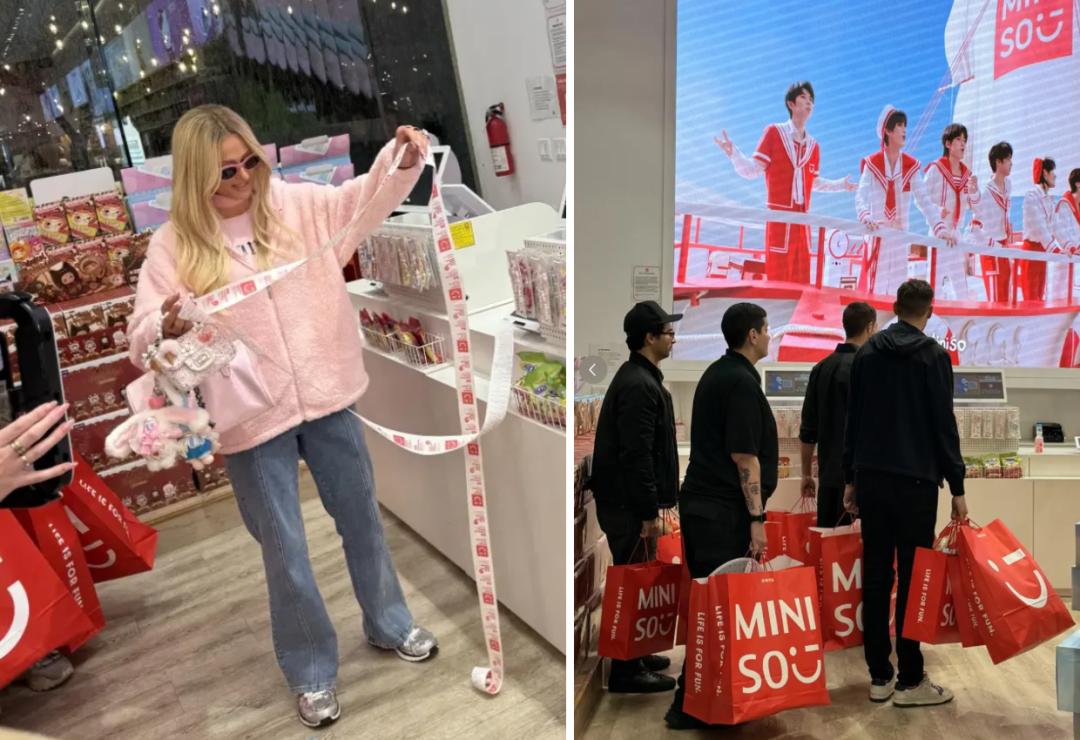
啥十元店能让希尔顿大小姐带四个保镖花小3万?这国产杂货铺快活成「潮玩版奥莱」了
3 6 Ke· 2025-11-28 10:20
Core Viewpoint - MINISO is undergoing a significant transformation from a low-cost daily goods retailer to a cultural and creative company focused on IP products, which has sparked mixed reactions in the market [6][8][35]. Group 1: Transformation Strategy - The founder of MINISO, Ye Guofu, has proposed closing 80% of existing stores to reopen them with a new focus on cultural and creative products [7]. - The new store format, MINISO LAND, aims to create a more upscale shopping experience, contrasting with traditional MINISO stores that are often located in less prominent areas [10][11]. - MINISO LAND has opened only 18 locations, strategically placed in city centers to become new landmarks, showcasing a shift in business strategy [10][11]. Group 2: Product Offering and Market Position - MINISO LAND emphasizes IP products, with a reported 79.6% of sales coming from these items, significantly higher than traditional products [11]. - The average transaction value in MINISO LAND is three times that of regular MINISO stores, indicating a successful shift in consumer spending behavior [11]. - The store features a diverse range of IP products, including collaborations with popular franchises, making it a competitive player in the market [20][22]. Group 3: Consumer Reception and Market Dynamics - Consumer feedback indicates that while MINISO LAND products are more expensive than traditional MINISO items, they remain cheaper than typical IP toy stores, appealing to a broad audience [20][22]. - The store attracts a significant number of foreign customers, highlighting its global appeal and the effectiveness of its location strategy [20]. - Despite the initial success, concerns about product quality and originality persist, as many items are perceived as lacking in uniqueness compared to competitors [23][29]. Group 4: Future Challenges and Opportunities - MINISO's reliance on external IP licensing raises concerns about long-term sustainability, as the company faces increasing costs and potential market volatility [35]. - The company's strategy to recruit talent for original IP development is crucial for its future growth, but initial efforts have faced criticism for lack of appeal [35]. - The ongoing challenge will be balancing the integration of original IP while maintaining the affordability and accessibility that has defined MINISO's brand [30][35].


加速供需适配 精准激发消费潜力
Jing Ji Wang· 2025-11-28 03:03
Core Viewpoint - The article discusses the implementation plan aimed at enhancing the adaptability of consumer goods supply and demand, addressing the information gap and demand mismatch between producers and consumers, and promoting a "two-way rush" between supply and demand [1] Group 1: Implementation Plan Focus - The implementation plan targets the supply-demand mismatch, aiming to optimize the supply-side structure and enhance resource investment over approximately five years to achieve dynamic equilibrium at a higher level [2] - Specific measures are proposed for different demographics, including infants, students, and the elderly, focusing on safety, quality, and practical needs [2][3] Group 2: Consumer Demographics - For infants and students, the plan emphasizes "healthy growth" and "learning efficiency," addressing issues like product safety and quality, and promoting the use of new eco-friendly materials [2] - For the elderly, the focus is on "practical convenience" and "quality of life," with plans to enhance the development of products like care robots and easy-to-swallow foods [2] Group 3: Consumption Promotion Strategies - The plan includes strategies to stimulate consumption potential through policies like trade-in programs for consumer goods, creating a favorable consumption atmosphere, and innovating consumption scenarios [4] - It aims to boost large-scale consumption in sectors like automotive and home appliances, and to promote new consumption models such as health and digital consumption [4] Group 4: International Consumption Environment - The plan seeks to enhance the international consumption environment in China, promoting initiatives like expanding visa-free travel and optimizing tax refund policies to attract more international consumers [5] Group 5: Development Goals - The implementation plan sets clear development goals, aiming for a significant optimization of consumer goods supply structure by 2027, with the creation of three trillion-level consumption sectors and ten hundred-billion-level consumption hotspots [7] - Key consumption sectors identified include elderly products, smart connected vehicles, and consumer electronics, while hotspots include baby products, smart wearables, cosmetics, and outdoor goods, indicating strong growth potential [7]
增强消费品供需适配性
Jin Rong Shi Bao· 2025-11-28 00:56
Core Viewpoint - The implementation plan aims to enhance the adaptability of supply and demand for consumer goods, promoting consumption through various measures across different sectors [1] Group 1: Consumer Goods Development - The plan emphasizes the development of products tailored for different demographics, including children, the elderly, and young consumers, focusing on health, practicality, and personalization [2] - Support will be provided for the research and development of elderly care robots, suitable clothing, and easy-to-swallow foods, alongside the establishment of a standard system for elderly products [2] - The initiative encourages the creation of culturally rich and fashionable products, such as national trend clothing and designer collaborations, to meet the diverse needs of young consumers [2] Group 2: Automotive Consumption Reform - The Ministry of Commerce reported that the trade-in program for consumer goods has generated over 2.4 trillion yuan in sales, benefiting more than 360 million people [3] - Retail sales of new energy passenger vehicles reached 10.15 million units in the first ten months of the year, marking a year-on-year increase of 21.9% [3] - Future plans include expanding the second-hand car market and promoting automotive consumption through various channels, including rentals and modifications [3] Group 3: Market Expansion Goals - By 2027, the plan aims to optimize the supply structure of consumer goods, creating three trillion-yuan-level consumption sectors and ten hundred-billion-level consumption hotspots [4] - The strategy focuses on enhancing product quality and cultural significance, driving the popularity of domestic products that embody Chinese cultural elements [4] - New products and services will be developed to cater to emerging consumer groups and needs, such as smart home solutions and services for the aging population [4] Group 4: Intelligent Development in Industries - The plan outlines specific arrangements to promote high-quality consumer goods, emphasizing technological innovation and the integration of artificial intelligence [5] - The initiative aims to enhance the infrastructure for electric vehicle charging, with a total of 18.645 million charging points established, reflecting a 54% year-on-year increase [5] - Support will be provided for the development of outdoor sports destinations and related enterprises to meet the growing demand for outdoor activities among young consumers [5] Group 5: Cultural and Tourism Consumption - The Ministry of Culture and Tourism plans to enhance the quality of intangible cultural heritage workshops and promote related products and services [6] - Activities such as seasonal shopping months for intangible cultural heritage products will be organized to stimulate consumer interest [6] Group 6: Quality and Safety Governance - The plan emphasizes the importance of consumer goods quality, with a focus on safety and consumer confidence [7] - A comprehensive governance framework for consumer goods quality will be established, including regular inspections and oversight of products for children and the elderly [7] - In 2023, over 5,200 cases related to the quality of household appliances and children's products were investigated, highlighting the commitment to maintaining market integrity [7] Group 7: Green Consumption Initiatives - The establishment of national standards for energy and water consumption in daily consumer goods has been initiated, promoting green consumption [8] - The expansion of green product certification aims to enhance the quality and variety of environmentally friendly products available in the market [8]
刚刚,五部门联合发声!这些大事与你有关→
Jin Rong Shi Bao· 2025-11-27 07:25
Core Viewpoint - The implementation plan aims to enhance the adaptability of supply and demand for consumer goods, promoting consumption through various measures and innovations in product development and market expansion [1]. Group 1: Consumer Goods Development - The plan emphasizes the integration of traditional toys and stationery with smart technology, focusing on safety and practicality in product design [2][3]. - There will be a push for the development of products catering to the elderly, such as service robots, adaptive clothing, and easy-to-swallow foods, alongside the establishment of a standard system for elderly products [3]. - The initiative supports the creation of culturally rich and fashionable products, including national trend clothing and designer collaborations, to meet the diverse needs of younger consumers [3]. Group 2: Market Performance and Trends - In the first ten months of the year, the trade-in program for consumer goods generated over 2.4 trillion yuan in sales, benefiting more than 360 million people [4]. - Retail sales of household appliances, furniture, and communication devices saw a year-on-year growth of approximately 20%, while retail sales of passenger vehicles increased by 7.9% [4]. - The plan anticipates the emergence of new consumption markets worth trillions of yuan by 2027, driven by supply-side structural reforms and the introduction of innovative products and services [5]. Group 3: Technological and Infrastructure Innovations - The plan includes the implementation of "Artificial Intelligence+" initiatives to promote intelligent development across industries, enhancing traditional industries and fostering smart product ecosystems [6]. - There is a focus on expanding parking facilities and electric vehicle charging infrastructure, with over 18.6 million charging points established nationwide, marking a 54% increase year-on-year [6]. - The initiative aims to support the development of high-quality outdoor sports destinations and enhance standards for outdoor sports products and services [7]. Group 4: Quality and Safety Regulations - The plan emphasizes the importance of consumer goods quality and safety, with ongoing actions to ensure the safety of children's and elderly products through comprehensive inspections and regulations [8][9]. - The market supervision authority has conducted extensive checks on various consumer goods, addressing quality issues in clothing, household appliances, and children's products [8]. - New national standards for energy consumption and safety for daily consumer goods are being established to promote green consumption and enhance consumer confidence [9].
工信部:将会同有关部门加强养老服务机器人等产品研发
Zhong Guo Xin Wen Wang· 2025-11-27 07:25
Core Insights - The Ministry of Industry and Information Technology (MIIT) is collaborating with relevant departments to enhance the research and development of products such as elderly care service robots [1][2] - The Chinese consumer market is undergoing a transformation from total expansion to structural optimization, driven by changes in consumer demographics and preferences [1] Group 1: Focus on Different Consumer Groups - For infants and students, the emphasis is on "healthy growth" and "learning efficiency," addressing issues like product functionality, quality inconsistencies, and safety hazards [1] - The MIIT plans to support the development of new eco-friendly materials and establish a strict quality standard system to promote high-quality products [1] - In the elderly care sector, the focus is on "practical convenience" and "quality of life," addressing challenges such as mobility issues and the need for home care [2] Group 2: Product Development and Standards - The MIIT will enhance the development of elderly care products, including service robots, adaptive clothing, and easy-to-swallow foods, while promoting the adaptation of internet applications for the elderly [2] - An initiative called "惠老助企" (Benefit the Elderly and Assist Enterprises) will be organized to promote nearly 2,000 quality elderly products, expanding access to safe and comfortable items [2] - The MIIT is accelerating the establishment of a standard system for elderly products and researching a "Silver Age" certification to label qualified products with an "安心标签" (Peace of Mind Label) [2] Group 3: Catering to Younger Consumers - The MIIT highlights the importance of "individual expression" and "fashion leadership" for the younger demographic, as traditional culture influences consumer upgrades [2] - Support will be provided for the development of culturally rich and fashionable products, such as national trend clothing and designer collaborations [2] - The MIIT encourages the growth of personalized services to meet the diverse and individualized consumption needs of consumers [2]

工信部:针对婴幼儿和学生、老年人、年轻人消费群体,向供给体系提出更高要求
Sou Hu Cai Jing· 2025-11-27 04:14
Core Insights - The Chinese consumer market is undergoing a significant transformation from quantity expansion to structural optimization, driven by changes in consumer demographics and preferences [1][3][4]. Group 1: Consumer Segmentation - Young consumers are increasingly seeking individuality, quality, and aesthetics in products, while older consumers prioritize convenience and usability [1][4]. - There is a growing diversity in consumption patterns across different age groups, regions, and lifestyles, necessitating higher standards in the supply system [1][3]. Group 2: Product Development Focus - For infants and students, there is an emphasis on "healthy growth" and "learning efficiency," with a call for improved product functionality, quality, and safety [3][4]. - The development of products for the elderly will focus on practical convenience and quality of life, addressing specific challenges such as mobility issues and dietary needs [4][5]. - The younger demographic is driving a trend towards personalized and fashionable products, with support for culturally infused items and custom services [5]. Group 3: Policy Measures - The government plans to support the research and application of new environmentally friendly materials and establish strict quality standards to enhance product safety and transparency [3][4]. - Initiatives like the "惠老助企" action aim to promote high-quality elderly products, expanding the existing catalog of nearly 2000 items to ensure safety and comfort for older consumers [4].
工信部:将持续推进互联网应用及智能终端适老化改造
Yang Shi Wang· 2025-11-27 03:59
Core Insights - The Chinese consumer market is undergoing a significant transformation from total expansion to structural optimization, driven by changes in consumer demographics and preferences [1] Group 1: Focus on Children and Students - The government emphasizes the importance of addressing the key needs of "healthy growth" and "learning efficiency" for children and students, highlighting issues such as product safety and quality [2] - There is a push for the development of AI toys that facilitate open and personalized interactions with children, promoting active learning and emotional management [2] Group 2: Focus on the Elderly - The initiative aims to combine "practical convenience" with "quality of life" for the elderly, addressing challenges such as mobility issues and the need for home care [3] - The government plans to enhance the development of elderly care products, including service robots and easy-to-swallow foods, while also establishing a standard system for elderly products [3] Group 3: Focus on Young Consumers - The strategy highlights the importance of "individual expression" and "fashion leadership" for young consumers, with a focus on cultural trends and the rise of domestic brands [4] - Support will be provided for the development of culturally rich and fashionable products, including designer collaborations and personalized services to meet diverse consumer needs [4]
消费品如何适配不同需求?工信部详解
Xin Jing Bao· 2025-11-27 03:15
Group 1 - The core viewpoint of the news is the implementation of a plan to enhance the adaptability of consumer goods and services to meet the diverse needs of different age groups, regions, and lifestyles [1][2] Group 2 - In serving infants and students, the focus is on "healthy growth" and "learning efficiency," addressing issues such as product functionality, quality inconsistencies, and safety hazards. The plan supports the development of new eco-friendly materials and the establishment of a strict quality standard system [1] - The plan promotes the deep integration of traditional toys and stationery with smart technology, aiming for a safer and more transparent industry development [1] Group 3 - For the elderly population, the emphasis is on combining "practical convenience" with "quality of life." The plan addresses common challenges faced by the elderly, such as mobility issues and the need for home care, by promoting the development of products like elderly care robots and easy-to-swallow foods [2] - The initiative includes an action to promote high-quality elderly products, expanding the existing directory of nearly 2,000 items to ensure more safe and comfortable products reach consumers [2] - The plan is also working on establishing a standard system for elderly products and developing a "Silver Age" certification to label qualified products, ensuring peace of mind for consumers [2] Group 4 - In catering to the younger demographic, the plan emphasizes "individual expression" and "fashion leadership," supporting the development of culturally rich and stylish products such as trendy clothing and cosmetics [2] - The initiative encourages the cultivation of original design capabilities and the development of personalized services to meet the diverse consumption needs of younger consumers [2]