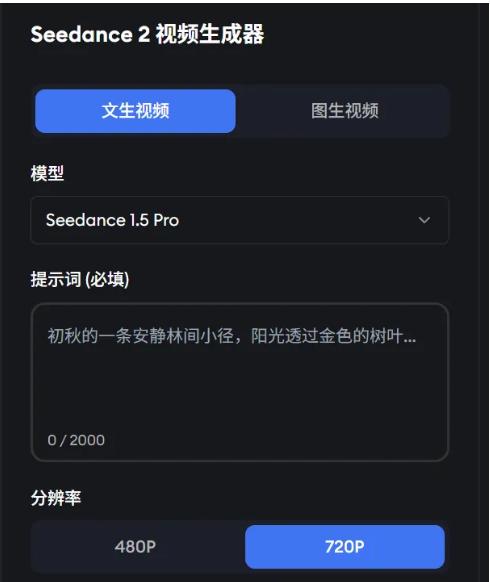
Seedream 5.0

Search documents
2026年第9周:数码家电行业周度市场观察
艾瑞咨询· 2026-03-15 00:07
Industry Environment - The rise of embodied intelligence has become a new focus in the industry, driven by advancements in ChatGPT and VLA models, with robots as key carriers for AI implementation. The financing scale in this sector reached 735.43 billion yuan in 2026, despite facing technical bottlenecks and commercialization challenges [3][4]. - The space photovoltaic sector is transitioning from concept to commercialization, with a market size expected to reach trillions. Companies like SpaceX are planning to deploy thousands of low-orbit satellites, while domestic firms are also advancing their satellite constellation plans [5]. - Major tech companies are accelerating the integration of AI models into hardware devices, such as smart glasses and headphones, creating a new battlefield for human-computer interaction. The global AI glasses shipment is expected to exceed 10 million units by 2026, with China becoming the second-largest market [6]. - The AI education sector is becoming a competitive focus for major internet companies, with a monthly active user base exceeding 120 million. The market is divided into tech-driven, education training, and small entrepreneurial companies [7][8]. - The air conditioning industry is experiencing a collective price increase of 3%-10% due to rising copper prices and tightening energy efficiency subsidy policies, marking a shift from price wars to value competition [9]. Key Brand Dynamics - ByteDance launched Seedream 5.0 and Seedance 2.0, focusing on practical value and optimizing performance for commercial applications, targeting fields like science and programming [20]. - In 2026, Yin Qi aims to focus on "AI + terminal" strategies, emphasizing the development of foundational models and smart driving technology, while avoiding direct competition with major players [21][22]. - The photovoltaic sector saw a surge in stock prices following Elon Musk's comments on space photovoltaics, although the commercialization of this technology still faces challenges [23]. - ByteDance's Seedance 2.0 contrasts with OpenAI's Sora, focusing on content consumption logic and lowering creation barriers, while raising ethical concerns regarding privacy and data usage [24]. - The company "Wujie Power" completed over 200 million yuan in financing to develop general-purpose intelligent robots, focusing on the iteration of their "general brain" technology [25].


AI技术突破与政策支持成互联网科技热点,半导体板块资金流入显著
Xin Lang Cai Jing· 2026-02-17 22:48
Group 1: Core Insights - The internet technology sector is experiencing significant developments in AI technology breakthroughs, policy support, and industry collaboration during the week of February 11 to 18, 2026 [1] - ByteDance released a preview of its image generation model Seedream 5.0 on February 10, while promoting the video model Seedance 2.0, leading to a surge in demand for AI video generation [1] - Meta announced an expansion of its partnership with NVIDIA on February 18, planning to deploy millions of AI chips in data centers, which will boost AI computing power demand [1] Group 2: Stock Market Trends - The A-share technology sector saw significant capital inflow, with the semiconductor sector experiencing a net inflow of 5.69 billion yuan on February 12 [2] - Notable stocks included Zhaopin Co., which rose over 15%, and companies in the liquid cooling server concept, such as Yuke Technology and Capital Online, hitting the daily limit [2] - Google Cloud announced a price increase of 100% for North American data transfer fees starting May 1, prompting a reevaluation of the value in the IDC and computing leasing sectors [2] Group 3: Financial Report Analysis - SMIC reported a net profit of 1.22 billion yuan for Q4 2025, a year-on-year increase of 23.2%, with an annual capacity utilization rate of 93.5% [3] - TSMC's revenue in January surpassed 400 billion New Taiwan dollars for the first time, reflecting a year-on-year growth of 36.8%, indicating strong demand for AI chips [3] - Both companies exceeded expectations, highlighting the robust health of the semiconductor industry chain [3] Group 4: Institutional Perspectives - A Bank of America report indicated that China's AI industry is at a critical turning point, with the explosion of video models driving a surge in computing power demand [4] - There is a noticeable divergence between the US and Chinese AI industries, with US tech stocks under pressure due to concerns over return on investment, while China's model commercialization accelerates [4] - New antitrust compliance guidelines have been introduced, encouraging platform companies to shift from "involution" to innovation, which is beneficial for the long-term health of the ecosystem [4]


发春节红包的大厂被约谈;百度O计划曝光,文心助手MAU增4倍;影石CEO回应年会送出5套房|AI周报
AI前线· 2026-02-15 05:32
Group 1 - Major tech companies were interviewed by the market regulatory authority to eliminate "involution-style" competition and ensure compliance with various laws [3] - Baidu's Wenxin Assistant saw a fourfold increase in monthly active users, with significant growth in AI-generated content features [4][6] - Insta360's annual meeting featured extravagant prizes, including five apartments and luxury cars, highlighting the company's focus on employee recognition and long-term value [7][8] Group 2 - DeepSeek's recent update led to user dissatisfaction due to perceived loss of personality in interactions, prompting calls for a rollback to previous versions [9][10] - Alphabet raised $31.51 billion through a large-scale bond issuance, reflecting strong demand for cloud service providers despite concerns over investor protection [11] - Disney accused ByteDance of copyright infringement related to its AI video generation model Seedance, marking a significant legal challenge for the company [12][13] Group 3 - Douyin launched a new app "Dou Sheng Sheng" to enhance its local life group buying business, aiming to compete in a less saturated market [18] - Elon Musk proposed building a factory on the moon to produce AI satellites, emphasizing the need for advanced computational resources [19] - A Stanford graduate developed an AI dating app called Date Drop, which has gained popularity among students, indicating a growing trend in tech-driven social solutions [20][21] Group 4 - Zhizhu announced a price increase for its GLM Coding Plan subscriptions, reflecting the rising costs associated with AI model development [16][17] - The URKL robot fighting league was launched to accelerate advancements in humanoid robotics, drawing parallels to F1 and NBA in terms of industry impact [21][22] - OpenAI released the GPT-5.3-Codex-Spark model, designed for real-time programming, showcasing advancements in AI-assisted software development [22][23]



AI正从美股增长引擎变成“估值粉碎机”?
财富FORTUNE· 2026-02-14 10:08
Core Viewpoint - The article discusses a significant downturn in the U.S. stock market, particularly the S&P 500 index, which fell by 1.4%, marking its largest drop since November of the previous year. This decline is attributed to fears surrounding AI's impact on various sectors, raising concerns that AI may no longer be a growth engine but rather a "valuation crusher" [1][3]. Group 1: Market Reactions - The S&P 500 index experienced a notable increase in abnormal stock fluctuations, with over 40 stocks showing deviations exceeding three standard deviations, indicating a potential collapse of market confidence [3]. - The logistics sector was heavily impacted, with C.H. Robinson experiencing an eight-fold standard deviation drop, leading to a "death spiral" of automated stop-loss orders and panic selling [3]. - Major tech companies, including Apple, Amazon, Microsoft, and Meta, were significant contributors to the index's decline, with Amazon hitting a nine-day losing streak, marking its longest since 2006 and entering a technical bear market [3][4]. Group 2: AI's Impact on Employment and Market Sentiment - A statement from Microsoft's AI CEO suggested that most white-collar jobs could be fully automated within 18 months, causing immediate market panic and a sell-off of stocks related to potentially disrupted industries [4]. - The market's fear extends to the return on investment for massive capital expenditures by tech giants, with a combined projected spending of $650 billion on AI infrastructure by Google, Meta, Microsoft, and Amazon, raising concerns about their financial health [4]. Group 3: Competitive Landscape and Pricing Power - Chinese AI companies have made significant advancements, launching competitive products that challenge the pricing and performance of existing models, which could reshape global investor expectations [5][6]. - The emergence of low-cost AI solutions, such as MiniMax's M2.5 model, threatens the pricing power of established tech giants, leading to a reevaluation of their market positions and business models [8]. - The article highlights a shift from a positive growth narrative to a negative cycle of demand shrinkage and profit contraction, as AI efficiency gains may lead to reduced overall employment [7]. Group 4: Future Market Outlook - Goldman Sachs warns that if the S&P 500 index falls below 6707 points, it could trigger systemic sell-offs amounting to $80 billion, indicating a fragile market environment [8]. - The current market situation serves as a "stress test" for business models in the AI era, determining which companies can adapt and which may struggle to maintain their competitive advantages [8].





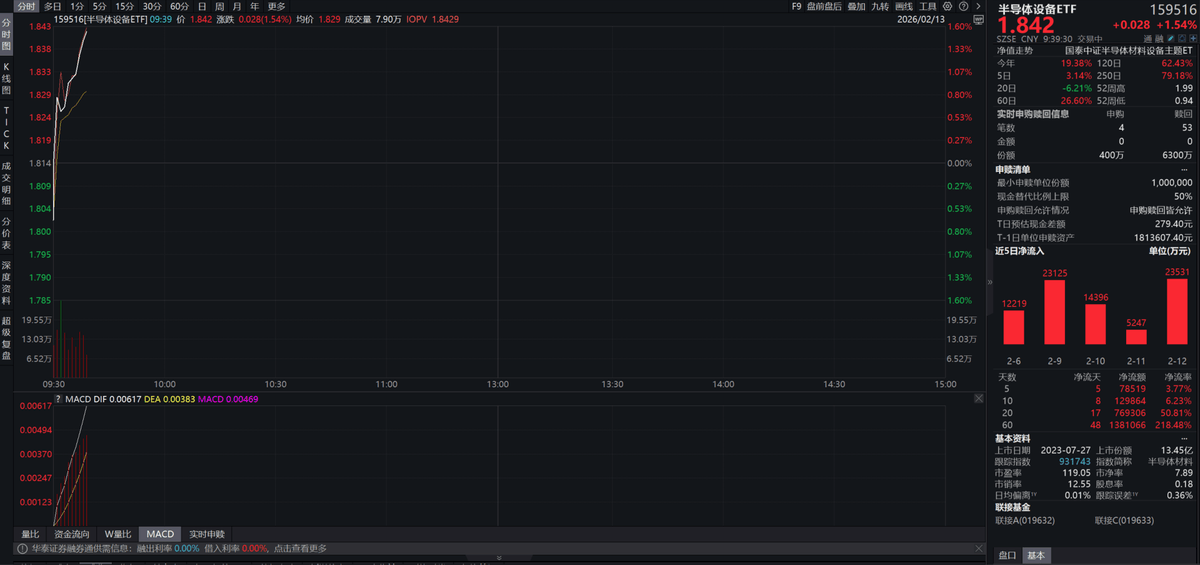
春节档大模型“超级周”来临,半导体设备ETF(159516)强势吸金
Mei Ri Jing Ji Xin Wen· 2026-02-13 02:18
Core Insights - The Chinese AI industry is experiencing a significant shift from "single-point breakthroughs" to "systematic iterations," as multiple domestic model manufacturers release flagship models simultaneously, enhancing market confidence in AI commercialization [1][3][4]. Group 1: Industry Developments - Major Chinese AI companies, including ByteDance, Zhipu, DeepSeek, and MiniMax, have launched new flagship models across various domains such as video generation, image generation, and programming, marking a collective advancement in the industry [1][3]. - Morgan Stanley has termed this phenomenon as the "Spring Festival release cycle," indicating that the simultaneous updates from multiple companies will accelerate market comparisons and shift market share towards the best performers [3][4]. Group 2: Market Dynamics - The perception of domestic large models has evolved from being "followers" to being competitive with global leaders in areas like coding and context handling, leading to increased willingness to pay and higher API workload retention rates [4]. - The marketing battle among AI applications during the Spring Festival has led to a surge in user engagement, validating the potential for explosive consumer traffic and creating a non-linear growth trajectory for inference computing demand [5][6]. Group 3: Long-term Trends - The AI investment narrative is shifting from "training-driven" to "inference-driven," with inference demand expected to become the main engine for computing growth starting in 2026, significantly expanding the market space compared to training [10][19]. - The supply side is undergoing generational upgrades, particularly in optical modules, with a projected demand increase of over tenfold for 1.6T optical modules by 2026 [12][19]. Group 4: Competitive Landscape - The commoditization of large models is leading to a redistribution of power in the platform layer, where differentiation is increasingly based on marketing capabilities, workflow ownership, and product iteration speed rather than just model strength [14][19]. - The semiconductor equipment sector is now closely tied to global AI computing cycles, with increased capital expenditures from overseas storage leaders driving expectations for domestic equipment companies [15][19]. Group 5: Investment Opportunities - The semiconductor equipment ETF (159516) is highlighted as a core investment vehicle, providing exposure to leading companies in the semiconductor equipment and materials sectors, with a current scale exceeding 20 billion [16][19].
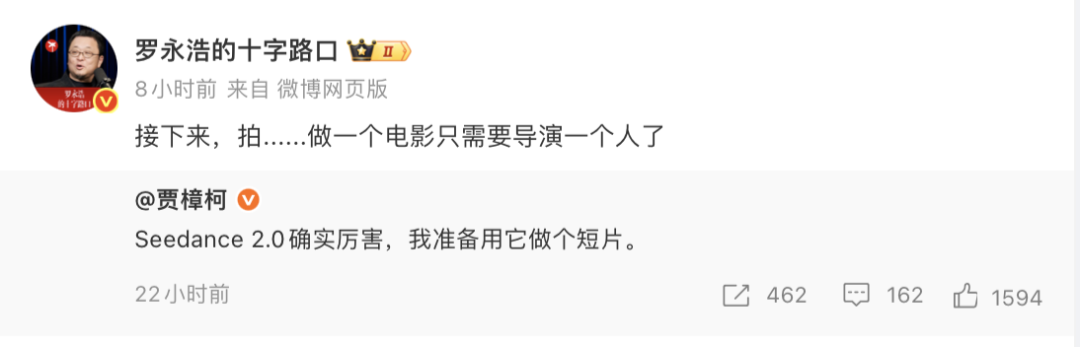
贾樟柯准备用Seedance 2.0拍短片,“人人皆可做导演”时代来了?
Guo Ji Jin Rong Bao· 2026-02-13 01:03
Core Insights - The launch of ByteDance's new video creation model, Seedance 2.0, has garnered significant attention in the global tech landscape, marking a pivotal moment in AI-generated content [1][9]. Group 1: Product Features - Seedance 2.0 utilizes a unified multi-modal audio-video generation architecture, supporting inputs from text, images, audio, and video, allowing users to input up to 9 images, 3 videos, and 3 audio clips simultaneously [1][2]. - The model is capable of producing high-fidelity, complex interactive scenes with realistic details and physics, including advanced audio capabilities with dual-channel stereo sound [2][4]. - Seedance 2.0 significantly reduces production costs and time for professional audio-visual content, making it suitable for applications in commercial advertising, film effects, and game animation [2][4]. Group 2: Industry Impact - The release of Seedance 2.0 has sparked strong reactions from industry professionals, with notable figures expressing both admiration for the technology and concerns about its implications for data privacy and copyright [4][5]. - The model's capabilities are expected to disrupt traditional filmmaking processes, with predictions that AI tools for movie production will reach critical mass within 18 to 24 months [5][9]. - The launch has led to notable stock movements in related sectors, with companies like Zhongwen Online and掌阅科技 experiencing significant stock price increases following the announcement [9][10]. Group 3: Market Potential - Analysts predict that the market for AI-generated content, particularly in short films and micro-dramas, will see substantial growth, with estimates suggesting a market size of approximately 16.8 billion yuan by 2025 and over 24 billion yuan by 2026, maintaining a growth rate of over 40% [10]. - The release of Seedance 2.0 is viewed as a critical moment for the entertainment industry, indicating a shift towards widespread adoption of AI-generated content across various platforms [9][10]. Group 4: Strategic Timing - The launch of Seedance 2.0 coincides with the Chinese New Year marketing period, part of ByteDance's broader strategy that includes the introduction of other AI models [11].
多模态“Deepseek时刻”下的大厂分化:字节拼“效率”,快手攻“专业”,阿里聚焦“电商”!
硬AI· 2026-02-12 15:44
Core Viewpoint - The article discusses the evolution of AI video generation from entertainment to industrial production, emphasizing the importance of controllability and reduced waste rates in video production processes [1][2][5]. Group 1: AI Model Updates - The recent updates in domestic multimodal models, such as Keling 3.0 and Seedance 2.0, significantly enhance controllability, marking a shift in AI video from entertainment to industrial production [2][5]. - The upgrades focus on improving controllability over video generation, including consistency across scenes, adherence to complex instructions, and the ability to edit generated content, thereby reducing waste rates [5][10]. Group 2: Cost Structure and Commercialization - The report indicates that the marginal cost of video production is increasingly aligning with computational costs, driven by advancements in AI models that lower waste rates [2][20]. - The commercialization threshold has shifted from "can it be done" to "can it be delivered consistently," highlighting the importance of stability in output quality [8][20]. Group 3: Competitive Landscape - ByteDance focuses on efficiency and cost reduction in content production, Kuaishou emphasizes professional storytelling, and Alibaba targets vertical e-commerce applications, indicating distinct strategic paths among these companies [19]. - The competition is not solely based on performance rankings but rather on the strategic differentiation of each company's offerings [19]. Group 4: Supply-Side Revolution - The report predicts a supply-side revolution where the marginal cost of content production will increasingly resemble computational costs, leading to improved efficiency for marketing and e-commerce service providers [20]. - As content production becomes easier, the scarcity and pricing of intellectual property (IP) will become more pronounced, with top-tier IP and derivatives gaining higher value [20].

中国大模型“春节档”打响!等待消费级AI出“爆款”
硬AI· 2026-02-12 15:44
Core Viewpoint - The article discusses the competitive landscape of AI model releases during the Chinese New Year period, highlighting the shift from model performance to efficiency and practical applications, with DeepSeek's V4 model being a focal point for potential industry transformation [2][4][15]. Group 1: Industry Dynamics - The 2026 Chinese New Year is expected to see a surge in flagship model releases, with multiple companies, including ByteDance, Alibaba, and DeepSeek, preparing significant updates [4][5][8]. - ByteDance has already launched three models, signaling a strong market entry with its Seedance 2.0 model [4]. - Alibaba plans to release Qwen 3.5 in mid-February, supported by a substantial customer acquisition incentive [5]. - DeepSeek's V4 model is anticipated to enhance coding and long prompt processing capabilities, with a reported support for up to 1 million tokens [8][15]. Group 2: Competitive Implications - The simultaneous release of multiple models may lead to a "winner-takes-all" scenario, where underperforming models face significant disadvantages [9][10]. - The Chinese New Year period is characterized by scarce attention, making it crucial for companies to present credible flagship updates to remain relevant [12][13]. Group 3: DeepSeek's Strategic Focus - DeepSeek's potential release aims to improve efficiency through a novel "conditional memory" approach, which could shift expensive computations to more cost-effective retrieval operations [15][16]. - If successful, this could enable AI to transition from being an expensive "toy" to a cost-effective "tool," facilitating its integration into high-frequency consumer products [17]. Group 4: Beneficiaries of the Model War - Tencent is positioned as a major beneficiary of the upcoming model releases, leveraging its high-frequency communication platforms like WeChat and QQ to enhance user experience with improved AI capabilities [19][20]. - In contrast, Alibaba and Baidu may face a dual challenge: while stronger models can enhance user experience, a price war initiated by DeepSeek could pressure the entire API service market [21][22]. Group 5: Market Sentiment and Future Outlook - Despite the excitement in the capital markets, there is skepticism regarding the actual performance of consumer-facing AI models, with large-scale user testing during the Chinese New Year serving as a critical evaluation point [24][25]. - The true signal for adoption will be whether major players integrate AI as a default feature in high-frequency interfaces, which would drive sustained demand for AI capabilities [25]. Group 6: Valuation Perspectives - Morgan Stanley maintains a bullish outlook on model developers like Zhiyu and MiniMax, projecting significant long-term growth based on their advancements and market positioning [27][28]. - The valuation logic is shifting towards long-term profitability, with target prices set at 400 HKD for Zhiyu and 700 HKD for MiniMax, based on expected earnings by 2030 [29][30].


首个AI“春节档”,谁是最大赢家?
3 6 Ke· 2026-02-12 12:56
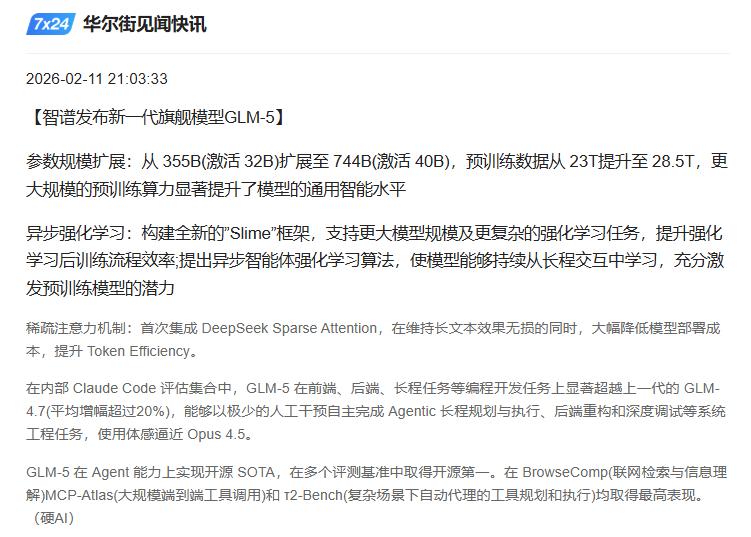
Core Insights - The 2026 Spring Festival has transformed into a battleground for Chinese AI giants competing for "mobile entry points," with a focus on efficiency and the implementation of intelligent agents [1] - Morgan Stanley's report highlights an unprecedented wave of flagship model releases in the Chinese internet and AI sector, marking a shift from individual model performance to the rapid conversion of "technical spillover" into consumer-grade products [1][9] - DeepSeek remains the focal point of market attention, with potential cost reductions in inference that could shift AI from standalone apps to embedded applications in high-frequency platforms like WeChat [1][12] Group 1: Competitive Landscape - The Spring Festival release season is crowded, with ByteDance leading by unveiling three models: Seedance 2.0, Seedream 5.0, and Doubao 2.0, with Seedance 2.0 showing signs of becoming a "hit" [2] - Alibaba is set to launch Qwen 3.5 in mid-February, supported by a 3 billion yuan incentive plan to attract users [3] - Zhiyu released GLM-5 on February 11, expanding its parameter scale from 355 billion to 744 billion [4] - DeepSeek's V4 version is expected to be released in mid-February, focusing on improvements in encoding and handling long prompts [6] Group 2: Market Dynamics - The simultaneous release of multiple models may lead to a "winner-takes-all" scenario, where underperforming models face significant disadvantages [9] - The Spring Festival window is characterized by scarce attention, making it crucial for labs to present credible flagship updates to remain relevant [11] - DeepSeek's potential release could yield significant "platform economic benefits," with its new technology aimed at improving efficiency without heavy computational upgrades [11] Group 3: Implications for Major Players - Tencent is projected to be the biggest beneficiary of DeepSeek's potential new releases, as it integrates third-party model capabilities into its high-frequency communication platforms [13][14] - Stronger models could enhance user experience for Alibaba and Baidu, but a price war initiated by DeepSeek could pressure the entire industry's API services [15] - Vertical giants like Ctrip, Beike, and Kuaishou stand to benefit from powerful open-source models that lower technical barriers and accelerate product iteration [15] Group 4: Future Outlook - The upcoming large-scale user testing during the Spring Festival will serve as a critical test for the reliability and performance of consumer-grade AI applications [17] - Morgan Stanley maintains a bullish outlook on model developers Zhiyu and MiniMax, with target prices set at 400 HKD and 700 HKD respectively, based on projected earnings by 2030 [18][19] - The valuation logic is shifting towards economic benefits, focusing on stronger willingness to pay and higher API workload retention rates as model capabilities approach global frontiers [19]
千问日活逼近,豆包为什么还敢把红包留到春晚 ?
3 6 Ke· 2026-02-12 11:13
Core Insights - The competition among major players in the AI app market has intensified with the introduction of significant cash incentives, particularly during the Chinese New Year, leading to a surge in user engagement for various applications [1][3][4]. Group 1: User Engagement and Competition - Qianwen App's daily active users (DAU) surged from under 10 million to 73.52 million, nearing Doubao's 78.71 million, indicating the effectiveness of cash incentives [1]. - Doubao announced its cash incentive plan on February 10, with the distribution set for the CCTV Spring Festival Gala on February 16, suggesting a strategic delay in response to competitive pressure [1][3]. - The introduction of the Seedance 2.0 model by ByteDance has been a game-changer, with its capabilities being compared to a cash incentive of 1 billion, showcasing the importance of technological advancements in user retention [2][5]. Group 2: Technological Advancements - ByteDance has launched multiple AI models, including Seedream 5.0 and the upcoming Doubao 2.0, indicating a robust strategy to enhance product offerings alongside cash incentives [2][5][8]. - The Seedance 2.0 model has received acclaim for its superior performance in video generation, positioning it as a leader in the AI space [5][8]. - The integration of AI hardware into the cash incentive strategy reflects a shift towards a more comprehensive approach to user engagement, combining software and hardware solutions [12][15]. Group 3: Strategic Marketing and Positioning - The current cash incentive war is not just about monetary rewards but also about leveraging AI capabilities and existing business strengths to create a competitive edge [4][22]. - Companies are exploring new marketing strategies that integrate their traditional strengths with AI advancements, as seen with Doubao's collaboration with third-party hardware manufacturers [16][18]. - The competition is evolving into a multi-faceted battle where the effectiveness of AI models and user experience will play a crucial role in long-term success [22].