Xiaomi HAD增强版

Search documents
小米集团-W:25Q4 业绩前瞻:汽车全年经营层面盈利,存储成本压力逐步体现-20260304
GUOTAI HAITONG SECURITIES· 2026-03-04 05:45
Investment Rating - The report maintains a "Buy" rating for Xiaomi Group (1810.HK) with a target price adjusted to HKD 42.7 [7][15]. Core Insights - The report highlights that the storage price surge is currently impacting Xiaomi's short-term profitability, but the long-term ecosystem value driven by multi-device synergy is promising [3]. - The financial forecasts for Xiaomi's revenue and adjusted net profit have been revised downwards for FY2025E-FY2027E, reflecting a more cautious outlook due to market conditions [15]. Financial Summary - **Revenue Forecast (in million RMB)**: - 2023: 270,971 - 2024: 365,932 (+35.0%) - 2025E: 457,062 (+24.9%) - 2026E: 511,216 (+11.8%) - 2027E: 595,885 (+16.6%) [5] - **Gross Profit and Margin**: - 2023: Gross Profit 57,477, Margin 21.2% - 2024: Gross Profit 76,564, Margin 20.9% - 2025E: Gross Profit 101,281, Margin 22.2% - 2026E: Gross Profit 107,773, Margin 21.1% - 2027E: Gross Profit 131,879, Margin 22.1% [5] - **Adjusted Net Profit**: - 2023: 19,273 (+126.3%) - 2024: 27,235 (+41.3%) - 2025E: 38,186 (+40.2%) - 2026E: 34,040 (-10.9%) - 2027E: 46,178 (+35.7%) [5] Business Segments Overview - **Smartphones**: The report anticipates a decline in smartphone shipments in Q4 2025, with an expected volume of 37.8 million units, down 11.4% year-on-year, primarily due to a contraction in the Indian market [15]. - **Automotive**: Xiaomi's automotive segment is projected to achieve operational profitability in 2025, with Q4 deliveries exceeding 140,000 units. The report notes a slight decline in average selling price (ASP) due to promotional activities [15]. - **IOT and Internet Services**: IOT revenue is expected to decline by 26% year-on-year in Q4 2025, while internet services are projected to grow by 4.7% [15]. Valuation Methodology - The report employs a Sum-of-the-Parts (SOTP) valuation method, assigning a PE of 20x for core businesses (smartphones, IOT, internet) and a PS of 2.4x for the automotive segment, reflecting Xiaomi's competitive advantages in supply chain management and brand strength [15][19].

今年交付目标55万辆!雷军直播冲上热搜 回应“7000法务”、“绿化带战神”等
Sou Hu Cai Jing· 2026-01-03 23:58
Core Viewpoint - Lei Jun, the founder and CEO of Xiaomi, conducted a live stream to address various concerns regarding the new Xiaomi YU7 car, responding to online rumors and emphasizing the company's commitment to technology and safety [2][15]. Group 1: Company Strategy and Goals - Xiaomi plans to focus on three main areas for 2026: maintaining a commitment to technology, increasing investment in AI, and enhancing the user experience across its ecosystem of products [4]. - The company has invested approximately 105 billion yuan in technology research and development over the past five years and plans to invest at least 200 billion yuan in the next five years [4]. - Xiaomi's automotive delivery target for 2026 is set at 550,000 units, with a previous achievement of 410,000 units delivered in 2025, surpassing the initial target of 350,000 units [4][8]. Group 2: Product Development and Safety - The live stream featured a detailed disassembly of the Xiaomi YU7, showcasing the vehicle's construction and addressing public concerns about its safety and technology [6]. - Lei Jun highlighted the importance of the Electronic Stability Program (ESP) for safe driving, especially in slippery conditions, and introduced a wet mode to enhance safety [9]. - The Xiaomi YU7 has undergone a 25% offset collision test, demonstrating a safety strategy called "wheel loss to protect the car," which aims to mitigate impact forces [12]. Group 3: Addressing Online Criticism - Lei Jun expressed concerns about online criticism and misinformation, stating that the company will strengthen its legal team to combat malicious attacks and rumors [15][16]. - The company aims to clarify misconceptions, such as the rumor about "7000 legal staff," which Lei Jun denied, emphasizing the need for a more robust legal framework to protect the brand [16][17]. - Xiaomi has conducted 484 advanced driving training sessions in nine cities, with over 10,620 participants, to promote safe driving practices among its car owners [14].

雷军直播,冲上热搜!网友:是真敢啊
Zhong Guo Ji Jin Bao· 2026-01-03 16:06
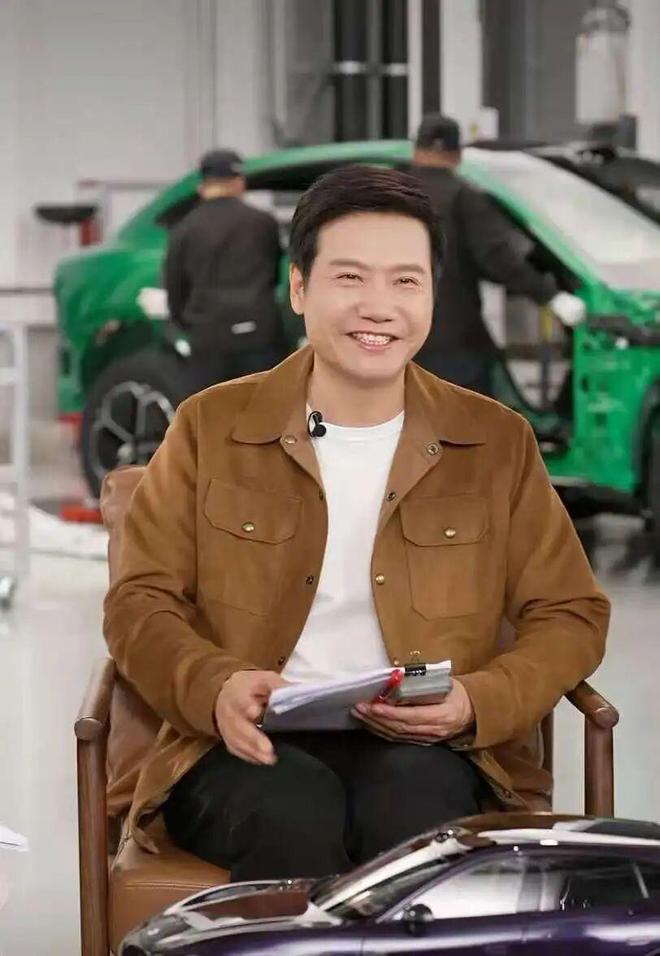
Core Viewpoint - Lei Jun, the founder and CEO of Xiaomi, conducted a live stream to address various concerns regarding the new Xiaomi YU7 car, responding to online rumors and emphasizing the company's commitment to technology and safety [1][15]. Group 1: Live Stream Highlights - The live stream lasted over four hours and included a detailed disassembly of the Xiaomi YU7, showcasing the vehicle's components and addressing public concerns about automotive technology and safety [1][6]. - Lei Jun expressed confidence in the YU7's design and materials, stating that the company is serious about car manufacturing and has made significant investments in this area [6][12]. - The stream also aimed to counteract negative online narratives, with Lei Jun advocating for a more objective discussion about Xiaomi's products [15][16]. Group 2: Future Plans and Investments - Xiaomi plans to invest at least 200 billion yuan in technology research and development over the next five years, building on the 105 billion yuan invested in the past five years [3]. - The company aims to enhance its AI capabilities and create a comprehensive ecosystem for users, focusing on the integration of vehicles, homes, and technology [3]. - Xiaomi has set a target to deliver 550,000 cars in 2026, reflecting its commitment to expanding its automotive business [4][8]. Group 3: Safety and Technology Features - Lei Jun discussed the importance of the Electronic Stability Program (ESP) for safe driving, particularly in adverse weather conditions, and highlighted the introduction of a new enhanced driving assistance system [9][12]. - The YU7's safety features include a unique "wheel detachment" strategy during collisions, designed to protect passengers by redirecting impact forces [12]. - Xiaomi is also researching advanced materials, such as 2400 MPa ultra-strong steel, to further enhance vehicle safety [12]. Group 4: Addressing Online Rumors - Lei Jun addressed various online rumors, including the exaggerated claim of having 7,000 legal staff, clarifying that this is not the case and emphasizing the need for a stronger legal team to combat misinformation [15][16]. - The company is committed to addressing malicious attacks and ensuring that genuine user feedback is prioritized [16].
雷军直播 冲上热搜!网友:是真敢啊
Zhong Guo Ji Jin Bao· 2026-01-03 16:04
Core Viewpoint - The live stream by Lei Jun, founder and CEO of Xiaomi, focused on the disassembly of the new Xiaomi YU7 and addressed various online rumors, highlighting the company's commitment to transparency and product quality [2][3]. Group 1: Live Stream Highlights - The live stream lasted over four hours and became a trending topic on social media, showcasing the disassembly of the Xiaomi YU7 standard version [2][7]. - Lei Jun expressed confidence in the quality of Xiaomi's vehicles, emphasizing the company's serious approach to car manufacturing and substantial investment in materials [8][14]. Group 2: Company Plans and Goals - Xiaomi plans to invest at least 200 billion yuan in technology research and development over the next five years, building on the 105 billion yuan invested in the past five years [5]. - The company aims to deliver 550,000 cars in 2026, with a focus on creating an integrated ecosystem for users [5][10]. Group 3: Addressing Online Rumors - Lei Jun acknowledged the impact of online criticism and malicious rumors on his mental well-being, stating that the company will strengthen its legal team to combat defamation [3][17]. - He denied the rumor of having 7,000 legal staff, clarifying that such claims are exaggerated [17][18]. Group 4: Safety and Technology - The Xiaomi YU7 features a "wheel drop to protect the car" safety strategy, which aims to mitigate damage during collisions [14]. - The company has introduced an enhanced driving assistance system, emphasizing the importance of driver safety and the need for users to keep the electronic stability program (ESP) activated while driving [12][16].
雷军直播,冲上热搜!网友:是真敢啊
中国基金报· 2026-01-03 16:00
Core Viewpoint - The live stream by Lei Jun, founder and CEO of Xiaomi, aimed to address various concerns regarding the company's automotive technology and safety, while also showcasing the new Xiaomi YU7 model through a detailed disassembly process [1][5]. Group 1: Company Strategy and Future Plans - Xiaomi plans to focus on three main areas for 2026: maintaining a commitment to technology, increasing investment in AI and large models, and enhancing the user experience across its ecosystem of products [4]. - The company has invested approximately 105 billion yuan in technology research and development over the past five years and plans to invest at least 200 billion yuan in the next five years [4]. - Xiaomi's automotive delivery target for 2026 is set at 550,000 vehicles, building on the previous year's achievement of delivering 410,000 vehicles, which exceeded the initial target of 350,000 [8][4]. Group 2: Product Development and Safety Features - The live stream included a four-step disassembly of the Xiaomi YU7, which was intended to respond to online criticisms and demonstrate the company's commitment to quality and safety in its vehicles [5][6]. - Lei Jun emphasized the importance of maintaining the Electronic Stability Program (ESP) in vehicles to prevent accidents, particularly in slippery conditions [10]. - The Xiaomi YU7 has undergone a 25% offset collision test, showcasing its safety features, including a strategy called "losing wheels to protect the car," which helps mitigate impact forces [13]. Group 3: Addressing Online Criticism and Legal Concerns - Lei Jun expressed concerns about malicious online attacks and misinformation regarding Xiaomi, including the false claim of having 7,000 legal staff, which he denied [2][19]. - The company plans to strengthen its legal team to combat defamation and misinformation, reflecting a proactive approach to managing its public image [17][19]. - Lei Jun highlighted the need for objective discussions about Xiaomi products and criticized the tendency for exaggerated negative commentary online [19].

一见Auto采访小米陈光的一些信息分享......
自动驾驶之心· 2025-12-26 01:56
Core Viewpoint - The article discusses the competitive landscape of autonomous driving technology, highlighting the different methodologies and ambitions of various companies, particularly focusing on Xiaomi's approach to end-to-end algorithms and the integration of world models and reinforcement learning [4][5][6]. Group 1: Xiaomi's Strategy and Development - Xiaomi's autonomous driving team is focusing on end-to-end development, having established a dedicated department for algorithm and function development in 2024, which is relatively late compared to competitors like Li Auto and NIO [5][6]. - The company has rapidly advanced its technology, pushing out 3 million Clips of end-to-end (HAD) in February 2025 and 10 million Clips in July 2025, with the enhanced version of Xiaomi HAD officially launched at the Guangzhou Auto Show in November 2025 [5][15]. - The enhanced version incorporates a world model and reinforcement learning, allowing the model to simulate experienced drivers and understand the reasoning behind driving actions, thus enhancing its cognitive capabilities [5][6][19]. Group 2: Technical Approaches and Challenges - Xiaomi's approach emphasizes maximizing the "intelligence density" of models, regardless of whether they use VA, WA, or VLA methodologies, indicating a focus on cognitive-driven solutions rather than purely data-driven ones [5][18]. - The integration of world models and reinforcement learning presents challenges, such as ensuring the fidelity of the world model and managing computational efficiency during parallel exploration [6][59]. - Xiaomi's autonomous driving team is structured into three groups, exploring various methodologies, including VLA, WA, and VA, while maintaining a focus on end-to-end solutions [10][30]. Group 3: Industry Context and Competition - The autonomous driving industry is experiencing a "nomenclature overload," with various factions emerging around different technical approaches, leading to ongoing debates about the best methodologies [7][26]. - Xiaomi's rapid growth in its autonomous driving team, which has expanded to over 1,800 members in four years, contrasts with competitors who took longer to build their teams [13][46]. - The company has invested 23.5 billion yuan in R&D by the third quarter of 2025, with a quarter of that allocated to AI development, showcasing its commitment to advancing its autonomous driving capabilities [13][46]. Group 4: User Experience and Market Perception - Xiaomi emphasizes that the ultimate measure of technology is user experience, arguing that advanced technology does not guarantee better user perception or trust [12][24]. - The company acknowledges the pressures and criticisms it faces as a latecomer in the autonomous driving space, asserting the importance of resilience and long-term thinking in overcoming challenges [15][48]. - Xiaomi's strategy includes leveraging its existing infrastructure and data resources from other business units to enhance its autonomous driving capabilities, allowing for rapid development and deployment [44][46].

小米陈光:我们不想制造技术焦虑了
2 1 Shi Ji Jing Ji Bao Dao· 2025-12-25 08:24
Core Viewpoint - The smart driving industry is experiencing a "term overload" phenomenon, with various factions emerging around different models such as VLA (Vision Language Action), VA (Vision Action), and WA (World Action) [2] Group 1: Industry Trends - The industry is divided between proponents of VLA, like Li Auto and Yuanrong Qixing, and opponents like Huawei and Xiaopeng, who prefer WA [2] - Xiaomi is focusing on end-to-end development, showcasing significant potential in this area, despite starting later than competitors like Li Auto and NIO [3][6] - Xiaomi's end-to-end algorithm has evolved rapidly, with multiple versions released within a year, indicating a fast-paced development cycle [6] Group 2: Technological Development - Xiaomi's latest version of its HAD (Highly Automated Driving) system incorporates world models and reinforcement learning, enhancing its cognitive capabilities [3][4] - The introduction of world models and reinforcement learning is seen as a necessary evolution from simple data-driven approaches to more complex cognitive-driven methodologies [9][10] - Xiaomi's approach emphasizes maximizing the model's intelligence density within limited computational resources [8][15] Group 3: Team Structure and Strategy - Xiaomi's smart driving team has grown to over 1,800 members, reflecting a rapid scaling compared to competitors [6][12] - The team is divided into three groups focusing on different technological routes, including end-to-end, VLA, and other exploratory research [4][13] - Xiaomi's strategy is characterized by a gradual introduction of new technologies, prioritizing user experience over merely adopting the latest advancements [5][10] Group 4: Challenges and Responses - The integration of reinforcement learning faces challenges, such as ensuring the fidelity of world models and managing computational efficiency [4][33] - Xiaomi's team has encountered external criticism, which they view as a necessary part of their growth and development process [25][26] - The company aims to balance the introduction of new technologies with the need for practical, user-friendly solutions [10][11]
小米汽车11月交付量突破40000台!雷军:将继续努力
Sou Hu Cai Jing· 2025-12-01 02:50
Core Insights - Xiaomi Auto announced a delivery volume exceeding 40,000 units for three consecutive months, with November 2025 recording a total of 40,000 units delivered [1] - The cumulative delivery of Xiaomi Auto surpassed 300,000 units within 15 months of its launch, with 157,000 units delivered in the first half of 2025 [3] - Xiaomi Auto achieved a record of 500,000 units produced in just 602 days since the launch of its first model, SU7, on March 28, 2024 [5] Delivery Performance - In October 2025, Xiaomi Auto's retail sales reached 48,654 units, with the YU7 model contributing 33,662 units to the wholesale sales [3] - The monthly delivery first exceeded 30,000 units starting in July 2025 [3] Technological Advancements - On November 21, Xiaomi Auto unveiled the enhanced version of its HAD driver assistance system, incorporating reinforcement learning and world model architecture [8] - The new version includes upgrades to AEB collision avoidance and adds features such as forward and backward low-speed collision assistance and AES emergency steering assistance [8] - Xiaomi has invested over 7 billion yuan in AI and has assembled a team of over 1,800 personnel focused on intelligent driving [8]

左手AI,右手生态
Zhong Guo Qi Che Bao Wang· 2025-12-01 01:44
Core Insights - The automotive industry is transitioning from traditional hardware competition to a new era driven by AI, which is deeply integrated into vehicle control and intelligent driving, transforming cars into essential "smart partners" and "ecological hubs" in daily life [2][12] AI Empowerment and Breakthroughs - AI technology has penetrated various aspects of the automotive sector, including intelligent driving and smart cockpits, showcasing significant advancements in both technical depth and application breadth [3] - The shift towards software-defined intelligent platforms is evident, with companies like Li Auto and Xiaomi showcasing advanced driver assistance systems that enhance user experience and mimic human decision-making [3][4] Market Accessibility and Cost Reduction - The price range of 120,000 to 150,000 yuan has emerged as a new battleground for intelligent driving, with companies like GAC Toyota and Dongfeng Nissan introducing advanced features at lower price points due to a significant drop in core component costs [4] - The cost of automotive-grade lidar has decreased from approximately 8,000 yuan in 2023 to below 3,000 yuan, indicating a trend towards more affordable intelligent driving technologies [4] Intelligent Cockpit Innovations - AI models are transforming traditional vehicles into emotionally aware travel companions, as seen in the Roewe M7 DMH's AI cockpit system, which offers advanced interaction capabilities and personalized user experiences [5] - The system can understand complex commands and remember user preferences, enhancing the overall driving experience [5] New Automotive Ecosystem - AI serves as a core hub connecting various elements of a vast automotive ecosystem, integrating travel services, energy networks, hardware, software applications, and urban infrastructure [7] - This integration breaks down the traditional isolation of vehicles, creating a more interconnected and efficient transportation network [7] Integrated Smart Mobility - AI is the foundational technology for building an integrated "vehicle-road-cloud" smart mobility ecosystem, enhancing collaborative driving and optimizing traffic network efficiency [8] - In the energy sector, AI is transforming vehicles into active participants in smart energy networks, improving battery management and charging efficiency [8] Comprehensive User Experience - AI is becoming the central engine for connecting "people-vehicles-home" ecosystems, evolving cars from mere transportation tools to personal mobility control centers [9] - The shift in human-machine interaction is moving towards an AI-centric model, where AI understands user intentions and provides tailored services [9] Industry Transformation - The dual drive of AI and ecosystem integration is reshaping the global automotive industry's competitive landscape, requiring participants to reassess their roles and value [11] - The focus of competition has shifted from mechanical performance to intelligence and ecosystem integration, with new business models emerging that emphasize lifecycle value rather than one-time hardware sales [11] Future Outlook - The automotive industry is moving from a horsepower competition to one focused on computing power and collaboration, with AI as the driving force behind this transformation [12] - Companies must understand these trends and build comprehensive capabilities to thrive in the evolving automotive landscape [12]

广州车展:年度“收官之展”如何承前启后
Bei Jing Ri Bao Ke Hu Duan· 2025-11-26 23:27
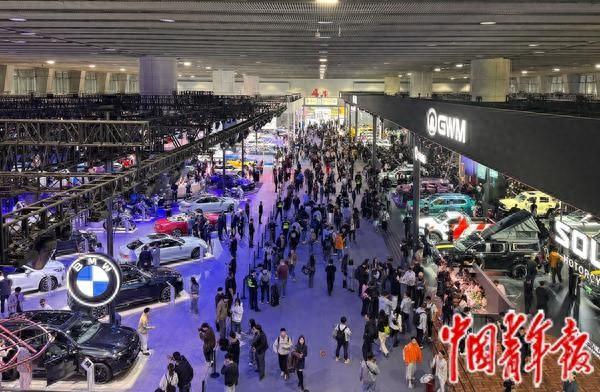
Core Insights - The Guangzhou International Auto Show serves as a significant platform for showcasing the achievements of the automotive market in the past year and indicates the development direction for the upcoming year [3][10] - The event features a total of 1,085 vehicles, with 629 being new energy vehicles and 93 global debuts, highlighting the growing emphasis on electric and intelligent vehicles [3][10] Industry Trends - Domestic brands are making significant advancements in technology, particularly in smart driving and battery range, with consumers increasingly impressed by the capabilities of local manufacturers [3][4] - The focus on innovation is evident, as companies like Geely and Deep Blue showcase new hybrid systems and advanced driver-assistance technologies, indicating a shift towards energy efficiency and performance [4][5] - The trend of software innovation is gaining traction, with several domestic brands moving from hardware-centric development to software updates via OTA, enhancing user experience [5][10] International Brand Strategies - Joint venture brands are actively transforming to adapt to market changes, with Volkswagen planning to launch around 40 new models in China from 2025 to 2027, over half of which will be electric [6][10] - Toyota's GAC is implementing a "dual fuel" strategy, moving away from the "sister car" approach to differentiate its product offerings [6][10] - Luxury brands like BMW and Mercedes-Benz are showcasing extensive lineups, emphasizing their commitment to both electric and hybrid technologies [6][7] Marketing and Consumer Engagement - The marketing approach at this year's auto show has shifted from exaggerated promotional tactics to more practical product demonstrations, reflecting a more mature consumer base [8][9] - Companies are focusing on providing hands-on experiences for consumers, allowing them to better understand vehicle features and capabilities [9][10] Future Outlook - The automotive industry in China is undergoing profound changes, with technology innovation being the core driver of development, particularly in the fields of new energy and intelligent connectivity [10] - The future landscape will likely see a coexistence of various technological routes, including pure electric, plug-in hybrid, and range-extended vehicles, alongside intensified competition between domestic and joint venture brands [10]