
Zheng Quan Shi Bao

Search documents
【商道论衡】商业银行如何服务海南自贸港建设
Zheng Quan Shi Bao· 2025-12-29 19:30
Core Viewpoint - The construction of Hainan Free Trade Port is a significant national strategic deployment and a landmark project of China's reform and opening up in the new era, presenting unprecedented development opportunities for Hainan as it approaches the full island closure operation on December 18, 2025 [1] Financial Service Demand - The construction of the free trade port brings multidimensional demands for financial services, including the need for diversified and long-term financing support for infrastructure projects such as ports, airports, and information networks, particularly in the context of upgrading the "Five Networks" and building a smart Hainan [1] - With the implementation of "zero tariffs, low tax rates, and simplified tax systems," there will be explosive growth in enterprises' needs for cross-border settlement, exchange rate hedging, trade financing, and cross-border investment financing, necessitating efficient and low-cost cross-border financial services from commercial banks [1] Industry-Specific Financial Services - Financial services must match the characteristics of the "3+1" modern industrial system, with tourism requiring support for scenic area development and consumer finance, high-tech industries needing intellectual property pledges and venture capital, and tropical agriculture requiring supply chain finance and agricultural insurance [2] Strategic Transformation of Commercial Banks - Commercial banks need to adjust their strategic positioning from traditional credit providers to comprehensive financial service providers, integrating various financial tools to offer comprehensive financial solutions throughout the entire lifecycle and industry chain [3] - There is a shift from a domestic-focused business model to a collaborative development of both onshore and offshore services, enhancing capabilities in offshore financial services while serving local enterprises and residents [3] Focus Areas for Commercial Banks - Commercial banks can focus on five key areas: 1. Cross-border financial innovation, utilizing tools like EF accounts to create integrated account service systems and promote products such as electronic documents and supply chain finance [4] 2. Industry-specific financial services, providing differentiated support systems tailored to the needs of the "3+1" modern industrial system [5] 3. Offshore financial breakthroughs, developing a multi-tiered service system for offshore banking and asset management [5] 4. Green finance development, creating blue bonds and funds to support clean energy and green building projects [5] 5. Digital finance empowerment, advancing digital RMB trials and building a financial ecosystem through open banking and big data [5] Risk Management and Compliance - In supporting the construction of Hainan Free Trade Port, commercial banks must strengthen risk management and compliance, establishing a comprehensive risk management system that addresses the unique risks associated with the free trade port [6] - There is a need for specialized compliance management teams to ensure that business innovations proceed within the regulatory framework while participating in regulatory sandbox trials for testing innovative products and services [6]
2025年全球多个地区、国家股市创出历史新高
Zheng Quan Shi Bao· 2025-12-29 19:30
Group 1 - Major stock indices in Europe, the US, Japan, and South Korea reached historical highs in 2025 [1] - European stock markets led the global rally, with Germany and Italy showing the highest gains [1] - The European Central Bank entered a rate-cutting cycle, making the Eurozone a "safe haven" and "value trap" for global capital due to clearer policy direction and relatively low valuations [1]
【发展之道】以产业创新助力消费增长
Zheng Quan Shi Bao· 2025-12-29 19:29
Core Viewpoint - Expanding domestic demand is essential for maintaining long-term economic health in China and meeting the growing needs of the population for a better life. The shift from high-speed to medium-high-speed growth necessitates increasing the consumption rate and addressing consumption shortfalls through industrial innovation and high-value-added industries, particularly in high-tech sectors like artificial intelligence [1][2]. Group 1: Economic Context - China's economy faces long-term pressures from an aging population, with the consumer rate at approximately 39.6% in 2023, significantly lower than developed countries (50%-70%) and the global average for middle-income countries (55%) [1]. - The traditional approach of income distribution adjustment is limited, necessitating a focus on industrial innovation to create new consumption demand and enhance overall economic growth [1][2]. Group 2: Industrial Innovation and Consumption - Developing high-value and high-tech industries is crucial for expanding economic growth during the medium-high-speed growth phase. Historical examples from the U.S. and Japan illustrate how technological advancements in sectors like information technology and healthcare have led to significant increases in service consumption [2]. - Artificial intelligence is identified as a key driver for consumption growth, enhancing production efficiency and creating high-income jobs, particularly in sectors like smart manufacturing and new energy vehicles [3]. Group 3: Synergy Between Technology and Consumption - The integration of artificial intelligence in consumer sectors is transforming traditional products into smarter, higher-end offerings, while also tailoring services to meet consumer needs. For instance, online retail sales are projected to account for 26.8% of total retail sales by 2024, with AI systems improving conversion rates by over 40% [4]. - The growth in high-tech industries has led to an average annual real income growth of 6.1% for residents from 2013 to 2024, with incomes in high-tech sectors growing faster than in traditional industries, highlighting the positive impact of industrial innovation on income distribution [4]. Group 4: Policy and Market Dynamics - The pathway of "industrial policy—developing domestic demand—expanding growth—income distribution—promoting consumption" has shown significant advantages over mere income distribution adjustments, creating new value through technological innovation and industrial upgrades [5]. - Initiatives like the trade-in policy for consumer goods and the promotion of AI in consumption are fostering a positive interaction between policy guidance, industrial upgrades, and consumption expansion, benefiting both industry and consumer welfare [5]. Group 5: Future Outlook - China is at a critical juncture for industrial and consumption upgrades, with a vast market of 1.4 billion people and a growing middle-income group providing ample opportunities for industrial innovation [5]. - Focusing on key sectors such as artificial intelligence, high-end equipment, and biomedicine, while optimizing income distribution, is essential for activating consumption potential and ensuring domestic demand becomes a primary driver of economic growth [5][6].
黄金价格屡创新高 全球央行持续买入成主推手
Zheng Quan Shi Bao· 2025-12-29 19:29
Core Viewpoint - International gold prices have reached new historical highs, driven by increased central bank purchases and rising demand for safe-haven assets, alongside a decline in the credibility of the US dollar [1] Group 1: Gold Price Movement - The London spot gold price has surged from $2,625 per ounce at the beginning of the year to $4,550.52 per ounce on December 29, marking a record high [1] - The continuous rise in gold prices has also led to significant increases in the prices of other precious metals, such as silver [1] Group 2: Market Drivers - Ongoing purchases of gold by global central banks are identified as a primary factor contributing to the increase in gold prices [1] - The rising demand for gold as a safe-haven asset, coupled with a decrease in the credibility of the US dollar, has attracted more investors to buy gold [1]
综合整治“内卷式”竞争 政策引导市场理性
Zheng Quan Shi Bao· 2025-12-29 19:27
Core Viewpoint - The central economic work conference in 2024 emphasized the need to comprehensively address "involutionary" competition, with a focus on guiding the market towards rationality through a series of policies implemented from the central to local levels [1] Group 1: Policy Implementation - A series of policy measures, described as a "combination punch," have been rolled out to regulate "involutionary" competition, including legal revisions and industry self-discipline [1] - The focus on "anti-involution" will continue throughout 2025, indicating a sustained effort to reshape competitive practices in various industries [1] Group 2: Industry Impact - In the photovoltaic industry, the price of the main contract for polysilicon futures has seen a significant increase, rising from slightly above 30,000 yuan per ton in June 2025 to over 58,000 yuan per ton currently [1]
国有资产法公开征求意见 全链条管好国资“家底”
Zheng Quan Shi Bao· 2025-12-29 19:26
"加强出资管理,不断健全国有资产管理将是国有资产法正式施行后的一大看点。"一位国资人士表示。 12月27日起,包括国有资产法草案在内的8件法律草案公开向社会征求意见。基于此次公开征求意见的 国有资产法草案(以下简称"草案"),我国将构建由国有资产法、专项国有资产法律、专项国有资产法 规规章组成的国有资产法律制度体系。接受证券时报记者采访的专家认为,新法有利于构建全方位、全 链条的国有资产治理体系,将进一步夯实盘活存量资产、防范国有资产流失的制度基础。 国有资产法草案分为总则、国有资产所有权人职责、国有资产管理、国有资产报告、国有资产监督、法 律责任、附则共七章62条。草案明确定义,国有资产是依照宪法、法律规定明确为国家所有,或者国家 通过购买、出资、征收、接受捐赠等方式取得或形成的境内外财产和权益。 从分类看,草案明确根据国有资产用途和管理需要,将国有资产分为国有自然资源资产、行政事业性国 有资产、企业国有资产以及其他国有资产等四类。中国企业改革与发展研究会研究员吴刚梁对记者表 示,这有利于构建全方位、全链条的国有资产治理体系。同时,草案把企业国有资产作了进一步分类, 即企业(不含金融、文化企业)国有资产、金 ...
跨境审计难题:高成本低收费之下舞弊风险如何防控?
Zheng Quan Shi Bao· 2025-12-29 19:16
Core Viewpoint - The increasing complexity and risk of cross-border operations in Chinese companies necessitate enhanced scrutiny and resources for auditing, as many firms face significant challenges in managing overseas revenue and compliance with regulations [1][2][3]. Group 1: Cross-Border Business Growth - In 2024, the total overseas revenue of A-share listed companies is projected to reach 10.52 trillion yuan, accounting for 17% of total revenue, with a 61% increase compared to 2020 [2]. - Over 1,100 companies have more than 30% of their revenue from overseas operations, indicating a significant shift towards international business [1][2]. Group 2: Audit Challenges - Cross-border auditing is complicated by factors such as the difficulty in obtaining evidence, compliance with varying international accounting standards, and the lack of transparency in overseas subsidiaries [4][5]. - The cost of cross-border audits is significantly higher than domestic audits, with additional expenses for travel, local legal and accounting services, and compliance with different regulatory frameworks [6][7]. Group 3: Audit Fee Discrepancies - Many companies with substantial overseas revenue pay insufficient audit fees, with 195 out of 810 companies spending less than 1 million yuan on annual audits, raising concerns about audit quality [7][8]. - The disparity between the complexity of cross-border audits and the fees paid can lead to inadequate resource allocation and increased audit risks [8][9]. Group 4: Recommendations for Improvement - Companies should recognize the importance of adequate audit funding as a necessary investment for risk management and financial reporting accuracy, rather than merely a cost [10][11]. - Audit firms need to enhance their professional capabilities and refuse to take on projects that are priced below cost, while also investing in technology and international talent [11][12]. - Regulatory bodies should improve cross-border regulatory collaboration, establish differentiated oversight mechanisms, and enhance transparency in overseas business operations to mitigate audit challenges [12].
人形机器人产业迎利好 融资资金大手笔买入四只概念股
Zheng Quan Shi Bao· 2025-12-29 19:16
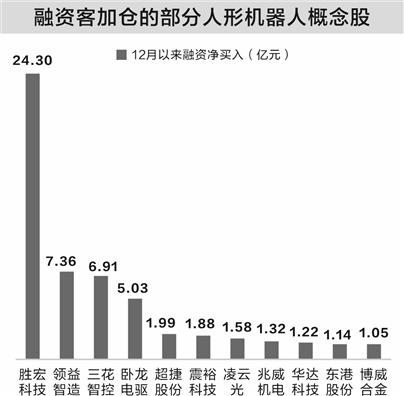
Group 1 - The establishment of the Standardization Technical Committee for Humanoid Robots and Embodied Intelligence is a significant step to enhance high-quality standard supply and promote the maturation and application of humanoid robot technology [3] - The humanoid robot and embodied intelligence industry is experiencing rapid growth, but faces challenges due to outdated standards and lack of unified interfaces, which increase collaboration costs and affect market trust [3] - The committee will focus on developing industry standards in key areas such as common technologies, components, systems, applications, and safety to guide healthy industry development [3] Group 2 - By 2025, China's humanoid robot industry is expected to transition from technology validation to large-scale commercialization, driven by supportive policies and advancements in both algorithms and hardware [4] - The market for humanoid robots is projected to reach $5 trillion by 2050, with an estimated deployment of 1 billion units, indicating a significant growth trajectory [4] - Investment opportunities in the humanoid robot sector are anticipated to focus on complete machines, key components, and core modules, with a notable differentiation in domestic and international paths [4] Group 3 - As of December 26, 23 humanoid robot concept stocks have seen net financing purchases exceeding 50 million yuan, with Shenghong Technology leading at 2.43 billion yuan [5] - Other notable companies with significant net financing include Lingyi Zhizao, Sanhua Intelligent Control, and Wolong Electric Drive, indicating strong market interest [6] - Some humanoid robot stocks have experienced price corrections, with nine stocks retreating over 20% from their yearly highs, highlighting market volatility [6]


多地积极培育未来产业 10只潜力股浮现
Zheng Quan Shi Bao· 2025-12-29 19:15
Group 1 - The core focus of the news is on the development and support of future industries in China, as highlighted by the "14th Five-Year Plan" which emphasizes nurturing emerging industries and exploring diverse technological routes and business models [3] - Various cities, including Beijing, Shenzhen, and Shanghai, are actively promoting future industries through initiatives and financial measures, with Beijing supporting 83 potential future industry companies and facilitating over 2 billion yuan in financing for 60 companies [4][5] - The future industries mentioned have significantly outperformed the market, with specific indices showing substantial annual growth, such as the nuclear fusion index rising over 83% and the 6G index increasing by more than 80% [5] Group 2 - Future industries are characterized by strong growth momentum, driven by disruptive technologies, with a projected median net profit of over 650 billion yuan for related companies by 2025, indicating a year-on-year growth of over 20% [6] - Specific companies within the future industries are expected to see remarkable profit increases, with over 60 companies projected to achieve net profit growth exceeding 100% by 2025, including notable firms like Foton Motor and Sino Medical [6][7] - A subset of companies has shown a decrease in shareholder numbers, indicating potential for price recovery, with 10 companies identified as having significant rebound potential due to their stock performance being below 19% for the year [8][9]

【头条评论】推动构建股东会议案合规保障体系
Zheng Quan Shi Bao· 2025-12-29 19:15
熊锦秋 12月26日振芯科技发布第一次临时股东会决议公告,《股东会议事规则》《董事会议事规则》《股东会 网络投票实施细则》三项核心治理议案未获通过,反对票占比均超71.84%,大概率来自控股股东国腾 电子集团,显示控股股东与董事会在治理理念方面或存分歧。 其三,应充分保障股东知情权和信披合规。公司应严格按照规定时限向全体股东送达完整的会议材料, 保证股东特别是中小股东有充足时间研读议案。对于专业性强、条款复杂或可能存有理解歧义的议案, 公司可考虑同步提供通俗的条款解读说明或问答,通过公告、官网、互动易等多种渠道解答疑问。若议 案系修订原有制度,应披露详细的修订内容对比。整个议案的筹划、起草、审议过程,必须严格执行内 幕信息保密规定,防止泄露内幕信息。 其四,完善审议阶段的沟通与事后跟进机制。在股东会审议过程中,议案提议方或公司管理层应就议案 内容进行清晰说明,真诚回应股东质询。当股东对议案内容存在重大分歧或材料准备不充分时,可考虑 暂缓表决,待沟通完善后再行审议。对于未获通过的议案,公司应认真分析原因,必要时可通过专项说 明会、意见征集等方式与股东沟通,并根据法律法规和股东合理意见进行修改完善。 比如,振芯科 ...
