Hua Er Jie Jian Wen

Search documents
英特尔财报前瞻:CPU缺货或提振业绩,但这可能是把“双刃剑”
Hua Er Jie Jian Wen· 2026-01-20 13:59
Core Viewpoint - Intel is facing a unique situation in the semiconductor cycle, where short-term supply shortages in the server CPU market may boost stock prices and quarterly performance, but underlying issues of capacity constraints and market share loss pose long-term risks to valuation [1][2]. Short-term Performance vs Long-term Concerns - Morgan Stanley predicts Intel may surprise with earnings per share (EPS) due to supply shortages, estimating non-GAAP revenue for the December quarter at $13.31 billion, a 6.7% year-over-year decline, slightly below Wall Street's expectation of $13.407 billion, but with an expected 11.5% quarter-over-quarter growth in the Data Center and AI (DCAI) segment [3][4]. - Despite the potential for short-term performance, structural issues remain, as Intel's internal capacity constraints mean it is missing out on demand rebounds, allowing competitors like AMD to capture significant market share [4][5]. Product Roadmap Challenges - Intel is in a transitional phase regarding product competitiveness, with the Panther Lake architecture showing promise in the notebook segment, but key server and high-performance desktop markets will not see competitive products until late 2026 and 2027, respectively [5][6]. - The delay in product releases means Intel's current offerings cannot fully capitalize on market demand, which will continue to suppress stock price potential [5]. Trust Issues in Foundry Business - Intel's foundry business is facing trust issues due to current supply shortages, which raise concerns among potential external customers about Intel's ability to meet their needs [6][7]. - The inability to satisfy even its own growth demands creates significant distrust, complicating efforts to attract new clients to its foundry services [6]. Financial Forecast and Valuation Outlook - For Q1 2024, Morgan Stanley forecasts Intel's revenue at $12.552 billion, slightly above Wall Street's expectation of $12.525 billion, but with a gross margin prediction of only 34.9%, below the market's 36.1% expectation [7][8]. - Intel's current stock valuation corresponds to 35 times the expected EPS for 2027, which is higher than the average for large logic semiconductor peers, reflecting market optimism about recovery potential and foundry business options [7][8]. - Analysts believe that unless Intel can demonstrate a recovery in server market share, the current profitability is insufficient to support further stock price revaluation [8].


微软CEO纳德拉预警:AI若不能广泛落地,终将沦为投机泡沫
Hua Er Jie Jian Wen· 2026-01-20 13:55
Group 1 - The core viewpoint is that the long-term success of AI depends on its adoption across a wider range of industries and regions beyond wealthy economies, as warned by Microsoft's CEO Satya Nadella [1][2] - Nadella emphasized that for AI to avoid becoming a bubble, the benefits of the technology must be distributed more evenly across different sectors and regions [2] - There is a significant disparity in global AI adoption rates, with productivity gains and applications primarily concentrated in wealthier developed countries, raising concerns about the sustainability of AI investment returns [1][2] Group 2 - Nadella reiterated that the market will not rely on a single dominant model provider, which has led Microsoft to collaborate with several leading AI companies, including Anthropic, xAI, and OpenAI [3] - Microsoft has gained a significant first-mover advantage in AI through a $14 billion investment in OpenAI, securing exclusive access to the technology behind ChatGPT and priority in data center collaborations [3] - Companies will be able to utilize multiple models, including open-source ones, and leverage techniques like "distillation" to create smaller, cost-effective proprietary models, which will be crucial for maintaining competitive advantage [3]

海康威视:利润同比增长18.46%至141.88亿元
Hua Er Jie Jian Wen· 2026-01-20 13:51
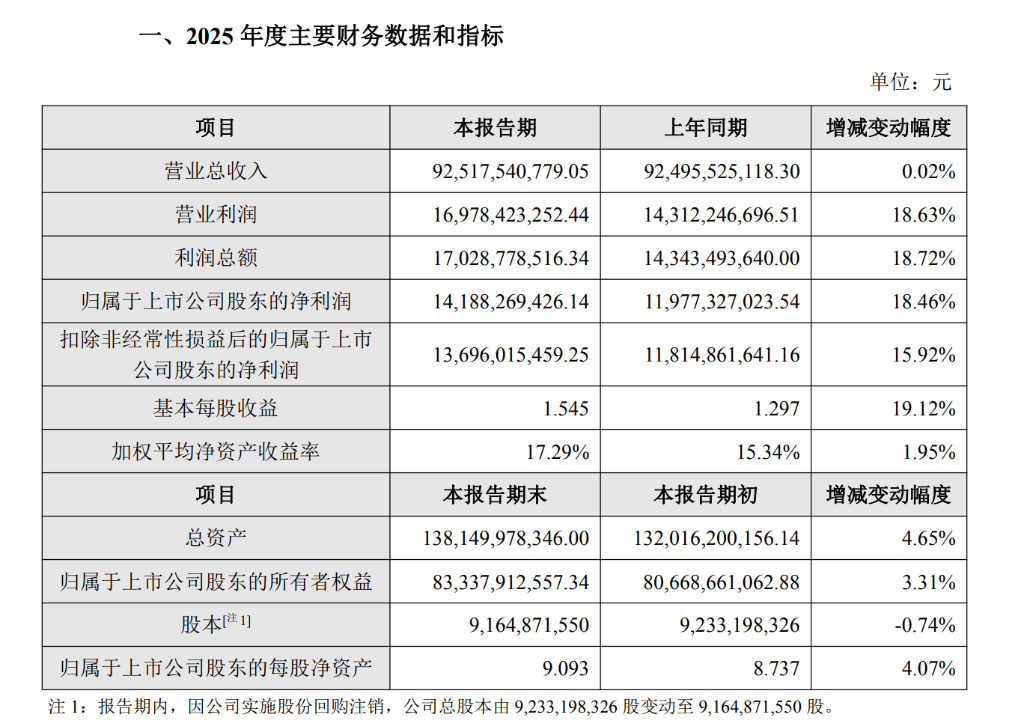
全球安防监控龙头企业海康威视在营收基本持平的情况下实现了利润的显著修复,这表明公司采取的"以利润为中心"的经营策略调整已初见成 效。 1月20日,海康威视发布的2025年度业绩快报指出,公司在过去一年中主动推进全面经营策略调整,通过精细化管理和组织变革,在收入端仅微增 0.02%的背景下,推动归属于上市公司股东的净利润同比增长18.46%至141.88亿元。这一业绩数据凸显了公司在面临增长压力时,通过内部提效 成功改善了盈利能力。 在经营导向上,海康威视明确表示2025年坚定执行了以利润为中心的策略,并加快数字化转型以追求高质量、可持续的增长。除了净利润的大幅 回升,公司还强调加强了应收账款回款管理,导致经营性现金流出现"显著增长",这一指标的改善为投资者提供了关于公司财务健康状况的积极 信号。 尽管此次发布的仅为初步核算数据,但双位数的利润增速与基本每股收益近两成的提升,或将缓解市场此前对于科技硬件板块盈利能力的担忧。 海康威视通过控制成本和优化管理实现的利润释放,反映了成熟期科技企业从规模扩张向效益优先转型的典型路径。 营收持平下的利润反弹 快报数据显示,2025年度海康威视实现营业总收入925.18亿元 ...

据报道,丹麦养老基金Akademiker Pension将退出美国国债投资
Hua Er Jie Jian Wen· 2026-01-20 13:35
风险提示及免责条款 据报道,丹麦养老基金Akademiker Pension将退出美国国债投资。 市场有风险,投资需谨慎。本文不构成个人投资建议,也未考虑到个别用户特殊的投资目标、财务状况或需要。用户应考虑本文中的任何 意见、观点或结论是否符合其特定状况。据此投资,责任自负。 ...
魏建军对效率下狠手
Hua Er Jie Jian Wen· 2026-01-20 13:30
Core Viewpoint - The launch of the "Guiyuan Platform" by Great Wall Motors marks a significant transformation in automotive production paradigms, aiming to unify its technology stack and enhance competitiveness in a challenging market environment [1][2]. Group 1: Platform Features - The Guiyuan Platform is described as the world's first native AI all-power vehicle platform, set to produce 51 models across five power types and seven categories, including brands like Ora, Wey, Tank, and Great Wall Pickup [1]. - The platform achieves an 80% commonality rate for vehicle components and reduces the R&D cycle by approximately 30%, leading to significant cost reductions in vehicle development and ownership [1][2]. - It decomposes vehicles into 49 core modules and 329 shared components, allowing for a modular approach to vehicle design, akin to assembling with Lego blocks [2]. Group 2: Strategic Shift - Great Wall Motors has adjusted its sales target for 2026 from 2.49 million units to 1.8 million units while maintaining a net profit target of 10 billion yuan, indicating a shift from scale dependency to seeking higher profit margins with a limited market share [3]. - The company plans to launch high-end products priced between 200,000 to 400,000 yuan, with the average domestic product price already at 200,000 yuan compared to competitors at 130,000 yuan [4]. Group 3: Competitive Landscape - The automotive industry is expected to transition from a price war to a competition based on product quality, features, and innovation, with Great Wall focusing on providing better products rather than the lowest prices [5]. - The Guiyuan Platform's design aims to enhance vehicle resale value and reduce maintenance costs by 15%, while improving repair efficiency by 40% [4]. Group 4: Technological Focus - Great Wall has chosen not to pursue range-extended electric vehicles, focusing instead on its Hi4-PHEV system, which features an 800V architecture and a dedicated four-speed hybrid transmission, achieving a pure electric range of 363 kilometers and a total range of nearly 1,400 kilometers [6]. - This strategic decision aims to establish a technological barrier against low-cost competitors and maintain its influence in the high-end and multi-purpose vehicle markets [6]. Group 5: Future Outlook - The Guiyuan Platform represents a shift towards a resilient manufacturing system that prioritizes efficiency and adaptability, moving away from the previous decade's focus on singular explosive growth [7]. - The platform's versatility is intended to address market fragmentation and ensure production efficiency, positioning Great Wall Motors for sustainable growth in a competitive landscape [8].

珠海万达商管换了位女将
Hua Er Jie Jian Wen· 2026-01-20 13:30
Core Insights - The leadership change at Zhuhai Wanda Commercial Management marks a significant shift in the company's direction, with Xu Fen taking over as CEO from Huang Dewei, indicating a transfer of power from investors like PAG to Wanda [1] - The appointment of Xu Fen, who has a strong financial background, reflects a new focus on return-driven management rather than scale-driven growth, aligning with the interests of major investors [1][3] - The combination of Xu Fen and COO Chen Qi aims to balance operational efficiency with market-oriented strategies, essential for navigating the current challenges in the commercial real estate sector [2] Group 1 - Xu Fen's promotion from financial manager to CEO demonstrates a commitment to operational efficiency and financial sensitivity, crucial for maximizing rental income and managing costs [1][2] - The shift in management philosophy from scale to return on investment is a response to the recent volatility in the commercial real estate market, emphasizing the need for precise cost control and deep operational management [2][3] - The transition in leadership is seen as a strategic move to enhance the company's resilience and adaptability in a challenging market environment, with a focus on professional management rather than individual heroism [3] Group 2 - The recent changes in leadership are part of a broader restructuring effort aimed at improving operational efficiency and ensuring the long-term viability of the company amidst financial pressures [3] - The expectation is that 2026 will mark a new era of specialization in the commercial management industry, where effective management practices will be critical for success [3] - The separation of ownership and management is anticipated to create a more robust governance structure, reducing the risk of operational disruptions due to financial instability [3]
ADP:截至12月27日四周,美国私营部门就业人数平均每周增加8000人
Hua Er Jie Jian Wen· 2026-01-20 13:20
市场有风险,投资需谨慎。本文不构成个人投资建议,也未考虑到个别用户特殊的投资目标、财务状况或需要。用户应考虑本文中的任何 意见、观点或结论是否符合其特定状况。据此投资,责任自负。 ADP:截至12月27日四周,美国私营部门就业人数平均每周增加8000人。 风险提示及免责条款 ...
“欧洲,振作起来!”IMF总裁开出“救欧四策”警示:别再掉队
Hua Er Jie Jian Wen· 2026-01-20 13:09
Core Viewpoint - The IMF President Kristalina Georgieva has issued a stern warning at the Davos Forum, urging Europe to "wake up" and implement four key strategies to restore its declining competitiveness amid U.S. tariff threats and geopolitical pressures [1][2]. Group 1: Trade Conflict and Economic Outlook - The trade tensions between the U.S. and Europe are at a sensitive juncture, with President Trump threatening to impose tariffs on several European countries if certain conditions are not met [2]. - Georgieva emphasized that Europe has fallen behind in productivity growth and nurturing local giant companies, which must change for better competitiveness [2][5]. - The IMF has slightly upgraded its global economic forecast, projecting a growth of 3.3% for this year and 3.2% by 2027, partly due to the less severe impact of tariffs than expected [2][3]. Group 2: Four Key Strategies for Competitiveness - Georgieva outlined four critical measures that European leaders must implement to revitalize the continent's economic vitality: 1. Complete the Capital Markets Union to ensure that European savings, currently amounting to €300 billion (approximately $351.75 billion), are invested locally rather than flowing to the U.S. [5]. 2. Finalize the Energy Union to address the fragmentation of energy systems, as having 27 different energy systems is not competitive [5]. 3. Remove barriers to labor mobility to simplify the process for employers to access labor across the EU [5]. 4. Increase investment in research and innovation to enhance competitiveness in technology [5]. Group 3: European Response to U.S. Pressure - In response to U.S. pressure, European leaders are adopting strong statements and countermeasures, with France advocating for the EU to utilize its strongest economic countermeasure, the "anti-coercion tool" [6]. - European Commission President Ursula von der Leyen stated that Europe must not rely on the old world order and must become independent amid ongoing geopolitical shocks [6].
砸钱死磕!奈飞“全现金”加码华纳竞购战,誓造4.5亿用户订阅帝国
Hua Er Jie Jian Wen· 2026-01-20 12:54
Core Viewpoint - Netflix has revised its acquisition proposal for Warner Bros. Discovery's film and streaming business to an all-cash offer at $27.75 per share, countering Paramount's criticisms of its previous mixed cash and stock proposal [1][2]. Group 1: Acquisition Details - The new all-cash proposal aims to expedite the transaction process and address Paramount's concerns regarding the stock component of Netflix's initial offer [1][2]. - If successful, the merger would result in a combined total of approximately 450 million subscribers for both companies, enhancing Netflix's content library to compete against rivals like Disney and Amazon [1]. Group 2: Financial Implications - The all-cash structure eliminates a major criticism from Paramount, which argued that the stock component made Netflix's offer less competitive [2]. - Netflix's market capitalization stands at $402 billion with an investment-grade credit rating, while Paramount's market cap is only $12.6 billion, with its bonds rated as junk by S&P [5]. Group 3: Valuation and Debt - Warner Bros. has disclosed the valuation of its cable assets, which are set to be spun off into a separate company, Discovery Global, with a per-share value estimated between $0.72 and $6.86 [6]. - Discovery Global is projected to have $17 billion in debt by June 30, 2026, which is expected to decrease to $16.1 billion by year-end, aided by better-than-expected cash flow [6]. Group 4: Leverage and Financial Strength - The combined debt of the merged entity would be approximately $85 billion, which is lower than the $87 billion projected if merged with Paramount. The financial leverage ratio for Netflix's proposal is below 4 times, compared to about 7 times for Paramount's offer [8]. - Warner Bros. has consistently rejected Paramount's $30 per share cash offer, citing insufficient value when considering various risks and uncertainties [8]. Group 5: Regulatory Approval - Netflix and Warner Bros. executives recently met with regulators in Europe to advocate for the approval of the transaction, expressing confidence in its eventual approval [9]. - Concerns have been raised by Hollywood unions and theater operators regarding the potential negative impact of the merger on their interests [9].
Q4业绩超预期,但投资者更关心“为什么台积电这么激进”?
Hua Er Jie Jian Wen· 2026-01-20 12:48
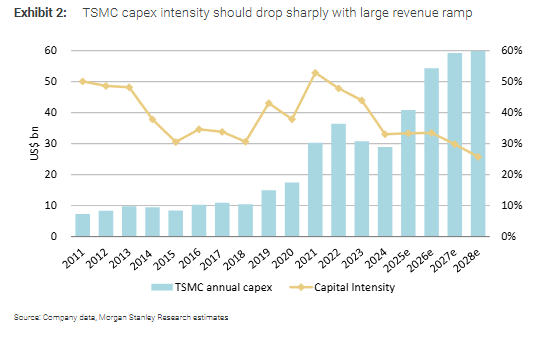
Core Viewpoint - TSMC's Q4 financial results and guidance exceeded market expectations, but investor focus has shifted from performance to strategic concerns regarding aggressive expansion plans and capital expenditure increases [1][2]. Group 1: Capital Expenditure and Market Share - TSMC's capital expenditure guidance for 2026 is set at $52 billion to $56 billion, significantly higher than market expectations by approximately $6 billion to $11 billion, raising discussions about the aggressive investment strategy [2]. - Analysts from Morgan Stanley suggest that strong AI semiconductor growth and potential equipment supply constraints necessitate TSMC's aggressive capacity expansion to avoid market share loss in the next 2-3 years [2][9]. - TSMC is accelerating infrastructure development, including advanced packaging plants AP9 and AP10 in the U.S., with potential prepayments for equipment to smooth capital expenditures in 2026 and 2027 [2][9]. Group 2: Revenue Growth and Production Efficiency - TSMC's revenue guidance for 2026 indicates nearly 30% year-over-year growth, attributed to improved production efficiency [3][5]. - The long-term gross margin target has been raised from 53% to 56% or higher, reflecting confidence in AI opportunities and sustainable production efficiency improvements [5][9]. - Analysts expect TSMC to achieve a gross margin target exceeding 56% despite increased capital expenditures, with a revised gross margin assumption of 63% for 2026 [5]. Group 3: AI Demand as a Growth Catalyst - The primary catalysts for TSMC's future growth are centered around the AI market, with global cloud service providers' capital expenditure guidance directly impacting TSMC's order visibility [6][8]. - The total addressable market (TAM) for AI semiconductors is projected to grow to $550 billion by 2029, with AI semiconductors expected to account for 20-25% of TSMC's total revenue by 2026 [6][9]. - TSMC has raised its AI semiconductor revenue growth forecast from 45% to a compound annual growth rate (CAGR) of 55-59% for 2024-2029, aligning closely with Morgan Stanley's 60% prediction [6]. Group 4: U.S. Investment and Strategic Partnerships - Following a tariff agreement with the U.S. requiring $250 billion in direct investments, TSMC is expected to contribute significantly, with plans for substantial investments in U.S. facilities [1][9]. - TSMC's previous announcement of a $165 billion investment in the U.S. by 2030 includes plans for 30% of its 2nm and below capacity to be located in the U.S., indicating a strategic push to meet customer demand [9]. Group 5: Stock Valuation and Analyst Recommendations - TSMC remains a preferred stock for analysts, with a target price of NT$2,088, reflecting strong AI capital expenditure guidance and a favorable valuation compared to historical price-to-earnings ratios [10][13]. - The stock is currently valued at 15 times the projected earnings per share for 2027, close to the average forward P/E ratio of 16.5 times since 2018, indicating an attractive investment opportunity [10][13].