Hua Xia Shi Bao

Search documents
欣旺达突遭天价索赔,市值蒸发47亿元,涉极氪001 WE 86车型
Hua Xia Shi Bao· 2025-12-30 12:53
Core Viewpoint - XINWANGDA (300207.SZ) experienced a significant stock price drop of 11.39% on December 29, following a lawsuit from its former partner, Weirui Electric Vehicle Technology (Ningbo) Co., Ltd., claiming damages of approximately 2.314 billion yuan due to alleged quality issues with battery cells supplied by XINWANGDA [2][3][4]. Group 1: Company Background and Financial Impact - XINWANGDA was selected as a designated supplier for Weirui's PMA platform project in April 2021, providing battery cells for various electric vehicle brands under Geely, including Zeekr and smart [4][5]. - In 2021, XINWANGDA's revenue from power batteries reached 2.933 billion yuan, a 584.67% increase from 2020's 428 million yuan [4]. - Following the lawsuit announcement, XINWANGDA's market capitalization dropped by over 60 billion yuan, reducing its total market value to 487 billion yuan [3][4]. Group 2: Legal and Market Reactions - The lawsuit claims that battery cells delivered by XINWANGDA from June 2021 to 2023 had quality issues, leading to significant losses for Weirui [5][10]. - Legal experts noted that while lawsuits over battery quality are not uncommon, claims involving such high amounts are rare, indicating potential for increased disputes as electric vehicle sales rise [2][6]. - On December 30, XINWANGDA's stock price showed a slight recovery, closing at 27.19 yuan per share, with a market capitalization of 502 billion yuan [2][4]. Group 3: Industry Context and Implications - The lawsuit highlights a growing trend of quality disputes between automakers and battery suppliers, although high-value claims remain infrequent [6][10]. - The impact of the lawsuit extends beyond financial implications, potentially affecting customer trust, supply qualifications, and brand reputation in the competitive electric vehicle market [10].



传统ERP已是过去式?全球首个L4级企业管理智能体面世,企业管理市场加速AI转型
Hua Xia Shi Bao· 2025-12-30 10:58
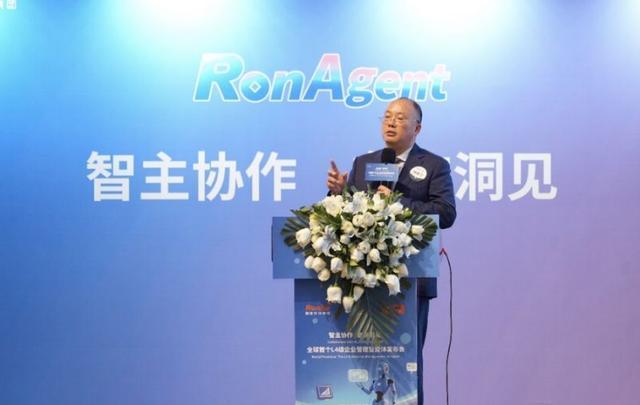
Core Viewpoint - The launch of RonAgent, the world's first L4-level enterprise management intelligent agent by Ronghe Technology, aims to transform management practices for small and medium-sized enterprises (SMEs) from traditional human-driven systems to intelligent agent-driven operations [2][6]. Group 1: Market Opportunity - Ronghe Technology targets the SME market for intelligent transformation, addressing the slow digital transition due to outdated technology, talent shortages, and high IT costs [2][6]. - SMEs, which constitute 99% of China's economy, are seen as more eager to adopt AI technologies compared to larger enterprises, as they lack historical burdens and possess greater potential for transformation [6][7]. Group 2: Product Features - RonAgent integrates multiple expert capabilities, such as virtual CIO, intelligent analyst, and 24/7 risk officer, automating repetitive tasks and providing data-driven decision-making support [3][4]. - The intelligent agent aims to liberate limited human resources in SMEs, allowing them to focus on market development and product innovation [3]. Group 3: Industry Context - The traditional ERP market has shown limitations due to its rigid processes, requiring businesses to adapt to software rather than the other way around [3][4]. - Over 40% of 155 software companies listed on A-shares are projected to be in a loss-making state by 2024, indicating a challenging environment for traditional software firms [3]. Group 4: Cost Structure - Ronghe Technology offers a competitive pricing model, charging based on token usage, which can significantly reduce costs for SMEs compared to traditional SaaS models [7]. - For example, a 50-person company could expect annual costs to remain within a thousand yuan for basic functionalities, even with full-feature applications capped at around ten thousand yuan [7]. Group 5: Future Outlook - The development of enterprise management intelligent agents is expected to significantly enhance decision-making and operational efficiency, with vast market potential [7][8]. - However, the effectiveness of these intelligent agents is still highly dependent on advancements in general large models, which have not yet reached the level of fully autonomous execution of complex management tasks [8].
撬动千亿级新增长极!记者探访深圳宝安低空经济产业
Hua Xia Shi Bao· 2025-12-30 08:08
Core Viewpoint - The low-altitude economy has been integrated into national strategy as a key area for cultivating new productive forces, with Shenzhen's Bao'an District leading the transformation from industrial aggregation to value ecology [2][4]. Group 1: Low-altitude Economy Development - Bao'an District is leveraging its comprehensive resources and "1+3+N" low-altitude scene layout to initiate profound changes in the low-altitude economy [2]. - The "Baojing Chuangxiang" low-altitude economy scene docking conference resulted in signed and intended investments totaling 670 million yuan, highlighting the industrialization and ecological progress of the low-altitude economy [2]. - The focus has shifted from "competing for airspace" to "building scene ecology," reshaping the relationships among government, state-owned enterprises, and market entities [4]. Group 2: Collaborative Mechanisms - Bao'an's approach involves an innovative collaborative mechanism where the government facilitates, state-owned enterprises open up, associations connect, and enterprises engage [3]. - Bao'an Transportation Group is transforming from a traditional builder to a "scene operator" and "public service provider," emphasizing demand-driven infrastructure development [5][6]. - The association plays a dual role as an "ecological connector" and "standard setter," gathering over 150 enterprises to guide the industry towards sustainable development [8]. Group 3: Safety and Compliance - Safety is identified as the core bottom line for the development of the low-altitude economy, with a focus on balancing safety regulations and development speed [10][12]. - The establishment of a comprehensive airspace management system is crucial for achieving this balance, with local governments playing a significant role [10]. - Companies are encouraged to proactively build their airworthiness systems, shifting the mindset from "I need airworthiness" to "I want airworthiness" [9]. Group 4: Technological Advancements - Breakthroughs in core components, such as the "Xinyunxiao 1.0" low-altitude power battery with a density of 320Wh/kg, are essential for commercial viability [12]. - The commercial path for low-altitude technology requires a delicate balance between stringent safety regulations and the urgent expectations for returns from capital [12]. Group 5: Ecosystem Development - Bao'an aims to create a self-sustaining, iterative "circular" industrial ecosystem, moving from linear growth to networked value elevation [13]. - The collaboration between state-owned enterprises and associations provides a platform for various enterprises to find development opportunities [13]. - The integration of low-altitude economy with marine industries, static transportation, and urban management is fostering a synergistic effect, reducing the cost of introducing new business models [14].

“不知情下被扣费两年多”,消费者吐槽免密支付,强监管来了
Hua Xia Shi Bao· 2025-12-30 08:00
Core Viewpoint - The article discusses the growing prevalence of "no-password payment" systems in e-commerce and payment scenarios, highlighting both the convenience they offer and the risks associated with default activation that can infringe on consumer rights [2][3]. Group 1: Consumer Experience - Many consumers express frustration over being automatically enrolled in no-password payment systems without clear notification, leading to difficulties in opting out [3][4]. - The convenience of no-password payments is particularly noted in low-value transactions, where additional steps can deter purchases [3][4]. - Complaints have surfaced regarding unauthorized deductions from accounts due to unclear automatic renewal policies, with some consumers unaware of their enrollment in such services [4][5]. Group 2: Industry Response - The China Payment and Clearing Association has issued a call for improved security management of no-password payment services, urging payment service providers to eliminate default activation and enhance cancellation options [5][6]. - Recent regulatory changes aim to ensure that platforms clearly present options for no-password payments and provide easy cancellation methods, addressing long-standing issues of consumer rights violations [6][7]. - The new regulations are expected to create a more compliant operating environment, reducing disputes and encouraging platforms to focus on service optimization rather than aggressive marketing tactics [7][8]. Group 3: Future Implications - The tightening of compliance requirements is anticipated to enhance consumer protection, making it easier for users to manage their payment authorizations and reducing the risk of unauthorized charges [7]. - Platforms may need to adjust their operational processes in the short term, but the long-term benefits include improved consumer trust and a shift towards more ethical marketing practices [7][8].

三瑞智能IPO过会,“无人机动力系统第一股”面临可持续性审视
Hua Xia Shi Bao· 2025-12-30 05:57
Core Viewpoint - Sanrui Intelligent, the second-largest player in the global civil drone power system market, has received approval for its IPO on the Shenzhen Stock Exchange, marking its entry into the A-share market by the end of 2025. The market is scrutinizing the sustainability of its high growth performance [2][5]. Financial Performance - Sanrui Intelligent has shown rapid revenue growth, with reported revenues of 362 million yuan, 534 million yuan, and 831 million yuan for the years 2022, 2023, and 2024, respectively, resulting in a compound annual growth rate of 51.64% over the last three years [5]. - The company's net profit attributable to shareholders, after deducting non-recurring gains and losses, was 101 million yuan, 162 million yuan, and 321 million yuan for the same years. For the first half of 2025, the company achieved a revenue of 436 million yuan and a net profit of 153 million yuan [6]. - For the full year of 2025, Sanrui Intelligent expects revenues between 1.03 billion yuan and 1.1 billion yuan, representing a year-on-year growth of 23.88% to 32.29%. The net profit is projected to be between 400 million yuan and 430 million yuan, indicating a growth of 24.80% to 34.16% [6]. Business Structure - The company's revenue from motor products consistently accounted for over 42% of total revenue during the reporting period. The robot power system segment, established in 2018, has seen rapid growth but remains a minor contributor to overall revenue, with proportions of 7.21%, 6.38%, 5.26%, and 8.45% [7]. - The revenue concentration among the top five customers has increased, with their contributions to total revenue rising from 18.30% to 33.09% over the reporting period. The company maintains a diverse customer base, which can mitigate risks but may also increase management costs [7]. Fundraising and Investment Plans - The IPO proceeds will be fully allocated to projects related to the company's main business, including 406.55 million yuan for expanding drone and robot power system production, 257.76 million yuan for building a new headquarters and R&D center, and 104.58 million yuan for upgrading information systems and smart warehousing [8][10]. - The company has a high capacity utilization rate for its motor products, increasing from 73.79% in 2022 to 123.26% in 2024, indicating a necessity for expansion [10]. Cash Dividends and Financial Position - Sanrui Intelligent has distributed significant cash dividends, totaling 130 million yuan in 2023 and 40 million yuan in the first half of 2025, amounting to 170 million yuan. The major beneficiary of these dividends is the controlling shareholder, who holds 81.06% of the voting rights [11]. - Despite having ample liquid assets, the rationale behind raising funds while distributing dividends has raised questions regarding the company's financial strategy and necessity for additional capital [12].

购房者:我们更盼房价稳下来!北京新政落地首个周末,楼市初现暖意,热门楼盘迎来看房潮
Hua Xia Shi Bao· 2025-12-30 05:57
Core Viewpoint - The recent policy changes in Beijing's real estate market have led to increased market activity, with significant growth in new home sales and a shift in seller mentality, indicating a potential stabilization in housing prices [2][3][10]. Market Performance - After the new policy implementation, the average daily online signing volume for new homes increased by 44.6% compared to the period before the policy was enacted [10]. - In the first weekend following the policy changes, there was a noticeable increase in foot traffic at popular real estate projects, with some locations experiencing queues for entry [2][8]. Policy Details - The new policy includes adjustments to purchase restrictions, making it easier for non-residents and families with multiple children to buy homes, and offers more flexible mortgage options [3]. - The down payment for second homes using public housing funds has been reduced by 5 percentage points, further lowering the cost of purchasing a home [3]. Buyer Sentiment - Buyers are expressing a desire for price stability, as many are concerned about the potential for further declines in housing prices [5][6]. - The sentiment among buyers reflects a cautious optimism, with some indicating a willingness to proceed with purchases if prices stabilize [5]. Market Segmentation - The market is experiencing a divergence, with core areas and quality projects seeing more pronounced benefits from the new policies, while non-core areas are lagging behind [10]. - Data indicates that while there is an increase in interest and viewings for second-hand homes, the actual signing rates have not yet shown significant improvement [4][10]. Future Outlook - Analysts suggest that the new policies will likely enhance the performance of already popular projects, emphasizing the importance of location, pricing, and product quality in driving sales [10]. - The overall sentiment in the market is cautiously optimistic, with expectations for gradual improvement in activity as the effects of the new policies continue to unfold [4][10].

一汽37.44亿元战略入股零跑汽车,中国汽车产业整合进入新阶段
Hua Xia Shi Bao· 2025-12-30 00:28
Core Viewpoint - The strategic partnership between China First Automobile Group and Leap Motor marks a significant shift in the Chinese electric vehicle industry from "wild growth" to "deep integration" [3] Group 1: Investment and Strategic Cooperation - China First Automobile Group signed an investment and strategic cooperation agreement with Leap Motor, where FAW will invest 3.744 billion RMB to acquire 5% of Leap Motor's shares at 50.03 RMB per share [3] - The collaboration is not merely a financial investment but a signal of the evolving dynamics in the Chinese electric vehicle sector [3] Group 2: Complementary Strengths - FAW, with 67 years of automotive experience, offers a robust supply chain, manufacturing capabilities, and extensive distribution networks, which are difficult for new entrants to replicate [5] - Leap Motor, established in 2015, has developed a comprehensive technology system and is expected to deliver nearly 600,000 vehicles by 2025, positioning itself as a leader among new automotive players [5] Group 3: Governance and Stability - Leap Motor's CEO emphasized that the investment agreement ensures the founding team's control, addressing concerns about potential loss of independence due to the involvement of a major shareholder [6] - The partnership aims to enhance stability and risk resilience for Leap Motor while maintaining its operational agility [6] Group 4: Future Development Path - The collaboration will focus on joint development of plug-in hybrid and range-extended powertrains, integrating Leap Motor's technology with FAW's manufacturing expertise [8] - Leap Motor is transitioning from merely producing its own vehicles to becoming a technology solution provider for the automotive industry [8] Group 5: Product and Market Expansion - Leap Motor is accelerating its product lineup, including the launch of new high-end models and expanding into luxury markets, with plans for a comprehensive range by 2026 [9] - The partnership will also target advancements in next-generation electric architectures, high-voltage charging platforms, and advanced driving systems [9] Group 6: Globalization Strategy - Leap Motor's collaboration with FAW and Stellantis aims to create a unique global strategy, leveraging FAW's resources in the Belt and Road markets and Stellantis's presence in mature markets [10] - The partnership will facilitate flexible production capabilities and shared manufacturing resources, enhancing Leap Motor's ability to meet growing market demands [10]


珠江人寿高管“海选”背后:四年未披露偿付能力报告
Hua Xia Shi Bao· 2025-12-29 10:02
Core Viewpoint - The recent public recruitment of five key executives by Zhujiang Life Insurance reflects the company's urgent need for management restructuring amid ongoing operational challenges and a lack of transparency in financial reporting [2][3][5]. Group 1: Executive Recruitment - Zhujiang Life Insurance is publicly recruiting for five senior management positions, including General Manager and Chief Financial Officer, with a deadline for applications set for January 15, 2026 [3]. - The recruitment of multiple key executives at once is rare in the insurance industry, indicating a pressing need for management overhaul following the resignation of the previous General Manager in August [3][4]. - The company has set high qualifications for candidates, particularly for the General Manager role, requiring over 15 years of experience in finance or insurance, with a focus on life insurance management [4]. Group 2: Operational Challenges - Zhujiang Life Insurance has not disclosed solvency reports for four consecutive years, raising concerns about its financial health and asset quality [2][6]. - The company’s solvency ratios have deteriorated, with the core solvency adequacy ratio dropping to 52.02% and the comprehensive solvency adequacy ratio at 104.04% as of the end of 2021 [5]. - The company has significant overdue investments, particularly in real estate, amounting to 30.94 billion yuan, which poses a risk to its financial stability [5][7]. Group 3: Strategic Transformation - The recruitment initiative is part of a broader strategy to inject new management perspectives and enhance decision-making efficiency, aiming to capitalize on market opportunities [2][3]. - Experts suggest that the management overhaul signals a commitment to reform and a response to accumulated risks and issues within the company [4][8]. - The company aims to improve transparency and risk management practices, which are critical for restoring market confidence [9]. Group 4: Market Perception and Future Steps - The high turnover in the executive team reflects the company's struggle with operational difficulties, and the new recruitment is seen as a potential starting point for rebuilding trust [8][9]. - Analysts emphasize the need for Zhujiang Life Insurance to implement concrete actions, such as enhancing financial transparency and addressing asset risks, to regain market confidence [9]. - Engaging strategic investors is viewed as a viable solution to improve capital structure and governance, which could help the company navigate its current challenges [9].

「游戏风云」元老丁迎峰退休!网易人事再调整,巩固“行业第二”宝座急需新爆款
Hua Xia Shi Bao· 2025-12-29 10:00
Core Viewpoint - NetEase is undergoing significant personnel changes, with the retirement of Ding Yingfeng, a key figure in the gaming division, amid challenges in sustaining growth and competition in the gaming industry [2][4][8]. Group 1: Personnel Changes - Ding Yingfeng, the Executive Vice President and head of the gaming division, will retire on December 31, 2025, but will continue as a consultant [2][3]. - Ding has been with NetEase since 2002 and has played a crucial role in the development of iconic games like "Fantasy Westward Journey" [3][4]. - There are speculations that Hu Zhipeng, head of the Lei Huo division, may succeed Ding Yingfeng [5][6]. Group 2: Industry Context - The gaming industry is experiencing a shift in personnel management strategies, moving from rewarding historical contributions to focusing on current capabilities and immediate outputs [4][6]. - NetEase is facing growth challenges, with a lack of new blockbuster games, while competitors like Tencent are achieving significant revenue growth [8][10]. - In Q3 2025, NetEase reported a net income of 28.4 billion yuan, an 8.2% year-on-year increase, but its revenue growth has been slowing compared to competitors [8][10]. Group 3: Strategic Needs - Analysts suggest that NetEase needs to implement three key strategies: rebranding the industry image, addressing internal issues, and developing new blockbuster games [10]. - The success of "Egg Party" is fading, and the company has struggled to launch new successful titles, which is critical for its future growth [10].


钱包余额可计息,新一代数字人民币行动方案即将实施|快讯
Hua Xia Shi Bao· 2025-12-29 09:16
Core Viewpoint - The People's Bank of China has introduced an action plan to enhance the management and service system of digital RMB, with a new framework set to be implemented on January 1, 2026, transitioning from cash-based to deposit currency-based digital RMB [2][3]. Group 1: Digital RMB Management and Framework - The action plan establishes a digital RMB measurement framework, incorporating bank-operated digital RMB into the reserve requirement system, with wallet balances counted towards deposit reserves [2]. - Non-bank payment institutions will implement a 100% digital RMB guarantee, ensuring that wallet balances are categorized based on liquidity [2]. - The transition marks the evolution of digital RMB from version 1.0 (cash-like) to version 2.0 (deposit currency-based) [2]. Group 2: Interest and Security Provisions - Under the dual-layer framework, banks will pay interest on customer-held digital RMB wallet balances, adhering to self-regulatory agreements on deposit rates [3]. - This arrangement allows banks to manage asset-liability operations autonomously, with deposit insurance providing equivalent security to traditional deposits [3]. - Non-bank payment institutions will treat digital RMB guarantees similarly to customer reserve funds [3]. Group 3: Digital RMB Transaction Data - As of November 2025, digital RMB has processed 3.48 billion transactions, amounting to 16.7 trillion yuan [3]. - The digital RMB app has facilitated the opening of 230 million personal wallets, with 18.84 million unit wallets established [3]. - The mBridge initiative has processed 4,047 cross-border payment transactions, totaling approximately 387.2 billion yuan, with digital RMB accounting for about 95.3% of the transaction volume [3].