Zhong Guo Neng Yuan Wang

Search documents
能耗双标杆新规下乙二醇的转型与供需格局重塑
Zhong Guo Neng Yuan Wang· 2025-12-24 09:28
Group 1 - The National Development and Reform Commission, along with other ministries, has issued a notice to promote the coal industry from low-end to high-end and to upgrade coal products from primary fuels to high-value products, with the release of the "Key Areas for Clean and Efficient Utilization of Coal Benchmark Levels and Baseline Levels (2025 Edition)" [1] - The 2025 edition includes indicators for coal consumption in coal-fired power generation and coal-to-natural gas, updating technical indicators based on national standards and policies from the past three years [1] - By the end of 2025, China's total ethylene glycol production capacity is projected to reach 29.865 million tons, a year-on-year increase of 3.93%, with coal-to-ethylene glycol capacity accounting for 993,000 tons per year, representing 33% of the total [1] Group 2 - There are approximately 26 coal-to-ethylene glycol enterprises in China, including major players like Henan Coal Industry, Yangquan Coal Group, and Yulin Chemical, with core production areas in Inner Mongolia, Shaanxi, Shanxi, and Xinjiang [2] - These regions benefit from low-cost raw coal and resource advantages, accounting for over 60% of the national production capacity, while provinces like Shandong, Jiangsu, and Zhejiang, despite lacking coal resources, have some coal-to-ethylene glycol facilities to meet local demand [2] - The main consumption markets for coal-to-ethylene glycol are concentrated in East China and South China, with specific companies supplying various regional markets [2] Group 3 - The coal-to-ethylene glycol industry in China shows significant differentiation in energy consumption control and efficiency standards, with leading companies achieving breakthroughs in energy consumption through process optimization and catalyst upgrades [3] - These top companies utilize direct synthesis gas methods or improved oxalic ester methods, achieving a coal conversion rate of over 80% and a by-product recovery rate of 95% [3] - Currently, most coal-to-ethylene glycol enterprises have energy consumption levels concentrated in the range of 2.9 to 3.2 tons [3] Group 4 - Approximately 75% of enterprises in the coal-to-ethylene glycol industry can stably meet advanced energy efficiency limits and strict environmental control requirements [4] - However, a significant proportion of enterprises, about 25%, do not meet the standards, primarily due to the use of outdated fixed-bed gasification technology and smaller overall plant sizes [4] - There are currently nine long-term shutdown plants, with some production capacities already being eliminated [4]


海南正式封关:液化气“零关税”落地
Zhong Guo Neng Yuan Wang· 2025-12-24 09:22
Core Insights - The launch of the Hainan Free Trade Port's full island closure operation on December 18 marks a significant milestone, allowing the first batch of "zero tariff" petrochemical raw materials to be imported through Yangpu Port, the largest maritime gateway for Hainan Free Trade Port [1] Group 1: Cost Reduction Benefits - The successful clearance of the first batch of "zero tariff" petrochemical raw materials signifies that the petrochemical industry can quickly benefit from both zero tariff imports and tax exemptions on value-added processing for domestic sales [1] - Propane has been officially included in the "zero tariff" raw material list for Hainan Free Trade Port, meaning that the tariff cost for propane imported from Hainan is effectively eliminated. In 2025, China's propane imports are projected to be approximately 26.235 million tons, providing a lower-cost procurement window for companies heavily reliant on overseas resources [1] - The processing value-added exemption policy encourages enterprises to utilize "zero tariff" imported materials for deep processing, with a cumulative value-added rate of over 30%, allowing products to enter the domestic market without additional import tariffs [3] Group 2: Impact on Trade Flows - The reduction in policy costs is rapidly changing the trade flow of propane and Hainan's industrial role. Previously, Hainan's annual import volume accounted for less than 3% of the national total, primarily used for ethylene raw material supplementation for local refining companies. This role is undergoing a fundamental transformation post-closure [4] - With the zero tariff advantage, Hainan, particularly Yangpu with its deep-water port, is poised to emerge as a propane distribution and trading center for South China and Southeast Asia. International traders can store propane sourced from the Middle East and the U.S. at lower costs in Hainan and flexibly choose to process locally or distribute to domestic and overseas markets based on price fluctuations [4] - The Hainan closure, through the "dual tax exemption" policy, creates a strong international competitive cost advantage for the propane deep processing industry, particularly for PDH projects, accelerating the concentration of related PDH projects in Hainan [4]
金价,爆了!原因找到了!
Zhong Guo Neng Yuan Wang· 2025-12-24 09:17
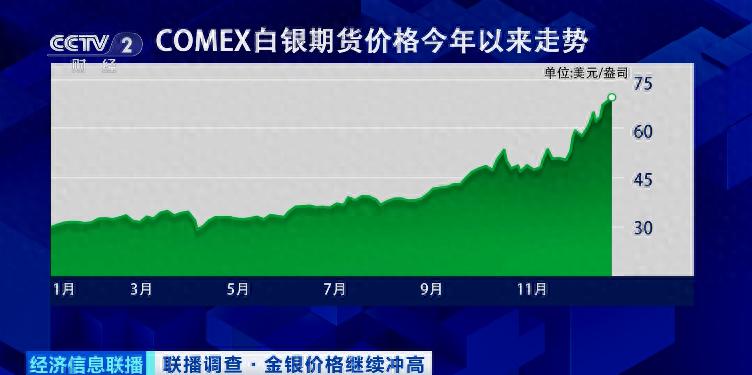
Core Viewpoint - The international gold and silver prices have reached historical highs due to rising market risk aversion, increased gold ETF holdings, and optimistic expectations regarding the Federal Reserve's interest rate cuts [1][3]. Group 1: Gold and Silver Price Trends - On October 24, during the Asian trading session, the spot gold price in London surpassed $4,500 per ounce, setting a new historical record [1]. - The international silver price also maintained its upward trend, with New York silver futures and London spot silver prices both breaking the $72 per ounce mark, achieving historical highs [1]. Group 2: Factors Driving Precious Metal Prices - The recent surge in gold and silver prices is attributed to heightened investor risk aversion, making precious metals one of the best-performing asset classes this year [1]. - COMEX gold futures expiring in February have risen over 70% year-to-date, while March COMEX silver futures have increased approximately 137%, nearly double the rise of gold [3]. - The market's increased betting on potential Federal Reserve interest rate cuts in 2026 has contributed to the attractiveness of physical assets like gold and silver, as lower interest rates compress yields on cash-like assets [3]. Group 3: Central Bank Activities and Market Dynamics - Significant gold purchases by global central banks, particularly in emerging markets, have disrupted traditional supply-demand balances for gold, creating structural demand [5]. - Central banks are buying gold to diversify foreign exchange reserves and reduce reliance on dollar-denominated assets, while also seeking to enhance asset safety amid rising global uncertainties [5]. - The ongoing global monetary policy shift towards easing, alongside heightened concerns about economic conditions and geopolitical tensions, has made gold a preferred choice for investors seeking to hedge risks, significantly boosting global gold demand [5].
给电力AI装上“安全闸”!首个智能体系统性测评体系发布,推动“可信AI”规模化落地
Zhong Guo Neng Yuan Wang· 2025-12-24 09:13
Core Viewpoint - The "Zhixu" power intelligent agent evaluation system has been launched by Jibei Electric Power Research Institute to facilitate the orderly implementation of artificial intelligence in the power industry, enhancing the construction of new power systems and smart grids [1][2]. Group 1: Evaluation System Development - The "Zhixu" evaluation system is designed to support the entire lifecycle of intelligent agents, focusing on measurable, explainable, and reproducible assessment methods to ensure their usability and reliability [1][2]. - The evaluation framework includes 25 assessment dimensions and 62 typical evaluation tasks, emphasizing the overall performance of intelligent agents in real business processes rather than relying solely on model performance [1][2]. Group 2: Standardization and Practical Application - The system aligns with national and international AI standards, contributing to the development of four national standards by 2025, including a proposal for the "Evaluation Indicators and Methods for Power Intelligent Agents" [2]. - The "Zhixu" system has been tested in practical scenarios, such as substation operation and maintenance decision support, and has successfully passed the "Qiusuo 2.0" national AI evaluation benchmark, showcasing its technological advancement and industry leadership [2]. Group 3: Future Directions - The Jibei Electric Power Research Institute aims to deepen the construction of the "Zhixu" evaluation system and promote its application in more power business scenarios, enhancing the safety, reliability, and engineering maturity of power intelligent agents [3].
IEA:2025年全球煤炭消费量创新高
Zhong Guo Neng Yuan Wang· 2025-12-24 07:44
Core Insights - The International Energy Agency (IEA) projects global coal demand to reach a record 8.85 billion tons by 2025, reflecting a growth of 0.5% [1] - Despite the short-term increase, IEA anticipates a decline in coal demand by 2030 due to the transformation of the power sector, with coal accounting for two-thirds of global coal consumption [1] - The report indicates that coal-fired power generation will decrease starting in 2026, driven by a surge in renewable energy capacity and an influx of liquefied natural gas [1] Group 1: Regional Demand Trends - India is expected to see the largest increase in coal consumption by 2030, with an average annual growth of 3%, resulting in a net demand increase of 20 million tons [3] - Southeast Asia is projected to have the fastest growth in coal demand, with an average annual increase of 4% by 2030 [4] - China's coal demand is anticipated to gradually decline, primarily due to rapid development in renewable energy, with peak consumption expected before 2030 [5] Group 2: Production and Trade Dynamics - IEA forecasts a decline in domestic coal production from major producers, including South Africa, by 2030 [6] - South Africa's coal production is expected to remain stable at 234 million tons in 2025, with improvements in rail infrastructure projected to increase exports by 10 million tons over the next three years [7][8] - By 2030, South Africa's coal production is estimated to decrease to 228 million tons due to structural investment declines being partially offset by logistics reforms [9]
告别暴涨暴跌?2026年动力煤价预测出炉:稳在700-900元区间
Zhong Guo Neng Yuan Wang· 2025-12-24 07:11
Group 1 - The core viewpoint of the articles highlights the fluctuations in thermal coal prices during the heating season, with prices for different grades of coal showing a decline, indicating a natural volatility linked to weather and electricity demand [1][2][4] - The coal market is expected to reach a basic balance between supply and demand by 2026, with thermal coal prices projected to stabilize between 700 to 900 yuan per ton, influenced by seasonal demand fluctuations [1][4] - The "anti-involution" measures implemented by the government have successfully curbed excessive competition and brought coal prices back to a reasonable range, ensuring the stable and healthy development of the industry [2][3] Group 2 - Current coal prices are seen as more reflective of actual supply and demand dynamics, following a significant drop that has eliminated previous inflated prices, which is beneficial for the long-term health of the coal industry [4] - The coal production in major regions has shown a trend of negative growth, indicating effective constraints on production capacity, which has alleviated previous supply pressures [4][6] - The profitability of coal enterprises has become increasingly polarized, with large companies maintaining stable profits due to lower costs and integrated operations, while smaller firms face losses [6] Group 3 - The government has developed more mature and refined regulatory measures for coal prices, which have been effective in stabilizing market expectations and preventing drastic price fluctuations [5][6] - Companies are encouraged to adopt proactive planning and compliance with safety regulations, while also exploring differentiation and market niches to enhance competitiveness [6] - The need for improved mechanisms to manage the impact of imported coal on the domestic market and to flexibly adjust coal production capacity based on demand fluctuations is emphasized [6]
案例集中文版正式上线: 融资创新如何激活中国乡村绿色转型?
Zhong Guo Neng Yuan Wang· 2025-12-24 06:33
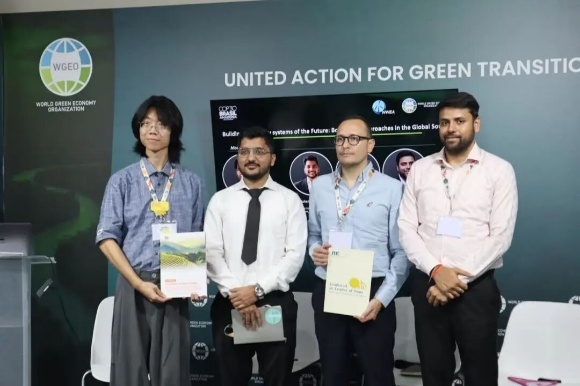
Core Insights - The 30th United Nations Climate Conference (COP30) in Brazil concluded with the release of a briefing titled "Small Money Big Change: Financial Empowerment for Local Energy Transition and Economic Growth," showcasing innovative models emerging in China's rural green transition [1][3]. Group 1: Urgency of Rural Green Transition - The urgency for rural energy transition in China is driven by escalating climate risks and long-term rural revitalization goals, highlighting the potential but lack of resources and mechanisms [4]. - Rural areas possess natural advantages such as solar and wind energy, yet face multiple barriers to investment [4]. Group 2: Challenges in Rural Energy Projects - Growth is slowing as centralized solar and wind energy projects approach capacity limits, shifting focus to distributed energy solutions in rural settings [5]. - Rural renewable energy projects are often small and fragmented, making them unattractive to institutional investors due to low investment amounts and long payback periods [5]. - Unclear revenue distribution among stakeholders leads to some projects becoming burdensome for farmers, resulting in negative returns [6]. Group 3: Objectives of the Case Study Collection - The case study collection aims to address key issues in rural energy transition, including damaged farmer confidence, cautious financial institutions, and the chaotic mix of quality renewable energy firms and ordinary distributors [9]. - It emphasizes the need for effective capital flow into rural areas through a diversified financing system that includes policy, commercial, and social capital [10]. - The collection advocates for innovative governance and operational models to ensure that project benefits remain within rural communities [11]. Group 4: Ecosystem of Rural Green Transition - The case study presents an ecosystem involving policymakers, market players, NGOs, and rural communities, focusing on creating a value network that connects diverse stakeholders [14]. - It highlights that the core of rural renewable energy development lies not in seeking large funds but in designing inclusive financing mechanisms that can create significant impacts with smaller investments [14]. Group 5: Content of the Case Study Collection - The collection includes insights on the impact of climate change on rural areas, core challenges in green low-carbon transition, and the importance of renewable energy for rural revitalization [15][16]. - It constructs a comprehensive financing theory framework for rural energy transition, detailing the logic of collaborative funding and innovative mechanisms like blended finance [17]. - The collection features seven representative innovative practice cases, providing a framework for understanding the current state of rural energy transition in China [19].
小鱼易连以“会议智能体”引领能源行业视讯智能化跃迁
Zhong Guo Neng Yuan Wang· 2025-12-24 03:12
Core Viewpoint - The 15th Energy Enterprise Informationization Conference highlighted the importance of digital transformation in the energy sector, emphasizing the need for efficient, secure, and intelligent communication systems to support collaboration and decision-making in energy enterprises [1] Group 1: Digital Transformation in Energy Sector - The energy industry is undergoing a digital transformation, requiring high levels of security, stability, and integration in communication and collaboration [3] - The conference gathered representatives from national energy authorities, research institutions, and leading energy companies to discuss digital development paths and technological innovations [1] Group 2: Company Solutions and Innovations - Xiaoyu Yilian has developed a "high security, super-converged, fully connected" video conferencing solution that has been implemented in major energy companies such as Sinopec, CNOOC, and the Three Gorges Group [3] - The company’s new generation video solution includes a "super-converged video platform, multi-modal terminals, AI meeting intelligence, and audio-video capability base," aimed at enhancing operational efficiency and intelligent decision-making in the energy sector [1][3] Group 3: AI Integration in Video Conferencing - The transition from "tool-based" to "intelligent" video conferencing is driven by advancements in AI and domestic model development, marking a significant change in collaboration methods and decision-making efficiency [4] - Xiaoyu Yilian's intelligent meeting agent supports the entire meeting process, from pre-meeting preparations to post-meeting documentation, enhancing the overall collaboration experience for energy enterprises [4][7] Group 4: Practical Applications and Recognition - Xiaoyu Yilian has been recognized for its contributions to remote collaboration, cross-national management, and emergency command in the energy sector [8] - The company has successfully implemented unified video capability platforms for companies like Sinopec, enhancing efficient collaboration and resource optimization [9] - Collaborations with CNOOC and the Three Gorges Group have led to innovative applications in emergency command and global communication, supporting high-quality management and business expansion [10][11]
国网遂平县供电公司:多措并举筑牢迎峰度冬物资保障屏障
Zhong Guo Neng Yuan Wang· 2025-12-24 02:20
Core Viewpoint - The State Grid Suiping Power Supply Company is implementing comprehensive measures to ensure material supply and quality control for the winter peak demand, aiming to maintain the stability and safety of the power grid [1][2]. Group 1: Material Preparation - The company is accurately assessing the demand for emergency materials based on historical consumption patterns and current load forecasts, focusing on securing supplies of wires and transformers [1]. - Temporary storage points are being established in key areas to ensure zero shortages at critical supply nodes [1]. Group 2: Quality Control - Quality control is integrated throughout the material supply process, with strict adherence to a "dual-person acceptance and multi-level verification" mechanism to ensure compliance with specifications and quality standards [1]. - Regular inventory checks and maintenance of stored materials are conducted to prevent deterioration and ensure materials remain usable [1]. Group 3: Emergency Response Mechanism - The company has developed a unified command, graded response, and efficient coordination system for emergency material allocation, including the establishment of an emergency command group and specialized plans [1]. - A warehouse management system is utilized for visual control of inventory, demand, and allocation processes to ensure rapid deployment of materials to repair sites when faults occur [1]. Group 4: Communication and Coordination - During the winter peak, the company enforces a 24-hour duty and leadership presence to ensure efficient communication and rapid response to emergencies [2]. - An information daily report mechanism is established to track inventory, allocation, and demand dynamics, enhancing internal communication and collaboration [2]. Group 5: Future Actions - The company will continue to monitor weather and power grid conditions closely, optimizing support measures and enhancing emergency capabilities to ensure reliable winter electricity supply for the community [2].
山东能源唐口煤业:绷紧“安全弦” 把稳“方向舵”
Zhong Guo Neng Yuan Wang· 2025-12-24 02:15
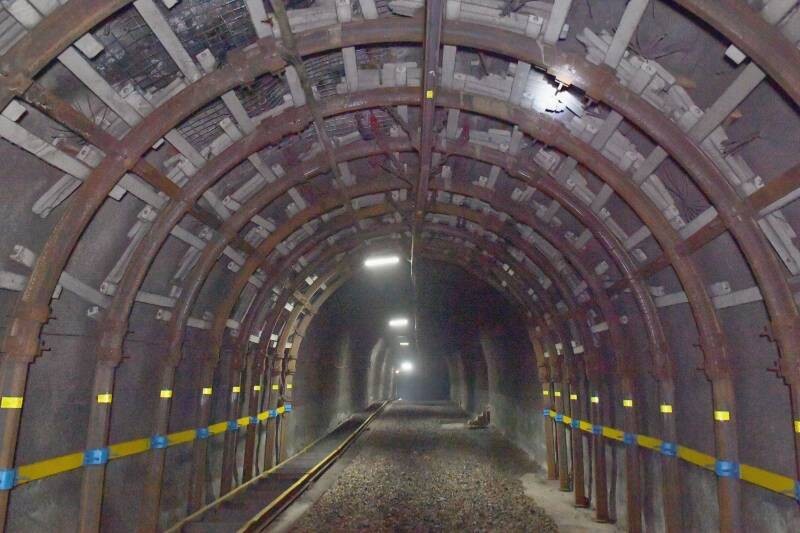
今年以来,山东能源鲁西矿业唐口煤业以"稳"固安全防线、以"准"提管理效能、以"质"增发展效益,深入开展"人人讲安全、全员抓落实"专项行动,全 力以赴打好全年安全生产"攻坚战",为公司高质量发展筑牢坚实根基。 (高标准掘进施工) 该公司紧扣生产核心需求,在采煤工作面,创新推行"区域负责、协同作业、互创条件"高效生产模式,明确各岗位责任边界与协作流程,从源头上规避 平行作业带来的交叉风险,实现生产效率与安全保障"双提升"。在掘进支护环节坚守"质量就是安全"底线,严格执行"一排一锚"施工标准,严禁超长截 割、空顶作业,强化质量标准化动态达标管理,通过规范操作流程、加强过程管控,实现掘进施工一次做对,在提升掘进效率的同时筑牢了现场安全基 础。 "我们还常态化开展煤层瓦斯基础参数测定,持续深化瓦斯区域预抽工程,优化通风系统布局,确保瓦斯浓度实时可控,为井下作业人员撑起安全'保护 伞'。"该公司总工程师王忠密说。 "准"字发力 激活标准化建设"强引擎" "稳"字当头 织密安全生产"防护网" 安全生产是企业发展的"底线工程",唐口煤业始终把"稳"字刻在心头、落在现场,从作业流程、施工标准、风险防控多维度发力,构建全方位、无 ...