Bei Jing Ri Bao Ke Hu Duan

Search documents
广州至湛江高铁正式开通运营,粤西纳入大湾区90分钟生活圈
Bei Jing Ri Bao Ke Hu Duan· 2025-12-22 02:53
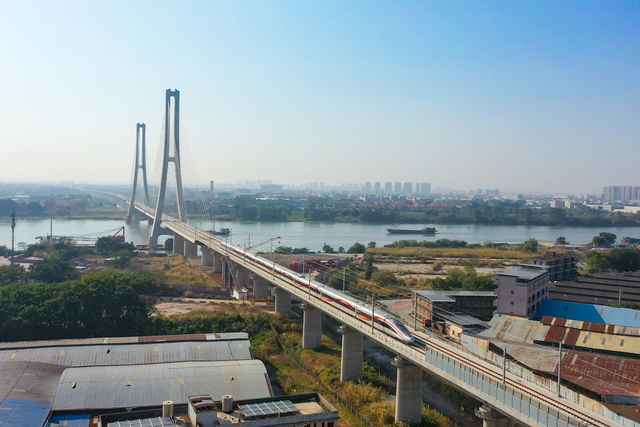
Core Viewpoint - The Guangzhou-Zhanjiang High-Speed Railway (广湛高铁) has officially opened, marking the entry of western Guangdong into the 350 km/h high-speed rail era, significantly improving travel convenience between Guangzhou and Zhanjiang [1][5]. Group 1: Project Overview - The Guangzhou-Zhanjiang High-Speed Railway spans 401 kilometers with a design speed of 350 km/h, connecting major cities including Guangzhou, Foshan, Zhaoqing, Yunfu, Yangjiang, Maoming, and Zhanjiang [1][5]. - It is the most complex, longest, and largest investment railway project in Guangdong Province, with a bridge-tunnel ratio of 76.8% [3]. Group 2: Engineering Challenges - The project faced significant construction challenges due to complex terrain and geological conditions, including key projects like the Zhanjiang Bay underwater tunnel and the Foshan Grand Bridge [3]. - The Zhanjiang Bay underwater tunnel, measuring 9,640 meters, is the longest underwater high-speed rail tunnel in China, utilizing advanced shield tunneling technology [3]. - The construction team implemented an intelligent management system for comprehensive control over progress, safety, and quality, achieving tunnel completion in 33 months with millimeter-level settlement control [3]. Group 3: Environmental Considerations - To minimize noise and vibration from high-speed trains, a 2.5-kilometer circular fully enclosed sound barrier was installed on the Foshan Grand Bridge, creating a "soundproof tunnel" [3]. - This soundproof tunnel is the first of its kind applied to a 350 km/h high-speed rail project in the Guangdong-Hong Kong-Macao Greater Bay Area, providing a new solution for noise reduction in densely populated urban areas [3]. Group 4: Station Design and Cultural Integration - The design of the Yangjiang North Station incorporates elements of the sea, with a focus on aesthetics and wind resistance, creating a unique urban reception area [5]. - Maoming South Station's design reflects local cultural characteristics, integrating themes of the South China Sea and local fishing culture into its architecture [5]. - The project utilized BIM technology for efficient collaboration across disciplines, overcoming challenges in constructing complex architectural shapes [5]. Group 5: Strategic Importance - The Guangzhou-Zhanjiang High-Speed Railway is a crucial part of the national "eight vertical and eight horizontal" high-speed rail network and serves as a key passenger transport corridor along the coast [5]. - The completion of this railway will significantly shorten travel times between western Guangdong and the Guangdong-Hong Kong-Macao Greater Bay Area, enhancing transportation development and improving travel conditions for local residents [5].


光阴的故事丨开办7年早餐全部免费 他们用一碗粥温暖一座城
Bei Jing Ri Bao Ke Hu Duan· 2025-12-22 02:30
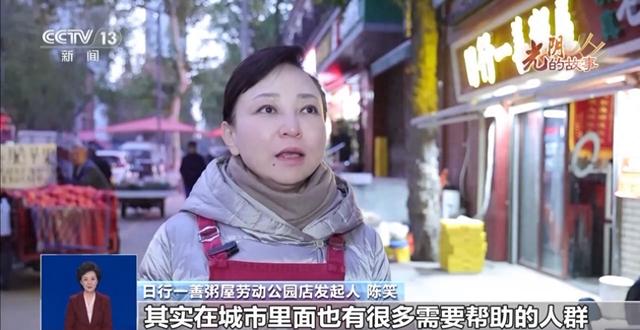
转自:北京日报客户端 在这个寒冬清晨,当城市尚未苏醒,在城市街角的日行一善粥屋已飘出袅袅炊烟。 这家位于陕西西安的粥屋,既普通又特别。说它普通,是因为店里每日经营的不过就是各种粥、馒头、 鸡蛋这类常规的早点;说它特别,是因为粥屋开办7年来,这些早餐全部免费,专门提供给城市环卫工 人、有需要的老人和特殊人群。清香的米粥、松软的馒头、香喷喷的小菜,让每个平凡的清晨都充满暖 意。那为什么要开办这样一家粥屋?这份免费的温暖,又是如何日复一日延续下来的呢?今天我们走进 这家"日行一善粥屋"的故事。 一碗粥的初心 温暖一座城的清晨 日行一善粥屋位于在西安莲湖区新园路,每天清晨6点半准时开餐,风雨无阻。附近的环卫工人们陆续 来到这里,领取一份免费的早餐,行动不便的老人,则由志愿者为他们细心打包,让他们能带回家中享 用。这家粥屋的开办,源于发起人一个朴素的心愿。 日行一善粥屋劳动公园店发起人 陈笑:在城市里也有很多需要帮助的人群,后来我和我几位同学、好 朋友成立了日行一善爱心粥屋,让他们感觉到不仅我为这个城市付出,也有人在为我付出,让他们觉得 很温暖、被关怀的感觉。 日行一善粥屋劳动公园店发起人 陈笑:志愿者特别难招募,而且 ...
轨道交通运营里程将突破900公里
Bei Jing Ri Bao Ke Hu Duan· 2025-12-22 01:09
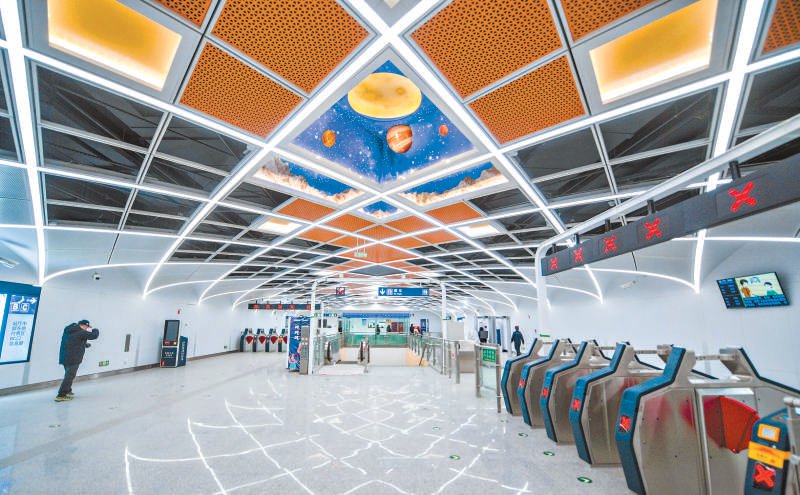
Core Viewpoint - The upcoming opening of three new subway lines in Beijing, including the middle section of Line 17, Line 18, and the southern extension of Line 6, will enhance the city's rail transit network, increasing the total operational mileage to 909 kilometers, marking a significant advancement in the capital's transportation capacity [7]. Group 1: Line Details - The total length of the new lines is approximately 30.1 kilometers, with the middle section of Line 17 spanning 8.2 kilometers and featuring four stations, including East Dajiao Station, which allows transfers to Line 6, and Yong'anli Station, which connects to Line 1 [9]. - Line 18, covering about 19.8 kilometers, serves as a major east-west route for the northern districts, featuring 11 stations, four of which are transfer stations, significantly easing commuting pressure for residents in large residential areas like Tiantongyuan and Huoying [10]. - The southern extension of Line 6 extends approximately 2.1 kilometers to Luyang Station, enhancing connectivity between the urban sub-center and the central city, which is crucial for improving green travel options [10]. Group 2: Design and Aesthetics - The design of the new lines incorporates unique artistic elements, such as the "Phoenix" theme at East Dajiao Station, which blends traditional culture with modern artistic expression, showcasing Beijing's international image [11]. - Line 18 features a "light and shadow tunnel" design theme, emphasizing a minimalist approach that balances economy, functionality, and aesthetics, creating a bright and welcoming atmosphere for passengers [11]. - Luyang Station on Line 6 employs a "bare concrete" design, which not only reduces construction costs but also enhances environmental performance, showcasing a modern aesthetic [12]. Group 3: Construction Innovations - The construction of these lines overcame significant challenges, including complex geological conditions and the integration with existing lines, demonstrating innovative engineering techniques and construction models [13]. - The middle section of Line 17 required intricate design to efficiently integrate multiple lines at East Dajiao Station while minimizing impacts on the surrounding environment [14]. - Line 18 is recognized as a smart construction demonstration line, utilizing advanced technologies such as flexible direct current traction power supply systems, which improve energy efficiency by 5%-10% compared to traditional systems [14]. Group 4: Impact on Urban Development - The opening of these new lines is expected to enhance service quality, operational efficiency, and urban integration, facilitating smoother urban connectivity and stimulating regional development [15]. - The new subway lines will provide safer, more convenient, and environmentally friendly travel options for residents, supporting the high-quality development of the capital and contributing to the creation of a harmonious and livable city [15].
哪些逾期信息适用一次性信用修复政策?央行解答
Bei Jing Ri Bao Ke Hu Duan· 2025-12-22 00:57
转自:北京日报客户端 《中国人民银行关于实施一次性信用修复政策有关安排的通知》政策问答 问:符合哪些条件的逾期信息可以适用一次性信用修复政策,作不予展示处理? 答:一次性信用修复政策主要有四个方面的适用条件,一是适用对象限定于个人在金融信用信息基础数 据库(即中国人民银行征信系统)中展示的信贷逾期信息;二是适用时间区间要求逾期信息产生于2020 年1月1日至2025年12月31日期间;三是适用金额为单笔逾期金额不超过1万元;四是适用前提是个人在 2026年3月31日(含)前足额偿还逾期债务。符合上述条件的逾期信息,将作不予展示处理。 问:个人是否需要主动申请适用一次性信用修复政策? 答:一次性信用修复政策实行"免申即享",个人无需申请和操作,也无需提交证明材料,由中国人民银 行征信系统对符合条件的逾期信息进行自动识别和统一处理。 在此,郑重提醒社会公众,一次性信用修复政策不收取任何费用、不需要第三方代理,任何以该政策名 义索要钱财、索取信息的都是诈骗行为;如果发现相关违法违规线索,可以向中国人民银行及其分支机 构反映,或向当地公安机关报案。 问:一次性信用修复政策实施后,符合条件的逾期信息将会出现哪些展示变化 ...
自觉运用“第二个结合”来推进理论创新
Bei Jing Ri Bao Ke Hu Duan· 2025-12-21 23:26
Core Viewpoint - The concept of "seeking truth from facts" has been innovatively developed and creatively transformed by the Chinese Communist Party, representing a significant integration of Marxism with traditional Chinese culture, termed the "second combination" [1][2][3] Group 1: Theoretical Development - The interpretation of "seeking truth from facts" by the Chinese Communist Party is an innovative development of a key category in Chinese academic and ideological history, originally appearing in the "Book of Han" by historian Ban Gu [1][2] - Mao Zedong's interpretation of "seeking truth from facts" emphasizes understanding objective reality and its inherent connections, marking a significant transformation of this concept [2][3] - The "second combination" aims to provide new interpretations of traditional cultural categories that align with contemporary demands, emphasizing the continuity between Chinese Marxism and traditional academic thought [2][4] Group 2: Practical Application - The principle of "seeking truth from facts" is not only a theoretical concept but also a practical methodology that can be directly applied in work, study, and life [5] - Mao Zedong and Xi Jinping both stress the importance of understanding the essence of things through practical engagement, highlighting the need for a scientific attitude in Marxism [6][7] - The goal of the "second combination" in the new era is to make Marxism more accessible and relatable to the public, breaking the notion that it is merely a foreign doctrine [4][6] Group 3: Cultural Integration - The interpretation of "seeking truth from facts" has made Marxism more understandable and has clarified the direction of new cultural pursuits for the Chinese nation [4][6] - The integration of traditional Chinese culture with Marxism aims to create a comprehensive understanding that resonates with the populace, emphasizing the unity of truth, goodness, and beauty [7][8] - The ongoing development of the "second combination" requires a commitment to theoretical innovation and practical application, avoiding rigid interpretations that hinder progress [8]
向油腻饮食说不
Bei Jing Ri Bao Ke Hu Duan· 2025-12-21 22:45
Core Viewpoint - The article highlights the growing concern over excessive oil consumption in China, which is linked to various health issues, including obesity and chronic diseases. The current average daily cooking oil intake is significantly above recommended levels, prompting a nationwide "reduce oil" initiative to address this public health challenge [1][3][17]. Group 1: Current Consumption and Health Risks - The average daily cooking oil intake in China is 43.2 grams, exceeding the recommended 25-30 grams by approximately one-third [3][4]. - The total daily fat intake per person is 79.1 grams, which is also above the recommended range of 50-70 grams [3][4]. - Excessive oil consumption is linked to serious health risks, including hypertension, diabetes, and various cancers, with obesity being a major public health issue in China [6][7][12]. Group 2: Dietary Trends and Cultural Influences - Traditional cooking practices favor high oil usage, with many consumers believing that more oil enhances flavor, leading to a cultural preference for "heavy oil" dishes [9][10]. - The rise of fast-paced lifestyles and the convenience of high-oil foods have contributed to the normalization of excessive oil consumption [8][14]. - The food delivery industry has further reinforced these trends, with many popular dishes being high in oil, salt, and sugar [14][19]. Group 3: Government Initiatives and Public Awareness - The Chinese government has initiated campaigns to promote reduced oil consumption, including guidelines that recommend daily oil intake not exceeding 25-30 grams [17][18]. - There is a growing public awareness regarding the health implications of high oil consumption, with more individuals adopting healthier cooking practices and dietary habits [18][19]. - The food and nutrition sector is responding to these changes, with restaurants and food services beginning to offer lower-oil options and smaller portion sizes [19][22]. Group 4: Future Directions and Recommendations - Experts suggest a balanced approach to oil consumption, emphasizing the importance of choosing healthier oils rich in unsaturated fats while reducing overall intake [20][21]. - There is a call for diversification in oil sources, promoting the cultivation of high-quality oilseed crops to meet the demand for healthier oils [22]. - The shift towards healthier eating habits is seen as a necessary evolution in Chinese culinary practices, aiming to balance taste and health [22].
挥别2025,北京正稳步迈进“五万亿之城”!
Bei Jing Ri Bao Ke Hu Duan· 2025-12-21 22:38
Economic Overview - Beijing's economy is steadily progressing towards becoming a "five trillion yuan city," with stable operations and positive growth trends [2] - The city's industrial structure is continuously upgrading towards high-end sectors, with notable growth in new energy vehicles, integrated circuits, 5G smartphones, and lithium-ion batteries [4][6] Industrial Growth - From January to November, the total output value of industrial enterprises above designated size exceeded 2.5 trillion yuan, with a year-on-year growth of 5.2% [7] - The production of complete vehicles reached 1.335 million units, a year-on-year increase of 27.6%, with new energy vehicles accounting for 624,000 units, a growth of 150% [9] - Key products such as integrated circuits and 5G smartphones saw production increases of 17.4% and 34.3% respectively, while wind turbine generators and lithium-ion batteries experienced growth rates of 37% and 100% [9] Technological Innovation - Beijing is witnessing a surge in "global firsts" in technology, including the world's first diabetes peripheral neuropathy patch and a general embodied intelligence platform for humanoid robots [6] - The city has a total of 201 AI model registrations, accounting for 30% of the national total, with significant daily usage across various institutions [9] Cultural and Tourism Integration - The integration of culture, commerce, and tourism is driving significant consumer engagement, with events like the WTT China Grand Slam and various concerts attracting millions [10][12] - The service consumption growth rate related to cultural and tourism integration reached 4.8% in the first eleven months, reflecting a recovery in consumer confidence [16] Infrastructure and Urban Development - Significant investments in infrastructure are underway, including the construction of smart logistics centers and urban transportation improvements, with fixed asset investment growth at 5.8% [19][24] - The city is enhancing its public services, including healthcare and education, with new facilities and schools being established to meet the needs of residents [21][25]



轨交运营里程将突破900公里
Bei Jing Ri Bao Ke Hu Duan· 2025-12-21 22:25
Core Viewpoint - The new subway lines in Beijing, including the 17th, 18th, and the southern extension of the 6th line, are set to enhance the city's transportation network, improve service quality, and support urban development, with a total length of approximately 30.1 kilometers to be opened by the end of the year [7][12]. Group 1: Line Details - The 17th line's middle section, spanning about 8.2 kilometers, connects key areas such as Future Science City and CBD, significantly reducing travel time from the southern end to the northern end to 66 minutes [7][12]. - The 18th line, approximately 19.8 kilometers long, serves as a major east-west route for northern districts, featuring 11 stations, including four transfer stations, and aims to alleviate commuting pressure in large residential areas [8][12]. - The southern extension of the 6th line extends about 2.1 kilometers to Luoyang Station, enhancing connectivity between the urban sub-center and the main city [8][12]. Group 2: Design and Construction Features - The 18th line features a unique design theme of "light and shadow tunnel," focusing on an open and clear transfer space with an 18-meter span at the largest column-free station in Beijing [10][11]. - The 17th line incorporates regional cultural elements in its design, with art pieces like "Phoenix Sounding the East" by Han Meilin at Dongdachang Station, reflecting Beijing's international image [9][10]. - The 6th line's Luoyang Station utilizes a "bare concrete" design, which saves materials and enhances environmental performance while maintaining aesthetic appeal [10][11]. Group 3: Technological Innovations - The 18th line is recognized as a smart construction demonstration line, employing advanced monitoring systems and flexible direct current traction supply technology, which can save 5%-10% energy compared to traditional systems [11][12]. - The construction of these lines faced challenges such as complex geological conditions and the need for integration with existing infrastructure, leading to innovative engineering solutions [11][12]. - The new lines are expected to improve the overall efficiency and safety of urban transportation, contributing to the high-quality development of the capital [12].
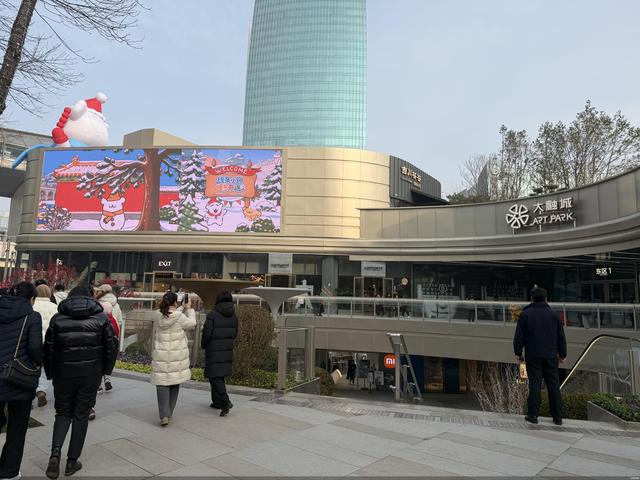
北京多家商业项目冲刺开业:发力年末消费
Bei Jing Ri Bao Ke Hu Duan· 2025-12-21 16:36
Core Insights - Beijing's commercial market is experiencing a wave of new openings by the end of 2025, with projects like Zhongguancun Daluocheng East District officially opening, enhancing the supply of brand goods in the area [1][3] - The new projects aim to capitalize on the upcoming peak consumption seasons during the New Year and Spring Festival, with multiple commercial projects launching to attract consumer attention [3][4] - The openings reflect a response to the trend of consumption upgrades, aiming to activate potential demand with higher quality offerings [5] Group 1: Project Openings - Zhongguancun Daluocheng East District has opened with over 60 first stores, including COACH concept store and gaga flagship store, enhancing the area's commercial offerings [3][6] - Other projects like Lianhua Hui and Wanli in Tongzhou District are set to open by the end of the year, with Wanli already in trial operation and focusing on cultural, sports, and family entertainment [3][4] - Lianhua Hui is transforming from a hypermarket to a "neighborhood lifestyle space," introducing tech retail brands like Huawei and Xiaomi, along with various dining options [3][7] Group 2: Market Positioning - The new projects have distinct positioning, with Zhongguancun Daluocheng focusing on high-end consumption and filling gaps in brand offerings in Haidian District [6][7] - Wanli aims to leverage its proximity to Universal Beijing Resort to attract tourists and convert them into overnight and experiential consumers [6][7] - Lianhua Hui's transformation caters to community needs, maintaining its supermarket while expanding dining and entertainment options [7] Group 3: Consumer Engagement Strategies - New commercial projects are encouraged to create engaging experiences through events and unique offerings to maintain consumer interest and ensure sustainable operations [8][9] - Operators should adapt tenant mixes based on market changes and consumer feedback, continuously innovating marketing activities to attract diverse customer groups [8][9] - The integration of online and offline shopping experiences is crucial, with a focus on creating themed spaces for younger consumers and utilizing data analytics for targeted marketing [9]
银行理财年末蓄势待发
Bei Jing Ri Bao Ke Hu Duan· 2025-12-21 16:34
Core Viewpoint - The year-end bonus has become a focal point for banks' marketing strategies, with various banks launching specialized financial products to attract customers looking to invest their bonuses [1][6]. Group 1: Bank Marketing Strategies - Multiple banks have initiated year-end bonus exclusive financial activities through online channels, offering a range of products including wealth management, funds, and precious metals [1][3]. - Postal Savings Bank has launched a campaign featuring low-risk financial products with attractive yields, such as "天天盈" with a maximum annualized yield of 1.52% and "优盛·鸿锦" with a yield of 4.76% [3]. - Traffic Bank's promotional activities cover a wide array of products, emphasizing low-risk financial products with annualized yields above 4.9% for certain offerings [4]. Group 2: Product Characteristics - The core focus of the promoted financial products is on low to medium risk, aligning with the general market trend towards stable investment options [6][7]. - The financial products are primarily invested in fixed-income assets such as government bonds, financial bonds, and corporate bonds, with some higher-risk products including stocks and funds for enhanced returns [6][7]. - Banks are encouraging a tiered asset allocation strategy, suggesting a mix of conservative, stable, and aggressive investments based on individual risk tolerance [5][6]. Group 3: Investor Guidance - Investors are advised to assess their risk tolerance and investment goals before selecting financial products, with recommendations for low-risk options if the bonus is needed for short-term expenses [7]. - The importance of understanding the performance benchmarks of financial products is emphasized, as actual returns may vary due to market conditions [7].