
Jin Rong Shi Bao

Search documents
银行密集营销年底购车贷款方案
Jin Rong Shi Bao· 2025-12-01 02:03
Core Insights - Banks are intensifying marketing efforts for year-end car loan schemes, with "zero interest" offers being particularly attractive to consumers [1][2] - The automotive consumer finance sector is transitioning from a "high-interest" customer acquisition model to a focus on service and customer experience [1][4] - Regulatory measures have curtailed "high-interest high-return" practices, prompting banks to adopt lower interest rates and flexible guarantees to capture market share [2][4] Group 1: Bank Initiatives - Postal Savings Bank is offering a financial subsidy of up to 4,500 yuan for its car loans, with annual interest rates ranging from 0% to 6% [1] - Ping An Bank has introduced a year-end car purchase campaign with a minimum "0% interest" option, allowing loans from 10,000 yuan to a maximum of 1 million yuan, with interest rates post-subsidy between 0% and 10% [2] - Several banks, including Ping An and China Merchants Bank, are participating in car purchase financing support, indicating a collaborative approach to enhance consumer financing options [3] Group 2: Market Trends - The automotive consumer finance loan balance at Ping An Bank reached 300.3 billion yuan by the end of September, reflecting a 2.2% increase year-on-year, with new loans for personal electric vehicles growing by 23.1% [3] - The shift in retail banking is characterized by high competition, high costs, and significant differentiation, necessitating a focus on scenario-based, intelligent, and specialized capabilities for future growth [3] - Banks are increasingly embedding financial services into the entire car purchasing process, aiming to create a comprehensive ecosystem that enhances customer value throughout the vehicle lifecycle [4] Group 3: Consumer Considerations - Consumers are advised to evaluate various car loan options, including bank loans, credit card installments, and automotive finance company loans [5] - Key factors for consumers when selecting a car loan include understanding the true cost beyond surface interest rates, scrutinizing contract terms for hidden fees, and assessing repayment capacity to avoid financial strain [6] - Recent adjustments in early repayment rules by banks, such as the new penalty structure from Guangfa Bank, reflect a trend towards more flexible repayment options to enhance customer satisfaction and loyalty [7]


客户尽职调查新规兼顾安全与便利
Jin Rong Shi Bao· 2025-12-01 02:03
Core Viewpoint - The newly released "Management Measures for Customer Due Diligence and Customer Identity Information and Transaction Record Retention" aims to effectively implement the revised Anti-Money Laundering Law by the end of 2024, emphasizing a balance between anti-money laundering measures and optimizing financial services [1][2][4]. Group 1: Purpose and Principles - The purpose of the "Management Measures" is to enhance customer due diligence while adhering to the "risk-based" principle, ensuring a balance between risk management and service optimization [1][5]. - The "risk-based" approach requires financial institutions to conduct thorough risk assessments and tailor their measures accordingly, moving beyond mere compliance with rules [2][3]. Group 2: Implementation and Compliance - The revised measures are designed to align with the new Anti-Money Laundering Law, which emphasizes the need for a detailed legal framework for customer due diligence to guide practical implementation [2][4]. - Financial institutions are encouraged to continuously conduct customer due diligence and transaction monitoring to effectively manage risks [4][5]. Group 3: Balancing Risk Management and Service Optimization - The revised "Management Measures" aim to balance anti-money laundering efforts with the need for efficient financial services, avoiding unnecessary burdens on compliant businesses and the public [5][9]. - Adjustments have been made to ensure that due diligence measures correspond to actual risk levels, allowing for simplified procedures in low-risk situations while enhancing scrutiny in high-risk scenarios [6][7]. Group 4: Real-World Applications and Challenges - Real-life examples illustrate the challenges of balancing security and convenience in anti-money laundering efforts, highlighting the need for effective risk assessment and customer verification [7][8]. - The revised measures seek to address the dual demands of the public for both efficient service and financial security, aiming to find a balance that prevents illegal activities while facilitating legitimate transactions [9].
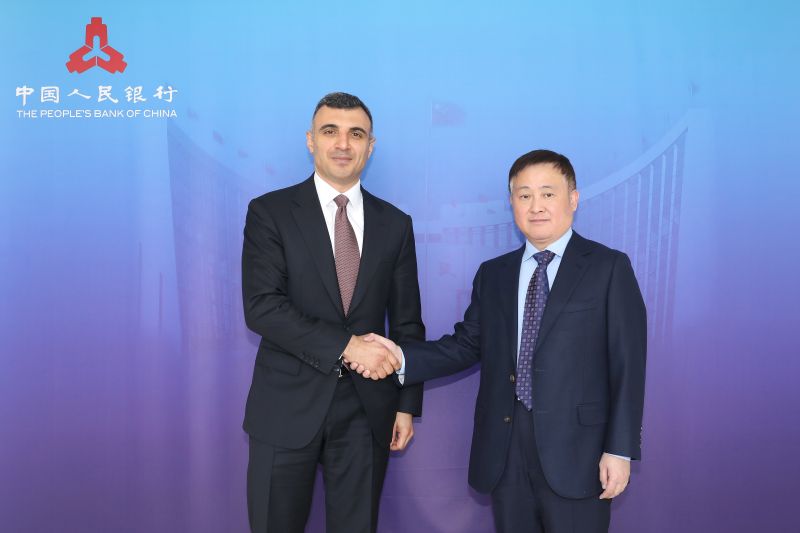
潘功胜会见阿塞拜疆央行行长塔拉赫·卡兹莫夫
Jin Rong Shi Bao· 2025-12-01 02:00
本报讯记者马梅若报道11月28日,中国人民银行行长潘功胜会见来华访问的阿塞拜疆央行行长塔拉赫.卡兹莫夫。 双方就两国经济金融形势、金融合作等共同关心的经济金融议题交换了意见。 ...

保险业:理赔捐赠同步 服务保障并行
Jin Rong Shi Bao· 2025-12-01 01:32
Core Viewpoint - The insurance industry in Hong Kong has rapidly mobilized to support rescue and recovery efforts following a severe fire incident in Tai Po, demonstrating its role as an economic stabilizer and social safety net through emergency response measures and significant financial contributions [1][4]. Group 1: Emergency Response Actions - Multiple insurance companies, including China Life, China Pacific, and Taikang Insurance, activated emergency response plans immediately after the fire, establishing management teams and simplifying claims processes to ensure rapid support for affected clients [2][3]. - China Life's overseas branch initiated emergency claims services, proactively contacting policyholders to ensure timely assistance [2]. - China Taiping Insurance quickly identified affected clients and established a claims hotline, demonstrating a commitment to rapid response and support [3]. Group 2: Financial Contributions - Insurance institutions have collectively donated over 60 million HKD to aid in rescue efforts, with AIA Hong Kong contributing 20 million HKD for emergency assistance and community recovery [4][6]. - China Ping An announced a donation of 10 million HKD for emergency relief and recovery efforts, emphasizing its commitment to supporting affected communities [4][5]. - Taikang Insurance pledged 10 million RMB for urgent relief and community rebuilding, showcasing the industry's solidarity with the affected population [6]. Group 3: Reinsurance Support - Reinsurance companies, such as China Re, played a crucial role in stabilizing market confidence by providing essential support for local insurers in managing disaster-related claims [7][8]. - China Re activated its emergency response mechanism to assist direct insurers in assessing losses and expediting claims processes, reinforcing the insurance system's resilience [7]. - Qianhai Reinsurance established a dedicated task force to support claims services and ensure timely compensation for affected areas, enhancing the overall response capability of the insurance sector [8].





11月份我国制造业PMI小幅回升
Jin Rong Shi Bao· 2025-12-01 01:29
Core Insights - The manufacturing Purchasing Managers' Index (PMI) in China for November is reported at 49.2%, indicating a slight improvement from the previous month [1] - The overall economic sentiment in China remains stable, with improvements in both production and demand in the manufacturing sector [1] - Small enterprises have shown a significant recovery in PMI, while high-tech manufacturing continues to expand [2] Manufacturing Sector - The production index and new orders index for November are 50.0% and 49.2%, respectively, reflecting increases of 0.3 and 0.4 percentage points from the previous month [1] - New export orders index rose by 1.7 percentage points to 47.6%, marking the second highest point since April of this year, indicating strong resilience in exports [1] - The manufacturing production and operational expectations index increased by 0.3 percentage points to 53.1%, suggesting enhanced confidence among manufacturers [2] Enterprise Size Analysis - Large enterprises' PMI stands at 49.3%, a decrease of 0.6 percentage points from last month, while medium and small enterprises' PMIs are 48.9% and 49.1%, showing increases of 0.2 and 2.0 percentage points, respectively [2] - The recovery in PMI is primarily driven by medium and small enterprises, with small enterprises reaching a six-month high [2] Industry Performance - High-tech manufacturing PMI is at 50.1%, remaining above the critical point for ten consecutive months, indicating sustained growth [2] - Equipment manufacturing and consumer goods industries have PMIs of 49.8% and 49.4%, both showing declines from the previous month [2] - High-energy-consuming industries' PMI increased by 1.1 percentage points to 48.4%, indicating a low-level recovery [2] Price Trends - The purchasing price index and factory price index for November are 53.6% and 48.2%, respectively, both showing increases from the previous month [3] - The procurement willingness of enterprises improved, with the procurement volume index rising to 49.5% [3] - The construction industry shows a steady recovery, with the business activity index at 49.6%, a slight increase from last month [3] Service Sector - The service sector's business activity index fell to 49.5%, down 0.7 percentage points from the previous month, indicating a return below the critical line [4] - The new orders index for the service sector dropped to 45.6%, reflecting insufficient recovery in market demand [4] - Despite short-term demand disruptions, the service sector's confidence remains supported, with expectations for recovery as policies are implemented [4] Future Outlook - Experts anticipate that the manufacturing PMI will stabilize and potentially improve in December, driven by year-end demand [5] - The overall economic sentiment will largely depend on the effectiveness and timing of growth-stabilizing policies [5]

推优惠促消费:银行密集营销年底购车贷款方案
Jin Rong Shi Bao· 2025-12-01 01:20
Core Insights - Banks are intensifying marketing efforts for year-end car loan schemes, with "zero interest" offers being particularly attractive to consumers [1][2] - The automotive consumer finance sector is shifting from a "high interest, high return" model to a focus on service and customer experience, driven by regulatory changes [1][4] Banking Actions - Major banks like Postal Savings Bank and Ping An Bank are launching various promotional car loan offers, including financial subsidies and flexible guarantees [1][3] - Postal Savings Bank is offering up to 4,500 yuan in financial subsidies for specific new models, with annual interest rates ranging from 0% to 6% [1] - Ping An Bank has introduced a year-end car loan with a minimum interest rate of "0%," allowing loans from 10,000 yuan to 1 million yuan [1] Market Dynamics - The shift towards lower interest rates and higher subsidies aims to stimulate consumer demand while enhancing competitive differentiation through flexible guarantees [2][4] - As traditional credit growth slows, banks are focusing on automotive consumer finance as a key growth area, with Ping An Bank's automotive loan balance reaching 300.3 billion yuan, a 2.2% increase year-on-year [3] Consumer Considerations - Consumers are advised to carefully evaluate car loan options, considering factors such as true costs, contract terms, and cash flow [6][7] - The recent adjustments in early repayment rules by some banks aim to balance risk and customer experience, potentially leading to more flexible repayment options in the future [7]
6月末我国对外证券投资资产16942亿美元
Jin Rong Shi Bao· 2025-12-01 01:09
本报讯 记者马玲报道 日前,国家外汇管理局发布了2025年6月末我国对外证券投资资产分国家/地 区及分居民持有者部门统计数据。统计数据显示,2025年6月末,我国对外证券投资资产(不含储备资 产)16942亿美元。其中,股权类投资10763亿美元,债券类投资6179亿美元。资产分布在前五位的国 家/地区是中国香港、美国、开曼群岛、英属维尔京群岛和英国,投资金额分别为8161亿美元、3307亿 美元、1252亿美元、672亿美元和392亿美元。2025年6月末,我国持有对外证券资产的部门主要是非银 行金融机构、银行和非金融部门,投资金额分别为9584亿美元、4728亿美元和2629亿美元,占我国对外 证券投资总额的57%、28%和16%。 责任编辑:袁浩 ...
10月份我国国际收支货物和服务贸易进出口规模42858亿元
Jin Rong Shi Bao· 2025-12-01 01:09
Core Insights - In October 2025, China's international balance of payments for goods and services trade reached a total scale of 42,858 billion yuan [1] - The goods trade saw exports of 21,630 billion yuan and imports of 15,217 billion yuan, resulting in a surplus of 6,413 billion yuan [1] - The services trade recorded exports of 2,607 billion yuan and imports of 3,404 billion yuan, leading to a deficit of 797 billion yuan [1] Goods Trade - Exports amounted to 21,630 billion yuan, while imports were 15,217 billion yuan, resulting in a surplus of 6,413 billion yuan [1] - In USD terms, exports were valued at 3,416 million USD and imports at 2,625 million USD, yielding a surplus of 792 million USD [1] Services Trade - The main components of services trade included travel services with a total scale of 1,751 billion yuan, transportation services at 1,705 billion yuan, other commercial services at 992 billion yuan, and telecommunications, computer, and information services at 658 billion yuan [1] - The services trade recorded a deficit of 797 billion yuan, with imports exceeding exports [1]
中国人民银行发布月度金融市场运行情况 10月份债券市场共发行各类债券63574.6亿元
Jin Rong Shi Bao· 2025-12-01 01:09
Bond Market - In October, the bond market issued a total of 63,574.6 billion yuan in various bonds, including 11,695.5 billion yuan in government bonds, 5,604.7 billion yuan in local government bonds, 8,010.8 billion yuan in financial bonds, 11,836.2 billion yuan in corporate credit bonds, 343.4 billion yuan in credit asset-backed securities, and 25,649.0 billion yuan in interbank certificates of deposit [1] - As of the end of October, the bond market's custody balance reached 194.6 trillion yuan, with 171.7 trillion yuan in the interbank market and 22.9 trillion yuan in the exchange market [1] - The custody balance for different bond types includes 39.4 trillion yuan in government bonds, 53.7 trillion yuan in local government bonds, 44.2 trillion yuan in financial bonds, 34.4 trillion yuan in corporate credit bonds, 1.0 trillion yuan in credit asset-backed securities, and 20.7 trillion yuan in interbank certificates of deposit [1] Trading Activity - In October, the cash bond trading volume reached 26.6 trillion yuan, with an average daily trading volume of 1.5 trillion yuan, reflecting a year-on-year increase of 10.2% and a month-on-month increase of 3.9% [2] - The average transaction size was 4,177.69 million yuan, with transactions between 5 million and 50 million yuan accounting for 48.06% of the total trading amount [2] - Foreign institutions held a custody balance of 3.8 trillion yuan in the Chinese bond market, representing 1.9% of the total custody balance, with 2.0 trillion yuan in government bonds [2] Money Market - In October, the interbank lending market recorded a transaction volume of 6.8 trillion yuan, a year-on-year decrease of 19.0% and a month-on-month decrease of 26.7% [3] - The weighted average interest rate for interbank lending was 1.39%, down 6 basis points month-on-month [3] - The commercial bill acceptance amount was 3.9 trillion yuan, with small and micro enterprises accounting for 93.4% of the total bill issuers [3] Stock Market - By the end of October, the Shanghai Composite Index closed at 3,954.8 points, up 72.0 points or 1.9% month-on-month, while the Shenzhen Component Index closed at 13,378.2 points, down 148.3 points or 1.1% [4] - The average daily trading volume in the Shanghai market was 961.58 billion yuan, down 6.8% month-on-month, while the Shenzhen market's average daily trading volume was 1,182.93 billion yuan, down 13.1% [4] - The interbank bond market had 3,987 institutional members, all of which were financial institutions, with the top 50 investors holding 53.2% of corporate credit bonds [4]
10月份中国外汇市场总计成交21.97万亿元
Jin Rong Shi Bao· 2025-12-01 01:09
2025年1至10月份,中国外汇市场累计成交252.07万亿元人民币(等值35.21万亿美元)。 责任编辑:袁浩 本报讯 记者马玲报道 国家外汇管理局11月28日发布的统计数据显示,2025年10月,中国外汇市场 (不含外币对市场,下同)总计成交21.97万亿元人民币(等值3.10万亿美元)。其中,银行对客户市场 成交3.57万亿元人民币(等值0.50万亿美元),银行间市场成交18.40万亿元人民币(等值2.59万亿美 元);即期市场累计成交8.26万亿元人民币(等值1.16万亿美元),衍生品市场累计成交13.71万亿元人 民币(等值1.93万亿美元)。 ...