Qian Zhan Wang

Search documents
重磅!2025年中国及31省市游戏行业政策汇总及解读(全) “出海增长”是主旋律
Qian Zhan Wang· 2025-09-26 06:07
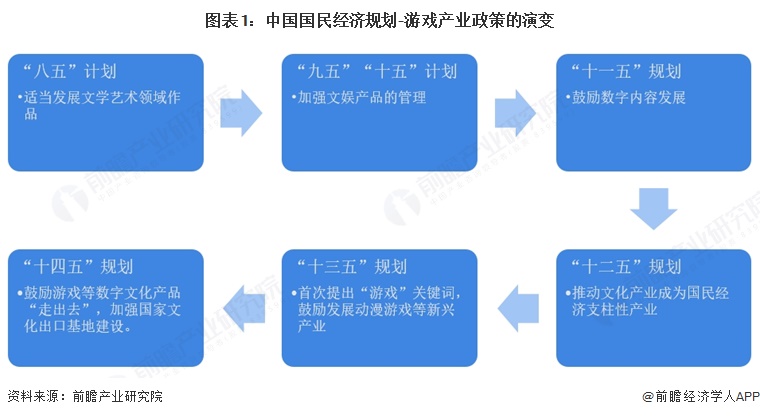
Core Viewpoint - The article discusses the evolution of China's gaming industry policies, highlighting the government's support and regulatory measures aimed at fostering growth and addressing challenges within the sector [2][3][4]. Policy Evolution - The gaming industry in China has transitioned from "cultural market management" to "digital content industry cultivation" and finally to "cultural industry pillarization and digital strategy" as outlined in national economic plans from the "Eighth Five-Year Plan" to the "Fourteenth Five-Year Plan" [2][3][4]. - The "Eleventh Five-Year Plan" (2006-2010) encouraged the development of digital content industries, including gaming, and emphasized cultural innovation and quality improvement [3]. - The "Twelfth Five-Year Plan" (2011-2015) aimed to make the cultural industry a pillar of the national economy, enhancing its overall strength and competitiveness [3]. - The "Thirteenth Five-Year Plan" (2016-2020) introduced the term "gaming" and focused on accelerating the development of emerging industries such as online audio-visual, mobile multimedia, and digital publishing [3]. - The "Fourteenth Five-Year Plan" (2021-2025) emphasizes expanding the supply of quality cultural products and implementing a digital strategy for the cultural industry [4]. National Policy Summary - Since 2000, various government bodies have issued policies to support and regulate the gaming industry, covering aspects such as technological development, industry standards, and minor user regulations [7][8]. - Key policies include the "Network Game Management Measures" aimed at ensuring the healthy development of the gaming industry and the "Technical Requirements for Minor User Monitoring Systems" which impose restrictions on gaming time and spending for minors [9][10]. Provincial Policies - Coastal provinces like Guangdong, Beijing, and Zhejiang have introduced supportive policies for the gaming industry, focusing on high-quality development, technological innovation, and overseas expansion [23][24]. - Specific measures include optimizing game approval processes, encouraging the development of 3A games, and supporting collaborations with historical IPs [24][25]. Market Outlook - As of mid-2025, China's gaming industry is projected to have an overseas market size of $9.501 billion, reflecting a year-on-year growth of 11.07% [20]. - The government aims to enhance the global competitiveness of the gaming industry by promoting the entire value chain from IP creation to overseas operations [20].



前瞻全球产业早报:阿里巴巴宣布与英伟达开展合作
Qian Zhan Wang· 2025-09-26 01:52
人工智能攻关"揭榜挂帅" 加速AI+制造专项行动 从工业和信息化部获悉,我国将启动新一轮人工智能赋能新型工业化"揭榜挂帅"行动。新一轮人工智能赋能 新型工业化"揭榜挂帅"希望通过机制创新,在新型工业化重点行业遴选技术难度大、应用前景广、推广价值 高的关键场景,开展联合创新、协同攻关,打造一批可复制、可推广的人工智能赋能新型工业化新标杆。通 过突破关键核心技术,加强通用大模型和行业大模型的研发布局,加快建设工业领域高质量数据集,促进人 工智能在工业领域深度融合。工业和信息化部相关负责人表示,将实施人工智能+制造专项行动,发布实施 制造业企业人工智能应用指南,常态化开展人工智能赋能新型工业化深度行活动。 阿里巴巴宣布与英伟达开展合作 在2025阿里云栖大会上,阿里巴巴正式宣布与英伟达开展Physical AI合作。合作覆盖了Physical AI的实践的 各个方面,包括数据的合成处理,模型的训练,环境仿真强化学习以及模型验证测试等。 湖北:到2027年全省算力总规模达到25EFLOPS 9月24日,在杭州云栖大会上,原力无限发布了首款人形机器人——AstroDroid AD-01。据介绍,AD-01身高 170c ...


【深原创】-政策汇总-重磅!2025年中国及31省市光电芯片行业政策汇总及解读(全)
Qian Zhan Wang· 2025-09-25 08:01
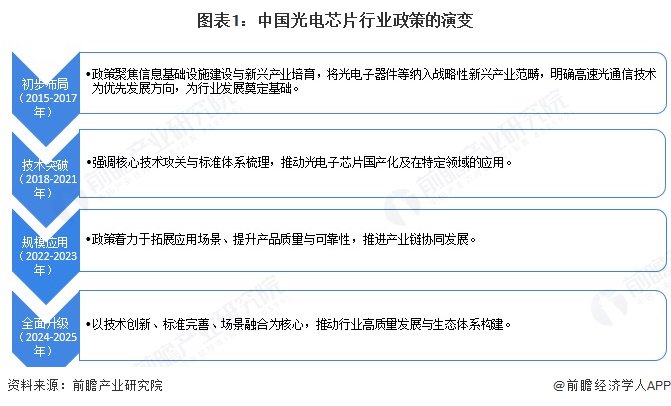
Core Viewpoint - The article discusses the development stages and policies of China's optoelectronic chip industry, highlighting the transition from initial layout to large-scale application and quality improvement, with future goals set for comprehensive upgrades and ecosystem construction by 2025 [1][2]. Policy Development Stages - The optoelectronic chip industry in China has undergone four stages: 1. Initial layout (2015-2017) focusing on infrastructure and emerging industry cultivation 2. Technological breakthroughs and application exploration (2018-2021) emphasizing core technology and localization 3. Large-scale application and quality enhancement (2022-2023) aimed at expanding scenarios and improving quality 4. Comprehensive upgrade and ecosystem construction (2024-2025) centered on technological innovation and standard improvement [1]. National Policy Summary - The optoelectronic chip is crucial for optical signal conversion, offering advantages such as small size, low power consumption, and high integration, which enhance transmission efficiency in optical communication systems [2]. - Since 2016, multiple policies have been issued by the State Council and the Ministry of Industry and Information Technology to support the development of the optoelectronic chip industry [2]. Key Policies and Plans - A summary of key policies and plans until 2025 includes: - Guidelines for updating and transforming production and testing equipment in electronic components [4]. - Implementation of the future industry innovation development plan to address foundational component shortages [4]. - Standardization initiatives for electronic information manufacturing and high-end chip standards [4][8]. - Plans to enhance the reliability of electronic components and promote the development of high-performance power semiconductors [5][6]. Impact of National Policies - National policies influence the optoelectronic chip industry through: - Encouragement of common key technology and frontier technology research [11]. - Implementation of industrial foundation reconstruction projects to strengthen supply chain resilience [11]. - Development of standard systems and expansion of application scenarios in various fields [11][13]. Provincial Policies Overview - Various provinces have introduced policies to support the optoelectronic chip industry, focusing on: - Technological breakthroughs in silicon photonic chips and high-speed optical communication chips [14][20]. - Financial subsidies and the establishment of innovation platforms, such as Guangdong's plan to create over ten innovation platforms [14]. - Collaborative development of industrial clusters and expansion into applications in 5G and quantum technology [20][18].



【投资视角】启示2025:中国潮玩盲盒行业投融资及兼并重组分析(附投融资汇总和兼并重组等)
Qian Zhan Wang· 2025-09-25 06:12
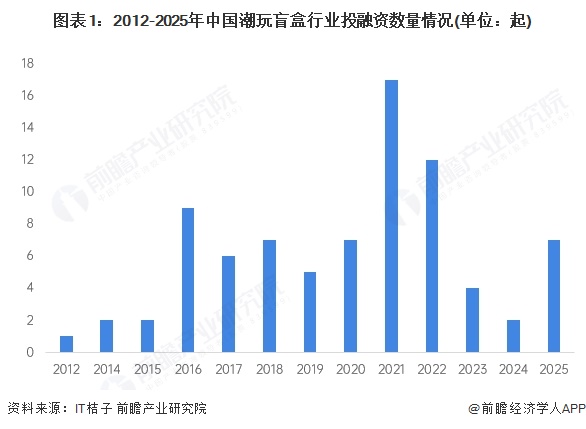
Core Insights - The Chinese潮玩盲盒 industry has experienced a decline in financing activity in recent years, with a peak of 17 financing events in 2021, dropping to only 2 events in 2024, but showing a slight recovery with 7 events from January to August 2025 [1][2] - The financing amounts have also fluctuated, peaking at 1.36 billion yuan in 2021, but dropping to 60 million yuan in 2024, with 283 million yuan raised in the first eight months of 2025 [2] - The industry is currently in a growth phase, primarily driven by A-round and angel investments, with a total of 30 A-round and 26 angel/seed round financing events [5] - Financing activities are concentrated in major cities such as Shanghai, Beijing, and Zhejiang, with Shanghai leading at 20 events, followed by Zhejiang with 16 and Beijing with 14 [6][8] - The investment focus is predominantly on cultural brands, which account for 54% of the investments, while trendy toys represent 35% [12] - The main investors in the潮玩盲盒 industry are investment firms, with notable participants including Sequoia Seed Fund and Alibaba Entrepreneur Fund, while operational companies like泡泡玛特 and 小红书 also play a role [15] - The industry is witnessing active mergers and acquisitions, with major players like Tencent,泡泡玛特, and万达电影 expanding their market presence through strategic acquisitions [17][19] Financing Trends - The潮玩盲盒 industry is in a growth phase, with A-round and angel investments being the primary focus [5] - The most frequent investment locations are Beijing and Shanghai, followed by Zhejiang [20] - Cultural brands are the main investment hotspots in the潮玩盲盒 sector [20] Mergers and Acquisitions - Large enterprises have a competitive advantage in mergers and acquisitions, with companies like Tencent and泡泡玛特 actively pursuing deals to expand their business footprint [20] - Recent acquisitions include strategic investments by阅文集团 in the毛绒潮玩 brand and万达电影's investment in52TOYS, enhancing their IP development capabilities [19]



前瞻全球产业早报:比亚迪李云飞回应巴菲特清仓
Qian Zhan Wang· 2025-09-23 11:45
Group 1: Banking and Financial Sector - As of June 2023, China's banking sector total assets reached nearly 470 trillion yuan, ranking first in the world [2] - The People's Bank of China maintains a supportive monetary policy stance, emphasizing a balanced approach to internal and external factors following the recent Federal Reserve rate cut [4] Group 2: Energy Sector - By 2030, China's energy equipment industry aims to achieve self-sufficiency in its supply chain, focusing on high-end, intelligent, and green development [3] Group 3: Consumer Goods and Retail - Guizhou Moutai has not adjusted its annual performance targets despite rumors, with the company on track to meet its goals for the first half of the year [4] Group 4: Technology and AI - OpenAI is collaborating with domestic supply chains in China to develop consumer-grade devices, with confirmed partnerships involving companies like Luxshare Precision [5][6] - A report indicates that OpenAI's initiatives in edge devices could benefit Chinese hardware companies within Apple's supply chain [12][13] Group 5: Automotive and Transportation - BMW has announced the launch of its third-generation hydrogen fuel cell system, with prototype production already underway [14] - Li Auto's CEO clarified that there is no model named "Li Auto i7," addressing public inquiries about the vehicle [10] Group 6: Market Performance - Anta Sports experienced a significant drop in market value, losing approximately 12.5 billion HKD due to negative public sentiment surrounding a recent event [7] - BYD's response to Berkshire Hathaway's divestment indicates a normal investment cycle, with the company expressing gratitude for past support [8] Group 7: International Relations and Policy - Trump's new H-1B visa policy, requiring a $100,000 fee, could significantly impact India's $280 billion outsourcing industry, prompting strategic adjustments from major firms [10] Group 8: Stock Market Trends - A report indicates that the A-share market saw collective gains, while the Hong Kong stock market experienced declines across major indices [19]

【行业深度】洞察2025:中国航空零部件行业竞争格局及排名情况(附竞争梯队、细分领域竞争、产业园、战略集群、波特五力模型等)
Qian Zhan Wang· 2025-09-23 11:36
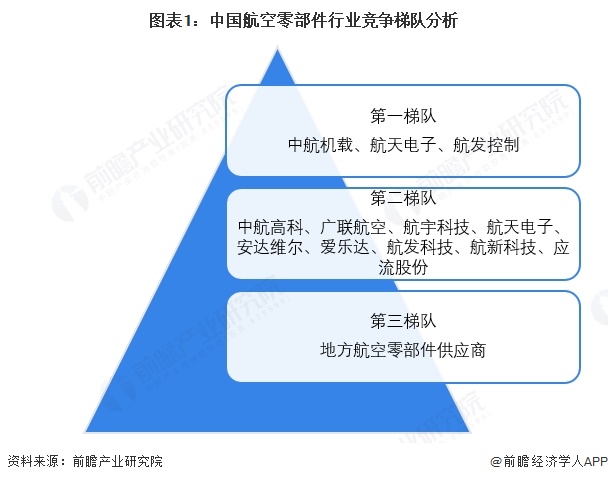
Core Insights - The Chinese aviation parts market is structured into three competitive tiers, with leading companies focusing on high revenue and specialization [1][8] - The industry has a unique competitive landscape characterized by military-civilian integration and a limited number of competitors due to high entry barriers [3] - The number of aviation industrial parks in China has significantly increased, exceeding 170, providing substantial support for the development of the aviation parts industry [5] Competitive Landscape - The first tier includes companies like AVIC Aircraft and Aerospace Electronics, with revenue exceeding 80% from aviation parts [8] - The second tier consists of companies with over 60% revenue concentration in aviation parts, such as AVIC High-tech and Guanglian Aviation [1][8] - The third tier comprises local suppliers with lower revenue from aviation parts [1] Revenue Analysis - AVIC Aircraft leads the market with a revenue of 195.2 billion, followed by Aerospace Electronics at 118.2 billion [9] - Other notable companies include AVIC High-tech and AVIC Control, each around 48 billion, while companies like Guanglian Aviation and AVIC Heavy Machinery have revenues around 10 billion [9] Industry Dynamics - The bargaining power of suppliers is strong due to high market concentration of core materials like titanium and carbon fiber [11] - Buyers, such as COMAC and AVIC, have significant bargaining power due to concentrated orders and high switching costs [11] - The threat of new entrants is low due to stringent international standards and high capital requirements [11] Technological Trends - The industry is witnessing a gradual shift towards new technologies like thermoplastic composites and 3D printing, although traditional materials remain dominant [11] - Competition is intensifying as state-owned enterprises lead the market, while private companies seek to capture niche segments through differentiated technologies [11]
小米空调推出“10年免费包修”服务,覆盖全品类!卢伟冰:我们不但要做技术创新,还要做服务保障【附白色家电行业市场分析】
Qian Zhan Wang· 2025-09-22 08:42
Group 1 - Xiaomi has launched a "10-year free warranty" service for its air conditioners, applicable to all types including wall-mounted, floor-standing, and central air conditioning units, starting from installations completed on or after January 1, 2025 [2] - The service includes comprehensive support such as free on-site service, labor, diagnostics, parts replacement, and refrigerant refills, emphasizing a commitment to customer service [2] - Xiaomi aims to become a significant player in the home appliance market, targeting to rank third in China's air conditioning market by 2025 and aspiring to compete globally [2] Group 2 - In Q2 2025, Xiaomi's IoT and lifestyle products revenue reached a record high of 38.7 billion yuan, a year-on-year increase of 44.7%, accounting for 33.4% of total revenue, with smart home appliances being a major growth driver [3] - Air conditioner shipments exceeded 5.4 million units, showing a year-on-year growth of over 60%, while refrigerators and washing machines also saw significant increases in shipments [3] Group 3 - The competitive landscape of the air conditioning industry is changing, with traditional leaders like Midea and Gree holding the largest market shares both online and offline, while Xiaomi ranks sixth in online sales and is not in the top ten offline [4] - Despite the dominance of established brands, emerging companies like Xiaomi are gradually gaining market share [4] Group 4 - There is a growing demand for high-end white goods in the Chinese market, with significant increases in the retail share of high-end refrigerators, dryers, and dishwashers compared to the previous year [5] - This trend presents new opportunities for companies like Xiaomi to leverage their technological innovation and smart features to enter the high-end market with new air conditioning products [6]


预见2025:《2025年中国重卡行业全景图谱》(附市场现状、竞争格局和发展趋势等)
Qian Zhan Wang· 2025-09-22 08:39
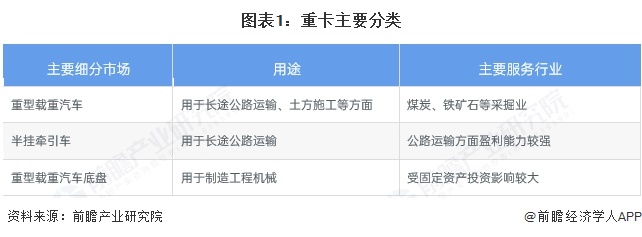
Industry Overview - The heavy-duty truck (HDT) market is defined by vehicles with a length of at least 6 meters and a total weight of at least 12,000 kg, categorized into complete vehicles, incomplete vehicles (chassis), and semi-trailers [1] - The HDT industry chain consists of upstream components like automotive glass and metals, midstream manufacturing of complete trucks, and downstream applications in engineering transport, truck leasing, and logistics [2] Industry Development History - The first heavy-duty truck in China was produced in the 1960s, with significant advancements in the 1980s when technology was imported from Austria [4] - The industry saw explosive growth starting in 2004 due to increased infrastructure investment and the implementation of stricter emission standards [4] - Since 2017, the industry has been undergoing adjustments and upgrades with the introduction of technologies like autonomous driving and vehicle networking [4] Policy Background - The Chinese government emphasizes the environmental and high-quality development of the HDT industry, promoting green low-carbon products and the development of autonomous trucks [8] - Various policies have been introduced to support the replacement of old trucks with new energy vehicles, including subsidies for scrapping older models [9] Supply and Demand Status - The production of heavy-duty trucks in China has shown significant fluctuations, peaking at 2.9765 million units in 2020, with a projected production of 1.6559 million units in 2024 [10] - The sales of heavy-duty trucks reached a peak of over 1.6 million units in 2020, driven by the transition to stricter emission standards, but have since declined due to market saturation [10] - The average price of heavy-duty trucks ranges from 300,000 to 400,000 yuan, estimating the market size at approximately 314.7 billion yuan in 2024 [13] Competitive Landscape - Major players in the market include China National Heavy Duty Truck Group, Dongfeng Motor Corporation, and FAW Jiefang, with market shares of approximately 30%, 22%, and 18% respectively [14] - The distribution of heavy-duty truck manufacturers is concentrated in regions like Anhui, Hubei, and Zhejiang [17] Future Development Prospects - The replacement demand for old heavy-duty trucks is expected to drive market growth, with projections indicating a market size exceeding 410 billion yuan by 2030 [19] - Key trends in the industry include the advancement of high-end intelligent, environmentally friendly, personalized, and customized heavy-duty trucks [21]
17年狂赚超38倍!股神巴菲特突然清仓比亚迪,芒格称王传福比爱迪生更厉害【附比亚迪企业分析】
Qian Zhan Wang· 2025-09-22 08:36
Core Insights - Berkshire Hathaway, led by Warren Buffett, has completely exited its investment in BYD, confirming the sale of all shares [2] - BYD's public relations manager acknowledged the gradual reduction of Berkshire's stake since August 2022, emphasizing the normalcy of buying and selling in stock investments [2] - Buffett's initial investment in BYD was heavily influenced by his friend Charlie Munger, who strongly recommended the investment [4][5] Investment History - Berkshire Hathaway acquired 225 million shares of BYD at HKD 8 per share in 2008, totaling approximately HKD 1.8 billion, which represented about 10% of BYD's shares post-placement [5] - Over the 14 years of holding, BYD's stock price increased by approximately 3890%, yielding substantial returns for Berkshire Hathaway [5] Company Overview - BYD, founded in 1995 and headquartered in Shenzhen, is a leading player in the global electric vehicle (EV) market, with a market share of 31.7% in China's EV sector as of 2022 [7][8] - The company is recognized for its comprehensive capabilities in battery, motor, and electronic control technologies, providing a full range of solutions from energy acquisition to application [9] Recent Performance - In the first seven months of 2025, BYD's global vehicle sales reached 2.49 million units, a year-on-year increase of 27.4%, with overseas sales of passenger cars and pickups exceeding 550,000 units, up over 130% [9] - BYD's new car registrations in Europe surged by 225% in July 2025, capturing a 1.2% market share and surpassing Tesla [9] Competitive Advantages - BYD's cost structure is significantly lower than that of competitors, with production costs at 55% of those of Volkswagen's electric vehicles, even after accounting for taxes [10] - The company's "Di Chain" payment model enhances liquidity in the supply chain, allowing suppliers to receive payments faster and reducing their financing costs, which in turn lowers component procurement costs for BYD [9]

历史性合作!英伟达宣布豪掷50亿美元入股英特尔,黄仁勋:将全球最强CPU整合起来,加速计算和AI计算时代已经到来【附全球GPU芯片行业市场分析】
Qian Zhan Wang· 2025-09-22 01:56
Core Viewpoint - Nvidia announced a $5 billion acquisition of Intel common stock at $23.28 per share, making it one of Intel's largest shareholders with an expected ownership of over 4% [2] - Following the announcement, Intel's stock price surged over 30% in pre-market trading, marking its largest single-day increase in recent years [2] - Nvidia and Intel will collaborate to develop customized CPUs for data center platforms and integrate Nvidia's GPUs with Intel's CPUs, signaling a significant partnership in the AI and accelerated computing sectors [2] Group 1: Nvidia and Intel Collaboration - The partnership is described as a fusion of two world-class platforms, emphasizing that it is not merely a financial investment but a strategic alliance [2] - Nvidia's CEO highlighted the importance of this collaboration in driving advancements in AI and accelerated computing [2] - The integration of Nvidia's AI technology with Intel's x86 ecosystem is expected to open new application scenarios for Nvidia's CUDA platform [5] Group 2: Market Context - Intel has historically dominated the GPU market with over 60% market share, primarily due to its integrated GPU chips in desktop and laptop computers [3] - However, in the independent GPU market, Nvidia and AMD have captured most of the market share, leaving Intel with a minimal presence [5] - The collaboration is viewed as a pivotal moment for Intel's "second startup," potentially allowing it to catch up in the AI chip market [5] Group 3: Industry Trends - The global GPU chip industry is recognized as a vital and strategic sector, with applications in gaming, AI, data centers, and autonomous driving [2] - The semiconductor industry is shifting from a "arms race" to "ecosystem building," as evidenced by alliances like the Nvidia-Intel partnership and TSMC's wafer foundry collaborations [5]