Qian Zhan Wang

Search documents
前瞻全球产业早报:河南能源巨头开启战略重组
Qian Zhan Wang· 2025-09-28 09:42
Group 1: AI Integration in Transportation - The Ministry of Transport and seven other departments released implementation opinions on "AI + Transportation," aiming for deep integration of AI in the transportation sector by 2030 [2] - By 2027, AI will be widely applied in typical scenarios within the transportation industry, with the establishment of a comprehensive transportation model system and the deployment of innovative projects [2] Group 2: National Computing Network Development - The National Development and Reform Commission issued measures to accelerate the construction of a national integrated computing network, promoting collaboration among localities and ensuring orderly pooling of computing resources [3] - The initiative aims to provide low-cost, reliable computing services to digital innovation enterprises, thereby lowering the barriers to computing resource usage [3] Group 3: AI in Fashion Manufacturing - Shanghai announced measures to support the cosmetics industry, focusing on the integration of AI and multi-omics technologies to drive innovation in manufacturing processes [4] - The city plans to create demonstration scenarios for "AI + Fashion Manufacturing" using support tools like computing vouchers and model vouchers [4] Group 4: Medical AI Validation Laboratory - A joint laboratory for medical AI evaluation was established to create a "gold standard" for the assessment and validation of AI applications in healthcare [5] - The lab aims to promote the compliant, safe, and efficient use of AI in the medical field [5] Group 5: Strategic Restructuring in Energy Sector - Several energy companies in Henan announced a strategic restructuring initiated by the provincial government, with no change in control despite the restructuring [6] Group 6: New Standards for Food Delivery Services - The State Administration for Market Regulation is drafting new national standards for food delivery platform services, indicating a shift towards improved service management [7] Group 7: Robotics and AI Developments - The CEO of Yushutech announced plans to release a humanoid robot with advanced algorithms, highlighting a significant growth rate of 50% to 100% in the domestic robotics industry [7] - The International Federation of Robotics reported that China will have over 2 million operational industrial robots by 2024, leading the global market [8] Group 8: Automotive Industry Challenges - The UK automotive industry faced a significant decline in production, with August 2023 output at approximately 38,700 vehicles, marking an 18.2% year-on-year decrease [10] Group 9: Corporate Developments - Starbucks announced plans to close hundreds of stores in North America and Europe as part of a business restructuring effort [13] - Panasonic decided to apply for delisting from the Nagoya Stock Exchange to reduce management costs associated with dual listings [14]

【干货】商业智能产业链全景梳理及区域热力地图
Qian Zhan Wang· 2025-09-28 09:31
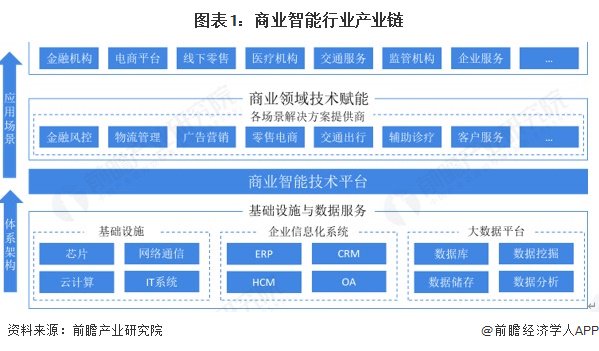
Core Insights - The article discusses the current state and dynamics of the Chinese Business Intelligence (BI) industry, highlighting key players, market trends, and technological advancements in the sector. Industry Overview - The Chinese BI industry is structured into three main segments: upstream (enterprise information system suppliers, data integration, infrastructure suppliers), midstream (big data management system suppliers, vertical product suppliers, scenario solution providers), and downstream (application fields such as finance, e-commerce, logistics, travel, media, and industry) [1]. - Upstream players include traditional IT vendors, cloud service providers, and big data platform service providers, while midstream focuses on technology-enabled companies that provide solutions for various business scenarios [1]. Key Players - Major participants in the BI industry include infrastructure layer vendors like Unisplendour, Huawei, Megvii, Inspur, and Alibaba Cloud; technology platform vendors like Baidu and Alibaba; and technology empowerment vendors like Ant Group, Tencent, Ping An Technology, and Shichuang Medical [2]. Regional Distribution - The BI industry in China shows a concentrated distribution in the eastern region, with Beijing, Guangdong, and Shanghai leading in multiple segments, while provinces like Hunan, Shandong, and Shaanxi are making strides in specific segments [4]. Product Offerings and Market Penetration - Key BI products from representative companies include Alibaba's QuickBI, Baidu's SugarBI, NetEase's Shufan BI, Inspur's Haiyue ChatBI 3.0, Meilin Data's TempoBI, and Shuju Software's Data E-View [8]. - Alibaba's QuickBI has over 1,000 benchmark cases in finance, manufacturing, and retail, with a 65% year-on-year growth in overseas customers expected in 2024 [9]. - Baidu's SugarBI serves multiple industries including government, finance, and education, while NetEase's Shufan BI has assisted over 450 leading clients in digital transformation [9]. Recent Developments - The latest trends in the BI sector emphasize deep integration with AI technologies. Alibaba is enhancing QuickBI with AI capabilities, launching a data analysis agent and AI travel solutions [11]. - NetEase is optimizing its BI products using DeepSeek's large model technology for intelligent applications in customer service [11]. - Inspur has released Haiyue Commercial AI and Model 3.0, integrating best practices from 1.2 million enterprises to provide comprehensive intelligent solutions for business management and production operations [11].


2025年中国汽车座椅行业进出口现状 中国是汽车座椅出口大国组图
Qian Zhan Wang· 2025-09-28 09:24
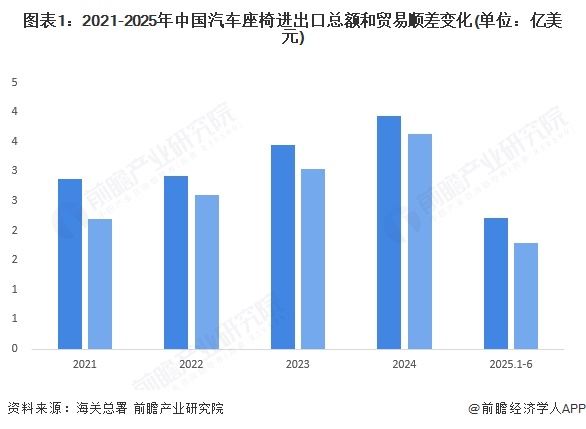
Core Insights - The total import and export value of China's automotive seat industry is projected to reach $423 million in 2024, reflecting a year-on-year increase of 9.8% [1] - The trade surplus for automotive seats in 2024 is estimated at $363 million, with imports valued at $30.37 million and exports at $393 million [1] Import Overview - The import value of automotive seats in China for 2024 is $30.37 million, showing a decline of 25.3% compared to the previous year [2] - The quantity of imported automotive seats is on the rise, with 113,100 units imported in 2024, marking a year-on-year increase of 36.4% [2] Major Import Sources - Key countries supplying automotive seats to China in 2024 include Poland ($7.75 million, 25.51%), Turkey ($4.19 million, 13.79%), and Italy ($3.36 million, 11.07%) [5] Export Overview - The export value of automotive seats from China is projected to be $393 million in 2024, representing a year-on-year growth of 13.9% [7] - The quantity of exported automotive seats is expected to reach 6.85 million units in 2024, with an increase of 8.7% compared to the previous year [7] Major Export Destinations - The primary export markets for automotive seats include Iran ($8.92 million, 22.72%) and the United States ($5.08 million, 12.95%) in 2024 [9]


2025年中国航空零部件行业技术现状 技术的发展为航空零部件制造带来更高精度与质量【组图】
Qian Zhan Wang· 2025-09-28 09:21
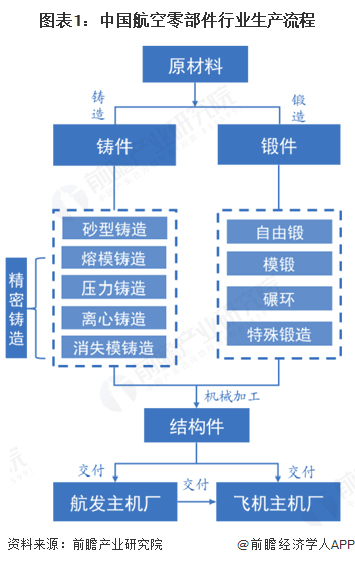
Core Insights - The article emphasizes the complexity of the production process for aerospace components, highlighting the importance of forging and casting techniques as foundational methods in the industry [1][6]. Group 1: Key Technologies in Aerospace Components - Aerospace components rely on five core technologies: integral blade disk manufacturing, cutting technology, special processing technology, engine casing manufacturing technology, and thermal barrier coating technology [4][6]. - Integral blade disks are crucial for the structural innovation of next-generation engines, reducing weight and part count while improving reliability [6]. - Cutting technology is essential for manufacturing heavy components of aircraft engines, increasingly relying on difficult-to-machine materials like titanium and high-temperature alloys [6]. - Special processing technologies, such as high-energy beam processing, excel in machining complex geometries and difficult materials [6]. - Engine casing manufacturing involves various materials depending on the operational temperature, including resin-based composites and high-temperature alloys [6]. - Thermal barrier coating technology enhances the durability and thermal protection of critical engine components [6]. Group 2: Importance of Non-Destructive Testing and Heat Treatment - Non-destructive testing is vital in ensuring the quality of each manufacturing step in aerospace component production, preventing defects from propagating through the process [7]. - Heat treatment processes, including heating, holding, and cooling, are employed to alleviate internal stresses in metal components, significantly improving their mechanical properties [10]. Group 3: Future Trends in Aerospace Component Technology - The future of aerospace component technology is focused on multi-faceted innovation, with advancements in composite materials and manufacturing techniques aimed at efficiency and cost reduction [11]. - The use of resin-based composites is increasing, with significant weight reductions observed in various aircraft models [14]. - New manufacturing techniques for large, integral wall panels are becoming essential for enhancing structural efficiency and reducing costs [14]. - High-energy beam processing and special welding techniques are gaining traction in the industry, addressing challenges in machining and assembly [14].






厦门发布氢能产业行动计划!目标到2027年氢能装备及材料生产企业达到30家【附氢能行业市场分析】
Qian Zhan Wang· 2025-09-28 07:49
Group 1 - The core viewpoint of the articles emphasizes the importance of hydrogen energy as a clean and low-carbon energy source, with China taking a leading role in its development and application [2][3][4] - Xiamen has officially issued the "Xiamen Hydrogen Energy Industry High-Quality Development Action Plan (2025-2027)", outlining goals for technological innovation, industry cultivation, and demonstration applications in the hydrogen sector [2] - By 2027, Xiamen aims to establish 30 hydrogen equipment and material production enterprises, develop hydrogen fuel cell vehicle demonstration routes, and build three hydrogen refueling stations [2][3] Group 2 - China has incorporated hydrogen energy into its "14th Five-Year Plan" and is using subsidies and standard-setting policies to promote industry growth [3] - In 2023, global hydrogen production exceeded 100 million tons, marking a 7.0% year-on-year increase, indicating that the hydrogen industry is entering a phase of scaled development [3] - China is the world's largest hydrogen producer, with a production of approximately 35.5 million tons in 2023, showing a consistent upward trend from 2016 to 2023 [4] Group 3 - The application of hydrogen energy is seen as having vast potential in sectors such as heavy trucks, shipping, and metallurgy, although challenges related to high costs and safety remain [6] - The concept of "pan-hydrogen" is proposed to broaden the utilization pathways of hydrogen by combining it with ammonia and alcohol derivatives, highlighting the importance of industrial by-product hydrogen in cost reduction [6]

【最全】2025年中国轻食行业上市企业全方位对比(附业务布局汇总、业绩对比、业务规划等)
Qian Zhan Wang· 2025-09-28 07:40
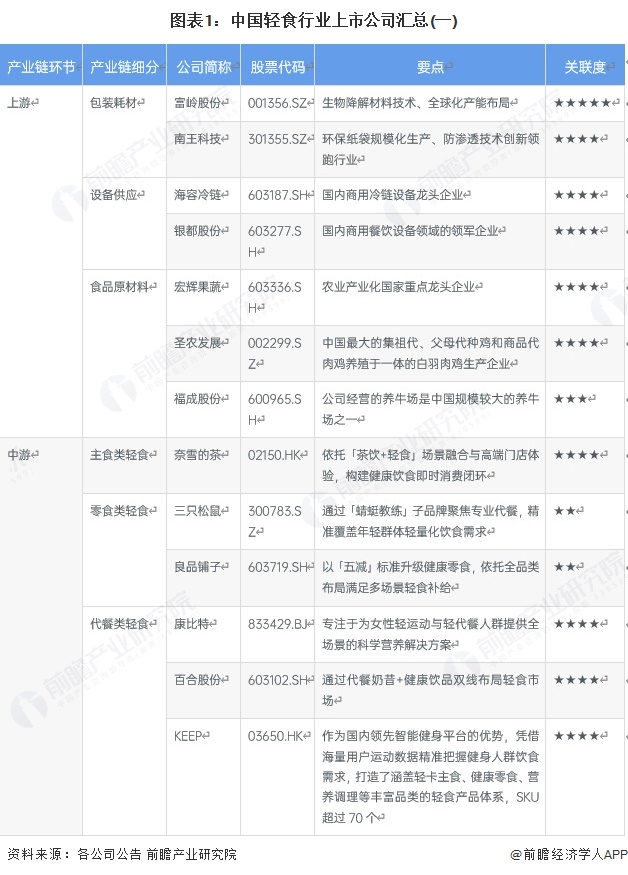
Core Insights - The article discusses the current landscape of the light food industry in China, highlighting the limited number of publicly listed companies and their cross-industry expansions into the light food sector [1][6]. Group 1: Overview of Listed Companies - The light food industry has few listed companies, with many being cross-industry brands such as Nayuki Tea, Three Squirrels, and others venturing into the light food market [1]. - Key players include Nayuki Tea (02150.HK), Three Squirrels (300783.SZ), and others, each focusing on different segments of the light food market [1][2]. Group 2: Company Profiles and Financials - Nayuki Tea is projected to generate 49.2 billion yuan in revenue in 2024, focusing on a health-oriented dining experience [4]. - Three Squirrels is expected to achieve 106.2 billion yuan in revenue, targeting the casual snack market with its sub-brands [4]. - Farmer Spring leads with 428.96 billion yuan in revenue, while Baihe Co. has the lowest at 8.01 billion yuan [8]. Group 3: Business Strategies and Market Positioning - Nayuki Tea and KEEP target young professionals and fitness enthusiasts, offering specialized stores and meal options to meet all-day light food needs [9][10]. - Three Squirrels and Liangpinpuzi focus on low-calorie snacks for the general health-conscious market, while West Oats and Taoli Bread cater to fitness consumers with nutritious and convenient food options [9][10]. - Companies like Kangbiter and Baihe Co. provide products aimed at sports enthusiasts, focusing on body management and post-exercise nutrition [9][10]. Group 4: Sales Channels and Performance - Nayuki Tea operates a balanced online and offline sales strategy, with over 1,453 stores and a significant presence on delivery platforms [11]. - Three Squirrels primarily focuses on online sales, while companies like Taoli Bread and Farmer Spring rely more on offline channels [11]. - In 2024, Nayuki Tea's energy bowl packages are expected to sell over 29.2 million units, showcasing strong market demand [12][13]. Group 5: Future Plans and Innovations - Companies are planning to expand their light food offerings through new store formats, product innovations, and enhanced distribution channels [15]. - Nayuki Tea plans to launch a new store type, "Nayuki Green," focusing on low-calorie and healthy options for urban consumers [10].




燃油车大幅萎缩!上汽集团王晓秋:预计到2030年,我国新能源汽车渗透率提升至70%【附新能源汽车行业市场分析】
Qian Zhan Wang· 2025-09-28 07:10
(图片来源:摄图网) 在全球低碳转型的大背景下,新能源汽车产业作为我国战略性新兴产业之一,正以蓬勃之势迅猛发展。 9月27日,在2025世界新能源车大会上,上汽集团董事长王晓秋预计到2030 年,我国新能源汽车渗透率将进 一步提升至70%。尽管燃油车市场会大幅萎缩,但仍会有一部分用户对其青睐有加,继续保持一定的市场份 额。届时,混动、纯电、燃油三条技术路径将基本形成4:3:3的市场发展格局。 此外,燃料电池汽车在示范应用的推动下,已成功走过批量化技术认证、产业链构建以及多场景示范等关键 阶段。意味着燃料电池汽车正逐步走向成熟,有望在未来新能源汽车市场中占据一席之地。王晓秋还强调, 新能源汽车的多元化发展,既体现在技术路径的多元化,涵盖混动、纯电、燃料电池等多种技术,也体现在 全球市场的多元化。 新能源汽车产业的蓬勃发展,离不开国家政策的全方位支持。自"八五"时期起,该产业就被列入科技攻关计 划。此后,2012年、2020年、2025年连续发布国家级中长期规划,为产业发展指明了方向。在资金支持方 面,累计投入补贴与税费减免超过3900亿元,极大地减轻了企业的负担,促进了技术的研发和产业的扩张。 2015年11月 ...

重磅消息!保时捷宣布重大战略调整:延后部分纯电动车型上市,重新聚焦燃油车与混合动力车【附新能源汽车行业市场分析】
Qian Zhan Wang· 2025-09-26 08:42
Core Insights - Porsche has announced a significant strategic shift, delaying the launch of certain electric vehicle models and refocusing on fuel and hybrid vehicles due to declining sales and increasing profitability pressures [2][3] Group 1: Strategic Adjustments - The development of a new electric platform originally scheduled for the 2030s has been indefinitely postponed, with Porsche opting to collaborate with other brands within the Volkswagen Group to restructure its technology framework [2] - The flagship SUV series (internal code K1) will prioritize the release of fuel and plug-in hybrid versions, while the electric version's launch date remains uncertain [2] - The launch of the 718 electric version has been significantly delayed from 2026 to around 2035, and the fuel and hybrid versions of key models like Cayenne and Panamera will continue to be sold until around 2035 [2] Group 2: Market Challenges - Demand for luxury electric vehicles has not met expectations, with Porsche's electric vehicle sales dropping by 32% year-on-year in the first half of 2025, and the flagship Taycan experiencing a 41% decline [3] - Trade policies, such as the 27.5% tariff on imported cars in the U.S., have led to a 15% price increase for models like Macan, resulting in a 28% drop in sales in the U.S. market [3] Group 3: Competitive Landscape - Domestic electric vehicle manufacturers in China, such as BYD, NIO, and Xpeng, are rapidly gaining market share and posing a significant challenge to traditional luxury brands like Porsche [4][8] - The Chinese electric vehicle market is projected to exceed 12 million units in production and sales in 2024, maintaining its position as the world's largest market for ten consecutive years [4] - The top ten companies in China's electric vehicle market accounted for 85.6% of total sales, with Porsche not ranking among them [6]

王兴兴:宇树科技机器人算法今年已经历几次迭代,预计下半年将发布身高1.8米人形机器人【附人形机器人行业发展趋势】
Qian Zhan Wang· 2025-09-26 08:28
Core Insights - Yushu Technology's CEO Wang Xingxing announced the upcoming release of a 1.8-meter humanoid robot in the second half of the year, following several iterations of their robotic algorithms since the Spring Festival performance [2][3] - The humanoid robot industry is experiencing rapid growth, with domestic companies seeing an average growth rate of 50% to 100% in the first half of the year [3] - The global humanoid robot financing reached 14 billion yuan in the first half of 2025, with the domestic market contributing 8.4 billion yuan [3] Company Developments - Yushu Technology's robots demonstrated advanced capabilities during the Spring Festival, including automatic formation changes and dancing, although initial performances showed some limitations in movement fluidity [2] - The company has made significant improvements in full-body motion control technology, allowing for more flexible and resilient robot movements [2] - The new technology enables robots to perform various dance and martial arts movements, showcasing a qualitative leap in their capabilities [2] Industry Trends - The humanoid robot market in China is projected to reach approximately 2.76 billion yuan by 2024, indicating substantial growth potential [5] - The Ministry of Industry and Information Technology's guidelines suggest that by 2027, the humanoid robot industry will achieve large-scale development and deeper integration into the economy [5] - The Pearl River Delta region is a key hub for the humanoid robot supply chain, hosting leading companies and core component manufacturers, which enhances collaboration and reduces production costs [7] Market Outlook - The humanoid robot industry is in a golden period of rapid development, driven by technological innovation, increasing market demand, and strong policy support [9] - The industry is expected to follow a development trajectory similar to that of computers, impacting various sectors such as entertainment, sports, and commercial services [9] - Nvidia's CEO highlighted that AI is not just a tool but a core driver of new productivity, with humanoid robots poised to become a major industry [9]


今年港股最大车企IPO来了!奇瑞汽车正式上市,募资规模高达91.4亿港元【附新能源汽车行业市场分析】
Qian Zhan Wang· 2025-09-26 06:36
Core Viewpoint - Chery Automobile has successfully launched its IPO on the Hong Kong Stock Exchange, raising HKD 9.14 billion with a subscription rate of 238 times, marking it as the largest IPO for a car company in Hong Kong this year [2] Group 1: Company Overview - Chery Automobile was established in 1997 and is headquartered in Wuhu, Anhui, with a registered capital exceeding CNY 5.4 billion [2] - The company has a strategic goal of becoming an "international brand" and has been the top exporter of Chinese passenger cars for 22 consecutive years [2] Group 2: Financial Performance - Chery's revenue is projected to grow from CNY 92.618 billion in 2022 to CNY 269.897 billion by 2024, representing a compound annual growth rate (CAGR) of 70.7% [3] - Net profit is expected to increase from CNY 5.806 billion to CNY 14.334 billion during the same period, with a CAGR of 57.1% [3] - By 2024, Chery's overseas market revenue is anticipated to exceed CNY 100.899 billion, accounting for 37.4% of total revenue [3] Group 3: Market Position - In the first eight months of this year, Chery exported 798,800 vehicles, marking a year-on-year increase of 10.8%, maintaining its position as the top exporter of Chinese automobiles [3] - Chery ranks 14th in the global automotive brand export list among the top 50 Chinese global brands [3] Group 4: Industry Context - China is the largest market for new energy vehicles (NEVs), with a global market share of 24.4% in 2022, significantly higher than the global average of 13.3% [4] - The export of Chinese NEVs has been rapidly increasing, with the number of exports rising from 147,100 units in 2018 to 679,000 units in 2022 [6] - In the first eight months of 2025, NEV exports reached 2 million units, reflecting a year-on-year growth of 51%, outpacing the growth of traditional fuel vehicles [6] Group 5: Technological Landscape - Chinese new energy technology is considered to be 3 to 5 years ahead of the global competition [7] - However, there are warnings about potential technological disruptions from overseas competitors who are actively developing advanced technologies such as solid-state batteries and interactive vehicle networks [9]