
Qi Huo Ri Bao Wang

Search documents
资金动态20250915
Qi Huo Ri Bao Wang· 2025-09-15 00:27
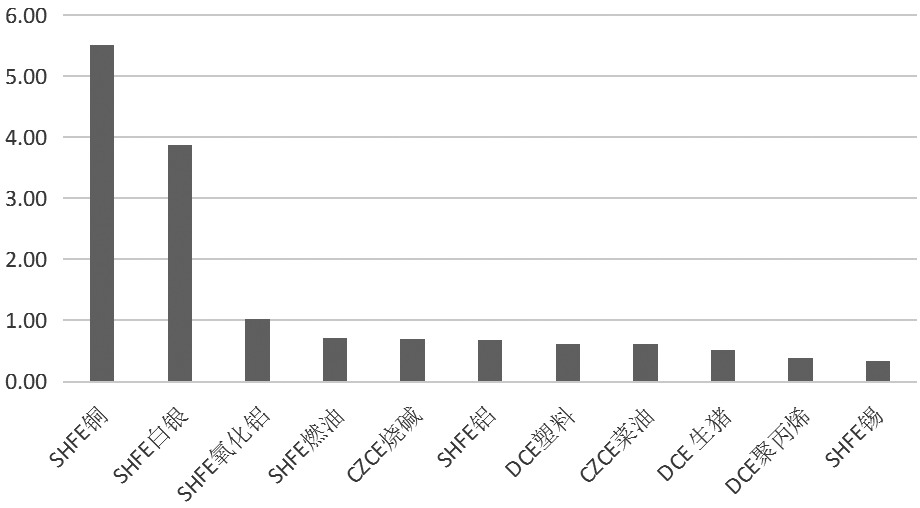
单品种看,上周五资金主要流入的商品期货(主连合约)品种有铜、白银、氧化铝、燃料油和烧碱,分别流入5.52 亿元、3.87 亿元、1.03 亿元、0.71 亿元和 0.70 亿元;主要流出的品种有黄金、螺纹钢、焦煤、镍和碳酸锂,分别流出6.55 亿元、1.84 亿元、1.57 亿元、1.24 亿元和0.88 亿元。从主力合约看,有色金 属、农产品和化工板块呈流入状态,黑色和金融板块呈流出状态。 整体看,上周五商品期货(主连合约)资金呈微幅流出状态。黑色板块呈流出状态,重点关注流出较多的螺纹钢和焦煤,同时关注逆势流入的铁矿石。有色 金属、农产品和化工板块呈流入状态,重点关注流入较多的铜、白银、氧化铝、燃料油、铝和菜油,同时关注逆势流出的黄金、镍、橡胶和棕榈油。金融板 块重点关注中证1000股指期货和30年期国债期货。(徽商期货 方正) 图为商品期货资金流出前十名(亿元) 图为商品期货主连合约资金流向(亿元) 图为金融期货主连合约资金流向(亿元) 图为板块资金流入额(亿元) 图为商品期货资金流入前十名(亿元) ...

浅谈大宗商品现货交易市场监管改革之路
Qi Huo Ri Bao Wang· 2025-09-15 00:27
Core Viewpoint - The recent policy from the Ministry of Commerce encourages innovation in bulk commodity spot trading, indicating a shift towards a more regulated and standardized market that supports the real economy [1]. Group 1: Regulatory Framework - The regulatory focus on bulk commodity spot trading emphasizes the importance of medium and long-term trading, which includes capacity pre-sale and order trading as key innovative directions [2]. - The "Document No. 37" issued by the State Council defines medium and long-term trading in bulk commodities, allowing for electronic centralized trading without the necessity of physical delivery [3]. - The "Document No. 38" restricts centralized trading methods for standardized contracts unless approved by the State Council or relevant regulatory bodies, indicating a need for clarity in the distinction between spot and futures trading [3]. Group 2: Market Practices - The "Special Regulations on Commodity Spot Market Trading" outlines that trading objects include physical goods and related certificates, while illegal futures trading is identified based on the purpose and form of the transactions [4]. - The essence of medium and long-term trading lies in its ability to mitigate risks and facilitate the transfer of ownership of physical goods, distinguishing it from futures trading which primarily focuses on risk management and price discovery [5]. Group 3: Innovation and Development - There is a call for breaking the current regulatory constraints that prohibit the use of standardized contracts and centralized trading methods, which could hinder the liquidity and innovation of the bulk commodity spot trading market [8]. - The recommendation is to adopt a regulatory approach that promotes development and innovation while ensuring compliance, rather than relying solely on prohibitive measures [9]. Group 4: Institutional Mechanisms - A proposed regulatory framework suggests a centralized rule system with local implementation, emphasizing accountability in the approval and regulatory processes for bulk commodity trading [10].
共话期市服务锌产业助力风险管理模式升级
Qi Huo Ri Bao Wang· 2025-09-14 16:27
Group 1 - The seminar focused on the current status and development trends of the zinc industry, exploring how the futures market can support high-quality development in the zinc sector [1] - The emphasis is on structural adjustments in the zinc industry under a green and low-carbon directive, prioritizing quality and efficiency over capacity expansion [1] - A comprehensive analysis of the zinc industry was provided, covering mining, smelting, processing, and consumption, along with practical risk management strategies for different types of zinc enterprises [2] Group 2 - In the first half of 2025, the zinc futures market recorded a trading volume of 32.02 million lots and a transaction value of 368.66 billion yuan, with an average daily open interest of 223,300 lots [3] - The zinc options market has seen rapid growth since its launch in 2020, with a cumulative trading volume of 8.39 million lots in the first half of 2025 and an average daily trading volume of 71,700 lots [3] - The futures market plays a crucial role in helping zinc enterprises manage price risks, stabilize production costs, and enhance operational efficiency [3]
期货公司分类评价规定发布
Qi Huo Ri Bao Wang· 2025-09-14 16:27
Core Viewpoint - The revised "Futures Company Classification Evaluation Regulations" aims to provide a more comprehensive and precise evaluation of futures companies, enhancing their service to the real economy and promoting high-quality, differentiated development within the industry [1][2]. Regulatory Foundation - The classification evaluation system is a foundational regulatory framework for futures companies, having undergone multiple revisions since its initial release in 2009. The recent changes address shortcomings revealed by evolving market conditions [2]. - The title of the regulations has been changed from "Futures Company Classification Supervision Regulations" to "Futures Company Classification Evaluation Regulations" to better reflect the updated focus [2]. Key Improvements - The revised regulations include a refined scoring mechanism, optimizing the addition and deletion of specific evaluation indicators to better align with industry development [2][3]. - The addition of new indicators, such as "daily average positions of industrial clients," emphasizes the importance of serving industrial and institutional clients over retail clients [6][7]. Market Competitiveness - The new evaluation system categorizes market competitiveness into three main categories with nine indicators, allowing for a more holistic assessment of a futures company's overall performance and capital strength [4][5]. - The removal of certain indicators, such as "cost management ability" and "return on net assets," encourages futures companies to invest more in their operations and pursue differentiated business strategies [5][6]. Service to the Real Economy - The regulations reinforce the commitment to serving the real economy by adjusting evaluation criteria to prioritize the development of services for industrial and institutional clients [6][8]. - The focus on enhancing service capabilities is expected to shift futures companies' attention from retail clients to more strategic partnerships with industrial clients [6][9]. Regulatory Enforcement - The updated regulations clarify the deduction mechanism, ensuring that penalties are based on effective regulatory measures and eliminating redundant penalties [7]. - Incentives for compliance and risk management are introduced, promoting a culture of proactive risk control within futures companies [7][8]. Future Industry Trends - The new regulations are anticipated to shift the focus of futures companies from mere scale and profit to enhancing the quality of services provided to the real economy [8][9]. - The potential for mergers and acquisitions is highlighted, as companies can gain evaluation points through strategic partnerships, thereby improving their market position and capital strength [9].
郑商所调整期权交易指令每次最大下单量
Qi Huo Ri Bao Wang· 2025-09-14 16:21
Group 1 - The Zhengzhou Commodity Exchange announced adjustments to the maximum order volume for options trading, effective from the night session on September 17 [1] - The maximum order volume for limit orders is set to 200 lots, while for market orders, it is adjusted to 5 lots [1]
上期综合业务平台将新增两个交易品种
Qi Huo Ri Bao Wang· 2025-09-14 16:21
Core Viewpoint - The Shanghai Futures Exchange announced the launch of trading for alumina standard warehouse receipts and bonded standard warehouse receipts for international copper, effective from September 19 at 9 AM [1] Group 1 - The trading of alumina standard warehouse receipts will be available on the comprehensive business platform of the Shanghai Futures Exchange [1] - The bonded standard warehouse receipts for international copper will also be listed for trading on the same platform [1] - The base price for the listings will be announced by the Shanghai Futures Exchange on the trading day prior to the launch [1]
期货公司资管业务规模显著提升
Qi Huo Ri Bao Wang· 2025-09-14 16:21
Core Insights - The asset management business of futures companies has shown significant growth in 2025, with total private asset management product scale reaching 383.97 billion yuan, an increase of 69.65 billion yuan from the end of 2024 [1] - The number of futures and derivatives products has increased by 364 to a total of 1,730, with a scale growth of 29.39 billion yuan compared to the end of 2024 [1] - The average management scale of private asset management products by futures companies has risen to 4.04 billion yuan, up from 2.86 billion yuan at the end of 2024 [1] Group 1: Market Trends - The implementation of the new asset management business registration rules has raised the entry threshold for futures companies, resulting in a decrease in the number of companies engaged in asset management from 110 to 94 [2] - The Commodity Trading Advisors (CTA) strategy has gained popularity due to its stable returns and low correlation with stock and bond markets, becoming a key tool for risk diversification and portfolio optimization [2] Group 2: Company Strategies - Ruida Futures has focused on active management and research empowerment, achieving a 36.5% growth in asset management equity scale, with CTA product scale increasing by over 40% [3] - CITIC Futures has developed various derivative investment strategies, including a "fixed income + gold options" strategy to capitalize on long-term opportunities in gold during interest rate cuts [3] - CITIC Futures has emphasized the unique characteristics of futures asset management, creating innovative "fixed income +" products to provide diverse asset allocation options and fill market gaps [4]
大商所联合中央气象台亮相2025年服贸会
Qi Huo Ri Bao Wang· 2025-09-14 16:21
Core Insights - The 2025 China International Service Trade Fair (CIFTIS) recently opened in Beijing, showcasing the "Central Meteorological Observatory-Dalian Commodity Exchange Temperature Index" and its applications in agricultural risk management and the integration of "meteorology and finance" [1][2] Group 1: Temperature Index Overview - The "Central Meteorological Observatory-Dalian Commodity Exchange Temperature Index" was jointly developed in 2009 and officially launched in 2022, covering 23 major cities in China, including Beijing, Shanghai, and Hangzhou [1] - The index includes various metrics such as Daily Average Temperature Index (DAT), Cumulative Monthly Average Temperature Index (CAT), Heating Degree Days (HDD), and Cooling Degree Days (CDD), becoming a key reference for temperature risk management in agriculture, insurance, and energy sectors [1] Group 2: Achievements and Applications - Since its launch, the temperature index has won the "Best Achievement Award" at CIFTIS and has established a multi-layered risk transfer mechanism, including "insurance + futures" and "meteorology + derivatives," serving as an important tool for financial services in the real economy and ensuring national food security [2] - As of 2022, 11 weather risk management projects linked to the temperature index have been implemented across various provinces, providing risk coverage for over 17,000 acres of crops amounting to more than 26.4 million yuan and 330 acres of aquatic products with 700,000 yuan in risk coverage [2] - The project was selected as one of the first typical cases in the "Meteorological Data Elements ×" initiative by the China Meteorological Administration and the National Data Bureau in 2024 [2] Group 3: Exhibition Highlights - At the fair, the Dalian Commodity Exchange and the Central Meteorological Observatory presented multiple practical cases of the temperature index in weather derivatives development, index insurance design, and agricultural yield forecasting through various display formats [2]
乘对外开放“东风” 架跨境服务之桥
Qi Huo Ri Bao Wang· 2025-09-14 16:20
Group 1: Market Opening and Expansion - China's futures market has steadily advanced its opening to the outside world, expanding the range of commodity futures available for foreign traders, with 7 products now accessible on the Zhengzhou Commodity Exchange (ZCE) [1] - The Qualified Foreign Institutional Investor (QFI) trading range has been expanded to 26 futures and options products, indicating a significant increase in foreign participation [1] Group 2: Diversified Hedging Demand - There has been a surge in cross-border hedging demand from domestic and foreign clients due to various international macroeconomic factors, which has raised the bar for the professional services provided by futures companies [2] - The trend of using "Chinese prices" as a benchmark by foreign industrial clients is becoming increasingly evident, particularly in the case of overseas vegetable oil trade [2] Group 3: Localized Services and Support - Futures companies are leveraging their domestic and international branches to provide localized services while also utilizing their research capabilities to assist clients in navigating the futures market [3] - A bilingual team familiar with international capital markets has been established to support cross-border business, ensuring comprehensive assistance for foreign clients in risk management [3] Group 4: Strategic Development and Global Integration - Dongzheng Futures has identified "internationalization" as a strategic development goal since 2012, with its Singapore subsidiary now holding clearing qualifications from the three major international exchanges [4] - Nanhua Futures is focusing on creating a localized intermediary service network in key global commodity trading areas to address the pain points of cross-border industrial clients [4] Group 5: Competitive Advantages of Foreign Firms - UBS Futures has established a first-mover advantage in talent development, platform construction, and client cultivation, focusing on serving international investors entering the Chinese market [5] - The firm has developed an internationally leading risk management framework and advanced trading settlement technology solutions, providing customized services that align with domestic market requirements while incorporating international best practices [6] Group 6: Future Outlook and Commitment - There is a growing call for the establishment of a world-class futures exchange and the enhancement of the influence of "Chinese prices," with ZCE continuously expanding its range of foreign investment products and deepening cross-border cooperation [6] - UBS Futures is committed to bridging foreign clients with the Chinese futures market and enhancing its service model through financial technology and research capabilities [6][7]
前8个月全国铁路完成固定资产投资5041亿元
Qi Huo Ri Bao Wang· 2025-09-14 16:14
Core Viewpoint - The construction of railway projects in multiple regions of China has been efficiently and effectively advanced this year, contributing positively to the economy [1] Investment and Economic Impact - From January to August this year, the total fixed asset investment in railways across the country reached 504.1 billion yuan, representing a year-on-year increase of 5.6% [1] - This investment has played a significant role in stimulating overall social investment, thereby injecting new momentum into expanding domestic demand and promoting a sustained economic recovery in China [1]