
Qi Huo Ri Bao Wang

Search documents
大商所“百校万才”工程2025年夏令营开营
Qi Huo Ri Bao Wang· 2025-07-15 03:34
Core Insights - The event "Hundred Schools, Ten Thousand Talents" summer camp aims to deepen the integration of education and industry in the futures market, highlighting the importance of talent cultivation for the stability and sustainable development of the futures market [1][3] - The Dalian Commodity Exchange (DCE) has collaborated with 92 universities to conduct over 400 training projects since 2017, successfully training more than 30,000 students [1][4] Summary by Sections Event Overview - The summer camp, guided by the China Securities Regulatory Commission and organized by DCE and the China Futures Association, involves 30 outstanding students from top universities [1] - The camp will last for one week, combining theoretical learning with practical experiences to enhance students' understanding of the futures market [4] Expectations for Participants - Participants are encouraged to deeply engage with the industry, understand the essence of the futures market's service to the real economy, and explore practical applications beyond textbooks [2] - Students are urged to embrace responsibility and teamwork, fostering a spirit of collaboration and mutual progress [2][3] Industry and Educational Collaboration - The China Futures Association emphasizes the need for high-quality financial talent to support the futures market's development, focusing on enhancing service capabilities for the real economy and promoting industry stability [3] - DCE plans to continue expanding the "Hundred Schools, Ten Thousand Talents" initiative, enhancing the connection between industry and academia through diverse practical activities [4]
丙烯品种基础知识专栏(三)| 丙烯进出口与贸易概况
Qi Huo Ri Bao Wang· 2025-07-14 20:33
Core Viewpoint - China is transitioning from being a net importer of propylene to reducing its import dependency due to expanding domestic production capacity, with imports expected to reach their lowest levels in recent years by 2024 [1] Group 1: Import and Export Dynamics - Propylene imports in China were stable at around 3 million tons from 2016 to 2019, with an import dependency of approximately 10% [1] - By 2024, propylene imports are projected to decline to 2.02 million tons, resulting in an import dependency of about 3.7% [1] - The majority of propylene imports come from South Korea (73.7%) and Japan (18.5%), accounting for a combined total of 92.3% of imports [1] - Propylene exports from China are minimal and often occur under conditions of domestic market oversupply [1] - In 2021, propylene exports surged due to price disparities caused by external factors in Europe and the U.S., with significant exports to South America and Asia [1] Group 2: Sales Models and Trade Structure - Propylene sales are conducted through long-term contracts and spot sales, with long-term contracts typically accounting for about 50% of trade [2] - The spot market for propylene is active, with approximately 60% of purchases made directly from producers and 40% involving traders [2] - As of 2024, there are nearly 50 propylene traders in China, with around 20 large traders selling over 20,000 tons annually [2] Group 3: Production and Consumption Patterns - Propylene production and consumption are widespread in China, with major production and consumption occurring in North and East China [3] - Shandong and Zhejiang are the largest provinces for both production and consumption of propylene, with Shandong facing a significant demand gap [3] - The South China region relies on imports and East China for propylene supply due to consumption gaps [3] - Most large propylene producers in China are integrated with downstream production facilities, leading to a situation where the commercial volume of propylene is less than the total production [3]
上半年我国进出口超21万亿元 分析人士:我国贸易将持续释放新动能
Qi Huo Ri Bao Wang· 2025-07-14 20:25
Core Viewpoint - China's foreign trade has shown resilience and maintained growth in a complex global economic environment, with total imports and exports reaching a historical high in the first half of 2023 [1][2]. Group 1: Trade Performance - In the first half of 2023, China's total goods trade reached 21.79 trillion yuan, a year-on-year increase of 2.9%, with exports at 13 trillion yuan (up 7.2%) and imports at 8.79 trillion yuan (down 2.7%) [1]. - In June alone, the import and export scale reached 3.85 trillion yuan, marking a 5.2% growth, the second highest monthly trade figure in history [3]. Group 2: U.S.-China Trade Relations - In the first half of 2023, the total trade value between China and the U.S. was 2.08 trillion yuan, a year-on-year decrease of 9.3%, with exports down 9.9% and imports down 7.7% [1]. - The trade relationship shifted from growth in the first quarter to a decline in the second quarter, with a drop of 20.8% attributed to the U.S. "reciprocal tariffs" [1]. Group 3: Structural Changes in Trade - The proportion of green low-carbon products in total exports rose to 18%, indicating a shift towards technology-intensive industries replacing traditional labor-intensive sectors [2]. - China's foreign trade is transitioning from processing trade to general trade, reflecting a move from a "cost-driven" model to a "quality and efficiency-driven" model, enhancing the resilience of domestic economic growth [3].
上半年我国人民币贷款增加12.92万亿元 央行:继续实施好适度宽松的货币政策
Qi Huo Ri Bao Wang· 2025-07-14 20:25
针对部分中小银行采取较为激进的债券市场投资政策的现象,中国人民银行金融市场司负责人曹媛媛表 示,中小银行的债券投资需要保持合理的"度"。要把握好投资收益和风险承担的平衡。对于个别债券投 资较为激进的金融机构,应该关注债券面临的利率和信用风险。中国人民银行将持续加强市场监测,及 时将监测到的高风险机构的信息共享给机构监管部门,关注资本充足率以及市场风险,同时也将持续加 强市场建设,不断丰富利率和信用风险管理工具,发挥好市场机制作用,切实防范金融市场风险。 谈及如何继续做好民营和中小企业金融服务工作,中国人民银行信贷市场司司长彭立峰表示,下一步, 中国人民银行将主要推动三个方面工作:一是进一步健全金融支持民营和小微企业政策体系。开展金融 服务能力提升工程,引导普惠小微贷款、民营经济贷款合理增长。健全民营中小企业增信制度,充分发 挥政府性融资担保、信息共享、金融衍生品等的积极作用,提升企业融资可得性。二是持续加大金融资 源要素投入。实施好适度宽松的货币政策,用好支农支小再贷款、科技创新和技术改造再贷款等结构性 货币政策工具,促进供应链金融规范发展。三是助力企业高效融资对接。全面推广全国中小微企业资金 流信用信息共享 ...
6月金融数据出炉!新增信贷、社融同比多增,M2增速回升
Qi Huo Ri Bao Wang· 2025-07-14 12:30
Monetary Supply - As of the end of June, the broad money supply (M2) reached 330.29 trillion yuan, reflecting a year-on-year growth of 8.3% [1] - The narrow money supply (M1) stood at 113.95 trillion yuan, with a year-on-year increase of 4.6%, marking the highest growth since May 2023 [1] - The net cash injection in the first half of the year amounted to 363.3 billion yuan, indicating a stable liquidity environment [1] Credit Growth - In June, new RMB loans totaled 2.24 trillion yuan, significantly increasing by 1.62 trillion yuan month-on-month and 110 billion yuan year-on-year, stabilizing the loan balance growth rate at 7.1% [2] - For the first half of the year, RMB loans increased by 12.92 trillion yuan, with corporate loans showing a recovery in growth [2] - The increase in corporate short-term loans by 4.9 billion yuan and the end of a four-month decline in medium to long-term loans indicate an improvement in credit structure [2] Social Financing - In June, new social financing (社融) reached 4.20 trillion yuan, with a month-on-month increase of 1.91 trillion yuan and a year-on-year increase of 900.8 billion yuan, pushing the social financing stock growth rate to 8.9% [3] - The growth in social financing was primarily driven by government bond financing, which increased by 503.2 billion yuan year-on-year [3] - The continuous year-on-year increase in social financing for seven consecutive months reflects the ongoing support of financial policies for the real economy, with expectations for further growth in July [3]
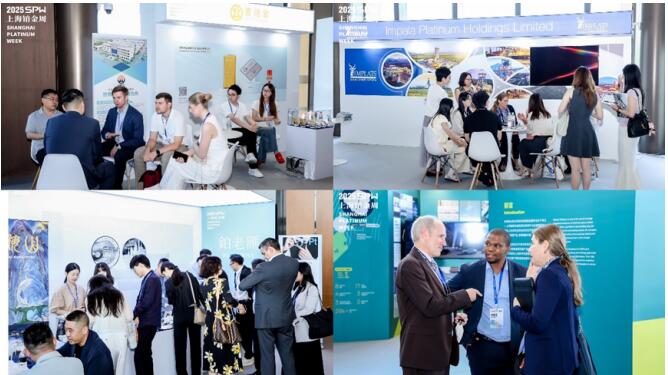
从东方盛会到全球坐标——一枚纪念章背后的产业崛起史
Qi Huo Ri Bao Wang· 2025-07-14 04:35
Group 1 - The Shanghai Platinum Week has evolved into a global platform for the platinum group metals industry, marking its fifth anniversary with a commemorative medal that symbolizes its achievements and growth [1][16] - The event has successfully transitioned from a regional gathering to the third global hub for platinum, attracting significant international participation and showcasing China's increasing influence in the industry [5][10] - The first Shanghai Platinum Week in 2021 attracted 780 attendees and reached 40,000 online viewers, establishing a voice for China's platinum group metals sector [3][4] Group 2 - The second Shanghai Platinum Week in 2022 utilized a hybrid model to overcome pandemic challenges, while the third event in 2023 saw participation from 37 exhibitors and 500 representatives, with over 770,000 online views [4][12] - The 2024 event highlighted China's dominance in the global platinum market, with imports accounting for 41% of global demand and significant participation from international mining and financial institutions [5][6] - The 2025 Shanghai Platinum Week is positioned to address global challenges and promote cooperation in the platinum industry, featuring multiple forums and discussions on the future of platinum applications [11][15] Group 3 - The Shanghai Platinum Week has become a platform for innovation, with discussions on the development of platinum futures and the introduction of new trading standards [7][10] - The event has facilitated strategic partnerships, such as the collaboration between China National Gold Group and the World Platinum Investment Council, aimed at enhancing resource synergy and innovation in the platinum market [15] - The growing demand for platinum in hydrogen energy and automotive sectors is expected to drive future growth, with China leading in hydrogen production and consumption [14][12]

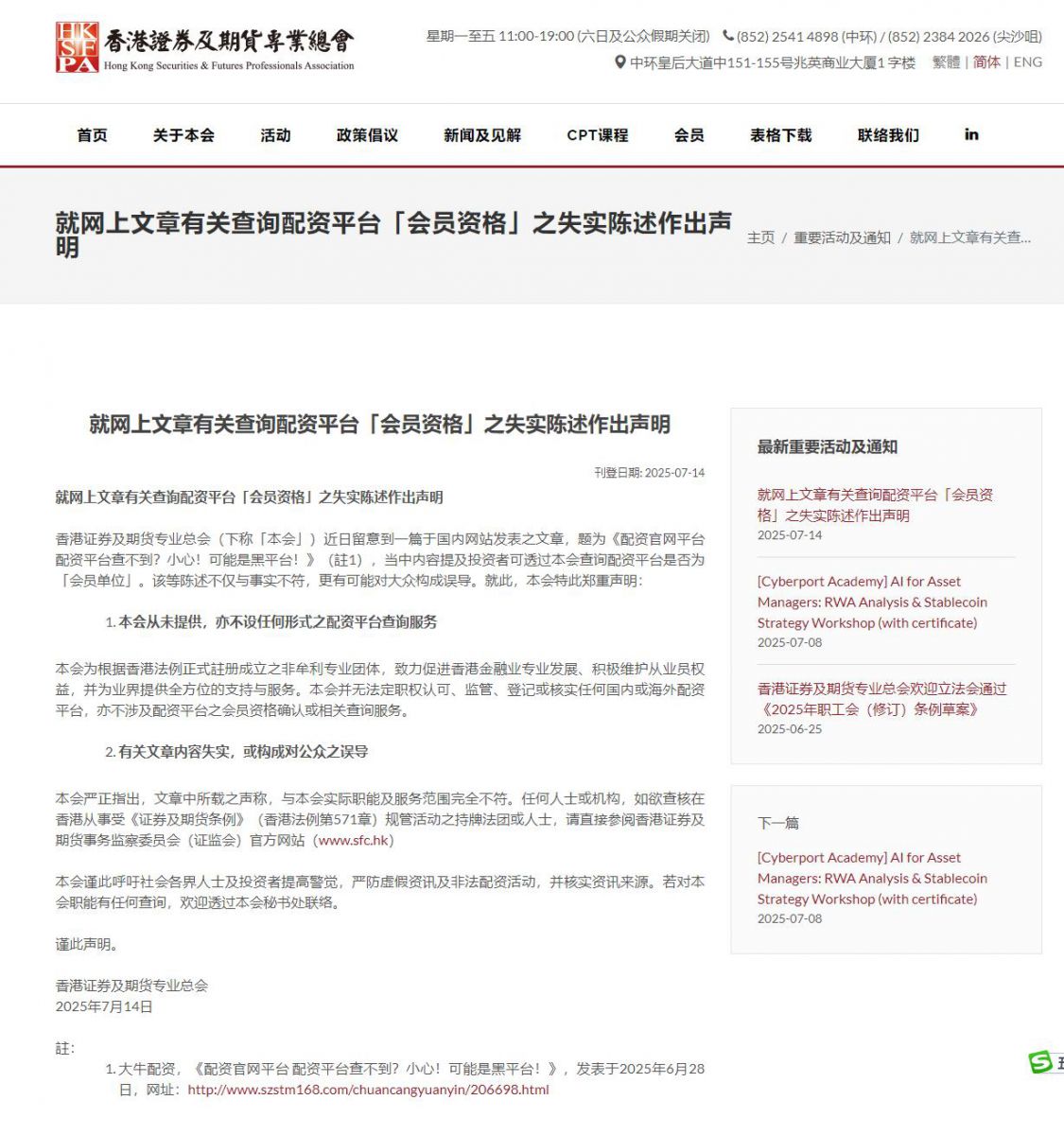
辟谣:香港证券及期货专业总会并未设任何形式之配资平台查询服务
Qi Huo Ri Bao Wang· 2025-07-14 04:15
Core Viewpoint - The Hong Kong Securities and Futures Professionals Association (HKSFPA) has clarified that it does not provide any services for verifying the membership status of financing platforms, contrary to claims made in a recent article, which may mislead the public [1][2]. Group 1 - The HKSFPA emphasizes that it has never offered any form of financing platform verification service [1]. - The association states that the claims made in the article are completely inconsistent with its actual functions and services [1]. - For verification of licensed entities or individuals regulated under the Securities and Futures Ordinance, the public is advised to refer directly to the Securities and Futures Commission (SFC) website [1]. Group 2 - The HKSFPA urges the public and investors to remain vigilant against false information and illegal financing activities, and to verify the sources of information [2]. - The association invites inquiries regarding its functions through its secretariat for further clarification [2].
大道至简的交易技法
Qi Huo Ri Bao Wang· 2025-07-14 01:06
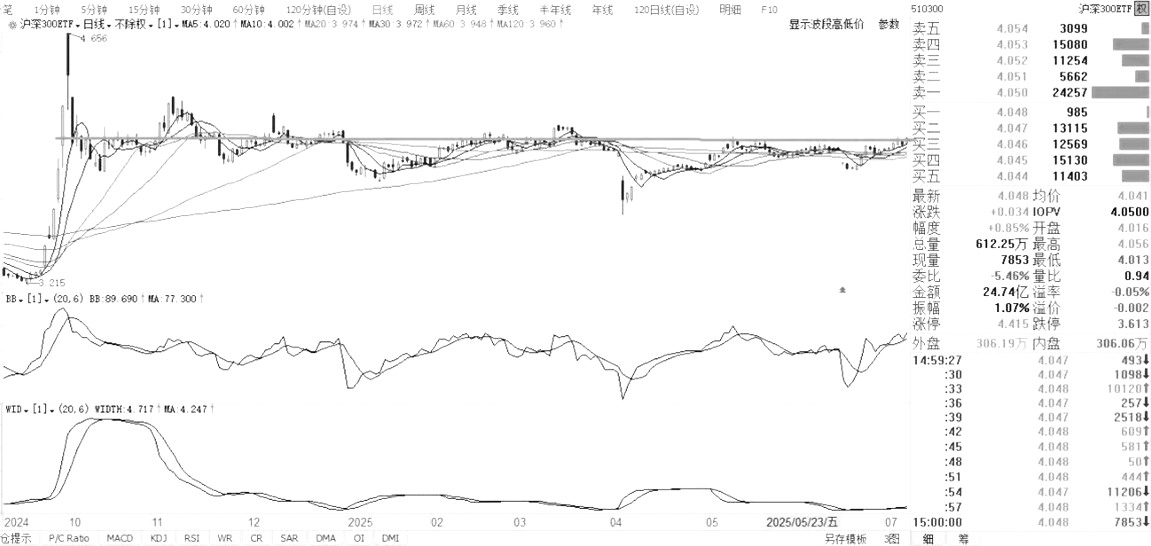
Group 1 - The core idea emphasizes that options trading can be a powerful tool for wealth generation, but improper use can lead to significant losses, particularly for inexperienced investors [1][5] - It is crucial for options buyers to wait for significant market trends before making trades, as frequent trading without clear opportunities can lead to losses due to time decay [2][4] - The article suggests that options buyers should adopt a sniper-like approach, being patient and selective about when to enter the market [2][4] Group 2 - The article highlights that options buyers face a low win rate, making it essential to wait for major market movements, which may only occur a few times a year [2][5] - It discusses the importance of understanding the underlying asset's trend analysis and improving trading psychology to become a successful options trader [4] - The article provides an example of the China Securities 300 ETF, indicating that trading around a stable price point (4.05 yuan) can lead to high probabilities of loss if not timed correctly [2] Group 3 - The article advises against buying options contracts that are close to expiration due to accelerated time decay, recommending instead to purchase contracts with a longer time frame [9][13] - It presents a comparative analysis of time value loss between January and February contracts for the China Securities 300 ETF, showing that January contracts incur greater time value loss [6][11][13] - The article concludes that unless a significant market movement is anticipated, traders should avoid opening positions in near-expiration contracts to mitigate risk [9][13]
期权蝶式价差策略的应用
Qi Huo Ri Bao Wang· 2025-07-14 01:06
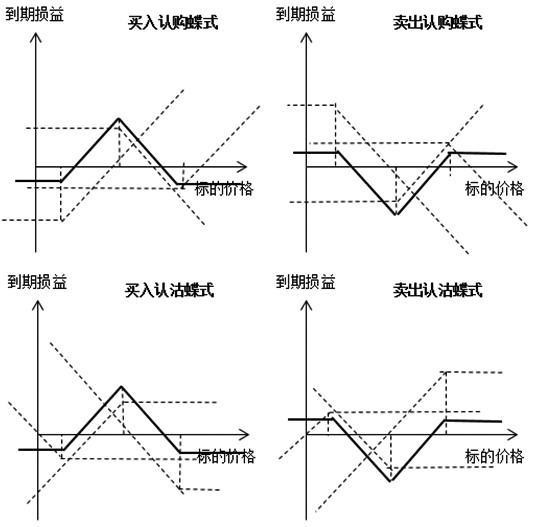
Group 1 - The article discusses the butterfly spread strategy in options trading, which consists of three options contracts with different strike prices that are evenly spaced and share the same expiration date [2][10] - There are two types of butterfly spread strategies: the long butterfly spread and the short butterfly spread, each involving specific combinations of buying and selling options [2][10] - The long butterfly spread is suitable for investors expecting a range-bound market with limited risk, while the short butterfly spread is for those anticipating a breakout but with manageable risk [4][10] Group 2 - The maximum loss and maximum profit for the long butterfly spread are predetermined, allowing for a better understanding of potential outcomes [4][10] - A case study involving a sugar factory illustrates the application of the long butterfly spread strategy, predicting that the price of sugar futures will fluctuate between 5600 and 6000 yuan/ton [5][8] - The analysis of Greek letters indicates that the strategy is favorable in low volatility environments and highlights the importance of selecting the appropriate middle strike price [9][10]
欧冶云商以AI赋能重构大宗商品价值链
Qi Huo Ri Bao Wang· 2025-07-14 00:59
Core Insights - In 2025, artificial intelligence (AI) has evolved into a core driver of transformation across industries, particularly impacting the commodity supply chain [1] - The Chinese government has created favorable conditions for the integration of AI and commodity supply chains, with state-owned enterprises urged to accelerate AI development [1] - China Baowu Steel Group has initiated a digital and intelligent transformation project called "2526," aiming to set a benchmark for AI in the steel industry [1] Group 1: AI Applications in Steel Industry - The "Steel High-Value Spot AI Intelligent Recommendation" project developed by Ouye Supply Chain won the championship in the application scenario implementation track of the competition [2] - The project aims to enhance the intelligence capabilities of steel sales, transitioning from experience-driven to data-driven trading through three phases of AI upgrades [2] - The first phase has achieved interactive AI analysis, integrating internal and external data to support decision-making in steel trading and supply chain management [2] Group 2: Pricing and Decision-Making Enhancements - The second phase focuses on flexible pricing and dynamic adjustment, utilizing data from Ouye's platform to create a pricing factor system based on resource heat and supply-demand dynamics [3] - A heat map tool has been introduced to visualize market trends and potential risks, aiding operators in identifying market hotspots [3] - The third phase will integrate the AI system with large models to reshape resource management and pricing decision processes [3] Group 3: Risk Management in Commodity Trading - The "Quantitative Efficiency - AI-Driven Futures Hedging Decision System" has been recognized for addressing core issues in futures hedging, enhancing operational efficiency [4][5] - The system provides three core functions: futures market analysis, hedging strategy recommendations, and pricing guidance for hedged goods [4] - This AI tool aims to optimize the futures hedging business for Ouye Supply Chain, establishing a foundation for scientific and efficient decision-making [5] Group 4: Overall Impact on Commodity Supply Chain - The implementation of AI in commodity trading is leading to precise forecasting, dynamic optimization, and risk management, thereby reconstructing the trading ecosystem and reshaping value chain distribution [5]