
Qi Huo Ri Bao Wang

Search documents
探索期现结合新路径 赋能广州民企发展 “期货衍生品市场赋能广州民企高质量发展专题培训”在羊城举办
Qi Huo Ri Bao Wang· 2025-07-16 16:32
Core Viewpoint - The training on futures derivatives market aims to enhance the risk management capabilities of private enterprises in Guangzhou, contributing to the high-quality development of the local economy [1][2][7]. Group 1: Training and Participation - The training event, held on July 15, attracted over 100 representatives from local private enterprises and government agencies [1]. - The event was organized under the guidance of the Guangdong Securities Regulatory Bureau and the Guangzhou Municipal Bureau of Industry and Information Technology [1]. Group 2: Economic Contribution of Private Enterprises - Private enterprises account for over 95% of market entities in Guangzhou, contributing to over 80% of new employment, 70% of innovation outcomes, and approximately 50% of imports and exports [1]. - In the first quarter of this year, the added value of Guangzhou's private economy reached 327.94 billion yuan, a year-on-year increase of 4.6%, representing 43.5% of the city's GDP, marking a five-year high [1]. Group 3: Importance of Futures Market - The futures derivatives market plays a crucial role in price discovery, risk management, and resource allocation [2]. - Utilizing futures tools can help private enterprises lock in costs, hedge risks, and stabilize operations, transitioning from passive to proactive risk management [2][3]. Group 4: Challenges Faced by Enterprises - Despite strong growth, private enterprises in Guangzhou face challenges such as cost fluctuations, exchange rate risks, and insufficient resilience in supply chains [1][3]. Group 5: Practical Applications and Strategies - The training emphasized the importance of understanding and utilizing derivatives for effective risk management, with a focus on inventory, capacity, and order risk management [4]. - Companies are encouraged to establish systematic hedging mechanisms and utilize a professional team for effective risk management [6]. Group 6: Future Outlook - The Dalian Commodity Exchange aims to build a world-class trading platform, enhancing services and supporting private enterprises in Guangzhou with better risk management tools [6]. - The collaboration between government and enterprises is expected to facilitate the integration of finance and the real economy, promoting the widespread use of futures derivatives among private enterprises [8].
东海期货案例入选中期协2024年度期货经营机构服务实体经济优秀案例
Qi Huo Ri Bao Wang· 2025-07-16 08:43
Group 1 - The core viewpoint of the article highlights the successful case of Donghai Futures in integrating financial tools to support the real economy, specifically through the innovative "rights trading + basis trading" model [1][2]. - Donghai Capital, a risk management subsidiary of Donghai Futures, utilized its core advantages to create a win-win ecosystem among upstream soda ash manufacturers, midstream traders, and downstream glass factories [2][3]. Group 2 - Since June 2022, Donghai Futures has signed 1,700 basis trading contracts across various industries, generating sales revenue of approximately 8.8 billion yuan [3]. - The company has served nearly 400 clients in sectors such as food, petrochemicals, and textiles, with a nominal amount exceeding 170 billion yuan [3]. - Donghai Futures has implemented 437 "insurance + futures" projects in 151 counties, covering agricultural products with a total insured amount of nearly 5 billion yuan and total compensation exceeding 100 million yuan [3].
【期报观察】以期货为锚,让金融活水精准浇灌实体经济
Qi Huo Ri Bao Wang· 2025-07-16 08:38
Core Viewpoint - The training on "Empowering High-Quality Development of Private Enterprises in Guangzhou through Futures Derivatives Market" highlights the importance of financial innovation in energizing the private economy and supporting national strategies, marking a significant step towards high-quality development in Guangzhou [1][3]. Group 1: Economic Contribution of Private Sector - The private economy constitutes over 95% of market entities in Guangzhou, contributing more than 80% of new employment, over 70% of innovation outcomes, and around 50% of imports and exports, underscoring its critical role in the city's economic landscape [1][2]. Group 2: Challenges and Financial Solutions - Current international complexities, such as volatile commodity prices and increased exchange rate risks, challenge the operational wisdom of private enterprises, prompting Guangzhou to leverage the futures derivatives market as a key solution to these issues [1][2]. - The futures market serves as a "financial shield" for private enterprises, enabling them to lock in costs, hedge risks, and stabilize operations, thus shifting from passive risk management to proactive risk management [1][2]. Group 3: Training and Collaboration - The specialized training aims to break down the perception of futures derivatives as niche tools, promoting their use across a broader range of enterprises through practical applications in daily operations [2]. - The training involved nearly a hundred private entrepreneurs and focused on the unique characteristics of Guangzhou's manufacturing sector, addressing commodity price fluctuations and supply chain optimization [2]. - The collaborative effort includes various stakeholders such as government departments and industry associations, reflecting a strong commitment to integrating financial tools into the operational strategies of private enterprises [2][3]. Group 4: Strategic Importance for the Greater Bay Area - As a core engine of the Guangdong-Hong Kong-Macau Greater Bay Area, Guangzhou's ability to effectively utilize futures derivatives is crucial for enhancing the region's competitiveness in global industrial chains and pricing power [3]. - The training represents a step towards creating a healthy ecosystem that combines the real economy with financial empowerment, contributing to the overall development of the Greater Bay Area [3].
全球铜价将如何演绎?
Qi Huo Ri Bao Wang· 2025-07-16 01:04
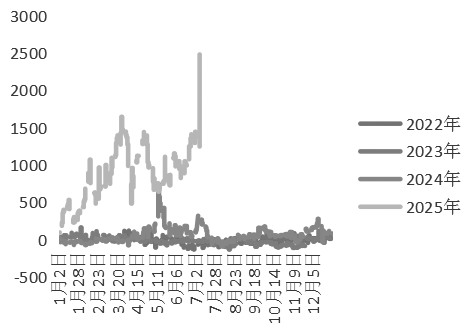
Group 1 - The U.S. will impose a 50% tariff on copper imports starting August 1, 2025, following a national security assessment [1][2] - This tariff is expected to significantly impact global copper trade flows and may lead to increased costs for U.S. industries reliant on copper, such as automotive and electrical sectors [6][11] - The COMEX copper futures price surged by 10% to a record high of $5.89 per pound after the announcement, while LME copper prices fell over 2% [2][10] Group 2 - The COMEX-LME copper futures price spread has reached a historical high of $2,677 per ton, indicating a significant divergence in market pricing [2][4] - U.S. copper imports have surged, with 685,000 tons imported in the first half of the year, nearly matching the total expected for 2024 [10] - The anticipated tariff could lead to a 5% to 8% reduction in U.S. copper demand, as higher costs may deter consumption [15] Group 3 - The tariff is part of a broader strategy to reshape U.S. copper industry dynamics and reduce reliance on imports from 45% to 30% by 2035 [11] - The U.S. is leveraging the tariff to gain political capital ahead of the Republican National Convention, showcasing a decisive stance on trade [9] - The potential for increased copper prices and volatility in the market is heightened, with expectations of a significant impact on global supply chains [11][15] Group 4 - China's copper imports are heavily reliant on the U.S., with over 80% of copper concentrate imports coming from abroad, raising concerns about supply chain disruptions [13] - The copper market is experiencing a seasonal slowdown in China, which could exacerbate inventory pressures if U.S. tariffs redirect copper flows to Asia [13] - The long-term outlook for copper remains positive, driven by increasing demand in renewable energy and electric vehicle sectors [16][17]

大商所组织召开原木期货座谈会
Qi Huo Ri Bao Wang· 2025-07-15 17:54
Core Viewpoint - The original wood futures market is demonstrating stable trading and increasing participation from industry players, contributing to the stability of the wood supply chain and enhancing China's influence on wood pricing [1][2][3][4] Group 1: Market Performance - As of the end of June, the average daily trading volume of original wood futures was approximately 31,200 contracts, with an average daily open interest of about 34,100 contracts, indicating a reasonable market scale and liquidity [1] - Since the listing of the original wood futures on November 18, 2024, the trading has been smooth, and the market functions are gradually being realized [1] Group 2: Delivery and Participation - By July 13, a total of 464 contracts had been successfully delivered, with significant activity concentrated in Shandong Lanshan, Jiangsu Taicang, and Chongqing, showcasing the effective delivery process [2] - Over a hundred industry enterprises are currently participating in trading, utilizing futures and options to manage price volatility risks [2] Group 3: Industry Impact and Innovations - The original wood futures market is facilitating the unification of measurement standards across regions, addressing long-standing issues in the physical wood market [3] - The introduction of intelligent inspection equipment has increased the efficiency of wood measurement by over five times, enhancing the operational efficiency of wood trading [3] Group 4: Future Developments - The Dalian Commodity Exchange plans to enhance market openness and facilitate foreign participation, aiming to strengthen China's pricing power in the international wood market [4] - Continuous optimization of contract rules and delivery processes is expected to improve industry participation and support the high-quality development of the original wood spot market [4]
精研期市避险策 护航豫企稳健行
Qi Huo Ri Bao Wang· 2025-07-15 16:47
Core Viewpoint - The training session aims to enhance the risk management capabilities of state-owned enterprises and listed companies in Henan, promoting the use of futures and derivatives to manage risks effectively in a complex global economic environment [1][2]. Group 1: Importance of Futures and Derivatives - Futures and derivatives serve as a "buffer" and "safe haven" for enterprises, emphasizing the need for robust management systems and professional teams to handle these financial instruments [2]. - The development of the futures market in China has provided more tools for enterprises to manage risks, with a well-established policy and market environment favoring listed companies that effectively utilize these tools [2][3]. Group 2: Training Content and Objectives - The training included sessions on macroeconomic analysis, internal control systems, and financial and tax processing, tailored to meet the actual needs of enterprises [4]. - The training aims to instill a correct understanding of hedging and to prevent enterprises from shifting focus from "risk management" to "speculative arbitrage," thereby enhancing their risk management capabilities [4]. Group 3: Support and Development of the Futures Market - The Henan government has been actively supporting the development of the futures market, with initiatives aimed at encouraging enterprises to participate and enhancing the market's competitive edge [1][3]. - Zhengzhou Commodity Exchange (ZCE) has established delivery service institutions across 11 cities in Henan, facilitating the integration of local agricultural and industrial products into the national delivery network [3].
“银期保”项目再升级 金融助农底气更足
Qi Huo Ri Bao Wang· 2025-07-15 16:47
Core Viewpoint - The "Yinqi Bao" project has significantly improved risk management and financial support for agricultural producers in Heilongjiang, allowing them to stabilize income and expand planting areas despite market fluctuations and adverse weather conditions [1][2][3]. Group 1: Project Overview - The "Yinqi Bao" project is in its third year in Heilongjiang, providing comprehensive protection for farmers with upgraded service models [1]. - The project combines insurance, futures, credit, and orders to create a risk management loop, addressing financing challenges faced by agricultural cooperatives [4][5]. Group 2: Impact on Agricultural Cooperatives - The Kelo Cooperative, established in 2010, primarily grows corn and soybeans and has benefited from the "insurance + futures" model, which helped mitigate losses during adverse weather in 2020 [2][3]. - In 2022, the cooperative received approximately 2.6 million yuan in claims, which effectively compensated for losses due to lower market prices [3]. Group 3: Financial Support and Expansion - The cooperative expanded its planting area from over 80,000 mu to 150,000 mu in 2025, securing 6 million yuan in loans at lower interest rates through the "Yinqi Bao" project [5]. - The project allows farmers to lock in sales prices and manage production based on market demand, enhancing operational planning [6]. Group 4: Risk Management and Market Awareness - The project has increased farmers' awareness of risk management and market dynamics, enabling them to make informed decisions regarding planting and sales [8]. - The extension of the pricing period from two months to six months allows farmers to benefit from potential price increases, addressing the issue of reluctance to sell [7][8]. Group 5: Collaboration and Training - The project involves collaboration among banks, insurance companies, and futures markets, creating a financial support network for farmers [8]. - Comprehensive training sessions have been conducted to ensure all participants understand the project, enhancing transparency and efficiency in the insurance and claims process [7].
海证期货双案例入围中期协2024年度服务实体经济优秀案例库
Qi Huo Ri Bao Wang· 2025-07-15 08:57
Group 1 - The core viewpoint of the news is that Hicend Futures has successfully entered the "2024 Excellent Cases of Futures Operating Institutions Serving the Real Economy" list by the China Futures Association with two innovative service models [1][4] Group 2 - Hicend Futures collaborated with Lianhua Supermarket to create a new model of "direct supply of agricultural products futures delivery to retail terminals," effectively reducing procurement costs and enhancing sales profits for Lianhua Supermarket [2][3] - The implementation of this model allowed Lianhua Supermarket to significantly lower apple procurement costs, providing consumers with better prices and shopping experiences [2][3] Group 3 - Hicend Futures tailored a personalized business model of "agent procurement + hedging" for Shaanxi Alloy Company to address the challenges of declining industrial silicon prices and financial pressures [3] - This model not only resolved the cash flow issues for Shaanxi Alloy Company but also effectively mitigated the risk of inventory devaluation through hedging operations [3] Group 4 - The successful cases of Hicend Futures demonstrate its professional capabilities in risk management and provide valuable experience for the integration of agricultural trade and financial services [3] - Hicend Futures aims to continue its innovative service philosophy and leverage its professional advantages to offer customized, comprehensive risk management solutions for more real economy enterprises [3]

期货工具全方位助力经济高质量发展
Qi Huo Ri Bao Wang· 2025-07-15 04:02
Core Viewpoint - The domestic futures market has established a multi-layered futures variety system covering key areas such as finance, energy, metals, and agricultural products, serving as an important tool for enterprises to hedge against price volatility risks and optimize resource allocation [1] Group 1: Futures Market Functions - The implementation of the Futures and Derivatives Law has clarified the core goal of the futures market to serve the real economy and ensure the safety of industrial chains, providing a solid policy foundation and legal guarantee for deeper integration into the real economy and supply chain management [1] - Through the hedging function of the futures market, enterprises can effectively hedge against price volatility risks, lock in costs, and optimize profits [1] - The price discovery mechanism of the futures market allows enterprises to obtain more accurate market information, aiding in procurement and sales decisions [1] - The standardized contracts and delivery systems of the futures market enable efficient inventory management for enterprises [1] Group 2: Case Study of Iron Ore Industry - In the early stages of China's steel industry, steel mills primarily relied on fixed prices or long-term contracts for iron ore procurement, often depending on the overseas Platts price index, which faced criticism for its narrow sample collection and lack of transparency [2] - The introduction of a pricing model based on "futures price + basis" using Dalian Commodity Exchange iron ore futures prices has provided a new, more liquid pricing reference for trade parties, enhancing flexibility and pricing power for steel mills [2] - Steel mills can now avoid the risks associated with one-time buyouts by locking in sources and managing production and inventory more effectively through staggered pricing and payment [2] Group 3: Trade and Risk Management Innovations - The basis trading model has expanded business channels for traders, allowing them to provide more flexible services to upstream and downstream enterprises, enhancing market competitiveness and facilitating their transformation into "comprehensive service providers" [3] - In the lithium industry, companies have actively participated in lithium carbonate futures, employing a combination strategy of "futures hedging + options insurance" to create a comprehensive price risk management system [4] - This strategy allows companies to limit losses during price declines while retaining some profit potential during price increases, fundamentally changing their perception of the value of derivative tools [4] Group 4: Agricultural Sector Innovations - The "insurance + futures" model has been recognized as an innovative financial business model in China, evolving from price insurance and agricultural product futures to include diverse products like income insurance and weather index insurance [5] - A pilot project in Shandong Province covering nearly 100,000 acres of peanuts has provided significant income protection for farmers, with a compensation amount of 19.57 million yuan and a compensation rate of 176.15% [5] - This project serves as an important innovative demonstration in the development of modern urban agriculture in China, promoting high-quality development in the local peanut industry [5][6] Group 5: Industry Chain Integration - Futures institutions are deepening their penetration into the industry chain by innovating service models, tracking the entire process from raw material procurement to product sales [7] - New tools such as basis trading and rights trading have been introduced to help enterprises manage risks and improve efficiency during downturns in the steel industry [7] - The futures market is evolving from a "marginal market" to a "core infrastructure," significantly enhancing the ability of the real economy to withstand external shocks and becoming a crucial force in promoting high-quality economic development [7]
原木产业开启避险新生态
Qi Huo Ri Bao Wang· 2025-07-15 03:55
Core Viewpoint - The introduction of lumber futures in China aims to mitigate price volatility risks faced by timber enterprises, particularly in the context of high dependence on imports and fluctuating demand from the construction industry [1][2]. Market Overview - The real estate market's cyclical downturn has significantly impacted the demand for construction timber, leading to a nearly 48% decrease in the import volume of softwood logs from 49.88 million cubic meters in 2021 to 26.12 million cubic meters in 2024 [2]. - Increased environmental awareness has shifted the demand structure in the timber market, with industries like furniture manufacturing favoring sustainable wood options [2]. - Price volatility has exacerbated operational challenges for timber enterprises, complicating cost control for importers and squeezing profit margins for processing companies [2]. Measurement Standards - There are inconsistencies in measurement standards across different regions in China, leading to discrepancies in the volume of timber between futures and spot markets [3]. - The northern and southern markets have different practices regarding timber length and diameter measurements, which can affect pricing and cost estimation for downstream processing companies [3]. Futures Hedging Cases - Case 1: A timber processing company successfully executed a "futures to spot" transaction, allowing them to secure raw material supply and control procurement costs by facilitating early delivery of timber [4][5]. - Case 2: A large timber trading company utilized futures to hedge against price declines, locking in a sales price of 865.5 yuan per cubic meter for their timber, thus avoiding potential losses from market depreciation [6][8]. Implementation and Training - The futures company provided tailored training and support to clients, including risk assessments and mock delivery exercises, to enhance their understanding of the delivery process and compliance [7]. - A detailed delivery plan was developed for the trading company, considering various costs associated with delivery, which helped streamline the process and reduce storage costs [7]. Conclusion - The successful completion of the first lumber futures delivery marks a significant step towards maturity in the market, emphasizing the need for industry participants to adopt standardized practices and a hedging mindset to navigate price fluctuations effectively [8].