3 6 Ke

Search documents
光盘录制时代落幕,索尼宣布全面停产蓝光录像机
3 6 Ke· 2026-02-10 13:16
Core Viewpoint - Sony has announced the gradual cessation of all Blu-ray recorder product shipments starting February, marking its complete exit from the home Blu-ray recorder hardware market, with no future models planned [1][3]. Group 1: Product and Market Overview - The cessation includes major models such as the BDZ-ZW1900 and BDZ-FBT4200, ending nearly two decades of Blu-ray recording technology [1][3]. - The exit primarily affects Blu-ray recorders with built-in playback functionality, while Sony has not announced the discontinuation of standard Blu-ray players or UHD Blu-ray players [3]. Group 2: Historical Context and Industry Trends - Blu-ray technology was introduced in 2002 by Sony in collaboration with Philips and Panasonic, addressing the need for high-definition storage with a capacity of 25GB per disc [3][4]. - The peak of Blu-ray recorder sales occurred in 2011, with 6.39 million units shipped in Japan, which has since plummeted to 620,000 units last year [3][4]. Group 3: Competitive Landscape and Industry Decline - Sony held a significant market share in the Blu-ray recorder segment, competing with brands like Panasonic, JVC, LG, Samsung, and Pioneer [4]. - The industry is experiencing a decline due to the rise of streaming services and advancements in storage technology, leading to the exit of several key players from the market [4][5]. Group 4: Broader Implications for Sony - Sony recently announced a divestiture of its television business, planning to establish a joint venture with TCL Electronics to manage its home entertainment operations [4]. - The market share of Sony's television products in China has significantly decreased, with the combined market share of major foreign brands dropping below 5% in 2024 [4].


2026李彦宏OKR:AI进入兑现期
3 6 Ke· 2026-02-10 13:10
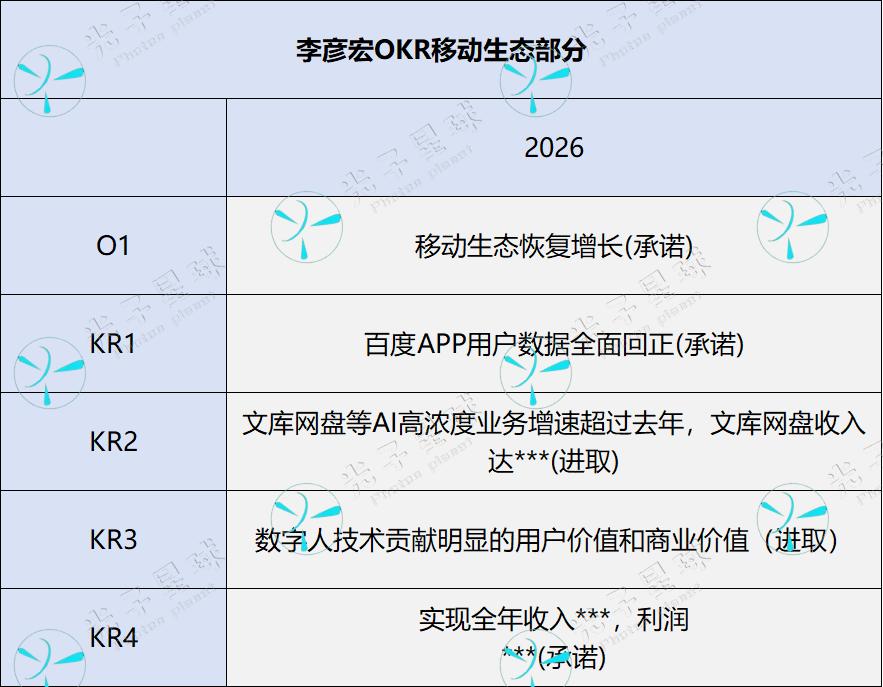
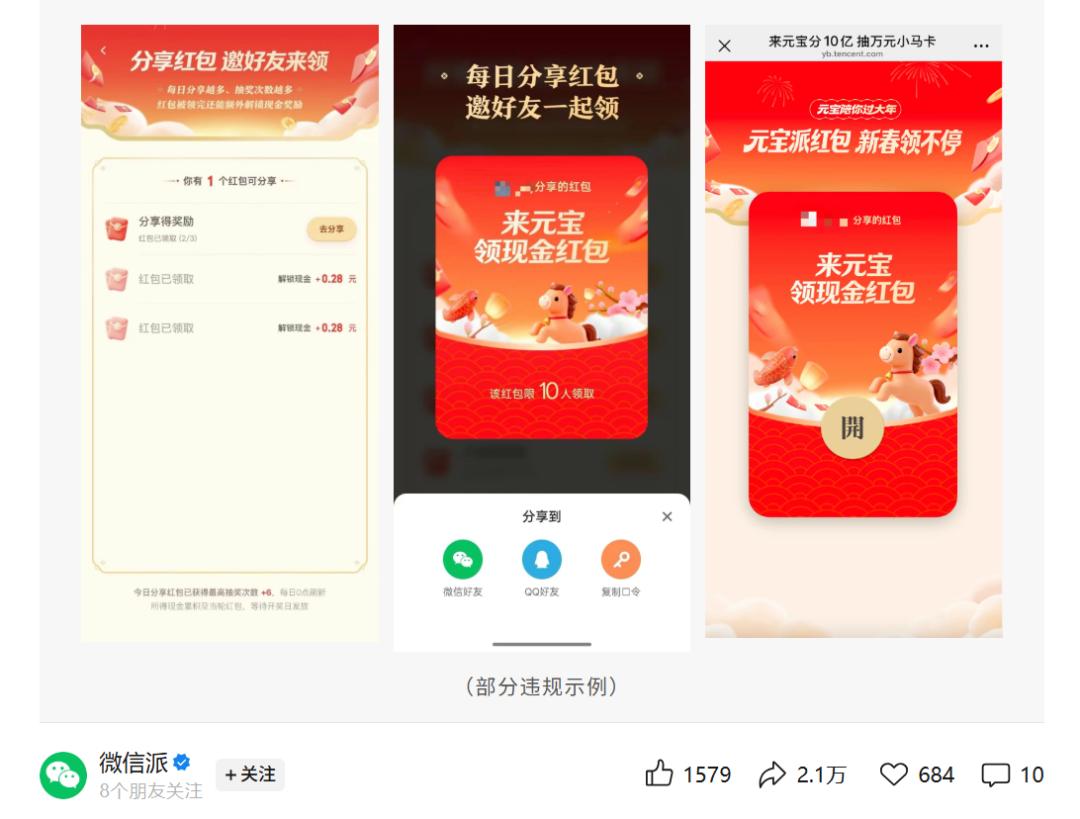
Core Insights - The article emphasizes that 2026 will be a year for Baidu to realize the commercial value of its various businesses after exploration in 2024 and restructuring in 2025 [1] Group 1: Organizational Changes - Baidu underwent three significant organizational adjustments in the first three months, including the split of TPG into two departments focusing on foundational and application model research [1] - The MEG group integrated PC and mobile search resources, forming a "search-push integration" team to enhance user operations and technical development [1] - A new PSIG group was established to focus on personal AI applications, with a subscription model for commercialization [1] Group 2: Strategic Shifts - Compared to the previous year, the number of aggressive objectives in Li Yanhong's OKR increased significantly, indicating a strategic shift towards more ambitious goals [2] - The focus on user experience has become a key operational strategy for the Baidu APP, reflecting a transition from traditional search to AI-driven interactions [3] Group 3: User Engagement Initiatives - Baidu launched a 500 million yuan Spring Festival red envelope campaign to boost user engagement, particularly targeting existing users rather than new user acquisition [5] - The emphasis on user experience necessitates a reorganization of services and interface within the Baidu APP to enhance user retention [5] Group 4: Business Model Diversification - Different business units within Baidu are adopting varied commercial models, with some focusing on classic search advertising while others explore subscription services [6] - The establishment of new business groups signals a strategic pivot towards AI and smart transportation, with specific revenue targets set for these units [7] Group 5: AI and Cloud Services - Baidu's intelligent cloud has shown strong performance, with AI cloud revenue surpassing 90% of total cloud revenue, indicating a successful transition to AI-centric services [11] - The focus on "super agents" in AI development aims to address specific high-frequency pain points in both business and consumer sectors [12] Group 6: Operational Efficiency and Growth - The operational strategy for Baidu's autonomous driving service has shifted from validation to scaling, with a focus on reducing operational costs and improving service metrics [15] - Li Yanhong's emphasis on internalizing AI capabilities reflects a broader strategy to enhance productivity and commercial value across various business units [18]

腾讯心动谷歌齐下阵,新一轮AI抢人大战开启
3 6 Ke· 2026-02-10 13:04
Group 1 - The article discusses the impact of AI, particularly Genie3, on the gaming industry, highlighting both excitement and concern among investors and developers [2][32]. - There is a notable reaction from the gaming sector, with significant stock price drops for companies like Take Two (down 10%), Unity (down 27%), and Roblox (down 13%) following the introduction of Genie3 [2]. - The potential of AI in game development is emphasized, suggesting that it could streamline the creation process, allowing developers to quickly generate interactive prototypes, thus reducing costs and time [23][28]. Group 2 - Genie3 allows users to create 3D environments from simple inputs, showcasing its ability to generate interactive content, although it currently lacks the depth and complexity of traditional games [8][14]. - The article mentions that while Genie3 is not yet fully accessible to the public, its subscription model (at $250/month) has generated interest among users eager to experiment with its capabilities [21]. - The emergence of similar AI tools from companies like Taptap Maker and Ant Group indicates a competitive landscape in AI-assisted game development, suggesting a shift in how games may be created in the future [25][27]. Group 3 - The concept of "world models" is introduced, explaining that AI can learn and predict interactions within virtual environments, which is crucial for developing engaging games [28][29]. - The article reflects on the broader implications of AI tools like Genie3, indicating a shift in creative processes within the industry and the potential for democratizing game development [32]. - The ongoing evolution of AI in gaming raises questions about the future of game creation, with the possibility of AI playing a more central role in developing interactive virtual worlds [29][32].
正经媒体报道“山寨货”,反而说明智能戒指要完
3 6 Ke· 2026-02-10 13:04
在消费类电子产品行业,"造假"或者说"山寨"从来都不是很罕见的现象。 从行业的角度来说,这是因为山寨厂商也有成熟且强大的产业链,甚至有一些"芯片大厂"为了出货量在他 们背后撑腰。 最近,我们三易生活在多个媒体都看到了一款名为"Rogbid Fusion"的设备。 从市场的角度来说,山寨产品之所以一直存在,也是因为生产者和消费者实际上是"双向奔赴"。生产山寨 产品的人看中的是低成本和"蹭热度"可能带来的暴利。而买山寨的消费者则往往有一种侥幸心理,觉得兴 许能捡个便宜,或者如果别人看不出自己用的是山寨产品,多少还能"挣个面子"。 但正是因为大多数情况下这些山寨产品假得"直白又离谱",所以大家也会注意到,主流的"正规媒体"绝大 多数情况下都绝不会去主动报道相关产品。因为如果报道了,就无异于是"助纣为虐"了。 这其实是一款"二合一智能戒指"。说它"二合一",是因为与普遍的智能戒指不同,它在结构和外观上实际 上不像智能戒指,而更像是"迷你智能手表"。它有一个非常小的触摸屏,并可以通过更换不同的"表带", 切换智能戒指和智能手环两种不同的"佩戴方式"。 但如果有那么一类山寨产品,正经的媒体普遍对其"毫不避讳",甚至都不是 ...

理解物联网在各行业应用落地节奏
3 6 Ke· 2026-02-10 13:04
一、最快的应用赛道代表:智能零售 零售业是物联网领域发展最快速的垂直领域之一。在许多方面,它是当前最接近消费物联网市场的落地 场景,因为该领域快速创新和即时满足推动了物联网技术采用。 当前,物联网已深度融入各行业数字化应用中,但物联网的采用和部署速度因行业领域特点存在显著的 差异。对于物联网的采用,各行业应深入评估基础上,设定切实可行的时间表,有效分配资源以及管理 应用成果期望。很多物联网技术供应商在与各行业客户互动时,一个被反复提出的问题是:"我们能多 快地实现规模化?"直觉上的答案应该是"越快越好"。然而,现实非常复杂,物联网解决方案的实施、 集成和扩展速度还需要与行业需求进行深入融合。近期,一家物联网研究机构对物联网在各行业应用节 奏做出总结,按照应用速度分为三类,并详细列出应用场景和需考虑的因素。 1、促成物联网在零售领域加速采用的因素 短暂的决策周期与激烈的竞争:零售行业呈现出激烈竞争和快速演变的消费和特征。企业必须迅速创 新,以抢占市场份额、提升客户体验并优化运营。这种竞争压力导致技术实施(包括物联网)决策过程 更短。零售商不断寻求优势,物联网提供了切实可行的解决方案,以快速实现这一目标。 明确的 ...
Anthropic最新2026趋势报告:人类最大一次编程革命势不可挡
3 6 Ke· 2026-02-10 12:58
【导读】Anthropic刚刚扔出一份18页重磅炸弹:《2026年智能体编码趋势报告》。结论直接炸裂:程序员不再写代码了,他们变成了「指挥官」。单个 AI助手已经进化成自主智能体军团,能花好几天打造完整系统,甚至让法务、市场这种完全不懂代码的人,也能自己做应用。软件开发,正在经历图形 界面发明以来最大的一次地震。 2026年的AI圈,要说谁最风光,Anthropic绝对排第一。 就在刚刚,Anthropic甩出了一份18页重磅报告:《2026年智能体编码趋势报告》。 这份报告的核心结论可以浓缩为一句话:任何人,都成为了开发者。 编程/软件开发的游戏规则彻底变了! 注意,不是「每个程序员变得更强了」,而是「非技术人员也能开发了」。 这意味着软件开发这个行当,正在经历自DOS、图形界面发明以来,最大的一次范式转移。 以下是报告全部8大趋势的深度解读,干货满满,一个不漏。 写在前面 这份18页的报告,信息密度极高! Anthropic没有画饼,没有讲故事,用的是Anthropic自己的内部研究数据、真实客户案例和对行业趋势的冷静判断。 核心信号非常清晰:程序员不会消失,但「只会写代码」的程序员会消失。 未来的软件工 ...

ChatGPT开测广告,OpenAI终于向“钱”看
3 6 Ke· 2026-02-10 12:58
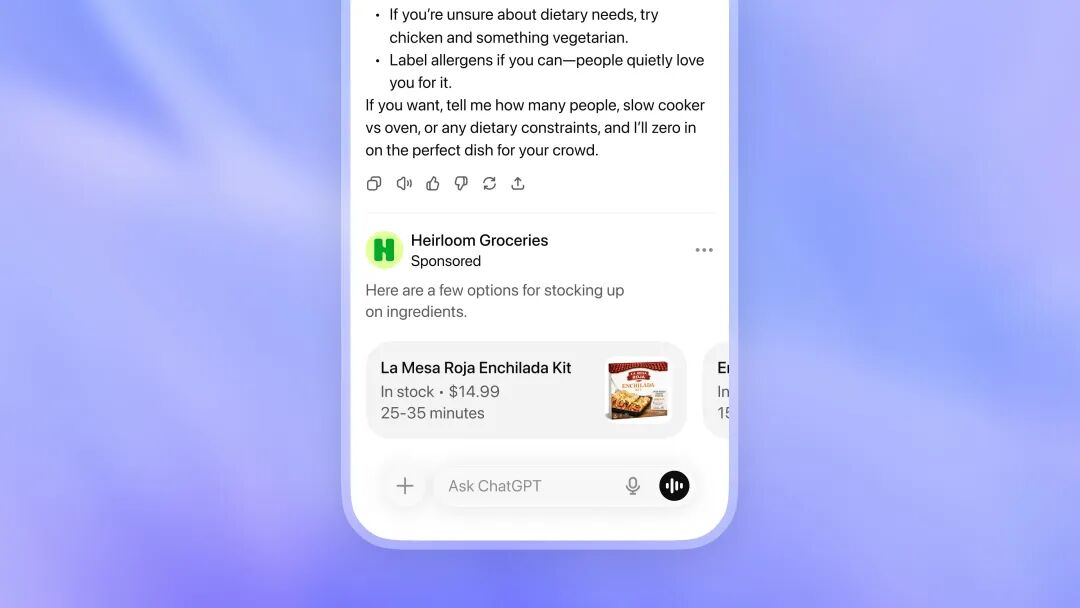
Core Insights - OpenAI has officially announced the testing of an advertising feature in the free and Go versions of ChatGPT across the United States, aiming to support free users due to financial constraints [1][5][6] Group 1: Advertising Implementation - The advertising feature will only be available to users of the free and Go versions, with no impact on other subscription tiers [6] - Ads will be clearly marked as "sponsored" and will not affect the quality or independence of ChatGPT's responses [6] - The ads shown will be determined by user chat history, current conversation topics, and interaction with previous ads, ensuring relevance [6][9] Group 2: Rationale Behind Advertising - OpenAI's motivation for introducing ads is to achieve widespread access to AGI, leveraging a proven business model that has worked for companies like Google and Facebook [5][7] - The introduction of ads is seen as a way to enhance user conversion rates, particularly for low-spending users, similar to Netflix's recent ad-supported subscription model [7] Group 3: Future of Advertising in AI - OpenAI aims to set higher industry standards for AI advertising, ensuring that the model remains unaware of ad content unless explicitly requested by the user [9] - The company believes that AI advertising will benefit small businesses by allowing them to create targeted marketing strategies through AI [9] - OpenAI envisions a future where ads evolve into more proactive interactions, aligning with user preferences and enhancing the overall experience [9] Group 4: Market Position and Growth - OpenAI has recently launched a new programming model, GPT-5.3-Codex, which has received positive feedback and increased user engagement by approximately 50% [10] - The monthly growth rate of ChatGPT has reportedly returned to over 10%, with a new version of the chat model expected to be released soon [10] Group 5: Funding and Industry Impact - OpenAI's $100 billion funding plan is gaining momentum, with the first part expected to come from major investors like Microsoft, NVIDIA, and Amazon, totaling up to $50 billion [12] - The successful integration of the "AI + advertising" model could trigger a ripple effect in the large model industry, prompting other companies to follow suit [12]
中西部力压长三角,改写2025年新能源融资格局
3 6 Ke· 2026-02-10 12:58
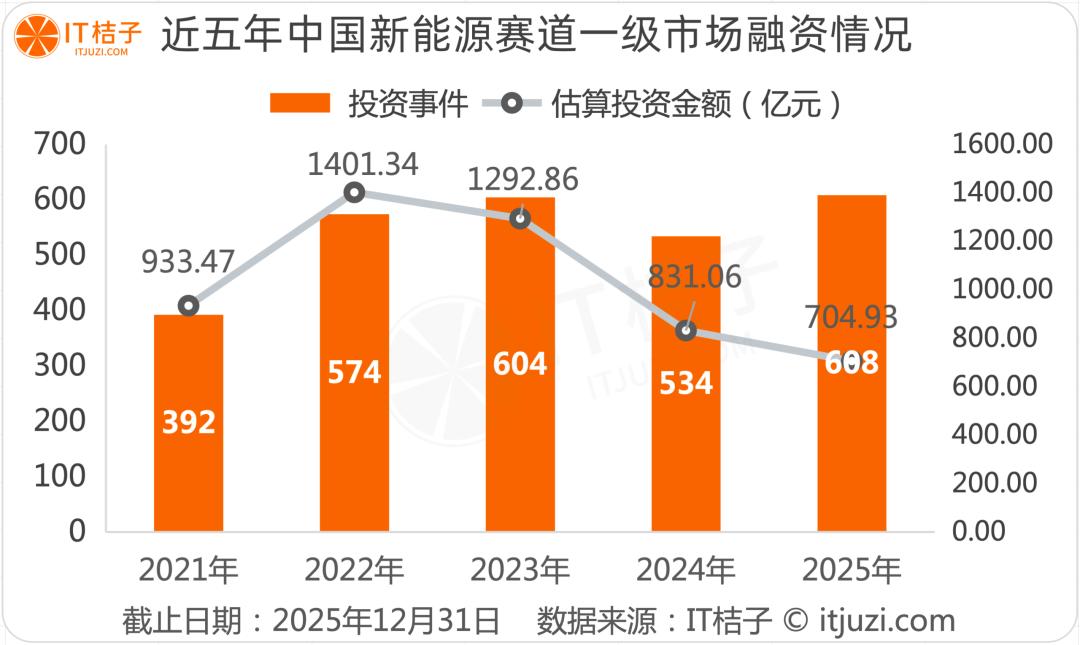
Core Insights - The Chinese renewable energy industry is at a critical juncture in 2025, with over 608 financing events and approximately 70.5 billion RMB injected, reflecting a significant reduction in investment compared to the peak in 2022, indicating a shift from enthusiasm to rationality in the sector [1][4][10] Overall Situation - The financing landscape in 2025 shows a distinct "volume up, price down" characteristic, highlighting structural differentiation in the industry and capital logic [2][4] Financing Trends - In 2025, the number of financing events in the renewable energy sector increased by 14% year-on-year, totaling over 608 events, while the total financing amount dropped nearly by half compared to the peak in 2022, indicating a fundamental shift in industry dynamics due to the gradual withdrawal of domestic subsidies [4][5] - The previous decade's reliance on policy subsidies as a core driver for attracting capital has diminished, leading to stricter investor requirements for project profitability and technological barriers [4][5] Regional Dynamics - The financing distribution in 2025 shows a significant shift, with the central and western regions of China rising in prominence, challenging the traditional dominance of the Yangtze River Delta [5][9] - The Yangtze River Delta remains the leader in financing events, accounting for nearly half with 296 events, while the central and western regions, particularly Sichuan and Hubei, have shown strong performance in financing scale [7][9] Capital Allocation - In 2025, the central and western regions received 43% of total capital investment, surpassing the Yangtze River Delta in financing scale, with Inner Mongolia and Sichuan attracting significant capital in wind and solar energy sectors [9] - Major financing events in the central and western regions are focused on mature enterprises and heavy asset projects, reflecting a higher pursuit of certainty and scale effects during the industry adjustment period [9][11] Emerging Sectors - Smaller financing amounts are increasingly directed towards innovative startups in emerging fields such as sodium-ion batteries, hydrogen energy, and nuclear fusion, primarily located in traditional financial hubs like Shanghai, Jiangsu, and Guangdong [9][11] Conclusion - The 2025 Chinese renewable energy financing market is evolving uniquely, characterized by rational maturity, the rise of the central and western regions, and the emergence of new sectors, presenting both challenges and opportunities for industry players and investors [10][11]
如何布局春节红包行情?两个重要方向都不容错过
3 6 Ke· 2026-02-10 12:52
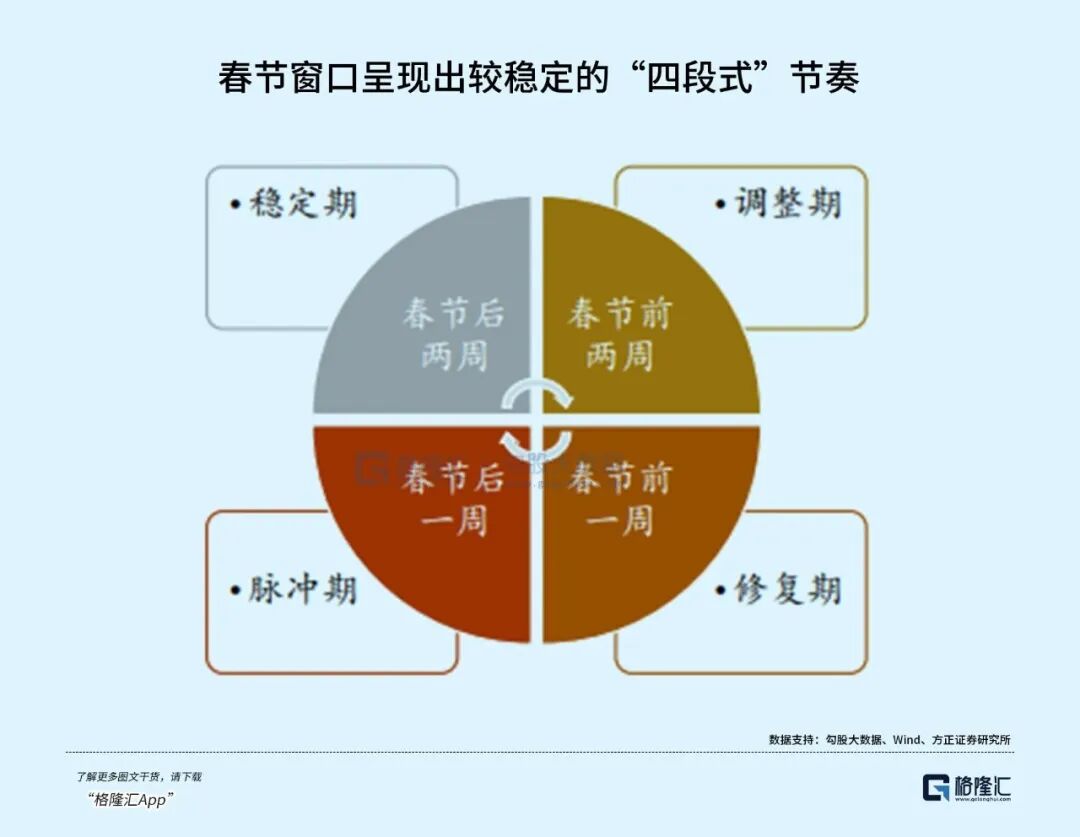
Group 1 - The core viewpoint of the article emphasizes that the upcoming Spring Festival market is supported by multiple favorable factors from macroeconomic, policy, and industry perspectives, making the conditions for a market rally more certain than in previous years [3][9] - Macro liquidity is stabilizing, with significant inflows into broad-based ETFs and a positive sentiment in the market, particularly benefiting small-cap growth and technology themes [3][9] - The policy environment is supportive, with ongoing implementation of the "14th Five-Year Plan" focusing on AI technology and its integration into industries, which boosts market confidence [3][9] Group 2 - AI technology is entering a period of explosive growth, serving as a key driver for the market rally, with significant advancements in AI applications such as ByteDance's Seedance 2.0 [9][10] - The demand for AI-generated content is expected to surge, with the domestic animation and short drama market projected to exceed 22 billion yuan by 2026, driven by increased consumption during the Spring Festival [13][23] - Major tech companies are significantly increasing their capital expenditures, with Google, Amazon, Meta, and Microsoft expected to collectively spend around $650 billion on AI infrastructure by 2026, indicating robust growth in the AI sector [18][20] Group 3 - The AI content generation sector is experiencing a critical window for scaling, with products like Seedance 2.0 addressing key pain points in video production and significantly lowering costs [11][12] - The AI computing power demand is rising sharply, with major tech firms investing heavily in data centers and AI hardware to support their applications, indicating a strong growth trajectory for the sector [14][19] - The article outlines several technology sectors that are likely to see rotation and investment opportunities, including semiconductors, AI power, commercial aerospace, robotics, nuclear power, and photolithography [24]
字节发完阿里发,Qwen-Image 2.0火线出击
3 6 Ke· 2026-02-10 12:52
Core Viewpoint - Alibaba has launched its new image generation model Qwen-Image 2.0, which supports up to 1,000 tokens for long instructions and 2K resolution, featuring a lighter architecture that enhances inference speed compared to its predecessor [2][37]. Group 1: Model Performance - Qwen-Image 2.0 excels in long instruction adherence and text rendering, although it slightly lags behind Google's Nano Banana Pro in image realism [2][6]. - In AI Arena testing, Qwen-Image 2.0 ranked third in text-to-image and second in image-to-image benchmarks, indicating competitive performance but still trailing behind Google’s model [6][8]. - The model can render complex text, such as the full text of "Lantingji Xu" in a brush style, while maintaining visual harmony with the background [4][9]. Group 2: Technical Enhancements - Qwen-Image 2.0 has optimized the common "greasy" appearance in AI-generated images, resulting in less saturated colors and a more realistic look [5][34]. - The model's size is significantly reduced compared to version 1.0, which had approximately 20 billion parameters, while still enhancing capabilities and speed [37][39]. - Improvements in the Variational Autoencoder (VAE) have strengthened the model's ability to generate clear and accurate small text, addressing previous issues of text distortion [39]. Group 3: Future Developments - The Qwen-Image team plans to focus on generating complex "parent images" like PPTs and multi-image posters, aiming to reduce hallucinations and errors in future iterations [14][40]. - The integration of image generation and editing capabilities is expected to enhance the model's utility, allowing for more flexible workflows in design [34][35]. - Collaborations with applications like WPS are planned to gather user feedback for continuous model improvement [40]. Group 4: Market Implications - The advancements in Qwen-Image 2.0 position it as a potential productivity tool across various industries, including e-commerce and healthcare, by visualizing complex processes and generating marketing materials [39][41]. - The rapid iteration and application of AI-generated content in China are anticipated to foster new industry chains and accelerate model development [39][41].