
Hu Xiu

Search documents
伯克希尔“王储”的第一笔大交易
Hu Xiu· 2025-10-03 10:14
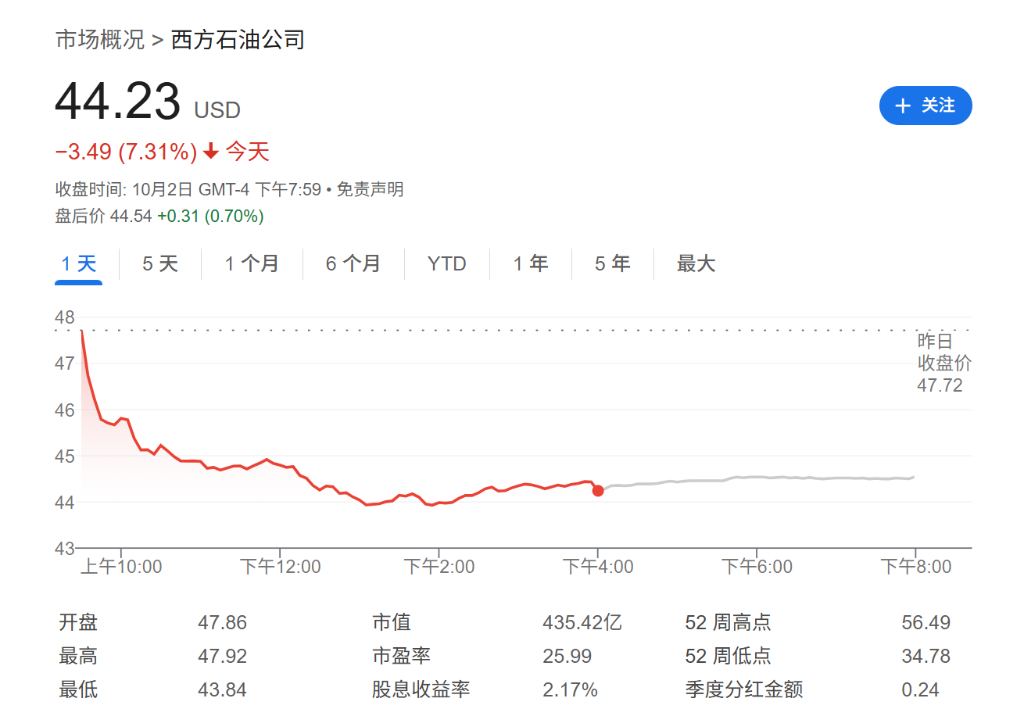
Core Viewpoint - Berkshire Hathaway has agreed to acquire Occidental Petroleum's chemical subsidiary OxyChem for $9.7 billion in cash, marking the first major acquisition led by Greg Abel since being named Buffett's successor [1][3][9] Group 1: Occidental Petroleum's Debt Reduction Strategy - The sale of OxyChem is a crucial step for Occidental Petroleum in its plan to reduce $24 billion in debt, with $6.5 billion from the transaction earmarked for debt repayment to achieve a target of under $15 billion in liabilities [1][4][7] - Occidental's heavy debt load primarily stems from two major acquisitions: the $55 billion purchase of Anadarko Petroleum in 2019 and the $12 billion acquisition of CrownRock in 2023 [4][5] - The company's leverage ratio remains high compared to peers, with a projected net debt to EBITDA ratio of 1.7 times by 2025 prior to the transaction [5][6] Group 2: Berkshire Hathaway's Strategic Acquisition - For Berkshire, this acquisition serves a dual purpose: it helps stabilize its investment in Occidental, where it holds a 29.6% stake, while also expanding its portfolio by controlling one of the largest independent producers of petrochemical products globally [3][8] - The transaction is seen as a strategic move to protect Berkshire's investment value, with cash being used for the acquisition rather than shares, contrasting with previous deals [8][9] - Following the acquisition, Berkshire will enhance its position in the chemical sector, joining industry giants like Dow Chemical and LyondellBasell, despite the current downturn in chemical demand [8][11] Group 3: Market Implications and Future Outlook - The sale of OxyChem simplifies Occidental's business structure, potentially making it a more attractive target for future acquisitions in the energy sector, while also reducing the complexity of a full acquisition by Berkshire [10][11] - This transaction represents Berkshire's largest deal since acquiring Alleghany for $11.6 billion in 2022, showcasing Abel's capital allocation strategy [9][11]


曹操怎么就成三国魅魔了?
Hu Xiu· 2025-10-03 09:04
Core Viewpoint - The animated film "The Stars of the Three Kingdoms" presents a unique interpretation of the Three Kingdoms story, focusing primarily on the character of Cao Cao, portraying him as a virtuous figure amidst complex relationships with other characters, particularly Yuan Shao and Emperor Liu Xie [10][11][12]. Summary by Sections Character Development - The film emphasizes a fair portrayal of classic Three Kingdoms characters, notably excluding prominent figures like Liu Bei and Guan Yu, which allows for a concentrated narrative on Cao Cao's character [7][8][9]. - Cao Cao is depicted as a "perfect saint" and the central figure of virtue, with all negative actions attributed to others, creating a narrative where he is either loved or envied by those around him [13][14][15]. Plot Overview - The story begins with a youthful Cao Cao and Yuan Shao engaging in petty theft, leading to a long-standing emotional conflict between them [16][18][20]. - The narrative skips significant historical events, such as Cao Cao's famous exploits, to focus on his emotional journey and decisions, including his choice to pursue the rescue of Emperor Liu Xie [22][24][26]. Relationship Dynamics - The film explores the evolving relationship between Cao Cao and Liu Xie, highlighting misunderstandings and emotional turmoil, particularly influenced by the scheming of characters like Dong Cheng [51][56]. - A significant turning point occurs when Liu Xie, after a year of hardship, encounters Cao Cao, leading to a moment of reconciliation and shared aspirations [44][46][68]. Conflict and Resolution - The film culminates in the conflict of the Battle of Guandu, where Cao Cao faces challenges both from Yuan Shao and internal strife, ultimately leading to a resolution of misunderstandings with Liu Xie [62][64][66]. - The narrative concludes with a poignant moment between Cao Cao and Yuan Shao, reflecting on their past and the complexities of their relationship, leaving the audience with an ambiguous sense of closure [74][75].

海湾国家如何用关键一招破解中东局势?
Hu Xiu· 2025-10-03 07:59
Core Insights - The article highlights the geopolitical implications of economic corridors in the Gulf region, emphasizing their role in trade, regional development, and geopolitical influence amidst shifting global dynamics [1][3][4]. Group 1: Economic Corridors Overview - The three major economic corridors discussed are the India-Middle East-Europe Corridor (IMEC), the Iraq Development Road Corridor (IDRC), and the Belt and Road Initiative (BRI) [1][7][10]. - IMEC aims to connect Indian manufacturing, Middle Eastern energy, and European markets, but faces challenges due to political resistance from Gulf and Arab nations regarding Israel's inclusion [1][7]. - IDRC seeks to establish a land bridge from Iraq's Basra to the Turkey-Iraq border, but its success is contingent on funding and regional stability, particularly concerning Iranian influence and Kurdish participation [10][11]. Group 2: Gulf States' Strategic Positioning - Gulf countries are leveraging their geographical advantages and capital reserves to position themselves as key players in a multipolar world, adopting a strategy of "active neutrality" [3][4]. - Significant infrastructure investments are being made, such as Saudi Arabia's $1.7 billion investment in Jeddah Port and the UAE's 900 km railway network, aimed at enhancing regional connectivity [4][5]. - Sovereign wealth funds in the Gulf, exceeding $1 trillion, are pivotal in diversifying economies and investing in emerging sectors like AI and cryptocurrency [5][6]. Group 3: Geopolitical Dynamics - The Gulf states are cautious in their participation in various economic corridors to avoid being drawn into the US-China rivalry, maintaining communication channels with multiple global powers [3][14]. - The article discusses the potential for economic corridors to create new trade routes and opportunities, particularly for previously isolated regions like Central Asia [15][16]. - However, the corridors face challenges such as geopolitical risks, funding issues, and the need for effective governance and transparency [16][19]. Group 4: Future Prospects and Digital Integration - The integration of digital technologies into economic corridors is transforming trade efficiency and infrastructure management, with Gulf states adopting AI and smart logistics [22][23]. - The shift towards digital payments is simplifying cross-border transactions and reducing reliance on traditional banking systems, positioning Gulf economies as innovative trade centers [23][24]. - Despite advancements, challenges remain in ensuring interoperability with global standards and addressing regulatory barriers that may hinder technological integration [23][24].
假期去博物馆的人,已经后悔了
Hu Xiu· 2025-10-03 07:01
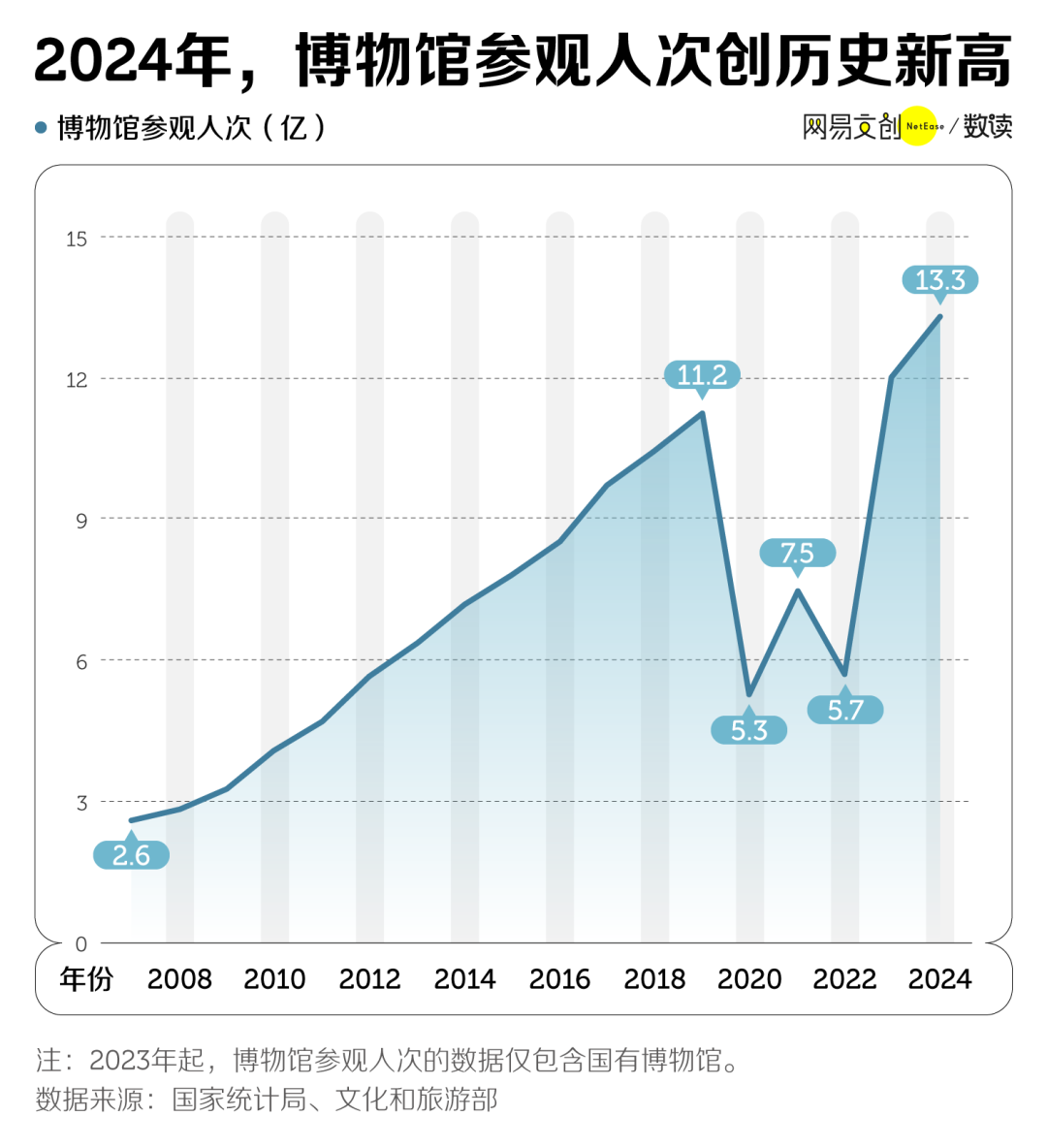
Core Insights - The popularity of museums has surged among young people, leading to intense competition for tickets and increased visitor numbers [5][9][21] - The free admission policy implemented in 2008 has significantly contributed to the rise in museum attendance, with visitor numbers tripling from 2007 to 2019 [7][8] - Despite the increase in visitors, many museums are struggling with overcrowding and declining visitor experience due to low visitor etiquette and inadequate management [25][43][54] Group 1: Popularity of Museums - Museums have become trendy destinations for young people, with long queues forming for popular exhibits [6][8] - Visitor numbers have rebounded post-pandemic, reaching 1.2 billion in 2023 and projected to exceed 1.33 billion in 2024 [9] - Major museums like the Palace Museum and the National Museum of China remain top attractions, while provincial museums like the Terracotta Army Museum and Shanghai Museum also draw significant crowds [13][14][15] Group 2: Visitor Experience Challenges - The influx of visitors has led to a decline in the quality of the museum experience, with complaints about overcrowding and disruptive behavior [25][26][43] - Social media highlights issues such as loud conversations, queue jumping, and inadequate supervision of children in museums [30][40][41] - Many museums lack effective crowd management and visitor services, resulting in a frustrating experience for attendees [52][54][60] Group 3: Financial and Operational Struggles - Many museums face financial difficulties, with 2023 losses totaling 1.423 billion yuan, relying heavily on government funding [54][55] - The revenue from ticket sales and exhibitions is insufficient for many local museums, which struggle to maintain operations and improve facilities [56][61] - The disparity in funding and visitor numbers between major and local museums highlights the challenges faced by smaller institutions [61][62]
我们为什么对AI失望?
Hu Xiu· 2025-10-03 06:35
Core Insights - The concept of "agency" in AI refers to the ability of an entity to autonomously take action towards a target, distinguishing it from mere automation, which executes pre-defined solutions [1][14] - Current AI technologies lack true agency because they do not possess dynamic subjectivity, which is essential for understanding and responding to user needs in a nuanced way [7][14] Group 1: Understanding Agency - Agency is defined as the emergence phenomenon of life, which current AI technologies cannot replicate [14][16] - The distinction between agents and automation lies in the agent's ability to develop solutions based on user-defined goals rather than executing pre-existing solutions [1][14] Group 2: Limitations of Current AI - Current AI applications struggle to understand user needs deeply, often failing to recognize what users themselves do not know [2][12] - Users typically find it challenging to articulate their needs, which limits the effectiveness of AI in providing tailored solutions [12][15] Group 3: The Role of Subjectivity - Human interactions involve a level of empathy and understanding that AI currently cannot achieve, as AI lacks the ability to dynamically respond to the environment and user emotions [7][9] - The ability to resonate with users' underlying motivations is crucial in service industries, which AI has yet to master [4][6] Group 4: Market Expectations - The market's perception of AI is often misaligned with its current capabilities, leading to disappointment as users expect a level of dynamic agency that AI cannot provide [13][15] - Successful AI applications often reflect limited static subjectivity that resonates with user needs, rather than true agency [15][16]
《刺杀小说家2》,华丽地走向失控
Hu Xiu· 2025-10-03 05:18
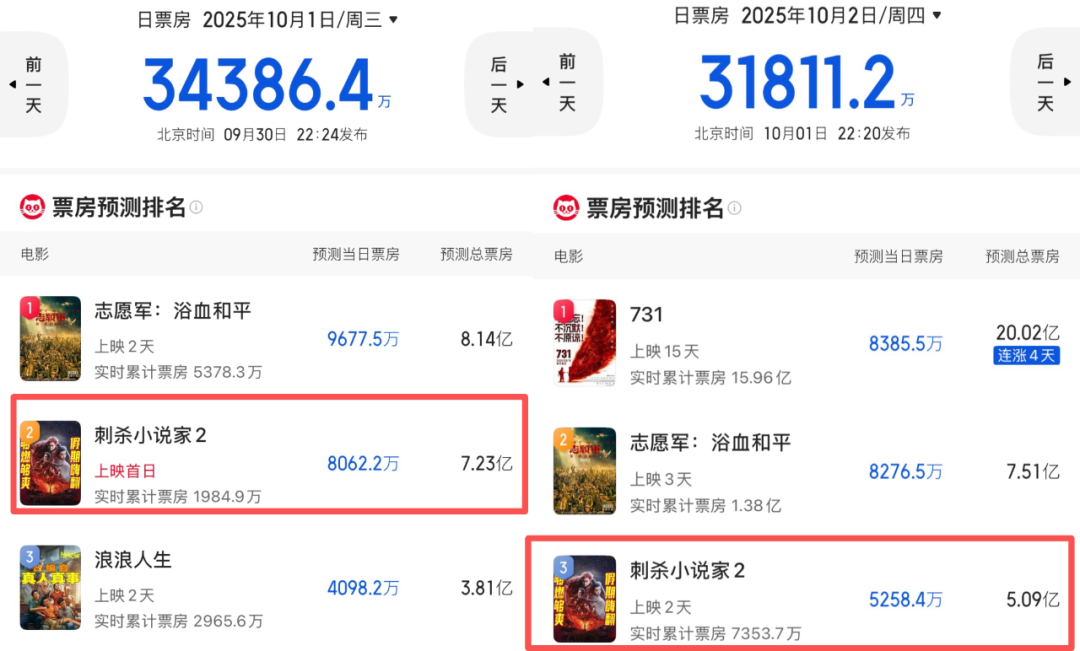
Core Viewpoint - The film "Assassination of the Novelist 2" has received mixed reviews, with its box office predictions being significantly lowered after its premiere, indicating potential financial struggles for the production [3]. Group 1: Film Overview - The theme of "Assassination of the Novelist 2" revolves around the concept of "who is the god of whom," featuring the real-life novelist Lu Kongwen and the protagonist from his novel [1]. - The film continues to explore the duality of two worlds, where the characters can influence each other's realities [11][12]. - The narrative structure involves frequent switching between the two worlds, which may confuse the audience and dilute emotional connections [14]. Group 2: Box Office and Financial Implications - The film reportedly has a production investment of 300 million, creating significant pressure to recoup costs [4]. - Initial box office figures show a decline in daily earnings, with the first day grossing approximately 80.62 million and a total of 198.49 million after two days [4]. Group 3: Production Quality and Imagination - The film has improved in production quality and imaginative elements compared to its predecessor, showcasing over 2,800 visual effect shots [22][26]. - The introduction of new characters and the concept of "dual crossing" allows for creative storytelling opportunities, enhancing the film's appeal [24][18]. Group 4: Story Completion and Critique - Despite advancements in production and imagination, the film suffers from a lack of narrative coherence, leading to a disjointed viewing experience [17][28]. - The emotional stakes and character motivations are often unclear, resulting in a failure to provide a strong emotional anchor for the audience [29][30]. - The film's conclusion lacks clarity regarding its thematic messages, leaving viewers uncertain about the intended takeaways [30][44].
Meta内部混乱持续:FAIR自由不再,LeCun考虑辞职
Hu Xiu· 2025-10-03 04:53
Core Insights - Meta has implemented a new policy requiring additional internal review of research results from the FAIR lab before public publication, causing significant unrest among employees [2][3] - The shift towards internal product focus and reduced external sharing of research is a part of Meta's broader restructuring of its AI business [4] - Tensions have arisen between the old and new teams within Meta, particularly following the appointment of new leadership from outside the company [6][10] Group 1: Internal Policy Changes - The new policy at FAIR lab has been perceived as a restriction on academic freedom, limiting researchers' ability to share their findings externally [3] - The internal review requirement is seen as a move to align FAIR's research more closely with Meta's product development goals [4] Group 2: Leadership and Cultural Tensions - Yann LeCun, co-founder of FAIR, has expressed dissatisfaction with the new direction and has considered resigning from his position as chief scientist [5][6] - The appointment of Alexandr Wang from OpenAI has led to concerns about perceived demotion among existing staff, contributing to a culture of discontent [6][7] Group 3: Organizational Structure and Challenges - Meta's new AI organization, the Super Intelligence Lab, is still in the early stages of integration, facing challenges typical of organizational change [8] - The lab has been restructured into four groups, with significant resources allocated to the development of the Llama 5 language model, which has attracted both interest and reluctance from researchers [9][15] Group 4: Employee Dynamics and Work Environment - The high-pressure environment created by substantial funding and attention has led to dissatisfaction among long-term employees, particularly regarding salary disparities with new hires [16] - The requirement for researchers in the TBD Lab to work on-site five days a week has caused friction with employees accustomed to more flexible arrangements [17] Group 5: Leadership Initiatives - New leadership is actively seeking to improve internal dynamics by empowering technical team members and reducing bureaucratic processes [19] - The success of Meta's ambitious AI initiatives hinges on navigating the current internal integration challenges effectively [20]

邪修MMT大战达里奥
Hu Xiu· 2025-10-03 03:35
Core Viewpoint - The article critiques Ray Dalio's understanding of sovereign debt issues, arguing that his microeconomic principles do not apply to sovereign currency nations [3][4][10]. Group 1: Critique of Dalio's Views - The first main point is that microeconomic principles are not applicable to sovereign currency nations, as governments can create their own currency and do not face the same constraints as individuals or companies [3][4]. - The second point is that macroeconomics is not a machine; it is influenced by changing environments and expectations, making it inappropriate to apply a one-size-fits-all approach to economic policy [7][10]. Group 2: Modern Monetary Theory (MMT) Discussion - The article suggests that the arguments presented align closely with Modern Monetary Theory (MMT), which has gained traction in Eastern economic discussions, contrasting with its perception in the West [10][12]. - It emphasizes that the government's ability to spend is not limited by money supply but by real resources, advocating for increased deficits in the context of insufficient domestic demand and excess capacity [13][12]. Group 3: Practical Implications - The article argues for a pragmatic approach to economic theory, suggesting that useful ideas from MMT should be adopted regardless of their traditional classification as heretical [14][15]. - It highlights a global shift towards practical, results-oriented economic thinking, moving away from rigid adherence to Western economic doctrines [15].
专访高圆圆:中年这道坎儿,我们都夸大了
Hu Xiu· 2025-10-03 03:01
Core Insights - The article explores the personal and professional evolution of actress Gao Yuanyuan, highlighting her journey from a timid young woman to a more confident and ambitious individual in her 40s [12][57]. Group 1: Personal Growth - Gao Yuanyuan reflects on her past, questioning whether a bit more courage could have changed her life [2]. - At 46, she finds fulfillment in balancing family life with her career, feeling nourished by her close relationships while also craving professional engagement [4][56]. - She acknowledges her past reliance on instinct in acting and expresses a desire to learn and explore new methods of performance [5][59]. Group 2: Career Development - The release of the film "Feng Lin Huo Shan" marks a turning point for Gao, as she takes on a challenging role that contrasts sharply with her previous characters [3][50]. - After years of limited output, she has recently completed multiple projects, indicating a renewed vigor in her career [55][56]. - Gao's approach to acting has evolved; she now actively seeks to enhance her skills and is open to exploring different aspects of her abilities [59][57]. Group 3: Reflections on Beauty and Identity - Gao Yuanyuan has grappled with the public's perception of her beauty, often feeling overshadowed by it, but has come to accept it as part of her identity [20][28]. - She expresses a desire to move beyond the labels of "beauty" and "goddess," embracing her complexity as an actress and individual [57][59]. - The article discusses her journey of self-acceptance and the realization that her worth is not solely tied to her appearance [26][28].

十几万啥都有?全新深蓝S07有点东西
Hu Xiu· 2025-10-03 03:01
Core Insights - The new Deep Blue S07 has received overwhelmingly positive feedback during test drives, indicating a strong market reception for the vehicle [1] Group 1 - The test drive experience highlighted a mix of praise and critique, but the overall sentiment was highly favorable towards the Deep Blue S07 [1] - The vehicle is noted for providing a premium experience at a competitive price point, raising questions about how the company achieved this balance [1]