Hu Xiu

Search documents
废美联储,立稳定币,特朗普为什么赌加密货币?
Hu Xiu· 2025-10-03 03:01
Core Insights - The article discusses the increasing acceptance of cryptocurrencies, particularly Bitcoin, as a strategic reserve asset, alongside the introduction of stablecoin legislation in the U.S. [1] - It raises questions about the motivations behind these developments, particularly in relation to former President Trump's actions and the broader implications for the financial industry [1] - The article also explores the differences between various types of cryptocurrencies, including stablecoins and meme coins, and their respective roles in the financial ecosystem [1] Group 1 - The emergence of Bitcoin as a strategic reserve asset indicates a shift in how cryptocurrencies are perceived in traditional finance [1] - The introduction of stablecoin legislation reflects a growing regulatory framework aimed at integrating cryptocurrencies into the mainstream financial system [1] - The article suggests that the U.S. government's actions may be aimed at leveraging cryptocurrencies to transform the financial industry [1] Group 2 - Different types of cryptocurrencies serve distinct purposes, with stablecoins designed to maintain value stability and meme coins often driven by speculative interest [1] - The article implies that the convergence of these various cryptocurrency types could lead to a more cohesive financial strategy [1] - The motivations behind these developments may include economic benefits and the potential for innovation within the financial sector [1]
后新冠时代,疫苗领跑者Moderna前景如何?
Hu Xiu· 2025-10-03 02:04
Core Viewpoint - Moderna is a global leader in mRNA technology, with its development journey marked by three key phases: foundational technology establishment, explosive growth driven by the COVID-19 pandemic, and a challenging diversification phase in the post-pandemic era [2][10]. Group 1: Development History - Moderna was founded in 2010 in Massachusetts, focusing on solving core challenges in mRNA technology [3]. - The name "Moderna" is derived from "Modified RNA," reflecting its technological core [4]. - Initially, the company operated in stealth mode with support from Flagship Pioneering, concentrating on fundamental scientific challenges in mRNA [6]. - A significant milestone was reached in 2013 with a $240 million upfront payment from AstraZeneca, validating its technology platform [7]. - In 2015, Moderna's first candidate vaccine, mRNA-1440, entered Phase I clinical trials, marking its transition to clinical validation [8]. - Moderna went public in 2018, achieving the largest IPO in global biotech history at that time, raising crucial capital for its ambitious R&D pipeline [9]. Group 2: COVID-19 Boom and Explosive Growth - The COVID-19 pandemic acted as a catalyst for Moderna's potential, leading to rapid development of the mRNA-1273 vaccine, which received emergency use authorization in 2020 [11]. - The success of the COVID-19 vaccine resulted in explosive revenue and profit growth, transforming Moderna from a cash-burning R&D company to a well-known commercial biopharmaceutical giant [12]. Group 3: Strategic Transformation and Diversification - As global COVID-19 cases stabilize and vaccine demand declines, Moderna entered a critical strategic transformation phase in 2023 [13]. - The company shifted its focus from reliance on a single COVID-19 product to building a diversified product portfolio [14]. - The R&D pipeline now spans other infectious disease vaccines (e.g., RSV, influenza), cancer immunotherapy (e.g., personalized cancer vaccines), and treatments for rare diseases [15]. - Moderna anticipates a net loss of approximately $800 million in 2025, reflecting a sharp decline in post-pandemic revenues [16]. Group 4: Core Investment Value - The core investment value of Moderna lies in its robust late-stage pipeline, particularly two major products: - Personalized cancer vaccine mRNA-4157, in collaboration with Merck, is undergoing Phase III trials for melanoma and non-small cell lung cancer, with data expected in 2026 [17]. - Seasonal influenza vaccine mRNA-1010 shows potential superiority over existing vaccines, with a projected market entry in 2025-2026 [18]. Group 5: Competitive Advantages and Technology Platform - Moderna's primary competitive advantage is its end-to-end mRNA technology platform, designed to guide human cells in producing specific proteins for disease prevention or treatment [19]. - The platform consists of three pillars: - Nucleotide modification technology enhances mRNA stability and translation efficiency [21]. - Lipid nanoparticle (LNP) delivery system ensures precise and efficient drug delivery [22]. - Scalable production processes allow rapid application across different products, aiming for long-term gross margins of 75%-80% [23]. Group 6: Product Pipeline and Market Potential - Moderna has over 40 projects in its pipeline, covering infectious diseases, cancer immunotherapy, rare diseases, and autoimmune diseases, creating a diversified product matrix [30]. - Key late-stage assets expected to contribute revenue in the coming years include CMV vaccine (mRNA-1647), influenza vaccine (mRNA-1010), and personalized cancer vaccine (mRNA-4157), targeting multi-billion dollar markets [31]. Group 7: Financial Data Analysis - Moderna's revenue is projected to plummet from $19.3 billion in 2022 to $1.93 billion in 2024, with a net loss of approximately $800 million expected in 2025 [43]. - The company has lowered its 2025 revenue guidance from $1.5-2.5 billion to $1.5-2.2 billion due to deferred contract revenues [44]. - To address revenue declines, Moderna has initiated a comprehensive cost control plan, including a 10% workforce reduction and a 25% cut in capital expenditure guidance for 2025 [45][46]. Group 8: mRNA Vaccine Market Landscape - The global mRNA drug market is experiencing strong growth, expanding from infectious disease vaccines to cancer immunotherapy and rare disease treatments [51]. - The market is currently dominated by a duopoly of Moderna and Pfizer/BioNTech, with Moderna holding approximately 24.2% market share and Pfizer/BioNTech at 19.8% [54]. - Both companies are diversifying their product pipelines, focusing on new areas such as influenza and RSV vaccines [55].



国庆音乐节超36场,流量艺人首秀是“新贵”还是“暗雷”?
Hu Xiu· 2025-10-03 00:41
Core Insights - The article discusses the emergence of "debut performances" by actors at music festivals during the National Day holiday, highlighting a trend towards diversification in the entertainment industry [1][5][15] Group 1: Industry Trends - The National Day music festival features several actors making their music festival debuts, which has sparked discussions and controversies [1][2] - The overall performance market is characterized by a push for newness, both in terms of artist lineups and innovative event formats [2][5] - The trend of actors participating in music festivals reflects a broader industry shift towards cross-genre collaborations, aiming to attract diverse audiences [7][15] Group 2: Market Dynamics - The demand for music festivals has led to a surge in performances by popular actors, with some artists already scheduled for multiple festival appearances during the holiday [6][12] - The cancellation of the Zhangjiakou Dalu Youth Music Festival due to contractual breaches highlights vulnerabilities in the execution chain within the industry [9][10] - The music festival market is experiencing structural changes, with smaller festivals becoming more prevalent, indicating a need for improved service and audience engagement [13][14] Group 3: Audience Engagement - The article notes that the audience's perception of quality and professionalism is becoming increasingly important, as they seek more than just star power [8][13] - The integration of online and offline experiences, such as live-streamed concerts, is becoming a popular strategy to enhance audience reach and engagement [14][15] - The industry's focus on maintaining a balance between attracting attention and ensuring high-quality performances is crucial for long-term success [8][15]
“大电池”的天快塌了
Hu Xiu· 2025-10-03 00:34
Core Viewpoint - The article discusses the ongoing "arms race" in the electric vehicle (EV) sector, focusing on battery size and range rather than technology or safety, highlighting the implications of lithium prices and the future of large batteries in the market [1][5]. Group 1: Battery Range and Market Dynamics - Several electric vehicle models have achieved ranges exceeding 700 kilometers, with notable examples including Zeekr 009 at 900 kilometers and Tesla Model 3 at 830 kilometers [2]. - The demand for lithium carbonate surged in 2022, with prices peaking at over 600,000 yuan per ton due to supply chain constraints [3]. - Starting in 2023, lithium supply growth is expected to outpace demand, leading to a significant price drop, with projections indicating a fall to around 60,000 yuan per ton by mid-2025 [4]. Group 2: Cost Implications and Competitive Strategies - The cost of lithium carbonate is a major factor in battery production, with a decrease from 500,000 yuan per ton to 80,000 yuan per ton resulting in a reduction of battery material costs by 34,000 yuan for an 80 kWh battery [4]. - As a result of price wars, increasing battery capacity and range has become a primary competitive strategy among automakers [4][5]. - The article suggests that the lithium price has likely bottomed out, with a recent rebound indicating a potential price reversal by late 2025 or early 2026 [4][5]. Group 3: Charging Infrastructure and Technological Innovations - The introduction of fast-charging technologies, such as BYD's "Megawatt Flash Charge," aims to significantly reduce charging times, potentially reshaping consumer perceptions of EVs [10][11]. - Current charging infrastructure is inadequate, with public charging stations serving far fewer vehicles compared to traditional gas stations, leading to economic inefficiencies [12][16]. - The government is pushing for the construction of high-capacity charging facilities, with plans to build over 100,000 stations by 2027, aligning with corporate strategies to enhance charging networks [18][20]. Group 4: Future Trends and Market Adaptation - The article predicts that solid-state batteries will begin mass production by 2027, potentially transforming the EV landscape alongside advancements in fast-charging technology [21]. - Plug-in hybrid vehicles are gaining traction as they offer a balance between electric and traditional fuel efficiency, appealing to consumers who are hesitant about fully electric options [22][28]. - The article concludes that the reliance on large batteries will diminish as new technologies and market dynamics evolve, likening large batteries to outdated technologies [5][28].


日本自民党党首明日选举,会有何影响?
Hu Xiu· 2025-10-03 00:15
Group 1 - The upcoming election for the president of Japan's ruling Liberal Democratic Party (LDP) features candidates including current Minister of Agriculture, Forestry and Fisheries Shinjiro Koizumi, former Minister of Economic Security Sanae Takaichi, and others, with predictions indicating a competitive race primarily between Koizumi and Takaichi [1][2][3] - Regardless of who wins the election, Japan's political landscape is expected to remain unstable, with a pattern of frequent leadership changes likely to continue [1][6][11] - The political cycle in Japan has been characterized by a lack of clear economic policies, contributing to the ongoing instability and dissatisfaction among the populace [7][21] Group 2 - The relationship between Japan and China is anticipated to remain unchanged despite the new party leader, with ongoing tensions likely to persist [2][24] - The economic ties between Japan and China have shown stability, with bilateral trade figures indicating a slight increase from 32.55 trillion yen (approximately 312.4 billion USD) in 2014 to 32.65 trillion yen (approximately 269.86 billion USD) in 2024, suggesting that economic relations are not significantly affected by political tensions [24][25] - The candidates for the LDP presidency have not proposed new strategies for Japan's economic relationship with the United States, which is crucial given the impact of U.S. tariffs on Japan's economy, including a projected GDP decrease of 0.4% due to these tariffs [17][18][20]
用简单信号就能打开特斯拉充电盖,车主们害怕吗?
Hu Xiu· 2025-10-02 23:43
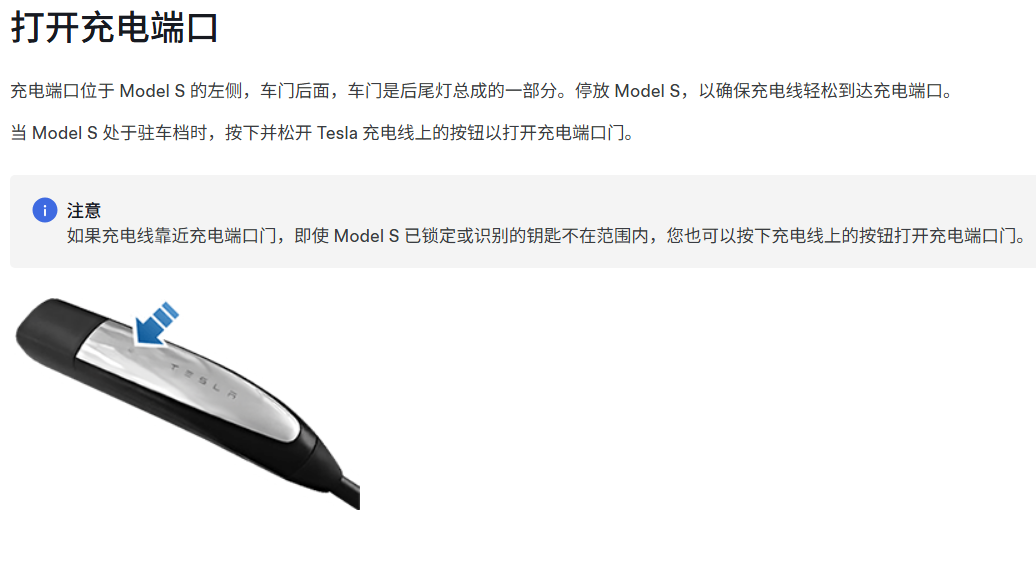
Core Viewpoint - The article discusses the security vulnerabilities associated with Tesla's charging port design, highlighting how easily it can be opened remotely, which poses risks to vehicle safety and integrity [1][3][17]. Group 1: Security Risks - The Tesla charging port can be opened easily, even when the car is locked, using a simple remote device that emits a frequency signal [10][11]. - This design lacks signal encryption, making it susceptible to unauthorized access and potential misuse [11][13]. - There are concerns about physical damage to the charging port and cover due to external forces, which could lead to increased maintenance costs [4][23]. Group 2: User Experience - The convenience of opening the charging port without unlocking the car is noted as a significant advantage, allowing for easier charging [17][18]. - Users have reported instances where the charging port opened unexpectedly, leading to safety concerns during operation [5][6]. - Despite the risks, many Tesla owners still perceive the convenience of the design to outweigh the potential dangers [39]. Group 3: Comparison with Domestic Electric Vehicles - Domestic electric vehicles typically use more secure methods for opening charging ports, such as touch-sensitive or encrypted Bluetooth systems, making them less vulnerable to unauthorized access [33][36]. - Most domestic electric vehicles also include rubber seals for added protection, enhancing safety compared to Tesla's design [37]. Group 4: Recommendations for Improvement - The article suggests that Tesla could enhance security by implementing a simple software upgrade to encrypt the frequency signals used to open the charging port, thus improving safety without significantly compromising convenience [42][43].

山姆,还要背刺中产多少次?
Hu Xiu· 2025-10-02 13:10
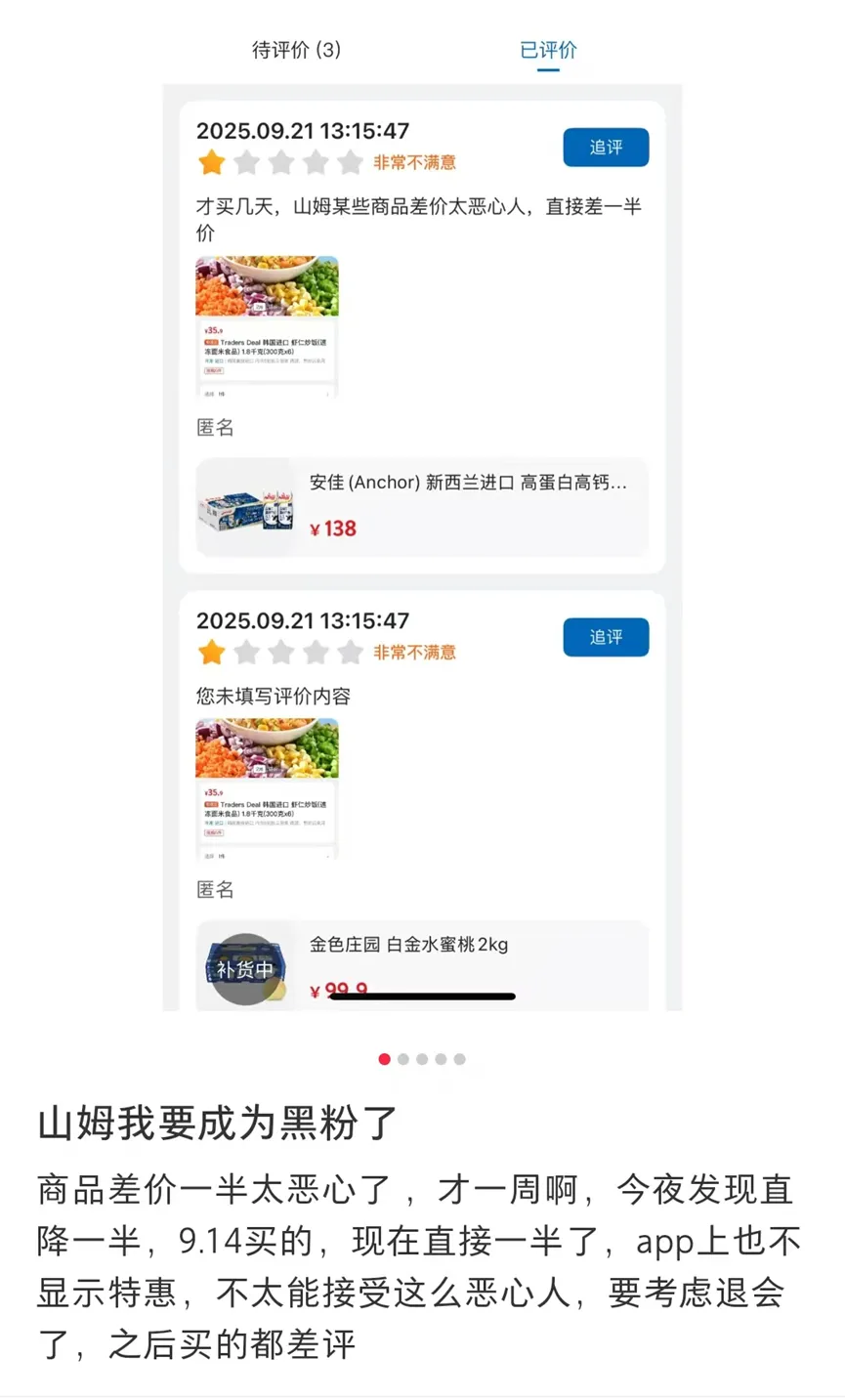
Core Insights - Sam's Club, once viewed as a "beacon of quality living" for middle-class families, is experiencing a decline in trust among its members [1] - Recent controversies, including price discrepancies and quality issues, have led to dissatisfaction among consumers [2][3] Price and Quality Trust Issues - A viral topic highlighted a significant price difference for the same snack, with Sam's Club charging 99.9 yuan while a discount channel offered it for 39.9 yuan [3] - Members are questioning the value of their annual membership fees, which can amount to several hundred yuan, as they feel misled by the perceived quality and pricing [4][10] - Complaints about price drops shortly after purchases have increased, with members expressing frustration over lack of price protection [10][16] - Quality concerns have emerged, with reports of spoiled or defective products, leading to a loss of trust in the brand [17][20][24] Strategic Adjustments and Controversies - The recent controversies are attributed to changes in the management team, particularly the departure of former president Wern-Ander and the appointment of Jane Ewing [36][37] - Ewing's strategy focuses on rapid expansion, data-driven operations, and cost reduction, which has led to a streamlined supply chain and product development process [38][39][42] - Despite impressive sales figures, the core issue remains the trust that members place in the brand, which is essential for the membership model [51][55] - The rapid expansion and shortened product cycles have raised questions about the consistency of product selection and quality standards [54][55]

我们都被审计报告骗了
Hu Xiu· 2025-10-02 11:52
Group 1 - The article discusses the limited value of audit reports in due diligence processes, suggesting that they often provide little useful information for investors [4][5][6] - It highlights that many investors rely solely on audit reports, which are often just basic Excel spreadsheets, indicating a lack of depth in the information provided [3][7] - The author emphasizes that the quality of audit reports varies significantly, with larger firms generally providing more valuable reports compared to smaller firms [32][24][46] Group 2 - The article points out that the audit industry has a high concentration of business, with 95% of listed company audits concentrated among the top firms, leading to a significant experience gap [24][25][22] - It mentions that many companies opt for smaller firms due to cost, resulting in less rigorous audit reports that often lack detailed disclosures [38][42] - The author notes that despite recent efforts to standardize audit reports through a national registration system, many unregistered reports still circulate in the market [50][52] Group 3 - The article reveals that a significant number of unregistered audit reports are still being produced, with one firm reportedly issuing 35,000 unregistered reports over two years [63][64] - It discusses the low wages of employees in the audit sector, raising questions about the sustainability and profitability of such firms [67][68] - The author calls for a push towards the standardization of audit reports and the importance of rejecting unregistered reports to enhance the value of audit work [72][75]
医疗改革问路(下)——中国医改步入铁腕时代
Hu Xiu· 2025-10-02 11:01
Core Viewpoint - The article draws a parallel between the myth of Sisyphus and the ongoing challenges of medical reform in China, suggesting that while progress is made, the struggle to balance drug pricing and innovation continues indefinitely [1] Group 1: Medical Reform - In 2018, China introduced a centralized procurement system as part of its medical reform efforts, aimed at combating high drug prices [1] - After seven years of implementation, by 2025, the industry is beginning to oppose the "low-price only" approach, advocating for stable profits for companies to ensure innovation [1] - The medical insurance policy must maintain existing achievements while balancing the interests of the market, government, and the public regarding drug pricing [1]
黄金还将继续闪耀?
Hu Xiu· 2025-10-02 10:41
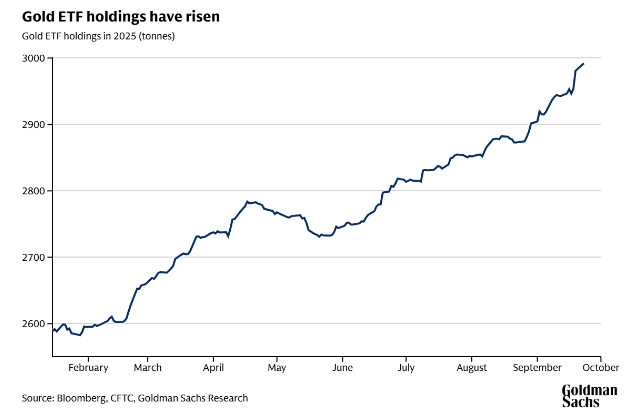
Core Viewpoint - Goldman Sachs indicates that the recent surge in gold prices is driven by strong interest from private investors, suggesting further upside potential that may exceed previous forecasts [2][10]. Group 1: Gold Price Movement - Gold prices are currently trading around $3,865 per ounce, continuing a five-day upward trend and approaching the $4,000 milestone [1]. - Year-to-date, gold has surged nearly 50%, surpassing the highest inflation-adjusted record set in 1980 [7]. - Since August 29, gold prices have increased by over 10%, breaking through previous trading ranges of $3,200 to $3,450 per ounce [7]. Group 2: Investor Behavior - Private investors are significantly increasing their investments in gold, with September inflows into gold ETFs reaching 109 tons, far exceeding the model's predicted 17 tons [9]. - The report highlights two types of gold buyers: steadfast buyers who consistently purchase regardless of price, and opportunistic buyers who enter the market only when prices are favorable [9]. - Steadfast buyers, including central banks and ETFs, have a notable impact on price movements, with a net purchase of 100 tons of gold correlating to a 1.7% increase in gold prices [8]. Group 3: Central Bank Demand - Central banks are expected to continue increasing their gold purchases, with a structural shift in reserve management observed since the onset of the Russia-Ukraine conflict [8]. - A recent survey indicated that 95% of central banks anticipate increasing their gold holdings over the next 12 months, with 43% planning to buy more gold, the highest level since 2018 [8]. - Goldman Sachs predicts that the trend of central banks increasing gold allocations will persist for at least three years, particularly among emerging market central banks [8].