理想TOP2

Search documents
理想超充站2916座|截至25年7月22日
理想TOP2· 2025-07-22 13:22
Core Viewpoint - The company is progressing towards its goal of establishing over 4000 supercharging stations by the end of 2025, with a current completion rate of 52.31% for this year [1] Group 1: Supercharging Station Development - Total number of supercharging stations has increased from 2908 to 2916 [1] - The company needs to build 1084 more stations to meet the 2025 target [1] - The current progress for new stations this year is at 52.31%, with 162 days remaining in the year [1] - To achieve the year-end target, the company needs to install an average of 6.69 stations per day [1] Group 2: New Stations Details - Eight new supercharging stations have been established, including locations in Beijing, Nanjing, Hohhot, Chengdu, Tianjin, and Chongqing [1] - Each new station in urban areas is designed with a specification of 4C × 6, while the stations in Chongqing are designed as highway service stations with specifications of 2C × 6 and 5C × 2 [1]


可以留意一下10位业内人士如何看VLA
理想TOP2· 2025-07-21 14:36
Core Viewpoints - The current development of cutting-edge technologies in autonomous driving is not yet fully mature for mass production, with significant challenges remaining to be addressed [1][27][31] - Emerging technologies such as VLA/VLM, diffusion models, closed-loop simulation, and reinforcement learning are seen as potential key directions for future exploration in autonomous driving [6][7][28] - The choice between deepening expertise in autonomous driving or transitioning to embodied intelligence depends on individual circumstances and market dynamics [19][34] Group 1: Current Technology Maturity - The BEV (Bird's Eye View) perception model has reached a level of maturity suitable for mass production, while other models like E2E (End-to-End) are still in the experimental phase [16][31] - There is a consensus that the existing models struggle with corner cases, particularly in complex driving scenarios, indicating that while basic functionalities are in place, advanced capabilities are still lacking [16][24][31] - The industry is witnessing a shift towards utilizing larger models and advanced techniques to enhance scene understanding and decision-making processes in autonomous vehicles [26][28] Group 2: Emerging Technologies - VLA/VLM is viewed as a promising direction for the next generation of autonomous driving, with the potential to improve reasoning capabilities and safety [2][28] - The application of reinforcement learning is recognized as having significant potential, particularly when combined with effective simulation environments [6][32] - Diffusion models are being explored for their ability to generate multi-modal trajectories, which could be beneficial in uncertain driving conditions [7][26] Group 3: Future Directions - Future advancements in autonomous driving technology are expected to focus on enhancing safety, improving passenger experience, and achieving comprehensive scene coverage [20][28] - The integration of closed-loop simulations and data-driven approaches is essential for refining autonomous driving systems and ensuring their reliability [20][30] - The industry is moving towards a data-driven model where the efficiency of data collection, cleaning, labeling, training, and validation will determine competitive advantage [20][22] Group 4: Career Choices - The decision to specialize in autonomous driving or shift to embodied intelligence should consider personal interests, market trends, and the maturity of each field [19][34] - The autonomous driving sector is perceived as having more immediate opportunities for impactful work compared to the still-developing field of embodied intelligence [19][34]

理想超充站2908座|截至25年7月21日
理想TOP2· 2025-07-21 14:36
Core Viewpoint - The article discusses the progress of the company's supercharging station construction, highlighting the current status and future targets for expansion [1]. Group 1: Supercharging Station Construction - The total number of supercharging stations has increased from 2901 to 2908, with a target of over 4000 stations by the end of 2025, leaving 1092 stations to be built [1]. - The progress for new stations this year has improved from 51.65% to 51.96%, with 163 days remaining in the year [1]. - To meet the year-end target, an average of 6.70 new stations need to be constructed daily [1]. Group 2: New Stations Details - Seven new supercharging stations have been added, located in various cities across different provinces, including: - Jiangmen, Guangdong: 4C × 6 configuration - Zhongshan, Guangdong: 4C × 6 configuration - Yangzhou, Jiangsu: 4C × 8 configuration - Chengdu, Sichuan: Two 5C stations at Yongxing Service Area with configurations of 2C × 3 and 5C × 1 - Chengdu, Sichuan: 4C × 6 configuration at the Fuleya Garden Hotel - Ningbo, Zhejiang: 4C × 6 configuration at the Dream Innovation Valley Science and Technology Park [1].
将理想i8销量预期从从6-10K提升至7-12K
理想TOP2· 2025-07-20 11:01
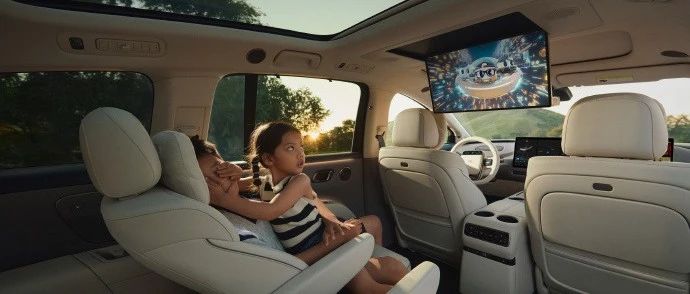
Core Viewpoint - The i8 model is expected to achieve sales between 7,000 to 12,000 units, significantly higher than the previously estimated 6,000 to 10,000 units, due to its competitive features and pricing strategy [2]. Group 1: Sales Projections - Initial sales projection for i8 was set at 6,000 to 10,000 units, based on the assumption that MEGA could achieve monthly sales of 2,000 to 3,000 units, with i8 expected to outperform MEGA by 2 to 3 times [1]. - The revised sales projection for i8 is now 7,000 to 12,000 units, with MEGA expected to maintain monthly sales of over 3,000 units from August to December [2]. Group 2: Product Features and Comparisons - i8's interior quality is noted to be a step above that of L9 and MEGA, featuring enhancements such as a zero-gravity seat in the second row and a 21.4-inch screen, which contribute to a more luxurious feel [2]. - The i8 is positioned as a cost-effective alternative, offering 90% of MEGA's product capabilities at 70% of its price, and 110-115% of L9's capabilities at 85% of its price [2]. - The i8 is described as the "king of product capability" in the 350,000 RMB price segment in China [2]. Group 3: Target Customer Profile - The primary target customers for the i8 are families looking for a three-row electric vehicle, particularly those with two or more children or those needing to transport additional family members [3]. - A significant portion of potential i8 buyers (over 50%) may currently own gasoline vehicles, indicating a broader market appeal beyond just electric vehicle switchers [3]. Group 4: Competitive Landscape - The i8 is expected to capture orders from the L series, although the exact impact on L series sales remains uncertain [3]. - Customers who find the MEGA's price manageable but are concerned about its size may lean towards the i8, while those who can afford the L9 may also consider the i8 as an alternative [4].
理想超充站2901座|截至25年7月20日
理想TOP2· 2025-07-20 11:01
Core Insights - The article discusses the progress of the company's supercharging station construction, highlighting the increase in the number of stations and the targets set for the future [1] Group 1: Supercharging Station Progress - The total number of supercharging stations has increased from 2893 to 2901, with a target of over 4000 stations by the end of 2025, leaving 1099 stations to be built [1] - The progress for new stations this year has improved from 51.30% to 51.65%, with 164 days remaining in the year [1] - To meet the year-end target, the company needs to build an average of 6.70 stations per day [1] Group 2: New Stations Details - Eight new supercharging stations have been completed, located in various cities across different provinces, including: - Longyan, Fujian: 4C × 6 configuration - Xiamen, Fujian: 4C × 6 configuration - Yangjiang, Guangdong: 4C × 4 configuration - Luoyang, Henan: 5C × 4 configuration - Zhengzhou, Henan: 4C × 6 configuration - Wuxi, Jiangsu: 4C × 6 configuration - Fuzhou, Jiangxi: 4C × 6 configuration - Shenyang, Liaoning: 4C × 6 configuration [1]
群友分析售价20万元以上品牌/车型销量市场
理想TOP2· 2025-07-18 14:10
Core Viewpoints - The main competitors in the new energy vehicle market over the next five years will still be fuel vehicles, with the core competitive point being the differentiated product matrix supply capability for models priced above 200,000 yuan, which currently has significant room for improvement in supply [2][3] - The market share of vehicles priced above 200,000 yuan is expected to exceed 60% in the next 5-10 years, up from the current 30%. The leading brand in this price segment is likely to exceed a 25% market share, potentially surpassing 30%, indicating annual sales exceeding 3 million units [2][3] - The new energy vehicle market is awaiting its "iPhone 4 moment," where technology and blockbuster products mature, leading to a significant increase in market concentration [2][4] Market Analysis - In 2024, the domestic passenger car sales are projected to be approximately 22.6 million units, with fuel vehicles accounting for about 11.5 million units, representing a market share of around 51%. The sales of models priced above 200,000 yuan are estimated at about 6.6 million units, making up 30% of total sales, with fuel vehicles contributing approximately 4.2 million units [3][6] - The market share of fuel vehicles in the 200,000 yuan price range remains substantial, currently at 64%. Despite significant price reductions in the past year to maintain market share, the trend is set, and the market is awaiting the arrival of the "iPhone 4 moment" [3][4] iPhone 4 Moment - The "iPhone 4 moment" refers to two key turning points: the maturity of 3G technology, which allowed smartphones to surpass traditional computers in user experience, and the decline of traditional phone brands' flagship models, which led to a loss of cash flow for R&D and ultimately market exit. This parallels the potential decline in sales of fuel vehicles priced above 200,000 yuan [4][5] Price Segment Analysis - The market share of vehicles priced above 200,000 yuan has increased from 9% in 2019 to 30% in 2023. It is anticipated that this segment will exceed 60% in the next five years, corresponding to sales of at least 12 million units domestically [6][7] - The brands and products in this price segment are crucial for generating sufficient profits to support R&D, branding, and market promotion, creating a flywheel effect. Additionally, this price segment attracts a broad customer base, enhancing brand momentum [6][7] Brand Market Share - In the segment of vehicles priced above 200,000 yuan, the top six fuel vehicle brands hold a market share of approximately 55%, while the top four new energy brands account for about 26-27% [16][17] - The future market structure is expected to resemble the smartphone industry, where a few brands dominate the high-end market. The leading brand in the new energy vehicle segment could capture around 25% of the market share, with annual sales exceeding 3 million units if the overall passenger car sales reach 20 million [17][29] Sales Performance - The average monthly sales of models priced above 200,000 yuan that exceed 10,000 units are defined as "blockbuster products." Currently, only six major fuel vehicle brands and four new energy brands have this capability, with these models accounting for 65% of the overall sales in this price segment [18][19] - The performance of Li Auto is particularly notable, as achieving a market share of 25-30% in the SUV segment priced above 200,000 yuan would significantly enhance its market position before expanding into the sedan market [29][30]
理想超充站2892座|截至25年7月18日
理想TOP2· 2025-07-18 14:10
来源:北北自律机 25年07月18日星期五 理想超充 2 新增。 超充建成数:2890→2892座 广东省 广州 新安服务区(珠三角环线高速广州花都方向) 为高速服务区5C站,规格:2C × 5 5C × 1 基于2025年底4000+座目标 还剩1108座 今年新增数进度值:51.17%→51.25% 今年剩余166天 今年时间进度值:54.52% 需每日 6.67 座,达到年底目标值 【附】2 座新增建成 四川省 成都市 成都美高登A座 为城市5C站,规格:2C × 6 5C × 2 加微信,进群深度交流理想实际经营情况与长期基本面。不是车友群。 ———————————————————— ...
理想超充站2890座|截至25年7月17日
理想TOP2· 2025-07-17 14:06
Core Viewpoint - The company is progressing towards its goal of establishing over 4000 supercharging stations by the end of 2025, with a current completion rate of 51.17% for the year [1]. Group 1: Supercharging Station Development - The total number of supercharging stations has increased from 2881 to 2890, with 1110 stations remaining to meet the 2025 target [1]. - The current progress for new stations this year is at 51.17%, with 167 days left in the year [1]. - To achieve the year-end target, an average of 6.65 new stations need to be built daily [1]. Group 2: New Stations Details - Nine new supercharging stations have been completed, located in various regions including Jiangsu, Shandong, Zhejiang, and Chongqing [1]. - Specific details of the new stations include: - Jiangsu Province: Two stations at Lvyu Port Service Area, each with specifications of 2C × 7 and 5C × 1 [1]. - Shandong Province: One station at Rizhao Hongxing Meikailong, with specifications of 2C × 3 and 5C × 1 [1]. - Zhejiang Province: Two stations at Huzhou and Haining, with specifications of 4C × 6 and 4C × 4 respectively [1]. - Chongqing: Three stations at various service areas, each with specifications of 2C × 6 and 5C × 2 [1].
自6月27日后理想再提VLA, 没给多久发的预期
理想TOP2· 2025-07-17 14:06
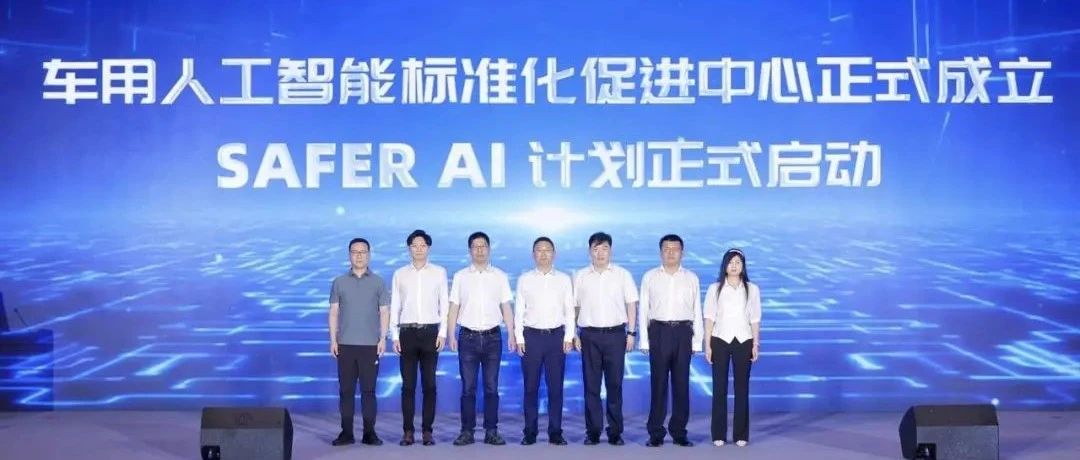
Core Viewpoint - The article emphasizes the advancements in Li Auto's VLA (Vehicle Language Assistant) technology, highlighting its capabilities in intelligent driving and AI security, as well as the company's leadership role in the newly established Automotive AI Standardization Promotion Center. Group 1: VLA Technology Advancements - Li Auto's VLA can understand and execute voice commands for driving tasks, enhancing user experience by integrating visual, linguistic, and behavioral capabilities into a single chip [4][6]. - The VLA system employs a newly designed architecture that combines end-to-end models with logical reasoning, optimizing driving decisions and trajectory predictions to improve vehicle performance in complex environments [6][7]. - The VLA incorporates user interaction features, allowing drivers to communicate their needs easily, such as finding locations or adjusting driving speed [7][9]. Group 2: AI Security Measures - Li Auto has established a comprehensive security framework that covers vehicles, cloud services, apps, and charging networks, creating a robust defense system against potential threats [9][12]. - The article discusses the complexity of AI-targeted attacks, which can manipulate AI decision-making through subtle inputs, necessitating advanced defensive strategies [9][11]. - Li Auto is focusing on building an AI security capability system that addresses adversarial attacks, safety alignment, and behavioral constraints through continuous innovation and validation [11][12]. Group 3: Standardization Initiatives - The Automotive AI Standardization Promotion Center has been established to focus on AI safety management, risk governance, and the development of international standards for automotive AI [13][14]. - Li Auto has taken a leadership role in two research groups within the center, aiming to integrate research outcomes into products to enhance safety and intelligence in driving experiences [16][12]. - The SAFER AI initiative has been launched to create a comprehensive framework for AI safety assessment, engineering research, and standard development in the automotive sector [14][16].
定量分析理想各车型维持稳态能力以及与部分友商车型比较
理想TOP2· 2025-07-16 14:58
Core Insights - The article analyzes the stability of various electric vehicle models' sales performance over a defined period, highlighting the Ideal L series as having strong stability compared to competitors [1][2]. Group 1: Stability Analysis - The Ideal L series maintains a relatively strong stability capability among competitors, with the L8 being slightly less stable and the MEGA showing significant fluctuations in monthly sales [1]. - By June 2025, the sales stability of the Xiaopeng P7 and M03 over 8 and 10 months, respectively, is significantly better than that of the L689 over the same duration, and comparable to the L7 under a lenient calculation method [1][2]. - The Wanjie M8 has only 3 months of data, making it less meaningful for comparison, while the M9 is noted as the strongest in stability within the Hongmeng system but still weaker than the Ideal L series over the same time frame [1][2]. Group 2: Variability Coefficient (CV) Definition - The stability capability is defined as the coefficient of variation (CV), calculated as the standard deviation divided by the average monthly sales over a specific period; a lower CV indicates stronger stability [2]. - The article emphasizes that due to limited data for many models, the CV should not be the sole measure of stability, and other factors such as outliers and cross-year influences should be considered [2]. Group 3: Statistical Results - Among 30 models analyzed, the Xiaopeng P7+ and MONA M03 have the lowest CVs at 14.11% and 17.35%, respectively, with both models having data spanning across years [3]. - The Ideal L series models have varying CVs, with L6, L7, L8, and L9 showing CVs of 38.05%, 18.08%, 21.59%, and 20.06% respectively over the first 8 months [4]. - The Wanjie M7 has a notably high CV of 87.02%, indicating the weakest stability among the 30 models analyzed, while the D9 shows a strong stability with a CV of 20.74% [5]. Group 4: Long-term Sales Implications - The article suggests that while short-term sales may correlate with brand momentum, long-term sales will tend to revert to the average product strength, indicating that the M9, despite being stronger than the M7, still has weaker stability compared to the Ideal L series over the same time period [5].