理想TOP2

Search documents
基于14个主流20万以上品牌看理想市占率变化
理想TOP2· 2025-07-28 09:23
Core Viewpoint - The article analyzes the market share trends of various automotive brands, particularly focusing on Li Auto and its competitors, highlighting fluctuations in market share from January 2023 to June 2025 [1][2]. Market Share Trends - Li Auto's market share increased from 6.97% in January 2023 to a peak of 13.14% in October 2023, before declining to 11.33% and 11.59% in November and December respectively [1]. - In 2024, Li Auto's market share fluctuated between 8.34% and 9.77% until June, when it rose to between 11.17% and 14.36% following the delivery of the L6 model [1]. - By June 2025, Li Auto's market share dropped to 9.35%, indicating a significant decline compared to the previous year [2]. Competitor Analysis - The article notes that while some readers perceive Seres/Wenjie as having a faster iteration speed compared to Li Auto, Seres' market share has not surpassed its peak since February 2024 [3]. - The market share of Seres reached a high of 10.66% in June 2024, but overall sales have not significantly increased despite a higher market share in the 400,000+ price segment [3]. - A comparison of market share changes from July 2024 to June 2025 shows declines for several brands, including Li Auto, NIO, and BMW, while Seres saw a slight increase of 0.38% [4]. Combined Market Share Insights - The combined market share of Li Auto and Seres reached a high of 25.49% in July 2024, suggesting that increases in one brand's share do not necessarily correlate with decreases in the other's [5]. - The expectation is that with the ongoing deliveries of new models, the combined market share of Li Auto and Seres could surpass the previous high of 25.49% [5].


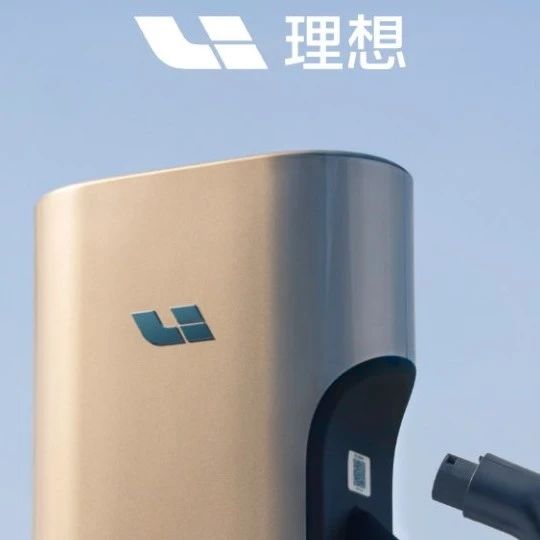
理想超充站2961座|截至25年7月27日
理想TOP2· 2025-07-27 15:27
Group 1 - The article discusses the progress of the company's supercharging station construction, with a total of 2961 stations completed as of the latest update, moving towards a target of over 4000 stations by the end of 2025 [1] - The current progress rate for new stations this year has increased from 53.89% to 54.29%, with 157 days remaining in the year [1] - To meet the year-end target, the company needs to complete an average of 6.62 new stations per day [1] Group 2 - The article lists the newly constructed supercharging stations, including locations in Guangdong, Guizhou, Henan, Jiangsu, Shaanxi, Tianjin, and Chongqing, with specifications for each station [1] - Specific details include the number of charging points at each station, such as 2C × 7 and 5C × 4 configurations [1]
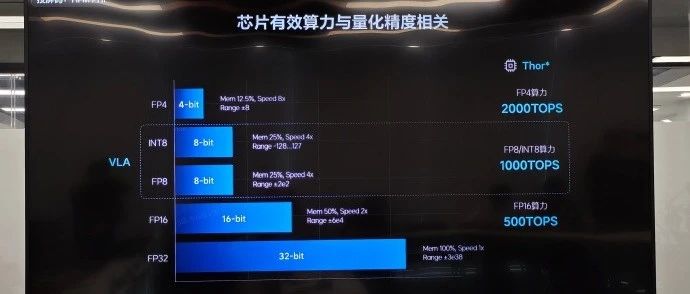
李想对Thor-U芯片500 TOPS算力的回应
理想TOP2· 2025-07-27 15:27
Core Viewpoint - The article discusses the performance and capabilities of NVIDIA's Thor chip, particularly in relation to its TOPS (Tera Operations Per Second) output under different precision formats, highlighting discrepancies between advertised and actual performance metrics [1][5]. Group 1: Chip Performance - NVIDIA's Thor chip was initially advertised to deliver 700 TOPS, but the actual performance is closer to 500 TOPS after several adjustments [1]. - The performance of the Thor-U chip varies significantly based on the precision format used; it can achieve 700 TOPS in INT8 and FP8 mixed precision, while it can reach 1400 TOPS in FP4 precision [5][4]. - The Thor-X chip has a similar performance variation, achieving 1000 TOPS in FP8, 500 TOPS in FP16, and 2000 TOPS in FP4 [5]. Group 2: Implications for Automotive Industry - Li Auto's VLA model utilizes a mixed precision approach (INT8 and FP8) to optimize performance, aiming to leverage the Thor-U chip's capabilities for faster response times [2][3]. - The automotive industry is increasingly focusing on low precision inference models to enhance processing speed, which requires advanced engineering capabilities [2]. - The shift towards FP4 precision in future models indicates a trend towards maximizing chip performance in the automotive sector [5].

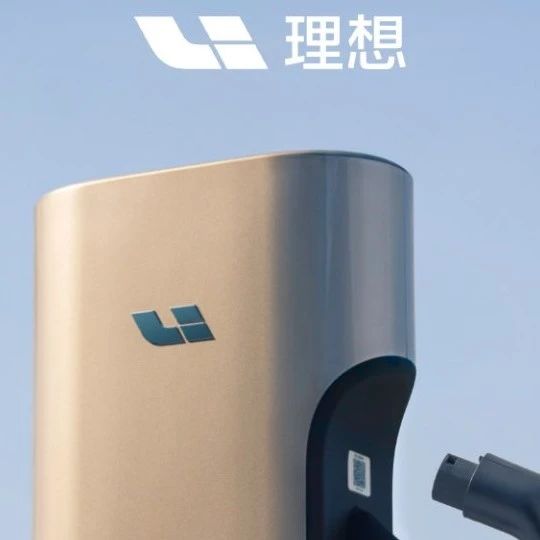
理想超充站2942座|截至25年7月25日
理想TOP2· 2025-07-26 10:08
Core Insights - The company has made progress towards its goal of establishing over 4000 supercharging stations by the end of 2025, with a current total of 2942 stations built [1] - The completion rate for new stations this year has increased from 52.84% to 53.45%, indicating a steady growth trajectory [1] - To meet the year-end target, the company needs to build an average of 6.65 new stations per day over the remaining 159 days of the year [1] Summary by Sections - **Current Status of Supercharging Stations** - Total supercharging stations built: 2942 - New stations added this week: 15 - Stations planned by end of 2025: 4000+ [1] - **Progress Metrics** - Yearly progress value: 53.45% - Time progress value for the year: 56.44% - Remaining stations to reach the target: 1058 [1] - **New Stations Details** - New stations include locations in Beijing, Gansu, Guangdong, Henan, Hubei, and Jiangsu, with various specifications for urban and highway service areas [1][3] - **Station Disappearance** - One station has been removed from the total count, located in Beijing, which was not open to the public [3]
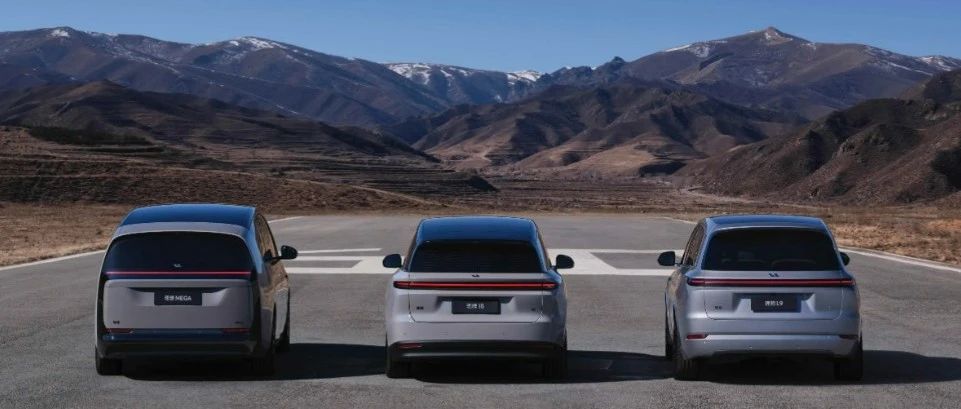
理想与供应链四种合作模式
理想TOP2· 2025-07-26 10:08
Core Viewpoint - The article discusses Li Auto's four collaboration models with suppliers, emphasizing the importance of strategic partnerships and self-research in enhancing product competitiveness and supply chain security [1][5][13]. Group 1: Collaboration Models - **Self-Research and Manufacturing**: Li Auto designs and produces key components in-house, such as the rear electric drive system for the i8, to ensure competitive efficiency and product integration [6][7]. - **Self-Research with Key Technology Lock-in**: The company collaborates with suppliers like Huichuan to co-develop critical components, such as the front electric drive, to mitigate risks and enhance supply chain security [8][9]. - **Deep Cooperation for Cutting-Edge Technology**: Li Auto invests heavily in partnerships, such as with CATL for the 5C ultra-fast charging Kirin battery, which significantly improves charging times and vehicle range [11][12]. - **Strategic Cooperation for Product Optimization**: Collaborations with companies like Horizon and Hesai lead to customized components that meet specific technical requirements, enhancing overall product performance [12][14]. Group 2: Supply Chain Strategy - **Investment in Core Technologies**: Li Auto focuses on self-research in critical areas like battery cell technology while outsourcing manufacturing to specialized firms, ensuring advanced technology without heavy capital investment [14]. - **Dynamic Supplier Management**: The company maintains a flexible supplier base of approximately 500, aiming to streamline this number for better cost efficiency and competitive advantage [14]. - **Balancing Self-Research and Outsourcing**: Li Auto adopts a dual approach of self-research and external procurement to foster healthy competition among suppliers, ensuring continuous technological advancement and cost optimization [13][14].
结构化回应看好乐道L90人士对理想i8所有主流槽点
理想TOP2· 2025-07-24 14:59
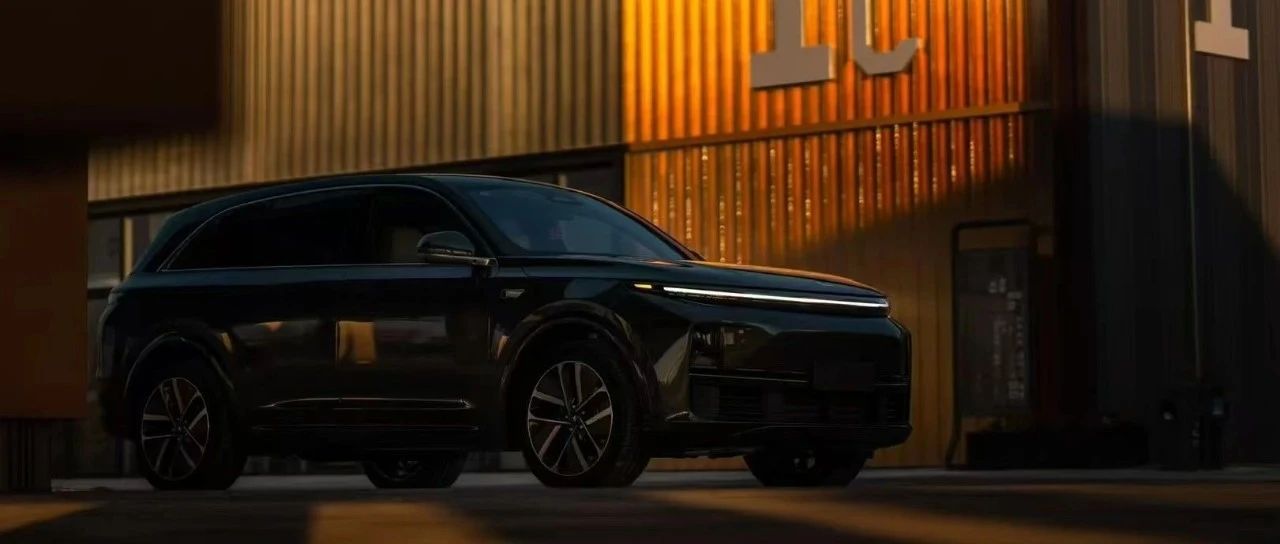
Core Viewpoint - The article addresses the criticisms of the Li Auto i8 model, providing a counter-perspective to potential consumers and highlighting the design choices made by the company to balance various factors such as space, comfort, and aerodynamics [1]. Group 1: Criticisms of i8 - The i8 lacks a front trunk, resulting in insufficient storage space compared to the L90 model, which is seen as a disadvantage for practical use cases [2]. - The internal space of the i8 is perceived as inadequate, particularly in the third row where headroom is limited, despite the i8 being designed for optimal passenger experience [4]. - The i8's rear trunk has less depth compared to the L90, which is attributed to the company's focus on aerodynamics and passenger comfort [5]. - The i8 is considered heavier than the L90, indicating a lower level of lightweight design, which could impact energy efficiency [12]. - The design of the i8 resembles that of an MPV rather than an SUV, aimed at enhancing passenger comfort and reducing drag [13]. Group 2: Responses to Criticisms - The absence of a front trunk in the i8 is a deliberate choice to maximize the internal space for passengers, particularly in the second and third rows, while also minimizing aerodynamic drag [3]. - Although the i8 is shorter than the L90 by 6 cm, it offers more legroom in the third row, demonstrating a trade-off between overall length and passenger comfort [4]. - The i8's design prioritizes aerodynamic efficiency, which affects the height and comfort of the third-row seating, but still aims to provide a satisfactory experience [5]. - The weight of the i8 is a result of its four-wheel-drive system and larger battery, but the focus remains on delivering a better energy consumption performance [12]. - Safety features are emphasized, with the company ensuring that the i8 meets high safety standards despite its shorter front end [14]. Group 3: Technical Specifications and Performance - The i8 has a battery capacity of 97.8 kWh, while the L90 has 85.1 kWh, with the i8 achieving a CLTC range of 720 km compared to the L90's 570 km [8]. - The i8's energy consumption is lower than that of the L90, with a CLTC energy consumption of 13.6 kWh/100 km versus 14.1 kWh/100 km for the L90 [8]. - The i8's electric motor power is rated at 400 kW, which, despite being heavier than the L90, allows for competitive acceleration times [10]. Group 4: Future Considerations - The company is continuously improving its technology and may address current limitations, such as the lack of electric closing for the refrigerator, in future models [17].
理想超充站2928座|截至25年7月24日
理想TOP2· 2025-07-24 14:59
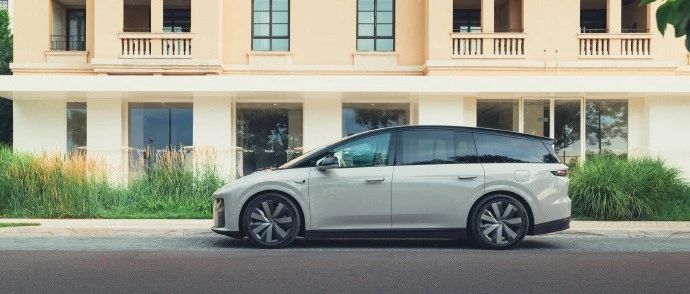
Core Viewpoint - The company is progressing towards its goal of establishing over 4000 charging stations by the end of 2025, with a current total of 2928 stations built and 1072 remaining to reach the target [1]. Group 1: Charging Station Development - The total number of charging stations has increased from 2918 to 2928, indicating a growth of 10 stations [1]. - The progress towards the annual target is at 52.84%, with 160 days remaining in the year [1]. - To meet the end-of-year goal, an average of 6.70 new stations must be built daily [1]. Group 2: New Charging Stations - Nine new charging stations have been established across various locations, including: - Beijing: Chaoyang District, China Petroleum Huayunda Gas Station (4C × 8) - Gansu: Two service areas in Linxia (5C × 4) - Hebei: Two service areas in Baoding (5C × 3 and 5C × 1) - Jiangxi: Shangrao International Hotel (4C × 6) - Tianjin: Tianjin Mingshi Huating (4C × 8) - Chongqing: Two locations, including a surface parking lot in Nanan District (4C × 8) [1]. Group 3: Station Recovery - One station has been restored in Beijing, located at the company's R&D headquarters, which is a non-public 5C station (2C × 3 and 5C × 1) [3].
关于Thor/VLA 一些信息线索
理想TOP2· 2025-07-22 13:22
Core Viewpoint - The article discusses the challenges faced by Li Auto due to delays in the delivery of NVIDIA's Thor chips, which are critical for the company's new range of vehicles. The delays have prompted Li Auto to accelerate its own chip development efforts. Group 1: Chip Delivery Issues - Li Auto's suppliers were notified that the launch of the upgraded L series range was postponed from March to May due to delays in the delivery of NVIDIA's Thor chips [1] - The initial mass production timeline for the Thor chip was promised for the end of 2024, but this has been pushed back multiple times [1] - The first batch of Thor chips delivered by NVIDIA faced significant engineering and design issues, leading to a reduction in promised performance from 700 TOPS to below 500 TOPS [1] Group 2: Self-Development of Chips - In response to the delays, Li Auto is accelerating its self-developed chip project, aiming for delivery in the first quarter of next year [2] - The cost of the first self-developed chips for Li Auto and its competitors is estimated to be between 300 million to 400 million USD, with ongoing investments for the second chip development [2] - Li Auto is exploring the application of large model technology in vehicles, with a focus on improving feedback and adjustment cycles through self-developed chips [2] Group 3: Challenges with NVIDIA - Li Auto faced unreasonable demands from NVIDIA during the testing of the T chip, which included a refusal to provide a list of issues and solutions [3] - NVIDIA's contract terms with Li Auto were described as lacking penalties for delays and containing unfair clauses [3] - Despite these challenges, Li Auto has successfully launched a fully functional intelligent driving system and is progressing with the upcoming VLA model [3]
理想超充站2916座|截至25年7月22日
理想TOP2· 2025-07-22 13:22
Core Viewpoint - The company is progressing towards its goal of establishing over 4000 supercharging stations by the end of 2025, with a current completion rate of 52.31% for this year [1] Group 1: Supercharging Station Development - Total number of supercharging stations has increased from 2908 to 2916 [1] - The company needs to build 1084 more stations to meet the 2025 target [1] - The current progress for new stations this year is at 52.31%, with 162 days remaining in the year [1] - To achieve the year-end target, the company needs to install an average of 6.69 stations per day [1] Group 2: New Stations Details - Eight new supercharging stations have been established, including locations in Beijing, Nanjing, Hohhot, Chengdu, Tianjin, and Chongqing [1] - Each new station in urban areas is designed with a specification of 4C × 6, while the stations in Chongqing are designed as highway service stations with specifications of 2C × 6 and 5C × 2 [1]
可以留意一下10位业内人士如何看VLA
理想TOP2· 2025-07-21 14:36
Core Viewpoints - The current development of cutting-edge technologies in autonomous driving is not yet fully mature for mass production, with significant challenges remaining to be addressed [1][27][31] - Emerging technologies such as VLA/VLM, diffusion models, closed-loop simulation, and reinforcement learning are seen as potential key directions for future exploration in autonomous driving [6][7][28] - The choice between deepening expertise in autonomous driving or transitioning to embodied intelligence depends on individual circumstances and market dynamics [19][34] Group 1: Current Technology Maturity - The BEV (Bird's Eye View) perception model has reached a level of maturity suitable for mass production, while other models like E2E (End-to-End) are still in the experimental phase [16][31] - There is a consensus that the existing models struggle with corner cases, particularly in complex driving scenarios, indicating that while basic functionalities are in place, advanced capabilities are still lacking [16][24][31] - The industry is witnessing a shift towards utilizing larger models and advanced techniques to enhance scene understanding and decision-making processes in autonomous vehicles [26][28] Group 2: Emerging Technologies - VLA/VLM is viewed as a promising direction for the next generation of autonomous driving, with the potential to improve reasoning capabilities and safety [2][28] - The application of reinforcement learning is recognized as having significant potential, particularly when combined with effective simulation environments [6][32] - Diffusion models are being explored for their ability to generate multi-modal trajectories, which could be beneficial in uncertain driving conditions [7][26] Group 3: Future Directions - Future advancements in autonomous driving technology are expected to focus on enhancing safety, improving passenger experience, and achieving comprehensive scene coverage [20][28] - The integration of closed-loop simulations and data-driven approaches is essential for refining autonomous driving systems and ensuring their reliability [20][30] - The industry is moving towards a data-driven model where the efficiency of data collection, cleaning, labeling, training, and validation will determine competitive advantage [20][22] Group 4: Career Choices - The decision to specialize in autonomous driving or shift to embodied intelligence should consider personal interests, market trends, and the maturity of each field [19][34] - The autonomous driving sector is perceived as having more immediate opportunities for impactful work compared to the still-developing field of embodied intelligence [19][34]