36氪

Search documents
10万就能当股东,众筹开酒店卷土重来
36氪· 2025-10-31 09:17
Core Viewpoint - The article discusses the rise of hotel crowdfunding as a new investment model, allowing ordinary individuals to invest in hotel projects with lower capital requirements, thus democratizing hotel investment opportunities [5][10][11]. Group 1: Emergence of Hotel Crowdfunding - Since 2017, a new investment model has emerged where individuals can become hotel shareholders through crowdfunding, requiring only tens of thousands of yuan to participate in projects worth millions [5][13]. - The hotel crowdfunding model has gained traction again in recent years, particularly among younger investors on social media platforms like Xiaohongshu [6][7]. - The search volume for "hotel investment" has increased by 12% year-on-year, with over 60% of new investors being young individuals [8]. Group 2: Characteristics of Hotel Crowdfunding - Traditional hotel investments required substantial capital, often in the millions, but crowdfunding has made it possible to invest with much lower amounts [9][13]. - Hotel crowdfunding primarily consists of two models: equity crowdfunding, where investors become shareholders and participate in management, and revenue-sharing crowdfunding, where investors receive dividends without management involvement [20]. - Successful crowdfunding projects have shown high participation rates, such as Atour's project that exceeded its funding goal by 330% [22][24]. Group 3: Benefits and Business Logic - Crowdfunding addresses two major pain points in the hotel industry: high capital requirements and the need for a steady customer base [31][32]. - The model allows for diverse returns for investors, including fixed and floating returns, enhancing the appeal of investments [33][36]. - Crowdfunding not only serves as a financing channel but also acts as a market validation tool, helping brands to refine their offerings based on investor feedback [38][41]. Group 4: Risks and Challenges - Despite its advantages, hotel crowdfunding faces challenges such as long return periods and regulatory uncertainties, which can complicate investor interests [52][55]. - The lack of comprehensive regulations in the crowdfunding space raises concerns about investor protection and the potential for illegal fundraising activities [56][62]. - Operational risks arise from involving numerous small shareholders in decision-making, which may hinder operational efficiency [64]. Group 5: Future Outlook - The sustainability of hotel crowdfunding as a business model will depend on its ability to balance risk and reward, ensuring that it creates real value for all stakeholders involved [69][71].



港股最大造假?4000名投资者血本无归
36氪· 2025-10-31 09:17
Core Viewpoint - The article discusses the rise and fall of Nohui Health, a company once celebrated as a leader in cancer early screening, which ultimately faced severe financial and governance issues leading to its delisting from the Hong Kong Stock Exchange [4][6][64]. Group 1: Company Background and Growth - Nohui Health was founded in 2015 by three Peking University alumni, focusing on cancer early screening, particularly for colorectal cancer, addressing a significant market need in China [42][44]. - The company launched its first product, "Changweiqing," in 2016, which was a non-invasive home testing kit for colorectal cancer, gaining attention in the industry [44]. - By 2021, Nohui Health went public on the Hong Kong Stock Exchange, raising approximately HKD 20 billion, with a market valuation exceeding HKD 410 billion at its peak [45][46]. Group 2: Financial Misconduct and Crisis - In August 2023, a short-selling report from Capital Watch accused Nohui Health of inflating its revenue by over HKD 300 million in 2022 through questionable sales practices [13][14]. - The report suggested that the actual sales revenue for 2022 was only HKD 76.95 million, a stark contrast to the reported HKD 765 million, indicating a potential Ponzi scheme-like operation [14][15]. - Deloitte, the company's auditor, raised concerns about the authenticity of Nohui Health's sales data and eventually resigned, which intensified scrutiny and led to the company's suspension from trading [21][24]. Group 3: Governance Issues and Leadership Changes - Following the financial scandal, Nohui Health's internal governance began to crumble, culminating in the resignation of CEO Zhu Yeqing in December 2024 due to health reasons, which was later followed by his removal from the board [34][38]. - The board's decision to remove Zhu highlighted significant differences in management style and philosophy, indicating deeper issues within the company's leadership structure [35][39]. Group 4: Investor Impact and Market Reaction - The company's delisting on October 27, 2023, resulted in a dramatic loss of value, with its market capitalization plummeting from HKD 400 billion to just HKD 0.01, leaving many investors with substantial losses [49][51]. - Over 4,000 individual investors have registered to seek compensation, with total investments exceeding HKD 700 million, reflecting the widespread financial damage caused by the company's collapse [57][58]. - The case has raised concerns about the risks associated with high-growth narratives in the capital market, particularly regarding governance and financial integrity [59][60].
自如生长14年,两次改变租住行业的底层逻辑
36氪· 2025-10-31 09:17
Core Viewpoint - The article discusses the evolution of the Chinese rental housing market, focusing on the transformation initiated by the company Ziroom, which shifted from a traditional rental model to an asset management approach, significantly changing the industry's underlying logic [1][6][24]. Group 1: Market Background and Initial Challenges - In 2011, a group of Chinese entrepreneurs, including Ziroom's founder, sought to learn from mature rental markets in Japan and the U.S. to innovate in China's rental sector [1][2]. - The rental market was primarily in a C2C phase, with high operational costs and inefficiencies due to the fragmented nature of individual landlords and tenants [2][3]. - Ziroom aimed to transform this market by productizing rental properties and enhancing transparency, which was initially met with skepticism from industry peers [2][3]. Group 2: Key Innovations and Business Model - Ziroom focused on three core areas: product standardization, service enhancement, and technology integration, which collectively improved rental efficiency and tenant experience [4][5]. - The company introduced a new rental model that allowed for the leasing of individual rooms rather than entire units, catering to diverse tenant needs and significantly increasing property utilization [4][5]. - By leveraging technology, Ziroom optimized the matching process between tenants and available properties, moving the rental experience closer to that of booking a hotel [5][22]. Group 3: Transition to Asset Management - In 2021, Ziroom transitioned to an "incremental rental" model, positioning itself as an asset management company rather than just a rental service provider [7][24]. - This shift was driven by the need for a more sustainable business model in response to market changes and increased competition, allowing for shared risk and reward with property owners [10][35]. - The new model has seen over 70% of Ziroom's properties switch to this asset management approach, demonstrating resilience in a challenging market environment [10][38]. Group 4: Long-term Vision and Industry Impact - Ziroom's evolution reflects a broader trend in the real estate sector, emphasizing the importance of understanding both tenant and landlord needs to create value [21][22]. - The company aims to redefine the rental market by providing high-quality living experiences through professional management and continuous property maintenance [26][39]. - Ziroom's journey illustrates the potential for innovation in the rental market, setting a new standard for professionalized housing rental services in China [8][39].

8点1氪:工行回应多名用户App内资产被清零;美方加征24%关税继续暂停一年;钟慧娟母女取代宗馥莉成为中国女首富
36氪· 2025-10-31 00:09
Group 1 - The core issue reported is a malfunction in the Industrial and Commercial Bank of China (ICBC) app, where users experienced their balances, investments, and liabilities showing as zero. The bank clarified that this was due to data delays and that actual amounts remained unchanged [5][6] - The bank's customer service suggested users check their accounts later as technical staff were investigating the issue [5] Group 2 - The Hu Run Research Institute released the "2025 Hu Run Women Entrepreneurs List," highlighting that Zhong Huijuan and her daughter from Hansoh Pharmaceutical became China's richest women with a wealth of 141 billion yuan, an increase of 64 billion yuan (83%) from the previous year [7] - The second place is occupied by Shunwei Technology's Zhou Qunfei, whose wealth increased by 47 billion yuan to 110 billion yuan, while Zong Fuli dropped to third place with 87.5 billion yuan [7] Group 3 - The HPV vaccine has been officially included in the national immunization program, with free vaccinations for girls aged 13 and above starting from November 10, 2025 [8] Group 4 - ICBC reported a net profit of 101.81 billion yuan for the third quarter, a year-on-year increase of 3.29%, with revenue of 201.89 billion yuan, up 2.42% [24] - China Construction Bank announced a net profit of 95.28 billion yuan for the third quarter, a 4.19% increase, with revenue of 179.43 billion yuan, down 1.98% [25] - Agricultural Bank of China reported a net profit of 81.35 billion yuan for the third quarter, up 3.66%, with revenue of 180.98 billion yuan, an increase of 4.30% [26] - Bank of Communications posted a net profit of 23 billion yuan for the third quarter, a 2.46% increase, with revenue of 66.5 billion yuan, up 4.23% [27] Group 5 - BYD reported a net profit of 7.82 billion yuan for the third quarter, a decrease of 32.60%, with revenue of 194.99 billion yuan, down 3.05% [20] - SAIC Motor Corporation announced a net profit of 2.08 billion yuan for the third quarter, a significant increase of 644.88%, with revenue of 169.40 billion yuan, up 16.19% [21] - Spring Airlines reported a net profit of 1.17 billion yuan for the third quarter, a decrease of 6.17%, with revenue of 6.47 billion yuan, up 6.01% [22][23]

硅谷高管创业项目获2500万美元种子轮融资,为企业打造全自动营销AI Agent|早起看早期
36氪· 2025-10-31 00:09
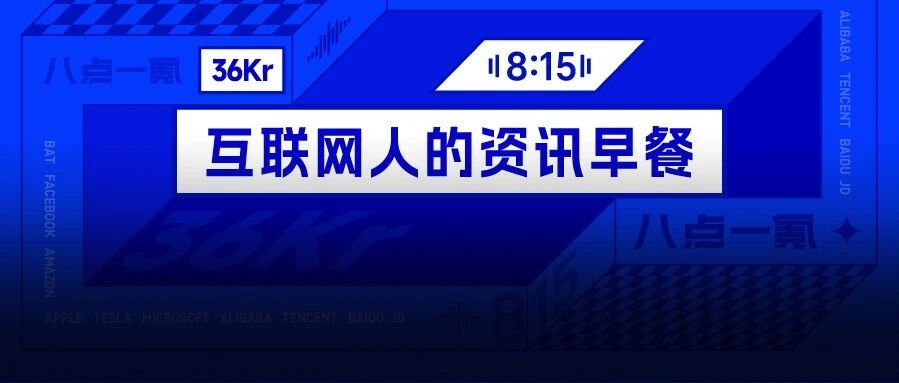
Core Insights - The article discusses the emergence of AI-driven marketing solutions, particularly focusing on MAI's automated marketing AI Agent, which aims to provide small and medium-sized enterprises (SMEs) with advanced advertising technology comparable to that of large corporations [2][4]. Company Overview - MAI is led by CEO Wu Yuchen, who has extensive experience in advertising platforms and e-commerce, having previously worked at Google and Instacart [7][10]. - The company recently completed a $25 million seed funding round, led by Kleiner Perkins, to expand its product and engineering teams and accelerate the development of its AI Agent platform [12][13]. Market Potential - The global MarTech market reached $131 billion in 2023, with a projected compound annual growth rate (CAGR) of 13.3%, indicating significant growth opportunities [15][16]. - There is a notable gap in the market for fully automated marketing solutions, particularly for SMEs that cannot afford the high costs associated with custom big data and machine learning solutions [18][19]. Product and Services - MAI's AI Agent platform offers services such as automated Google Ads management, real-time dynamic adjustments, personalized business adaptation, instant problem detection, and efficient scaling [24][25]. - The platform significantly reduces the time required for advertising optimization from days or weeks to hours, enabling continuous real-time analysis and decision-making [22][23]. Competitive Advantage - MAI differentiates itself by addressing the "white space" in the market for autonomous marketing AI Agents, focusing on comprehensive optimization rather than single-point solutions [27][28]. - The AI Agent system acts as an optimization engineer for marketing efforts, continuously analyzing data to enhance marketing engine efficiency [28][29]. Client Success - MAI has partnered with several well-known brands and manages millions of dollars in Google Ads spending monthly, with some clients reporting sales increases of up to 40% [31][32]. - For instance, NutritionFaktory achieved a threefold revenue increase based on MAI's services, demonstrating the effectiveness of the AI Agent in driving business growth [33].
金价大跌,老铺黄金还敢涨
36氪· 2025-10-31 00:09
Core Viewpoint - The article discusses the recent price hikes of Laopu Gold, highlighting its positioning as a luxury brand and the implications of its pricing strategy on consumer behavior and market perception [5][12][17]. Price Increases - Laopu Gold has raised prices three times in 2023, with the latest increase in October seeing price hikes of 10% to 12%, although some products experienced increases exceeding 20% [5][6][9]. - The average price per gram for Laopu Gold has reached around 2000 RMB, which is double that of investment gold bars [3][5]. - Despite the price increases, consumer demand remains strong, with reports of long queues and high sales activity prior to price hikes [7][10]. Consumer Behavior - Laopu Gold is perceived as a luxury brand, akin to "the Hermes of gold," which suggests that affluent consumers are less sensitive to price increases [12][17]. - The brand's strategy of frequent price increases may create a "buy high, not low" mentality among consumers, further driving demand [17][24]. - Some consumers express concerns about affordability as prices rise, indicating a potential shift in purchasing behavior among less affluent buyers [16][17]. Financial Performance - Laopu Gold reported a revenue of 12.354 billion RMB in the first half of 2023, a 251% increase from the previous year, with a gross margin of 38.1% [12][24]. - The company's stock price peaked at 1108 HKD in July 2023 but has since declined by nearly 40% to 667.5 HKD by late October [20][22]. - The decline in stock price is attributed to various factors, including the company's financing activities and market reactions to its pricing strategy [23][24]. Market Positioning - Laopu Gold differentiates itself through unique craftsmanship and high-end positioning, operating in premium retail locations alongside luxury brands [13][14]. - The company has successfully shifted consumer perception from selling gold by weight to selling it as a cultural symbol, enhancing its brand value [14][17]. - The brand's dual attributes of jewelry and gold as a store of value contribute to its appeal among consumers [18]. Financing and Expansion - To support its expansion, Laopu Gold has engaged in multiple rounds of financing, raising funds for inventory and store openings [24][25]. - The company faces scrutiny regarding its cash flow management, as rapid expansion and high inventory levels raise concerns about financial sustainability [25][26]. - Recent financing activities coincide with fluctuations in gold prices, indicating a strategic approach to inventory management and market confidence [26].

手指上的百亿美元穿戴生意,马斯克推荐,追觅、三星正追风
36氪· 2025-10-31 00:09
Core Viewpoint - The article discusses the rise of smart rings, particularly the Oura Ring, highlighting its market success, competitive landscape, and the focus on sleep monitoring as a key feature [5][12][25]. Market Overview - Oura Health, a Finnish company, has sold approximately 3 million rings in the past year, with a valuation nearing $11 billion, doubling from $5 billion last year [5]. - Since 2015, Oura Ring has sold 5.5 million units and is projected to reach $1 billion in revenue by 2025, holding about 80% market share [6]. Competitive Landscape - New entrants like Dreame Ring from Zhiwei and Ultrahuman from India are emerging, with the latter expected to generate $64 million in revenue for the 2024 fiscal year [8]. - Chinese brand RingConn has become a top seller domestically and ranks second globally, recently completing a significant funding round [8]. - Major consumer electronics companies, including Samsung and Reebok, are also entering the smart ring market, indicating a potential replication of the smartwatch market dynamics [10]. Product Differentiation - Smart rings are lighter (3-6 grams) compared to smartwatches (40-70 grams) and smart bands (20-50 grams), making them more comfortable for long-term wear [13]. - The primary focus for most smart ring brands is on sleep monitoring, addressing pain points of traditional wrist-worn devices [14][15]. Technological Features - Oura Ring utilizes advanced sensors to monitor various health metrics, including heart rate and body temperature, providing users with health scores related to sleep quality and recovery [15]. - Other brands, like Ultrahuman and RingConn, are also focusing on specific sleep-related features, such as metabolic health analysis and sleep apnea monitoring [16]. Competitive Strategies - The competition is shifting from merely providing accurate data to offering understandable and actionable insights for users [23]. - Oura's dual business model of hardware and subscription services has proven effective, with about 20% of its revenue coming from subscriptions [25]. - RingConn is exploring the professional medical market, having received regulatory approval for its devices [27]. Ecosystem Integration - The article emphasizes the importance of ecosystem connectivity, suggesting that smart rings can serve as a hub for personal health management [28]. - The unique form factor of rings allows for seamless integration with other devices, enhancing their value proposition in the health tech landscape [27].

揭秘「伟哥」背后,多数人不知道的商业故事
36氪· 2025-10-30 13:37
Core Viewpoint - The article discusses the confusion and risks associated with the purchase of erectile dysfunction (ED) medications, particularly focusing on the brand name "Viagra" and its misuse in the market, leading to consumer deception and health risks [2][9][50]. Group 1: Market Confusion - The term "伟哥" (Weige) has become a generic term for ED medications in China, leading to a proliferation of misleading products and advertisements [21][32]. - A significant portion of complaints related to "伟哥" includes false advertising (28%), product mismatches (20%), and counterfeit or unregulated products (19%) [9][45]. - The commercialization of "伟哥" has resulted in a disconnect between the original drug, Viagra, and the various products marketed under the same name, creating a chaotic marketplace [20][40]. Group 2: Historical Context - Viagra, originally approved by the FDA in 1998 as a cardiovascular drug, became the first oral PDE-5 inhibitor for ED treatment, significantly impacting both medical and cultural perceptions [15][18]. - The introduction of Viagra to the Chinese market in 2000 marked the beginning of a complex relationship between the drug's medical use and its cultural symbolism [19][20]. - The brand name "万艾可" (Wan Aike) was established for Viagra in China, while "伟哥" became a separate trademark owned by a domestic company, leading to brand confusion [25][36]. Group 3: Regulatory and Legal Issues - Legal disputes have arisen over whether "伟哥" should be considered a generic term, with the National Intellectual Property Administration ruling that it retains its trademark status [38]. - Pfizer has attempted to assert that "伟哥" is a well-known trademark, but courts have not consistently supported this claim [39][40]. - The fragmentation of trademark rights has contributed to ongoing brand confusion and legal challenges in the market [37]. Group 4: Consumer Risks - Consumers face significant risks when purchasing ED medications online, including exposure to counterfeit products and unregulated substances that may contain harmful ingredients [46][59]. - The lack of clear labeling and the prevalence of misleading marketing tactics complicate the consumer's ability to make informed choices [44][45]. - The article emphasizes the importance of purchasing medications through legitimate channels and verifying product authenticity to mitigate health risks [54][60].


躺平、闯关、拍短剧,来北京798把工位搬到WISE大会现场!
36氪· 2025-10-30 13:37
Core Viewpoint - The article promotes the "Workplace Dividend" event, emphasizing the evolving nature of the job market and the breaking down of traditional job boundaries between blue-collar and white-collar workers [5][7][8]. Event Details - The "Workplace Dividend" event will take place on November 27-28 at Beijing 751 D-Park, featuring various interactive activities designed to engage participants in a new narrative about work [5][23]. - The event includes a mix of performances, challenges, and discussions aimed at redefining workplace experiences and expectations [11][12]. Activities and Engagement - Participants can engage in various immersive zones, including challenges for blue-collar and white-collar workers, a main stage for performances and discussions, and a relaxation area [12]. - There are competitions for short skits, showcasing unique workplace skills, and a challenge to identify and create workplace jargon, with rewards for top entries [14][20][21]. Target Audience - The event aims to attract individuals who are navigating the changing job landscape, particularly those who are willing to explore unconventional career paths [9][10]. - It highlights the importance of adaptability and creativity in the modern workplace, encouraging participants to share their experiences and insights [8][10].
前阿里、字节大模型带头人杨红霞创业:大模型预训练,不是少数顶尖玩家的算力竞赛|36氪独家
36氪· 2025-10-30 13:37
Core Viewpoint - The article discusses the emergence of a new AI paradigm led by Yang Hongxia, who aims to decentralize model training, contrasting with the centralized approaches of major companies like Alibaba and ByteDance [4][12][27]. Group 1: Yang Hongxia's Background and Vision - Yang Hongxia has over seven years of experience in large model research at Alibaba and ByteDance, where she contributed to the development of significant models like M6 and Tongyi Qianwen [5][6]. - After leaving ByteDance in July 2024, she founded InfiX.ai, focusing on model-related technologies and aiming to challenge existing centralized models [7][10]. - Yang's vision includes creating a decentralized model training framework that allows small and medium enterprises, research institutions, and individuals to participate in model training [13][16]. Group 2: Technical Innovations and Frameworks - InfiX.ai has recently open-sourced the world's first FP8 training framework, which enhances training speed and reduces memory consumption compared to the commonly used FP16/BF16 [17][18]. - The company has developed a model fusion technology that allows different domain-specific models to be combined, avoiding resource wastage from redundant training [20][21]. - The InfiMed framework enables the training of small-scale models with strong reasoning capabilities across various medical tasks, particularly in cancer detection [22][26]. Group 3: Market Position and Future Outlook - Yang believes that the future of AI will involve a collaborative approach where every company and institution can have its own expert model, leading to a globalized foundational model for various fields [30][31]. - The article highlights the growing acceptance of decentralized model training in the U.S., with significant funding being raised for companies pursuing this approach [28][29]. - InfiX.ai's focus on challenging fields like healthcare, particularly cancer, is seen as a strategic move to demonstrate the model's capabilities and differentiate it from competitors [72][73].