市值风云

Search documents
PCB老炮玩转AI与存储,四季度利润翻倍!
市值风云· 2026-02-11 10:12
| 作者 | | 萧瑟 | | --- | --- | --- | | 编辑 | | 小白 | 近期,深南电路(002916.SZ)发布了业绩预告,预计2025年归母净利润31.54亿至33.42亿,同比增长 68.0%至78.0%;扣非净利润29.93亿至31.67亿,同比增长72.0%至82.0%。 PCB内资第二、封装基板内资第一。 (来源:深南电路公告) AI服务器带来的海量需求下,只要不是技术实力特别差的PCB公司,年内都能取得不错的业绩,这是 我们事先能猜到的。 但除此之外,这家公司是否还有其他值得关注的地方呢? 其中四季度的盈利情况尤其亮眼,单季归母净利润8.28亿至10.16亿,同比增幅高达112.7%至 160.9%。 | 项目 | 本报告期 | | | | 上年同期 | | --- | --- | --- | --- | --- | --- | | 归属于上市公司 | 315,431.00 | | N | 334,206.66 | 187,756.55 | | 股东的净利润 | 比上年同期增长 | 68.00% | 2 | 78.00% | | | 扣除非经常性损 | | 299,258. ...


“锂”想落地前,西藏珠峰还得靠铅锌老本行撑场
市值风云· 2026-02-10 10:13
Core Viewpoint - The performance of the company's lithium projects in Argentina, particularly the timely production of the 10,000-ton salt lake project, will be a critical validation point for its future prospects [1][9]. Group 1: Company Overview - Tibet Summit (600338.SH) is recognized as a "lithium mining newcomer" and "salt lake lithium player," with significant investments in Argentina's salt lakes [3]. - The company operates in the "metals, non-metals, and mining" sector, focusing on traditional mining (lead, copper, zinc) alongside new energy materials [4]. Group 2: Revenue Composition - In 2022, the primary revenue source was lead and zinc, while in 2023, lithium mining contributed 140 million, accounting for 9.7% of total revenue with a high gross margin of 76.9% [5]. - By 2024, lithium revenue is expected to "disappear" from the financial statements, with lead and zinc business returning to over 91% of total revenue [6]. Group 3: Customer Concentration - The company's customer base is highly concentrated, with the top five customers accounting for nearly 100% of sales, and only 9.7% of sales coming from potential lithium product customers [7]. Group 4: Argentina Salt Lake Projects - The company holds two major salt lakes in Argentina: the Angeles salt lake, with a resource of 2.05 million tons of lithium carbonate equivalent, and the Arizaro salt lake, which is speculated to have no less than 10 million tons [8]. - As of the end of 2025, neither project has achieved commercial production, with the Angeles project still in the construction and installation phase as of January 2026 [9]. Group 5: Financial Performance - The company anticipates a significant increase in net profit for 2025, projecting a range of 440 million to 540 million, representing a year-on-year growth of 92% to 135% [10]. - Operating cash flow for the first three quarters of 2025 is expected to surge by 381% to reach 510 million, indicating strong operational quality [11]. - The company's financial structure is robust, with a debt-to-asset ratio of only 33.9% and an interest-bearing debt ratio of 2% as of Q3 2025 [15]. Group 6: Market Outlook - Currently, the company is characterized as a profitable, cash-flow strong, and financially stable traditional metal mining company, with lead and zinc as its main revenue and profit sources [18]. - The long-term potential hinges on the successful transition from resource holding to production in the Argentine lithium projects, particularly the Angeles project [18].


AI应用再临风口,Seedance风暴席卷A股,哪些ETF关联度最高?
市值风云· 2026-02-10 10:13
在科技与资本交织的浪潮中,总有一些时刻被定义为"奇点"。 如果说去年Deepseek的横空出世标志着文本大模型的元年,那么2026年的初春,随着字节跳动旗下即 梦AI发布Seedance 2.0模型,视频生成领域正式迎来了属于它的"工业革命"。 酝酿已久的AI应用行情终于出现了。 作者 | 紫枫 编辑 | 小白 更为震撼的是模型对物理世界的深刻理解。但Seedance 2.0生成的视频中,人物的运动符合重力与惯 性,光影随着物体的移动自然流转,甚至连衣服褶皱的动态变化都逼近实拍,以往模型中常见的"AI 抽搐"不再存在。 此外,模型还展现了原生音画同步的能力,无需任何音频输入,仅凭画面内容就能生成高度匹配的音 效和人声,这种多模态的深度融合让视频的完成度瞬间提升到了交付级标准。 然而,技术的双刃剑效应也随之显现。实测显示,该模型仅凭一张正面照片,就能通过算法"脑补"出 建筑背后的真实构造;仅靠人脸照片,就能生成与其本音高度相似的声音。这种能力意味着,一旦个 人影像数据进入训练集,模型可以完整复刻一个人的形态与声音,连至亲之人都难辨真假。 在巨大的舆论压力与安全隐患下,豆包和即梦平台紧急全面封禁了真人人脸的上传功 ...

9个小将干出700亿!永赢基金高收益背后,是梭哈还是实力?
市值风云· 2026-02-10 10:13
Core Viewpoint - The article discusses the rapid growth and performance of Yongying Fund in 2025, highlighting the significant increase in assets under management and the impressive returns of its equity funds during a bullish market. It raises questions about the sustainability of such high returns and the risks associated with concentrated investment strategies [1][3][8]. Group 1: Fund Performance and Growth - Yongying Fund's total assets under management grew from 528.3 billion to 652.4 billion in 2025, marking a 23.5% increase [4]. - The combined scale of equity and mixed funds surged from 32.6 billion at the beginning of 2025 to 175.2 billion by year-end, while passive products like ETFs expanded tenfold from 4.7 billion to nearly 50 billion [6]. - In 2025, four equity funds doubled their net value, and 18 funds achieved returns exceeding 50% [6]. Group 2: "Smart Selection" Series - The "Smart Selection" series contributed significantly to Yongying Fund's growth, with 16 products attracting 74.1 billion in new investments [10]. - Among the ten funds with complete performance data, only three had returns below 50% [11]. - The "Smart Selection" series is characterized by high concentration in top holdings, with many funds having over 70% of their assets in the top ten stocks [18]. Group 3: Investment Strategy and Risks - The high returns of the "Smart Selection" series are attributed to concentrated positions in sectors like AI and semiconductors, but this strategy also entails significant volatility and risk, with some funds experiencing drawdowns exceeding 50% [27]. - The management team is relatively young, with most fund managers having less than five years of experience, raising concerns about their ability to navigate market cycles [30][31]. - The article emphasizes the need for investors to manage positions carefully and consider profit-taking strategies in light of the inherent risks of concentrated investments [27][30]. Group 4: ETF Expansion - Yongying Fund expanded its ETF offerings from 4 to 15 in 2025, with notable performance in satellite ETFs, which grew to 16.6 billion [32]. - The fund's strategy includes a mix of high-growth and stable income products, aiming to balance risk and return [35].
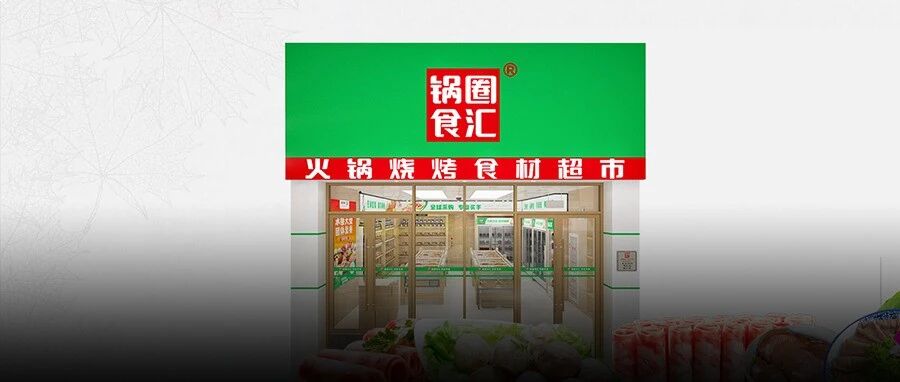
火锅食材龙头亮出黑科技!AI炒菜,锅圈的第二增长极?
市值风云· 2026-02-10 10:13
Core Viewpoint - The article discusses the successful implementation of AI in the restaurant industry, particularly through the case of Guoquan, which has achieved significant growth by focusing on cost-effectiveness and market expansion in lower-tier cities [3][4][5]. Group 1: Company Performance - Guoquan expects total revenue for 2025 to be between 7.75 billion and 7.85 billion yuan, representing a year-on-year growth of 19.8% to 21.3%, marking a historical high [5]. - The net profit is projected to be between 443 million and 463 million yuan, showing a year-on-year increase of 83.7% to 92.0% [6]. - The core operating profit is expected to be between 450 million and 470 million yuan, with a growth of 44.8% to 51.2%, also setting a new record [6]. Group 2: Market Strategy - The company has focused on expanding into lower-tier markets, with nearly 60% of its over 10,000 stores located in third-tier cities and below [9]. - By the end of 2025, Guoquan's total number of stores reached 11,566, exceeding its target of 1,000 new stores for the year, with significant contributions from rural stores [12]. - The average revenue per store in 2025 is approximately 674,400 yuan, reflecting a year-on-year increase of 5.8%, indicating effective management of new store operations [16]. Group 3: Cost Control and Supply Chain - Guoquan has developed an integrated supply chain ecosystem, reducing costs by eliminating intermediaries, which allows for competitive pricing [20][21]. - The company has established 19 central warehouses and invested in 7 core factories, enhancing its supply chain efficiency [20]. - Guoquan's core products are priced competitively compared to similar products, showcasing its cost advantage [22]. Group 4: AI Integration - Guoquan is leveraging AI to standardize Chinese cuisine through its "Guoquan Stir-fry" project, which utilizes smart cooking devices to replace traditional chefs [26][30]. - The project aims to reduce labor costs by 70% and overall store costs by 30%, while maintaining high-quality standards [27][28]. - The AI-driven cooking system allows for consistent quality and flavor, addressing the challenges of traditional cooking methods [29]. Group 5: Future Outlook - Guoquan plans to expand its "Guoquan Stir-fry" project to a scale of 10,000 stores, positioning it as a potential second growth curve for the company [32]. - The company has rapidly expanded since its establishment in 2017, becoming a major player in the community dining and food retail sector [33].
“专业买手”FOF最新持仓:四季度最爱哪些主动权益基金?
市值风云· 2026-02-10 10:13
Core Viewpoint - The article discusses the increasing complexity of selecting mutual funds in a growing market, highlighting the role of Fund of Funds (FOF) as a guide for investment decisions, particularly focusing on the popularity of quantitative and conservative fund strategies [3][4][5]. Group 1: FOF and Fund Performance - FOFs are seen as "smart money" due to their backing by institutional research systems, which provide them with a keen market sense and professional selection logic [4][5]. - The article analyzes quarterly holdings data from FOFs to reveal institutional fund flows and market style shifts [6]. - The top actively managed equity fund by FOF holdings is the Baodao Jiuhang C (008319.OF), which has been included in the portfolios of 22 FOFs and achieved over 40% returns last year [7][9]. Group 2: Fund Performance Metrics - Baodao Jiuhang C has shown significant performance metrics, with a return of 40.14% in 2025, outperforming its benchmark and the CSI 300 index [8]. - The second fund, Baodao Growth Zhihang C (013642.OF), managed by Yang Meng, also performed well with nearly 50% returns last year, but its quarterly holding change dropped by 49.4%, indicating some profit-taking [10]. - The third fund, Fuguo Stable Growth C (010625.OF), managed by Fan Yan, is known for its balanced and stable approach, being favored by 17 FOFs [11][12]. Group 3: Investment Strategies and Trends - The article notes a trend where FOF managers prefer C-class shares for tactical allocations due to their lower transaction costs and flexibility, especially in volatile sectors like technology [31][32]. - A-class shares are typically seen as long-term holdings, while C-class shares are favored for short-term strategies, reflecting a tactical approach by FOFs [30][34]. - The upcoming regulatory changes may blur the lines between A-class and C-class shares, potentially impacting FOF strategies in the future [35].
价值风格也有“春天”,蓝小康代表作25年上涨46%,四季度加仓保险
市值风云· 2026-02-09 10:11
价值型基金经理的标杆。 作者 | 市值风云基金研究部 编辑 | 小白 管理规模破300亿,业绩领跑价值风格 在2025年经历了科技成长风格的极致演绎后,最近市场对价值风格的讨论热度又高了,化工、石油、 工程机械等一批老登股表现较好。 而在2025年的公募基金榜单中,中欧基金的蓝小康无疑是颇受关注的名字之一。甚至可以说,在过去 一年的价值型基金经理中,他的表现是现象级的。 截至2025年四季度末,蓝小康的管理规模已经达到302亿元。这个体量意味着他进入市场顶流"大 腕"行列。 平心而论,价值风格在2025年并不讨喜,红利风格甚至被批得体无完肤。但是,蓝小康的业绩相当不 错。 (来源:Choice数据) 以其管理时间最长(2018年4月)、管理规模最大(189.3亿)的代表作中欧红利优享灵活配置混合A (004814.OF)为例,该基金在2025年的复权单位净值增长率高达46.7%,跑赢其业绩基准(中证沪 港深高股息精选指数为主)约32个百分点。 这一成绩不仅大幅跑赢了同类平均水平,也在同类可比基金中名列前茅。即便是在刚刚过去的2025年 第四季度,在市场风格震荡切换的背景下,该基金依然录得6.68%的净值增长, ...
一图看懂 | 太空算力概念股
市值风云· 2026-02-09 10:11
Group 1 - The article highlights that the most economically beneficial application of AI is in space, as it becomes the only long-term scalable computing power carrier due to ground electricity bottlenecks [5] - The demand for computing power is experiencing exponential growth, while global electricity production, excluding China, is stagnating [5] Group 2 - Key companies involved in core computing and operational energy support include Qianzhao Optoelectronics, Shunhao Co., and Zhongke Xingtou [6] - Companies in the computing chip sector include Hangyu Micro, Guangxun Technology, and Beijing Junzheng [6] - Infrastructure and manufacturing companies mentioned are Tianyin Electromechanical, Ruantong Power, and Lingyi Zhi Manufacturing [6]



景旺电子:全球汽车PCB老大,为何在AI时代掉队?
市值风云· 2026-02-09 10:11
Core Viewpoint - The article discusses the recent developments surrounding Kinwong Electronics, a leading PCB manufacturer in China, as it prepares for its IPO in Hong Kong while its controlling shareholders have been cashing out over 1 billion RMB, raising questions about the company's future prospects [4][40]. Group 1: Company Overview - Kinwong Electronics, established over 30 years ago, has become a global leader in PCB manufacturing, with a market capitalization exceeding 65 billion RMB [3]. - The company has successfully positioned itself as the top supplier of automotive PCBs globally, holding a 9% market share, which is 2.6 percentage points ahead of its nearest competitor [7][9]. Group 2: Financial Performance - Kinwong's revenue has shown steady growth, increasing from 6.33 billion RMB in 2019 to 12.66 billion RMB in 2024, with a compound annual growth rate (CAGR) of nearly 15% [16]. - However, the net profit growth has lagged, with a CAGR of only 6.9% during the same period, indicating a decline in profitability [18]. - The company's gross margin and net margin have decreased by 5.9 percentage points and 4.6 percentage points, respectively, since 2019, with the latest figures at 21.6% and 8.6% [20]. Group 3: Market Position and Competition - Despite being a top player, Kinwong faces intense competition in the PCB industry, with many peers experiencing rising profit margins while Kinwong's margins have fallen [22][23]. - The company’s automotive electronics segment has contributed nearly half of its revenue, solidifying its position but also highlighting the challenges of maintaining high profitability in a highly competitive market [11]. Group 4: Strategic Challenges - Kinwong's focus on automotive PCBs, while lucrative, has limited its ability to capitalize on the rapidly growing AI PCB market, where demand for high-end products is surging [33]. - The company has initiated projects to enhance its capabilities in high-end PCBs, but delays in production timelines have raised concerns about its ability to meet market demands [36][40]. - The controlling shareholders' decision to cash out during this critical transition period raises questions about their confidence in the company's future growth prospects [4][40].

“A杀”海吉亚医!市值蒸发600亿,民营医疗的并购扩张模式崩塌?
市值风云· 2026-02-09 10:11
Core Viewpoint - The article discusses the challenges faced by Hai Jiayi Medical, highlighting the decline in stock price despite revenue growth, and the shift in the healthcare service model from expansion through acquisitions to a focus on technological innovation [4][10][31]. Group 1: Company Overview - Hai Jiayi Medical is a leading private medical group in China, primarily focused on oncology services, operating a network of chain hospitals [10][16]. - The company has expanded its operations through acquisitions and partnerships, establishing a presence in various provinces, primarily targeting patients underserved by major hospitals in first-tier cities [16][22]. Group 2: Financial Performance - Despite projected revenue growth to a historical high in 2024, the company's stock price continues to decline, indicating a disconnect between revenue and market valuation [6][20]. - The revenue composition for 2024 shows approximately 45% from oncology services and 55% from non-oncology services, reflecting a diversified income stream [17]. Group 3: Market Dynamics - The healthcare market has shifted post-2020, with a decrease in patient demand and increased supply leading to a challenging business environment for private healthcare providers [20][31]. - Policy changes, particularly stricter medical insurance cost controls, have significantly impacted profitability, with a notable decline in gross margins from high-cost oncology services [23][25]. Group 4: Demand and Supply Factors - The demand for oncology services has weakened, with patients showing reduced willingness to pay for high-cost treatments amid economic pressures, leading to stagnant patient visits and declining revenue growth [28][30]. - Increased competition from public hospitals and other private entities has pressured pricing and profitability, with some acquisitions yielding lower net profit margins than initially expected [30][31]. Group 5: Future Outlook - The article suggests that the traditional model of growth through acquisitions in the healthcare sector may be reaching its limits, with future success likely hinging on technological advancements rather than mere expansion [31].