猛兽派选股

Search documents
有色的优质基底,航天的量化助涨
猛兽派选股· 2025-12-31 09:03
Core Viewpoint - The current base structure of the non-ferrous metals market differs from previous bull markets, showing strong retracement characteristics with minimal pullback, aligning with volatility indicators [1]. Group 1: Market Analysis - The leading stocks in the non-ferrous sector are primarily within the first and second retracement levels, indicating a robust market structure [1]. - Financial data for various companies shows significant year-on-year growth, with specific metrics indicating strong performance in the sector [2][3]. Group 2: Company Performance - Jiangxi Copper has shown a notable increase, with a price rise of 82.65% since August 21, 2025, reflecting strong market momentum [2]. - Western Mining's financial data indicates a solid performance, with key metrics suggesting a healthy growth trajectory [3]. - Yun Aluminum's financial indicators also reflect positive growth, with a year-on-year increase of 13.9% in key metrics [3]. Group 3: Investment Strategy - The article emphasizes the importance of understanding quantitative analysis for retail investors, suggesting that knowledge in this area can enhance investment strategies [5]. - It argues that retail investors should not solely rely on intuition but should also engage with quantitative methods to improve their market performance [5].

液冷有关的几只业绩和走势俱佳的票
猛兽派选股· 2025-12-30 07:04
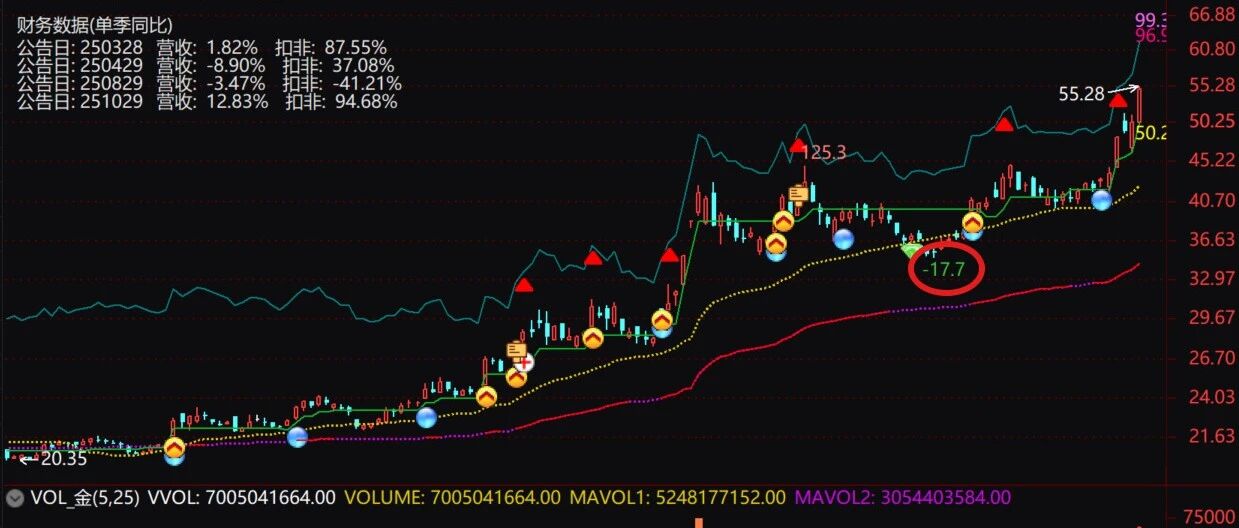
Core Viewpoint - The liquid cooling industry, while part of the computing ecosystem alongside optical modules and PCBs, has a less robust business model and profitability. However, it has significant potential for penetration, particularly in high-density AI clusters, where current overall penetration is low, projected to reach about 20%-25% by 2025 [1]. Group 1: Industry Overview - Optical modules and PCBs are essential components of server and switch infrastructure, with nearly 100% penetration rates, while liquid cooling is only a necessity in high-density AI clusters [1]. - The revenue recognition for optical modules and PCBs is quick and has a short cycle, whereas liquid cooling projects typically have a lag of over six months due to the need for infrastructure setup [1]. - The standardization and mass production of optical modules and PCBs lead to stable and high gross margins, while liquid cooling faces challenges due to customization and project-based sales, resulting in lower gross margins [2]. Group 2: Key Companies - **Inspur**: A leading domestic liquid cooling company with a comprehensive solution covering cold plates, CDU, and system integration, benefiting from partnerships with major players like NVIDIA and Intel. It is positioned to gain from the AI high-density computing cooling market, although its valuation may be stretched with a PB exceeding 30x [2]. - **Tongfei Co., Ltd.**: A specialized enterprise transitioning to data center liquid cooling, with a dual-path approach in cold plate and immersion cooling, aiming for significant growth in AI computing infrastructure and energy storage [3]. - **Yidong Electronics**: Entering the AI server liquid cooling market in 2024, it aims to integrate connectors and liquid cooling solutions, achieving significant revenue milestones in 2025 [4]. - **Dingtong Technology**: Focused on integrated connector and liquid cooling modules, it is set to ramp up production and gross margin potential in the coming years [5]. - **Siquan New Materials**: Specializing in high thermal conductivity materials for AI server cooling, it is expected to enter a critical phase of mass delivery and certification by 2025 [6]. - **Zhongshi Technology**: Engaged in thermal management materials and AI server cooling solutions, it is expanding its production capacity and is expected to see significant order and margin growth [7]. - **Feirongda**: With a focus on electromagnetic shielding and thermal management, it is positioned for significant delivery and expansion in the AI server cooling market [8]. - **Dongyangguang**: Following a comprehensive approach in liquid cooling, it is set to enter a critical phase of delivery and overseas expansion [9]. - **Juhua Co., Ltd.**: Leveraging its fluorochemical expertise, it is positioned as a key player in the liquid cooling market, focusing on domestic replacement and overseas expansion [10]. - **Qiangrui Technology**: Engaged in integrated solutions for testing equipment, it is expected to achieve significant breakthroughs in delivery and ecosystem integration by 2025 [11].
胜宏和沪电哪家潜力更大
猛兽派选股· 2025-12-29 04:40
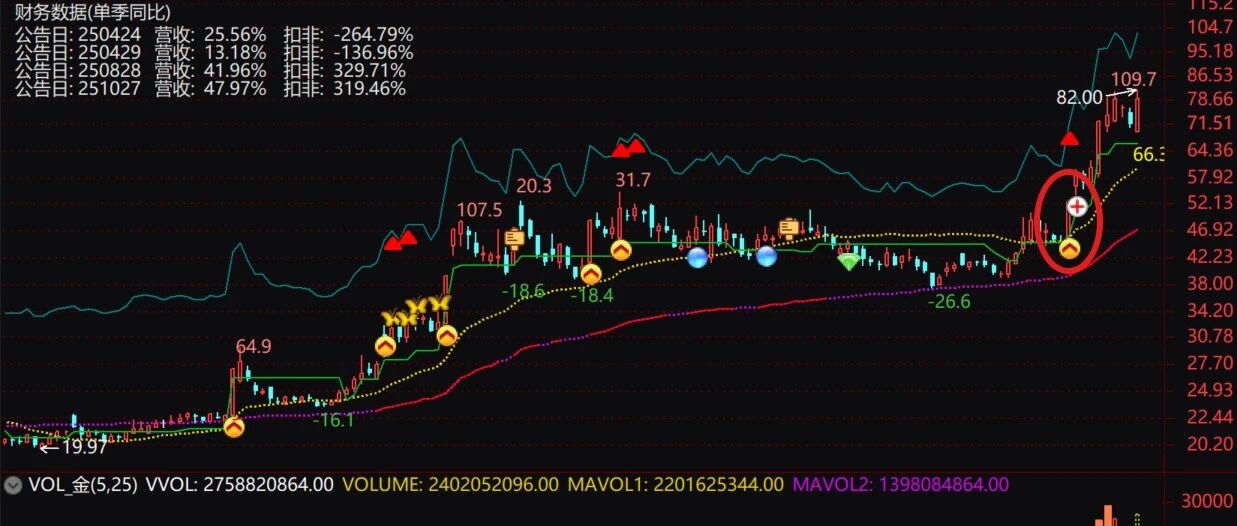
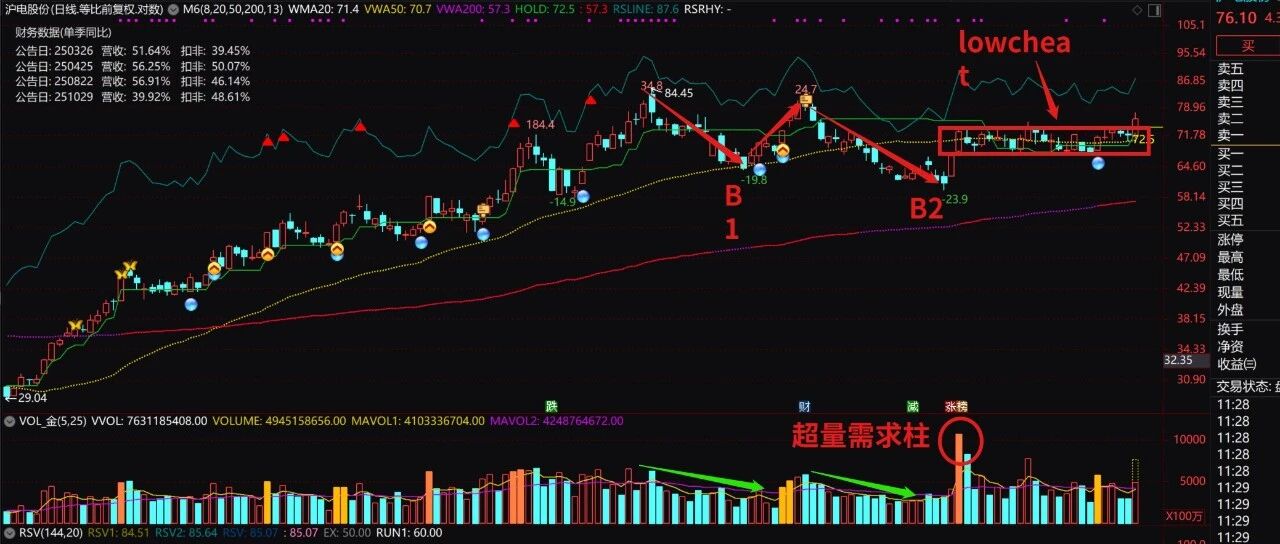
Group 1 - The core viewpoint is that both Shenghong and Huydian exhibit potential for future price increases, with Huydian showing a clearer and stronger performance from a technical perspective [4] - Shenghong's price structure can be interpreted as a VCP (Volatility Contraction Pattern) or a double bottom, but the third peak is lower than the previous two, indicating a weakening process [2] - Huydian's price structure is identified as a double bottom, with the left side B2 being lower than B1, which aligns with the low cheat pattern, and it has recently broken through a small platform [3] Group 2 - The volume bars' rhythm remains intact for both stocks, indicating that the main force is still holding together [2][3] - The initial super volume demand bar for the double bottom reversal is linked to the release of Google's Gmini3, reflecting a genuine demand surge in the market [3] - The concept of a second type of VCP is mentioned, which is characterized by a right-side stepwise upward and convergence pattern, exemplified by Shengyi Technology [4][5]
最新骑牛信号的得与失
猛兽派选股· 2025-12-28 04:35
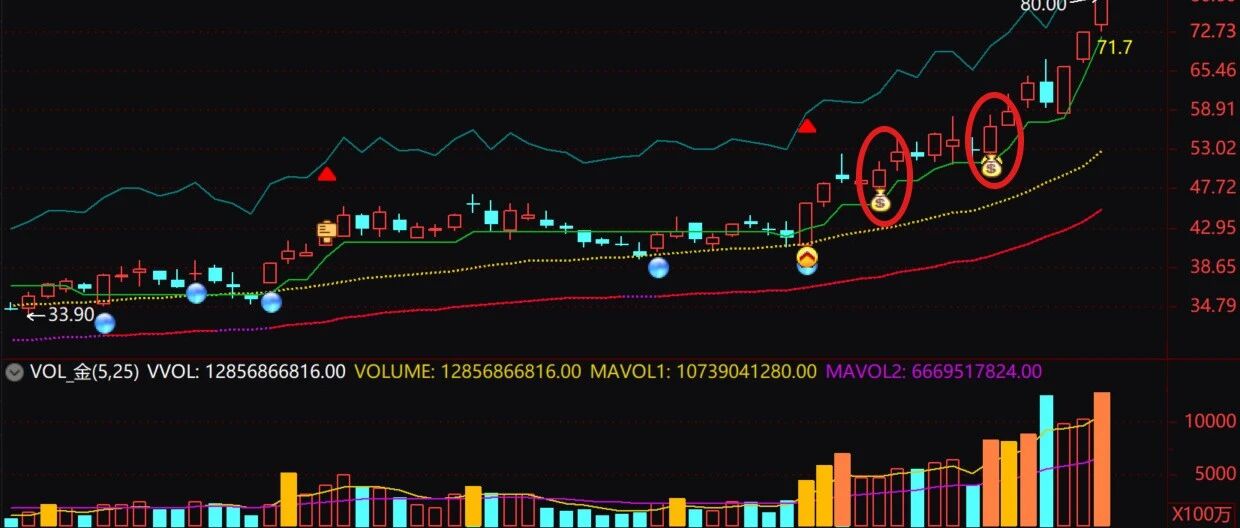
Group 1 - The article discusses the emergence of a new market trend, indicating that a new round of market activity is about to begin [1] - It highlights the importance of volume accumulation signals, suggesting that stocks with high turnover and strong trends are more likely to succeed [8] - The article emphasizes the significance of timing during low volatility phases for selecting stocks, particularly in the commercial aerospace sector, which has shown strong performance recently [8] Group 2 - Financial data for various companies is presented, showing significant year-on-year changes in performance metrics [3][4][5][6] - For example, 雷科防务 reported a financial data point of 250419 with a significant increase in performance metrics [3] - Similarly, 航天发展 and 中国卫星 also show notable financial performance, with year-on-year growth rates of 21.80% and 8.54% respectively [4][5]
新一轮行情已经喷薄而出
猛兽派选股· 2025-12-27 03:58
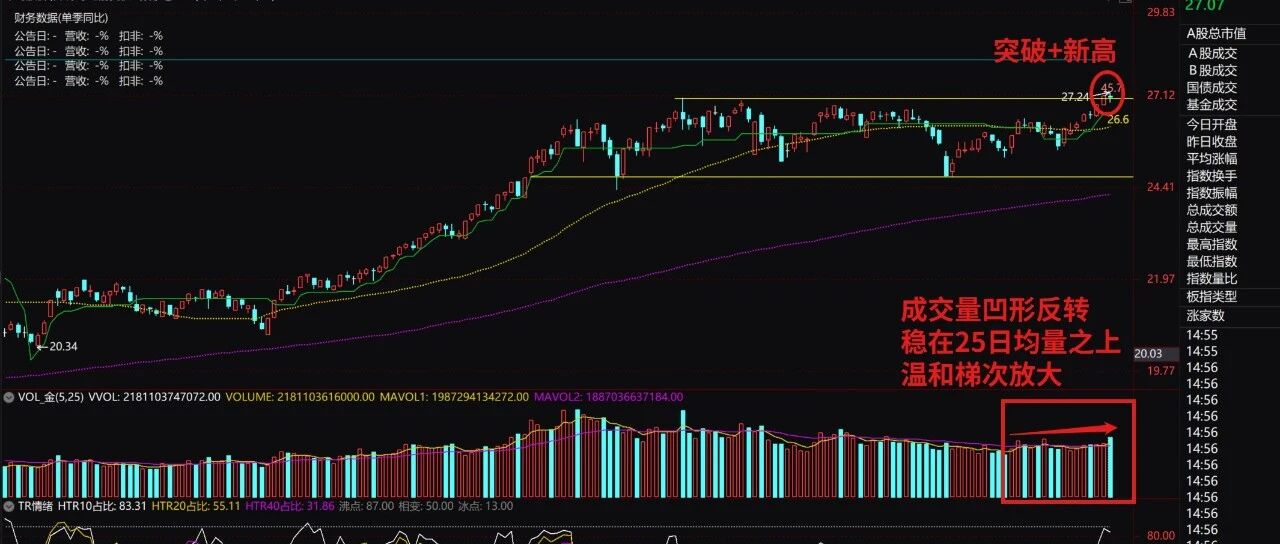
Group 1 - The article emphasizes the importance of understanding the underlying catalyst logic when selecting stocks, especially in a market where multiple stocks in the same sector are rising simultaneously [1][2] - A new trend is forming in the market, with the average stock price index breaking through the VCP consolidation structure and reaching new highs, supported by a stable increase in trading volume [1][2] - The average stock price index is preferred for analysis due to its clear structure and accurate signals, unlike the Shanghai Composite Index, which is heavily influenced by large-cap stocks [2] Group 2 - The main driving forces for the upcoming market trends are identified as AI computing power, AI electricity, and the strong cyclical recovery of non-ferrous metals, with key stocks showing signs of reversal or initial pivot points [2] - The overall market and strong stocks have shown restrained pullbacks over the past four months, indicating a healthy bull market characterized by controlled volatility [4]
AI算力驱动下,PCB和覆铜板产业竞争和卡位格局
猛兽派选股· 2025-12-26 16:01
Core Viewpoint - AI computing power is the core growth engine for the PCB and copper-clad laminate industry, with high-end HDI/multi-layer boards and low-loss copper-clad laminates becoming key competitive factors [1][5]. Group 1: Copper-Clad Laminate (CCL) Manufacturers - The copper-clad laminate is a core substrate for PCBs, accounting for about 30% of PCB costs, with high technical barriers and long certification cycles leading to high industry concentration [1][6]. - Leading global manufacturers include: - Shengyi Technology: Mainland China's leader in copper-clad laminates, with M9 ultra-low loss products certified by NVIDIA, achieving over 90% yield [2]. - Kingboard Laminates: A global leader in scale, covering mid-to-high-end FR4 and low-loss series, with strong overseas delivery capabilities [2]. - Taiwan's Taisol and Panasonic: Key suppliers for NVIDIA, maintaining stable shares in ultra-low loss products [2]. - Domestic second-tier players like Huazheng New Materials and Jin'an Guoji are accelerating high-end breakthroughs, focusing on low-loss series for AI servers and communication equipment [3]. Group 2: PCB Manufacturers - The core competitiveness of PCB manufacturers lies in customer binding depth, high-end product technology, and overseas capacity layout [4]. - Leading North American players include: - Simmtech: A leader in high-end HDI and multi-layer boards, a core supplier for NVIDIA and other major clients [4]. - Unimicron: A benchmark for high-speed communication boards, with strong growth driven by AI and communication sectors [4]. - Domestic players like Shennan Circuits and Pegatron are positioned for long-term benefits from the rise of domestic computing power and breakthroughs in carrier boards [4]. Group 3: Industry Trends and Competitive Logic - Most PCB manufacturers do not produce their own copper-clad laminates due to high technical barriers and customer specifications [6]. - The competitive core dimensions focus on ultra-low loss product capacity, yield, and customer certification, as well as high-end HDI and multi-layer board technology breakthroughs [7]. - Short-term beneficiaries include Simmtech and Shengyi Technology, while mid-term beneficiaries are Shennan Circuits and Huazheng New Materials, with long-term potential seen in advanced packaging and carrier board manufacturers [7][8].





杰瑞的燃气发电项目:北美大单背后的增长逻辑
猛兽派选股· 2025-12-26 05:16
Core Business Positioning - The company positions itself as a "modular solution leader" in the gas power generation sector, focusing on North American AI data centers and oil and gas field microgrids, utilizing a unique model of "outsourced core engine + deep system integration + localized delivery" [1][3] Technical Route - The core technology combination includes modified aircraft engines (aero-derivative gas turbines) and gas internal combustion engines, with partnerships with Siemens and Baker Hughes for high-performance engines [2][3] - The modified gas turbines are designed for rapid start-up and high efficiency, while gas internal combustion engines are suitable for emergency backup and smaller distributed generation scenarios [2] - The company integrates its proprietary microgrid control systems and energy storage modules with purchased engines to achieve modular deployment and optimize data center PUE [2][3] Core Advantages - The company has established a strong competitive barrier through exclusive agreements with top engine manufacturers, ensuring stable supply and prioritization [3][4] - Its system integration capabilities meet stringent reliability requirements, validated by large-scale projects in North America [3] - The company leverages its existing oil and gas equipment customer base to enhance its gas power generation solutions [4] North American Orders - The company has secured two major gas power generation contracts in North America, totaling approximately 1.5 billion RMB, with deliveries expected in 2026 [4][5] - These contracts serve as primary power sources for AI data centers, highlighting the company's technological maturity and market position [4] Revenue and Profitability - The gas power generation business is part of the natural gas equipment/EPC or new energy sectors, showing significant growth potential with a projected net profit of around 500 million RMB by 2026 [5][6] - The business has a gross margin of 30%-40%, significantly higher than the overall company margin of 31.29%, indicating strong profitability [5] Growth Drivers - The gas power generation business is identified as the core growth engine for the next 2-3 years, supported by natural gas equipment and traditional oil and gas sectors [6] - The company anticipates that the gas power generation segment will evolve from a growth area to a pillar business as hydrogen transition and carbon reduction policies advance [6]


高端PCB造孔工艺设备和厂商全梳理
猛兽派选股· 2025-12-25 16:01
Core Viewpoint - The article discusses the core processes and key equipment in high-end PCB manufacturing, highlighting the competitive landscape, market share, and recent performance of leading companies in drilling, plating, and blind hole formation processes. Group 1: Drilling Process - The drilling process includes mechanical and laser drilling, with key equipment such as mechanical drilling machines and CO₂/UV/ultrafast laser drilling machines. The domestic market share for mechanical drilling is approximately 70%, while laser drilling is rapidly increasing but still faces foreign competition [2]. - Leading domestic company Dazhu CNC (301200) holds a leading market share in mechanical drilling and has reported a revenue of 3.343 billion yuan in 2024, a 104.56% increase, and a net profit of 301 million yuan, a 122.20% increase [3]. - Mitsubishi Electric is a global benchmark for laser drilling machines, but faces challenges with long delivery times and high prices, leading to accelerated domestic substitution [4]. - Haoshi Electromechanical (300503) leads in high-speed air-floating spindles for PCB drilling, benefiting from high-end PCB expansion with increased shipment volume and price [5]. - Ding Tai Gao Ke (301377) holds the top global market share in PCB drill bits, with a projected 2024 share of approximately 26.8% [6]. - Chip Microelectronics (688630) is gaining traction with CO₂ laser drilling machines, targeting major clients and showing rapid growth in orders and shipments [7]. Group 2: Plating Process - Dongwei Technology (688700) is a domestic leader in vertical continuous plating (VCP) with over 50% market share, reporting a revenue of 757 million yuan in the first three quarters of 2025, a 30.58% increase [8]. - German company Amtech is a benchmark for high-end horizontal plating and IC substrate wet process equipment, but faces competition from domestic manufacturers like Dongwei in terms of cost and localization [9]. - Jingming (Taiwan) is an established player in VCP and plating lines, competing with Dongwei, which has superior uniformity and cost advantages [10]. Group 3: Blind Hole Formation Process - Dazhu CNC leads in routing/V-Cut forming machines, supporting pre-drilling and back drilling for blind holes, with high growth in orders and shipments expected in 2024-2025 [11][12]. - German company Berke-Faranna is a benchmark for high-end laminating machines used in blind hole lamination, but faces long delivery times and high prices, with domestic manufacturers catching up [13]. - Dongwei Technology supports blind hole filling with VCP and horizontal filling plating lines, achieving a filling fullness rate of over 98% [14].


数据中心分布式电站的未来
猛兽派选股· 2025-12-24 16:41
Core Viewpoint - Google's acquisition of Intersect for $4.75 billion signals a strategic move to secure energy supply for AI computing power expansion, addressing the energy needs of AI data centers [2]. Group 1: Acquisition Details - The essence of the acquisition is to lock in energy supply for AI computing, with Intersect focusing on mixed energy projects that combine solar, long-duration storage, and natural gas peaking [3]. - Intersect's projects can reduce the power supply cycle for data centers from 1-2 years to 90 days, achieving a Power Usage Effectiveness (PUE) below 1.1 [3]. Group 2: Energy Demand and Challenges - The distributed power market for data centers in China reached 18 billion yuan in 2025, but existing power solutions are inadequate for the demands of the AI era [5]. - Three major pain points are driving the need for power upgrades: reliability issues, environmental pressures, and increasing cost disparities [6]. - Diesel generators have a fuel cost of approximately $0.28 per kWh, while SOFC using natural gas costs only $0.09 per kWh, saving over 2 million yuan annually for a 1 MW system [7]. Group 3: Technology Insights - Solid Oxide Fuel Cells (SOFC) convert chemical energy directly into electrical energy with high efficiency, operating at temperatures of 600-800°C [9]. - SOFCs have a pure electrical conversion efficiency of 55%-65%, while traditional diesel generators only achieve 30%-40% [10]. Group 4: Industry Landscape - The SOFC industry features high material barriers and close integration with end-user needs, with domestic companies gaining competitive advantages in key segments [22]. - Key players include Sanhua Group, which holds over 50% of the global SOFC membrane market share, and Weichai Power, which has made significant engineering breakthroughs [23][24]. Group 5: Market Outlook - Policies supporting SOFC technology are emerging, with subsidies and tax incentives reducing initial cost disparities with traditional power sources [28]. - The domestic SOFC market is projected to grow from 2.25 billion yuan in 2023 to over 15 billion yuan by 2030, with a compound annual growth rate of 42.3% [30].

LiFSI(双氟磺酰亚胺锂)不仅仅是添加剂
猛兽派选股· 2025-12-24 03:15
Core Viewpoint - LiFSI (Lithium bis(fluorosulfonyl)imide) is transitioning from a performance-enhancing additive to a core material in high-end battery formulations, with its usage in leading battery manufacturers increasing from 5% to 15% as the industry moves towards high-nickel ternary, fast-charging, and solid-state batteries [1] Group 1: Advantages and Shortcomings of LiFSI - Core advantages include high efficiency and safety, with an ionic conductivity of 10.2 mS/cm at 25°C, which is 15% higher than traditional LiPF₆, and a capacity retention rate of 82.3% after 1000 cycles with high-nickel cathodes [3] - LiFSI remains conductive at -40°C, addressing range reduction issues for electric vehicles in cold climates, and shows excellent compatibility with silicon-carbon anodes and high-voltage cathodes above 4.4V, making it a standard material for 800V platforms [4] - As a primary salt, LiFSI can create high-concentration electrolytes, meeting the interface control needs of semi-solid batteries, with CATL's Kirin battery requiring at least 20% addition [5] - Current production costs are high, ranging from 120,000 to 200,000 yuan per ton, which is 2-3 times that of LiPF₆, despite a significant decrease from 800,000 yuan per ton in 2021 [6] - There is a risk of aluminum foil corrosion at high voltages, necessitating the use of additives like LiPO₂F₂ or blending with LiPF₆, complicating formulations [7] - The synthesis process is complex, requiring multiple reactions and a product purity of over 99.99%, with metal impurities needing to be controlled below 5 ppm [8] Group 2: Capacity Landscape - The domestic LiFSI market is highly concentrated, with over 85% market share held by five companies, including Tianqi Materials and Dongyue Group, as of Q3 2025, with effective capacity reaching 32,000 tons [9] - Tianqi Materials leads the industry with a capacity of 30,000 tons, expected to expand to 90,000 tons by 2026, benefiting from a cost advantage of 15% due to its integrated supply chain [10] - Dongyue Group operates at full capacity with 8,000 tons, achieving over 90% self-sufficiency in intermediates and maintaining top-tier impurity control [11] - New Zhongbang and Yongtai Technology focus on high-end markets with capacities of 5,000 tons and 6,000 tons, respectively, with the latter reducing energy consumption by 30% through continuous flow processes [12] - By 2026, planned domestic capacity is expected to exceed 50,000 tons, but only 30% will be high-end electronic-grade, leading to price competition in mid-to-low-end products [13] Group 3: Development Pathways - In the short term (2025-2027), LiFSI is expected to penetrate the market as an additive, increasing its proportion in power batteries from 8.5% to 20%, with high-end consumer electronics penetration exceeding 68% [15] - In the medium term (2028-2030), the demand for LiFSI as a primary salt will grow due to the mass production of semi-solid batteries, with usage in 4680 cylindrical batteries rising to over 5% per ton [16] - In the long term (post-2030), LiFSI is anticipated to adapt to new scenarios such as sodium-lithium hybrid batteries and hydrogen energy storage, with global demand potentially exceeding 200,000 tons [18] Group 4: Upstream and Downstream Dynamics - The upstream supply chain faces constraints, particularly with chlorosulfonic acid, which is essential for LiFSI production, leading to a 50% price surge to 2,050 yuan per ton due to increased demand [20] - The domestic effective capacity for chlorosulfonic acid is locked at 565,000 tons, with environmental approvals causing supply gaps, while Kaisheng New Materials monopolizes 40% of the market with 150,000 tons [20] - The downstream battery manufacturers are shifting from passive procurement to joint development, customizing LiFSI formulations to suit silicon-carbon anodes and solid electrolytes, with the average mixing ratio reaching 8.5% in 2024, up 6 percentage points from 2022 [22] - Three pathways for overcoming bottlenecks include upstream integration of raw materials, promoting process innovations, and establishing green approval channels for chlorosulfonic acid production [23][24][25] Conclusion - The evolution of LiFSI reflects the lithium battery industry's shift towards higher energy density and safety, with short-term raw material constraints supporting industry growth, while long-term leaders with integrated capabilities and technological barriers are expected to dominate [27]