
算力生态

Search documents
风险外溢下的风格切换:AI 硬件出清,软件重估?
美股研究社· 2026-03-04 11:36
Group 1 - The article discusses a significant market shift where hardware, particularly AI hardware infrastructure, has faced severe declines, while software, especially SaaS, has shown resilience and growth. This reflects a re-evaluation of "certainty" in the context of geopolitical risks and macroeconomic liquidity [2][10]. - The recent volatility in the South Korean stock market is attributed to a broader global high-leverage retail investor structure, which has accelerated the clearing of positions under external shocks. This has led to a chain reaction affecting the AI core chain in the US stock market [4][8]. - The sell-off in hardware sectors, including liquid cooling technology, optical modules, and high-performance servers, indicates a cold and rational withdrawal of funds, particularly from high-valuation and crowded trades [7][11]. Group 2 - The article emphasizes that the current market turmoil is more about liquidity issues rather than a fundamental collapse of demand for computing power. The demand for large model training and inference remains intact, but there are concerns about the timing of orders and potential overcapacity in the supply chain [8][12]. - Software stocks have rebounded sharply, contrasting with the decline in hardware, due to their high gross margins, low capital expenditures, and improved cash flow. This shift indicates a structural change in capital preferences towards "light asset" and "sustainable cash flow" businesses [10][11]. - The SaaS sector has experienced a significant valuation compression over the past two years, moving from high price-to-sales ratios to more reasonable levels. As hardware's certainty is questioned, software's advantages become more pronounced, leading to a redefinition of software as a defensive growth asset [11][12]. Group 3 - The article suggests that the current market dynamics represent a structural rebalancing rather than a full-blown tech bull market revival. The distinction lies in the underlying drivers: hardware is tied to macro liquidity and risk appetite, while software is linked to operational cash flow and efficiency [14][15]. - The rebound in software stocks may indicate a valuation bottom, but it does not imply a comprehensive recovery in industry health. The true reversal in software will depend on the expansion of corporate IT spending cycles [15][17]. - The overall message is that the market is undergoing a reordering where only companies with real profitability, healthy cash flows, and resilient business models will attract long-term capital. This shift highlights the importance of understanding market logic over mere index predictions [17][18].


世界计算·长沙智谷一区全面投运 逾200家企业签约入驻,二三区预计年中竣工
Xin Lang Cai Jing· 2026-02-23 23:45
Group 1 - The core focus of the news is the rapid development and investment in the Changsha Global R&D Center, specifically the World Computing Changsha Smart Valley, which aims to create a robust computing ecosystem and attract numerous enterprises [1][2] - The first phase of the Smart Valley, covering approximately 830,000 square meters, is operational, while the second and third phases, totaling around 900,000 square meters, are expected to be completed by mid-year [1] - Over 200 companies have signed agreements to establish operations in the park, with nearly 50 already in place, and plans to attract 20 leading enterprises, 50 headquarters, and 1,500 small and medium-sized enterprises, aiming to gather 80,000 to 100,000 talents [1] Group 2 - The park emphasizes industrial collaboration, utilizing a "super middle platform + chain life service platform" to foster partnerships among enterprises and share computing resources [1] - The park has launched an initial 200P computing power to support AI training, big data, and reasoning computing, ensuring operational capabilities even before full spatial delivery [1] - The park features a comprehensive energy system that reduces energy costs for enterprises by over 15%, alongside 100,000 square meters of commercial living space, talent apartments, and smart facilities, promoting integration of industry and urban life [2]
液冷有关的几只业绩和走势俱佳的票
猛兽派选股· 2025-12-30 07:04
Core Viewpoint - The liquid cooling industry, while part of the computing ecosystem alongside optical modules and PCBs, has a less robust business model and profitability. However, it has significant potential for penetration, particularly in high-density AI clusters, where current overall penetration is low, projected to reach about 20%-25% by 2025 [1]. Group 1: Industry Overview - Optical modules and PCBs are essential components of server and switch infrastructure, with nearly 100% penetration rates, while liquid cooling is only a necessity in high-density AI clusters [1]. - The revenue recognition for optical modules and PCBs is quick and has a short cycle, whereas liquid cooling projects typically have a lag of over six months due to the need for infrastructure setup [1]. - The standardization and mass production of optical modules and PCBs lead to stable and high gross margins, while liquid cooling faces challenges due to customization and project-based sales, resulting in lower gross margins [2]. Group 2: Key Companies - **Inspur**: A leading domestic liquid cooling company with a comprehensive solution covering cold plates, CDU, and system integration, benefiting from partnerships with major players like NVIDIA and Intel. It is positioned to gain from the AI high-density computing cooling market, although its valuation may be stretched with a PB exceeding 30x [2]. - **Tongfei Co., Ltd.**: A specialized enterprise transitioning to data center liquid cooling, with a dual-path approach in cold plate and immersion cooling, aiming for significant growth in AI computing infrastructure and energy storage [3]. - **Yidong Electronics**: Entering the AI server liquid cooling market in 2024, it aims to integrate connectors and liquid cooling solutions, achieving significant revenue milestones in 2025 [4]. - **Dingtong Technology**: Focused on integrated connector and liquid cooling modules, it is set to ramp up production and gross margin potential in the coming years [5]. - **Siquan New Materials**: Specializing in high thermal conductivity materials for AI server cooling, it is expected to enter a critical phase of mass delivery and certification by 2025 [6]. - **Zhongshi Technology**: Engaged in thermal management materials and AI server cooling solutions, it is expanding its production capacity and is expected to see significant order and margin growth [7]. - **Feirongda**: With a focus on electromagnetic shielding and thermal management, it is positioned for significant delivery and expansion in the AI server cooling market [8]. - **Dongyangguang**: Following a comprehensive approach in liquid cooling, it is set to enter a critical phase of delivery and overseas expansion [9]. - **Juhua Co., Ltd.**: Leveraging its fluorochemical expertise, it is positioned as a key player in the liquid cooling market, focusing on domestic replacement and overseas expansion [10]. - **Qiangrui Technology**: Engaged in integrated solutions for testing equipment, it is expected to achieve significant breakthroughs in delivery and ecosystem integration by 2025 [11].
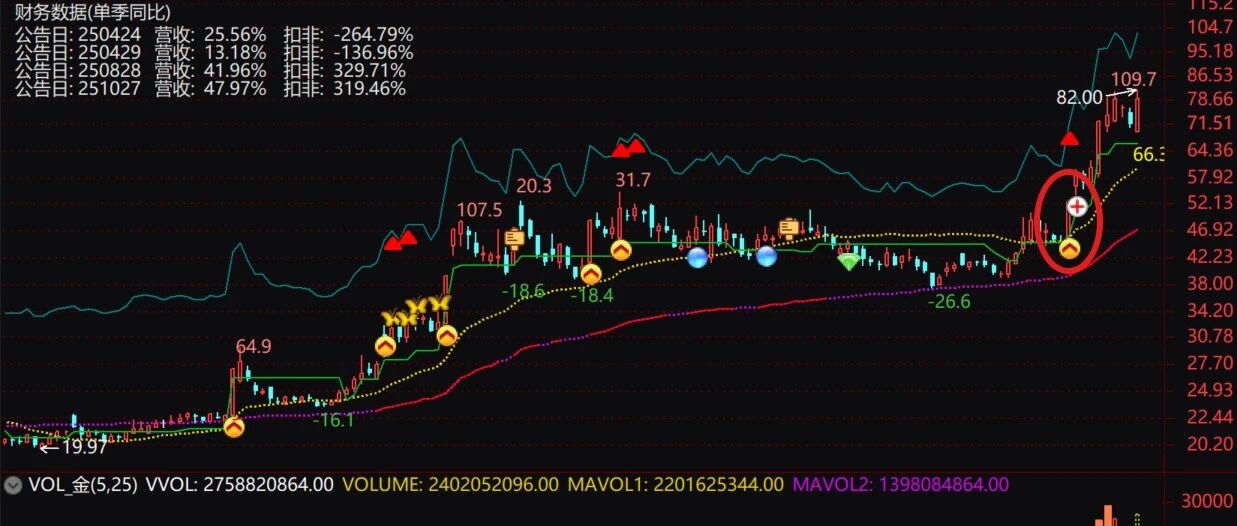
沐曦训推一体布局 展现国产算力新突破
Ren Min Wang· 2025-12-26 05:24
Core Viewpoint - The article emphasizes the importance of high-level technological self-reliance and strength as a strategic support for high-quality development in China, particularly focusing on the advancements in domestic high-performance GPU technology by Muxi Co., Ltd. [2] Group 1: Technological Advancements - Muxi Co., Ltd. has made significant progress in developing world-class GPU chips and computing platforms, aiming to become a cornerstone of the digital economy [2]. - After approximately five years of technological accumulation, Muxi has achieved a leap in product development, establishing a complete product line with three main series: Xisi (N series) for inference products, Xiyun (C series) for integrated training and inference products, and Xicai (G series) for graphics rendering [2]. - The Xisi and Xiyun series products have entered mass production [2]. Group 2: Technical Strategy - The core concept of Muxi's technical route is "universality," ensuring that chips can adapt to diverse future computing needs due to the mismatch between the long development cycle of chips and the rapid iteration of software [2]. - High-performance GPUs are primarily used in multi-tasking and multi-load data center scenarios, necessitating sufficient versatility [2]. Group 3: Software Ecosystem - Muxi's software team has developed a widely compatible self-researched software stack, claiming full support for all operators on PyTorch [3]. - Testing on nearly 4,500 active open-source application repositories shows that 92% can achieve "plug-and-play" functionality on Muxi's platform [3]. - Muxi can effectively support the entire process of training, fine-tuning, and inference, achieving comparable computing power utilization rates to international flagship platforms on mainstream models like Llama, ChatGLM, and DeepSeek [3]. Group 4: Supply Chain and Product Strategy - Muxi has established a fully domestic supply chain for its products, exemplified by the C600 product launched mid-year, which covers design, manufacturing, and packaging testing [3]. - The company follows a product strategy of "one generation on sale, one generation in research, and one generation in pre-research," with smooth progress on the next-generation C700 product [3]. - Muxi is pursuing a development path characterized by "hardware independence, software control, and open ecology," contributing to breakthroughs in the domestic GPU industry and strengthening the digital economy's computing foundation [3].
破壁·共生:寻找AI产业的新风向
36氪· 2025-12-03 00:51
Core Insights - The article discusses the upcoming "2025 Yangtze River Delta Artificial Intelligence Industry Integration and Coexistence Development Conference" set to take place in Hangzhou, China, emphasizing the shift from large model development to practical applications in AI [2][10]. Group 1: Industry Trends - The AI industry is transitioning from a focus on developing large models to implementing practical applications, with a clear need for businesses to create commercial viability [3][5]. - Companies are moving away from a blind faith in large parameters and are now focusing on vertical fields to find unique solutions for "Chinese-style AI" [6]. - The demand for AI applications is growing in various sectors, including low-altitude economy, industrial manufacturing, and embodied intelligence, indicating a shift towards practical, real-world applications [6]. Group 2: Challenges in Implementation - There exists a significant mismatch in the AI industry, characterized by "time differences" in computing power and "temperature differences" in application, which hinders innovation [7]. - Many small and medium enterprises face high costs and logistical challenges in accessing advanced computing power, which is often concentrated in a few centers [8]. - Traditional enterprises possess vast amounts of data but are hesitant to adopt AI technologies due to concerns over data security and unclear ROI, creating a barrier to effective collaboration [8]. Group 3: Conference Objectives - The conference aims to break down information silos and facilitate real discussions on AI applications and industry collaboration [10][12]. - It will gather experts from various fields, including government, industry, academia, and research, to discuss the latest trends and practical experiences in AI [11][12]. - The goal is to make AI a practical tool for various industries, moving beyond theoretical concepts to real-world applications that enhance efficiency and reduce costs [12].
DeepSeek模型上新,关注人工智能ETF(159819)、科创人工智能ETF(588730)等产品布局机会
Mei Ri Jing Ji Xin Wen· 2025-12-02 04:04
Group 1 - The A-share market opened lower, with the AI industry chain showing volatility; as of 10:50, the Shanghai Stock Exchange Sci-Tech Innovation Board AI Index fell by 1.1%, while the CSI AI Theme Index rose by 0.1% [1] - The DeepSeek company released two new models, DeepSeek-V3.2 and DeepSeek-V3.2-Speciale, aimed at enhancing reasoning capabilities and exploring the limits of model capabilities [1] - Analysts noted that DeepSeek is driving collaborative innovation and evolution in China's computing power ecosystem, integrating innovations in models and algorithms with lower-level computing chips [1] Group 2 - The CSI AI Theme Index consists of 50 stocks that provide foundational resources, technology, and application support for AI, covering the entire AI industry chain; the Shanghai Stock Exchange Sci-Tech Innovation Board AI Index includes 30 larger market cap stocks involved in AI, with a higher proportion in basic chips and AI applications [2] - AI ETFs (159819 and 588730) are available to help investors capitalize on growth opportunities in the AI and computing power ecosystem [2]

大湾区生态创新中心共建启航
Zheng Quan Ri Bao Wang· 2025-11-26 07:08
Core Insights - The Greater Bay Area Ecological Innovation Center has been established to accelerate the application of domestic computing power technology and support the high-quality development of the digital economy in the Guangdong-Hong Kong-Macao Greater Bay Area [1][2] Group 1: Strategic Collaboration - Guangzhou Radio and Television Wuzhou Technology Co., Ltd. has signed a strategic cooperation agreement with Muxi Integrated Circuit (Shanghai) Co., Ltd. and Shanghai Huayan Enterprise Development (Group) Co., Ltd. to leverage their core advantages in the domestic computing power industry chain [1] - The collaboration aims to build a comprehensive ecosystem that integrates computing power, technological innovation, industry application, talent cultivation, and community sharing [1] Group 2: Future Goals and Projections - By 2027, the core industry scale of artificial intelligence in the Greater Bay Area is projected to exceed 440 billion yuan, with computing power expected to surpass 60 EFLOPS [1] - The innovation center will focus on deep integration of domestic computing power with key sectors such as healthcare, transportation, finance, and education, accelerating the large-scale implementation of AI applications [2] Group 3: Ecosystem Development - The center will promote a new ecosystem characterized by safety, openness, and sustainability, transitioning domestic computing power from "usable" to "user-friendly, easy to use, and scalable" [2] - It aims to serve as an important platform for empowering various industries with intelligent computing technology, functioning as a "laboratory" and "testing ground" for industry applications [1][2]
中国算力进入拐点
Di Yi Cai Jing Zi Xun· 2025-09-29 02:21
Group 1: Industry Trends - Nvidia's CEO Jensen Huang predicts a tenfold increase in AI inference, leading to a $5 trillion annual market for AI infrastructure capital expenditures [2] - The collaboration between Nvidia and OpenAI aims to build AI data centers with a capacity of up to 10GW, equivalent to deploying 4-5 million GPUs, setting a high barrier for competitors [3] - The competition in the global computing power market is entering a critical phase, with increasing demand driving companies to form alliances with Nvidia, such as Oracle and Intel [2][3] Group 2: Competitive Landscape - Huawei has announced a comprehensive open-source strategy, planning to invest 150 billion RMB annually for ecosystem development and support over the next five years [5] - Huawei's decision to open-source its software is aimed at fostering a broader ecosystem and gaining long-term trust from internet companies, while focusing on monetizing its Ascend hardware [5][6] - The Chinese computing power industry is transitioning from hardware breakthroughs to ecosystem construction, with significant advancements in key metrics like computing density and energy efficiency [6][7] Group 3: Ecosystem Development - The competition in the computing power ecosystem involves not just hardware but also developer ecosystems, application ecosystems, and standard systems [6] - Nvidia's CUDA platform has created a significant lock-in effect for AI applications, making it challenging for competitors to overcome this ecosystem advantage [7] - Huawei is actively collaborating with open-source communities and projects to build its ecosystem, contributing to over 60 open-source projects and 370,000 lines of code [7][8]

中国算力进入拐点:“用多了就有生态,用少了生态就跑了”
Di Yi Cai Jing· 2025-09-29 01:49
Core Insights - The urgency to establish a robust ecosystem in the domestic computing power market is increasing despite warnings about a computing power bubble [1] - Nvidia's CEO Jensen Huang has raised expectations for the computing power industry, predicting a tenfold increase in AI inference and a $5 trillion annual market for AI infrastructure capital expenditures [1] - Nvidia's strategic partnership with OpenAI, described as a "smart investment," is seen as a way to secure profits while fostering an AI ecosystem dominated by American companies [1][2] - Huawei is responding to the changing landscape by adopting an open-source strategy, planning to invest 150 billion RMB annually in ecosystem development over the next five years [3][4] Industry Dynamics - The global computing power competition is entering a critical phase driven by rising demand, with Nvidia and OpenAI planning to build AI data centers with a capacity of up to 10GW, equivalent to deploying 4-5 million GPUs [2] - The rapid iteration of large models is leading to the emergence of new frameworks and algorithms, primarily developed on Nvidia's platform, which may create significant barriers for new entrants [2] Competitive Landscape - Huawei's decision to open-source its software and support mainstream open-source projects is aimed at fostering a broader ecosystem, while also focusing on monetizing its Ascend hardware [3][4] - The Chinese computing power industry is transitioning from hardware breakthroughs to ecosystem building, with significant advancements in key metrics like computing density and energy efficiency [4][5] - The competition in the computing power ecosystem is fundamentally about developer ecosystems, application ecosystems, and standard systems, with Nvidia's CUDA platform presenting a significant challenge for Chinese companies [5][6] Ecosystem Development - Huawei is actively collaborating with open-source communities and projects, contributing to over 60 open-source projects and 370,000 lines of code, while aiming to create a self-sustaining ecosystem independent of Western supply chains [6] - The belief that ecosystem development requires collective effort across the industry is emphasized, with a focus on long-term growth and sustainability in the global computing power competition [6]
中国算力,如何像水和电一样自然流动?
3 6 Ke· 2025-08-27 11:28
Core Viewpoint - The article discusses the challenges and opportunities in China's computing power market, particularly focusing on the emergence of "intelligent computing centers" and the role of the company Wuwen Xinqun in addressing these challenges through innovative solutions [1][10]. Group 1: Current State of Computing Power - As of September 2024, China's computing power scale reached 246 EFLOPS, with intelligent computing power growing over 65% year-on-year, and over 13,000 computing power application projects across various industries [1]. - Despite the growth in computing power, the average cabinet utilization rate in intelligent computing centers is only 20% to 30%, with some enterprise-level centers as low as 10% [1][2]. - The overall utilization rate of computing power in the country is only 32%, indicating a significant gap between supply and demand [2]. Group 2: Challenges in the Computing Power Market - There is a shortage of quality computing power supply, making it difficult for many enterprises to find suitable resources [2][3]. - High usage thresholds prevent startups from effectively utilizing available computing power, leading to a phenomenon of "computing power scarcity" among AI companies [3]. - The domestic chip ecosystem is fragmented, with various models and architectures that are incompatible, hindering efficient resource flow [3]. Group 3: Wuwen Xinqun's Approach - Founded in May 2023 by a team with strong ties to Tsinghua University, Wuwen Xinqun has quickly gained market attention, securing nearly 1 billion yuan in funding within two years [4][5]. - The company aims to be a "computing power operator" in the era of large models, addressing the challenges posed by the dominance of NVIDIA's CUDA ecosystem and the fragmentation of domestic chip manufacturers [5]. - Wuwen Xinqun has developed a cloud computing network that integrates heterogeneous computing resources, allowing developers to focus on applications without worrying about underlying hardware differences [5][10]. Group 4: Product Offerings - Wuwen Xinqun has introduced three core products, referred to as "three boxes," to enhance computing power utilization across various scales [6][9]. - The "Wuqiong AI Cloud" serves as a large-scale computing network, integrating resources from 26 provinces and over 53 data centers, with a total computing power exceeding 25,000 P [7]. - The "Wujie Intelligent Computing Platform" targets large computing clusters, demonstrating significant performance in training large models [8]. - The "Wuyin Terminal Intelligence" solution is designed for limited computing terminals, enabling them to perform complex tasks without relying on cloud resources [9]. Group 5: Future Outlook - Wuwen Xinqun's efforts reflect a broader need for a cohesive ecosystem that allows computing power to flow effectively, addressing the current challenges of fragmentation and high costs [10][11]. - The company aims to enhance the actual utilization rate of computing resources and improve the cost-performance ratio, contributing to the growth of China's AI industry [10].