猛兽派选股

Search documents
M8主图指标说明书
猛兽派选股· 2025-12-23 13:27
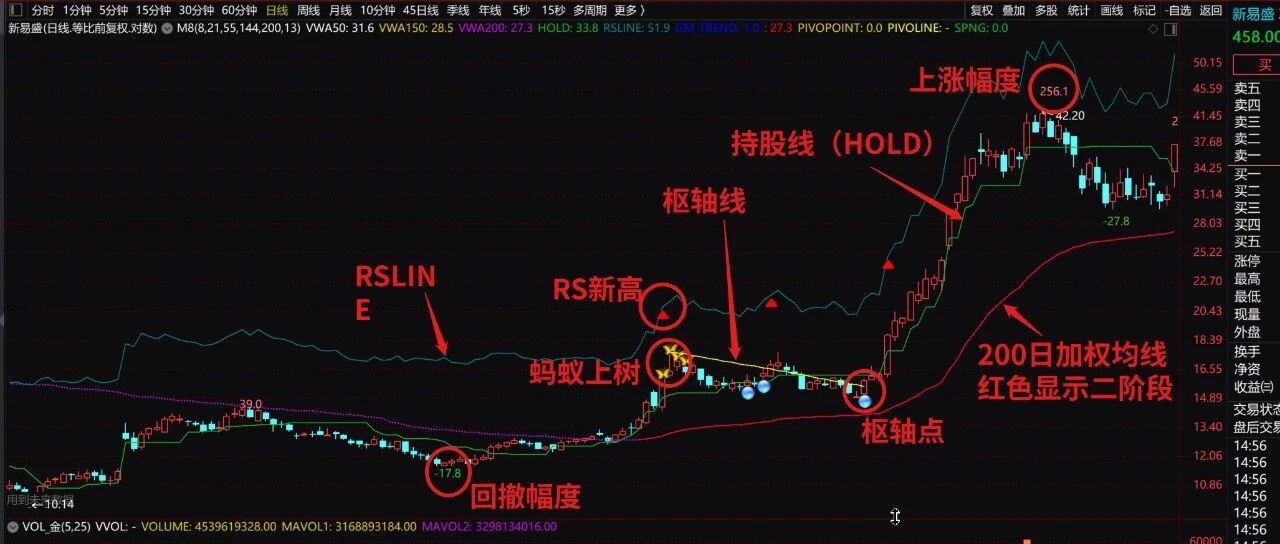
Core Viewpoint - The article provides a detailed explanation of the M8 main chart signals, aiming to help new users understand the various indicators and their implications for stock trading. Group 1: M8 Chart Signals - RSLINE indicates the stock's performance relative to the market index, with red triangles marking new highs [3] - HOLD line serves as a mobile stop-loss line, designed by the author [3] - The 200-day moving average, shown in purple, changes to red when entering the second phase, calculated using a weighted method based on transaction amounts [3] - Pivot points are represented by blue balls, with some connected to a yellow diagonal line, serving as buy signal references [3] - The "Ants Climbing a Tree" signal appears as a yellow butterfly on the K-line, indicating rapid accumulation in early rises or potential topping in high volume [3] Group 2: Additional Signals - The "Lightning Rod" signal, depicted as a light blue sad face ball, indicates a significant sell signal on the day of a peak retreat [5] - The "First Break of Year High" signal, marked by a red cross on a white ball, occurs after a long period of consolidation and indicates a breakout above the previous year's high [5] - Further details on the usage of these signals can be found in related articles and regular updates [5]

AI后周期的两个确定性方向
猛兽派选股· 2025-12-23 02:14
Core Viewpoint - The article discusses the emergence of a new trend in the market, driven by advancements in AI technology, particularly focusing on the M9 material and the rising prices of optical fiber rods as key investment opportunities [1]. Group 1: Breakthrough in Quantity - The M9 material, essential for high-end computing substrates, is set to experience significant growth due to the deployment of Nvidia's Rubin architecture and Google's TPU products, expected to reach a tipping point by 2025 [1]. - Q fabric, a core component of M9 material, is facing an expanding supply-demand gap, with price expectations for domestic Q fabric projected to rise to 250-300 RMB per square meter by 2026, up from a previous estimate of 200-250 RMB [1]. - Core companies in this sector include China National Materials (leading domestic Q fabric producer) and Feilihua (leading quartz material company) [2]. Group 2: Price Recovery - The optical fiber market is undergoing a structural change driven by AI, with demand expected to grow significantly; global optical fiber demand is projected to reach approximately 600 million core kilometers by 2025, with AI-related demand increasing from 5% to 10% annually [3]. - The supply side is constrained by the production of optical rods, which are essential for fiber production and face high technical barriers, leading to a strong likelihood of price increases [4]. - Historical data shows that previous supply constraints led to significant price increases in the optical fiber market, indicating a potential for similar trends in the current AI-driven environment [5]. - Key companies in the optical fiber sector include Yangtze Optical Fibre and Cable (leading in optical fiber and rod production) and Hengtong Optic-Electric (integrated layout benefiting from both submarine cables and AI fiber demand) [5].

先进陶瓷三杰
猛兽派选股· 2025-12-22 06:08
Core Conclusion - Advanced ceramics are positioned as the "crown jewel of the materials industry," achieving a critical phase of import substitution in strategic fields such as semiconductors, new energy, and optical communication. The three companies—Guoci Materials, Sanhuan Group, and Kema Technology—are building competitive barriers through differentiated track layouts: Guoci focuses on a powder-based multi-field platform, Sanhuan monopolizes niche markets with full-chain capabilities, and Kema leverages semiconductor domestic substitution for high growth. Together, they share the trillion-level market dividend [1]. Business Overview: Differentiated Tracks Constructing Domestic Ceramic Industry Ecosystem - Guoci Materials (300285) is positioned as a leading advanced ceramic powder platform, while Sanhuan Group (300408) serves as a comprehensive solution provider for the entire ceramic industry chain, and Kema Technology (301611) is a benchmark for semiconductor advanced ceramic components and domestic substitution [2]. - Guoci's core products include MLCC dielectric powders, honeycomb ceramics, and dental zirconia, while Sanhuan offers optical fiber ceramic inserts and SOFC membranes, and Kema specializes in ceramic heaters and etching machine components [2]. - Revenue structures show Guoci's focus on electronic materials (42%), Sanhuan's on communication devices (38%), and Kema's on semiconductor ceramic components (92%) [2]. In-depth Business Characteristics - Guoci Materials employs a "powder + acquisition" strategy to build a cross-field platform, breaking Japan's monopoly with water-thermal barium titanate powder, achieving over 25% global market share and over 80% domestic MLCC powder market share [3][4]. - Sanhuan Group has a vertical integration model, achieving over 70% global market share in optical fiber ceramic inserts and 80% in SOFC membranes, with a self-manufacturing rate of 90% for equipment [6][8]. - Kema Technology holds a 72% market share in domestic advanced structural ceramics and over 80% in etching equipment ceramic parts, with a focus on upgrading products to higher-margin modules [10]. Core Barriers: Technology, Customers, and Industry Chain - Guoci Materials has achieved breakthroughs in powder synthesis and nanostructured zirconia, with a purity of 99.9% for barium titanate powder [11]. - Sanhuan Group's proprietary technology includes ultra-thin YSZ membranes with over 99% density and a lifespan exceeding 40,000 hours [11]. - Kema Technology's innovations include plasma-resistant ceramics and precision processing techniques, with a focus on long-term contracts with major clients [11]. Development Potential: Growth Logic of Domestic Substitution and Scene Expansion - Key growth drivers include the high-end upgrade of MLCCs for Guoci, SOFC station proliferation and optical communication for Sanhuan, and semiconductor equipment expansion for Kema [15][16]. - The target market by 2030 includes electronic materials at $20 billion, catalytic materials at $15 billion, and semiconductor ceramic components at $10 billion, with compound annual growth rates of 18%-22%, 25%-30%, and 35%-40% respectively [16]. Competitive Landscape - All three companies face competition from Japanese firms like Kyocera and Nippon Electric Glass, particularly in advanced processes below 7nm and high-end SOFCs [18]. - Domestic collaboration is evident, with Guoci supplying raw materials to Sanhuan and Kema, while Sanhuan's semiconductor devices complement Kema's equipment components, forming a domestic ceramic industry ecosystem [19].


不做扩展数据,如何实现相对强度指标
猛兽派选股· 2025-12-21 09:17
Group 1 - The article discusses a simplified relative strength indicator solution that can be used in real-time trading without the need for extended data, making it more accessible for traders using mobile devices [1][3] - It introduces the RSline, which expresses the ratio of an individual stock's current price to the market index, providing a horizontal comparison that captures the stock's strength relative to the entire market [1] - The article suggests normalizing the RSline similar to RSV and integrating it with RSV, presenting a complete code for implementation [1] Group 2 - The proposed RSV value can replace RSR without requiring extended data, allowing for real-time use during trading sessions and compatibility with mobile applications [3] - The thresholds for the new indicator remain consistent with previous RSR conditions, ensuring continuity in trading strategies [3]

察哈尔汗盐湖双雄
猛兽派选股· 2025-12-20 05:10
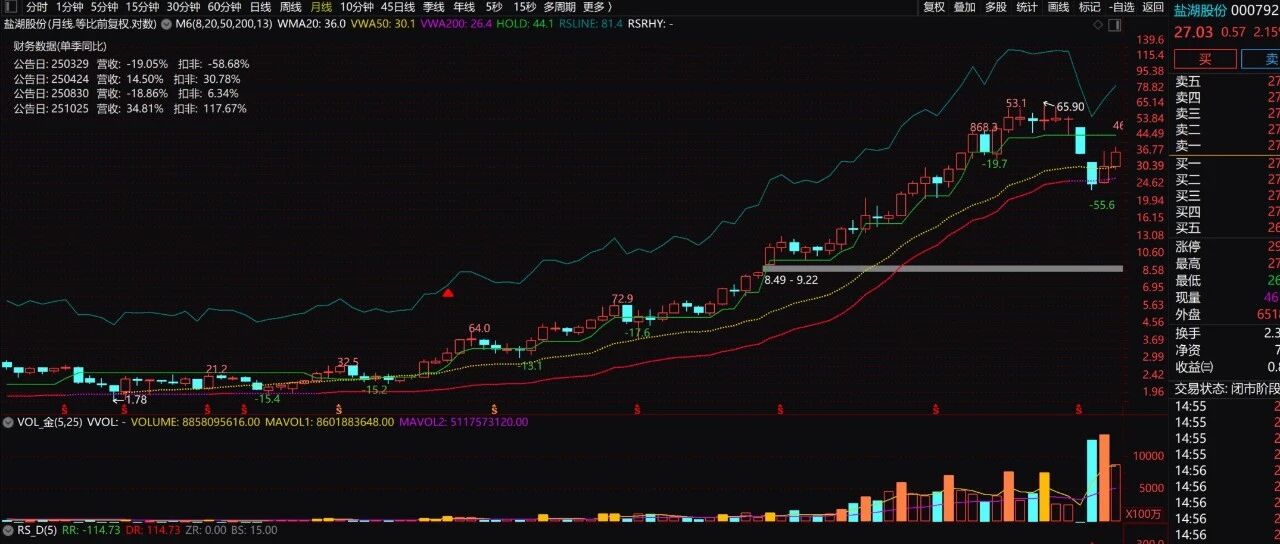
Core Viewpoint - The article discusses the transformation and recovery of two listed companies, Salt Lake Co. and Zangge Mining, which have both experienced significant ups and downs but have recently shown potential for growth and profitability due to strategic restructuring and market conditions. Group 1: Salt Lake Co. - Salt Lake Co. was originally a local state-owned enterprise that transitioned to a joint-stock company in 1996-1997, focusing on potassium fertilizer as its main business [1] - The company experienced rapid growth and was a high-performing stock during the 2004-2008 bull market, achieving over 30 times price increase [1] - After 2008, the company diversified into magnesium projects, leading to significant losses and a peak loss of 45.9 billion in 2019, resulting in bankruptcy restructuring [3] - In 2020, the company underwent judicial restructuring, divesting loss-making assets and refocusing on potassium fertilizer and lithium extraction, which improved its financial structure [3] - In 2025, the company was acquired by Minmetals Group, becoming a central enterprise, which enhanced its governance and strategic clarity [3] Group 2: Zangge Mining - Zangge Mining started as a private enterprise in 2002 and became the second-largest compound fertilizer company in China, listing in 2016 [4] - The company faced governance issues and financial troubles between 2019-2020, leading to a significant crisis and eventual restructuring [4] - In 2021, Zangge Mining restructured by introducing strategic investments and divesting bad assets, successfully removing delisting risks [4] - In April 2025, Zijin Mining became the largest shareholder, transforming the company from a private to a state-owned enterprise, which improved governance and risk control [4] Group 3: Market and Financial Performance - Both companies have similar business structures focusing on potassium fertilizer and lithium extraction, with Zangge Mining showing higher ROE due to its new ownership [6] - Salt Lake Co. is considered more attractive in terms of investment valuation compared to Zangge Mining [6] - Other companies in the potassium fertilizer sector, such as Yara International and Dongfang Tower, are also performing well, with Yara showing continuous high growth in recent quarters [6]
图形、指标和复合建模
猛兽派选股· 2025-12-18 03:28
Core Viewpoint - The article discusses the challenges and complexities of using quantitative methods in stock selection, particularly focusing on the difficulties of translating chart patterns into formulas and the advantages of using indicators for more effective modeling [1][3][4]. Group 1: Challenges of Chart Patterns - Many investors start their quantitative journey by trying to convert chart patterns into formulas, believing that certain patterns have high success rates [1]. - Describing chart patterns with formulas is difficult and often leads to complex conditions that do not yield the desired results, highlighting the subjective nature of pattern interpretation [3]. - The majority of stock selection formulas in the market rely on a combination of chart patterns and moving averages, reflecting a common understanding among investors [3]. Group 2: Advantages of Indicators - Indicators are seen as a more advanced method of describing stock characteristics, as they extract specific features from raw data, providing a more abstract and statistical perspective [3][4]. - The effectiveness of quantitative modeling lies in its ability to combine multiple indicators to create a coherent model, which is more efficient than relying solely on chart patterns [4]. - Successful quantitative modeling requires a clear understanding of the underlying logic and the appropriate characteristics to describe, emphasizing a structured approach to building models [4].


基于TR广度计算的情绪观测指标
猛兽派选股· 2025-12-16 03:00
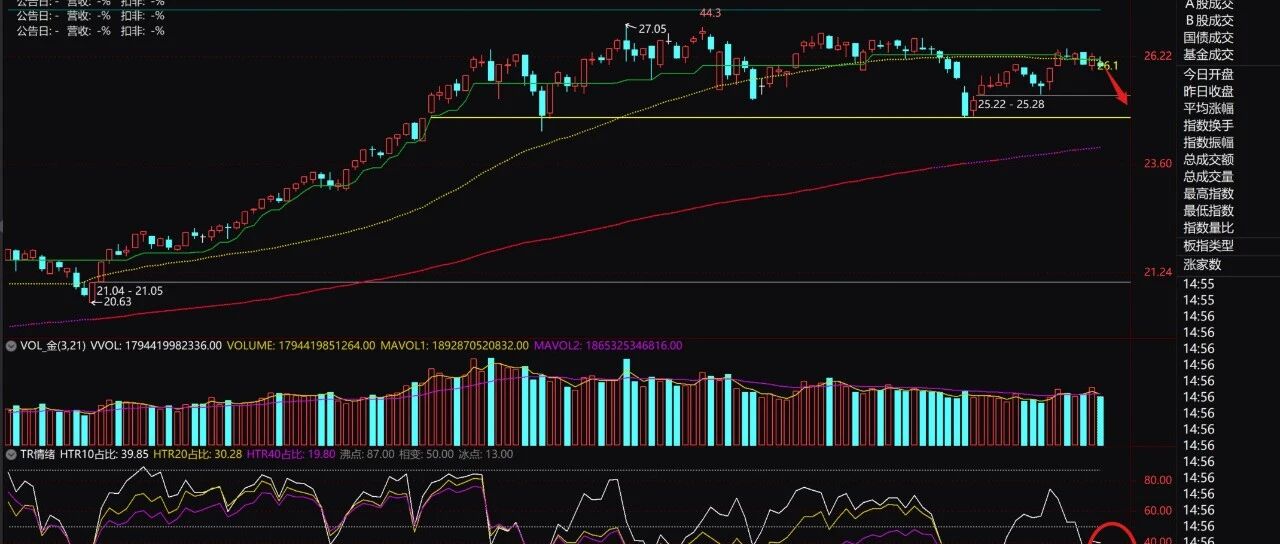
Group 1 - The core viewpoint of the article emphasizes the inadequacy of using moving averages to measure market sentiment, arguing that it reflects rationality rather than true emotional responses [1] - The article introduces a new method for measuring market sentiment through the TR value, which captures the maximum daily price movement, suggesting that the frequency of breakthroughs in maximum tension is a more accurate measure of sentiment [1] - The sentiment curve derived from TR calculations includes three lines representing 10-day, 20-day, and 40-day sentiment values, with specific thresholds indicating "emotional boiling" and "emotional freezing" regions [1] Group 2 - Key insights include that extreme sentiment values often lead to price reversals [3] - The synchronization of extreme values across the three sentiment lines indicates a significant potential for price reversals [3] - Discrepancies between large sentiment peaks and small sentiment movements suggest lower reliability in predicting market behavior [3] - A significant divergence between sentiment peaks and price peaks indicates a potential turning point in the market [3]

下一次恐慌即将来临
猛兽派选股· 2025-12-15 13:43
Group 1 - The article discusses a prolonged sideways market structure that has lasted over four months, indicating the need for patience in this phase [1] - Initial expectations for the sideways cycle were 1 to 3 months in September, which have now been revised to 3 to 5 months in October, suggesting a longer duration for market stabilization [2] - The transition from a convex resistance at the 50-day moving average to a concave support will require sufficient time, ranging from a minimum of 3 months to a maximum of 10 months, to facilitate significant capital conversion and prepare for the next trending market [2] Group 2 - A short-term panic in the market is anticipated to occur soon, with sentiment indicators expected to align in the "ice zone," providing a potential high-probability opportunity at the lower boundary of the consolidation range [2] - Recent market trends indicate that following each short-term panic, a new leading theme emerges, such as battery storage previously and commercial aerospace currently, raising the question of what the next attractive theme might be in the coming weeks [2]