半导体芯闻

Search documents
加速汽车芯片落地,Arm放大招
半导体芯闻· 2025-08-27 10:40
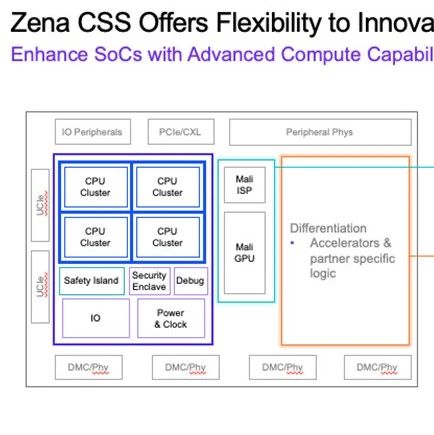
Core Insights - Arm has been a significant player in the automotive chip market for over 25 years, with a notable increase in chip shipments based on Arm architecture, tripling in the past five years [1] - The semiconductor market is projected to grow from $68 billion in 2024 to $132 billion by 2030, with automotive semiconductor value per vehicle increasing from $759 to approximately $1,332 [3][7] - The shift towards electric and intelligent vehicles is driving demand for advanced semiconductor technologies, particularly in power electronics and AI integration [7][8] Group 1: Automotive Chip Market Dynamics - The automotive industry is transitioning from internal combustion engines to hybrid and electric vehicles, increasing the demand for advanced semiconductor components [7] - New safety regulations are requiring even entry-level vehicles to be equipped with additional sensors and controllers, further driving semiconductor demand [7] - The complexity of automotive systems is increasing due to AI integration, necessitating advanced computing solutions [8] Group 2: Arm's Strategic Innovations - Arm is addressing the challenges of increasing complexity in automotive chip design by introducing Compute Subsystems (CSS) to streamline development processes [12][17] - The launch of the Arm Zena CSS aims to provide a standardized, pre-integrated computing platform that can reduce chip development cycles by up to 12 months [20][25] - Zena CSS supports a flexible architecture that allows for easy integration of custom accelerators and logic components, enhancing differentiation for automotive manufacturers [25][27] Group 3: Future Outlook and AI Integration - Arm anticipates that AI will play a larger role in automotive functionalities, including driving decision-making and user interaction [8][10] - The company emphasizes the importance of innovation flexibility, scalability of AI applications, and reduced time-to-market for automotive solutions [10] - Arm's long-term commitment to the automotive sector is expected to accelerate innovation in the Chinese automotive market, leveraging its established expertise [31]

寒武纪,当了几分钟股王
半导体芯闻· 2025-08-27 10:40
Core Viewpoint - The article highlights the remarkable performance of Cambricon Technologies, which has seen its stock price surge significantly due to the growing demand for domestic AI chips and the trend of domestic substitution. The company reported a staggering revenue increase of 4347% in the first half of 2025, marking a turnaround from losses to profits [3][4]. Financial Performance - Cambricon achieved a revenue of 2.88 billion yuan in the first half of 2025, a year-on-year increase of 4347.82% [4] - The company reported a net profit attributable to shareholders of 1.038 billion yuan, compared to a loss of 530 million yuan in the same period last year [4] - The cloud product line contributed 28.70 billion yuan in revenue, accounting for 99.6% of total revenue, indicating a strong market position in AI computing [3][4] Stock Market Performance - On August 27, Cambricon's stock price reached 1462 yuan per share, briefly surpassing Kweichow Moutai to become the highest-priced stock in A-shares [2] - The stock price increased from 520.67 yuan on July 10 to 1384.93 yuan on August 25, representing a cumulative increase of over 166% [2] Company Background - Cambricon was founded in 2016 by Chen Tian Shi and his brother Chen Yun Ji, both graduates of the University of Science and Technology of China. Chen Tian Shi holds a 29.63% stake in the company, with a net worth exceeding 150 billion yuan [5] - The company focuses on the research and development of AI chips, aiming to create core processing chips for the AI field [5] Product Lines - **Cloud Product Line**: Includes cloud intelligent chips and boards, which serve as core components for AI processing in cloud services and data centers [6] - **Edge Product Line**: Addresses the need for computing power at the edge, enhancing capabilities while mitigating privacy and bandwidth issues [7] - **IP Licensing and Software**: Involves licensing the company's developed IP for intelligent processors and providing a unified software platform for various AI applications [8] - **Intelligent Computing Cluster System**: Combines the company's intelligent computing products with partner hardware to offer comprehensive solutions for AI deployment in data centers [9]

AI芯片公司,超过100家
半导体芯闻· 2025-08-27 10:40
Core Insights - The number of companies developing AI processor chips has exceeded 121, driven by the surge in interest following the release of ChatGPT by OpenAI two years ago [2][3] - Nvidia has emerged as a leader in the GPU market, which is the preferred accelerator for AI model training and deployment [2] - The AI processor market is experiencing a "Cambrian explosion," reminiscent of past tech booms, with expectations of consolidation reducing the number of companies from 121 to about 25 by the end of the decade [3][6] Company Landscape - The United States leads the AI processor development with at least 59 companies, while China has 14, and most other countries have only a few [3][6] - California and Texas are hotspots for AI chip development, with California housing at least 42 AI chip companies [3] - Companies have collectively attracted over $13.5 billion in startup funding, with many raising over $100 million in the past year [3][6] Market Segmentation - The AI processor market is categorized into five segments: - AI-IoT: Ultra-low power inference in microcontrollers or small SoCs, high volume but low average selling price [8] - AI-Edge: Inference on devices outside data centers, including robotics and smart cameras [8] - AI-Automotive: Focused on ADAS and autonomous driving, differing in economics and design cycles [8] - AI-Data Center Training: High-end accelerators for large language models and model training, low volume but high average selling price [8] - AI-Data Center Inference: Large-scale services for AI models, utilizing a mix of GPUs, NPUs, and custom ASICs [8] Investment Trends - 95 startups have received $13.5 billion in investments, while 26 public companies are expected to invest $60 billion in R&D [12] - Notable funding includes Tenstorrent's $693 million in Series D, Lightmatter's $400 million for photonic interconnects, and Black Semiconductor's $275 million in government-led support [12]

华为高管:世界上根本没有免费的东西
半导体芯闻· 2025-08-27 10:40
Core Viewpoint - Huawei's automotive business is rapidly expanding, particularly in the field of assisted driving, with various collaboration models with car manufacturers being explored [2][3]. Group 1: Collaboration Models - Huawei's automotive business unit (BU) collaborates with car manufacturers through multiple models, including component supply, single intelligence (either smart cockpit or assisted driving), dual intelligence (both smart cockpit and assisted driving), and full-stack solutions [2]. - The collaboration process involves Huawei supporting car manufacturers throughout the entire lifecycle, from product definition and design to manufacturing and marketing [2][7]. Group 2: Technology Approach - Huawei's approach to assisted driving does not align with the Vision-Language-Action (VLA) model favored by some car manufacturers; instead, it emphasizes the World and Action (WA) model, which directly controls the vehicle through sensory inputs [3][9]. - The WA model is considered by Huawei to be the ultimate solution for achieving true autonomous driving, bypassing the language processing step [9]. Group 3: Commercialization and Market Strategy - Huawei does not have a specific short-term commercialization goal for its assisted driving technology, focusing instead on long-term user-centered strategies and sustainable investment [7]. - The company believes that the market for assisted driving features will evolve, and that pricing strategies should reflect the ongoing development and maintenance costs associated with these technologies [12]. Group 4: Industry Trends and Future Outlook - The number of players in the autonomous driving space is expected to decrease as the industry consolidates, with future success relying heavily on data-driven approaches [10]. - The differentiation in assisted driving technology is minimal, as the primary goal remains zero accidents and fatalities, with pricing determined by perceived value to consumers [11].
芯片出口管制,美国又搞新动作
半导体芯闻· 2025-08-27 10:40
如果您希望可以时常见面,欢迎标星收藏哦~ 来 源 :内容来自半导体芯闻综合 。 美国众议院美国与中国共产党战略竞争特设委员会主席约翰·穆勒纳尔(John Moolenaar)星期一(8 月25日)致函美国商务部部长霍华德·卢特尼克(Howard Lutnick),提出向中国出口的人工智能芯 片的新框架,以保持中国对美国人口智能芯片的依赖,同时限制中国先进能力的发展。 这位来自密西根州的共和党籍联邦众议员在信中建议美国商务部采取他所说的"滚动式技术门 槛"(RTT)政策,确保美国向中国出口的芯片性能只略高于中国国内能够大规模生产的最先进芯片, 将中国的人工智能的总算力限制在美国的10%,以确保美国在人工智能领域持久的主导地位。 点这里加关注,锁定更多原创内容 *免责声明:文章内容系作者个人观点,半导体芯闻转载仅为了传达一种不同的观点,不代表半导体芯闻对该 观点赞同或支持,如果有任何异议,欢迎联系我们。 推荐阅读 10万亿,投向半导体 芯片巨头,市值大跌 黄仁勋:HBM是个技术奇迹 他在信中说,"我们不应该将出口管制门槛与美国的芯片制造能力挂钩(例如,向中国出售我们第四 好的芯片或比最前沿降低50%的芯片),而应 ...
高通在处理器中加入RFID
半导体芯闻· 2025-08-27 10:40
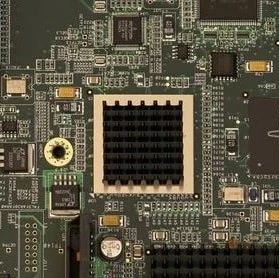
Group 1 - Qualcomm announced the Dragonwing Q-6690 as the first enterprise mobile processor integrated with UHF RFID functionality, featuring 5G, Wi-Fi 7, Bluetooth 6.0, and UWB for advanced proximity sensing and global connectivity [2] - The architecture supports various form factors from rugged handheld devices to retail POS systems and smart kiosks, providing OEMs and ODMs with a scalable, upgradeable platform and configurable software for wireless updates [2] - The processor supports edge devices in retail, commercial, and industrial sectors, enabling smarter, proximity-aware interactions through the integration of RFID, AI, and advanced connectivity [2] Group 2 - The device introduces a software-configurable feature package, allowing OEMs to select products based on computing needs, multimedia capabilities, camera support, or peripheral configurations without redesigning hardware, enabling wireless upgrades [3] - This modular approach accelerates time-to-market, reduces certification costs, and extends product lifecycle through wireless upgrades as customer demands change [3]


尊湃侵犯华为海思芯片技术商业秘密案一审判决生效
半导体芯闻· 2025-08-27 02:43
Core Viewpoint - The article discusses the legal case involving the infringement of Huawei's HiSilicon chip technology trade secrets by the company Zunpai, highlighting the significant valuation of the stolen technology and the legal consequences faced by the involved individuals [2][4]. Summary by Sections Case Overview - The case involves 14 former employees of Huawei's HiSilicon who illegally obtained technology information valued at 317 million yuan (approximately 3.17 billion) [2][3]. - The technology in question pertains to Wi-Fi chip development, which Huawei initiated in 2011 and subsequently entrusted to its subsidiary, HiSilicon [2]. Actions of Defendants - Zhang, a former head of the RF chip development department at HiSilicon, founded Zunpai and recruited several former colleagues to develop similar Wi-Fi chips [3]. - The defendants used improper methods such as screenshots and WeChat transmissions to acquire sensitive technology information from HiSilicon [3]. Legal Proceedings - The Shanghai Municipal People's Procuratorate filed charges against the defendants for trade secret infringement, with the case being complex due to the involvement of multiple defendants and technical details [4]. - The court's judgment on July 28 confirmed the defendants' guilt, with sentences ranging from three to six years in prison and fines from 200,000 to 3 million yuan [4]. Importance of Trade Secrets - The article emphasizes the critical role of trade secrets in modern economic development and the ongoing efforts by legal authorities to protect these rights [5].
日本小型半导体设备厂商的困境
半导体芯闻· 2025-08-26 10:09
Core Viewpoint - The semiconductor manufacturing equipment parts industry in Japan is facing challenges despite the growth in AI and chip demand, with calls for consolidation among manufacturers to improve profitability and competitiveness [2][3]. Group 1: Industry Overview - Japan's semiconductor equipment parts market is fragmented, with domestic sales below 100 billion yen (approximately 6.8 billion USD) [2]. - The vacuum components produced by companies like Marumae are critical for chip manufacturing, requiring high precision to avoid defects [3]. - Smaller suppliers struggle to raise prices despite their clients achieving record profits, leading to declining profit margins [3]. Group 2: Company Insights - Marumae, a company with around 300 employees, holds about 7% market share in Japan's vacuum chamber market, generating annual revenue of approximately 5 billion yen (about 34.5 million USD) [3]. - The company's operating profit margin was around 20% for the nine months ending in May, a significant increase from 3% in the previous fiscal year [3]. - Marumae's CEO, Toshikazu Maeda, emphasizes the need for larger scale to negotiate better with clients and is actively seeking acquisition opportunities to consolidate the industry [2][3]. Group 3: Competitive Landscape - Major players like Tokyo Electron and Applied Materials maintain operating profit margins around 30%, despite facing order cancellations and geopolitical challenges [4]. - Competitors often resist acquisition offers due to strong support from regional banks and concerns over losing proprietary technology through consolidation [4]. - There is potential competition from foreign companies seeking to acquire Japanese semiconductor technology, highlighting the strategic importance of domestic firms [4].
“小巨人”领航智造未来!2025中国工博会自动化展专精特新企业全景扫描
半导体芯闻· 2025-08-26 10:09
Core Viewpoint - The article emphasizes the importance of "specialized, refined, distinctive, and innovative" (专精特新) small and medium-sized enterprises (SMEs) in driving China's economic vitality and resilience, highlighting their role in the new industrialization process and technological advancement [1][2]. Latest Policies - The Ministry of Industry and Information Technology stresses the mutual relationship between SMEs and private enterprises as a crucial source of economic vitality and resilience [1]. - The central government places high importance on the development of private enterprises and the cultivation of specialized and innovative SMEs [1]. Specialized and Innovative Enterprises - "Specialized and innovative" enterprises are seen as leaders among SMEs and indicators of local business environments and economic activity [2]. - These enterprises are positioned as pioneers in overcoming core technological challenges during China's critical period of smart manufacturing transformation [2]. - The 2025 China International Industrial Expo showcases a strong lineup of national-level "little giant" enterprises, high-tech companies, and gazelle enterprises, all demonstrating their innovative capabilities and potential [2]. Exhibition Highlights - The 2025 China International Industrial Expo's automation exhibition features a diverse array of specialized and innovative enterprises, showcasing cutting-edge domestic technologies [2]. - The event serves as a platform for these enterprises to compete and display their technological strengths [2]. List of Notable Enterprises - A list of national-level specialized and innovative "little giant" enterprises is provided, including companies like Shenzhen Blue Ocean Huating Technology Co., Ltd. and Beijing Yihui Information Technology Co., Ltd. [3][4][6][8][14]. Event Details - The 25th China International Industrial Expo is scheduled for September 23-27, 2025, at the National Exhibition and Convention Center in Shanghai, with pre-registration available for attendees [25].

全球TOP30半导体巨头集体亮相,湾芯展2025成产业合作新纽带
半导体芯闻· 2025-08-26 10:09
Core Viewpoint - The Bay Area Semiconductor Industry Ecological Expo (Bay Chip Expo 2025) aims to enhance international collaboration and resource integration in the semiconductor industry, showcasing cutting-edge technologies and fostering global partnerships [3][17]. Group 1: Event Overview - The second Bay Chip Expo will be held from October 15 to 17, 2025, at the Shenzhen Convention Center, focusing on semiconductor wafer manufacturing equipment, components, materials, advanced packaging, IC design, and third-generation semiconductors [3][18]. - The expo will serve as a platform for communication, trade, and international cooperation, expanding its reach beyond regional boundaries [3][17]. Group 2: International Participation - The expo will feature a significant increase in international exhibitors, with leading semiconductor companies from over 20 countries, including ASML, Applied Materials, Tokyo Electron, and others, showcasing innovations across the entire semiconductor value chain [4][6]. - Domestic leaders such as North Huachuang and Shanghai Microelectronics will also participate, highlighting the complementary nature of the global supply chain [6][11]. Group 3: High-Level Dialogues and Forums - The event will host high-level dialogues, including the 9th International Advanced Lithography Technology Seminar, focusing on key areas such as lithography equipment and process technology [8][10]. - A comprehensive academic exchange conference, the 2025 Chip Conference, will feature over 50 renowned scholars discussing significant advancements in chip science [8][10]. Group 4: Global Networking and Collaboration - The expo aims to strengthen global semiconductor industry networks by inviting key industry organizations from Japan, Singapore, and Malaysia to facilitate deep connections between international buyers and exhibitors [11][12]. - The event will also organize over 20 high-level forums addressing global semiconductor market dynamics and cross-border cooperation strategies [10][12]. Group 5: Future Prospects - The Bay Chip Expo is positioned to become a leading platform for technological innovation and industry collaboration, with a high renewal rate of exhibitors from the first event indicating strong market recognition [17]. - The expo's international characteristics will enhance the coupling of the semiconductor supply chain, creating greater value through global integration [17].