日经中文网

Search documents
日经BP精选:铃木的印度产EV“e VITARA”采用比亚迪磷酸铁锂电池
日经中文网· 2025-09-02 03:15
Core Viewpoint - Suzuki is set to produce its first electric vehicle (EV), the "e VITARA," in India, marking a significant step in its transition to electric mobility while leveraging its established low-cost supply chain in the region [3][5]. Group 1: Production and Supply Chain - Suzuki will import core components for the "e VITARA" from overseas, specifically battery packs from China and inverters from Japan, despite sourcing most parts locally in India [3]. - The decision to produce the EV in India rather than Japan is driven by the lower production costs and the existing supply chain developed over 40 years [3][5]. - The vehicle will be manufactured at Suzuki's Gujarat plant, which has an annual production capacity of 2.6 million units, exceeding that of its Japanese facilities [5]. Group 2: Market Strategy - The "e VITARA" is scheduled for release in Japan within the fiscal year 2025, with the first units imported from India [3]. - The collaboration on the vehicle's chassis development involves partnerships with companies like Toyota, indicating a strategic alliance in the EV sector [3].


设上合组织开发银行是摸索非美元结算网
日经中文网· 2025-09-02 03:15
Core Viewpoint - The establishment of the Shanghai Cooperation Organization (SCO) Development Bank is aimed at increasing RMB financing and exploring a non-USD settlement network, responding to emerging countries' needs for stable exchange rates and infrastructure financing [2][4][10]. Group 1: RMB Internationalization - As of July 2023, RMB accounted for 2.88% of international settlements, ranking sixth after USD, EUR, GBP, JPY, and CAD [6][7]. - Following the fall of the Trump administration's policies, there is a growing demand among emerging countries to reduce reliance on the USD and stabilize their currencies [6][10]. - The RMB's share in international settlements previously peaked at around 4.7% but fell below 3% by May 2025, indicating market concerns over geopolitical tensions affecting currency transactions [9]. Group 2: Development Bank's Purpose - The SCO Development Bank aims to provide a new source of development funding for emerging countries, enhancing China's influence as a leading player [5][10]. - The bank's establishment is seen as a response to the U.S. prioritizing its own interests, which has led to dissatisfaction among emerging nations [5][10]. - The bank's timeline and specific plans are still under discussion, but the potential for increased bad debt risks exists if large-scale funding is deployed [10]. Group 3: Economic Security and Risks - Expanding RMB transactions is crucial for China's economic security, allowing it to stabilize trade activities even under U.S.-led financial sanctions [10]. - The "Belt and Road Initiative" has faced challenges, with investment amounts dropping significantly post-2020 due to the pandemic, leading to increased concerns over bad debts [11]. - The total amount of "problem debts" from 2020 to 2022 reached $76.8 billion, a significant rise from $17 billion in the pre-pandemic period [11]. Group 4: Challenges to RMB Usage - The strict controls on RMB's cross-border flow and exchange difficulties hinder its internationalization [12]. - To enhance the RMB's presence, it is essential to relax capital controls, but current economic uncertainties and outflow pressures complicate this process [12].
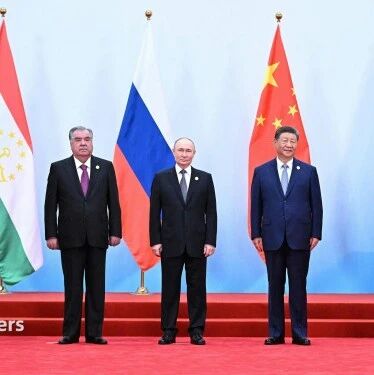
中国表示设立上海合作组织开发银行
日经中文网· 2025-09-01 08:20
Group 1 - The core viewpoint emphasizes the establishment of the Shanghai Cooperation Organization Development Bank to provide stronger support for member countries' security and economic cooperation [1][3] - A commitment to provide 2 billion RMB in unconditional aid to member countries within the year was highlighted [3] - The call for the activation of a comprehensive center for addressing security threats and challenges, as well as a drug control center, was expressed [3] Group 2 - The speech advocates against Cold War mentality, bloc confrontation, and bullying behavior, promoting a multipolar world with equality and order [3] - There is a strong emphasis on mutual benefit and win-win cooperation, with a focus on deepening development strategy alignment and high-quality construction of the Belt and Road Initiative [3] - Collaboration in various fields such as energy, infrastructure, green industries, digital economy, technological innovation, and artificial intelligence is encouraged to achieve modernization together [3]

股市上的“中国AI威胁论”再起
日经中文网· 2025-09-01 08:20
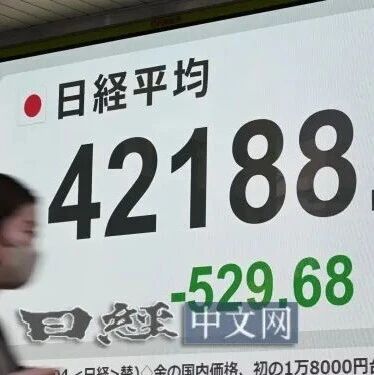
Core Viewpoint - The development of new AI semiconductors by Alibaba Group has raised concerns about the potential erosion of the United States' dominance in the semiconductor industry, leading to declines in semiconductor-related stocks in both the U.S. and Japan [2][4][5]. Group 1: Market Reactions - On September 1, the Nikkei average index in Japan fell by 529 points (1.2%), with a peak decline of 800 points, attributed to fears surrounding Alibaba's new AI semiconductor [2]. - The Philadelphia Semiconductor Index (SOX) in the U.S. dropped by 3.1%, reflecting a broader trend of declining semiconductor stocks [4]. - Major Japanese companies like Advantest and Tokyo Electron saw significant stock price drops of 9.3% and 3.1%, respectively, contributing to a decline of approximately 290 points in the Nikkei index [4]. Group 2: Comparisons to Previous Events - Investors are reminded of the "DeepSeek Shock" from January, when news of a low-cost AI developed by a Chinese startup led to a 17% drop in NVIDIA's stock, erasing about $590 billion in market value [5]. - Following the announcement of Alibaba's AI semiconductor, Chinese tech stocks surged, with Alibaba's stock rising nearly 20% and the Hang Seng Index increasing by over 2% [5]. Group 3: Diverging Opinions on Impact - Some analysts express skepticism about the potential impact of Alibaba's semiconductor, suggesting that its performance may not match NVIDIA's high-performance chips, and that the effect on Japanese semiconductor stocks will be limited [6]. - Analysts note that Alibaba's semiconductor focuses on AI "inference" rather than the "training" aspect where NVIDIA excels, indicating that NVIDIA's market position is unlikely to be significantly threatened [6]. - September is historically a month of market declines, with upcoming key economic data and meetings expected to influence market sentiment [6].
莫迪石破共乘新干线,考察半导体设备工厂
日经中文网· 2025-09-01 08:20
Core Viewpoint - India is pursuing semiconductor localization to reduce dependence on China, with hopes of collaborating with Japan to strengthen its semiconductor supply chain and enhance economic security [2][5][6]. Group 1: Semiconductor Industry Developments - Indian Prime Minister Modi and Japanese Prime Minister Kishida visited Tokyo Electron's factory in Miyagi Prefecture, emphasizing the importance of bilateral cooperation in semiconductor manufacturing [2][4]. - Tokyo Electron is collaborating with Tata Electronics to support talent development and establish a support system for semiconductor manufacturing in India [4][5]. - The Indian semiconductor market is projected to reach $64 billion by 2026 and $110 billion by 2030, accounting for approximately 10% of the global semiconductor market [5]. Group 2: Economic Security and Supply Chain - The focus of the India-Japan summit was to define economic security cooperation through the establishment of a semiconductor supply chain, reducing the risk of economic dependence being weaponized [5][6]. - Japan aims to diversify its semiconductor manufacturing bases to mitigate geopolitical risks from regions like China and Taiwan [6][7]. Group 3: Infrastructure and Logistics - India faces challenges in logistics infrastructure and forming industrial clusters, which are critical for building a robust semiconductor supply chain [7]. - The introduction of high-speed rail as part of India-Japan cooperation is expected to enhance logistics and facilitate the formation of industrial clusters [7][8]. Group 4: Challenges for Japanese Companies - Japanese companies entering the Indian market encounter various challenges, including differing laws across states and frequent changes in tax regulations [9]. - Collaboration with Indian state governments is crucial for supporting Japanese enterprises in overcoming these challenges [9].

FT中文网精选:A股创十年新高,投资人如何能赢?
日经中文网· 2025-09-01 03:18
Group 1 - The core viewpoint of the article highlights the ongoing capital feast in the A-share market, with the Shanghai Composite Index surpassing 3700 points, marking a ten-year high, and daily trading volumes exceeding 1 trillion [6] - Analysts predict a sustainable bull market, with expectations that the stock market will replace real estate as the main driver of China's economic growth [6] - The article emphasizes that the current market enthusiasm is driven by structural reform dividends, liquidity easing, and the reflection of China's economic transformation [6] Group 2 - The article warns that historical experiences suggest that risks often emerge when most perceive opportunities, indicating a need for caution despite the bullish sentiment [7]
石破茂内阁支持率回升至42%
日经中文网· 2025-09-01 03:18
Core Viewpoint - The Japanese Prime Minister Shigeru Ishiba faces internal pressure to resign as the leader of the Liberal Democratic Party (LDP) following multiple electoral defeats since 2024, despite a recent increase in cabinet approval ratings [2][4]. Group 1: Election Performance and Public Opinion - Since 2024, the LDP has experienced failures in various elections, leading to calls for Ishiba to step down as party leader [4]. - A recent public opinion poll indicates that 52% of respondents believe there should not be an early party leadership election, while only 39% support the idea of an early election [6]. - Ishiba's cabinet approval rating has risen to 42%, a 10 percentage point increase from the previous month, marking the first time it has returned to around 40% since February [2][6]. Group 2: Reasons for Support and Opposition - Among the reasons for supporting Ishiba's cabinet, the most cited is "trustworthy character" at 37%, followed by "it is a cabinet centered on the LDP" at 22% [6]. - The primary reason for opposition is "poor policies" at 38%, with "lack of leadership" and "poor government and party operation" both at 32% [6]. Group 3: Policy Priorities - In a survey regarding policy priorities, the most pressing issue identified by respondents is "price control," which received 49% of the votes, followed by "child-rearing, education, and declining birthrate measures" and "economic growth," both at 29% [6]. Group 4: Party Support Rates - The LDP's support rate has increased to 28% from 24% in July, while the support for the Constitutional Democratic Party has decreased to 7% from 9% in the same period [6].

莫迪专访:和美国一直是朋友,支持多极化
日经中文网· 2025-09-01 03:18
Group 1 - India's Prime Minister Modi emphasized the importance of a free economy for both India and the world, highlighting India's role in contributing to global development while serving its own population of 1.4 billion [4][5] - The visit to Japan is significant for restoring the tradition of annual leader meetings, which will facilitate discussions on domestic and international issues and explore new areas of cooperation [6] - Economic security and supply chain strengthening are key areas of cooperation between India and Japan, with initiatives like the launch of Suzuki's first electric vehicle and joint projects involving Toshiba and Denso [7] Group 2 - Talent exchange between India and Japan is expected to grow, leveraging India's young and skilled workforce to contribute to Japan's industries while benefiting from Japanese technology and investment [8] - The Mumbai-Ahmedabad High-Speed Rail project is highlighted as a crucial collaboration between India and Japan, with plans for a larger high-speed rail network in India [9] - The Quad framework, involving India, Japan, the US, and Australia, is evolving to address broader issues such as maritime security, health security, and infrastructure resilience [10] Group 3 - The BRICS group is recognized as an important multilateral entity focused on reforming global governance and enhancing the voice of the Global South, particularly in the context of current global challenges [11][12] - Modi called for reforms in international organizations like the UN Security Council and the Bretton Woods system to better address 21st-century challenges and ensure the Global South's representation [13] - Japan's increasing transfer of semiconductor and LCD panel technologies to India is noted, with India establishing six semiconductor bases and four under construction, aiming for significant domestic production [14] Group 4 - Defense cooperation with Japan is a priority, focusing on partnerships in defense equipment and technology, including discussions on transferring naval communication technology [15] - The collaboration between Indian states and Japanese prefectures is deepening, with numerous Indian state leaders visiting Japan to promote investment and tourism [16]

日本1~6月出生33.9万人再创新低
日经中文网· 2025-09-01 03:18
Core Points - Japan's birth rate in the first half of the year has hit the lowest record since comparable data began in 1969, with a total of 339,280 births, a decrease of 3.1% year-on-year, indicating a continuing trend of declining birth rates [2][4] - The number of marriages has also declined, with 238,561 couples marrying, a decrease of 4.0% year-on-year, marking the first decline in two years [4] - The natural population decrease stands at -497,538, with deaths reaching 836,818, an increase of 3.1% year-on-year, marking 21 consecutive years of natural population decline [4] Regional Analysis - All prefectures in Japan are experiencing natural population decline, prompting the government to implement the "Children's Future Strategy" aimed at reversing the declining birth rate [6] - The government plans to invest approximately 3.6 trillion yen before 2028 to address this issue, although the effectiveness of these measures remains uncertain [6] - The COVID-19 pandemic has accelerated the declining birth rate, as restrictions limited social interactions, leading to fewer marriages and subsequently fewer births [6] Future Projections - Predictions indicate that the birth rate will continue to decline by over 3% in 2025, which is significantly higher than the 1% declines observed in the 2000s [7] - The fertility rate among married women is also on a downward trend, making significant improvements in birth rates unlikely [7] Childcare and Enrollment - As of April 1, 2025, the number of children unable to enter childcare facilities is 2,254, a significant decrease from the peak of 26,081 in 2017, with 87.9% of municipalities reporting zero waiting children [8] - The primary reasons for the decrease in waiting children include the expansion of childcare capacity and lower-than-expected application numbers [8] - The city of Otsu has the highest number of waiting children at 132, attributed to difficulties in securing childcare staff [10] Policy Adjustments - The government is shifting its approach to childcare, planning to consolidate or abolish facilities in areas with declining demand, while increasing subsidies for after-school care and children's cafeterias [10] - There is a concern regarding individuals intentionally applying for childcare facilities to extend their benefits, which has been identified as a significant issue [11]

中国车企1~6月利润踩下急刹车
日经中文网· 2025-09-01 03:18
Core Viewpoint - The financial performance of major Chinese automotive companies is deteriorating, with five out of six companies reporting reduced profits or losses in the first half of 2025, while BYD is the only company to achieve profit growth, albeit at a lower rate than the previous year [2][4]. Group 1: Financial Performance - BYD's net profit for the first half of 2025 increased by 14% year-on-year, reaching 15.5 billion yuan, but this growth rate is lower than the 24% increase from the previous year [2]. - BYD's main automotive business saw a slight decrease in pre-tax profit for the first half of 2025, marking the first decline since 2021 [4]. - Geely's net profit fell to 9.2 billion yuan, a 14% decrease, marking the first decline in three years, with the average vehicle price dropping by 10% to 95,000 yuan [5]. Group 2: Market Competition - The Chinese automotive market is experiencing intense price competition, which is negatively impacting profit margins across the industry [2][6]. - The China Automobile Industry Association warns that chaotic "price wars" are a significant factor in the declining industry profitability, with total profits expected to decrease by 8% in 2024 compared to 2023 [6]. Group 3: Supply Chain Impact - The ongoing price competition is affecting the supply chain, particularly small and medium-sized component manufacturers, who are facing challenges with order fulfillment and payment delays [6]. - BYD's procurement debt decreased by 6% to 236.6 billion yuan by the end of June, influenced by shortened payment terms, which may lead to reduced operating cash flow [7]. - The net cash flow for BYD in the first half of 2025 was a deficit of 42.6 billion yuan, indicating worsening cash flow issues compared to the previous year [7].