日经中文网

Search documents
金融危机新火种:98万亿美元隐性债务
日经中文网· 2025-07-14 06:28
Core Viewpoint - The article highlights the significant growth of "hidden debt" through foreign exchange swaps, which is not reflected on balance sheets and poses potential liquidity risks in the financial system, particularly as the global amount is projected to reach $98 trillion by the end of 2024 [1][2][3]. Group 1: Hidden Debt Overview - Hidden debt primarily refers to the dollars raised through financial derivatives known as "foreign exchange swaps," which involve exchanging domestic currency for dollars and require repayment in dollars after a set period, typically less than one year [1][2]. - The International Bank for Settlements (BIS) has raised alarms about the excessive expansion of hidden dollar debt, which has grown from $41 trillion at the end of 2008 to $91 trillion by the end of 2023, and is expected to reach $98 trillion by the end of 2024 [1][2]. Group 2: Risks and Regulatory Concerns - The lack of transparency and insufficient regulation surrounding non-bank institutions, which are the largest users of foreign exchange swaps, presents a significant vulnerability for financial regulators [2][3]. - In the event of a financial shock, institutions may face increased costs to secure dollars or may need to liquidate dollar assets, potentially worsening their financial conditions [3]. Group 3: Specific Institutional Challenges - Japan's three major banks—Mitsubishi UFJ Financial Group, Sumitomo Mitsui Financial Group, and Mizuho Financial Group—are facing challenges in stabilizing dollar funding, with their foreign currency deposits not fully covering foreign currency loans as of March 2025 [3]. - The funding gaps for these banks are significant, with Mitsubishi UFJ raising $82 billion, Sumitomo Mitsui $146 billion, and Mizuho $93.7 billion, indicating a risk of dollar shortages during financial stress [3]. Group 4: Global Economic Factors - The uncertainty surrounding the Federal Reserve's willingness to supply dollars during a global financial crisis raises concerns, especially given the geopolitical tensions in the Middle East that could exacerbate economic conditions [4][5].


日本摸索对美关税谈判如何破局
日经中文网· 2025-07-14 03:12
在日本自民党"关于美国关税措施的综合对策总部"会议上,日本经济财政相赤泽汇报了与美国关税谈判的情况(7月9日,日本自 民党总部) 日美关税谈判在汽车方面仍存在明显分歧。日本政府内部已经有声音认为"(让美方)撤销关 税存在困难"。因此,作为破局的方案,日方提出的是根据对美国经济的贡献度下调税率的方 案。不过,日本需要的可能是打出能缩小美国贸易逆差的新牌…… 日美关税谈判中,双方围绕作为两国基础产业的汽车仍存在明显分歧。日本提出了根据在美 国的生产和就业等贡献度下调税率的方案。一方面,优先考虑削减贸易逆差的美国总统特朗 普多次对日本进口美国车的数量少表示不满,双方立场存在差异。日本方面将以对等关税加 征宽限期的8月1日为节点,探索妥协的可能性。 7月7日,特朗普向日本发出通知,称自8月1日起征收25%的对等关税。这比4月公布的24% 进一步提高了1%。自4月3日起,汽车已经被另行加征25%的关税,加上原来的2.5%,总税 率达到27.5%。 汽车是日本的基础产业,占国内就业人口的约1成。日本在汽车方面难以接受高关税。在特朗 普第一任期内,日本通过降低进口美国牛肉等的关税,达成了贸易协议,避免了美国对日本 车加征关 ...

日产或在美国为本田生产汽车
日经中文网· 2025-07-14 03:12
Core Viewpoint - Nissan and Honda are discussing collaboration to utilize Nissan's underutilized factories in the U.S. to produce vehicles for Honda, aiming to mitigate the impact of U.S. auto tariffs on Japanese automakers [1][2]. Group 1: Collaboration and Production - Nissan has begun negotiations with Honda to supply vehicles from its U.S. factories, particularly focusing on producing pickup trucks at the Canton plant in Mississippi [1][2]. - The collaboration is seen as a strategic move to increase local production and reduce the high import ratios of Japanese vehicles in the U.S., which are 47% for Nissan and 32% for Honda [2][3]. - Both companies face significant profit declines due to U.S. auto tariffs, with Honda projected to lose 650 billion yen and Nissan up to 450 billion yen in the fiscal year ending March 2026 [2]. Group 2: Market Conditions and Challenges - The Canton plant's utilization rate is projected to be only 57% in 2024, significantly below the breakeven point of around 80%, indicating a need for increased production to improve profitability [3]. - The U.S. government's strong stance on tariffs, including a 25% tariff set to take effect in April, adds pressure on Japanese automakers to enhance local production [3]. Group 3: Negotiation Dynamics - Previous discussions aimed at forming a global automotive alliance between Nissan and Honda collapsed due to disagreements, but both companies are now focusing on cooperation to rebuild their relationship [4]. - Following a management change at Nissan in April, regular discussions between the executives of both companies have resumed, although they have denied immediate plans to restart formal merger talks [4].


日本制铁CEO:不认为中国是第1
日经中文网· 2025-07-14 03:12
Core Viewpoint - Japan's Nippon Steel, led by CEO Eiji Hashimoto, acknowledges China's dominance in steel production but emphasizes that it does not equate to being the best, citing differences in pricing and profitability among domestic products [1][6]. Group 1: Acquisition of US Steel - The acquisition of US Steel by Nippon Steel was a result of lengthy negotiations, deemed beneficial for both the US and Nippon Steel, with the final agreement reflecting a mutual understanding of the need for revitalization in the US steel industry [1][2]. - The local community, initially skeptical, recognized that the partnership with Nippon Steel was essential for the economic recovery of the region, especially after observing the struggles of competitors like Cleveland-Cliffs [2]. Group 2: Operational Reforms - Hashimoto outlines a two-step approach to operational reform: first, restoring profitability to motivate employees, and second, ensuring sustainable growth over the next 10 to 20 years [3]. - The first step involves top-down reforms, while the second requires a cultural shift within the company to foster a growth-oriented mindset among employees [3]. Group 3: Challenges in the US Steel Market - The US steel industry faces challenges such as low production rates and high variable costs, which hinder competitiveness despite existing demand [4]. - Nippon Steel has already dispatched 40 technical personnel to address these issues and improve production methods [4]. Group 4: Market Demand and Product Contribution - There is a significant demand in the US market that can support increased production, particularly in sectors like AI and electric vehicles, where Nippon Steel can provide high-performance materials that are currently lacking in the US [5]. Group 5: Competitive Landscape with China - Hashimoto expresses concern over China's aggressive expansion in the steel market, particularly in emerging markets like India and Thailand, and emphasizes the need for proactive measures to counter this trend [6][7]. - The company aims to maintain its competitive edge by focusing on high-end steel products in markets with clear growth potential [9]. Group 6: Future Aspirations - Nippon Steel aims to reclaim its position as the world's leading steel producer within the next decade, targeting a crude steel production of 100 million tons, while also maintaining its technological leadership in Japan [8]. - The company is open to further acquisitions, particularly of smaller manufacturers in the US, to enhance its market position, while remaining cautious about the competitive landscape in Asia [9].



FT中文网精选:“美国党”能改变美国的政治生态吗?
日经中文网· 2025-07-14 03:12
FT中文网 . 英国《金融时报》集团旗下唯一的中文商业财经网站,旨在为中国商业菁英和决策者们提供每日不可或 缺的商业财经资讯、深度分析以及评论。 美国的政党经费制度决定了美国的政党需要取得一定的规模,才能生存下去。马斯克 如果高举高打,倒也不是不能成事,但难度实在很高。 编者荐语: 日本经济新闻社与金融时报2015年11月合并为同一家媒体集团。同样于19世纪创刊的日本和英国的两家 报社形成的同盟正以"高品质、最强大的经济新闻学"为旗帜,推进共同特辑等广泛领域的协作。此次, 作为其中的一环,两家报社的中文网之间实现文章互换。 以下文章来源于FT中文网 ,作者李瀚明 阅读更多内容请点击下方"阅读原文" (本文由FT中文网提供) 文丨李瀚明 马斯克因为美丽大法案的问题和特朗普分道扬镳、彻底闹掰以后,马斯克在今天(7月5日) 宣布成立了一个新政党"美国党"(America Party)。 为了讲清楚"美国党"能不能成事,我们得先从美国的选举制度开始。 假设我们要通过选举分配一个位置——那常识告诉我们,"少数服从多数",哪位候选人拿到 的票最多,哪位候选人坐这个位置,这是天经地义的事情嘛。事实上,几乎所有总统制,通 过 ...

日欧将展开卫星网合作,摆脱对美依赖
日经中文网· 2025-07-14 03:12
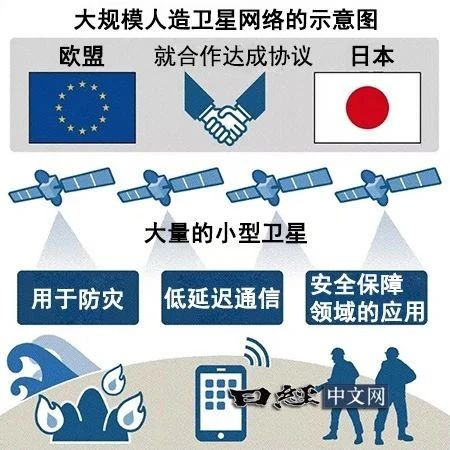
Group 1 - The article discusses the uncertainty in international cooperation in the space sector due to the "America First" policy under the Trump administration, highlighting Musk's threat to cut off Starlink services to Ukraine [1][2] - Japan and the EU are set to collaborate on building a large-scale satellite network, aiming to launch multiple small communication satellites to reduce dependence on American companies like SpaceX [1][2] - The technology of deploying interconnected small satellites, known as "satellite constellations," is positioned as crucial for supporting digital transformation (DX) [1] Group 2 - The EU plans to construct a satellite constellation with over 290 satellites, while Japan aims to launch more than five satellites in the early 2030s, indicating a significant gap with the US and China [2] - The article mentions the potential issue of space debris due to the increasing number of satellites and discusses the possibility of Japan and the EU collaborating on this challenge [2] - The agreement includes the establishment of a "Defense Industry Dialogue" to strengthen supply chains and explore future collaboration in defense equipment development [2] Group 3 - The article notes that EU Commission President von der Leyen aims to discuss the advancement of a free trade area led by Japan and the EU [3] - Von der Leyen advocates for the creation of new trade rules based on the Comprehensive and Progressive Agreement for Trans-Pacific Partnership (CPTPP) [4] - The draft outcome document emphasizes the importance of adhering to international law to promote peace and prosperity in the Indo-Pacific region [4]
日本最大半导体经销商社长:增加中国产半导体交易
日经中文网· 2025-07-11 08:16
Macnica社长原一将(横浜市) 日本Macnica的社长原一将:虽然存在地缘风险,但不聚焦中国市场是不可能的。目前我们主要经营欧 美厂商生产的半导体,但今后中国的需求方可能会避开欧美产品而选择中国本国产品…… 在中美对立激化的背景下,从事半导体经销业务的商社的竞争格局也发生变化。位居日本国 内首位的日本Macnica的原一将社长表示,"正在增加与中国半导体厂商的交易",透露称该 公司正在采取措施防范政治风险。 记者:半导体市场行情复苏速度迟缓。 原一将: 工业设备需求不断下滑。原本预计2025年下半年半导体需求会复苏、2025年度销 售额会增长10%左右,但考虑到美国特朗普政府关税政策的影响,已调整为与上年基本持 平。 原一将 记者:在中美对立的情况下,如何实现增长? 1994年毕业于甲南大学理学专业,1995年入职Macnica。曾担任营业统括部长、创新战略事 业本部长,2018年担任董事。2019年开始担任现职。出身于兵库县。 原一将: 虽然存在地缘政治风险,但不聚焦中国市场是不可能的。目前我们主要经营欧美厂 商生产的半导体,但今后中国的需求方可能会避开欧美产品而选择中国本国产品。因此,我 们目前正在 ...

支撑苹果的中国幕后企业向东南亚分散生产基地
日经中文网· 2025-07-11 08:16
Core Viewpoint - Lens Technology, a major supplier for Apple, has listed on the Hong Kong Stock Exchange and plans to use part of the raised funds for additional investment in its Vietnam factory, reflecting a strategy to diversify its production base amid US-China tensions and reduce reliance on Apple [1][2]. Group 1: Company Developments - Lens Technology aims to expand its production base to Southeast Asia, with plans to invest in a new factory in Thailand set to begin operations in 2026 [1][3]. - The company reported a projected sales increase of 30% year-on-year for the fiscal year 2024, reaching 69.8 billion yuan, with a net profit growth of 20% to 3.6 billion yuan [1]. - The company has reduced its reliance on Apple, with Apple's contribution to sales expected to be around 50% in fiscal year 2024, down from 70% in 2022, due to increased sales to Xiaomi [2]. Group 2: Market Context - The recent US-China tariff agreement has temporarily suspended additional tariffs, but the risk of increased tariffs on Chinese exports to the US remains high [2]. - Competitors like Luxshare Precision and Goertek are also seeking to diversify their production bases and reduce dependence on Apple, with Luxshare planning to list on the Hong Kong Stock Exchange and potentially raise up to $1 billion [4]. - The shift in focus from smartphones to emerging sectors like artificial intelligence (AI) and electric vehicles (EV) is prompting suppliers to adapt their strategies [4].



靠游客“救场”?日本旅游顺差抵消数字逆差
日经中文网· 2025-07-11 08:16
Core Viewpoint - The article discusses how Japan's tourism surplus is helping to offset its digital trade deficit, highlighting the importance of tourism in the country's economy [1] Group 1: Tourism Impact - Japan's tourism surplus reached a record high of 4.8 trillion yen (approximately 43.5 billion USD) in 2022, significantly contributing to the economy [1] - The influx of international tourists, particularly from countries like China and South Korea, has been a key driver of this surplus [1] - The tourism sector is seen as a vital component in balancing Japan's overall trade, especially in light of ongoing digital trade challenges [1] Group 2: Digital Trade Deficit - Japan's digital trade deficit was reported at 1.5 trillion yen (around 13.7 billion USD) in 2022, indicating a growing gap in digital goods and services [1] - The article emphasizes that while the digital sector is expanding, it is not yet sufficient to cover the losses incurred from the digital trade deficit [1] - The reliance on tourism to mitigate this deficit underscores the need for Japan to enhance its digital economy [1]