日经中文网

Search documents


挥别电视业务,索尼改革“无禁区”
日经中文网· 2026-01-22 08:00
索尼集团的CEO十时裕树(2024年) 对于索尼集团而言,电视曾是特别的存在,旗下"WEGA"系列更是拥有很高的品牌影响力。此次索尼将 合资公司的半数股份转让给TCL,表明电视已不再是不可或缺的业务。未来的焦点将落在智能手机业务 的最终走向…… 索尼集团将剥离电视业务,移交至由中国电视制造商TCL集团牵头的合资公司。此举向内外反映出索尼 的态度:即便是曾经的核心支柱业务,一旦被判定对游戏、音乐等娱乐业务的增长无足轻重,便会被纳 入业务重组的范畴。索尼集团社长兼首席执行官(CEO)十时裕树推动的 "无禁区" 业务组合改革正在 全面提速。 "业务组合绝非一成不变的静态存在,而是需要持续动态调整的体系。只要有需要优化的板块,我们就 会毫不犹豫地出手整改",十时裕树在2025年2月的财报发布会上,就已明确表达了主动推进结构性改革 的战略思路。 本次剥离电视业务,正是这一战略方针的落地实践。早在2025年10月,索尼便已剥离了与核心发力的娱 乐领域关联度较低的金融业务,整理组织架构,以将经营资源集中投向游戏、音乐等内容领域。 索尼集团采取的战略是,获取知识产权(IP),在游戏、动画和音乐等旗下公司涉足的各个领域进行多 ...


日本将建立车载半导体信息共享系统
日经中文网· 2026-01-22 02:59
Group 1 - The core idea of the article is the establishment of a shared semiconductor information system by the Japan Automobile Parts Industry Association, which aims to stabilize semiconductor procurement for Japanese automakers like Toyota and Renesas Electronics, covering approximately 80-90% of the semiconductor needs [2][5] - The system will allow semiconductor manufacturers to register specifications, production times, and origins, enabling automakers and parts manufacturers to query and understand the supply stability of required semiconductors [6][8] - The automotive industry is facing challenges due to a complex supply chain structure, making it difficult to grasp the overall procurement sources and supply chain status, which this new mechanism aims to address [8] Group 2 - The shared system is expected to include around 20 domestic and international semiconductor companies, such as Renesas Electronics and Infineon Technologies, and will be operated by the Automotive and Battery Traceability Promotion Center [4] - The importance of automotive semiconductors is increasing, especially with the industry's shift towards autonomous driving and artificial intelligence, with the global market size projected to reach approximately $159.4 billion by 2035, an increase of over 80% from about $86.1 billion in 2025 [9] - The initiative aims to mitigate procurement risks associated with key components, thereby enhancing the competitiveness of the automotive industry [9]



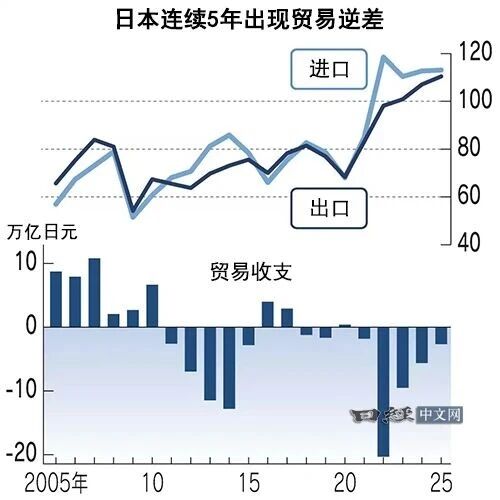
日本2025年贸易逆差减少52.9%,对华出口微减
日经中文网· 2026-01-22 02:59
Group 1 - Japan's total export value in 2025 is projected to grow by 3.1%, reaching a record high of 110.448 trillion yen, driven by increased exports of semiconductors and electronic components to Asia [2][4] - The trade balance shows a deficit of 2.6506 trillion yen, marking five consecutive years of deficits, although the deficit has decreased by 52.9% compared to the previous year [2] - Total imports are expected to rise by 0.3%, amounting to 113.0987 trillion yen, indicating that export growth outpaces import growth [4] Group 2 - Exports to the United States are anticipated to decline by 4.1%, falling to 20.414 trillion yen, with a corresponding decrease in trade surplus to 7.5214 trillion yen, down by 12.6% [5] - The decline in exports to the U.S. is influenced by tariff policies from the previous U.S. administration, leading to an 11.4% drop in automobile exports, which are now at 5.3409 trillion yen [5] - Exports to China have also decreased by 0.4%, totaling 18.7795 trillion yen, while imports from China have increased by 5.5%, reaching 26.6941 trillion yen, driven by higher imports of personal computers and smartphones [5]
布雷默:美国压力或令北约瓦解
日经中文网· 2026-01-22 02:59
Core Viewpoint - The article discusses the geopolitical tensions arising from President Trump's ambitions regarding Greenland and the potential implications for NATO and U.S.-European relations, suggesting a shift towards closer ties between Europe and China as a counterbalance to U.S. pressure [2][4][6]. Group 1: U.S.-Europe Relations - Ian Bremmer expresses that if Trump continues to demand territorial acquisitions, it could lead to the end of NATO, as this behavior is not supported domestically in the U.S. and is driven by Trump's vanity and self-interest [4]. - Europe is currently in a crisis and feels divided, needing to respond collectively under the leadership of Germany and France to counter U.S. actions, including potential retaliatory tariffs against the U.S. [6]. Group 2: Trump's Strategy - The sudden prioritization of Greenland by Trump is seen as a shift in focus after a lack of significant action during his first term, with the new national security strategy emphasizing unilateral actions in the Western Hemisphere [7]. - Bremmer describes Trump as an undisciplined president with strong political instincts, suggesting that his motivations for acquiring Greenland are rooted in personal vanity rather than national security needs [8].

日美成为金融市场动荡的震源
日经中文网· 2026-01-22 02:59
Group 1 - Japan's long-term interest rates have risen sharply, causing turmoil in the bond market and creating spillover effects globally, with U.S. long-term rates reaching a high not seen in about five months [2][5] - The newly issued 30-year government bond yield in Japan was 3.71%, down 0.165% from the previous day, while the 40-year bond yield was 4.04%, also down 0.165%, indicating a market correction after a historic surge [4] - The Japanese bond market turmoil has led to increased scrutiny from overseas investors, with concerns about fiscal irresponsibility and a lack of clarity regarding funding sources for proposed consumption tax cuts [7] Group 2 - The Nikkei average fell by 216 points (0.4%) on January 21, marking a decline of over 1500 points over five consecutive trading days, reflecting market apprehension towards rising interest rates [7][8] - Financial stocks, including Mitsubishi UFJ Financial Group, experienced significant sell-offs, with shares dropping over 3%, indicating a shift in market sentiment [9] - The rising interest rates, while potentially improving bank loan spreads, could also suppress economic growth and force financial institutions to write down their bond holdings, contributing to market volatility [10] Group 3 - The ongoing geopolitical tensions between the U.S. and Europe, particularly regarding Greenland, have further dampened investor confidence, leading to a 2% drop in the Dow Jones Industrial Average [10][11] - Speculation about Europe potentially selling U.S. Treasury holdings as a countermeasure has added to market chaos, although U.S. Treasury Secretary has downplayed such discussions [10] - The chief investment officer of a Danish pension fund indicated plans to reduce U.S. Treasury holdings to near zero, reflecting growing pessimism and the potential for prolonged market adjustments [11]
FT中文网精选:2026年,中国汽车在欧洲能否延续高光时刻?
日经中文网· 2026-01-22 02:59
Group 1 - The core viewpoint of the article highlights that BYD has surpassed Tesla in global sales of pure electric vehicles for the first time, with BYD's sales reaching approximately 2.257 million units in 2025, a year-on-year increase of 27.9%, while Tesla's deliveries are projected to be around 1.636 million units, reflecting a nearly 9% decline year-on-year [6] - The shift in leadership in global pure electric vehicle sales is attributed to BYD's continuous expansion in overseas markets, contrasting sharply with Tesla's significant sales decline in various European countries such as France, Sweden, and Spain [6] - The article notes that BYD achieved this milestone in the fourth quarter of 2023, marking the first time it surpassed Tesla in quarterly sales [6]



日本40%市场人士认为2026年最弱货币是日元
日经中文网· 2026-01-21 08:00
Core Viewpoint - The Japanese yen is expected to continue depreciating due to concerns over the expansionary fiscal policies of the government led by Prime Minister Fumio Kishida and the persistently low real interest rates in Japan [2][4]. Group 1: Currency Predictions - In a recent survey conducted by QUICK and Nikkei Veritas, 40% of respondents predicted the yen would be the weakest currency among eight major currencies by 2026 [2][4]. - The survey included 173 participants from Japanese financial institutions and companies, with 64 valid responses collected [4]. - The dollar was predicted to be the second weakest currency, with 36% of respondents selecting it, citing factors such as ongoing interest rate cuts and political uncertainties [4][5]. Group 2: Current Exchange Rates - As of January 14, the exchange rate for the yen against the dollar fell to approximately 159.5 yen per dollar, marking the lowest level in about a year and a half [4]. - The yen also depreciated against the euro, reaching an exchange rate of 185.5 yen per euro, the lowest since the euro's inception in 1999 [4]. Group 3: Future Currency Strength - For the strongest currency prediction, the euro ranked first, followed by the Swiss franc, while the Swiss franc was predicted to be the strongest currency in the 2025 survey [5].

美国再现股债汇三杀,格陵兰关税引担忧
日经中文网· 2026-01-21 08:00
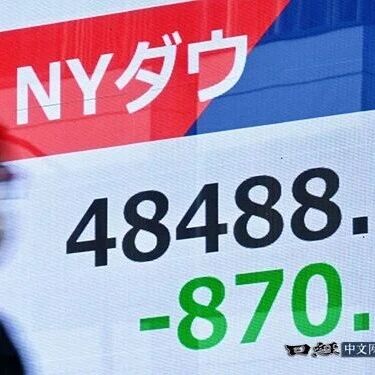
Core Viewpoint - The U.S. stock market experienced significant declines, with the Dow Jones Industrial Average dropping 870 points to close at 48,488 on January 20, driven by geopolitical tensions and rising interest rates [2][4]. Group 1: Market Performance - On January 20, the Dow Jones Industrial Average fell by 870 points, marking a significant drop from the previous weekend [2]. - The market saw a decline of over 900 points during the day, reaching a new low not seen in two days, with major companies like Nvidia, Amazon, and 3M experiencing substantial losses [5]. - The VIX, known as the "fear index," rose to the 20 range, reaching its highest level since November 2025, indicating increased market volatility [5]. Group 2: Interest Rates and Currency - The 10-year U.S. Treasury yield increased by 0.09% to 4.31%, reflecting upward pressure on bond prices [6]. - The U.S. dollar index fell by over 1% compared to the previous weekend, contrasting with the decline in U.S. asset prices [6]. Group 3: Geopolitical Factors - President Trump announced plans to impose tariffs on eight European countries until the U.S. secures Greenland, leading to heightened geopolitical risks and a sell-off in stocks [2]. - European responses to the tariff announcements were negative, contributing to market uncertainty [2]. Group 4: Commodity Trends - In contrast to the declining asset prices, gold saw increased buying interest, with New York futures prices rising to the $4,770 range, up approximately 4% from the previous trading day [6]. Group 5: Investment Recommendations - UBS Global Wealth Management suggested that despite short-term volatility risks, global stock markets may rise, recommending that investors with low stock ratios consider increasing their investments [6].
特朗普2.0:丛林化的世界秩序
日经中文网· 2026-01-21 08:00
Group 1 - A major Japanese bank reportedly provided 4 billion yen to the U.S. Embassy in Japan at the request of the U.S. government, commemorating the 250th anniversary of the United States [3] - Japanese corporations, including large trading companies and automotive manufacturers, are expected to contribute over 10 billion yen, with the U.S. explaining that the funds will be used for a party [5] - The U.S. plans to invest 100 billion dollars starting in 2026 for the construction and expansion of nuclear power plants, marking a significant shift in energy policy, with Japan being asked to bear part of the costs [5][6] Group 2 - The Trump administration's policies have led to a significant increase in defense spending globally, with military expenditures potentially rising to 6.6 trillion dollars by 2035 [9] - The economic competition is intensifying, with China potentially violating WTO rules to lower export prices, leading to a record trade surplus by 2025 [9] - The U.S. faces risks of economic decline, as historical precedents show that military engagements without allied support can lead to financial crises and diminished national power [9]