格隆汇APP

Search documents
湘妹子遇见贵人雷军,在广东广州创出一家IPO,做IDC年入4亿
格隆汇APP· 2025-05-06 09:35
Core Viewpoint - The article discusses the successful IPO of a company founded by a young entrepreneur in Guangzhou, which has achieved an annual revenue of 400 million in the IDC sector, highlighting the potential of the industry and the impact of influential figures like Lei Jun [1] Group 1 - The company has successfully launched an IPO in Guangzhou, indicating strong market interest and investor confidence [1] - The annual revenue of the company is reported to be 400 million, showcasing its financial performance and growth potential in the IDC industry [1] - The involvement of Lei Jun, a prominent figure in the tech industry, is noted as a significant factor in the company's success, suggesting the importance of mentorship and networking in entrepreneurship [1]


重磅发布!资金重回超级赛道
格隆汇APP· 2025-05-06 09:35
Core Viewpoint - The A-share market has shown a strong rebound, particularly in technology stocks, with over 4,800 stocks rising, driven by multiple favorable factors and the release of earnings reports, especially in the AI sector [1][2][3]. Market Performance - As of the market close, the Shanghai Composite Index rose by 1.13%, the ChiNext Index increased by 1.97%, and the STAR 50 Index gained 1.39% [2]. - The AI technology stocks have rebounded significantly, with the ChiNext AI Index rising over 17.2% since its low on April 9, outperforming the ChiNext Index (+7.9%) and the CSI AI Theme Index (+14.1%) [3]. Sector Performance - Various sectors performed strongly, including office supplies (+4.66%), internet (+4.17%), education (+3.72%), and communication equipment (+3.58%), while sectors like soft drinks and oil & gas saw declines [5][6]. - Active concepts in the technology sector included controllable nuclear fusion, Huawei's HarmonyOS, and optical modules [5]. AI Sector Dynamics - The primary driving force behind the market rally is AI computing power, with recent news and earnings acting as catalysts for the sector [7]. - The launch of new AI models and upgrades in chip architecture, such as Huawei's Ascend 910C, have sparked interest in the tech community [9][10]. Earnings Reports - Major cloud service providers reported significant capital expenditures, with a total of $76.54 billion in Q1, a 64% year-on-year increase, indicating continued investment in AI despite economic uncertainties [13]. - Domestic companies in the computing power supply chain also reported strong earnings, alleviating concerns about a slowdown in AI spending [15][16]. Investment Strategy - The article emphasizes the importance of a long-term investment strategy in the AI sector, suggesting that investors should focus on industry development and market trading rhythms, employing a high sell-low buy approach [24][25]. - The AI sector is recognized as a key area for investment, with specific ETFs like the ChiNext AI ETF (159363) gaining significant traction, attracting 869 million yuan in investments this year [27][30]. Future Outlook - Despite recent challenges, the AI sector has shown resilience and is expected to continue its growth trajectory, similar to the historical development of the internet [33][34]. - Investors are encouraged to identify high-quality companies and investment tools, particularly during market corrections, to capitalize on the long-term potential of the AI industry [36].

湖南长沙跑出一家冷链IPO,三年累计派息2亿,却欠缴员工社保公积金
格隆汇APP· 2025-05-05 07:30
湖南长沙跑出一家冷链IPO,三年累计派息2亿,却欠缴员工社保公积金 原创 阅读全文 格隆汇新股 ...

五一最火赛道,节后怎么走?
格隆汇APP· 2025-05-05 07:30
Core Viewpoint - The tourism sector is experiencing a significant rebound during the May Day holiday, driven by policy support and strong demand, indicating a potential shift from a "revenge travel" phase to a more normalized high prosperity phase in the Chinese tourism market [6][22]. Group 1: Tourism Demand and Trends - This year's May Day holiday marks the first holiday after the announcement of an extended break, leading to a notable release of long-distance travel demand [1][2]. - Nationally, ticket bookings for popular scenic spots increased by 30% year-on-year during the May Day period [3]. - Major attractions like Shanghai Disneyland and Beijing Universal Studios saw daily visitor numbers exceed 100,000 [4]. - The national railway is expected to transport 144 million passengers from April 29 to May 6, a 4.9% increase year-on-year, setting a historical record [4][5]. Group 2: Policy Support and Economic Indicators - The tourism market is characterized by a "volume and price increase" trend due to supportive policies [9]. - Data from the Ministry of Transport indicates that cross-regional mobility reached 33.27 million people on May 1, a 6.2% increase year-on-year [10]. - Retail and catering sales saw a 15% year-on-year increase, while tourism revenue grew by 20% during the first two days of the holiday [11]. Group 3: Travel Preferences and Consumer Behavior - Long-distance travel, cross-border movement, and the rise of county-level tourism are key trends this year [16]. - Long-distance travel accounted for 46% of total bookings, with a significant increase in mid-to-high-end free travel and customized travel demand [16]. - Cross-border tourism orders surged by 173% year-on-year, driven by policies like temporary visa exemptions and tax refunds [18]. Group 4: Market Dynamics and Stock Performance - Historically, the tourism sector often experiences "data heat, stock cold" phenomena, where strong performance metrics do not translate into stock price increases [7][23]. - The tourism sector's performance before the holiday often leads to a market that has already priced in expectations, resulting in potential declines post-holiday [26][30]. - In the lead-up to this year's May Day, several tourism stocks saw significant gains, indicating pre-holiday positioning by investors [29]. Group 5: Industry Competition and Future Outlook - The tourism industry is facing increasing competition, with more companies entering the market, leading to potential profit declines for listed companies [45][47]. - Companies with scarce resources, strong operational capabilities, and technological barriers are expected to have greater potential for growth [48]. - The tourism sector is projected to continue benefiting from government policies aimed at boosting domestic demand and consumption [54][56].

五一假期资产大涨!迎接5月科技成长股主升行情
格隆汇APP· 2025-05-05 07:30
Group 1: Macroeconomic and Industry Background - The return of the technology growth market in May is supported by a combination of loose liquidity and a recovery in risk appetite, with global liquidity remaining abundant and the offshore RMB surpassing 7.20 [2] - The US Federal Reserve's dovish signals and a shift in US fiscal policy towards balance have contributed to a weaker dollar, which further strengthens the rationale for allocating to growth stocks [2] - The end of the April earnings season has cleared risks for the technology sector, with the TMT sector's trading congestion dropping to an 11% historical low for 2023, providing space for capital rotation [3] Group 2: AI Revolution Deepening - Major overseas tech companies have significantly increased capital expenditures related to AI, with a year-on-year growth rate exceeding 30%, focusing on computing chips and cloud infrastructure [7] - The market anticipates that global AI computing investment will exceed $200 billion by 2025, indicating a robust demand for AI infrastructure [7] - Domestic companies are accelerating the deployment of multimodal AI agents, with new AI hardware products being launched, driving the transformation of consumer electronics towards "AI + terminals" [9][10] Group 3: Intelligent Robotics - The mass production of humanoid robots is accelerating, with predictions indicating that by 2050, there will be 100 million humanoid robots globally, generating annual revenues of $5 trillion [11] - The market for exoskeleton robots is expanding, with applications in medical and industrial fields, and the expected market space exceeding hundreds of billions [15] - The US's tariff exemptions on auto parts are reducing costs in the supply chain, benefiting the automotive and robotics sectors [17] Group 4: Autonomous Driving - Policies in both China and the US are accelerating the commercialization of autonomous driving, with new regulations and operational licenses being issued [18] - Key segments of the industry chain benefiting from this trend include high-precision sensors, computing chips, and high-precision mapping [19] Group 5: Investment Strategy for May - Focus on core sectors such as AI, robotics, and autonomous driving, with specific attention to AI applications and hardware, including AI PCs and AI glasses [20][21] - Identify key components in robotics, such as dexterous hands and lightweight materials, as well as critical elements in autonomous driving like lidar and vehicle communication [21] - Emphasize the importance of selecting companies with high R&D investment and strong order visibility while avoiding stocks with uncertain earnings [23]


5万字,32个问题!2025巴菲特股东大会全程实录(建议收藏)
格隆汇APP· 2025-05-04 05:58
十大讲话要点: 1、谈接班人: 计划在年底退休,阿贝尔在各方面都做好了担任伯克希尔哈CEO的准备,将建议董事会在年底前任命阿贝尔为公司CEO。 2、谈对公司的持股 :无意出售伯克希尔的任何一股股票,但会逐步捐赠出去。 3、谈关税问题: 关税政策"让75亿人不满",美国应该寻求与世界其他国家进行贸易,不应该把贸易当成武器,通过加征关税激怒全球,这是 一个重大错误,这种做法已经扰乱了全球市场。 4、谈美国财政政策: 美国的财政问题令我害怕,但这也不是美国独有的问题。美国的财政赤字是不可持续的,可能会变得无法控制,担心政 府作出的决定会导致美元走弱。 5、关于美国的经济前景: 不会为美国的现状感到沮丧,美国的财政政策是我最担忧的问题,但这也不是美国独有的问题。 6、谈美股大幅波动: 与历史上的大崩盘相比,过去几十天的下跌根本不算什么。 7、谈人工智能: AI将会成为一夜改变游戏规则的工具,我们要改变做事的方式评估风险,对风险进行评价。我不会把所有的东西绕着AI进行 投资和发展;如果AI里面有选择的话,应该让阿吉特·贾恩来选择。 8、谈日本市场: 不会卖掉手里的5家日本贸易公司股票,在未来50年我们希望公司是由它们经 ...
股神学不来!巴菲特股东大会到底给了散户哪些实用投资启示?
格隆汇APP· 2025-05-04 05:58
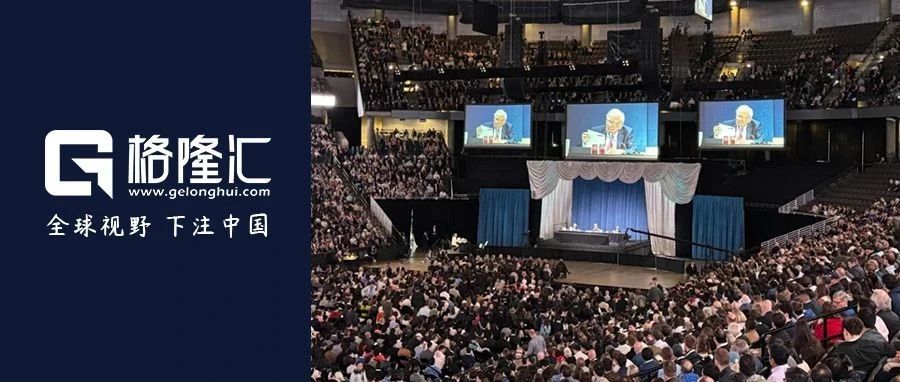
就在昨天,投资界的年度盛会——伯克希尔哈撒韦股东大会在奥马哈盛大召开,北京时间3日周六晚9点进入大会备受关注的股东问答环节。股 神巴菲特再次全程参与,特携其CEO接班人-伯克希尔非保险业务的负责人阿贝尔,以及保险业务负责人贾恩一同亮并共同回答股东提问。 年年巴菲特股东大会年年学,但还是不会。股神的金玉良言多多,也确实能受益颇多,但普通投资人很多条件跟大佬千差万别,不止是投资水 平或投资理念,比如伯克希尔源源不断的资金来源就是让全世界投资人都望尘莫及,同时伯克希尔的优秀团队和丰富投资工具也是绝大多数普 通投资人难以启及的(比如其可以在日本当地发债用来购买日本股票)。这些散户往往都不具备,同时也很难学会和掌握。 那么这届巴菲特股东大会到底带给了普通投资者人哪些实用的市场投资机会启示呢?我们就结合AI统计的本届大会高频词语具体给大家来交流 几点。 首先,我们简单罗列一下AI统计这次股东大会问答环节中超过4次以上的高频词语排序如下: 伯克希尔 - 58次,巴菲特 - 54次,美国 - 32次,投资 - 28次,公司 - 25次,贾因 - 18次,阿贝尔 - 18次,美元 - 17次,保险 - 15 次,市场 - 14 ...

白酒行业熬出头了吗?
格隆汇APP· 2025-05-03 08:37
Core Viewpoint - The A-share liquor industry has experienced a significant decline of over 40% since its peak in February 2021, with the white liquor sector particularly struggling, contrasting sharply with its previous popularity before 2021 [1][2]. Group 1: Industry Performance - From 2022 to 2024, the net profit growth rate of A-share listed liquor companies is projected to decline, with figures of 20.3%, 18.9%, and 7.4% respectively, marking a significant drop from the double-digit growth seen in previous years [2]. - In Q1 2025, total revenue for listed liquor companies reached 153.4 billion yuan, a year-on-year increase of 1.7%, while net profit was 63.39 billion yuan, up 2.3% [4]. - Despite some companies like Moutai and Wuliangye showing positive growth, nearly half of the A-share liquor companies reported declining performance, with some experiencing revenue drops of up to 80% [7]. Group 2: Market Dynamics - The overall profitability of the liquor sector remains high, with a gross profit margin of 81.53% and a net profit margin of 42.54% in Q1 2025, largely supported by leading companies [8]. - The market is currently facing a "volume and price decline" scenario, contrasting with the consumption upgrade seen in the previous five years [9][10]. - The current price-to-earnings ratio of the liquor index is 19.9 times, a significant drop from 70 times in February 2021, aligning with valuation levels from 2015 and 2018 [10][12]. Group 3: Economic Influences - The liquor industry is undergoing a cyclical downturn, influenced by broader economic factors such as the real estate market's decline, which has seen a drop in sales area from 1.79 billion square meters in 2021 to 970 million square meters in 2024, a decrease of over 45% [14]. - The decline in real estate prices and the shrinking asset base of middle-class families are expected to negatively impact personal liquor consumption [15]. - The demographic trends indicate a potential decline in the drinking population starting in 2028, which could further pressure demand [17]. Group 4: Future Outlook - The current cycle presents greater challenges for the liquor industry compared to previous downturns, with no clear new growth engines to drive recovery [20]. - While exploring international markets could provide growth opportunities, the cultural differences in drinking habits pose significant challenges [21]. - The liquor industry is transitioning from a high-growth phase to a more mature and potentially declining phase, with long-term growth rates likely to settle in the single digits [22].