格隆汇APP

Search documents
黄金+白银,究竟是地狱,还是天堂?
格隆汇APP· 2026-02-07 08:09
Core Viewpoint - The article discusses the recent surge in gold prices, attributing it to a new era of global finance and the implications of "de-dollarization" as central banks increase gold reserves [1][4]. Group 1: Gold Price Surge - Gold prices have seen unprecedented increases, with a 26.66% rise in 2024 and a staggering 63.68% in 2025, reaching $5,598.88 per ounce by January 29, 2026 [1][4]. - The total value of gold reached $38.2 trillion, comparable to the U.S. national debt of $38.5 trillion, marking a significant moment since the 1980s [1][4]. - The rapid increase in gold prices has led to extreme market volatility, with a 28% rise followed by a 21% drop within a short period [4][5]. Group 2: Causes of Price Fluctuations - The sudden drop in gold prices was linked to market over-exuberance and high leverage, with the market reacting sharply to news regarding the nomination of a hawkish Federal Reserve chair [5][12]. - Historical data shows that the speed of gold price increases has been unprecedented, with significant gains occurring in a matter of days [7][9]. Group 3: Central Bank Actions - Central banks globally have been increasing their gold reserves, with China alone adding 7.415 million ounces by the end of 2025, marking 14 consecutive months of increases [17][20]. - From 2022 to 2024, global central banks purchased over 1,000 tons of gold annually, significantly exceeding annual gold production [20]. Group 4: Future Outlook - The ongoing "de-dollarization" process and concerns over U.S. debt are expected to sustain the demand for gold, with predictions of gold prices potentially reaching $8,000 to $10,000 per ounce in the future [26][27]. - The article suggests that a true market recovery and a significant drop in gold prices would only occur in a thriving economic environment, where investor confidence is restored [28]. Group 5: Investment Considerations - The gold-silver ratio is highlighted as a potential indicator for investment decisions, with the current ratio nearing historical norms, suggesting a possible entry point for investors [29]. - The article also notes that other commodities may follow gold and silver trends, indicating broader market implications [31].


波斯湾危机?美伊动武风险与资产推演
格隆汇APP· 2026-02-06 10:08
作者 | 格隆汇小编 数据支持 | 勾股 大数 据(www.gogudata.com) 2026年2月,波斯湾风云再起。 美军"林肯"号航母打击群抵近北阿拉伯海,6艘驱逐舰布下战略围网,美伊在阿拉伯海及霍尔 木兹海峡的直接"海上交锋",瞬间拉满地区紧张感。 当前 WTI原油期货价格64美元/桶,较近期低点上涨18%,地缘溢价初显但冲击需理性看待。 综合研判: 美国对伊全面战争概率不足10%,有限军事打击风险升至30%,高压对峙仍是主 流(60%)。 特朗普政府正踩在 "极限施压+军事威慑+外交试探"的钢丝上,动武与否,核心看伊朗核进 展、地区局势、国内政治三大变量。 而伊朗的精神底气,来自苏莱曼尼自传《I FEARED NOTHING》里的一句话:"我放羊时不向 狼低头,低头就成了猎物",这既是其对峙的信条,也牵动着全球资产的脉搏。 当前美伊对峙已触高危临界点, 军事、外交、核问题三个火药桶, 随时可能被点燃。 2月3日的海上交锋是近期导火索: 美军击落伊朗侦查无人机,伊朗快艇直接逼近美籍油轮。 特朗普随后放话"下一次打击更猛烈",明晃晃释放精准打击伊朗核设施的信号,军事威慑意图 毫无遮掩。 外交谈判则陷入死 ...

跌崩!黑天鹅重演?
格隆汇APP· 2026-02-06 10:08
Core Viewpoint - The article discusses a significant downturn in the U.S. stock market, precious metals, and cryptocurrencies, indicating a potential major adjustment in the market dynamics, particularly in the tech sector driven by AI investments [3][4][5][8]. Group 1: Market Performance - U.S. stock indices fell over 1%, with the Nasdaq experiencing its worst three-day sell-off since April of the previous year [5]. - Precious metals like silver and gold saw drastic declines, with silver dropping over 20% and gold over 4% [4]. - The recent earnings reports from major tech companies like Google and Amazon, despite showing strong growth, did not excite the market and instead led to significant stock price drops [5][10][13]. Group 2: Capital Expenditure Concerns - Google reported a remarkable 48% growth in cloud business but indicated a capital expenditure guidance for 2026 of $175-185 billion, nearly double its 2025 spending [10]. - Amazon's capital expenditure plan for 2026 is projected at $200 billion, yet its stock also faced a 10% drop post-earnings [13]. - The combined planned investment of $660 billion by major tech firms for AI infrastructure by 2026 raises concerns about the efficiency of such massive capital expenditures, especially if they yield only marginal growth in cloud services [18]. Group 3: AI Investment Dynamics - The article highlights a shift from a "honeymoon phase" of AI investment to a more critical phase where the market questions the return on investment for high capital expenditures in AI infrastructure [17]. - The physical limitations of infrastructure, such as the U.S. power grid's inability to support explosive growth in data center capabilities, further complicate the situation [18][19]. - The emergence of autonomous AI applications threatens traditional software business models, as companies may reduce their reliance on SaaS products due to AI's ability to perform tasks previously done by human employees [22][23]. Group 4: Macroeconomic Factors - The nomination of Kevin Warsh as the Federal Reserve Chair has created uncertainty in the market, with fears of tighter monetary policy leading to higher long-term interest rates, which could negatively impact tech stock valuations [24][30]. - Warsh's hawkish stance on monetary policy contrasts with market expectations for continued liquidity support, raising concerns about the future of tech stock valuations [26][32]. - The potential for a liquidity crunch, combined with the current market dynamics, suggests an increased likelihood of a significant market correction [38][41].



银行股,资金出手了!
格隆汇APP· 2026-02-05 10:15
Core Viewpoint - A significant market shift is occurring, characterized by a mass exodus of funds from technology and precious metals sectors, with a notable influx into bank stocks as a safe haven amid rising panic and volatility [2][5][21]. Group 1: Market Dynamics - The U.S. tech stocks experienced a sharp decline, with the Nasdaq dropping over 2%, and major companies like Nvidia, Meta, and Tesla falling more than 3%. AMD saw a staggering drop of 17.3%, marking its largest single-day decline in nearly nine years [2][5]. - Panic spread to A-shares and Hong Kong stocks, with sectors like solar energy and oil equipment witnessing significant sell-offs. Precious metals, which had recently rebounded, also faced a sharp decline, with silver futures plummeting nearly 20% in a single day [3][5]. - The market turmoil was triggered by negative news affecting U.S. tech stocks, leading to a valuation bubble burst. Despite AMD's strong performance, its results fell short of the most optimistic analyst expectations, resulting in a drastic stock price drop [5][6]. Group 2: Bank Sector Resilience - In contrast to the broader market, the banking sector saw a rise, with A-share bank stocks collectively increasing by 2.1%. All 42 bank stocks closed in the green, with Xiamen Bank hitting a rare limit-up and several city commercial banks rising over 3% [3][15]. - Southbound funds significantly targeted bank stocks, with a net purchase exceeding 22 billion HKD, focusing on major banks like ICBC, CMB, and CCB as core investment targets [4][20]. - The banking sector is viewed as a "safe haven" due to its strong earnings growth and historically low valuations, making it an attractive option for risk-averse investors [21][22]. Group 3: Earnings and Valuation - Recent earnings reports from several banks indicate robust growth, with Qingdao Bank, Hangzhou Bank, and Shanghai Pudong Development Bank showing significant increases in net profits. For instance, Qingdao Bank reported a net profit of 51.88 billion CNY, a 21.66% year-on-year increase [23][25]. - The banking sector has undergone a six-month correction, leading to a new valuation bottom. The sector's price-to-earnings ratio stands at a low 6.7 times, and the average dividend yield is between 4.87% and 5.2%, making it appealing in a low-interest-rate environment [27][28]. - Institutional interest in bank stocks is rising, with over 370 institutions conducting research on 11 listed banks, indicating a strategic shift towards these stocks amid market volatility [28][29].







业绩爆表+扩产加码!这个赛道的机会藏不住了
格隆汇APP· 2026-02-05 10:15
Core Viewpoint - The semiconductor equipment industry is entering a high-growth cycle driven by AI computing demand, domestic substitution, and global capacity expansion, with significant performance improvements from both international and domestic companies [4][7][21]. Group 1: Industry Performance - ASML reported a net sales of €32.7 billion in 2025, a 16% year-on-year increase, with a backlog of €38.8 billion in unfulfilled orders [4]. - Samsung's semiconductor business saw a 33% increase in operating profit, while SK Hynix's Q4 operating profit surged by 137% year-on-year [4]. - Domestic semiconductor equipment companies like Jinhaitong and Changchuan Technology also announced significant performance increases [4]. Group 2: Demand Drivers - The scale application of generative AI has drastically reshaped storage demand, with AI server DRAM needs being eight times that of regular servers and NAND needs three times higher [6]. - High Bandwidth Memory (HBM) is emerging as a core growth engine, with a projected CAGR of 33% from 2024 to 2030, potentially capturing 50% of the DRAM market by 2030 [6]. - Major global storage manufacturers are ramping up production, with Samsung's capital expenditure for 2025 expected to increase by 89% and SK Hynix raising its annual capital expenditure to $20.3 billion [6]. Group 3: Domestic Substitution Progress - The domestic semiconductor equipment localization rate is expected to reach 35% in 2024, doubling from 16.4% in 2022, with etching equipment localization at 23% and CMP equipment at 30%-40% [7]. - China has maintained its position as the largest semiconductor equipment market globally for five consecutive years, with sales expected to reach $49.54 billion in 2024, accounting for 42.34% of the global market [7]. Group 4: Future Trends - The global DRAM industry capital expenditure is projected to reach $61.3 billion in 2026, a 14% year-on-year increase, while NAND Flash capital expenditure is expected to be $22.2 billion, up 5% [9]. - ASML's order situation reflects high industry prosperity, with €13.2 billion in new orders in 2025, including €7.4 billion for EUV lithography machines, and a backlog extending to 2027 [9]. - The global semiconductor equipment market is projected to reach $117 billion in 2024, with a CAGR of 8.4% from 2025 to 2033, potentially growing to $224.93 billion by 2033 [9]. Group 5: Key Segments - The etching equipment market, representing 22% of the front-end equipment market, is expected to reach a domestic market size of ¥48.67 billion in 2025 [12]. - Thin film deposition is also experiencing rapid growth, with a global market size of $12.68 billion, driven by domestic leaders like TuoJing Technology [12]. - Testing and packaging equipment are benefiting from advanced process promotion and capacity expansion, with companies like Changchuan Technology and Huafeng Measurement Control covering multiple semiconductor fields [12]. Group 6: Material and Component Localization - The localization rate of core semiconductor equipment components is expected to rise from 10% to 20% in 2024, with Anji Technology's CMP polishing liquid achieving a 15% global market share [14]. - Continuous breakthroughs in supporting segments are enhancing the competitiveness of domestic equipment, fostering a collaborative development advantage across the entire industry chain [14]. Group 7: Strategic Outlook for 2026 - The advanced process competition is intensifying, leading to a surge in demand for high-end equipment, with global semiconductor giants pushing for 2nm and below processes [17]. - Policy and capital are driving domestic substitution deeper into high-end segments, with significant support for key technologies and substantial financing events in the semiconductor equipment sector [18]. - The demand structure is optimizing, with emerging fields like AI computing centers and electric vehicles creating new growth opportunities, while domestic companies expand into overseas markets [19].



年入136亿!江苏无锡冲出一家电动两轮车IPO,与雅迪、爱玛竞争
格隆汇APP· 2026-02-04 09:35
年入136亿!江苏无锡冲出一家电动两轮车IPO,与雅迪、爱玛竞争 原创 阅读全文 格隆汇新股 ...

马斯克出手,引爆A股
格隆汇APP· 2026-02-04 09:35
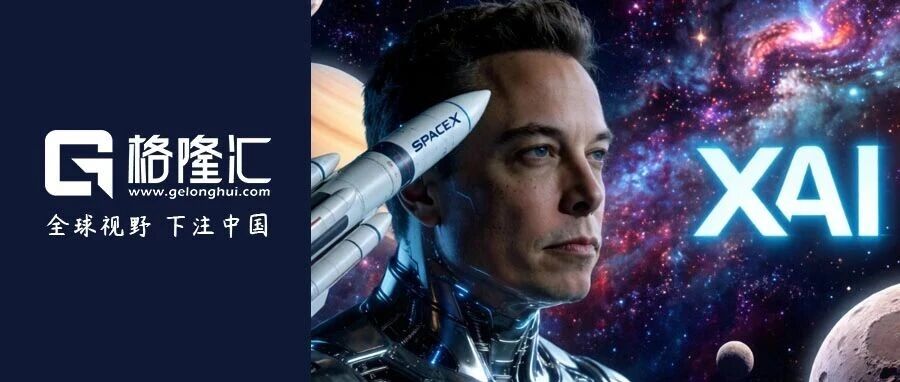
Core Viewpoint - Elon Musk announced the boldest asset merger in Silicon Valley history, with SpaceX fully acquiring xAI, aiming to address the energy bottleneck of AI computing power by relocating data centers to space powered by solar energy [3][4][8]. Group 1: Acquisition Details - The merger will elevate the valuation of the combined entity to an astonishing $1.25 trillion [5][8]. - The acquisition is seen as a financial rescue for xAI, which has a high cash burn rate of $1 billion per month, necessitating SpaceX's profits to cover its losses [12][25]. Group 2: Financial Implications - SpaceX is projected to achieve revenues of approximately $15 billion to $16 billion in 2025, with an estimated profit of around $8 billion [19][18]. - The integration of xAI into SpaceX is not just a business merger but a financial lifeline, similar to Musk's previous acquisition of SolarCity [26]. Group 3: Market Reactions - The news of the merger has revitalized the Chinese photovoltaic sector, with significant stock price increases as investors anticipate new opportunities in space energy and computing [6][34]. - The market is shifting focus from satellite manufacturing to the broader implications of space as a hub for energy and computing power [35][36]. Group 4: Technological Innovations - Musk's ambitious plan includes launching 1 million tons of satellites annually, each with 100 kW of computing power, which could lead to a significant increase in AI computing capacity [39]. - The shift towards space-based solar energy is expected to open new markets for high-efficiency solar cells, moving away from traditional ground-based production [40][42]. Group 5: Industry Opportunities - Companies involved in photovoltaic equipment manufacturing are likely to benefit first from the increased demand for space-based solar energy solutions [43]. - The need for low-cost, high-frequency launch systems will stimulate interest in reusable rocket technology and satellite internet constellation development [45]. Group 6: Future Outlook - The concept of "orbital data centers" signifies a transformative shift in the aerospace industry, evolving from mere transportation services to advanced computing and energy solutions [51]. - China's comprehensive photovoltaic supply chain and maturing commercial aerospace sector position it as a key player in this new wave of interstellar infrastructure development [52].