申万宏源金工

Search documents
模型提示价量匹配度降低,市场情绪回落较快 ——量化择时周报20250704
申万宏源金工· 2025-07-08 06:32
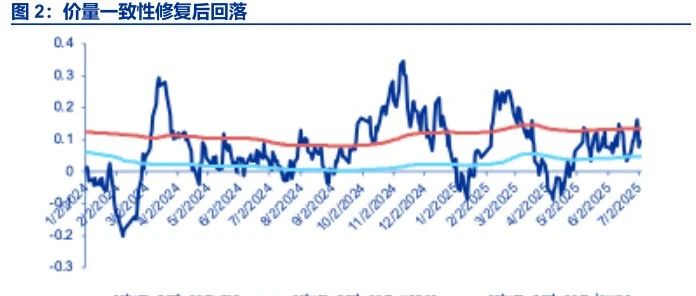
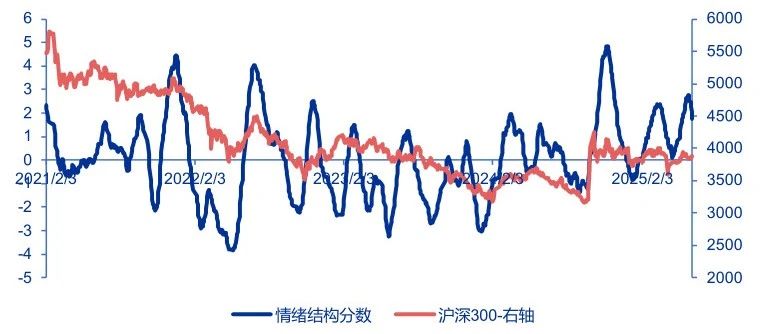
Group 1 - The market sentiment score has further declined, with the current score at -0.9 as of July 4, down from -0.65 the previous week, indicating a bearish outlook [1][3] - The trading volatility between industries has decreased, suggesting a lack of active capital and increased uncertainty in short-term sentiment [3][11] - The overall trading volume in the A-share market has shown a slight increase compared to the previous week, but the daily trading volume has been on a downward trend, with the lowest daily trading volume recorded at 1.33 trillion RMB on Thursday [5][8] Group 2 - The short-term trend scores for industries such as steel, construction materials, and basic chemicals have significantly increased, with construction materials showing a rise of 90.91% [23][24] - The banking, communication, media, and comprehensive sectors are identified as the top five industries with the strongest short-term trends [23] - The value style is currently dominant, with the model indicating a preference for large-cap stocks over growth stocks [23][24]

Calamos发行“雪球”ETF ——海外创新产品周报20250630
申万宏源金工· 2025-07-02 06:41
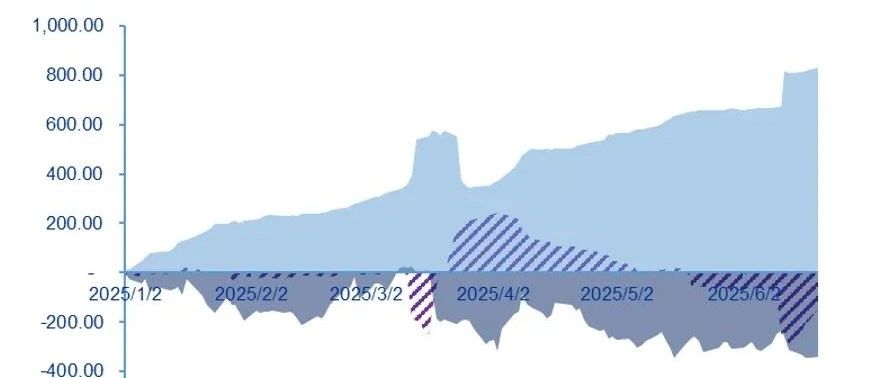
Group 1: Core Insights - The article highlights the significant increase in the issuance of new ETFs in the US, with 46 new products launched last week, indicating a growing trend in the ETF market [1][2] - Calamos launched a "Snowball" ETF that invests in the Autocallable notes market, which is valued at over $100 billion, diversifying its investment across more than 50 different contracts [3][5] - The performance of emerging market ETFs has outpaced the S&P 500, with several products showing gains exceeding 15% this year, while the S&P 500 has only increased by less than 5% [11] Group 2: ETF Dynamics - The article discusses the fluctuation in fund flows for major US ETFs, noting that the Vanguard S&P 500 ETF experienced significant outflows, while other products like iShares Core S&P 500 ETF saw substantial inflows [6][10] - The introduction of new Buffer products by ProShares and First Trust aims to provide daily protection against market downturns, differentiating them from existing products [2] - The article mentions that the total assets of non-money market mutual funds in the US reached $21.91 trillion as of May 2025, reflecting a slight increase from the previous month [12]



量化如何应对宏观不确定性冲击?——海外量化季度观察2025Q2
申万宏源金工· 2025-06-27 06:24
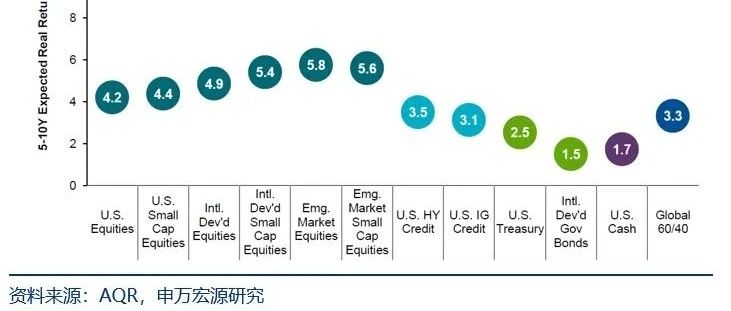
Group 1: Overseas Quantitative Dynamics - The impact of tariff events has led to significant drawdowns for quantitative hedge funds, with Renaissance Institutional Equities Fund experiencing an approximately 8% decline in early April despite a 22.7% increase in 2024 [1][2] - Man Group's trend-following strategy also faced over a 10% drawdown, prompting a return to in-office work for some researchers to enhance strategy intervention [1] - Systematica Investments, founded by Leda Braga, saw a 20% drawdown in early April, highlighting the vulnerability of trend-following strategies during such events [1] Group 2: Adoption of AI in Quantitative Strategies - AQR has begun to embrace AI in investment decisions, acknowledging its potential for higher returns despite challenges in explanation during drawdowns [3] - In contrast, domestic private quantitative firms in China are utilizing AI more extensively, with teams like Baiont Quant employing fully self-developed AI algorithms for minute-to-hour level return predictions [3] Group 3: Market Uncertainty and Quantitative Strategies - BlackRock emphasizes the importance of adjusting models to cope with increasing global uncertainty, identifying three main uncertainties in tariff policies: target, scale, and timeline [6] - The evolution of BlackRock's quantitative investment system has led to a more granular approach to risk exposure, now incorporating over a thousand risk factors [7] - BlackRock's strategy focuses on maintaining neutrality in risk exposure while seeking short-term reversal opportunities in a high uncertainty environment [8] Group 4: Macro Hedge Fund Perspectives - Bridgewater highlights the impact of "modern mercantilism" on investment portfolios, noting the challenges posed by chaotic implementation processes and the unique risks facing U.S. assets [10] - Despite recent market volatility, Bridgewater believes that asset prices have not undergone substantial adjustments, indicating potential future opportunities [10] - The interaction between AI development and modern mercantilism is seen as a new dynamic, with AI potentially offsetting some negative impacts on productivity [11] Group 5: AQR's Investment Focus - AQR suggests that high volatility factors, while challenging to maintain, can yield significant long-term Sharpe ratios, advocating for the acceptance of these factors [12][16] - The firm recommends focusing on small-cap stocks, particularly in emerging markets, due to their lower valuations and potential for higher returns compared to U.S. large-cap stocks [19] Group 6: Performance Tracking of Quantitative Products - Factor rotation products from BlackRock and Invesco have outperformed their respective indices over the past five years, with BlackRock's adaptive factor selection demonstrating resilience [21][24] - The performance of machine learning-based ETFs has varied, with QRFT showing strong results in certain months while AIEQ continues to experience significant drawdowns [39] - Bridgewater's All Weather ETF faced notable drawdowns due to tariff events but has since recovered, indicating resilience in its strategy [40]
标普500 ETF规模差距持续扩大 ——海外创新产品周报20250623
申万宏源金工· 2025-06-25 05:33
Group 1: ETF Innovations and New Products - Roundhill launched a series of weekly dividend ETFs linked to stocks like Meta, Netflix, Amazon, Berkshire, and Robinhood, offering 1.2 times weekly returns [1] - Rainwater Equity introduced its first ETF focusing on companies with high customer loyalty, such as software providers and exchanges, which are expected to deliver stable earnings growth [2] - WisdomTree released an inflation-protected ETF utilizing a momentum-based long-short commodity strategy, covering 18 commodities and holding long positions in gold and silver [2] Group 2: ETF Fund Flows and Performance - U.S. stock ETFs saw significant inflows exceeding $30 billion last week, with international stock products also attracting over $10 billion [3] - Vanguard's S&P 500 ETF has seen substantial inflows, surpassing $680 billion in total assets, leading other products by nearly $80 billion [6][10] - Technology ETFs, particularly in the semiconductor and cybersecurity sectors, have rebounded significantly, with some products gaining over 20% since May [10] Group 3: Fund Flow Trends - For the week of June 4 to June 11, U.S. domestic equity funds experienced outflows of approximately $11.2 billion, while bond products continued to see inflows exceeding $8 billion [11]




模型提示价量匹配度降低,市场情绪回落较快——量化择时周报20250620
申万宏源金工· 2025-06-23 05:54
Group 1 - The market sentiment score has further declined, indicating a bearish outlook as of June 20, with a score of 0.05, down from 0.8 the previous week [1][4][6] - The price-volume consistency has decreased, reflecting a lack of capital activity and increased divergence in market sentiment [4][6] - The overall trading volume in the A-share market has significantly decreased, with a daily trading volume of 1.09 trillion RMB, marking the lowest for the month [9] Group 2 - The electronic industry shows a significant upward trend, with a short-term trend score increase of 25.00%, indicating strong performance [18][19] - The banking, oil and petrochemical, communication, comprehensive, and national defense industries are identified as the top five sectors with the strongest short-term trends [18] - The small-cap value style is currently favored, while there are signs of a potential strengthening of the large-cap style [20]
全天候策略再思考:多资产及权益内部的应用实践——数说资产配置系列之十二
申万宏源金工· 2025-06-20 05:35
Group 1 - The core idea of the article revolves around the All-Weather Strategy, which is favored by investors for its robust performance and ability to withstand cyclical fluctuations [1][3] - The All-Weather ETF launched by Bridgewater and State Street in March 2025 has a scale of approximately $204 million as of the end of May, with a leverage level of about 1.8 times [1] - The asset allocation of the All-Weather ETF as of March includes approximately 25% in stocks, 20% in commodities, and 55% in bonds, which is similar to the target allocation of the risk parity product RPAR [3][4] Group 2 - The All-Weather ETF has shown characteristics of a Beta strategy, primarily holding long positions, and has experienced significant fluctuations in the market, with a maximum drawdown of 8.78% shortly after its launch [3][4] - The maximum drawdown of the risk parity ETF RPAR with a leverage level of 1.2 times was about 8%, while the UPAR with a leverage level of 1.7 times had a maximum drawdown of approximately 11% [3] - The All-Weather ETF's drawdown is between the two risk parity ETFs, indicating a strong correlation with similar strategy products [3] Group 3 - The report explores various construction methods for the All-Weather Strategy, starting from the basic risk parity strategy and considering the application of All-Weather thinking within high-correlation equity assets [4][12] - The core idea of risk parity is to equalize the risk contribution of each asset in the portfolio, with a focus on achieving a balanced risk exposure across different macroeconomic scenarios [4][12] Group 4 - The article discusses the concept of "Scenario Parity," which involves identifying asset combinations that benefit from different macroeconomic conditions and allocating them based on risk parity [12][14] - The asset allocation for different macro scenarios includes stocks and commodities during economic growth, nominal bonds and gold during economic downturns, and inflation-protected bonds during rising inflation [12][13] Group 5 - The performance of the "Scenario Parity" strategy has been superior to traditional risk parity, with a static scenario parity combination yielding an annualized return of 5.01% compared to 4.00% for risk parity [17][18] - Dynamic combinations based on macroeconomic factors have shown even better performance, with the dynamic scenario parity strategy achieving an annualized return of 6.57% [17][18] Group 6 - The article emphasizes the importance of macro sensitivity in constructing portfolios, suggesting that using sensitivity measures can lead to more effective asset allocation compared to traditional regression methods [23][24] - The results indicate that portfolios constructed using macro sensitivity measures have better explanatory power and stability compared to those based solely on regression analysis [25][36] Group 7 - The All-Weather strategy can also be applied internally within equity assets, similar to a "barbell strategy," by calculating the exposure of sectors and stocks to various macroeconomic variables [28][29] - The performance of sector-based All-Weather combinations has shown significant improvement, with the scenario parity approach yielding higher returns and lower drawdowns compared to traditional risk parity [34][50]

比特币、黄金ETF继续流入 ——海外创新产品周报20250616
申万宏源金工· 2025-06-18 07:29
Group 1: Core Insights - The article highlights a significant increase in the issuance of leveraged inverse ETFs in the US, with 22 new products launched last week, including 8 leveraged inverse products, primarily focused on single stocks [1][2] - Notable new products include leveraged ETFs linked to MicroStrategy, Upstart, Archer Aviation, Mercado Libre, Boeing, and a 2x leveraged inverse product tied to the Nasdaq 100 Mega Index [1] - FundX launched a future-themed fund targeting small to mid-cap companies expected to lead future trends, similar to ARK's disruptive innovation investment philosophy [2] Group 2: ETF Market Dynamics - The US ETF market saw continued inflows into Bitcoin and gold ETFs, while stock ETFs experienced slight outflows [3][5] - A notable migration of funds occurred from BlackRock's IVV to Vanguard's S&P 500 ETF, with IVV seeing outflows exceeding $20 billion [5][7] - The top inflow products included Vanguard's S&P 500 ETF (VOO) with $145.09 million, while iShares' IVV faced the largest outflow of $226.58 million [6] Group 3: Performance of Alternative Products - The performance of alternative ETFs has varied significantly this year due to global macro uncertainties, with long/short equity and futures products underperforming, while State Street's multi-asset products performed well [8] - The top three holdings of State Street's multi-asset product include commodities, global infrastructure, and global natural resources ETFs [8] Group 4: Fund Flow Trends - Recent data from the Investment Company Institute (ICI) indicates that US domestic equity funds experienced a significant outflow of approximately $16.9 billion, more than double the previous week, while bond products saw inflows nearing $10 billion [9]

模型提示市场价量匹配度提高,但轮动仍缺乏持续性——量化择时周报20250613
申万宏源金工· 2025-06-16 02:53
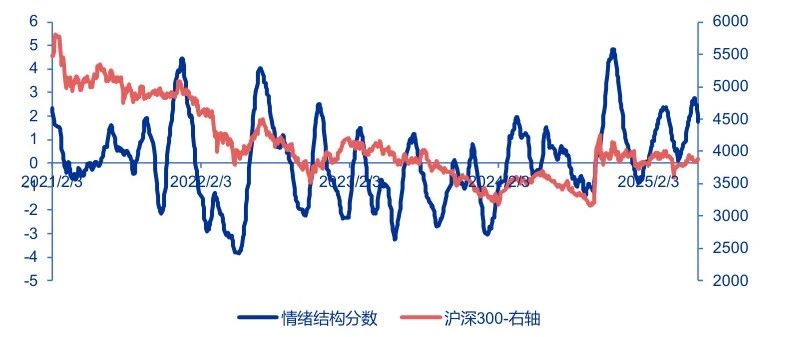
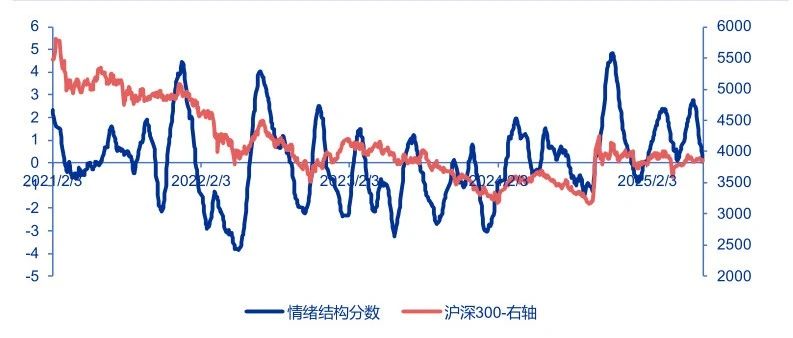
Group 1 - The market sentiment score has further declined, with the current score at 0.8 as of June 13, down from 1.75 the previous week, indicating a bearish outlook [1] - The market sentiment structure indicator has shown significant fluctuations over the past five years, remaining low for most of 2023, with a potential breakthrough expected in October 2024 [1] - The price-volume consistency has improved, suggesting increased market activity and participation, although the overall market risk appetite continues to decline [4][6] Group 2 - The overall trading volume in the A-share market has increased, with a daily turnover reaching 1.50 trillion RMB and a trading volume of 1.225 billion shares on Friday [6] - The industry performance shows a lack of investment themes, with the industry trend score remaining negative, indicating weak sector rotation [11] - The sectors with notable performance include non-ferrous metals, media, and comprehensive industries, while household appliances, food and beverage, and construction materials have shown significant declines [13][16] Group 3 - The short-term trend scores for sectors such as social services, non-ferrous metals, and steel have risen significantly, with social services showing a 31.25% increase [19][20] - The current market signals indicate a preference for small-cap stocks and a strengthening value style, despite a weak differentiation between growth and value styles [19][21] - The relative strength index (RSI) analysis suggests that small-cap styles are currently favored, although the trend for large-cap styles is also strengthening [21]
KraneShares发行人形机器人ETF ——海外创新产品周报20250609
申万宏源金工· 2025-06-10 08:43
Group 1: Core Insights - The article discusses the recent launch of innovative ETF products in the US, including a humanoid robot ETF by KraneShares and various options-based strategies [1][2] - There is a notable trend of inflows into cross-border products, with over $2 billion flowing into international equity and bond ETFs [3][5] - The article highlights the performance of international bond ETFs, which have outperformed US bonds amid global macroeconomic uncertainties [9] Group 2: ETF Dynamics - Three industry-themed ETFs were launched, focusing on energy, AI, and embodied intelligence, with a balanced investment strategy in leading companies [2] - The article notes that short-term and aggregate bond ETFs saw significant inflows, while long-term bonds experienced outflows [5][8] - The top inflow products included iShares Core US Aggregate Bond ETF with $14.45 billion and iShares 0-3 Month Treasury Bond ETF with $12.73 billion [6] Group 3: Fund Flows - The article reports that US domestic equity funds experienced an outflow of approximately $8 billion, while bond products continued to see inflows for four consecutive weeks [11] - As of April 2025, the total amount of non-money market mutual funds in the US was $21.06 trillion, reflecting a slight decrease from March [10]

模型提示市场情绪继续下行——量化择时周报20250606
申万宏源金工· 2025-06-09 02:43
Group 1 - The market sentiment score has further declined, with the current score at 1.75, down from 2.5 the previous week, indicating a bearish outlook [1][4][6] - The financing balance ratio and the 300 RSI index scores have decreased, reflecting an increase in bearish sentiment among investors [4][9] - The overall market lacks a clear investment theme, with industry performance trends remaining weak and negative [17][20] Group 2 - The total transaction volume in the A-share market has seen a slight increase, with a daily transaction amount of 1.17 trillion RMB, but significant outflows of main funds have negatively impacted market performance [12] - The short-term trend scores for industries such as communication, real estate, and media have shown significant increases, with communication and real estate industries rising by 41.67% [23][24] - The small-cap growth style is currently favored, with a strong signal indicating its superiority over other styles, while the differentiation between growth and value styles remains weak [25]