硬AI

Search documents
募资最高1000亿美元,估值或达8300亿美元,最快明年1季度完成!更多报道披露OpenAI最新融资细节
硬AI· 2025-12-19 14:02
Core Insights - OpenAI is planning to raise up to $100 billion in a new funding round, which could potentially increase its valuation to $830 billion if successful, with the completion expected by the end of Q1 next year [2][3] - Despite a cooling interest in AI and a more cautious capital environment, OpenAI requires substantial funding to support its computational investments and remain competitive [3] Funding and Strategic Moves - SoftBank has committed to invest $30 billion in OpenAI, having sold $5.8 billion worth of NVIDIA shares to fund this investment, with an expectation to provide the remaining $22.5 billion by the end of this year [5] - OpenAI has also engaged in a series of transactions, including a content licensing agreement and a $1 billion investment from Disney, indicating a strong fundraising capability despite uncertainties in funding sources [5] Market Challenges and Valuation Risks - The potential valuation of $830 billion for OpenAI hinges on its ability to raise the full target amount, but the market environment has become more challenging, with partners like Oracle and CoreWeave experiencing declines in market value [7] - There is skepticism regarding OpenAI's multi-billion dollar computational deals as excitement in the public market for AI concepts diminishes, leading to more cautious capital expenditures from investors [8] Competitive Landscape and Cash Burn - OpenAI faces intense competition, particularly from Google, which has lower debt levels and stronger profits, allowing it to invest more easily in AI [10] - To maintain its competitive edge, OpenAI is projected to consume over $200 billion in cash by 2030, highlighting its urgent need for substantial capital [10]


宁德时代打样,人形机器人变身流水线“蓝领”,2035年市场空间或破480亿
硬AI· 2025-12-18 14:05
Core Insights - Humanoid robots are accelerating their integration into factories, primarily focusing on logistics and quality inspection as initial commercial paths. The key challenge lies in achieving a return on investment (ROI) within two years, necessitating a price reduction to around 100,000 yuan [2][5] - The introduction of the humanoid robot "Xiao Mo" by CATL marks a significant milestone in the application of embodied intelligence in smart manufacturing, achieving a stable connection success rate of over 99% and tripling daily output compared to skilled workers [2][5] Group 1: Complementary Positioning - Humanoid robots are not intended to replace highly automated industrial robots but to fill the gap between traditional automation and human labor. They are designed to replace human positions rather than industrial robots [7] - The complementary nature of humanoid and industrial robots is evident in their capabilities: humanoid robots possess autonomous mobility, can adapt to unstructured environments, and are suited for flexible, small-batch tasks, while industrial robots excel in high-speed, high-load, and precise repetitive tasks [8][10][11] Group 2: Implementation Roadmap - In the initial phase, humanoid robots will start with "short-chain tasks," focusing on logistics and quality inspection due to their semi-flexible characteristics and high human involvement [14] - Basic assembly tasks are still in preliminary testing stages for humanoid robots, with a focus on tasks like screw pre-tightening and component installation [15] - The choice of robot form is crucial, with wheeled robots being favored for their stability, long endurance, and speed in industrial settings [16] Group 3: ROI and Technical Bottlenecks - The large-scale commercialization of humanoid robots faces two main obstacles: economic viability and technical limitations. To achieve a two-year ROI, the price of humanoid robots must drop to around 100,000 yuan, while current prices range from 300,000 to 500,000 yuan [20][21] - Two significant technical challenges include the underdevelopment of embodied intelligence for complex tasks and the need for improved dexterity and control in fine operations [22] Group 4: Market Potential - Despite challenges, the outlook for humanoid robots in industrial applications is promising, driven by global labor shortages and the need for safer working environments. By 2030, a labor shortage of nearly 8 million is expected in global manufacturing [25] - By 2035, the demand for humanoid robots in China's industrial sectors, including automotive manufacturing, electronics, and logistics, is projected to reach 484,000 units, with a market potential of 48.36 billion yuan [25][26] Group 5: Role of Automotive Companies - Automotive manufacturers like Tesla and XPeng are crucial in advancing humanoid robots, leveraging their technological and supply chain advantages to validate applications in their production lines [27][28] - These companies can repurpose AI, perception, and control technologies from the smart automotive sector to humanoid robots, providing valuable application scenarios and training data [28] - Tesla's Optimus and XPeng's IRON are already testing humanoid robots in their factories, with plans for large-scale production by 2026 [29][30]


豆包大模型1.8正式发布,拥有更强多模态Agent能力,豆包日均使用量超过50万亿,推出成本节省计划降幅达47%
硬AI· 2025-12-18 14:05
Core Insights - The article highlights the launch of Doubao Model 1.8 by Volcano Engine, which features enhanced multimodal agent capabilities and a 256K ultra-long context for handling complex tasks [2][3][5] - Volcano Engine's "AI Savings Plan" aims to optimize user costs, offering savings of up to 47% on AI usage [3][17] - The company emphasizes the importance of expanding the AI market rather than competing for existing market share, predicting a potential market growth of tenfold in the coming year [4] Model Capabilities Upgrade - Doubao Model 1.8 shows significant improvements in multimodal understanding, particularly in long video comprehension and security monitoring scenarios [5] - The model's context management allows companies to tackle complex tasks and support decision-making processes [5] - New image generation model Doubao-Seedream-4.5 offers capabilities such as multi-image combinations, creative photography, and virtual try-ons [5] Video Generation Enhancements - The Seedance series includes two versions: Seedance-1.0-Lite focuses on cost and speed, while Seedance-1.0-Pro delivers cinematic quality and native sound effects [7] Application Scenarios - Doubao Model has been integrated into smart hardware and voice assistants, covering daily communication, professional services, and online searches [9] Ecosystem Development - Volcano Engine introduced "Volcano Ark" inference outsourcing service, supporting major open-source models for seamless deployment [11] - The Viking series products enhance user input quality and facilitate the rapid construction of knowledge and memory bases for models and agents [13] - The company launched an enterprise-level AI Agent platform, AgentKit, which has been adopted by leading clients [15] Cost Optimization Plan - The "AI Savings Plan" allows users to join once and benefit from cost reductions across various models, with flexible payment options [17] - The initiative is expected to enhance performance and reduce costs, particularly for video generation models, and is seen as a potential investment opportunity in the AI application landscape [17]

亚马逊重组AI团队,发力大模型、芯片和量子计算研究,CEO称“公司进入转折点”
硬AI· 2025-12-18 14:05
Core Viewpoint - Amazon announced a restructuring of its artificial intelligence (AI) teams, creating a new business unit led by Peter DeSantis from AWS, aiming to develop advanced, multi-purpose AI tools similar to ChatGPT [2][3][4]. Group 1: Organizational Changes - The new organization will integrate Amazon's Artificial General Intelligence (AGI) team, chip manufacturing division, and quantum computing research [2][3]. - Peter DeSantis, previously a senior vice president in AWS, will report directly to CEO Andy Jassy in his new role [4]. - Rohit Prasad, the current head of the AGI team and long-time leader of the Alexa voice science team, is set to leave Amazon by the end of the year [5]. Group 2: Strategic Intent - Jassy emphasized that new technologies are at a critical turning point that will significantly shape customer experiences [4]. - The restructuring indicates Amazon's intent to consolidate AI development efforts, which were previously scattered between the Alexa team and AWS, into a unified organization [4]. - The inclusion of Annapurna Labs, acquired in 2015, strengthens the team's capabilities in developing general-purpose chips and AI hardware [4][6]. Group 3: Competitive Landscape - AWS, while being the largest provider of computing power and data storage, has struggled to replicate its cloud computing dominance in the AI developer space, facing stiff competition from Microsoft, Google, and various startups [4].


AI算力“逃离地球”?谷歌宣布“追日者”计划,2027年拟在太空部署AI数据中心
硬AI· 2025-12-17 13:58
Core Viewpoint - Google is attempting a groundbreaking infrastructure experiment with "Project Suncatcher," aiming to establish a space-based data center powered by solar energy to alleviate the energy and computational bottlenecks associated with AI [3][4]. Group 1: Project Overview - The project involves a cluster of 81 satellites equipped with AI chips, which will operate in a sun-synchronous orbit approximately 650 kilometers from Earth, providing near-constant solar energy for high-energy AI workloads [3][5]. - Google plans to collaborate with Planet to launch two prototype satellites into low Earth orbit by 2027 as the first step of this initiative [3][5]. - The project aims to circumvent the challenges faced by terrestrial data centers, such as complex planning approvals and local opposition, as well as the inability of existing power grids to meet the surging energy demands of AI [5] Group 2: Challenges and Risks - The ambitious plan faces significant technical and economic challenges, including high launch and maintenance costs, risks from space radiation, collision hazards, and the increasing congestion of orbital traffic [4][7]. - The proximity of satellites (100 to 200 meters apart) raises concerns about collision risks, which could lead to catastrophic chain reactions in the already crowded near-Earth orbit [7][8]. - The project also raises governance issues regarding space, as the increasing number of satellites could interfere with astronomical observations and contribute to light pollution and radio interference [11] Group 3: Industry Context - Microsoft's previous attempt with underwater data centers (Project Natick) ended without further plans, highlighting the increasing difficulty of establishing data centers in unconventional environments like space [9][10]. - The cost of space-based power remains comparable to terrestrial power, and despite decreasing launch costs due to companies like SpaceX, significant economic advantages have yet to be realized [9][10]. - The project reflects a broader trend in the tech industry, where companies are exploring unconventional solutions to address energy concerns while also showcasing the potential for AI scalability [3][11].


AI需求引爆“抢单潮”?美光财报前瞻:客户疯抢2027年产能,盈利预计翻倍
硬AI· 2025-12-17 13:58
Core Viewpoint - Micron Technology is expected to experience significant revenue and profit growth in the first fiscal quarter, driven by the surge in storage chip demand due to AI advancements, despite a recent stock price pullback before the earnings report [2][3][4]. Supply and Demand Imbalance Strengthens Pricing Power - Analysts believe Micron is benefiting from both rising storage chip prices and supply constraints, with demand expected to exceed supply through 2026 [6][8]. - The demand from hyperscale cloud service providers is driving the need for high-value products, which supports Micron's average selling price (ASP) and gross margin [6][8]. - Rosenblatt analyst Kevin Cassidy predicts a 9% quarter-over-quarter increase in Micron's ASP, suggesting that this estimate may still be conservative [7]. Strategic Shift: Divesting Consumer Business to Focus on High-Profit Areas - Micron announced plans to exit its Crucial consumer business to concentrate on enterprise and commercial sectors, aiming to improve supply conditions and support growth in faster-growing segments [8]. - This strategic decision highlights management's focus on high-value end markets, with investors keenly observing comments on capacity ramp-up and how existing capacity can be converted into sellable output for high-margin cloud and data center products [8]. Valuation and Market Outlook - Despite a significant stock price increase this year, analysts generally view Micron's valuation as reasonable, with a forward P/E ratio around 12 times [10]. - Analysts expect strong guidance for the upcoming quarter, with projected revenue of $14.33 billion, a 78% year-over-year increase, and an EPS of $4.78, reflecting a 206% growth [12].
亚马逊洽谈投资OpenAI超100亿美元,协议包含使用AWS芯片
硬AI· 2025-12-17 13:58
Core Viewpoint - Amazon is negotiating to invest at least $10 billion in OpenAI, potentially pushing the latter's valuation to over $500 billion [2][9] Group 1: Investment and Valuation - The proposed investment aims to support OpenAI's substantial infrastructure spending, with OpenAI committing to spend $38 billion on Amazon Web Services (AWS) over the next seven years [3][5] - OpenAI's valuation has reached $500 billion in private equity sales, but maintaining its leading position requires significant capital, with projections indicating over $100 billion in expenses for server expansion and talent acquisition over the next four years [9][8] Group 2: Technological Collaboration - A key aspect of the deal is OpenAI's plan to adopt Amazon's proprietary Trainium AI chips, marking a significant step in reducing reliance on Nvidia [3][6] - OpenAI is also collaborating with Broadcom to develop dedicated AI server chips and has agreed to use chips from AMD, further diversifying its supply chain [6] Group 3: Strategic Limitations - Due to Microsoft's exclusive rights, Amazon cannot resell OpenAI's models to its cloud customers, which limits the commercial scope of their collaboration [3][9] - The focus of discussions has shifted to specific application scenarios, including the potential sale of enterprise versions of ChatGPT to Amazon employees and exploring e-commerce integration opportunities [9][10] Group 4: Competitive Landscape - The negotiations highlight the complex competitive dynamics among tech giants, with Amazon seeking to balance its AI strategy by deepening ties with OpenAI amid Microsoft's investments in competitors like Anthropic [3][11] - The current landscape shows major cloud service providers engaging in cross-investments to strategically hedge in the intense AI arms race [12]



“世界模型”竞赛升级:Runway推出GWM-1,实时交互可持续数分钟之久
硬AI· 2025-12-13 12:45
Core Insights - Runway aims to evolve from being a "special effects supplier" in the film industry to becoming an "AI architect" in the physical world [2][20] - The company has launched its first General World Model (GWM-1), entering the "world simulation" arena dominated by giants like Google and Nvidia [2][20] - GWM-1 is designed to understand physical laws, geometric structures, and environmental dynamics, focusing on "coherence" and "interactivity" [2][5] GWM-1 Breakdown - The world model allows AI to simulate the mechanisms of the real world without traversing all possible scenarios, enabling reasoning, planning, and action [5] - GWM-1 consists of three autoregressive models tailored for different domains: GWM-Worlds, GWM-Robotics, and GWM-Avatars, all built on the latest Gen-4.5 base model [5][6] GWM-Worlds - GWM-Worlds provides an interactive digital environment exploration interface, allowing users to intervene in real-time and predict subsequent events [8] - The model generates environments at 24fps and 720p resolution, maintaining coherence in long sequences of motion [8] GWM-Robotics - GWM-Robotics addresses the challenge of acquiring real data for extreme weather and unexpected obstacles by generating high-quality synthetic data [10][11] - This approach significantly reduces training costs and helps predict compliance risks before deploying robots in the real world [11] GWM-Avatars - GWM-Avatars integrates video generation with voice, enabling digital avatars to engage in long, continuous conversations without quality loss [14][15] - If successful, this technology could disrupt customer service and online education sectors [15] Base Model Evolution and Computational Power - Runway has upgraded its Gen-4.5 model to enhance native audio and multi-camera editing capabilities, supporting video generation of up to one minute [18] - The company has partnered with CoreWeave to utilize Nvidia's cloud infrastructure for model training and inference, addressing the computational demands of world simulation [18] Strategic Expansion - Runway's strategy is rapidly expanding from creative tools in film to robotics simulation, but it faces stiff competition from established players like Google and Nvidia [19][20] - The ability to leverage GWM-1 to prove its capabilities beyond a special effects supplier will be crucial for the company's valuation growth [20]

Visa高管:2026年将是“AI导购”元年
硬AI· 2025-12-13 12:45
Core Viewpoint - The article discusses the anticipated mainstream adoption of AI-assisted shopping by 2026, with a significant shift expected in consumer behavior towards interactive shopping experiences facilitated by AI platforms like ChatGPT [3][5]. Group 1: AI-Assisted Shopping - AI-assisted shopping is expected to transition from a niche experience to a common practice among consumers by 2026, with AI assistants playing a crucial role in shopping decisions [5][6]. - The evolution from "AI-assisted decision-making" to "agentic commerce," where AI robots handle payments and purchases autonomously, will take more time due to consumer reluctance to relinquish control over final transactions [6]. Group 2: Global Payment Giants - Global payment companies are rapidly positioning themselves to capitalize on the shift towards AI-assisted shopping, aiming to secure their place as consumers increasingly engage with chatbots [8]. - Visa is actively communicating with all major industry players, while Mastercard has partnered with Microsoft, and PayPal has signed an agreement with OpenAI to integrate its digital wallet into OpenAI's chatbot [8].

热门数据中心概念股Fermi差点“一日腰斩”,其联创系前特朗普政府能源部长
硬AI· 2025-12-13 12:45
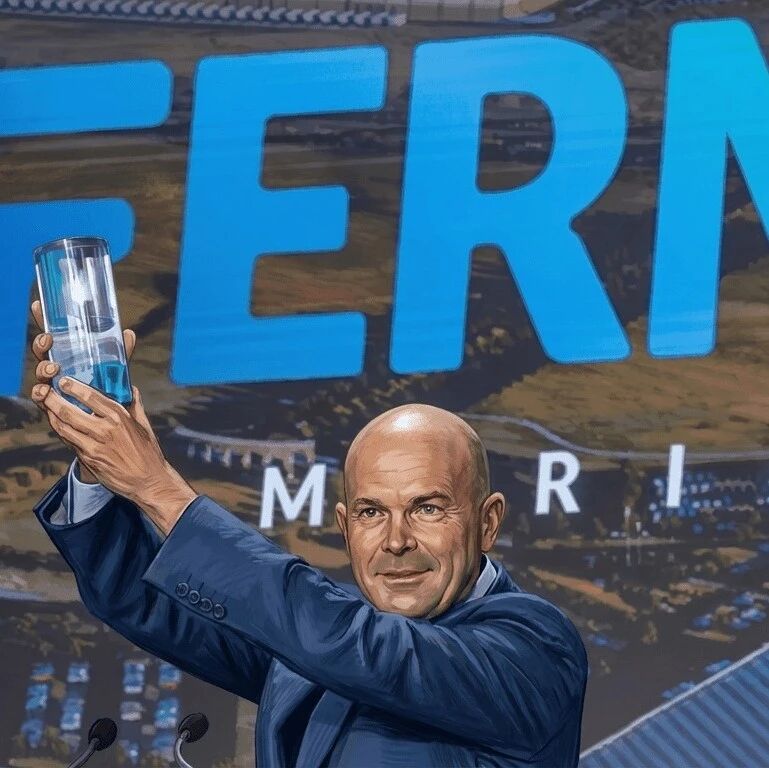
Core Viewpoint - Fermi, a prominent AI energy infrastructure company, experienced a significant stock price drop of 46% after announcing that its major client would withdraw a $150 million investment commitment for a large AI park in West Texas [3][7]. Group 1: Client Withdrawal Impact - The announcement of the client's withdrawal from the $150 million investment agreement led to a sharp decline in Fermi's stock price, which has now retreated 70% from its peak since its IPO in October [7]. - Fermi's management attempted to reassure investors by stating that negotiations regarding lease terms are still ongoing and have not completely broken down [7]. Group 2: Market Sentiment and Analyst Ratings - Despite the negative news, all nine Wall Street firms covering Fermi maintain a "buy" rating, while approximately 38% of the company's float is currently shorted [9]. - Fermi's investment advisor, Ocean Wall, downplayed the impact of the client withdrawal, emphasizing that the underlying logic of "power shortages" in AI computing remains unchanged [9]. Group 3: Political Connections and Ambitious Plans - Fermi has strong political ties, co-founded by former Energy Secretary Rick Perry, and has plans to name its energy center after Donald Trump [11]. - The company aims to build the world's largest energy and data park in Amarillo, Texas, with an estimated cost exceeding $50 billion, including four Westinghouse AP1000 nuclear reactors, targeting a total power generation capacity of 11 gigawatts [11].