DT新材料

Search documents
PCM2026官宣启动!第三届相变材料创新与应用论坛 | 4月16-18 广州
DT新材料· 2026-01-06 16:04
Core Insights - Phase Change Materials (PCM) are identified as core functional materials for efficient energy storage and precise temperature control, with significant market growth potential driven by advancements in basic research and increasing demand in emerging fields such as cold chain logistics, building energy efficiency, and smart textiles [1][2]. Forum Information - The Third Phase Change Materials Innovation and Application Forum will be held from April 16-18, 2026, in Guangzhou, organized by DT New Materials [2]. - The forum aims to promote communication and collaboration between academia and industry, focusing on the latest advancements and breakthroughs in the PCM field [1][2]. Agenda Planning - The forum will cover various topics, including PCM material development, battery thermal management, and fixed and distributed PCM energy storage applications [4][5][7]. Key Topics - **Topic 1: PCM Material Development and Exploration** - Research progress and industry development trends in PCM [4]. - Mechanism exploration of new phase change materials [4]. - Development and structural design of low melting point/high latent heat low-temperature phase change materials [4]. - **Topic 2: Practical Exploration of Battery Thermal Management** - Selection and performance optimization of PCM for solid-state and fast-charging batteries [6]. - Engineering applications of PCM in battery thermal management systems [6]. - **Topic 3: Fixed and Distributed PCM Energy Storage Applications** - Applications of PCM in air conditioning and cold storage systems [11]. - Integration of PCM materials in smart windows and photovoltaic systems [11]. - **Topic 4: Advanced Technology and Youth Forum** - A special forum for young scientists to discuss technical challenges and innovative ideas in PCM research [8]. Registration and Fees - Registration fees vary, with early bird prices set at 1600 RMB for students and 2500 RMB for non-students, increasing for online and on-site payments [10][14]. Contact Information - For report applications and participation inquiries, contact the designated managers via provided phone numbers and emails [12].

重磅!英伟达宣布 Rubin量产,液冷架构首次曝光
DT新材料· 2026-01-06 16:04
Core Viewpoint - NVIDIA has officially launched the Rubin platform, marking a significant technological advancement in the field of AI supercomputing, with full production announced by CEO Jensen Huang at CES 2026 [2]. Group 1: Rubin Platform Overview - The Rubin platform consists of six new chips that work together to create a powerful AI supercomputer, significantly reducing AI training time and lowering inference token generation costs [2]. - The Vera CPU, a core component of the platform, is built on a customized Armv9.2 architecture, featuring 88 cores and 176 threads, and supports NVIDIA's spatial multithreading technology [5]. - The Rubin GPU integrates a third-generation Transformer engine, providing 50 petaflops of NVFP4 computing power, with a single GPU bandwidth of 3.6 TB/s [8]. Group 2: Performance Metrics - The Rubin platform achieves 50 PFLOPS for inference and 35 PFLOPS for training, with HBM4 bandwidth reaching 22 TB/s, and NVLink bandwidth per GPU at 3.6 TB/s [6]. - The total number of transistors in the Rubin platform is 336 billion, representing a 1.6x increase compared to previous generations [6]. Group 3: Structural Innovations - The Rubin architecture features a complete redesign of the compute tray, transitioning to 100% liquid cooling and eliminating all cables, which enhances assembly efficiency and reduces the risk of operational errors [10]. - The cooling system utilizes a high-temperature water cooling technique, allowing for high power density heat dissipation while maintaining a water temperature of 45°C [12][15]. Group 4: Ecosystem and Partnerships - Major partners such as Lenovo and Supermicro are actively developing AI factories based on the Rubin platform, indicating a strong ecosystem support for the commercial deployment of advanced AI capabilities [14]. - The efficient liquid cooling architecture of the Rubin platform is expected to save approximately 6% of global data center electricity consumption [15]. Group 5: Comparison with Previous Platforms - The Rubin platform's power consumption is double that of the Grace Blackwell platform, yet it maintains the same cooling temperature, eliminating the need for expensive chiller systems in data centers [15]. - The GB300 platform, which was introduced in 2025, features a TDP exceeding 1.2 kW, showcasing the increasing energy demands of AI servers [16].


34家机器人“霸屏”CES2026 !谁将定义未来的新材料
DT新材料· 2026-01-06 16:04
Core Insights - The article highlights the significant advancements in the robotics industry, particularly focusing on humanoid robots and the materials that support their development [4][7][16]. - The upcoming FINE 2026 expo in Shanghai is positioned as a strategic platform for showcasing innovations in new materials that will drive future industries [2][25]. Humanoid Robots - Humanoid robots rely on three core technology modules: environmental perception, motion control, and human-computer interaction [8]. - China has made substantial progress in the production of core components for humanoid robots, achieving breakthroughs in domestic manufacturing capabilities [12]. Key Exhibitors at CES 2026 - The article lists 20 Chinese companies showcasing their humanoid robots at CES 2026, with notable mentions including Unitree, AgiBot, and UBTECH, highlighting their unique features and market positions [13]. - The presence of 34 humanoid robot companies at CES 2026 indicates a strong competitive landscape, with Chinese firms accounting for 58.8% of the exhibitors [4][7]. Material Innovations - Key materials driving the evolution of humanoid robots include titanium alloys, PEEK, flexible electronics, and advanced battery technologies, each contributing to weight reduction, durability, and performance [18]. - The use of titanium alloys and magnesium-aluminum alloys addresses the challenges of weight and load capacity, with titanium achieving a 40% weight reduction and a threefold increase in lifespan through advanced manufacturing techniques [18]. Future Industry Landscape - The FINE 2026 expo is set to feature various exhibitions focused on advanced semiconductors, lightweight materials, and energy solutions, emphasizing China's role in global material innovation [19][25]. - The article suggests that the advancements in materials are crucial for the commercialization of robotics and the broader transformation of future industries [16][18].
全球首款全固态电池问世!
DT新材料· 2026-01-06 16:04
Core Viewpoint - Donut Lab has launched the world's first commercially viable all-solid-state battery, marking a significant advancement in the electric vehicle and energy storage industries [2][3]. Group 1: Battery Specifications and Performance - The new battery achieves an energy density of 400 Wh/kg, significantly higher than the current mainstream lithium-ion batteries, which typically range from 250 to 300 Wh/kg [3]. - It can be charged in just 5 minutes, representing a qualitative leap in charging speed [3]. - The battery boasts a cycle life of up to 100,000 cycles, far exceeding the 5,000 cycles limit of existing technologies, allowing for nearly 30 years of stable use with daily charge and discharge [5]. Group 2: Material and Cost Efficiency - Donut Lab's solid-state battery is made from abundant, low-cost materials that are geopolitically stable, avoiding reliance on rare or sensitive elements, thus significantly reducing costs compared to traditional lithium-ion batteries [5]. - This development addresses the core cost bottleneck that has historically limited the large-scale application of solid-state batteries [5]. Group 3: Safety and Testing - The battery has undergone rigorous testing under extreme conditions, maintaining over 99% capacity at temperatures as low as -30°C and above 100°C without any signs of fire or degradation [5]. Group 4: Market Applications and Collaborations - Donut Lab has partnered with Verge Motorcycles to offer the first production motorcycle equipped with this solid-state battery, with pre-orders starting and deliveries expected in Q1 2026 at a starting price of $29,900 [6]. - The motorcycle can be charged in 10 minutes, providing up to 60 kilometers of range per minute of charging, and a long-range version can travel 600 kilometers on a single charge [6]. - Additionally, Donut Lab is collaborating with WATTEV to create a lightweight modular electric vehicle platform that integrates their battery technology [8]. Group 5: Future Outlook - Donut Lab asserts that solid-state batteries are ready for application in OEM production vehicles now, indicating a shift towards the future of electric mobility [8].
中海油,4万吨/年超高分子量聚乙烯项目招标
DT新材料· 2026-01-06 16:04
Group 1 - The core viewpoint of the article highlights the upcoming procurement plan for the basic design services of ultra-high molecular weight polyethylene (UHMWPE) at the CNOOC Ningbo Daxie Petrochemical, with an expected bidding date in January 2026 [2] - The project aims to establish a new UHMWPE production facility with a capacity of 40,000 tons per year, utilizing raw materials such as ethylene, hydrogen, and purchased hexane, employing a low-pressure hexane slurry process developed by the Shanghai Institute of Organic Chemistry and Sinopec Shanghai Engineering [2] - The total investment for the Daxie Petrochemical Phase VI project is approximately 1,018,418,000 yuan, which includes various production capacities such as 100,000 tons/year of high-performance olefin elastomers (HPOE) and 150,000 tons/year of carbon four comprehensive utilization [3] Group 2 - The Daxie Petrochemical Phase VI project is positioned to enhance the competitiveness of the integrated refining and chemical base by leveraging existing resources like self-produced ethylene and liquefied gas [2] - The project is strategically located in the southern area of the Daxie Petrochemical Taiping plant in Ningbo, aiming to create advanced and competitive high-function material projects [2] - The article also mentions the 2026 Future Industry New Materials Expo scheduled for June 10-12, 2026, at the Shanghai New International Expo Center, focusing on lightweight, high-strength, and sustainable materials [8]
恒逸石化,1200万吨/年化工项目官宣
DT新材料· 2026-01-06 16:04
Core Viewpoint - Hengyi Petrochemical has announced the full launch of the second phase of the PMB petrochemical project in Brunei, aiming for completion by the end of 2028, with a designed capacity of 12 million tons per year [2]. Group 1: Project Overview - The second phase of the Brunei refining project includes refining, aromatics, ethylene, and polyester, with a focus on producing high-value products such as diesel, PX, benzene, and polypropylene [2]. - Upon completion, the total capacity of the Brunei refinery will reach 20 million tons per year, with initial site preparation and sand filling already completed [2]. Group 2: Competitive Advantages - The project benefits from geographical advantages, including convenient crude oil procurement without import quotas and proximity to the Malacca Strait, which reduces logistics costs [3]. - The Brunei project is located in the ASEAN Free Trade Area, offering tax advantages such as an 11-year corporate income tax exemption, extendable to 24 years under certain conditions [4]. Group 3: Strategic Alignment - The advancement of the Brunei phase two project complements Hengyi Petrochemical's domestic strategy, which includes a comprehensive PTA production base along the coast of China with a capacity of 19 million tons per year, ranking first globally [4]. - The integration of products from Brunei and the Guangxi Qinzhou project is expected to enhance logistics efficiency through direct shipping routes, further reducing costs [4]. Group 4: Market Demand - The Southeast Asian market for refined oil products is experiencing tight supply and demand dynamics, with local GDP growth significantly outpacing the global average, leading to sustained demand for refining products [4]. - According to IEA forecasts, the supply-demand gap for refined oil in Southeast Asia is expected to widen to 68 million tons by 2026, presenting significant market opportunities for the Brunei refining project [4].

精工科技,首条年产5000T高性能碳纤维原丝生产线投运
DT新材料· 2026-01-05 16:04
Core Viewpoint - The article highlights the successful launch of a high-performance carbon fiber precursor production line by Jinggong Technology, marking a significant advancement in domestic carbon fiber manufacturing capabilities and contributing to the broader goals of sustainable development and carbon neutrality in China [2][3]. Group 1: Industry Developments - Jinggong Technology has successfully developed and launched its first production line with an annual capacity of 5000 tons for high-performance carbon fiber precursors, overcoming technological barriers and achieving a key step towards domestic and scalable production [2]. - The production line utilizes proprietary technology developed by Jinggong Technology, showcasing its ability to deliver comprehensive equipment solutions for carbon fiber production [2]. - The production process features a polymerization reaction conversion rate exceeding 90%, with minimal side reactions and uniform molecular weight distribution, ensuring high-quality precursor production [2]. Group 2: Applications and Impact - High-performance carbon fiber has extensive applications in aerospace, energy equipment, automotive industry, high-end sports equipment, and medical devices, providing essential material support for national strategic directions such as low-altitude economic development and transportation lightweighting [3]. - The large-scale production of high-performance carbon fiber precursors is expected to significantly promote energy conservation and emission reduction in downstream industries, contributing to China's dual carbon goals [3]. Group 3: Upcoming Events - The 2026 Future Industry New Materials Expo (FINE) will focus on common needs in future industries such as robotics, automotive, drones, data centers, aerospace, AI, and new energy, featuring six major exhibition areas including lightweight, high-strength, and sustainable materials [1][12]. - The expo is scheduled to take place from June 10 to June 12, 2026, at the Shanghai New International Expo Center [8][12].

未来芯片散热全景图
DT新材料· 2026-01-05 16:04
Core Viewpoint - The semiconductor industry is transitioning from FinFET to CFET technology by 2026, marking a shift in chip performance competition from mere size reduction to addressing physical limits and thermal management challenges [2][32]. Group 1: Macro Crisis - The long-term focus on increasing transistor density has led to significant thermal management issues, impacting CPU and GPU performance, power consumption, and energy efficiency [4][6]. - High temperatures can slow down critical signal propagation and cause permanent degradation of chip performance, leading to increased energy consumption for the same computational tasks [7][10]. Group 2: Path Exploration - Chip-level cooling technologies are essential for efficiently dissipating heat from high-density chips, with methods categorized into active and passive cooling systems [12][13]. - Advanced cooling architectures include remote, near-chip, and embedded on-chip cooling, each with varying effectiveness in heat transfer [13]. Group 3: Architectural Revolution - The transition to nanosheet and CFET architectures is expected to increase power density by 12%-15%, raising concerns about thermal runaway in densely packed data centers [34]. - Backside power delivery networks (BSPDN) are being developed to reduce resistance and improve voltage delivery, but they may introduce new thermal challenges due to thinner silicon substrates [35][40]. Group 4: Future Solutions - The industry is exploring various advanced materials and cooling techniques, including microchannel cooling, liquid cooling, and high-performance thermal management materials like diamond composites [20][59]. - Collaborative approaches, such as system and technology co-optimization (STCO), are necessary to address the complex thermal management challenges posed by next-generation chips [48][75].

填补空白!康辉新材,高性能光学膜技术突破
DT新材料· 2026-01-05 16:04
Core Viewpoint - Kanghui New Materials Technology Co., Ltd. has achieved significant breakthroughs in the production of polarizer protective base films, reaching advanced industry levels in both yield and quality, thus ending the long-standing market monopoly by imported products in the high-end polarizer protective base film sector [2][3]. Group 1: Company Achievements - Kanghui New Materials has successfully achieved stable mass production of polarizer protective base films, with monthly shipment volumes nearing 10 million square meters, making it the leading domestic enterprise in this field [3]. - The products have gained high recognition from downstream customers, leading to a continuous increase in order volumes and successfully penetrating the domestic mainstream polarizer market [3]. Group 2: Industry Context - The BOPET polarizer protective base film is a critical optical material in the polarizer manufacturing process, with stringent requirements for film flatness, defect control, and thermal stability, directly impacting production efficiency and product quality for downstream enterprises [2]. - Historically, the high-end polarizer protective base film market has been dominated by Japanese and Korean companies, creating high technical barriers that forced domestic polarizer manufacturers to rely on imports, facing challenges such as high procurement costs and unstable supply cycles [2]. Group 3: Strategic Implications - The breakthroughs achieved by Kanghui New Materials not only validate its R&D capabilities and manufacturing strength in the high-end optical film sector but also promote the deep extension of China's display industry into upstream core material segments, providing essential material support for the high-quality development of strategic emerging industries such as new displays and consumer electronics [3].

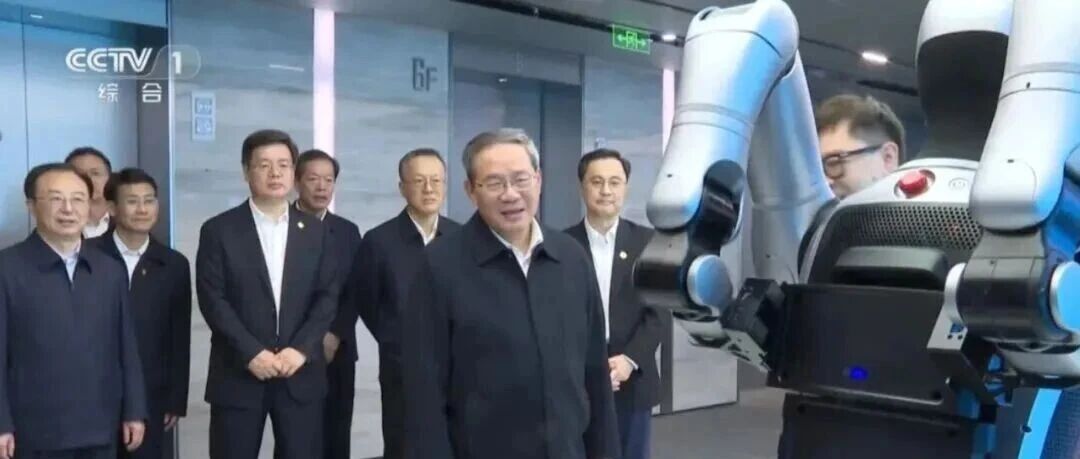
李强总理,调研人形机器人!
DT新材料· 2026-01-05 16:04
Core Viewpoint - The article highlights the importance of humanoid robots and artificial intelligence in driving technological and industrial transformation, emphasizing China's potential in this sector and the need for policy and scene-driven development to enhance industry efficiency and application scenarios [5][6][8]. Group 1: Government Initiatives and Industry Development - Premier Li Qiang's visit to Shenzhen focused on low-altitude economy and humanoid robot development, showcasing the government's support for innovation and technology [2][8]. - The government aims to strengthen the industrial ecosystem, expand application scenarios, and explore effective business models for new technologies like robots and drones [8]. Group 2: Industry Insights and Recommendations - Zhou Jian, CEO of UBTECH, emphasized the need for a "scene-driven, closed-loop iteration, and ecological collaboration" approach for high-quality development in the humanoid robot industry [5][6]. - Recommendations include enhancing policy and scene-driven initiatives, optimizing resource allocation, and building sustainable business models to support the humanoid robot industry [6]. Group 3: Technological Challenges and Opportunities - The article identifies several technological challenges that need to be addressed, such as high-performance semiconductors, energy-dense batteries, and advanced materials, which present significant opportunities for new materials and technologies [9]. - Various companies are developing lightweight, high-strength materials essential for humanoid robots, including carbon fiber composites and advanced polymers [10][11][12][13].