GLP1减重宝典

Search documents
FDA前局长新书爆料:自己使用司美格鲁肽,瘦了55斤
GLP1减重宝典· 2025-11-12 15:16
Core Insights - The article emphasizes the significant health risks associated with visceral fat, termed "toxic waist," which is linked to chronic diseases such as hypertension, type 2 diabetes, cardiovascular diseases, certain cancers, and even dementia [2] - The introduction of GLP-1 drugs, such as Wegovy and Ozempic, is transforming obesity treatment, with the author sharing a personal success story of losing over 60 pounds and halving body fat [2][4] - Despite their potential, GLP-1 drugs come with challenges, including severe gastrointestinal side effects, high costs (approximately $1,000 per month), and lack of insurance coverage for weight loss [4][6] Group 1: Health Implications - Visceral fat is a major contributor to chronic diseases, and reducing it could significantly improve public health and lower national healthcare costs [2][6] - The prevalence of hyperinsulinemia in the U.S. increased from 28% in 1999 to over 41% in 2018, highlighting a growing health crisis [6] Group 2: Drug Mechanism and Personal Experience - GLP-1 receptor agonists were initially developed for diabetes management, working by slowing gastric emptying and affecting the brain's reward center to reduce cravings for high-calorie foods [4] - The author experienced a significant change in appetite and food preferences while using these medications, leading to healthier eating habits [4][6] Group 3: Future Considerations - There is a need for more research on the long-term effects and potential for intermittent or strategic use of GLP-1 drugs, as many individuals may be reluctant to use them indefinitely [8] - The fight against obesity is framed as a public health priority that could save trillions in healthcare costs and reduce the incidence of chronic diseases as populations age [8]


速递|OpenAI布局消费者健康赛道:AI巨头能否突破数据壁垒?
GLP1减重宝典· 2025-11-12 15:16
Core Viewpoint - OpenAI is making significant strides in the healthcare sector by developing consumer health applications, aiming to transform personal health management and challenge traditional healthcare software giants [2][3]. Group 1: OpenAI's Strategic Shift - OpenAI is transitioning from being a "tool provider" to an "ecosystem builder" in the healthcare industry, planning to launch dedicated software for consumers [3]. - The company is considering various options, including creating a personal health assistant or a platform for integrating user health data [3]. - OpenAI's recent hiring of experienced professionals from the digital health sector indicates a strong commitment to this strategic direction [3]. Group 2: Market Potential and Challenges - The shift in consumer behavior from using search engines to large language models for health information presents a significant opportunity for OpenAI [4]. - Investors are optimistic about OpenAI's potential to solve the long-standing issue of personal health record integration, which has been a challenge for major tech companies [4][5]. - Previous attempts by companies like Microsoft, Google, and Apple to enter the personal health record space have faced challenges, highlighting the difficulties in user engagement and data management [5]. Group 3: Regulatory and Technological Landscape - Recent federal policies aimed at eliminating "information blocking" are facilitating better access to patient data, which could benefit OpenAI's health initiatives [5]. - Data intermediary platforms are emerging to help aggregate and standardize health data, which could support OpenAI's development of health applications [5][6]. - OpenAI is cautious in handling health data, emphasizing compliance and not encouraging users to upload medical records [6]. Group 4: Collaborative Opportunities - OpenAI could adopt a model similar to Apple's HealthKit by partnering with third-party applications and wearable devices to aggregate health data [6]. - The company is also focusing on collaborations with clinical professionals and researchers to innovate in clinical and personal health products [6]. - Partnerships with pharmaceutical companies and health tech firms are underway to enhance drug development and clinical decision support [6]. Group 5: Future Outlook - OpenAI's ability to successfully implement its health strategy will test its technical capabilities and ecosystem collaboration [7]. - If successful, OpenAI could redefine how AI empowers health management, giving consumers more control over their health [7].

速递 | 重磅!聚焦司美格鲁肽等核心业务,诺和诺德中国2026年架构大调整
GLP1减重宝典· 2025-11-11 10:37
Core Insights - Novo Nordisk China announced a strategic organizational restructuring aimed at optimizing resource allocation and focusing on core business growth, effective from January 1, 2026 [5] - The restructuring aligns with the global strategy of shifting resources towards high-growth businesses [5] Group 1: Insulin Division Restructuring - The Emerging Business Division (EBD) will be renamed the Insulin Business Division (IBD), focusing exclusively on the innovative insulin product line [6] - This division will divest from GLP-1 related businesses and will leverage Novo Nordisk's century-long experience in the insulin sector to accelerate the introduction of innovative products [6] Group 2: Diabetes and Obesity Division Focus - The Diabetes and Obesity Division (DOD) will concentrate on the full product line of semaglutide for diabetes and obesity [8] - Key initiatives include solidifying the market leadership of Novo Nordisk's brand in type 2 diabetes blood sugar control, enhancing the brand influence of oral GLP-1 formulation, and accelerating the competitive advantage of weight loss drug Novo Nordisk [8] - These products, while all based on semaglutide, will cater to different patient needs through varying formulations and indications [8] Group 3: Sales Network Enhancement - The Commercial and Retail Division (DRD) will strengthen channel cooperation and build a comprehensive sales network [9] - This division will collaborate deeply with distributors to handle sales tasks in grassroots hospitals and will further penetrate the retail market, including partnerships with online pharmaceutical platforms [9] - The restructuring aims to eliminate business overlaps and clarify core responsibilities among divisions, reinforcing business barriers ahead of the potential generic competition following the expiration of semaglutide's core patent in 2026 [9]

怎样才能最大限度地减少纯脂肪,同时提升肌肉含量?
GLP1减重宝典· 2025-11-11 10:37
Core Viewpoint - The article emphasizes the importance of a balanced approach to fat loss and muscle gain, highlighting the significance of caloric deficit, protein intake, exercise types, and sleep quality in achieving sustainable results [6][7][18]. Summary by Sections Caloric Deficit - A daily caloric deficit of 300-500 kcal is deemed optimal for effective fat burning while preserving muscle mass, reducing the risk of rebound weight gain [7][9]. - It is recommended to calculate the basal metabolic rate and total daily energy expenditure to establish a suitable caloric deficit [8]. Protein Intake - The article suggests a protein intake of 1 gram per kilogram of body weight, with examples provided for a woman weighing 60 kg needing approximately 60 grams of high-quality protein daily [11]. - Each meal should contain 20-30 grams of protein to meet synthesis needs, as excessive protein may increase diabetes risk [11]. Exercise Recommendations - Strength training is crucial for muscle growth, with a recommendation of 2-3 sessions per week, lasting 30-60 minutes each [13]. - Aerobic exercise should be limited to 3-5 times a week for 20-30 minutes to prevent muscle loss [14]. Sleep Importance - Sleep plays a vital role in muscle synthesis and fat breakdown, with optimal sleep times suggested to be around 10:30 PM to 7 AM [16][17]. - The article posits that effective weight management is a combination of exercise, diet, and sleep, with sleep acting as a bridge to maximize the effects of the other two [18]. Muscle Preservation - It is noted that even with proper diet, exercise, and sleep, muscle gain during a month is limited to just over a pound, emphasizing the need to protect muscle during fat loss [19].

靠司美格鲁肽就能“躺瘦”?医生:用药也需调整饮食
GLP1减重宝典· 2025-11-11 10:37
Core Viewpoint - The weight loss drug "Semaglutide" has officially launched in China, leading to an increase in consultations at weight loss and endocrinology clinics. It is emphasized that the use of weight loss medications requires professional evaluation and should be part of a comprehensive treatment plan that includes lifestyle changes [2]. Group 1: Medication Usage and Management - Semaglutide should be used under the guidance of qualified medical professionals to ensure its effectiveness and safety. Relying solely on medication without lifestyle changes is unlikely to yield significant weight loss results [2]. - The importance of a balanced diet during the use of Semaglutide is highlighted, with recommendations to reduce refined carbohydrates and sugary drinks, and to limit salt intake to no more than 5 grams per day [4]. Group 2: Foods to Avoid - High-fat foods, such as fried items and heavily cooked dishes, should be avoided during Semaglutide treatment as they can cause gastrointestinal discomfort [5]. - Foods high in trans fats and saturated fats, including full-fat dairy products and red meats, may exacerbate digestive issues and affect the drug's efficacy. Healthier fat sources like olive oil and nuts are recommended [5]. - High-sugar foods, including sauces, baked goods, and sugary beverages, should be strictly limited as they can interfere with the medication's effects and cause blood sugar fluctuations, particularly in diabetic patients [5]. - High-sodium foods, such as chips and pickled products, can raise blood pressure and pose risks for heart disease, especially for type 2 diabetes patients [7]. - Refined carbohydrates, which lack comprehensive nutrition and can spike blood sugar levels, should be minimized in favor of whole grains and natural carbohydrates [7]. - Starchy vegetables like potatoes and corn may cause blood sugar fluctuations and should be consumed in moderation, with low-sugar vegetables recommended instead [7]. - Alcohol should be minimized or avoided as it can aggravate digestive issues and increase the risk of hypoglycemia during Semaglutide treatment [8].
速递 | 英矽智能携手礼来开启AI药物研发合作,合约总额超亿美元
GLP1减重宝典· 2025-11-11 10:37
Core Insights - The article discusses a strategic collaboration between Insilico Medicine and Eli Lilly to accelerate drug discovery using AI technology [2][4]. - Insilico Medicine's Pharma.AI platform will be utilized to generate, design, and optimize candidate compounds for specified innovative targets [4]. - The partnership is expected to yield over $100 million in cumulative revenue for Insilico Medicine, including upfront payments, milestone rewards, and royalties from future drug sales [4]. Group 1: Collaboration Details - Insilico Medicine and Eli Lilly have formalized a drug development partnership leveraging Insilico's AI capabilities and Eli Lilly's extensive experience in drug development [2][4]. - This collaboration builds on a previous software licensing agreement established in 2023, laying a strong foundation for the current strategic partnership [4]. - The CEO of Insilico Medicine expressed enthusiasm about the collaboration, highlighting Eli Lilly's recognition of Insilico's AI drug development capabilities [4]. Group 2: Efficiency and Innovation - Insilico Medicine has significantly improved early-stage drug development efficiency, reducing the typical drug discovery timeline from 3-6 years to an average of 12-18 months for candidate nomination [4]. - From 2021 to 2024, Insilico has nominated 20 preclinical candidate compounds, with each project involving only 60 to 200 synthesized and tested molecules, enhancing resource utilization [4]. Group 3: Industry Context - The article references a government initiative aimed at promoting AI applications in healthcare, emphasizing the importance of AI in enhancing medical services and efficiency [14]. - The healthcare sector is identified as a primary beneficiary of AI advancements, with expectations of significant industry transformation due to high data density and quality [12][14].


速递|全球首创!ESMO重磅发布AI医疗指南,23项共识精准回应行业难题!
GLP1减重宝典· 2025-11-10 13:34
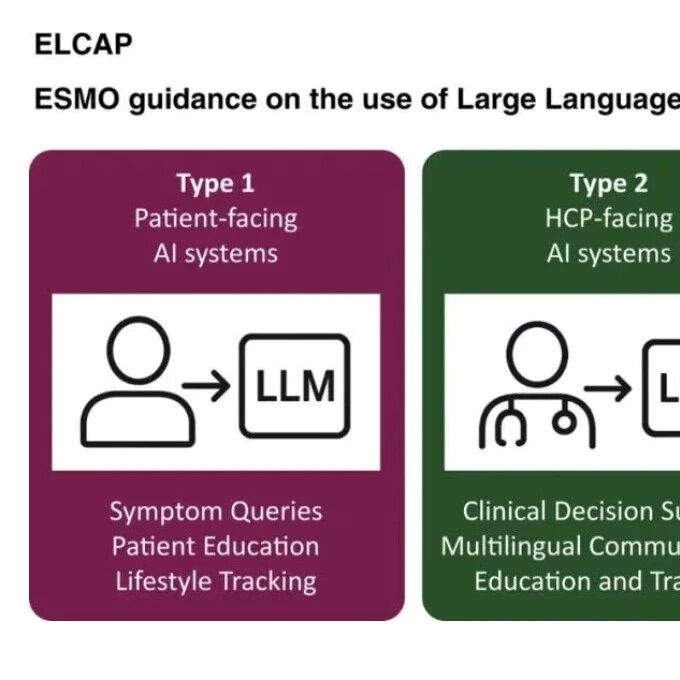
Core Viewpoint - The article emphasizes the urgent need for guidelines on the application of AI in healthcare, particularly in oncology, as AI tools like ChatGPT become more prevalent in the medical field. The European Society for Medical Oncology (ESMO) has released the first systematic framework for the safe integration of large language models (LLMs) in oncology practice, focusing on data protection, clinical oversight, and decision support [2][3]. Group 1: AI Application Categories - ESMO categorizes AI applications into three types, each with specific safety and governance recommendations [3]. Group 2: Type 1 LLM Applications - Patient-Facing Tools - Type 1 applications include chatbots and virtual assistants that provide symptom information or treatment advice. A study involving a GPT-4-based breast cancer chatbot highlighted the importance of clear communication from patients to receive accurate information [7][8]. - Key recommendations for patients include maintaining open dialogue with healthcare providers, not treating LLMs as replacements for in-person consultations, and ensuring privacy when sharing health data [7][8][9]. Group 3: Type 2 LLM Applications - Medical Professionals - Type 2 applications are designed for oncologists and healthcare teams, focusing on decision support, documentation, and translation. These tools can assist in clinical decision-making but require strict validation and clear accountability mechanisms [10][12]. - Recommendations for healthcare professionals include verifying AI-suggested information, maintaining human oversight, and not delegating final responsibility for patient care to AI [11][12]. Group 4: Type 3 LLM Applications - Backend Systems - Type 3 applications operate in the background of healthcare institutions, focusing on tasks like data extraction from electronic health records (EHRs) and patient screening for clinical trials. The quality of AI outputs heavily relies on the accuracy and completeness of clinical documentation [13][15]. - Continuous performance monitoring and institutional governance are emphasized to ensure the reliability and safety of these AI systems [15].
详解替尔泊肽双靶点的优势:继司美格鲁肽更强的减肥药,好在哪?
GLP1减重宝典· 2025-11-10 13:34
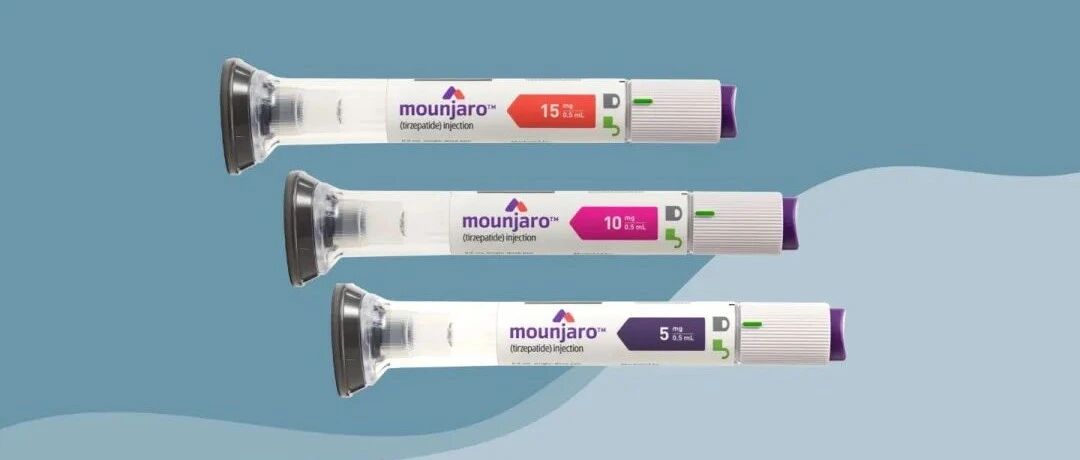
Core Viewpoint - Tirzepatide, a dual-target drug combining GLP-1 and GIP, shows significant efficacy in weight loss and metabolic control, outperforming single-target drugs like semaglutide [2][6][10]. Group 1: Mechanism and Efficacy - Tirzepatide enhances GLP-1 activity and has GIP activity approximately 10 times that of GLP-1, leading to complementary effects in reducing appetite and improving metabolic functions [2][4]. - GIP plays a crucial role in fat metabolism, helping to rebalance and redistribute body fat, which is a notable advantage over single-target drugs [4][6]. - Clinical trials demonstrate that tirzepatide leads to an average weight loss of 22.5% in patients after treatment, making it the first drug in phase 3 trials to achieve over 20% weight loss [10]. Group 2: Comparative Efficacy - In the SURMOUNT-3 trial, patients treated with tirzepatide lost an average of 26.6% of their body weight, setting a new record for weight loss efficacy [10]. - When comparing tirzepatide to semaglutide, tirzepatide showed superior weight loss results: 15.7% for diabetic patients versus 9.6% for semaglutide, and 22.5% for non-diabetic obese patients versus 15% for semaglutide [10][11]. Group 3: Safety and Tolerability - Both tirzepatide and semaglutide share common side effects, primarily gastrointestinal issues, but tirzepatide's dual action may lead to better tolerability [13]. - Approximately 80% of tirzepatide users report at least one side effect, with 33% experiencing nausea compared to 44% for semaglutide, indicating a potentially lower incidence of adverse effects [13].
替尔泊肽:难治性高血压治疗新突破?一例成功案例引发热议
GLP1减重宝典· 2025-11-10 13:34
Core Insights - The article discusses the challenges and new perspectives in the treatment of resistant hypertension, particularly focusing on the potential of GLP-1/GIP receptor agonists in managing blood pressure in patients who do not respond to traditional medications [6][7][12]. Group 1: Resistant Hypertension - Resistant hypertension is defined as a condition where patients cannot achieve effective blood pressure control despite using five or more antihypertensive medications at maximum doses [6]. - This condition significantly increases the risk of cardiovascular and renal complications, highlighting the need for more effective treatment options [6]. Group 2: Case Study - A case study of a 71-year-old female patient illustrates the potential of GLP-1/GIP receptor agonists. Despite being on eight antihypertensive medications, her blood pressure remained uncontrolled until she began treatment with liraglutide in 2013, which reduced her systolic blood pressure from 206 mmHg to 160 mmHg over six years [8][10]. - The treatment was later switched to dulaglutide and then to terzepatide, resulting in further blood pressure reduction to 135 mmHg, demonstrating the effectiveness of these agents in resistant hypertension [9][10]. Group 3: Mechanism of Action - GLP-1/GIP receptors are widely distributed in the hypothalamus, carotid body, vascular endothelium, and kidneys. Animal studies suggest that these receptor agonists may lower blood pressure by inhibiting sympathetic nervous system activity, improving endothelial dysfunction, and/or reducing vascular remodeling [12]. - The findings from the case study indicate that GLP-1/GIP receptor agonists may have broader applications in blood pressure control, especially for patients with resistant hypertension, and emphasize the need for further exploration of their mechanisms [12].
速递 |“减脂不减肌”,柯君医药公布新一代减重药物CG-0416临床前突破性数据
GLP1减重宝典· 2025-11-10 13:34
Core Viewpoint - The article highlights the breakthrough clinical data of CG-0416, a novel oral weight loss drug developed by Kejun Pharmaceutical, which targets liver metabolism and offers a new option for obesity treatment globally [5][6]. Group 1: Drug Mechanism and Advantages - CG-0416 is developed based on the thyroid hormone receptor beta (THR-β) target, demonstrating high liver targeting and promoting fat burning and energy expenditure, leading to effective reduction of liver fat accumulation [6][8]. - The drug achieves weight loss without appetite suppression, resulting in a high-quality weight loss effect characterized as "fat loss without muscle loss" [6][8]. - Clinical data shows that approximately 95% of weight loss from CG-0416 comes from fat reduction, contrasting with GLP-1 drugs where about one-third of weight loss is from muscle loss [8]. Group 2: Safety and Side Effects - CG-0416 is expected to significantly reduce gastrointestinal side effects such as nausea and vomiting, thereby improving patient compliance [8]. - The drug also lowers lipid levels in blood and liver, improving triglyceride and blood sugar tolerance, contributing to overall metabolic health benefits [8]. Group 3: Combination Therapy - Research indicates that combining CG-0416 with various GLP-1 receptor agonists, such as semaglutide, shows a strong synergistic effect, enhancing weight loss from 24% to 40% in certain models [9]. - The combination therapy alleviates muscle loss associated with standalone GLP-1 drug use, increasing the proportion of muscle post-weight loss [9]. - This dual pathway approach of central appetite regulation (GLP-1) and peripheral liver metabolism activation (CG-0416) offers a new solution for severely obese patients needing significant weight loss and metabolic remodeling [9].