艾瑞咨询

Search documents
理疗养生与女性客群:2025中国按摩足疗行业潜力洞察
艾瑞咨询· 2025-09-12 04:13
Core Viewpoint - The Chinese massage and foot therapy industry is experiencing significant growth and structural upgrades driven by the "Healthy China 2030" strategy and increasing health awareness among the public, with the market expected to exceed 730 billion by 2026 and online user penetration surpassing 45% [1][2][6]. Market Size and Trends - By 2026, the user base in the Chinese massage and foot therapy industry is projected to reach nearly 250 million, with order volume approaching 30 billion and transaction value exceeding 730 billion, indicating a stable and mature development phase [2][6]. Industry Development and Growth - The therapeutic wellness segment is becoming the growth engine of the industry, fueled by the aging population, rising demand for body care and chronic disease management, and a shift in consumer health awareness from relaxation to proactive wellness [6][10]. Market Concentration - The therapeutic wellness market remains fragmented, but leading brands in high-tier cities are expanding rapidly, resulting in a gradual increase in market concentration, with the top 10 brands' order share rising from 9.8% in 2020 to 13.5% in 2025 [10][13]. Store Growth Distribution - The distribution of therapeutic wellness stores follows a pyramid structure, with rapid expansion in lower-tier markets driven by low costs and policy support, while mid-sized stores are also growing quickly [15][21]. User Characteristics - The user demographic is increasingly female and younger, with diverse needs driving sustained growth in the industry. Women, particularly full-time mothers and young professionals, are more health-conscious and willing to invest in wellness services [38][55]. Female-Friendly Services - The upgrade of environments and services to be more female-friendly, incorporating a "healing + social" model, is meeting women's needs for a safe, comfortable, and private therapeutic experience [41]. Consumption Trends - There is a noticeable trend of increased user frequency, with users making three or more transactions contributing significantly to the industry's gross transaction value (GTV) [47]. Project Supply - Massage and therapeutic services are the core offerings, with the highest profit margins coming from combinations like massage + moxibustion [27][29]. Technician Influence - The professional capabilities of technicians are a core driving force in therapeutic wellness, directly impacting service effectiveness, customer trust, and operational efficiency [32]. Purchase Experience - Female users often prefer to make their first purchase directly in-store, while younger women are more inclined to use online platforms for group purchases [80]. Consumer Frequency - The average frequency of therapeutic services is high, particularly for massage and moxibustion, with users engaging in these services regularly [83]. Consumer Spending - Female users typically spend between 100-299 yuan per session on therapeutic services, with an average spend of 254 yuan, slightly higher than the overall average [85]. Repurchase Behavior - Nearly half of female users choose to repurchase services in-store due to the ability to negotiate service combinations and discounts, while around 40% prefer online repurchases for price advantages [87]. Membership Recharge - A significant portion of female users opt for store membership cards due to long-term trust and flexible service combinations, while those with specific treatment needs tend to choose service cards [89]. Experience Satisfaction - Key factors enhancing female user satisfaction include the technician's skill, service effectiveness, and the comfort of the store environment [95]. Store Switching Frequency - Female users generally switch stores infrequently but may do so due to excessive upselling or unavailability of preferred technicians [97]. User Segmentation - The primary user groups in the massage and foot therapy sector include urban young professionals, homemakers, and middle-class individuals, with notable growth among the elderly and students [99][100].


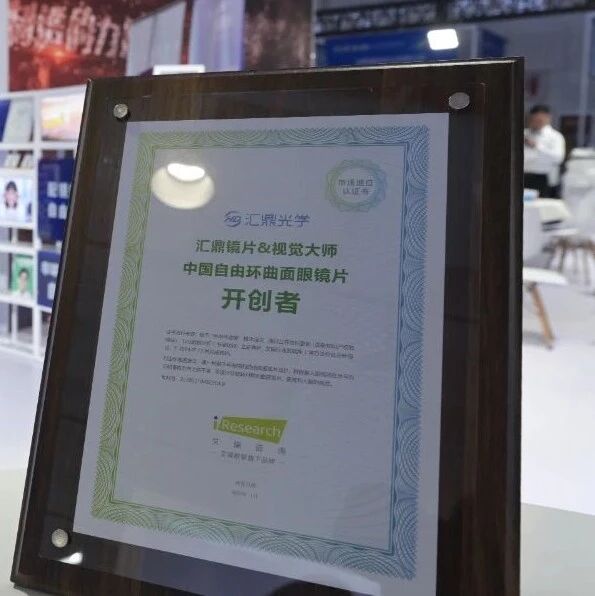
艾瑞数智为汇鼎光学颁发“中国自由环曲面眼镜片开创者”市场地位声明
艾瑞咨询· 2025-09-12 04:13
Core Viewpoint - The article highlights the growing trend of consumer demand for personalized lens solutions in the eyewear industry, emphasizing the technological upgrade of single vision lenses and the significance of freeform lens technology as a best practice solution [2]. Group 1: Market Position and Recognition - Aiyi Shuzhi awarded Huiding Optical the title of "Pioneer of Freeform Lenses in China," recognizing its technological innovation and industry leadership [5]. - The market position statement serves as a testament to Huiding Optical's capabilities and its role in leading the industry [5]. Group 2: Aiyi Shuzhi's Services - Aiyi Shuzhi is a leading commercial data and research institution in China, providing market position statements to help companies build differentiated brand advantages in competitive markets [7]. - The market position statement system of Aiyi Shuzhi focuses on four dimensions: business strategy upgrade, brand value creation, market expansion, and compliance risk management, offering customized solutions for companies [9]. Group 3: Methodology and Approach - Aiyi Shuzhi employs a multi-dimensional and full-process professional statement service, ensuring scientific and effective results through five rigorous steps: preliminary communication, in-depth research, professional analysis, conclusion writing, and result delivery [11]. - The organization leverages a professional research team, extensive data accumulation, and self-developed statistical forecasting models across various sectors, including consumer markets, internet and technology, and cultural entertainment [14]. Group 4: Future Outlook - Aiyi Shuzhi aims to continue providing credible, quantifiable, and communicable market position statements, assisting companies in establishing sustained influence in global competition and promoting high-quality industry development [14].
“天空之城”的崛起:重庆低空经济的战略解析
艾瑞咨询· 2025-09-11 00:03
Core Viewpoint - The article highlights Chongqing's strategic push towards developing a "low-altitude economy," leveraging drone technology to enhance cultural tourism, consumption, and urban competitiveness, positioning the city as a pioneer in integrating technology with urban development [1][9][13]. Summary by Sections Low-altitude Economy: New Dimension of Cultural Tourism - On June 17, 2025, Chongqing set a Guinness World Record with 11,787 drones performing a synchronized aerial display, generating over 2 million discussions on social media [3]. - The "New Rhythm Chongqing" light show featuring 5,000 drones during Stephen Curry's visit on August 18, 2025, incorporated local cultural elements, leading to nearly 30,000 social media mentions [3]. - The 2025 VCT CN League Finals from August 20 to 25 showcased a drone performance as a highlight, merging low-altitude technology with esports culture, resulting in nearly 1 million interactions [3][5]. Strategic Layout of Low-altitude Economy - Chongqing's low-altitude economy encompasses various sectors, including aviation, drone logistics, urban governance, emergency rescue, and surveying, aiming to create a new economic growth engine [9][11]. - The city is establishing six low-altitude economic demonstration zones, focusing on airspace openness and policy innovation, providing a model for high-quality development in the national low-altitude economy [9][11]. Collaborative Advancement Across Five Dimensions - Chongqing is systematically developing high-quality low-altitude experience products, building a comprehensive industrial ecosystem that includes research, manufacturing, and operations [11]. - The initiatives aim to stimulate new consumption and employment potential while enhancing regional competitiveness and urban branding, positioning low-altitude economy as a key driver for industrial upgrades and urban strategic positioning [11][13]. Future Prospects - The low-altitude economy is expected to expand nationally, becoming a significant force in driving new productive capacities as more application scenarios are implemented [14].

2025年第35周:跨境出海周度市场观察
艾瑞咨询· 2025-09-11 00:03
Group 1 - Amazon released the "Top 50 Innovative Brands for 2025" in cross-border e-commerce, projecting a 16.9% year-on-year growth in China's cross-border e-commerce export scale to 2.15 trillion yuan in 2024, with significant growth in high-tech products [3][4] - The Middle East is identified as a prime market for Chinese companies looking to expand overseas, with retail spending expected to reach $300 billion and a rapidly growing e-commerce market potentially exceeding $1 trillion [5] - The Chinese micro-short drama industry is accelerating its overseas expansion, with the market size expected to surpass 50 billion yuan in 2024, focusing on cultural elements and diverse content to enhance competitiveness [6] Group 2 - A "Robot Outbound Cooperation Network" was officially launched in Beijing, aimed at promoting the international development of China's robotics industry through strategic partnerships [7] - Southeast Asia's e-commerce market has seen explosive growth, with sales increasing from $4 billion in 2012 to $184 billion in 2024, driven by Chinese companies leveraging supply chain advantages [8] - The rise of a new generation in cross-border e-commerce is reshaping global business, with emotional value and technology becoming core competitive elements [9] Group 3 - Localization in research and development is becoming a key strategy for Chinese brands going overseas, with companies adapting products to meet local demands and enhancing market fit [10] - The global popularity of Chinese metaphysics and feng shui is growing, with a projected market size of $48.7 billion by 2024, driven by emotional consumer needs [12] - Chinese service and logistics robot companies are successfully entering the Japanese market by optimizing technology and localizing strategies [13] Group 4 - Chinese brands are rapidly expanding internationally, transitioning from OEM production to independent innovation, with significant sales growth in Europe and other markets [14] - The new tea beverage sector is emerging as a global force, particularly in Southeast Asia, but faces challenges such as supply chain vulnerabilities and cultural differences [15] - Over 20 Chinese beauty brands have accelerated their overseas sales through Alibaba's AliExpress, with significant growth in markets like Europe and Mexico [17] Group 5 - Chinese companies are entering a new wave of "innovative outbound" strategies, with over 2,000 companies targeting 96 countries, integrating local resources and capabilities [18] - Great Wall Motors has completed its factory in Brazil, enhancing its local service and production capabilities to support its global strategy [20] - AliExpress reports a doubling of sales for Chinese beauty brands in the past year, with a focus on integrating influencer marketing and comprehensive solutions for market entry [21] Group 6 - Meituan's Keeta is rapidly expanding into the Middle East, achieving a 10% market share in Saudi Arabia within five months and planning further regional growth [22] - Reading Group's revenue from IP operations has shown strong growth, with a 68.5% increase in net profit, driven by successful adaptations of popular content [23] - Cainiao is transforming into a global logistics enterprise, focusing on international logistics and technology to support Chinese brands' overseas expansion [25]




2025年汽车行业网络营销监测报告
艾瑞咨询· 2025-09-10 00:08
Core Insights - The domestic automotive market is experiencing accelerated growth, structural optimization, and innovative marketing strategies as it enters a new cycle in 2025, with a cumulative retail of 12.746 million passenger vehicles from January to July, representing a year-on-year increase of 10.3% [1][4] - The penetration rate of new energy vehicles (NEVs) has consistently exceeded 50% for five consecutive months, indicating a strong shift towards NEVs and driving the replacement of traditional fuel vehicles [1][4] - The market is characterized by a concentration of top brands, with the top three manufacturers (BYD, Geely, and FAW-Volkswagen) capturing one-third of the market share, while the remaining brands are more dispersed [1][10] Market Overview - The cumulative retail sales of passenger vehicles in the domestic market reached 12.746 million units from January to July 2025, with NEVs showing remarkable growth, consistently exceeding 10% year-on-year [4] - The NEV market's rapid growth reflects its increasing role in replacing traditional fuel vehicles, contributing significantly to overall industry growth [4] Policy Environment - The automotive market is being stimulated by a dual policy approach from national and local governments, which includes initiatives like vehicle trade-in programs and subsidies for NEVs [7] - National policies encourage automotive consumption, while local governments implement specific measures to enhance consumer incentives and infrastructure development [7] Advertising and Marketing Trends - The automotive advertising market saw a significant recovery in July 2025, with the number of advertisers showing positive growth for the first time, particularly in the NEV sector [2][14] - Mobile and OTT platforms are gaining a larger share of advertising spend, while traditional PC advertising is declining [2][18] - The advertising strategies are increasingly focused on achieving both short-term sales conversions and long-term brand building, with a clear emphasis on integrating user insights and data-driven approaches [3][37] Marketing Strategies - The automotive marketing landscape is shifting towards a user-centric, data-driven model, emphasizing the importance of understanding consumer behavior and optimizing the entire purchase journey [3][35] - Companies are leveraging technology and AI to enhance marketing efficiency and create a seamless online-offline experience for consumers [3][39] - The marketing strategies are evolving to focus on personalized approaches rather than one-size-fits-all campaigns, aligning with the characteristics of target demographics [3][37] Competitive Landscape - The top three manufacturers dominate the market, with BYD leading in retail sales at 1.885 million units, followed by Geely and FAW-Volkswagen [10][11] - The competitive dynamics show a clear oligopolistic effect, with the top ten manufacturers accounting for 63% of total market sales [10] Media and Advertising Channels - The advertising landscape is becoming more stable, with automotive websites remaining the primary media choice for advertisers, capturing over 70% of the market share [18][25] - The top media platforms for automotive advertising include AutoHome and Dongchedi, which have seen increased engagement and advertising spend [23][25] Case Studies and Innovations - AutoHome is leveraging its expertise in content creation and integrated marketing services to provide comprehensive solutions for advertisers, enhancing brand visibility and consumer engagement [39][43] - Innovative marketing strategies, such as those employed by high-end models like the AITO M7 and Zeekr 009, focus on addressing consumer pain points and enhancing brand perception through targeted messaging and community engagement [45][47]

2025年第35周:数码家电行业周度市场观察
艾瑞咨询· 2025-09-10 00:08
Group 1: AI Consulting Market - The AI consulting market is projected to become a trillion-dollar industry due to the gap between the urgent demand for AI and the insufficient implementation capabilities of businesses [2][3] - Traditional consulting firms lack the technical engineering capabilities and neutrality to meet enterprise needs, creating opportunities for new AI consulting firms to act as long-term partners [2] - The ideal AI consulting process involves four steps: opportunity audit, value mapping, lighthouse projects, and technology selection, aiming to help businesses achieve AI transformation [2][3] Group 2: Humanoid Robots - The World Robot Conference has seen over 1.3 million attendees, with humanoid robots becoming a focal point, attracting significant capital investment [4] - Major internet companies like Meituan, Tencent, and JD.com are heavily investing in the humanoid robot sector, with JD planning to invest over 10 billion yuan to drive industry development [4] - The commercialization of humanoid robots is still in its early stages, with manufacturers testing vertical scenarios, and the market is expected to see technological breakthroughs in the next two to five years [4] Group 3: Spatial Intelligence - Spatial intelligence, the ability of AI to understand and interact with the three-dimensional world, is seen as crucial for achieving general artificial intelligence (AGI) [5] - The development of spatial intelligence faces challenges such as dimensional complexity and data scarcity, and it progresses through five levels from basic 3D reconstruction to physical law modeling [5] - Applications for spatial intelligence are broad, including autonomous driving and digital twin cities, with significant advancements being made in Japan and China [5] Group 4: Home Appliance Market - The "old-for-new" policy has benefited over 430 million people, leading to a surge in sales of large appliances, with sales of TVs over 98 inches increasing by 43% and refrigerators over 550L rising by 89% [6] - Smart appliances are performing well, with over 60% of air conditioners priced above 5000 yuan being AI products, and sales of smart kitchen appliances and robotic vacuums growing significantly [6] Group 5: AI Agents - The release of GPT-5 has led to explosive growth in the AI Agent field, but challenges remain in technology, commercialization, and market fit [7] - High development costs and low user willingness to pay hinder profitability, with many products lacking differentiation and user engagement [7] - Future success in the AI Agent space may depend on breakthroughs in high-value sectors like finance and healthcare, requiring collaboration across technology, organization, and ecosystem [7] Group 6: AI in Film Industry - Generative AI is transforming the film industry by enhancing script evaluation, IP discovery, and virtual production efficiency [8] - AI currently plays a supportive role, but collaborations with tech companies are driving innovation, despite challenges in technology costs [8] Group 7: Smart Home Industry - The smart home industry is facing challenges due to the downturn in real estate, leading to a shift towards online channels for customer acquisition [13][17] - Major appliance companies are attempting to pivot towards smart home opportunities, but the industry struggles with "pseudo-intelligence" issues, where devices lack interoperability and maturity [13][17] Group 8: AI Glasses - AI glasses are emerging as a new competitive entry point for tech giants, with companies like Xiaomi and Alibaba launching products in 2025 [10][11] - The technology advancements in AI glasses, such as Micro LED and waveguide technology, are addressing issues of weight and battery life, making them a potential next-generation computing platform [10][11] Group 9: Headphone Market - The headphone market is evolving from a "backup tool" to a "necessity," with a projected shipment of 110 million Bluetooth headphones in China by 2024, a 19% increase [12] - Consumers are increasingly seeking headphones that cater to various scenarios, and AI technology is expanding the applications of headphones beyond traditional uses [12] Group 10: AI Toys - The AI toy market is experiencing a surge, with over 30 companies entering the space, targeting both adult emotional companionship and children's educational toys [14][15] - The competition is focused on understanding user needs, with psychological health and therapy emerging as potential new directions for product development [14][15] Group 11: Meta's Talent Acquisition - Meta is aggressively pursuing top AI talent in Silicon Valley, offering substantial compensation packages to attract researchers from leading AI firms [19] - This strategy aims to accelerate Meta's vision of "personal superintelligence," with significant investments expected to enhance its advertising business [19] Group 12: Tencent's AI Strategy - Tencent's Q2 performance exceeded expectations, driven by AI applications across various sectors, including gaming and advertising [20] - The company is leveraging its ecosystem and cost management to enhance its AI strategy, positioning AI as a key growth driver for the future [20] Group 13: Smart Refrigerator Market - The demand for automatic ice-making features in refrigerators is rising, with Rongsheng leading the industry by obtaining certification for its technology [24] - The certification process emphasizes hygiene, efficiency, and quality, marking a shift towards standardized development in the refrigerator sector [24] Group 14: Cooking Robots - Cooking robots are transitioning from concept validation to commercial application, with JD.com planning significant investments to drive demand [25] - The B2B market is showing strong performance, while the consumer market faces challenges due to complexity and taste preferences [25] Group 15: Large Screen TVs - The release of a white paper on 100-inch TVs sets new standards for selection, focusing on design, durability, and user experience [26][27] - Changhong is launching new products that meet these standards, indicating a shift in the industry towards comprehensive experience competition [26][27] Group 16: Meitu's AI Strategy - Meitu is experiencing a turnaround through AI image technology, with projected net profit growth of 65%-72% in the first half of 2025 [28] - The company is focusing on AI applications and subscription services, with plans to expand into productivity tools to overcome growth limitations [28]

2025年年轻宝妈电动车出行白皮书
艾瑞咨询· 2025-09-09 00:07
年轻宝妈电动车出行丨 白皮书 近年来,随着两轮电动车行业"她经济"效应的持续凸显,头部品牌纷纷聚焦女性用户需求,持续推出注重颜 值、舒适度和个性化的女性专属产品;女性用户尤其是年轻宝妈群体,正在成为驱动市场进一步增长的关键 动力和新支点。在此行业背景下,艾瑞咨询通过对超千名年轻宝妈人群进行问卷调查,并对10位年轻宝妈进 行深度访谈,系统梳理了年轻宝妈群体对两轮电动车的购买动机、场景需求、产品体验及核心痛点等,旨在 为两轮电动车行业的产品研发、营销策略优化及精细化用户运营提供洞察和参考。 中国两轮电动车市场保有量与销量规模 截至 2024 年底,我国两轮电动车保有量已突破 4 亿辆,已是国民主流的出行工具; 2022 年以来,两轮电动车的年销量连续 3 年超过 5000 万辆, 2025 年有望继续保持 两轮电动车行业持续高质量发展, " 她经济 " 效应凸显 新国标实施、以旧换新政策及智能化潮流等,带来的产品更新与消费升级需求,均是 推动行业稳健增长的重要力量;注重颜值、舒适度和个性化的女性专属两轮电动车产 品,有望成为推动行业增长的新支点 通过定量定性结合方式分析年轻宝妈电动车使用情况 核心摘要: 本研究通 ...

2025年中国团餐行业研究报告
艾瑞咨询· 2025-09-09 00:07
团餐定义及研究范畴 团餐行业丨研究报告 核心摘要: 团餐作为中国餐饮市场的重要支柱,承载着企事业单位、学校、医院等场景的规模化餐饮需求,其发展水平 直接关系到民生服务效率与食品安全保障。近年来,在数字化转型与供应链升级的双轮驱动下,团餐行业向 智慧化、标准化、集约化方向加速演进。头部企业通过中央厨房、冷链物流和数字化管理系统的深度整合, 显著提升运营效率。与此同时,团餐产业链的社会价值日益凸显,成为推动乡村振兴的重要场景。本报告基 于对中国团餐行业的持续追踪,详细梳理团餐行业背后客群场景及政策导向的变化趋势,探讨团餐行业规范 化发展新范式,旨在为行业内玩家深刻洞察团餐行业发展趋势、共同推动行业高质量发展提供方向建议。 中国团餐行业驱动因素-政策端 乡村振兴战略引导三产融合,团餐行业适配乡村三产融合类项目,借此通过政府合作 等方式加速渗透,释放社会价值 近年来,国务院、农业农村部接连推出促进乡村振兴的各类政策。乡村产业主要围绕农产品展开, 在保障粮食和重要农产品供给的基础上,乡村振兴相关政策鼓励乡村以三产融合为路径,发展农产 品加工业以提升农业活动附加值与保存时间,提高农产品流通链条稳定性。团餐行业每日就餐规模 ...

2025年中国智能PPT市场发展洞察报告
艾瑞咨询· 2025-09-08 00:06
Core Insights - The article emphasizes the transformative impact of artificial intelligence (AI) on the PowerPoint (PPT) creation process, shifting from traditional tools to comprehensive creative platforms, enhancing efficiency, precision, and personalization in presentations [1][2][4]. Market Development Background - The AI-powered office software market has experienced explosive growth, with the AI PPT segment rising from 686 million yuan in 2019 to 13.103 billion yuan in 2023, reflecting a compound annual growth rate (CAGR) of 109.09%. It is projected to exceed 191.137 billion yuan by 2028, indicating a significant market expansion phase ahead [2][4]. Supply and Demand Dynamics - The growth of intelligent PPT is driven by structural changes on both supply and demand sides. Users face increasing complexity in tasks and collaboration bottlenecks, prompting a shift towards AI-driven efficiency. Technological advancements, particularly in large language models, have enabled a more integrated and interactive user experience [4][9]. Value Applications of Intelligent PPT - The value of intelligent PPT lies in its dual focus on technology and application scenarios, aligning with the "smile curve" theory. This shift emphasizes both technological development and the creation of new ecosystems around specific business scenarios [7][9]. Transformation Directions - AI technology enhances PPT capabilities, transitioning from a functional tool to a content-driven platform. This evolution requires companies to build open content API systems and collaborate with non-traditional partners to expand application scenarios [9][11]. User Experience and Efficiency - Intelligent PPT significantly restructures the user experience, particularly in information retrieval and creative processes, leading to substantial efficiency gains. Traditional PPT users often spent considerable time on these tasks, which are now streamlined through intelligent solutions [11][23]. International Development Trends - Internationally, intelligent PPT products focus on "AI-native experiences" and innovative narrative paradigms, integrating AI deeply into the PPT creation process. This contrasts with domestic products, which still rely on template-based approaches [14][19]. User Demand Insights - Users of intelligent PPT are primarily high-educated individuals aged 18-35 in major cities. Over 48% of users engage with intelligent PPT multiple times a week, indicating its normalization in professional and educational settings [19][21]. Commercialization and Pricing Strategies - The market is moving towards a clearer commercialization path, with a significant portion of users willing to pay between 100-300 yuan annually for services. This pricing strategy provides a strategic blueprint for vendors targeting specific market segments [23][25]. Competitive Strategies of Different Players - Different types of players in the intelligent PPT market exhibit varied strengths and strategies. Traditional office software firms leverage established user bases, while startups and internet companies focus on innovative interactions and rapid ecosystem development [28][30]. Business Models of Intelligent PPT Vendors - The primary business models for intelligent PPT vendors include subscription-based services, advertising revenue through targeted ads, and API revenue sharing with third-party platforms. These models reflect the diverse approaches to monetizing intelligent PPT solutions [32].

2025年第35周:食品饮料行业周度市场观察
艾瑞咨询· 2025-09-08 00:06
Group 1 - The article discusses the trend of tea brands entering the coffee market, highlighting the rapid growth of the coffee sector in China, which is expected to reach a trillion yuan by 2025. Brands like Cha Yan Yue Se and Mi Xue Bing Cheng are launching coffee products to capture this market [3] - The resurgence of iced tea is noted, with brands like Nongfu Spring and Yuanqi Forest introducing new products that emphasize health and low sugar content. The iced tea market, traditionally dominated by brands like Master Kong, is seeing new entrants aiming to disrupt the status quo [4] - The rise of street vendors is impacting traditional restaurants, as low-cost and convenient options attract consumers. This shift is supported by policy changes and market dynamics, leading to a more diverse food service ecosystem [5] Group 2 - The decline of sugary beverages is evident, with health-conscious products gaining popularity among younger consumers. Yuanqi Forest's new health-focused product line has seen significant growth, indicating a shift towards traditional health concepts in beverage innovation [6] - Instant drink brands like Xiangpiaopiao are facing challenges as consumer preferences shift towards fresh and convenient options. Despite attempts to diversify, these brands struggle to maintain relevance in a rapidly evolving market [7] - The emergence of hard discount retailing in China is reshaping the market, with retailers focusing on high-quality, low-cost products. This model emphasizes supply chain optimization and has gained traction among consumers seeking value [9] Group 3 - Nongfu Spring has achieved a significant milestone by ranking third in the global soft drink brand value list, driven by its dual-engine strategy of water and beverages, and a strong health positioning [10][11] - Master Kong is redefining instant noodles by focusing on consumer satisfaction and product innovation, achieving revenue growth through a diversified product matrix [12] - New product launches in the health beverage sector, such as Panpan's jasmine tea and Yiwei's new yogurt drinks, reflect a growing consumer interest in health-oriented products [13][14] Group 4 - Mengniu's collaboration with popular IPs like Nezha has proven successful, with significant sales figures indicating effective engagement with younger consumers through innovative marketing strategies [15] - The rapid expansion of brands like Mr. Ice Cream, which focuses on high-quality, handmade ice cream, highlights the competitive landscape in the dessert market [16] - Wahaha's investment in a new beverage production facility in Xi'an aims to enhance its production capabilities and market presence, leveraging the region's established food and beverage ecosystem [17] Group 5 - The beverage market is witnessing a shift towards health and unique flavor experiences, with brands like Reesun Yogurt innovating to meet consumer demands for fresh and diverse products [18] - McDonald's has reported strong performance in China, with plans for aggressive expansion and a focus on local sourcing to enhance its supply chain efficiency [19] - The success of community-focused dining concepts, such as Xiong Daye's handmade dumplings, illustrates the growing trend of personalized and culturally rich food experiences [20] Group 6 - The traditional tea brand Wu Yutai is diversifying into the bakery and coffee market, showcasing a trend of established brands exploring new culinary territories [21] - Yanjing Beer is focusing on premiumization and expanding its product offerings, while also experimenting with low-cost beverage options to create new revenue streams [23] - Huangshanghuang's acquisition of a controlling stake in Lixing Food aims to enhance its product portfolio in the freeze-dried food sector, indicating a strategic move towards emerging market opportunities [24] Group 7 - Chongqing Beer is adapting its strategy by increasing its online presence and expanding into non-alcoholic beverages, reflecting a broader trend in the beverage industry towards diversification and innovation [25] - Huangshi Group is focusing on the water buffalo milk sector, leveraging technological advancements and strategic investments to strengthen its market position [27]