
SENSETIME(00020)

Search documents
硬氪专访|商汤联创王晓刚带队具身智能新业务,要帮机器人重新理解真实世界
3 6 Ke· 2025-12-15 01:32
Core Insights - SenseTime has transitioned from visual AI to generative AI, with its revenue from generative AI expected to reach 2.4 billion yuan in 2024, increasing its share from 34.8% in 2023 to 63.7% [1] - The establishment of Daxiao Robotics, led by co-founder Wang Xiaogang, aims to address the practical challenges of AI in the physical world through a human-centric approach [2][4] - The AI industry is evolving from "digital intelligence" to "physical intelligence," necessitating a significant transformation for established AI companies [3] Company Developments - SenseTime reported a net loss of 1.162 billion yuan in the first half of 2025, a 50% decrease year-on-year, while continuing to increase R&D investment [4] - Daxiao Robotics aims to create integrated soft and hard products that address real-world needs, moving beyond merely developing models [10][12] - The company is focusing on the robotics sector as a critical breakthrough point for expanding its business and achieving vertical integration [5] Technological Innovations - Daxiao Robotics proposes a human-centric paradigm that emphasizes understanding human interactions with the physical world, utilizing diverse data sources [7][24] - The new "Kairos 3.0" world model integrates multi-modal understanding and behavior prediction, allowing for a comprehensive understanding of physical interactions [19][21] - The model's architecture includes multi-modal understanding, synthesis networks, and predictive capabilities, enabling robots to execute complex tasks in dynamic environments [22][23] Market Trends - The Chinese embodied intelligence market is projected to exceed 800 billion yuan in 2024, with hundreds of startups entering the field [10] - Daxiao Robotics aims to leverage its understanding of user pain points and needs to accelerate the industrialization of embodied intelligence [5][24] - The company anticipates that the logistics sector will be a key area for scaling its solutions, while household applications will require longer development cycles due to safety concerns [28]


AIGC 行业专题报告:AI 技术演进视角下,智能内容生成的现在与未来
Sou Hu Cai Jing· 2025-12-12 23:09
Core Insights - The article discusses the transformative potential of Artificial Intelligence (AI) as the fourth industrial revolution, emphasizing its role in enhancing productivity and reducing costs across various sectors [1][5]. Group 1: AI Development Drivers - AI is driven by the need to improve efficiency and reduce costs, addressing pain points in consumer-related scenarios such as entertainment, travel, and health [3]. - The application of AI in consumer sectors includes labor replacement and productivity enhancement through technologies like voice recognition and intelligent customer service [3]. - In the business sector, AI is widely adopted in finance, public safety, and healthcare, reflecting a strong demand for efficiency improvements [3]. Group 2: Historical Context and Evolution - AI is positioned as the fourth productivity revolution, following the steam, electrical, and information technology revolutions, with significant historical milestones marking its development [5]. - The evolution of AI has seen three major waves of growth, each driven by breakthroughs in underlying algorithms, with the current wave characterized by deep learning advancements [8][12]. - The first wave of AI in the 1950s was limited by computational performance, while the second wave in the 1980s faced challenges due to the high costs of expert systems [9][11]. Group 3: AI Industry Structure - The AI industry can be segmented into three layers: foundational support (hardware and data), technology (algorithm development), and application (commercial solutions) [6][7]. - Major players in the foundational layer include international tech giants like Nvidia and Intel, while the technology layer features companies like Google and IBM focusing on specific AI applications [6][7]. - The application layer is where AI technologies are commercialized, with a relatively low entry barrier due to the global open-source community [6]. Group 4: Current AI Landscape - The current state of AI is classified as "weak AI," focusing on specific tasks such as speech and image recognition, with significant performance exceeding human capabilities in certain areas [30][33]. - AI's impact on global GDP is projected to be substantial, with estimates suggesting a 14% increase, translating to approximately $15.7 trillion in growth [37]. - The rapid advancement of deep learning algorithms and the availability of vast datasets are expected to drive widespread AI application across various industries [38][39]. Group 5: Future Opportunities - The article highlights the potential for AI to revolutionize content generation and distribution, particularly through platforms like TikTok and Douyin, which utilize AI-driven recommendation systems [46][52]. - The emergence of generative AI (AIGC) is seen as a significant opportunity, with advancements enabling the creation of diverse content types, including text, images, and videos [54][61]. - The integration of AI into various sectors is anticipated to accelerate, driven by technological advancements and supportive policies from governments [44][45].





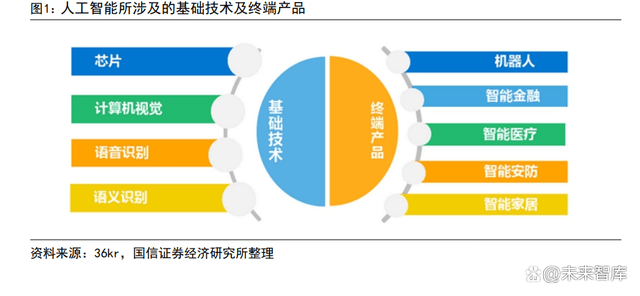
计算机行业2026年投资策略:模型迭代驱动、应用突破与算力国产引领行业发展
GF SECURITIES· 2025-12-12 14:48
Core Insights - The report emphasizes that the computer industry is driven by model iteration, application breakthroughs, and domestic computing power leadership, with a buy rating for the sector [2][4][17]. Industry Overview - The AI infrastructure sector is transitioning from "testing and trial" to "large-scale rollout in 2026" for domestic AI chip replacements, with a narrowing gap between domestic and international leading models [8][17][26]. - The AI application sector is categorized into three types of companies: those with recognized benchmark clients but in early stages, those with long-term trends but uncertain timelines, and those leveraging AI with reachable inflection points [8][17][19]. - The EDA and R&D software sector is seeing rapid improvement in domestic product capabilities, with mergers and acquisitions expected to accelerate due to policy support [8][17][21]. - In the intelligent driving and robotics sector, the report suggests focusing on competitive chip tracks, overseas expansion, and new autonomous driving opportunities, recommending global AMR leader Geek+ [8][18][21]. - The report notes that traditional trust and innovation directions are facing funding delays, while the release of HarmonyOS PC in 2025 is seen as a catalyst for business growth and technological upgrades [8][18][21]. - The energy information sector is expected to benefit from stable capital expenditures and market reforms, although policy implementation timelines need to be monitored [8][18][21]. Key Companies - In the AI infrastructure sector, recommended companies include Cambricon, Inspur, and Unisoc, with attention to Sugon [8][19]. - For AI applications, notable companies are Jingtaikong, Rainbowsoft, and Kingdee International, with additional focus on Hancloud and Guangyun Technology [8][19][21]. - In the intelligent driving and robotics sector, key players include Geek+, Black Sesame Intelligence, and Rui Ming Technology, with recommendations to monitor Desay SV and SOTER [8][19][21]. - In the EDA and R&D software sector, companies like GigaDevice, Gexin Electronics, and BGI are highlighted, with attention to Zhongkong Technology and Haocen Software [8][19][21]. - For trust and innovation, recommended companies include Kingsoft and Softcom, with additional focus on Taiji Co. and China Software International [8][19][21]. - In the energy information sector, notable companies are Guoneng Rixin and Longxin Group, with attention to State Grid Information and South Grid Digital [8][19][22].


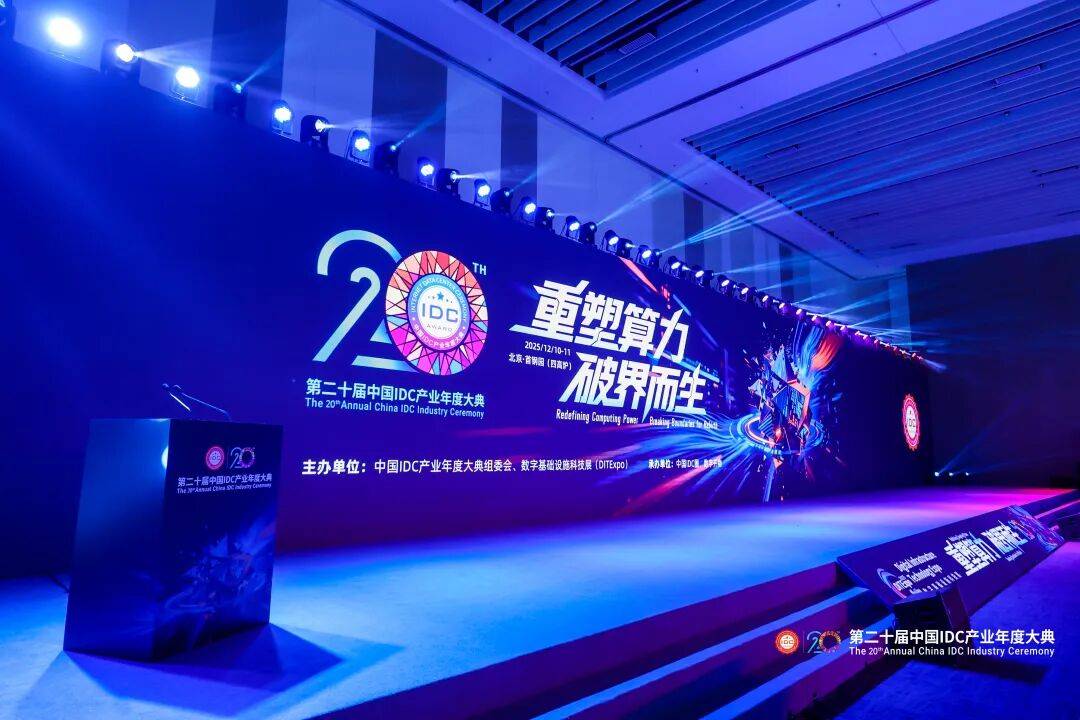
万人齐聚首钢园|第二十届中国IDC产业年度大典盛大召开!
Sou Hu Cai Jing· 2025-12-12 05:03
Core Insights - The 20th China IDC Industry Annual Conference (IDCC2025) and Digital Infrastructure Technology Expo (DITExpo) was held in Beijing, marking a significant milestone in the IDC industry, themed "Reshaping Computing Power, Breaking Boundaries" [1][3] - The IDC industry in China has evolved from a market size of 2.16 billion yuan in 2006 to approaching a trillion yuan, transitioning from basic server hosting to a comprehensive intelligent computing power hub covering AI training, inference, and cloud computing [3][8] - The event gathered thousands of representatives from government, academia, and industry to discuss the future of the computing power industry and its next golden decade [3][8] Event Highlights - The DITExpo was officially launched during the conference, attended by prominent figures from academia and industry, symbolizing a new development stage for China's digital infrastructure industry [7][10] - Huang Chao, CEO of China IDC Circle, highlighted the IDC industry's journey over the past 20 years, noting its growth from hundreds of millions to nearly a trillion yuan, and the impact of national strategies like "New Infrastructure" and "East Data West Computing" [8][10] - The conference featured various keynote speeches and discussions on topics such as AI model inference systems, green computing, and the collaboration between computing power and electricity [12][14][18] Industry Trends and Reports - A report presented at the conference indicated that the demand for intelligent computing power is expected to grow at a compound annual growth rate of 49% over the next three years, with the total scale of data centers in China projected to exceed 25 GW by 2025 [31][33] - The report also emphasized the importance of green computing as a core competitive factor, with new projects increasingly requiring green electricity ratios [33] - The issuance of public REITs by companies like GDS and Runze marks a significant breakthrough in the capital market for the data center industry, paving the way for the securitization of computing power infrastructure [33] Awards and Recognition - The conference included the 2025 China IDC Industry Annual Awards, recognizing outstanding contributions to the development of the computing power industry [34][36] - Awards were given in various categories, including AI+DC innovation practices and green computing centers, showcasing the highest standards of technological innovation in the IDC industry [34][36] Future Outlook - The next decade is anticipated to be a period of rapid development for intelligent computing, with data centers evolving towards large-scale, high-density, and green low-carbon models [44][48] - The industry is expected to focus on deep collaboration between computing power and electricity, as well as the service-oriented and asset-oriented evolution of computing power [48] - The China IDC Circle aims to continue its role as a builder of the digital infrastructure ecosystem, contributing to the development of the digital economy and the construction of a digital China [48]


人工智能概念股悉数走强 狮腾控股(02562)涨6.72% 机构指AI Agent加速落地的趋势依然不变
Xin Lang Cai Jing· 2025-12-12 04:21
Core Viewpoint - The artificial intelligence (AI) concept stocks have shown strong performance, with notable increases in share prices for several companies, indicating a positive market sentiment towards AI technologies [1][2] Group 1: Stock Performance - Lion Group (02562) increased by 6.72% - ZhiZi City Technology (09911) rose by 6.43% - SenseTime-W (00020) gained 5.21% - Weimob Group (02013) saw a rise of 5.13% - GDS Holdings Limited-SW (09698) increased by 2.33% - Fourth Paradigm (06682) rose by 2.38% [1][2] Group 2: Research Insights - CITIC Securities' report highlights the convenience features of Doubao AI phone, showcasing the potential of edge-side agents; however, it also points out the limitations due to various application permissions and interface restrictions, reflecting the current fragmentation in the traditional smartphone ecosystem [1][2] - The report suggests that for AI phones to achieve large-scale adoption, there is a need to redefine the collaboration between AI, applications, and operating systems, indicating potential restructuring of existing ecosystem boundaries and roles [1][2] - China Galaxy Securities notes that while overseas large models face high cost issues in the short term, the trend towards accelerated implementation of AI agents remains unchanged despite the current mismatch in technology maturity and commercialization pace [1][2]
港股商汤-W早盘一度涨超6%
Mei Ri Jing Ji Xin Wen· 2025-12-12 02:35
Group 1 - SenseTime-W (00020.HK) experienced a significant increase in stock price, rising over 6% in early trading and currently up 4.74% at 2.2 HKD per share [1] - The trading volume reached 785 million HKD, indicating strong market interest and activity surrounding the stock [1]
商汤-W早盘涨超6% 大晓机器人将推出机器狗产品 目标明年出货逾千台
Zhi Tong Cai Jing· 2025-12-12 02:25
Core Viewpoint - SenseTime-W (00020) experienced a significant stock price increase, rising over 6% in early trading and currently up 4.74% at HKD 2.2, with a trading volume of HKD 785 million [1] Group 1: Company Developments - Daxiao Robotics announced its official launch on December 18, introducing several globally leading technologies and products [1] - The company will unveil the first domestically open-source and commercially applicable "KAIWU" World Model 3.0 [1] - Daxiao Robotics will also present the world's first ACE technology paradigm, establishing a comprehensive technology system based on visual input, including "environmental collection + world model + embodied base model" [1] Group 2: Strategic Initiatives - Daxiao Robotics operates independently under SenseTime's "1+X" spin-off strategy, focusing on the embodied intelligence sector [1] - The company will launch the Embodied Super Brain Module A1, featuring a pioneering pure visual end-to-end VLA embodied intelligence model with disruptive autonomous navigation capabilities [1] - Strategic partnerships will be formed with leading domestic embodied intelligence companies to rapidly deploy robotic dogs in industrial scenarios such as security and inspection, while continuously expanding application scenarios to drive large-scale commercial implementation [1] Group 3: Market Goals - The Embodied Super Brain Module A1 will be commercially promoted on a large scale next year, initially focusing on applications in cultural tourism and smart city scenarios [1] - The target for next year is to deliver over 1,000 units of the robotic dog [1]
港股异动 | 商汤-W(00020)早盘涨超6% 大晓机器人将推出机器狗产品 目标明年出货逾千台
智通财经网· 2025-12-12 02:23
Core Viewpoint - SenseTime-W (00020) experienced a significant stock price increase, rising over 6% in early trading and currently trading at 2.2 HKD with a transaction volume of 785 million HKD, driven by the announcement of major technological advancements by its subsidiary, Daxiao Robotics [1] Group 1: Company Developments - Daxiao Robotics officially announced that it will unveil multiple globally leading technologies and products on December 18, including the first domestic open-source and commercially applicable "KAIWU" World Model 3.0 [1] - The company will introduce the world's first ACE technology paradigm, which constructs a comprehensive technology system based on vision, integrating "environmental collection + world model + embodied base model" [1] - Daxiao Robotics operates independently under SenseTime's "1+X" spin-off strategy, focusing on the embodied intelligence sector [1] Group 2: Product Launch and Strategic Partnerships - Daxiao Robotics will also launch the Embodied Super Brain Module A1, featuring a pioneering pure visual end-to-end VLA embodied intelligence model with disruptive autonomous navigation capabilities [1] - The company plans to establish strategic partnerships with leading domestic embodied intelligence firms to rapidly deploy robotic dogs in industrial scenarios such as security and inspection, continuously expanding usage scenarios to promote large-scale commercial implementation [1] - The robotic dog is expected to have spatial autonomy and aims for large-scale commercial promotion next year, with initial applications in cultural tourism and smart city scenarios, targeting over 1,000 units to be shipped next year [1]
智通港股通持股解析|12月12日


智通财经网· 2025-12-12 00:33
Core Insights - The top three companies by Hong Kong Stock Connect shareholding ratios are China Telecom (72.50%), Power Assets Holdings (69.68%), and GCL-Poly Energy Holdings (69.67%) [1][2] - Xiaomi Group-W, Tracker Fund of Hong Kong, and China Merchants Bank saw the largest increases in shareholding amounts over the last five trading days, with increases of +4.913 billion, +2.976 billion, and +1.548 billion respectively [1][2] - The companies with the largest decreases in shareholding amounts during the same period include WanGuo Gold Group (-3.816 billion), Tencent Holdings (-2.649 billion), and Alibaba Group-W (-1.421 billion) [1][2] Shareholding Ratios - The latest shareholding ratios for the top 20 companies in Hong Kong Stock Connect are led by: - China Telecom (100.63 billion shares, 72.50%) - Power Assets Holdings (3.72 billion shares, 69.68%) - GCL-Poly Energy Holdings (2.82 billion shares, 69.67%) [1] Recent Increases in Shareholding - The top 10 companies with the largest increases in shareholding amounts over the last five trading days are: - Xiaomi Group-W: +4.913 billion (11.647 million shares) - Tracker Fund of Hong Kong: +2.976 billion (11.551 million shares) - China Merchants Bank: +1.548 billion (3.028 million shares) [1][2] Recent Decreases in Shareholding - The top 10 companies with the largest decreases in shareholding amounts over the last five trading days are: - WanGuo Gold Group: -3.816 billion (-49.945 million shares) - Tencent Holdings: -2.649 billion (-4.403 million shares) - Alibaba Group-W: -1.421 billion (-9.435 million shares) [1][2]
商汤AI论坛探索未来智能范式,视觉AI迈入二次增长曲线
Zheng Quan Shi Bao Wang· 2025-12-11 14:03
Group 1 - The "2025 SenseTime Technology AI Forum" was successfully held, focusing on key topics such as breakthroughs in multimodal large models, embodied intelligence, and industrial intelligence upgrades [1] - SenseTime's CEO Xu Li emphasized that the past decade has seen rapid changes in AI cognition, marking a significant technological wave that is reshaping work across industries [1] - SenseTime aims to leverage Hong Kong's favorable innovation and technology environment to connect national AI strategies with global innovation networks, serving both local and international markets [1] Group 2 - SenseTime's co-founder and Chief Scientist Lin Dahua highlighted challenges in AI industrialization, including reliability, professional data, spatial understanding, and cost [1] - SenseTime is innovating through foundational technologies such as native multimodal fusion architecture and high-efficiency reasoning systems to enhance spatial cognition and real-time interaction capabilities [1] - The forum also discussed how AI can drive deep paradigm shifts in enterprises, with SenseTime's Asia-Pacific business serving nearly 500 clients, 70% of whom maintain long-term partnerships [2] Group 3 - Wang Xiaogang, co-founder of SenseTime and Chairman of Daxiao Robotics, announced the upcoming launch of Daxiao Robotics on December 18, introducing leading technologies and the first domestic open-source "KAIWU" world model 3.0 [2] - The forum emphasized the integration of "model-hardware-scene" ecosystems to promote breakthroughs in embodied intelligence across various applications, including industrial manufacturing and home companionship [2] - SenseTime's Visual AI 2.0, empowered by large language models, transforms real-time video analysis into actionable solutions, marking a new growth phase for visual AI [2]