GEELY AUTO(00175)

Search documents
新款小米SU7涨价增配,4月上市!宝马集团2025年全球交付246.3万台!小鹏、比亚迪多款新车密集上市!丨一周大事件
电动车公社· 2026-01-11 16:05
Core Viewpoint - The article highlights the recent developments in the electric vehicle (EV) market, focusing on new model launches, company collaborations, and government initiatives to promote green consumption in the automotive sector [2][3][111]. New Car Launches - The new XPeng P7+ was launched with a price range of 186,800 to 198,800 yuan, offering both pure electric and extended range versions [3][11]. - The XPeng G6 was introduced at a price of 176,800 to 186,800 yuan, maintaining the design of its predecessor [13][20]. - The XPeng G7 extended range version is priced between 195,800 and 205,800 yuan, featuring upgraded technology and design [21][30]. - The XPeng G9 was launched with a price range of 248,800 to 278,800 yuan, showcasing new color options and advanced features [32][39]. - BYD's new Qin PLUS DM-i is priced at 79,800 to 99,800 yuan, maintaining its design while enhancing battery capacity [42][57]. - The BYD Qin L DM-i was launched at 96,800 to 126,800 yuan, featuring improved battery specifications [48][55]. - The BYD Song Pro DM-i was introduced at a price of 99,800 to 127,800 yuan, focusing on battery upgrades [59][65]. - The new Xiaomi SU7 is available for pre-sale at 229,900 to 309,900 yuan, with significant upgrades in technology and design [66][75]. - The Geely Galaxy V900 is set for pre-sale at 319,800 to 389,800 yuan, featuring a spacious interior and advanced powertrain [76][86]. Company Dynamics - BAIC Arcfox has partnered with Sinopec Kunlun Network Electric to enhance charging network services, with the first batch of charging stations already operational in Beijing [87][91]. - BMW Group announced a target of delivering 2,463,715 vehicles globally by 2025, with a focus on increasing electric vehicle sales [92][93]. - Porsche and Bentley have announced recalls for specific models due to safety concerns, highlighting ongoing quality control measures in the luxury automotive sector [97][100]. - NIO celebrated the production of its one millionth vehicle, marking a significant milestone in its growth trajectory [107][110]. Government Initiatives - The Ministry of Commerce and nine other departments have issued a notice to promote green consumption in the automotive sector, supporting the purchase of new energy vehicles [111][114]. - The initiative aims to strengthen the automotive industry chain and explore potential in the used car market, car rentals, and other related sectors [112][114].






汽车及汽车零部件行业周报:2026年“两新”政策落地,有望带动需求稳步向上-20260111
SINOLINK SECURITIES· 2026-01-11 15:10
Group 1 - The investment rating for the automotive industry is positive, with expectations for steady demand growth driven by the implementation of the "Two New" policy in 2026 [1][12][14] - The core viewpoint emphasizes that the subsidy policy has shifted from fixed amounts to a percentage of the vehicle price, which is expected to benefit high-end vehicles while putting pressure on low-priced cars [1][14] - The report anticipates a marginal recovery in sales growth in Q1 2026, with an upward revision of the annual domestic sales growth forecast to -2% [1][14][16] Group 2 - The report highlights opportunities in themes such as smart technology and overseas expansion, with passenger car exports maintaining a growth rate of over 20% year-on-year [2][17] - Key companies to watch include BYD, Geely, and Li Auto in the automotive sector, and Horizon Robotics and Top Group in the smart technology and robotics sectors [2][22] - The report notes that the export volume of passenger cars is expected to maintain double-digit growth in 2026, driven by recovering demand in markets like Russia and the increasing penetration of fuel and new energy vehicles [2][17] Group 3 - The automotive market saw a wholesale sales volume of 1.457 million units in the last week of December 2025, with a year-on-year increase of 5%, while new energy vehicles accounted for 772,000 units, up 22% year-on-year [4][31] - In December 2025, the total wholesale sales volume was 2.759 million units, down 10% year-on-year, with new energy vehicles at 1.554 million units, showing a 3% increase [4][31] - The retail sales data for December 2025 indicated a total of 2.296 million units sold, down 13% year-on-year, while new energy vehicles saw a 7% increase in retail sales [4][31][46]

港股公告掘金 | 先声药业拟分拆先声再明的H股在联交所主板独立上市
Zhi Tong Cai Jing· 2026-01-11 12:22
Major Events - CATL (03750) plans to issue an additional 34.8584 million shares [1] - MINIMAX-WP (00100) fully exercised its over-allotment option involving a total of 4.3796 million shares [1] - MIRXES-B (02629) established a strategic partnership with N Health, and its HELICORapid and FITRapid home testing kits received regulatory approval [1] - LFG Investment Holdings (03938) was acquired by Chen Shaoyang, who purchased approximately 61.43% of shares at a discount of about 59.46% through a cash offer, with resumption of trading on January 12 [1] - Xiansheng Pharmaceutical (02096) plans to spin off its H-shares for independent listing on the main board of the Hong Kong Stock Exchange [1] - OmniVision Technologies (00501) saw its public offering in Hong Kong oversubscribed by 9.28 times, with a share price of HKD 104.8 [1] - China Nonferrous Mining (01258) released its production guidance for 2026, expecting a total copper output of approximately 484,000 tons [1] - China Rare Earth Holdings (03788) reported a 53.1% increase in JORC ore reserves to 2.62 million ounces, with JORC gold resources rising to 5.54 million ounces [1] - Black Sesame Intelligence (02533) plans to issue a total of 30.1319 million subscription shares, raising approximately HKD 568 million [1] - Shanghai Pharmaceuticals (02607) received approval for the production of bromhexine oral solution [1] - Beijing Energy International (00686) signed an EPC contract for a 100 MW wind power project in Heilongjiang Province [1] - Standard Chartered Group (02888) plans to issue SGD 750 million fixed-rate reset perpetual subordinated convertible securities [1] Share Buybacks/Reductions - Geely Automobile (00175) repurchased 1.547 million shares for HKD 26.6229 million on January 9 [2] - Sunny Optical Technology (02382) repurchased 840,000 shares for HKD 53.9894 million on January 9 [2] - Xiaomi Group-W (01810) repurchased 4 million shares for HKD 151 million on January 9 [2] Operating Performance - China Jinmao (00817) achieved a cumulative contracted sales amount of RMB 113.5 billion for 2025, a year-on-year increase of 15.52% [2] - Jiumaojiu (09922) reported stable performance for its main brands in the fourth quarter [2] - CIFI Holdings Group (00884) recorded a cumulative contract sales amount of approximately RMB 16.1 billion for 2025 [2] - R&F Properties (02777) reported total sales revenue of approximately RMB 14.21 billion for 2025, a year-on-year increase of 26.54% [2] - Zhongliang Holdings (02772) reported a cumulative contract sales amount of approximately RMB 12.07 billion for 2025, a year-on-year decrease of 32.68% [2] - Shui On Land (00272) achieved a cumulative contract property sales amount of RMB 7.916 billion for 2025 [2] Additional Performance Metrics - Greenland Hong Kong (00337) reported contract sales of approximately RMB 7.214 billion for 2025, a year-on-year decrease of 21.66% [3] - Yuzhou Group (01628) achieved a cumulative sales amount of RMB 6.727 billion for 2025 [3] - New World Development (01030) reported contract sales of approximately RMB 1.354 billion in December [3] - China Shipbuilding Defense (00317) expects a year-on-year increase of 149.61% to 196.88% in net profit attributable to shareholders for 2025 [3] - Longyuan Power (00916) completed a cumulative power generation of 76.4694 million MWh for 2025, a year-on-year increase of 1.22% [3] - Sunny Optical Technology (02382) reported a December shipment of 95.592 million mobile phone lenses, a year-on-year decrease of 8.9% [3] - COFCO Joycome (01610) reported a December pig output of 567,000 heads, a month-on-month increase of 1.43% [3] - Dekang Agriculture (02419) sold 1.1097 million pigs in December, generating sales revenue of RMB 1.664 billion [3] - Hengding Industrial (01393) reported a coal output of 5.415 million tons for 2025, a year-on-year increase of 31% [3] - Orient Overseas International (00316) reported a 17.2% decrease in quarterly shipping revenue compared to the same period last year, with total cargo volume up 0.8% and carrying capacity up 4.5% [3]
吉利汽车集团在杭州获L3级自动驾驶道路测试牌照
Zhong Guo Qing Nian Bao· 2026-01-11 08:34
Core Viewpoint - Geely Auto Group has obtained a Level 3 (L3) autonomous driving road testing license in Hangzhou, marking a significant step towards the commercialization of advanced autonomous driving technology [2] Group 1: License Details - The license was issued by the Hangzhou Municipal Bureau of Economy and Information Technology, the Public Security Bureau, and the Transportation Bureau, allowing the Zeekr 9X model equipped with the Qianli Haohan H9 solution to conduct advanced autonomous driving tests in designated areas of Hangzhou [2] - The testing area covers 9,224 square kilometers and includes over 1,500 kilometers of dual-direction expressways, making it one of the largest L3 autonomous driving testing licenses in China in terms of area and mileage [2] Group 2: Data Integration and Testing - The test vehicles will connect to Hangzhou's traffic data system, which includes over 7,000 intersections, providing data support for the optimization of autonomous driving algorithms [2] - Geely plans to build a comprehensive autonomous driving corpus through large-scale real-world testing, covering various complex scenarios [2] Group 3: Definition and Importance of L3 Autonomous Driving - Level 3 autonomous driving is defined as "conditional automation," where the system can perform all driving tasks under specific conditions but requires the driver to take over when requested [2] - Obtaining the road testing license is a crucial step for automakers in advancing high-level autonomous driving technology from research and development to commercial application, helping to accumulate data and validate system reliability and safety in real traffic environments [2]
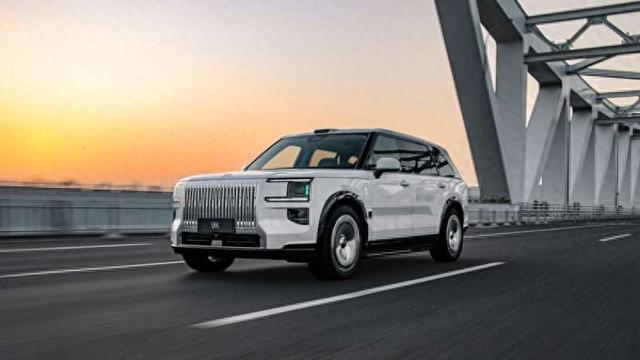
稳固国家能源安全的“液态阳光”,醇氢动力或改写运输行业!
第一商用车网· 2026-01-10 13:23
Core Viewpoint - The article emphasizes the strategic importance of methanol as a clean, low-carbon energy source, transitioning from a supplementary to a primary energy role in China's energy landscape, particularly in achieving energy security and supporting the "dual carbon" goals [2][4]. Group 1: Methanol as a Strategic Energy Source - Methanol is recognized as a key player in the new energy system, with its production methods utilizing diverse raw materials, including fossil fuels and carbon dioxide, enabling the creation of "zero-carbon methanol" [2][4]. - The forum highlighted a collective initiative to promote liquid renewable energy development, underscoring methanol's critical position in future energy systems [2][4]. Group 2: Advantages of Methanol in Transportation - Methanol's characteristics, such as high energy density and quick refueling capabilities, make it particularly suitable for commercial vehicles, outperforming pure electric vehicles in long-haul and low-temperature scenarios [5][7]. - The methanol-powered vehicles demonstrate significant environmental benefits, with PM pollutant emissions reduced by 98% and fuel costs lowered by 32%-52% compared to diesel [7][8]. Group 3: Economic Viability and Cost Efficiency - Methanol's production and application across the entire supply chain exhibit notable cost advantages, positioning it as an economic engine for large-scale renewable energy adoption [10][12]. - The potential for utilizing a significant portion of China's annual carbon dioxide emissions for methanol production presents a substantial opportunity for resource utilization [10][12]. Group 4: Future Prospects and Industry Growth - The establishment of a robust methanol infrastructure, alongside ongoing technological advancements and expanding application scenarios, is expected to create a trillion-dollar green methanol industry ecosystem [13]. - The successful hosting of the second Green Methanol Energy Industry Development Forum signifies a pivotal moment for the industry, aligning with national strategies for energy independence and zero-carbon futures [13].
消息称吉利正考虑进入美国市场,极氪和领克等品牌或是首选;北汽集团启动L3车型规模化上路通行试点运营,二季度向个人开放丨汽车交通日报
创业邦· 2026-01-10 10:38
Group 1 - Geely is considering expanding into the US market, with brands like Zeekr and Lynk & Co as potential candidates for entry [2] - Geely's global communications director indicated that an announcement regarding the US expansion could come within the next 24 to 36 months, with the main concern being the timing and locations for entry [2] - Geely has not yet sought a production base in the US but suggested that Volvo's assembly plant in South Carolina could be an ideal location [2] Group 2 - Lei Jun stated that Tesla is not invincible, highlighting that the SU7 is the only electric sedan to have beaten the Model 3 in sales [2] - Lei Jun expressed pride in the SU7's product quality and performance, which contributed to its sales success [2] - He also mentioned that the YU7, launched six months ago, has a sales gap compared to the Model Y, but he believes it will compete effectively in the future [2] Group 3 - BAIC Group has launched a pilot operation for L3 vehicles, with plans to gradually open it to individual users by the second quarter of 2026 [2] - The pilot will initially focus on B-end operations to ensure safety, with the first vehicles set to operate in designated areas of major highways [2] Group 4 - The new generation of the SU7 will be equipped with Xiaomi's Super Electric Motor V6s Plus, which will enhance production efficiency and shorten delivery times [2] - The motor will be supplied by a collaboration between "United Microelectronics" and "Huichuan," with plans to introduce self-developed motors in the future [2]



汽车“自主五强”的2025年:增长之下现战略分野
经济观察报· 2026-01-10 08:22
Core Viewpoint - The Chinese automotive market is entering a critical phase in 2025, with domestic brands collectively capturing nearly 70% of the passenger car market share, driven by the rise of new energy vehicles and international expansion [2][4]. Group 1: Market Dynamics - The "self-owned five strong" brands, including BYD, Geely, Chery, Changan, and Great Wall, have established a stable market presence, with total sales of 14.67 million units, accounting for over half of the overall passenger car market [2][4]. - BYD leads the global new energy vehicle sales with 4.6024 million units sold in 2025, marking a 7.73% year-on-year increase, while its pure electric vehicle sales reached approximately 2.257 million units, surpassing Tesla [4][5]. - Geely's total sales exceeded 3.02 million units in 2025, a 39% increase, with new energy vehicle sales reaching 1.6878 million units, reflecting a 90% growth [5][6]. Group 2: Strategic Developments - Geely has initiated a significant restructuring by merging with Zeekr Technology to enhance operational efficiency and resource integration, aiming to save billions in R&D costs annually [9][10]. - Chery has restructured its brand architecture to improve domestic market efficiency, establishing a new business group to streamline operations and enhance competitiveness [9][10]. - Changan has launched a 6 billion yuan capital increase plan to support the development of new energy vehicles and global R&D centers, reinforcing its strategic alignment with major shareholders [10][11]. Group 3: Technological Advancements - The competition among Chinese automakers has evolved from individual technological breakthroughs to a more systemic confrontation, with companies like BYD and Geely focusing on comprehensive technology integration and smart driving solutions [11][12]. - Great Wall has introduced a next-generation intelligent super platform that supports various powertrains, emphasizing its advancements in smart cockpit and driving technologies [12].



对话千里科技印奇:抓住 “想做、能做、可做” 的闪现时刻,决胜智驾淘汰赛
晚点Auto· 2026-01-10 07:30
Core Viewpoint - The article discusses the competitive landscape of intelligent driving in China, highlighting the potential for latecomers to succeed by leveraging advanced technology and strategic partnerships, as exemplified by Geely and Qianli's collaboration on the G-ASD system [3][6][11]. Group 1: G-ASD System Overview - The G-ASD system, developed by Geely and Qianli, utilizes a state-of-the-art end-to-end model architecture, enabling full-range intelligent driving capabilities without relying on high-precision maps [4][10]. - The system is powered by 23.5 EFLOPS of computing power and vast amounts of real driving data, allowing for rapid iteration and self-evolution through a "world behavior model" [4][10]. Group 2: Strategic Insights - Geely's CEO emphasizes the integration of new energy and intelligence as a unified goal, aiming to establish Geely's intelligent driving as a benchmark in China and compete globally [6][11]. - Qianli's competitive edge lies in its lack of historical technical burdens and a composite team with expertise from various sectors, enhancing its ability to innovate and execute [7][8]. Group 3: Market Positioning and Future Outlook - The article predicts that only three to four leading intelligent driving suppliers will emerge globally, with Qianli and Geely's collaboration positioned to capitalize on economies of scale and technological advancements [11][24]. - Qianli aims to focus on a "big customer strategy," seeking deep partnerships with a select few major automotive clients to build a robust competitive barrier [24][25].

消息称吉利正考虑进入美国市场,极氪和领克等品牌或是首选
Xin Lang Cai Jing· 2026-01-10 02:39
Core Viewpoint - Geely Holding is considering expansion into the U.S. market, with brands such as Zeekr and Lynk & Co. being potential candidates for entry [1][2] Group 1: Expansion Plans - Geely is likely to announce its U.S. expansion plans within the next 24 to 36 months [1][2] - The main challenges identified include determining the timing of entry into the U.S. and selecting specific regions for expansion [1][2] Group 2: Production Considerations - Geely has not yet sought production bases in the U.S. but has indicated that Volvo's assembly plant in South Carolina could be an ideal location [1][2]
汽车早报|吉利控股集团年销量首次突破400万辆 宝马集团2025年交付量同比增长0.5%
Xin Lang Cai Jing· 2026-01-10 00:41
Group 1: Industry Developments - The State Administration for Market Regulation will accelerate the development of national standards for the new energy vehicle, lithium battery, and photovoltaic industries [1] - The China Passenger Car Association forecasts that domestic retail sales of new energy passenger vehicles will reach 12.809 million units in 2025, a year-on-year increase of 17.6% [2] Group 2: Company Performance - Geely Holding Group's total sales for 2025 are projected to exceed 4 million units, reaching 4,116,321 vehicles, a 26% year-on-year increase, with new energy vehicle sales at 2,293,099 units, up 58% [3] - Honda's total vehicle sales in China for 2025 are expected to be 645,345 units, a decrease of 24.28% from the previous year [4] - BMW Group anticipates delivering 2,463,715 vehicles in 2025, a 0.5% increase year-on-year, with electric vehicle deliveries reaching 642,087 units, an 8.3% increase [7] - BAIC Group aims for a total sales volume of 1.752 million vehicles in 2025, with a 25% year-on-year growth in its self-owned brands [8] - Dongfeng Motor's total vehicle sales for 2025 are projected at 119,016 units, a decline of 23.22% year-on-year [10] Group 3: Product Launches and Innovations - The Avita 12 will launch a new version offering three electric drive options, with upgrades in intelligence and performance [6] - Zhao Changjiang predicts that the new flagship MPV, the Zhijie V9, will have no competitors for at least three years [5]