
GEELY AUTO(00175)

Search documents
【环时深度】2026 CES展,中国AI企业拉高国际能见度
Huan Qiu Shi Bao· 2026-01-09 22:37
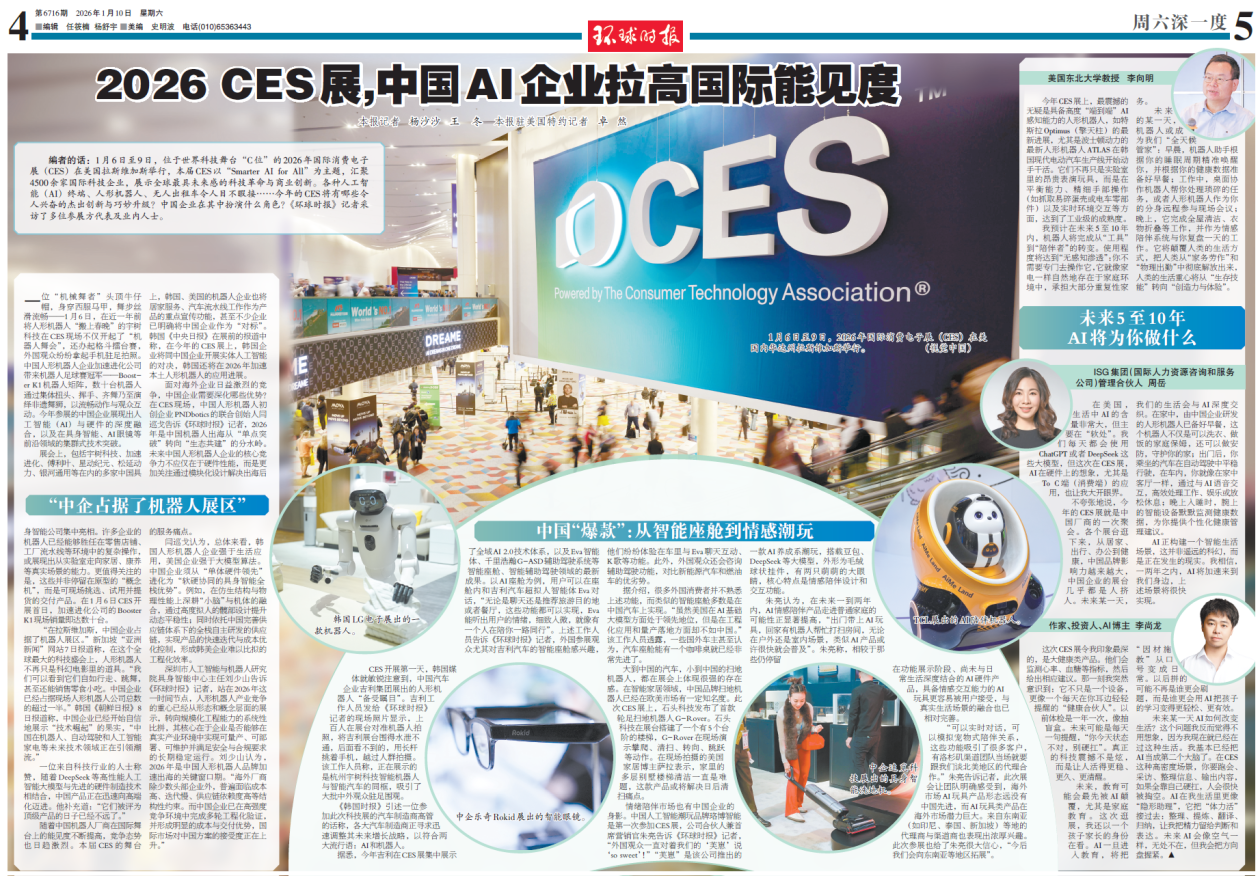
Group 1 - The 2026 International Consumer Electronics Show (CES) in Las Vegas showcased over 4,500 international tech companies, focusing on the theme "Smarter AI for All" [2] - Chinese companies demonstrated significant advancements in humanoid robots and AI integration, with many products ready for immediate purchase and use [5][10] - The presence of Chinese firms in the humanoid robot sector exceeded half of the total exhibitors, indicating a strong competitive stance against Korean and American companies [5][11] Group 2 - Chinese humanoid robot companies are evolving from hardware-centric approaches to a focus on modular design and service solutions for international markets [7] - The competition in the humanoid robot industry is shifting towards the ability to produce scalable, deployable, and maintainable systems that meet safety and compliance standards [9] - Chinese brands are increasingly recognized for their engineering efficiency and cost advantages, enhancing their acceptance in international markets [9] Group 3 - The automotive sector, represented by companies like Geely, highlighted the integration of AI in smart cabins and autonomous driving systems, attracting significant attention from international audiences [11][12] - The CES showcased a variety of AI products, from smart home devices to emotional companion toys, indicating a growing market for AI in everyday life [12][15] - The potential for AI to transform daily living is emphasized, with expectations for AI to become an integral part of household management and personal assistance in the near future [18][21]



传统车企分化、新势力加速洗牌 打响生态战 2025车企生存启示录
Zhong Guo Jing Ying Bao· 2026-01-09 20:03
Core Insights - The Chinese automotive market in 2025 shows a stable total volume with a differentiated structure, indicating a new competitive norm where traditional automakers maintain dominance while new players face varied growth trajectories [3][4][5] Traditional Automakers - SAIC Group sold 4.507 million vehicles in 2025, a 12.3% increase year-on-year, with a retail volume of 4.67 million, maintaining its industry leadership [3] - Geely Automobile achieved sales of over 3.02 million vehicles in 2025, exceeding its targets and setting a 2026 goal of 3.45 million vehicles, reflecting strong growth momentum [4] - Chery Group sold 2.806 million vehicles, including 1.344 million exports, leading in Chinese passenger car exports for 23 consecutive years, with its new energy segment growing by 54.9% year-on-year [4] New Energy Vehicle Players - Leap Motor emerged as a significant player with 596,600 deliveries in 2025, marking a 103% year-on-year increase and becoming the top seller among new forces [2][4] - NIO is gradually recovering from a downturn, with a milestone of producing its one-millionth vehicle expected in early 2026, despite reporting a cumulative loss of nearly 15.7 billion yuan in the first three quarters of 2025 [2][5] - The competitive landscape for new energy vehicles is marked by a stark contrast, with some players struggling while others, like Lantu and Avita, show steady growth backed by traditional automakers [4][5] Strategic Shifts - The industry is shifting from product-centric competition to a focus on ecosystem collaboration and technological innovation, as companies aim to build resilient and innovative ecosystems [5][7] - SAIC Group emphasizes a dual strategy of technological innovation and ecosystem cooperation, launching over 20 competitive new products and collaborating with partners like Huawei and OPPO [6][8] - Companies are setting ambitious goals for 2026, with a focus on advanced technologies such as solid-state batteries, AI, and global expansion, indicating a move towards a more integrated and strategic approach to competition [8][9]



质韧于内 蜕变向新 “一个吉利”的强势跨越
Bei Jing Ri Bao Ke Hu Duan· 2026-01-09 15:31
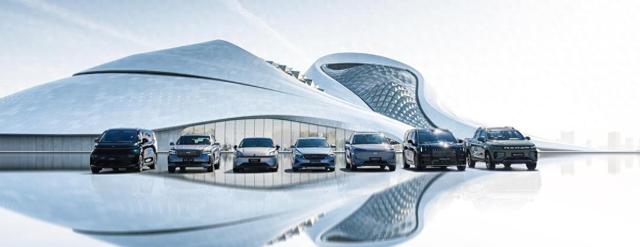
Core Viewpoint - Geely is celebrating its 40th anniversary in 2026, marking its evolution from a small parts manufacturer to a global automotive giant, with a focus on smart electrification and high-quality development in the face of industry transformation and competition [1][18]. Group 1: Sales and Growth - In 2025, Geely's annual sales surpassed 4.11 million units, with a 58% increase in new energy vehicle sales, achieving a penetration rate of 56% [1]. - The company has maintained five consecutive years of rapid growth, indicating a dual breakthrough in scale and quality [1]. Group 2: Strategic Initiatives - Geely's 2024 "Taizhou Declaration" outlines five strategic pillars to guide its development, emphasizing internal integration and operational efficiency [4]. - The company aims to enhance its core competitiveness by streamlining operations, clarifying brand positioning, and reducing redundant investments [4]. Group 3: Technological Advancements - Geely has launched the "Smart Car Full-Field AI" technology system, integrating various AI-driven features into its vehicles, including the FlymeAuto smart cockpit and advanced driver assistance systems [8][10]. - The company has achieved a 47.26% thermal efficiency in its hybrid engine through AI simulation, significantly reducing the R&D cycle by 30% [5]. Group 4: Brand Positioning - Geely has established a clear brand matrix with three main brands targeting mainstream, mid-to-high-end, and luxury segments, successfully elevating its brand value [7]. - The launch of the "9 series" products has positioned Geely in the high-end market, with the Zeekr 9X SUV priced above 500,000 yuan, demonstrating strong market demand [7]. Group 5: Global Expansion - Geely is pursuing a global strategy that emphasizes collaboration and resource integration, as seen in its joint venture with Renault in Brazil to promote new energy technologies [16]. - The company has shifted from a product-focused export model to an ecosystem-based approach, integrating technology, supply chains, and branding for international markets [17]. Group 6: Safety and Innovation - Geely has established a global safety center, launching the "Full-Field Safety 2.0" system that expands safety considerations to a comprehensive ecosystem perspective [13]. - The company is positioning itself as a leader in automotive safety technology, enhancing its global influence in this area [13].
吉利汽车(00175.HK)连续5日回购,累计斥资2.21亿港元
Zheng Quan Shi Bao Wang· 2026-01-09 14:41
Core Viewpoint - Geely Automobile has been actively repurchasing its shares for five consecutive days, with a total expenditure of HKD 221 million, indicating a strategic move to support its stock price amidst recent declines [1] Summary by Categories Share Buyback Details - On January 9, Geely repurchased 1.547 million shares at prices ranging from HKD 17.170 to HKD 17.250, totaling HKD 26.62 million [1] - Since January 5, the company has repurchased a total of 12.703 million shares, amounting to HKD 221 million [1] - During this period, the stock price has decreased by 5.55% [1] Daily Buyback Breakdown - January 9: 154.70 thousand shares, highest price HKD 17.250, lowest price HKD 17.170, total amount HKD 26.62 million [1] - January 8: 392.50 thousand shares, highest price HKD 17.380, lowest price HKD 17.170, total amount HKD 67.62 million [1] - January 7: 338.80 thousand shares, highest price HKD 17.650, lowest price HKD 17.380, total amount HKD 59.16 million [1] - January 6: 42.30 thousand shares, highest price HKD 17.810, lowest price HKD 17.570, total amount HKD 0.75 million [1] - January 5: 342.00 thousand shares, highest price HKD 17.900, lowest price HKD 17.520, total amount HKD 60.31 million [1]
固态电池供应商备战2027:目标定好了,路线还在争
Jing Ji Guan Cha Wang· 2026-01-09 12:33
Core Insights - The solid-state battery industry is experiencing renewed interest from investors due to clear profitability and order visibility in the supply chain, with a significant focus on achieving mass production by 2027 [2][3][6] - Major automotive companies are targeting 2027 for the application of solid-state batteries in vehicles, with many planning to complete product development or testing by 2026 [4][5] Industry Developments - Companies like Tian Shi Ke Feng have begun to engage with potential investors after overcoming initial funding challenges, with plans to expand production capacity significantly in 2026 [2] - The Ministry of Industry and Information Technology has identified solid-state batteries as a key area for development, aiming to establish 3-5 leading companies by 2027 [3] Technical Challenges - The path to mass production of solid-state batteries is fraught with challenges, including material technology discrepancies and shortages in core equipment [6][8] - The industry is divided on material technology routes, with significant competition between oxide and sulfide electrolytes, each having distinct advantages and challenges [10][12] Material Innovations - Solid-state batteries are recognized for their high energy density and intrinsic safety, making them suitable for various applications, although their cost-effectiveness in electric vehicles remains a concern [7][8] - The development of silicon-carbon and lithium metal anodes is ongoing, with companies reporting progress in small-scale trials [9][10] Equipment and Production - The lack of mature mass production equipment poses a significant barrier, with many companies resorting to self-developed solutions to meet production demands [14][19] - The production process for solid-state batteries requires high precision and specialized equipment, which increases costs and complicates the manufacturing process [20][21] Market Dynamics - The solid-state battery supply chain is characterized by a collaborative approach among suppliers and manufacturers, with a focus on meeting evolving technical requirements from cell manufacturers [23][24] - The competitive landscape is marked by a "race" among cell manufacturers to explore various material suppliers, emphasizing the need for continuous innovation and adaptation [24]





小米汽车销量创新高,华为鸿蒙月销逼近9万,12月国产新能源百花齐放
Xin Lang Cai Jing· 2026-01-09 11:54
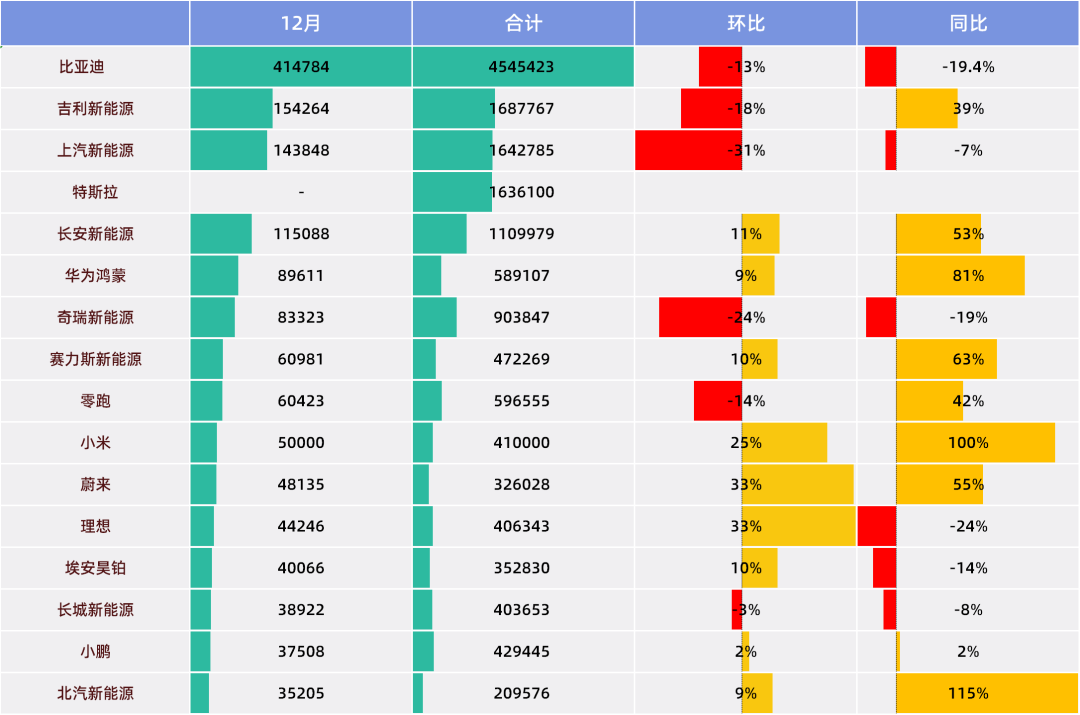
Core Insights - BYD's sales surged from 426,000 units in 2020 to 4.545 million units in 2025, achieving a compound annual growth rate of 60% [1] - Despite rapid growth, BYD faced intense competition from other automakers and did not meet its performance targets in 2025 [1] - The Chinese automotive market is undergoing significant changes, with many companies preparing for global expansion [1] Sales Performance - In December, BYD sold 414,784 units, a decrease of 13% month-over-month and 19.4% year-over-year [3] - Among 15 Chinese automakers, only five achieved both month-over-month and year-over-year sales growth [4] - The average sales volume dropped to 94,427 units in December, primarily due to declines in the first and second-tier companies [4] Market Dynamics - The Chinese government continues to support the automotive market with subsidies exceeding 1.1 billion yuan [2] - The competition is intensifying, with several brands achieving historical sales highs, particularly in the third tier [6] - The central economic work conference emphasized the importance of domestic demand, indicating ongoing support for the automotive sector [7] Company-Specific Developments - Only five out of 14 automakers met their sales targets for 2025, with companies like Li Auto and Aion falling short [8] - BYD's electric vehicle sales reached 2.2567 million units, surpassing Tesla's 1.636 million units for the first time [11] - The export volume of Chinese automobiles is expected to exceed 7 million units in 2025, with BYD emerging as a key player [14] Technological Advancements - The introduction of L3 autonomous driving technology is gaining momentum, with several companies, including BYD and Huawei, conducting road tests [17][18] - The competition for L3 autonomous driving capabilities is expected to intensify in 2026 [18] Brand Strategies - Huawei's HarmonyOS ecosystem has expanded, contributing to record sales for its vehicles [19] - Xiaomi's sales reached over 500,000 units in 2025, but the company faced a public relations crisis that may impact future products [21][23] - NIO and Xpeng have shifted to lower price segments to maintain competitiveness, with NIO achieving a record monthly sales of 48,135 units in December [24][27] Future Outlook - The automotive industry is expected to continue evolving rapidly, with companies focusing on both domestic and international markets [49] - The competitive landscape is shifting, with traditional automakers adapting to new market realities and consumer preferences [49]


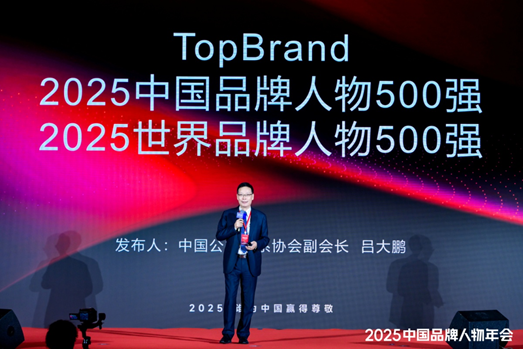
《TopBrand 2025中国品牌人物500强》榜单发布
Xin Lang Cai Jing· 2026-01-09 10:57
Group 1 - The 2025 China Brand Person Annual Conference will be held from December 28 to 30 in Shenzhen, focusing on the theme "Who Earns Respect for China" [1][10] - The event will include a series of activities such as an opening ceremony, main forum, honor ceremony, and closed-door discussions to review the history of Chinese brand development and explore new trends and opportunities in brand building [1][10] Group 2 - The "Top Brand 2025 China Brand Person 500" list was released by Lv Dapeng, Vice President of the China Public Relations Association, highlighting the overall characteristics and industry trends of the listed individuals [10][12] - This list has been publicly released for the seventh consecutive year, continuously recording and promoting the growth and influence of Chinese brand figures [10][12] Group 3 - The top three individuals in the 2025 China Brand Person 500 are Ren Zhengfei, Liu Qiangdong, and Yu Chengdong, with Dong Mingzhu, He Xiaopeng, Li Shufu, Wang Chuanfu, Jack Ma, Liang Wenfeng, and Wang Ning following in positions 4 to 10 [3][12] - The selection process involved analyzing over 5,000 influential brand figures based on criteria such as industry authority, social influence, sense of social responsibility, public image, and attention [3][12]



吉利汽车(00175.HK)1月9日耗资2662.3万港元回购154.7万股
Ge Long Hui· 2026-01-09 09:36
相关事件 吉利汽车(00175.HK)1月9日耗资2662.3万港元回购154.7万股 吉利汽车(00175.HK)1月8日耗资6762.08万 港元回购392.5万股 格隆汇1月9日丨吉利汽车(00175.HK)发布公告,2026年1月9日耗资2662.3万港元回购154.7万股,回购价 格每股17.17-17.25港元。 ...
吉利汽车1月9日斥资2662.29万港元回购154.7万股
Zhi Tong Cai Jing· 2026-01-09 09:36
Core Viewpoint - Geely Automobile (00175) announced a share buyback plan, indicating a strategic move to enhance shareholder value and manage capital effectively [1] Group 1: Share Buyback Details - The company will repurchase 1.547 million shares at a total cost of HKD 26.6229 million, with each share priced between HKD 17.17 and HKD 17.25 [1] - The buyback is scheduled for January 9, 2026, reflecting the company's commitment to returning capital to shareholders [1] Group 2: Employee Stock Options - The company issued 33,000 ordinary shares due to employees exercising stock options under a plan adopted on April 28, 2023 [1]
吉利汽车(00175)1月9日斥资2662.29万港元回购154.7万股
智通财经网· 2026-01-09 09:33
Group 1 - The company, Geely Automobile, announced a share buyback plan, committing to repurchase 1.547 million shares at a total cost of HKD 26.6229 million [1] - The buyback price per share ranges from HKD 17.17 to HKD 17.25 [1] - Additionally, the company issued 33,000 ordinary shares due to employees exercising stock options under a plan adopted on April 28, 2023 [1]