CCB(00939)

Search documents
既润“供给之木”又灌“需求之田”建设银行双向发力激活消费市场
Zheng Quan Ri Bao Zhi Sheng· 2025-12-03 16:10
Core Viewpoint - The article emphasizes the strategic importance of consumption as a "main engine" and "stabilizer" for economic growth in China, highlighting the need for policies that stimulate domestic demand and enhance consumer spending [1]. Policy Guidance - China Construction Bank (CCB) has initiated a consumption finance special action to support national policies aimed at boosting consumption and expanding domestic demand, integrating various financial services to create a comprehensive consumption finance ecosystem [2]. - CCB has implemented structural monetary policy tools to enhance credit support for consumption and elderly care, with over 100 billion yuan in loans allocated to these sectors since the policy's announcement [2]. Financial Support and Infrastructure - CCB has effectively utilized fiscal support policies, managing to distribute over 20.9 billion yuan in consumer vouchers across 309 cities, which has directly stimulated consumption by approximately 151.1 billion yuan [3]. - The bank has increased its credit support for key consumption sectors, with loans in tourism, culture, sports, health, education, and elderly care growing over 60% since the end of 2022 [5]. Demand Activation - CCB has developed a comprehensive consumer finance service system, responding to diverse consumer needs through personal loans, credit cards, and payment services, with a total of 35 million personal loan customers and a loan balance of 652.7 billion yuan as of October 2025 [7]. - The bank has enhanced the payment experience by integrating consumption loan features with payment services, facilitating immediate access to funds for consumers [8]. Ecosystem Co-construction - CCB is actively building a new consumption ecosystem by collaborating with various stakeholders, leveraging both online and offline channels to create a multi-faceted consumption environment [10]. - The bank has formed partnerships with leading e-commerce platforms to enhance consumer experiences and drive sales during key shopping events, fostering a positive interaction among banks, merchants, and customers [10]. Future Directions - CCB plans to continue implementing national strategies to boost consumption and expand domestic demand, focusing on emerging growth areas such as service consumption, green consumption, and digital consumption [11].

张文琪与中国建设银行党委副书记、行长张毅一行座谈交流
Xin Lang Cai Jing· 2025-12-03 13:21
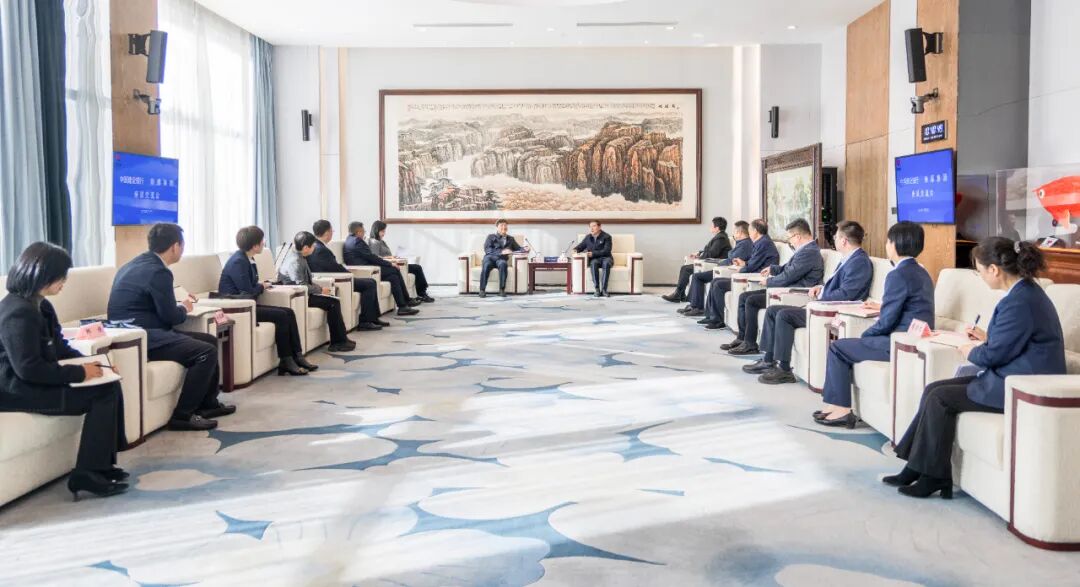
12月3日,陕煤集团党委书记、董事长张文琪在集团总部与来访的中国建设银行党委副书记、行长张毅一行座谈,双方围绕深化银企合作、推动产融结合 进行交流。中国建设银行投资银行部总经理蔡亚蓉,建信投资公司党委书记、董事长张明合,建设银行陕西省分行党委书记、行长张新华,党委委员、副 行长王文莉,陕煤集团党委委员、总会计师杨璇参加座谈。 张毅回顾了双方合作历程。他表示,陕煤集团是建设银行重要的战略客户,双方合作渊源深厚、成果显著。建设银行对陕煤集团未来发展充满信心,将全 面对接陕煤集团发展需求,充分发挥自身在基建服务、科技金融、综合化经营方面的专业优势,持续创新金融产品与服务模式,聚焦陕煤集团"十五五"规 划,精准助力在项目建设、科技创新、产业链延伸等关键领域的发展布局,以更高水平的金融服务为双方高质量发展注入新动能,实现银企互利共赢。 (来源:陕煤集团) 12月3日,陕煤集团党委书记、董事长张文琪在集团总部与来访的中国建设银行党委副书记、行长张毅一行座谈,双方围绕深化银企合作、推动产融结合 进行交流。中国建设银行投资银行部总经理蔡亚蓉,建信投资公司党委书记、董事长张明合,建设银行陕西省分行党委书记、行长张新华,党委委员 ...

建设银行广州分行: 聚力“百千万工程” 金融润泽南粤沃土
Xin Lang Cai Jing· 2025-12-03 13:20
Core Viewpoint - The article emphasizes the role of financial institutions, particularly China Construction Bank's Guangzhou branch, in promoting rural revitalization through targeted financial support and innovative services, contributing to the growth of agricultural loans and enhancing urban-rural integration [1][8]. Group 1: Financial Support for Rural Development - China Construction Bank's Guangzhou branch has implemented the "Hundred Million Thousand Project" strategy, focusing on agricultural pain points and driving agricultural loan growth, with the loan balance exceeding 67 billion yuan by the end of September [1][8]. - The bank's support has enabled the transformation of idle land into ecological parks, enhancing the quality of life for villagers and attracting tourism [2][10]. Group 2: Case Study of Financial Assistance - Guangzhou Shinjing Ecological Landscape Co., established in 2021, faced cash flow challenges due to high upfront costs for park renovation projects, but received a timely loan of 1.86 million yuan from the bank, facilitating project completion [2][9]. - The financial backing not only helped the company grow but also improved the ecological environment for local residents, enhancing their happiness [3][10]. Group 3: Strengthening Agricultural Supply Chains - A trading company in Guangzhou, involved in pork distribution, encountered difficulties due to long payment cycles and high upfront costs, prompting the need for financial assistance [4][12]. - The bank's "Zhang Fuqing Financial Service Team" provided a tailored financial solution, granting 7.49 million yuan through a combination of collateral and credit, which allowed the company to expand its procurement and strengthen its supply chain [5][12]. Group 4: Activating Urban-Rural Economic Circulation - The bank's initiatives include engaging in community activities to promote financial literacy and support for farmers, thereby enhancing the connection between agricultural production and urban consumption [6][13]. - The dual approach of offline events and online benefits has effectively linked agricultural producers with urban consumers, fostering a supportive environment for agricultural products and reducing costs for consumers [7][13]. Group 5: Commitment to Rural Revitalization - The Guangzhou branch of China Construction Bank is committed to deepening the integration of finance and rural revitalization, continuously enriching agricultural financial products and optimizing service networks to support the vision of strong agriculture, beautiful rural areas, and prosperous farmers [14].
建行广东分行:破解高碳行业转型难题 打造转型金融示范样板
Zhong Guo Jin Rong Xin Xi Wang· 2025-12-03 13:17
Core Viewpoint - The traditional high-energy and high-emission industries in Guangdong are undergoing a significant green transformation, supported by targeted financial services from the China Construction Bank Guangdong Branch [1][2]. Group 1: Financial Support for Transformation - The China Construction Bank Guangdong Branch has launched a specialized service plan for transformation-linked loans to address the financing difficulties faced by traditional industries during their green transition [2][4]. - The bank has successfully implemented transformation financial services across various sectors, including thermal power, ceramics, steel, agriculture, paper, glass, and petrochemicals [2][4]. Group 2: Case Studies of Green Transformation - In Meizhou, the bank provided a loan of 98 million yuan to an agricultural enterprise for its low-carbon transformation, which is expected to reduce carbon emissions by approximately 4,000 tons annually [3][4]. - In Yangjiang, the bank supported a steel company with a loan of 65.4 million yuan for green technology upgrades, projected to save 2,331 tons of standard coal and reduce carbon emissions by about 5,809 tons per year [4][5]. - In Shaoguan, a paper company received a 30 million yuan unsecured loan to facilitate its low-carbon transition, addressing its raw material procurement needs [4][5]. Group 3: Institutional Support and Future Plans - The China Construction Bank Guangdong Branch is committed to enhancing its transformation financial services by optimizing financial products and participating in the establishment of industry standards [6]. - The bank aims to expand its services to more sectors, including chemicals and textiles, to further support the green transformation of traditional industries in Guangdong [6].
2025年11月社融前瞻:社融增速预计8.5%,M1增速保持相对高位
GF SECURITIES· 2025-12-03 13:15
社融增速预计 8.5%,M1 增速保持相对高位 [Table_Page] 跟踪分析|银行 证券研究报告 [Table_Title] 2025 年 11 月社融前瞻 [Table_Summary] 核心观点: [Table_Gr ade] 行业评级 买入 前次评级 买入 报告日期 2025-12-03 [Table_PicQuote] 相对市场表现 [分析师: Table_Author]倪军 SAC 执证号:S0260518020004 021-38003646 nijun@gf.com.cn 分析师: 林虎 SAC 执证号:S0260525040004 SFC CE No. BWK411 021-38003643 gflinhu@gf.com.cn -10% -2% 6% 14% 22% 30% 12/24 02/25 04/25 07/25 09/25 12/25 银行 沪深300 请注意,倪军并非香港证券及期货事务监察委员会的注册 持牌人,不可在香港从事受监管活动。 | DocReport] [Table_ 相关研究: | | | --- | --- | | 银行行业:海外银行业如何化 | 2025-12 ...


建行取得报文处理方法、装置、设备及介质专利
Sou Hu Cai Jing· 2025-12-03 12:31
声明:市场有风险,投资需谨慎。本文为AI基于第三方数据生成,仅供参考,不构成个人投资建议。 国家知识产权局信息显示,中国建设银行股份有限公司取得一项名为"一种报文处理方法、装置、设备 及介质"的专利,授权公告号CN 119544799 B,申请日期为2024年11月。 来源:市场资讯 天眼查资料显示,中国建设银行股份有限公司,成立于2004年,位于北京市,是一家以从事货币金融服 务为主的企业。企业注册资本25001097.7486万人民币。通过天眼查大数据分析,中国建设银行股份有 限公司共对外投资了927家企业,参与招投标项目5000次,财产线索方面有商标信息1908条,专利信息 5000条,此外企业还拥有行政许可149个。 ...
建行取得一种数据处理方法和装置专利
Sou Hu Cai Jing· 2025-12-03 12:31
来源:市场资讯 天眼查资料显示,中国建设银行股份有限公司,成立于2004年,位于北京市,是一家以从事货币金融服 务为主的企业。企业注册资本25001097.7486万人民币。通过天眼查大数据分析,中国建设银行股份有 限公司共对外投资了930家企业,参与招投标项目5000次,财产线索方面有商标信息1908条,专利信息 5000条,此外企业还拥有行政许可149个。 国家知识产权局信息显示,中国建设银行股份有限公司取得一项名为"一种数据处理方法和装置"的专 利,授权公告号CN 118921358 B,申请日期为2024年7月。 声明:市场有风险,投资需谨慎。本文为AI基于第三方数据生成,仅供参考,不构成个人投资建议。 ...
中国天保集团(01427)拟订立一份企业担保协议
智通财经网· 2025-12-03 10:05
Core Viewpoint - China Tianbao Group (01427) plans to enter into a corporate guarantee agreement with China Construction Bank's Huailai branch, providing a guarantee of up to RMB 800 million to support its wholly-owned subsidiary, Huailai Tianbao Health Service Co., Ltd, in fulfilling its obligations under a bank financing agreement [1] Group 1 - The guarantee aims to ensure that Huailai Tianbao can effectively meet its obligations related to the long-term loan agreement with the bank, which is set to mature in July 2041 [1] - The interest rate for the loan is set at the China Loan Market Quote Rate minus 60 basis points, with annual repayment amounts determined based on the business development of Tianbao Jingbei Health City [1] - The board believes that entering into the financing agreement and providing the guarantee will offer favorable financing resources for Huailai Tianbao's business operations, enhancing cash flow management and supporting the development of Tianbao Jingbei Health City [1]
建行北京市分行落地北京数币新生态
Bei Jing Shang Bao· 2025-12-03 08:09
Core Insights - The digital RMB pilot is expanding in application scenarios, with the Beijing branch of the Construction Bank focusing on serving state-owned enterprises and cross-border settlements, contributing to the capital's "two zones" construction and the global digital economy benchmark city development [1] Group 1: Digital Currency Applications - The Beijing branch of Construction Bank, in collaboration with a financial company, launched a group digital currency direct connection and treasury settlement project, leveraging advantages like "loadable smart contracts" and "no transaction fees" to enhance corporate treasury management efficiency [2] - At the 2025 China International Fair for Trade in Services, Construction Bank showcased its achievements in building a financial powerhouse and promoting the real economy, including a section dedicated to digital currency, where visitors could open digital wallets and experience convenient consumption [3] Group 2: Cross-Border Payment Solutions - The Beijing branch utilized the mBridge platform to facilitate a 6.75 million RMB cross-border remittance for a state-owned enterprise subsidiary, highlighting the efficiency, low cost, and high security of the digital currency cross-border payment solutions [4] - The mBridge platform, based on distributed ledger technology, enables real-time settlement across jurisdictions, providing a tailored cross-border payment solution that enhances payment efficiency and reduces costs for enterprises [4]
建设银行苏州分行:以“圈链群”破局普惠金融为实体经济注入“活水”
Xin Lang Cai Jing· 2025-12-03 07:30
Core Insights - The article emphasizes the importance of small and micro enterprises as vital components of the market economy and regional economic development, highlighting their persistent challenges in financing [2][11] - Suzhou's Construction Bank has innovatively shifted its financial service model to a "circle-chain-group" approach, effectively addressing the financing needs of various small and micro enterprises [2][11] Group 1: Financing Challenges and Solutions - Small and micro enterprises in Suzhou face significant financing difficulties, including high costs and slow access to funds, which hinder their growth [2][11] - Suzhou Construction Bank has served over 57,000 clients with inclusive loans, achieving a loan balance exceeding 100 billion yuan by October 2025 [2][10] - The bank's approach includes evaluating the future potential of enterprises rather than solely relying on past financial statements, thus facilitating loans for technology-driven companies without traditional collateral [4][5] Group 2: Innovative Financial Products - The "Open Business Upgrade Loan" allows the bank to assess non-financial indicators such as technology potential and team quality, enabling support for companies in different lifecycle stages [4][5] - The "Factory Quick Loan" product has been designed to help manufacturing companies unlock capital tied up in fixed assets, with nearly 1,400 enterprises served and a total loan amount exceeding 27 billion yuan [9][10] Group 3: Ecosystem and Collaborative Financing - The "circle-chain-group" strategy integrates small and micro enterprises into a cohesive ecosystem, enhancing customer identification and risk management [11][12] - By collaborating with industrial park management, the bank can better understand the financing needs of enterprises, leading to tailored financial products that improve service efficiency [5][11] - This model not only addresses financing challenges but also supports regional industrial upgrades and sustainable business development [12]