SMIC(00981)

Search documents
智通港股通活跃成交|2月13日





智通财经网· 2026-02-13 11:02
Group 1 - Tencent Holdings (00700), Alibaba-W (09988), and Meituan-W (03690) ranked as the top three companies in terms of trading volume on the Hong Kong Stock Connect (southbound) on February 13, 2026, with transaction amounts of 4.301 billion, 3.680 billion, and 3.169 billion respectively [1] - Tencent Holdings (00700), Alibaba-W (09988), and Meituan-W (03690) also led the trading volume on the Shenzhen-Hong Kong Stock Connect (southbound) with transaction amounts of 3.563 billion, 2.870 billion, and 1.460 billion respectively [1] Group 2 - The top ten active companies on the Hong Kong Stock Connect (southbound) included Tencent Holdings (00700) with a net buy of 1.426 billion, Alibaba-W (09988) with a net buy of 1.143 billion, and Meituan-W (03690) with a net sell of 0.368 billion [2] - On the Shenzhen-Hong Kong Stock Connect (southbound), Tencent Holdings (00700) had a net buy of 0.837 billion, Alibaba-W (09988) had a net buy of 1.156 billion, and Meituan-W (03690) had a net buy of 0.611 billion [2]
中芯国际(688981) - 港股公告:翌日披露报表
2026-02-13 11:01
FF305 翌日披露報表 (股份發行人 ── 已發行股份或庫存股份變動、股份購回及/或在場内出售庫存股份) 表格類別: 股票 狀態: 新提交 公司名稱: 中芯國際集成電路製造有限公司 呈交日期: 2026年2月13日 如上市發行人的已發行股份或庫存股份出現變動而須根據《香港聯合交易所有限公司(「香港聯交所」)證券上市規則》(「《主板上市規則》」)第13.25A條 / 《香港聯合交易所有限公司GEM證券 上市規則》(「《GEM上市規則》」)第17.27A條作出披露,必須填妥第一章節 。 | 第一章節 | | | | | | | | | | | --- | --- | --- | --- | --- | --- | --- | --- | --- | --- | | 1. 股份分類 | | 普通股 | 股份類別 | 不適用 | | 於香港聯交所上市 | 是 | | | | 證券代號 (如上市) | | 00981 | 說明 | 港股 | | | | | | | A. 已發行股份或庫存股份變動 | | | | | | | | | | | 事件 | | | 已發行股份(不包括庫存股份)變動 | | | 庫存股份變動 ...
中芯国际(00981) - 翌日披露报表
2026-02-13 10:43
如上市發行人的已發行股份或庫存股份出現變動而須根據《香港聯合交易所有限公司(「香港聯交所」)證券上市規則》(「《主板上市規則》」)第13.25A條 / 《香港聯合交易所有限公司GEM證券 上市規則》(「《GEM上市規則》」)第17.27A條作出披露,必須填妥第一章節 。 | 第一章節 | | | | | | | | | | | --- | --- | --- | --- | --- | --- | --- | --- | --- | --- | | 1. 股份分類 | | 普通股 | 股份類別 | 不適用 | | 於香港聯交所上市 | 是 | | | | 證券代號 (如上市) | | 00981 | 說明 | 港股 | | | | | | | A. 已發行股份或庫存股份變動 | | | | | | | | | | | 事件 | | | 已發行股份(不包括庫存股份)變動 | | | 庫存股份變動 | 每股發行/出售價 (註4) | | 已發行股份總數 | | | | | 已發行股份(不包括庫存股份)數 目 | | 佔有關事件前的現有已發 行股份(不包括庫存股 份)數目百分比 (註3) | 庫存股份數目 | | ...
北水动向|北水成交净买入202.19亿 北水抢筹港股ETF及科技股 全天加仓盈富基金(02800)超36亿港元
智通财经网· 2026-02-13 09:57
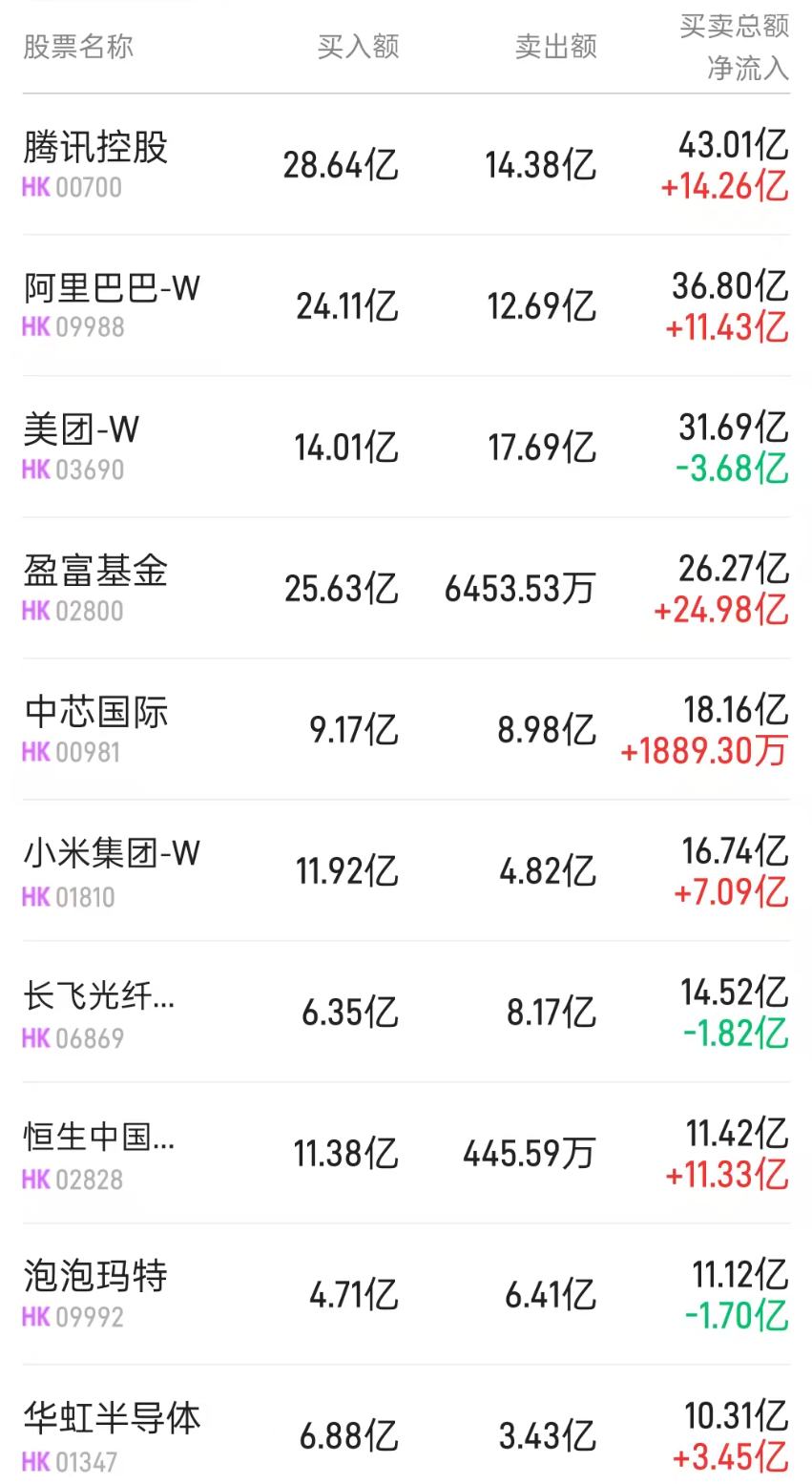
Group 1 - The Hong Kong stock market saw a net inflow of 202.19 billion HKD from northbound trading, with 114.77 billion HKD from Shanghai and 87.43 billion HKD from Shenzhen [1] - The most bought stocks included the Tracker Fund of Hong Kong (02800), Alibaba-W (09988), and Tencent (00700) [1] - The most sold stocks were Changfei Optical Fiber (06869) and CNOOC (00883) [1] Group 2 - Tencent Holdings received a net inflow of 28.64 billion HKD, with a total buy amount of 43.01 billion HKD and sell amount of 14.38 billion HKD [2] - Alibaba-W had a net inflow of 24.11 billion HKD, with total buys of 36.80 billion HKD and sells of 12.69 billion HKD [2] - Meituan-W saw a net inflow of 14.01 billion HKD, with total sells of 17.69 billion HKD [2] Group 3 - The Tracker Fund of Hong Kong (02800) had a net inflow of 25.63 billion HKD, with total buys of 26.27 billion HKD and sells of 645.53 million HKD [2] - Semiconductor stocks like Huahong Semiconductor (01347) and SMIC (00981) received net inflows of 8.46 billion HKD and 5.73 billion HKD respectively [6] - CNOOC experienced a net outflow of 1.43 billion HKD amid geopolitical tensions affecting oil prices [6] Group 4 - Xiaomi Group-W received a net inflow of 12.11 billion HKD, with a notable sales performance in January [5] - The Tracker Fund of Hong Kong, Hang Seng China Enterprises (02828), and Southern Hang Seng Technology (03033) saw significant net inflows of 36.75 billion HKD, 11.33 billion HKD, and 11.23 billion HKD respectively [4] - Changfei Optical Fiber (06869) faced a net outflow of 1.48 billion HKD [7]


中芯国际:中性”评级-20260214
Ubs Securities· 2026-02-13 09:45
Investment Rating - The report maintains a "Neutral" rating for Semiconductor Manufacturing International Corporation (SMIC) [1] Core Insights - UBS has raised the revenue forecast for SMIC for 2026 to 2029 by 4% to reflect greater domestic opportunities and improved supply-demand dynamics, but has lowered the profit forecast by 8% to 18% due to higher depreciation burdens [1] - The target price is set at HKD 76, based on a projected price-to-book ratio of 3.3 times over the next 12 months, with a long-term return on equity of 11.3% [1] - SMIC's net profit for the last quarter increased by 4.5% quarter-on-quarter, exceeding previous guidance of a 0% to 2% increase and market expectations of a 1.3% increase, driven by slight growth in wafer shipments and average selling prices [1] - The gross margin was reported at 19.2%, aligning with the guidance range of 18% to 20%, but below the market expectation of 20% [1] Revenue and Capacity Outlook - With the 8-inch chip capacity utilization exceeding 100% and the 12-inch chip capacity nearing full operation, management forecasts that capital expenditures this year will remain at USD 8.1 billion, with a projected capacity increase of 40k wafers per month for 12-inch capacity by year-end to meet strong domestic demand from fabless companies [1] - SMIC aims to focus on expanding in areas with tight supply, such as BCD chips, memory, and memory-related products [1] - Management predicts that sales will remain flat in the first quarter, with a gross margin expected to be between 18% and 20%, and sales growth anticipated to exceed the industry average for the year [1] Depreciation and Margin Pressure - The report indicates that due to ongoing business expansion, management expects depreciation expenses to increase by 30% year-on-year this year, maintaining high levels into next year, which will further pressure gross margins [2] - UBS currently forecasts a gross margin of 20% for the first quarter and 21.2% for the entire year, with depreciation pressure expected to be offset by a more favorable pricing environment [2]
中国半导体行业展望
Zhong Cheng Xin Guo Ji· 2026-02-13 09:14
Investment Rating - The semiconductor industry is rated as "stable improvement" for the next 12 to 18 months, with potential for upward adjustments based on demand growth from automotive electronics and artificial intelligence [5][7]. Core Insights - The semiconductor industry in China is expected to benefit from effective industrial support policies, accelerating domestic substitution processes, and a stable upward trend in credit quality [5][8]. - The competition in the semiconductor industry remains a key national focus, with ongoing support for high-end breakthroughs and supply chain management [7][9]. - The recovery of the semiconductor industry is driven by the mild recovery in consumer electronics and rapid development in automotive electronics and artificial intelligence [19][24]. - The global semiconductor sales reached approximately $697.18 billion in 2025, with a year-on-year growth of 11.22%, indicating a new recovery cycle after a previous downturn [20][24]. - The domestic semiconductor market in China is projected to reach $210.88 billion in 2025, growing by 14.68% year-on-year, driven by AI and automotive electronics [24]. Industry Fundamentals Analysis - The semiconductor industry is supported by a comprehensive policy framework that includes national and local government initiatives aimed at enhancing self-sufficiency and technological breakthroughs [9][10]. - The production of integrated circuits in China reached 484.3 billion units in 2025, a year-on-year increase of 87.28%, with exports also showing significant growth [11][24]. - The industry is characterized by a high degree of concentration, with the top ten chip design companies holding over 65% of the market share globally, predominantly led by U.S. firms [30][31]. Credit Performance of Industry Enterprises - The overall financial performance of the semiconductor industry has improved, with revenue, profit, and operating cash flow showing growth, while debt levels remain manageable [29]. - The industry has not experienced any bond extensions or defaults, indicating a stable credit environment [29]. - The chip design sector has seen rapid growth, particularly in AI chip manufacturers, which have outperformed other segments [31].


中芯国际涨0.30%,成交额40.21亿元,后市是否有机会?
Xin Lang Cai Jing· 2026-02-13 08:19
Core Viewpoint - Semiconductor manufacturing company SMIC has received investment from the National Integrated Circuit Industry Investment Fund, holding 1.61% of the total share capital, indicating strong governmental support for the company and the industry [2]. Company Overview - SMIC is the largest integrated circuit manufacturing enterprise group in mainland China, known for its advanced technology and comprehensive support [2]. - The company specializes in wafer foundry services based on various technology nodes and platforms, providing design services, IP support, and photomask manufacturing [2]. - As of September 30, 2025, SMIC reported a revenue of 49.51 billion yuan, a year-on-year increase of 18.22%, and a net profit of 3.82 billion yuan, up 41.09% year-on-year [5]. Market Performance - On February 13, SMIC's stock rose by 0.30%, with a trading volume of 4.02 billion yuan and a turnover rate of 1.72%, bringing the total market capitalization to 935.50 billion yuan [1]. - The stock's average trading cost is 122.58 yuan, with current price levels between resistance at 125.50 yuan and support at 111.80 yuan, suggesting potential for range trading [4]. Institutional Holdings - As of September 30, 2025, the top ten circulating shareholders of SMIC include several ETFs, with notable reductions in holdings from major funds like E Fund and Huaxia [6][7].
中芯国际(00981):穿越周期波动
citic securities· 2026-02-13 08:02
Investment Rating - The report aligns with the views of CITIC Securities and maintains a positive outlook on SMIC, indicating that the company's performance is expected to meet market expectations [5][6]. Core Insights - SMIC's Q4 2025 performance and Q1 2026 guidance are in line with expectations, with a revenue increase of 4.5% quarter-on-quarter to $2.49 billion, surpassing the guidance of 0%-2% [6]. - The company anticipates that the supply of consumer electronic storage chips will ease within 9-12 months due to new capacity ramp-up and inventory release [7]. - Capital expenditures for 2026 are projected to remain flat at $8.1 billion, while depreciation expenses are expected to rise by 30% year-on-year [8]. Summary by Sections Financial Performance - Q4 2025 revenue reached $2.49 billion, with a gross margin of 19.2%, which is within the guidance range of 18%-20% [6]. - The Q1 2026 revenue guidance is expected to remain stable at $2.49 billion, with a gross margin forecasted between 18%-20% [6]. Capital Expenditure and Depreciation - Capital expenditures for 2025 were $8.1 billion, exceeding guidance due to strong customer demand and geopolitical uncertainties affecting equipment delivery [8]. - The company plans to increase its 12-inch wafer capacity by 40,000 pieces per month in 2026, while maintaining high capacity utilization to mitigate depreciation pressure [8]. Market Dynamics - The report highlights that SMIC will benefit from the deepening domestic substitution of mature and advanced process chips [9]. - Factors such as improved yield rates in advanced processes and progress in domestic deep ultraviolet lithography (DUV) are seen as catalysts for growth [10].
暴拉!最猛散户进场扫货
Ge Long Hui· 2026-02-13 07:20
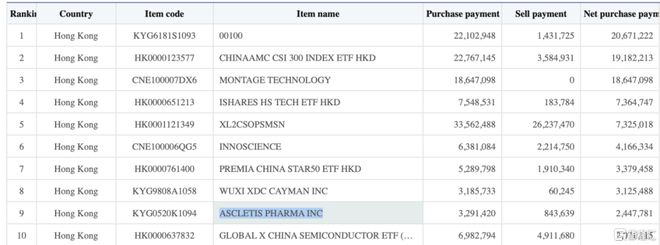
Group 1 - The core viewpoint of the news highlights the significant surge in Chinese AI model stocks, particularly with companies like Zhiyu and MiniMax experiencing substantial price increases, with Zhiyu rising over 130% in five trading days and MiniMax increasing over 40% in the same period [1] - The launch of new AI models such as GLM-5 by Zhiyu and Minimax 2.5 by MiniMax is expected to drive further interest and investment in the sector, with additional models from Alibaba and ByteDance anticipated to be released around the Chinese New Year [1] - Korean retail investors are actively purchasing Chinese AI model stocks, indicating a shift in investment preferences towards emerging technology companies, as evidenced by their buying patterns in the Hong Kong stock market [2][4] Group 2 - Data from the Korea Securities Depository shows that Korean investors have favored stocks like MiniMax and various ETFs related to Chinese technology and semiconductors, reflecting a strong interest in these sectors [2][3] - The Korean stock market has seen a remarkable increase, with the composite index rising by 130% since 2025, largely driven by a few major stocks like Samsung Electronics and SK Hynix, which have contributed significantly to the overall market performance [6][7] - The trend of Korean retail investors converting their currency to invest in foreign markets, including the Chinese stock market, has raised concerns about the depreciation of the Korean won, as highlighted by the Bank of Korea [10][11]


闪存巨头甩出业绩王炸!港A存储芯片股应声大涨
Ge Long Hui· 2026-02-13 07:03
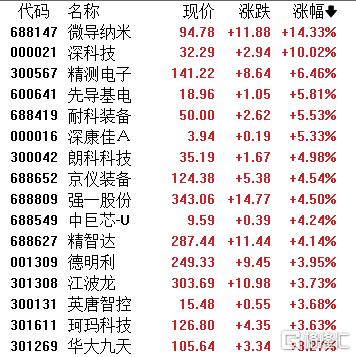
Group 1: Market Performance - The semiconductor and memory chip sectors in A-shares experienced significant gains, with stocks like Weidao Nano rising over 14% and Deep Technology hitting the daily limit [1][2] - In the Hong Kong market, semiconductor and chip stocks were also active, with Aixin Yuanzhi increasing by over 15% [3][4] Group 2: Financial Performance of Key Players - Kioxia reported a strong financial performance for Q3 of FY2025, achieving revenue of 543.6 billion yen, a year-on-year increase of 20.8% and a quarter-on-quarter increase of 21.3% [5][6] - The company expects operating profit for FY2025 to reach between 709.57 billion yen and 799.57 billion yen, significantly exceeding market expectations [7] Group 3: Market Trends and Demand - The demand for AI computing power is driving strong growth in the memory chip sector, with significant price increases expected for NAND flash memory [8] - The global semiconductor sales are projected to reach $791.7 billion in 2025, a 25.6% increase from 2024, with expectations of surpassing $1 trillion in 2026 [9] - The semiconductor equipment market is anticipated to grow, with TSMC planning capital expenditures of $52 billion to $56 billion in 2026, a substantial increase from $40.9 billion in 2025 [9]