SMIC(00981)

Search documents
电子周观点:阿里字节模型密集发布,AI算力需求扩容
GOLDEN SUN SECURITIES· 2026-02-14 08:24
Investment Rating - The report maintains a rating of "Buy" for the electronic industry, with a focus on specific stocks such as 香农芯创, 东山精密, 兆易创新, 北方华创, 中微公司, and 胜宏科技 [6][8]. Core Insights - The report highlights the significant advancements in AI models from Alibaba and ByteDance, which are expected to drive a substantial increase in computing power demand, particularly in video generation applications [2][12]. - The NAND market is projected to grow significantly, driven by AI-related data center demands, with a forecasted bit shipment growth rate of approximately 17%-19% for 2026 [3][61]. Summary by Sections Section 1: AI Model Releases and Computing Demand - Alibaba's Qwen-Image-2.0 model integrates image generation and editing, supporting 1K token inputs and 2K resolution, enhancing performance significantly [13][15]. - ByteDance's Seedance 2.0 model, released on February 12, 2026, demonstrates a 3-5 times increase in computing power consumption compared to standard video generation models, indicating a shift towards more computationally intensive applications [19][20]. Section 2: Kioxia's Financial Performance - Kioxia reported a record revenue of 543.6 billion JPY (approximately 3.5 billion USD) for FY25Q3, marking a 21.3% quarter-over-quarter increase, driven by higher average selling prices (ASP) and bit shipments [46][47]. - The company anticipates full-year revenue for FY25 to be between 2.18 trillion JPY and 2.27 trillion JPY, with a focus on increasing the proportion of data center and enterprise SSD shipments [58][61]. Section 3: Semiconductor Industry Trends - The report notes that domestic AI applications are transitioning from "technology development" to "scaled deployment," which is expected to inject strong momentum into the domestic AI computing industry [2][12]. - SMIC's Q4 2025 revenue reached 2.489 billion USD, a 12.8% year-over-year increase, with a focus on expanding production capacity and optimizing business structure [25][31]. Section 4: Related Investment Opportunities - The report identifies several key stocks and sectors for investment, including computing chips, interconnect chips, storage modules, semiconductor equipment, and materials, highlighting companies like 寒武纪, 中微公司, and 香农芯创 [62][63].


周观点:阿里字节模型密集发布,AI算力需求扩容-20260214
GOLDEN SUN SECURITIES· 2026-02-14 08:15
Investment Rating - The report maintains a rating of "Buy" for the electronic industry, with a focus on specific stocks such as 香农芯创, 东山精密, 兆易创新, 北方华创, 中微公司, and 胜宏科技 [6][62]. Core Insights - The release of AI models by Alibaba and ByteDance is expected to significantly increase the demand for computing power, particularly in video generation applications, which are more resource-intensive than text generation [2][12]. - The report highlights that the domestic AI applications are transitioning from "technology development" to "scaled deployment," indicating a robust demand for AI computing resources [2][12]. - Kioxia reported record revenue of 543.6 billion yen (approximately 3.547 billion USD) for FY25Q3, driven by increased average selling prices (ASP) and bit shipments, with expectations for continued growth in the NAND market due to AI-driven demand [3][46][61]. Summary by Sections Section 1: AI Model Releases and Computing Power Demand - Alibaba's Qwen-Image-2.0 model integrates image generation and editing, supporting 1K token input and 2K resolution, enhancing performance significantly [1][13]. - ByteDance's Seedance 2.0 model, released on February 12, 2026, demonstrates a 3-5 times increase in computing power consumption compared to standard video generation models, addressing complex motion and interaction scenarios [2][19][20]. Section 2: Kioxia's Financial Performance - Kioxia's FY25Q3 revenue reached a historical high of 543.6 billion yen, with a quarter-over-quarter growth of 21.3%, attributed to increased ASP and bit shipments [3][46]. - The company anticipates FY25 revenue between 2.18 trillion yen and 2.27 trillion yen, with a focus on data center and enterprise SSD shipments driving profitability [3][61]. Section 3: Related Stocks and Market Opportunities - The report identifies several key stocks in the semiconductor and AI sectors, including companies involved in computing power chips, storage modules, and semiconductor equipment, indicating a broad range of investment opportunities [62][63].
恒生指数下跌1.72% 恒生科技指数下跌0.90%
Xin Hua Cai Jing· 2026-02-14 05:50
Market Overview - The Hong Kong stock market experienced a decline, with the Hang Seng Index falling by 1.72% to 26,567.12 points, the Hang Seng Tech Index down by 0.90% to 5,360.42 points, and the National Enterprises Index decreasing by 1.55% to 9,032.71 points [1] - The Hang Seng Index opened lower at 26,640.16 points, dropped by 392.38 points, and ultimately closed down by 465.42 points, with a total trading volume exceeding 257.5 billion HKD [1] - The southbound trading (Hong Kong Stock Connect) saw a net inflow of over 20.2 billion HKD [1] Sector Performance - Overall, sectors such as chips and department stores saw gains, while new consumption, new energy vehicles, and telecommunications had mixed results. Conversely, sectors like gold, non-ferrous metals, biomedicine, port transportation, technology, oil and gas, brokerage, and banking mostly experienced declines [1] Individual Stock Movements - Notable stock movements included Xiaomi Group increasing by 0.88%, AIA Group decreasing by 4.18%, Zijin Mining falling by 7.64%, Hong Kong Exchanges and Clearing down by 2.13%, and Semiconductor Manufacturing International Corporation rising by 0.79% [1] - Ctrip Group-S dropped by 2.10%, Pop Mart fell by 1.90%, while Tian Shu Zhi Xin surged by 14.59% and Zhi Pu increased by 20.65% [1] - China Construction Bank decreased by 1.49%, China Resources Land fell by 2.52%, and Lao Pu Gold dropped by 3.97%, while Guotai Junan International rose by 4.61% and China Petroleum & Chemical Corporation fell by 4.33% [1] Top Traded Stocks - The top three traded stocks included Tencent Holdings, which fell by 0.65% with a trading volume exceeding 14.2 billion HKD; Alibaba, down by 2.02% with over 10.8 billion HKD in transactions; and Meituan, which decreased by 3.18% with a trading volume of over 8.1 billion HKD [2]


近50家芯片大厂最新业绩:谁在赚钱,谁还在复苏?
芯世相· 2026-02-14 04:07
Core Viewpoint - The semiconductor industry is expected to recover in 2025, with significant revenue growth driven by rising storage prices and increasing demand from data centers, leading to improved performance for major chip manufacturers [3][4]. Group 1: Semiconductor Sales and Growth - Global semiconductor sales are projected to reach $791.7 billion in 2025, a 25.6% increase from $630.5 billion in 2024, with further growth expected towards $1 trillion in 2026 [3]. - The recovery is attributed to strong demand from emerging technologies such as AI, IoT, 6G, and autonomous driving [3]. Group 2: Chip Design and IDM - Texas Instruments (TI) is expected to achieve approximately $17.68 billion in revenue for 2025, reflecting a 13% year-over-year growth, with significant contributions from industrial and automotive sectors [6]. - STMicroelectronics (ST) anticipates a revenue decline of 11% to around $11.8 billion, with Q4 showing slight improvement driven by personal electronics [8]. - NXP's revenue is projected at $12.27 billion, down 3%, with automotive and industrial sectors remaining stable [10]. - Renesas reported a revenue drop of 2% to 1.3212 trillion yen, marking its first loss in six years due to significant impairment losses [12]. - Microchip Technology expects growth in both year-over-year and quarter-over-quarter sales, with a projected revenue of $1.186 billion for Q3 2026 [12]. - Qorvo's revenue exceeded expectations at $993 million, with an 8.4% year-over-year increase [12]. - Infineon's revenue is projected at €14.662 billion, down 2%, but with strong demand in AI driving growth [14]. Group 3: Memory Chips - Samsung's revenue is expected to reach 333.6059 trillion won (approximately $233.8 billion), a 10.9% increase, with the semiconductor division achieving 130.1 trillion won in revenue [29]. - SK Hynix anticipates a record revenue of 97.15 trillion won (approximately $681.6 billion), a 47% increase year-over-year [31]. - Micron's revenue is projected to rise from $25.11 billion to $37.38 billion, with HBM chip capacity sold out for 2026 [33]. - GigaDevice expects a revenue increase of approximately 25% to 9.203 billion yuan [35]. Group 4: Wafer Foundry - TSMC's revenue is projected to reach approximately 3.8 trillion new Taiwan dollars (around $122.42 billion), a 31.6% increase, with advanced processes contributing significantly [47]. - UMC expects a slight revenue increase of 2.3% to 237.55 billion new Taiwan dollars, with a focus on mature process technologies [49]. - SMIC anticipates a record revenue of $9.3268 billion, a 16.2% increase, with improved profitability driven by increased wafer sales [51]. Group 5: Testing and Packaging - ASE Group's revenue is expected to reach 645.388 billion new Taiwan dollars, an 8.4% increase, with advanced packaging services contributing significantly [57]. - Amkor's revenue is projected at $6.71 billion, a 6% increase, with strong performance in advanced packaging and computing business [59]. Group 6: Equipment - ASML's total net sales are expected to reach €32.667 billion, a 15.6% increase, with a record order backlog reflecting strong demand for AI-related technologies [61]. - Lam Research anticipates a record year with significant growth driven by advanced process technologies [63]. Group 7: Distribution - WPG Holdings expects a revenue of 999.12 billion new Taiwan dollars, a 13.4% increase, driven by AI and high-performance computing demand [66]. - WPG's revenue is projected to exceed 1 trillion new Taiwan dollars, marking a significant milestone [68].



计算机行业事件点评:Seedance2.0算力需求知多少
Guolian Minsheng Securities· 2026-02-14 00:51
Investment Rating - The report maintains a "Recommended" rating for the industry, indicating an expected relative performance exceeding 15% compared to the benchmark index over the next 12 months [8]. Core Insights - The launch of Seedance 2.0 by ByteDance marks a significant advancement in AI video generation, enabling users to create videos with simple text prompts, which is expected to enhance user engagement and frequency of use over the long term [3][5]. - The model's capabilities include multi-modal input acceptance, narrative coherence, and audio-visual synchronization, addressing key industry challenges such as character consistency and audio-visual mismatch [4][5]. - The demand for computational power is projected to increase exponentially due to the anticipated high concurrency from both consumer (C-end) content creation and business (B-end) API calls [6]. Summary by Sections Seedance 2.0 Launch and Features - Seedance 2.0 is integrated into various platforms, allowing users to generate short videos easily, which is expected to drive higher usage rates [3]. - The model supports multiple input types and can generate videos with synchronized audio, enhancing the creative process for users [4]. Computational Demand Projections - The report estimates that by October 2025, the monthly usage of AI-generated content on the platform will reach 63,900 times, with a total usage time of 1,668.2 hours [6]. - The complexity of video generation is significantly higher than that of text and images, leading to a substantial increase in computational requirements [6]. - Projections indicate that the number of required H100 GPUs for video generation could range from 2.4 million to 4.284 million under different scenarios, with a market space for H100 GPUs estimated between $4.8 billion and $8.568 billion [14][12]. Long-term Market Opportunities - The report highlights the potential for domestic computational power providers to benefit from the growth of AI video generation, with specific companies recommended for investment, including chip designers and AI server manufacturers [13]. - The user base for short videos in China is expected to exceed 1 billion by the end of 2024, with increasing daily usage times projected [7][11].


北水成交净买入202.19亿 北水抢筹港股ETF及科技股 全天加仓盈富基金超36亿港元
Zhi Tong Cai Jing· 2026-02-13 21:54
Group 1 - The Hong Kong stock market saw a net inflow of 202.19 billion HKD from northbound trading, with 114.77 billion HKD from the Shanghai Stock Connect and 87.43 billion HKD from the Shenzhen Stock Connect [2] - The most net bought stocks included the Tracker Fund of Hong Kong (02800), Alibaba-W (09988), and Tencent (00700), while the most net sold stocks were Longi Green Energy (601869) and CNOOC (00883) [2][8] - Northbound trading showed significant interest in semiconductor stocks, with Huahong Semiconductor (01347) and SMIC (00981) receiving net purchases of 8.46 billion HKD and 5.73 billion HKD respectively [6] Group 2 - Tencent Holdings (00700) had a net inflow of 22.00 billion HKD, with total trading volume reaching 35.63 billion HKD [3] - Alibaba-W (09988) received a net inflow of 20.13 billion HKD, with a total trading volume of 28.70 billion HKD [3] - Meituan-W (03690) saw a net inflow of 10.35 billion HKD, with a total trading volume of 14.60 billion HKD [3] Group 3 - Huahong Semiconductor reported a fourth-quarter revenue of 659.9 million USD, a significant quarter-on-quarter increase of 22.4%, with a gross margin of 13.0% and a net profit of 34.1 million USD, reversing a previous loss [6] - SMIC also reported strong performance, contributing to the positive sentiment in the semiconductor sector [6] - CNOOC (00883) faced a net outflow of 1.43 billion HKD amid geopolitical tensions and market shifts towards supply-demand dynamics [7]




中芯認股證結構透視:遠價外集中度近七成 技術位博弈暗藏流動性陷阱
Ge Long Hui· 2026-02-13 17:40
Core Viewpoint - The analysis indicates a significant divergence from rational market boundaries for SMIC, with defined support and resistance levels suggesting potential trading ranges and highlighting liquidity risks in the current market structure [1][3]. Group 1: Technical Analysis - The current price of SMIC is 69.6 HKD, with key support at 68.3 HKD and a lower testing area at 62.7 HKD, while resistance is at 75.2 HKD and an upward target at 80.4 HKD [1]. - The technical framework suggests that the exercise price range of 62.7-75.2 HKD is within a reasonable technical boundary, but the market structure shows a significant deviation from rational limits [1]. Group 2: Market Structure and Imbalance - There are 145 existing call warrants with a clear structural differentiation, where 30 products in the deep in-the-money range (41.50-62.93 HKD) serve as stock substitutes, and 8 products in the near-the-money range (68.88-69.04 HKD) act as daily trading tools [2]. - The far out-of-the-money range (81.81-168.88 HKD) contains 80 products, accounting for 55% of the total, indicating a market characterized by irrational exuberance [2]. Group 3: Liquidity Risks - The total street volume of 1,923.69 million warrants shows that the far out-of-the-money range holds 1,438.46 million warrants (74.78%), leading to a concentration risk above the technical resistance level of 75.2 HKD [3]. - This concentration reflects a collective market bet on a breakout, neglecting liquidity risks, which could lead to significant selling pressure if the stock fails to break through resistance [3]. Group 4: Trading Behavior - The total trading volume of 243,367 thousand HKD shows that the far out-of-the-money range accounted for 112,840 thousand HKD (46.37%), indicating a heavy concentration of funds on breakout speculation [4]. - The middle out-of-the-money range contributed 56,909 thousand HKD (23.38%), totaling 69.75% of the trading volume concentrated above the technical resistance level [4]. Group 5: Product Efficiency and Recommendations - The middle out-of-the-money range exhibits relatively better risk-return characteristics with an average implied volatility of 53.90% and a leverage of 4.76 times, providing a more reasonable balance [5]. - The near-the-money range has an implied volatility of 52.68% and a leverage of 3.39 times, but the limited number of products (8) restricts operational flexibility [5]. - The far out-of-the-money range, despite a leverage of 5.35 times, has a high implied volatility of 59.11%, increasing holding costs and indicating a severe mismatch between costs and expected returns [5]. Group 6: Systemic Risks - Analysis reveals that several far out-of-the-money products exhibit "zero trading high street volume" characteristics, such as a product with an exercise price of 88.93 HKD having a street volume of 105.40 million but zero trades, making it difficult for investors to exit at reasonable prices [6]. - Investors are advised to focus on products within the technical range, particularly in the near-the-money and slightly out-of-the-money areas, which offer better terms and liquidity protection [6].
中芯国际(688981)2025年四季度业绩点评:4Q25营收超预期 扩产坚定推进下折旧压力待消化
Ge Long Hui· 2026-02-13 12:58
Core Insights - The company reported 4Q25 revenue of $2.489 billion, exceeding previous guidance and market expectations, with a year-over-year growth of 12.8% and a quarter-over-quarter increase of 4.5% [1] - The company is cautious in its 1Q26 guidance, projecting flat revenue quarter-over-quarter and a year-over-year increase of 10.7% [1] - The company anticipates a structural demand shift in 2026, driven by AI and automotive sectors, while facing challenges from the storage cycle [2] Financial Performance - 4Q25 gross margin was 19.2%, slightly below market expectations, primarily due to increased depreciation [1] - The net profit for 4Q25 was $203 million, a significant year-over-year decline of 24.9% and a quarter-over-quarter drop of 35.5% [1] - For the full year 2025, the company achieved a record revenue of $9.327 billion, with a year-over-year growth of 16.2% and a net profit of $685 million, up 39.1% year-over-year [1] Market Segmentation - In 4Q25, the revenue breakdown by application showed consumer electronics at 47.3%, with a quarter-over-quarter increase of 3.9 percentage points [1] - The 12-inch wafer revenue accounted for 77.2% of total wafer revenue, with a year-over-year decrease of 3.4 percentage points [1] - Geographically, revenue distribution in 4Q25 was 87.6% from China, 10.3% from the U.S., and 2.1% from the Eurasian region [1] Capacity and Investment - The company maintained a high utilization rate of 95.7% in 4Q25, with a year-over-year increase of 10.2 percentage points [2] - Capital expenditure in 4Q25 was $2.41 billion, with expectations to maintain similar levels in 2026 [2] - The company plans to add 40,000 pieces of 12-inch monthly capacity in 2026, although the pace of capacity release may be slower than capital expenditure [2] Profitability Forecast - The company has adjusted its profit forecasts downward due to pressures from the storage cycle and increased depreciation from new production lines [2] - Expected net profits for 2026-2027 are $1.08 billion and $1.25 billion, respectively, reflecting a year-over-year growth of 58% and 16% [2] - Current stock prices correspond to a price-to-book ratio of 3.2x for 2026 and 3.0x for 2027 in the Hong Kong market [2]
中芯国际因行使根据2014以股支薪奖励计划所授予的受限制股份单位而发行1.66万股
Zhi Tong Cai Jing· 2026-02-13 11:23
智通财经APP讯,中芯国际(00981)发布公告,于2026年2月13日,非本公司董事因行使根据2014以股支 薪奖励计划(于2013年6月13日获采纳)所授予的受限制股份单位而发行的普通股股份1.66万股。 ...
中芯国际(00981)因行使根据2014以股支薪奖励计划所授予的受限制股份单位而发行1.66万股
Zhi Tong Cai Jing· 2026-02-13 11:04
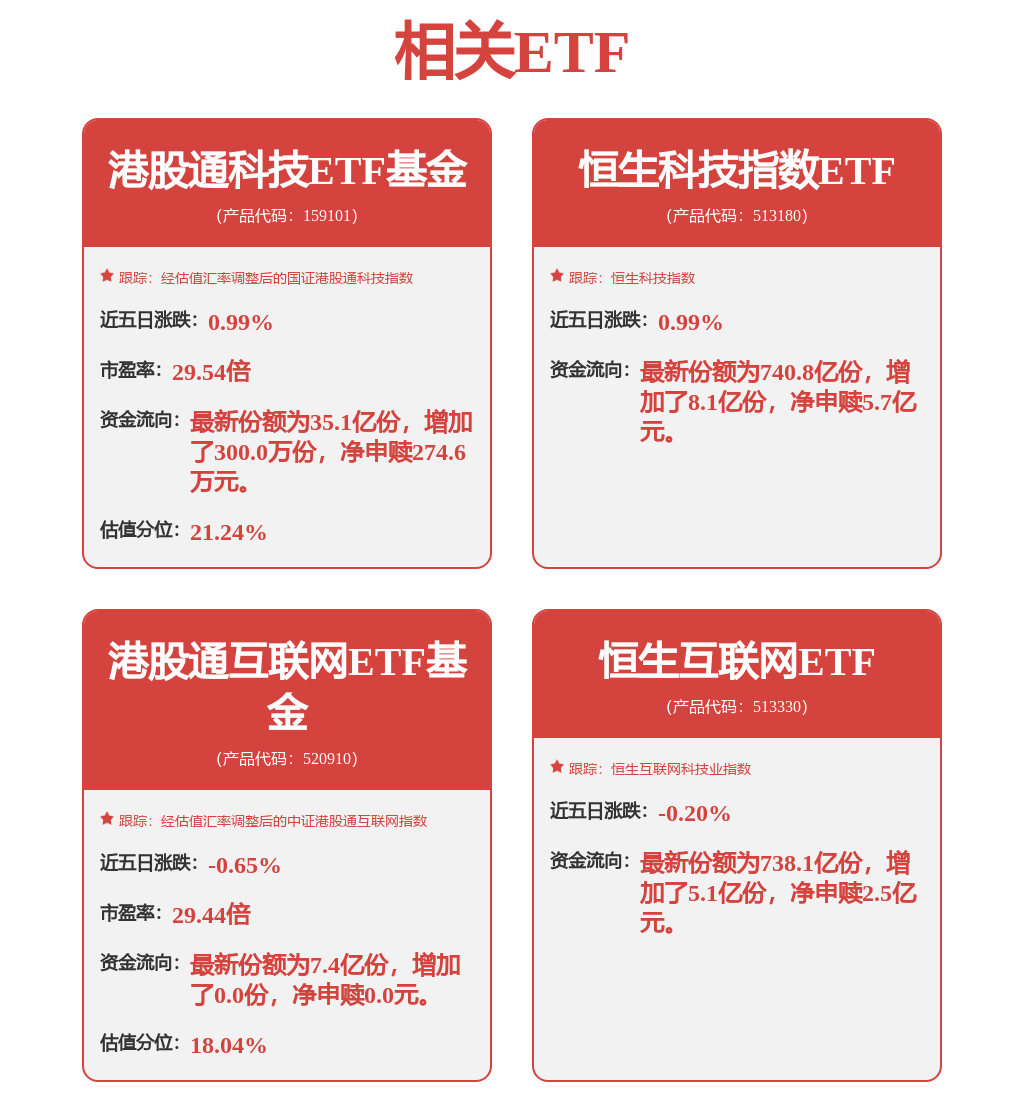
Group 1 - Core viewpoint: SMIC (00981) announced the issuance of 16,600 shares due to the exercise of restricted stock units granted under the 2014 share-based compensation plan on February 13, 2026 [1] Group 2 - Related ETF: The Hong Kong Stock Connect Technology ETF (Code: 159101) tracks the adjusted CSI Hong Kong Stock Connect Technology Index, with a recent five-day change of +0.99% and a P/E ratio of 29.54 times [3] - Fund flow: The latest share count is 3.51 billion, an increase of 3 million shares, with a net subscription of 274.6 million [3] - Related ETF: The Hang Seng Technology Index ETF (Code: 513180) tracks the Hang Seng Technology Index, also with a recent five-day change of +0.99% [3] - Fund flow: The latest share count is 74.08 billion, an increase of 810 million shares, with a net subscription of 570 million [3] - Related ETF: The Hong Kong Stock Connect Internet ETF (Code: 520910) tracks the adjusted CSI Hong Kong Stock Connect Internet Index, with a recent five-day change of -0.65% and a P/E ratio of 29.44 times [4] - Fund flow: The latest share count is 740 million, with no change in shares and no net subscription [4] - Related ETF: The Hang Seng Internet ETF (Code: 513330) tracks the Hang Seng Internet Technology Index, with a recent five-day change of -0.20% [5] - Fund flow: The latest share count is 73.81 billion, an increase of 510 million shares, with a net subscription of 250 million [5]