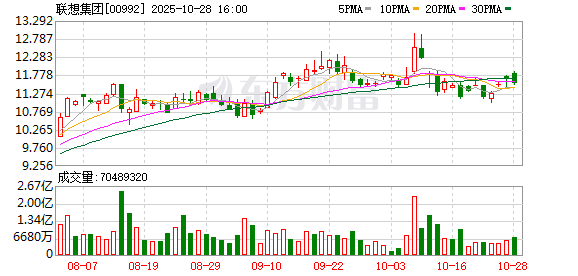
LENOVO GROUP(00992)

Search documents
联想与深圳市光明区合作 打造人工智能先锋城区
Zheng Quan Shi Bao· 2025-10-30 19:11
Core Insights - Lenovo Group has signed a strategic cooperation agreement with the Shenzhen Guangming District government to develop a city super intelligent system, focusing on enhancing "city + AI" applications across various sectors such as manufacturing, education, healthcare, government services, and cultural tourism [1] Group 1: Strategic Cooperation - The partnership aims to build and operate a city super intelligent system to improve AI application levels in multiple fields [1] - The agreement includes the construction of industry-specific corpora in healthcare and cultural tourism to drive innovation and application of AI large models [1] Group 2: AI in Manufacturing - Lenovo's Southern Intelligent Manufacturing Base in Guangming District serves as an "AI-native manufacturing" hub, supporting its production system and acting as an incubator for small and medium-sized enterprises [1] Group 3: AI Ecosystem Development - The collaboration will explore the creation of an open-source AI ecosystem, including a developer community and open-source foundation to promote resource sharing and the development of quality open-source projects [1] - Lenovo plans to introduce the city super intelligent system team and upstream/downstream cooperation resources to facilitate the application ecosystem's development in Guangming District [1] Group 4: Implementation and Expansion - The city super intelligent system has entered a phase of scalable replication, with partnerships already established in locations such as Wuyishan, Yichang, Hongkou, and Hohhot this year [2]

牵住科技创新这个“牛鼻子”——新发展理念引领高质量发展一线观察之一
Xin Hua She· 2025-10-30 16:36
Group 1 - Innovation is positioned as the top priority in the new development concept, with a focus on enhancing technological self-reliance and innovation as a core driver for high-quality development [1][2] - China's global innovation ranking has improved to 10th place according to the World Intellectual Property Organization's 2025 Global Innovation Index report, indicating a period of innovation explosion [2] - Various sectors are witnessing significant technological advancements, such as the successful research of flexible batteries and the operation of major scientific facilities like the Jiangmen neutrino experiment [2] Group 2 - The integration of innovation and industry is crucial for transforming innovation capabilities into productive forces, with efforts to deepen the collaboration between technological and industrial innovation [3][4] - Over 2,400 manufacturing pilot platforms have been established in China, facilitating the transition from laboratory to production line and supporting the commercialization of over 300 products [3] - The number of high-tech enterprises in China has reached 504,000, with over 140,000 specialized and innovative small and medium-sized enterprises cultivated [3] Group 3 - The government has made strategic deployments in key areas such as integrated circuits and high-end equipment manufacturing, emphasizing breakthroughs in core technologies [5] - Companies like Beijing Jingdiao Technology Group are increasing R&D investments to enhance their market share in high-end machine tools, aiming for a leading position globally [5] - The integration of artificial intelligence in manufacturing processes has led to a reduction in costs by approximately 20% for companies like Lenovo, highlighting the importance of smart transformation [5] Group 4 - Talent development is emphasized as a critical resource for innovation, with initiatives in the Yangtze River Delta promoting practical training and collaboration between educational institutions and industries [6] - The Ministry of Science and Technology anticipates significant advancements in China's technological capabilities over the next five years, driven by innovation leading to new productive forces and high-quality development [6]
联想签约中国—东盟信息港 共筑“数字城市丝绸之路”
Bei Jing Shang Bao· 2025-10-30 11:15
Core Insights - Lenovo Group signed strategic cooperation agreements with China-ASEAN Information Harbor Co., Ltd. and Beitou Xinchuan Group during the 2025 World Cities Conference to promote the construction and operation of urban super-intelligent systems [1] Group 1: Strategic Partnerships - Lenovo will leverage its extensive experience in urban super-intelligent systems and intelligent transformation to enhance urban governance, transportation, and cultural tourism services [1] - The collaboration with China-ASEAN Information Harbor aims to expand urban super-intelligent systems in ASEAN countries, using Laos as a model to explore applications in healthcare, education, and agriculture [1] - The partnership with Beitou Xinchuan Group focuses on developing urban super-intelligent systems in the Beibu Gulf area, covering smart transportation, energy, ports, low-altitude economy, zero-carbon parks, and manufacturing [1] Group 2: Goals and Objectives - The initiatives aim to improve urban management efficiency and optimize public service delivery [1] - The projects are part of the broader "Digital Silk Road" strategy, emphasizing the importance of digital infrastructure in the Belt and Road Initiative [1]
联想与深圳市光明区达成战略合作 共同打造人工智能先锋城区
Zheng Quan Shi Bao Wang· 2025-10-30 09:49
Group 1 - The first Urban Super Intelligent Agent Development Forum was held in Shenzhen, where Lenovo Group signed a strategic cooperation agreement with the Guangming District government to build an AI-driven urban area [1] - The collaboration aims to enhance the application of "City + AI" in various sectors such as manufacturing, education, healthcare, government services, and cultural tourism through the construction and operation of urban super intelligent agents [1] - Lenovo's Southern Intelligent Manufacturing Base in Guangming is positioned as an "AI-native manufacturing" hub, serving both its production system and as an incubator for small and medium-sized enterprises [1] Group 2 - The partnership will leverage Lenovo's "1+N Intelligent Agent" architecture to link multiple vertical intelligent agents through a city-level intelligent hub, accelerating AI integration across various industries [2] - Lenovo's urban super intelligent agent initiative has entered a phase of scalable replication, with strategic collaborations announced in cities such as Wuyishan, Yichang, Hongkou, and Hohhot this year [2] - The initiative focuses on building an open-source AI ecosystem, fostering a developer community, and promoting resource sharing to cultivate high-quality open-source projects [1][2]
这七只股藏不住了! 国信证券称AI机柜方案将持续放量
智通财经网· 2025-10-30 09:09
Core Insights - The demand for AI servers is rapidly expanding, leading major global cloud service providers (CSPs) to increase procurement of NVIDIA GPU solutions and expand data center infrastructure [1] - Capital expenditures for eight major CSPs, including Google, AWS, Meta, Microsoft, Oracle, Tencent, Alibaba, and Baidu, are projected to exceed $420 billion by 2025, representing a 61% year-on-year increase [1] - By 2026, total capital expenditures for CSPs are expected to reach a new high of over $520 billion, driven by the continued rollout of AI cabinet solutions [1] - Morgan Stanley forecasts that global cloud capital expenditures could reach $820 billion by 2026, with a year-on-year growth of 31%, significantly surpassing the market consensus of 16% [1] - Capital expenditures for AI servers are anticipated to grow by 70%, indicating an unprecedented growth trajectory [1] Industry Focus - The AI sector is identified as a high-growth investment theme with strong demand certainty, prompting recommendations to focus on companies such as Hon Hai Precision Industry, Huaqin Technology, Huadian Technology, Loongson Technology, Lenovo Group, Luxshare Precision, and Amlogic [1]




AI仍是需求确定性高增长的投资主线 国信证券看好工业富联、联想等七只股
Ge Long Hui· 2025-10-30 09:09
Core Insights - The demand for AI servers is rapidly expanding, leading major global cloud service providers (CSPs) to increase procurement of NVIDIA GPU solutions and expand data center infrastructure [1] - Capital expenditures for eight major CSPs, including Google, AWS, Meta, Microsoft, Oracle, Tencent, Alibaba, and Baidu, are projected to exceed $420 billion by 2025, representing a 61% year-on-year increase [1] - By 2026, total capital expenditures for CSPs are expected to reach a new high of over $520 billion, driven by the continued rollout of AI cabinet solutions [1] - Morgan Stanley forecasts that global cloud capital expenditures could reach $820 billion by 2026, a 31% year-on-year growth, significantly surpassing the market consensus of 16% [1] - Capital expenditures for AI servers are anticipated to grow by 70%, indicating an unprecedented growth trajectory [1] Industry Focus - The AI sector remains a high-growth investment theme with strong demand certainty, prompting recommendations to focus on companies such as Hon Hai Precision Industry, Huaqin Technology, Huadian Technology, Loongson Technology, Lenovo Group, Luxshare Precision, and Amlogic [1]

“制造+服务”如何实现“1+1>2”
Ke Ji Ri Bao· 2025-10-30 07:18
Core Viewpoint - Service-oriented manufacturing is becoming a crucial direction for the development of the manufacturing industry, emphasizing the integration of advanced manufacturing and modern services [1][2] Group 1: Definition and Characteristics of Service-oriented Manufacturing - Service-oriented manufacturing is a new business model that integrates digital technology and solutions into all lifecycle stages of manufacturing, from R&D to production and after-sales service [2][3] - It features three main characteristics: covering the entire product lifecycle, being user-demand driven, and integrating advanced technologies like industrial internet and artificial intelligence [2][3] Group 2: Advantages Over Traditional Manufacturing - Service-oriented manufacturing shifts the focus from product-centric to user-centric approaches, enhancing value through comprehensive lifecycle services [3] - It allows for higher added value compared to traditional manufacturing, which often relies on scale and low-end products [3] Group 3: Policy and Industry Development - The Ministry of Industry and Information Technology has recognized 372 demonstration enterprises and 157 projects since 2017, indicating significant progress in service-oriented manufacturing [6] - The new implementation plan aims to establish 50 leading brands and 100 innovation development hubs by 2028, promoting widespread adoption of service-oriented manufacturing models [7] Group 4: Case Study and Practical Applications - Lenovo's "Manufacturing as a Service" (MaaS) model supports startups by providing resources for product validation and flexible production, resulting in over 20% efficiency improvement and about 10% cost reduction [5] - The MaaS model connects global manufacturing resources, enabling rapid response to diverse customer needs and facilitating the transition from concept to production [4][5] Group 5: Future Outlook - The integration of manufacturing and services is seen as a key pathway to building a modern industrial system and fostering new productive forces [8]
Omdia:第三季度全球智能手机市场出货量同比增长3% 达3.201亿台
智通财经网· 2025-10-30 06:15
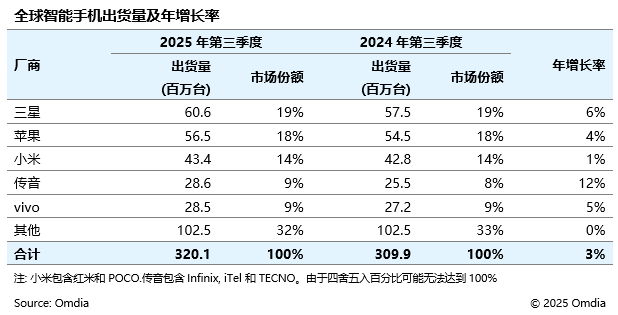
Core Insights - The global smartphone market is projected to reach 320.1 million units in Q3 2025, reflecting a 3% year-over-year growth, driven by increased shipments from major brands like Samsung, Apple, Transsion, and Lenovo [1][2]. Company Performance - Samsung maintains its position as the global leader with shipments of 60.6 million units, a 6% increase year-over-year, supported by strong sales of its high-end Galaxy Z Fold7/Flip7 and mid-range Galaxy A07 and A17 models [5]. - Apple shipped 56.5 million units, marking a 4% year-over-year growth, with the iPhone 17 series performing well due to enhanced storage options and strong demand in emerging markets [5]. - Transsion has risen to the fourth position globally, achieving a 12% year-over-year increase in shipments after completing inventory adjustments [6]. - Xiaomi's shipments reached 43.4 million units, showing a modest 1% growth, with regional performance offsetting declines in the Chinese market [5]. - Vivo ranked fifth, benefiting from strong performance in the Indian market and surpassing Huawei in market share within China [6]. Regional Market Trends - The North American and Greater China markets experienced a year-over-year decline in shipments, while regions like Asia-Pacific, the Middle East, and Africa saw robust growth, contributing to the overall recovery of the global smartphone market [9]. - Africa recorded a significant 25% year-over-year increase in shipments, largely due to Transsion's increased market investment following inventory adjustments [9]. - The Asia-Pacific region achieved a 5% year-over-year growth, marking the highest quarterly performance since Q4 2021 [9]. Market Outlook - The global smartphone market is exhibiting a polarized growth trend, with both low-end (under $100) and high-end (over $700) segments expanding, while the mid-range market remains weak [10]. - Despite the recovery in Q3, challenges such as component shortages and rising costs are expected to impact the industry, potentially leading to increased prices for new products and dampening demand in the low-end market [10]. - Manufacturers are likely to adopt various strategies to address these challenges, including prioritizing high-margin models and enhancing supply chain negotiation power to maintain profitability [10].



联想首提“AI工厂”:用最少的算力做好智能体的开发
Huan Qiu Wang· 2025-10-30 06:13
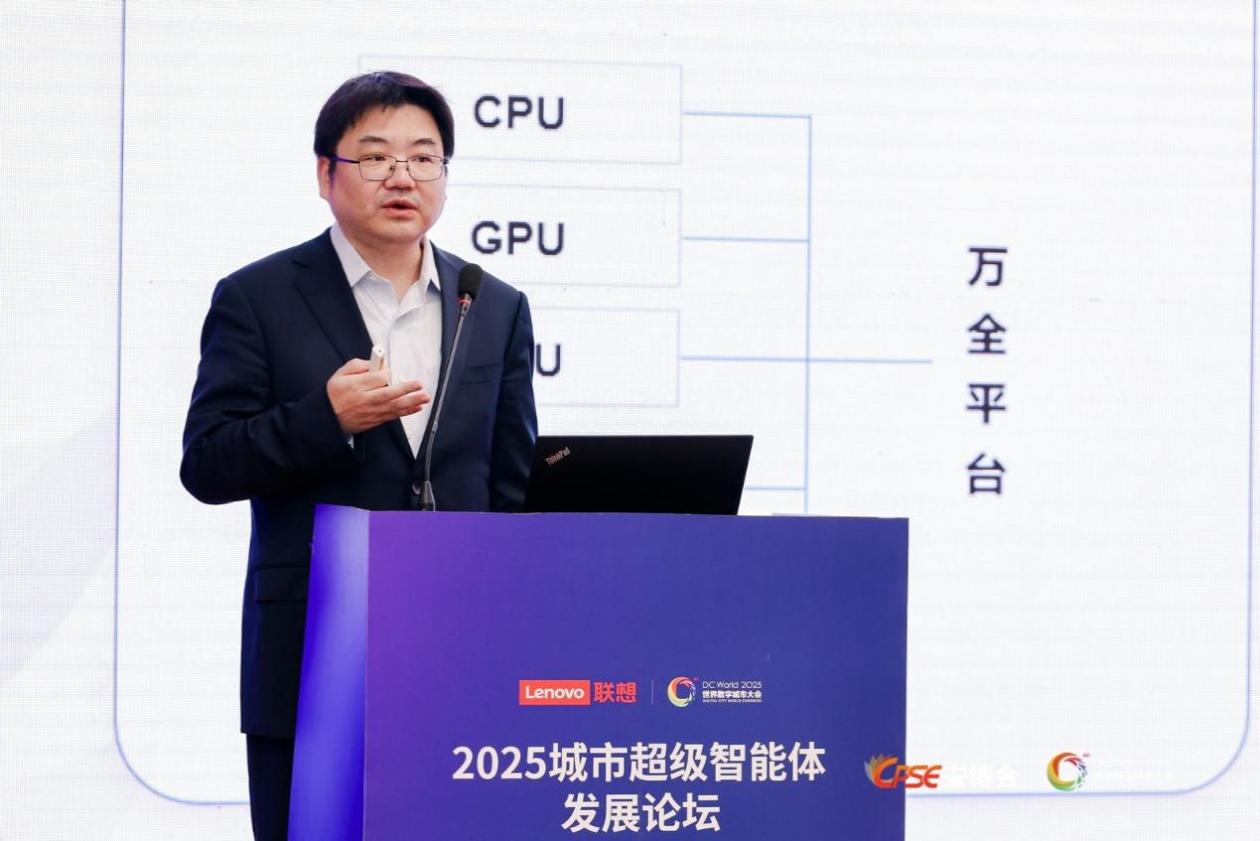
Core Insights - Lenovo introduced the concept of "AI Factory" at the World Digital City Conference, aiming to simplify infrastructure complexities for clients through a standardized system that enables industry co-creation [1][3] Group 1: AI Transformation - Companies undergoing AI transformation must navigate a "three-step leap" process, facing challenges in data governance, ROI pressures, and the need for continuous upgrades and maintenance of computing models [3] - Lenovo's "1+N Intelligent Body" architecture illustrates the impracticality of requiring different hardware systems for various scenarios, which the "AI Factory" aims to address by creating a manageable and replicable standardized system [3] Group 2: Infrastructure and Technology Strategy - Lenovo's strategy, termed "AI Empowerment + Green Empowerment," encompasses a comprehensive technology layout that includes a unified heterogeneous computing platform to enhance computing efficiency [4] - The "One Horizontal and Five Verticals" framework includes server, storage, data network, software, and support services, ensuring a robust foundation for the "AI Factory" [4] Group 3: Hardware Innovations - Lenovo's innovations in hardware, such as the ultra-intelligent fusion server and AI-oriented storage designs, provide a solid physical base for the "AI Factory," achieving energy efficiency with a PUE as low as 1.05 [5] - The AI-oriented storage architecture significantly reduces networking costs and storage capacity requirements, making it four times more efficient than traditional architectures [5] - The overarching goal of the "AI Factory" is to facilitate the development of intelligent systems with minimal computing resources, promoting sustainable and standardized infrastructure for widespread AI application across various industries [5]
首届城市超级智能体论坛开幕 联想加速智慧城市4.0落地
Zheng Quan Shi Bao Wang· 2025-10-29 14:48
Group 1 - The first Urban Super Intelligent Body Development Forum was held in Shenzhen, focusing on the theme "Urban Super Intelligent Body Leading Smart City 4.0" [2] - The forum discussed the core role and practical methods of the "Urban Super Intelligent Body" in transforming urban governance and promoting social service innovation [2] - The transition from Smart City 3.0 to 4.0 involves integrating AI and big data, enabling cities to have self-perception, autonomous decision-making, and continuous evolution capabilities [2] Group 2 - Lenovo's Urban Super Intelligent Body, proposed for 2025, is described as a complete urban intelligent ecosystem rather than a single technology product [2] - The architecture of the Urban Super Intelligent Body is defined as "1+N," where "1" represents a unified intelligent core responsible for various functions, and "N" represents multiple specialized intelligent bodies focusing on specific tasks [3] - The collaboration between Lenovo and various governmental and corporate entities aims to enhance the application and innovation of the Urban Super Intelligent Body across multiple regions [5] Group 3 - Lenovo's Urban Super Intelligent Body has already been implemented in several cities, including Wuyishan, Yichang, Hongkou, Hohhot, and Xixian New Area, indicating a nationwide scale of deployment [5] - The strategic cooperation agreement signed with the Shenzhen Guangming District People's Government and other partners aims to further improve urban management efficiency through the Urban Super Intelligent Body [5]