KUAISHOU(01024)

Search documents
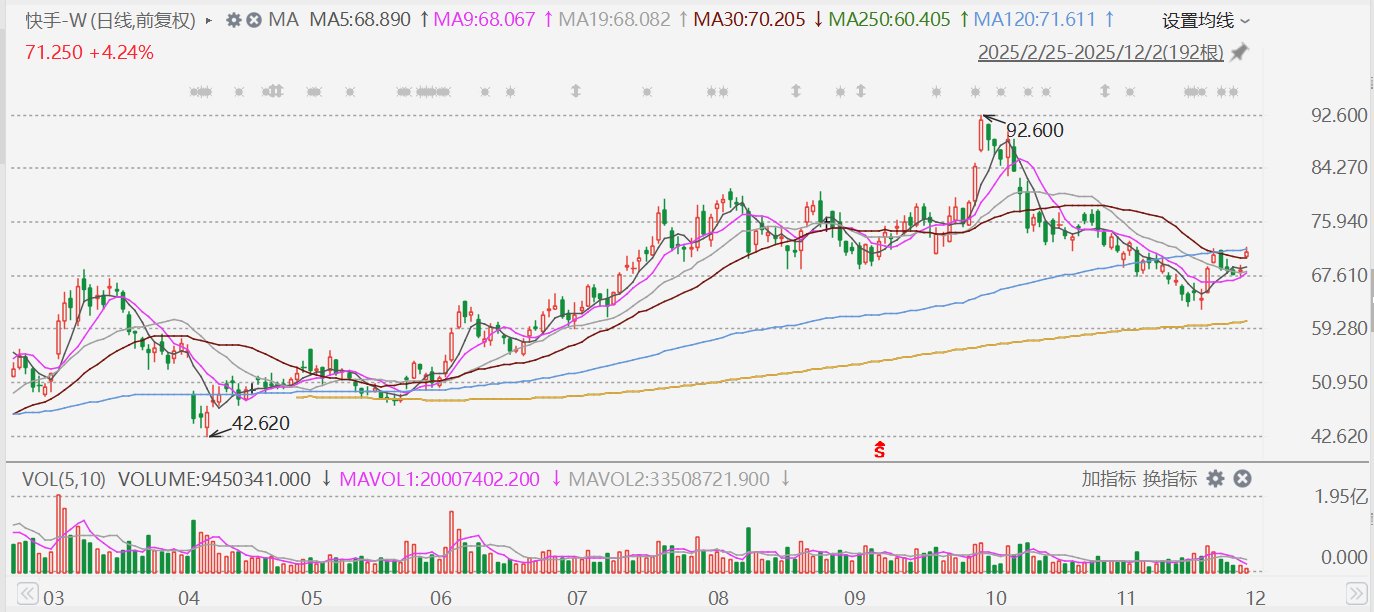
港股异动 | 快手-W(01024)涨超5% 可灵AI视频O1模型正式上线
Xin Lang Cai Jing· 2025-12-02 01:44
消息面上,12月1日,可灵AI正式发布其全新产品"可灵O1",定位为首个大一统的多模态创作工具。可 灵O1基于全新的视频和图像模型,整合文字、视频、图片、主体等多模态输入,将所有生成和编辑任 务融合于一个全能引擎之中。可灵O1的推出,彻底解决了AI视频生成中角色、场景等一致性难题,为 影视、自媒体、广告电商等应用场景,提供了深度适配的一站式解决方案。 西部证券认为,在生成式AI应用加速落地的背景下,公司基于多模态大模型技术积极迭代软硬件,或 将进一步促进公司主营业务持续增长,同时,公司生成式AI应用不断推进技术落地和商业化也有望为 公司带来新的增量空间。浦银国际也表示,看好公司在视频大模型领域的领先地位或将为公司增长带来 新的动能,带动估值提升。 快手-W(01024)涨超5%,截至发稿,涨5.19%,报71.9港元,成交额6.06亿港元。 来源:智通财经网 ...
港股异动丨快手拉升涨超5%,全球首个大一统多模态视频模型可灵O1上线
Ge Long Hui· 2025-12-02 01:42
Core Viewpoint - Kuaishou-W (1024.HK) experienced a significant increase of over 5%, reaching HKD 71.95, following the announcement of the launch of Keling AI's new product "Keling O1" on December 1 [1] Group 1: Product Launch - Keling O1 is positioned as the first unified multimodal creation tool [1] - The product integrates text, video, images, and subjects into a comprehensive engine, addressing consistency issues in AI video generation [1] - Keling O1 offers a one-stop solution tailored for applications in film, self-media, and advertising e-commerce [1]

香港恒生指数开盘涨0.6% 恒生科技指数涨0.76%
Zheng Quan Shi Bao Wang· 2025-12-02 01:39
人民财讯12月2日电,香港恒生指数开盘涨0.6%,恒生科技指数涨0.76%。阿里巴巴、快手高开超3%。 ...
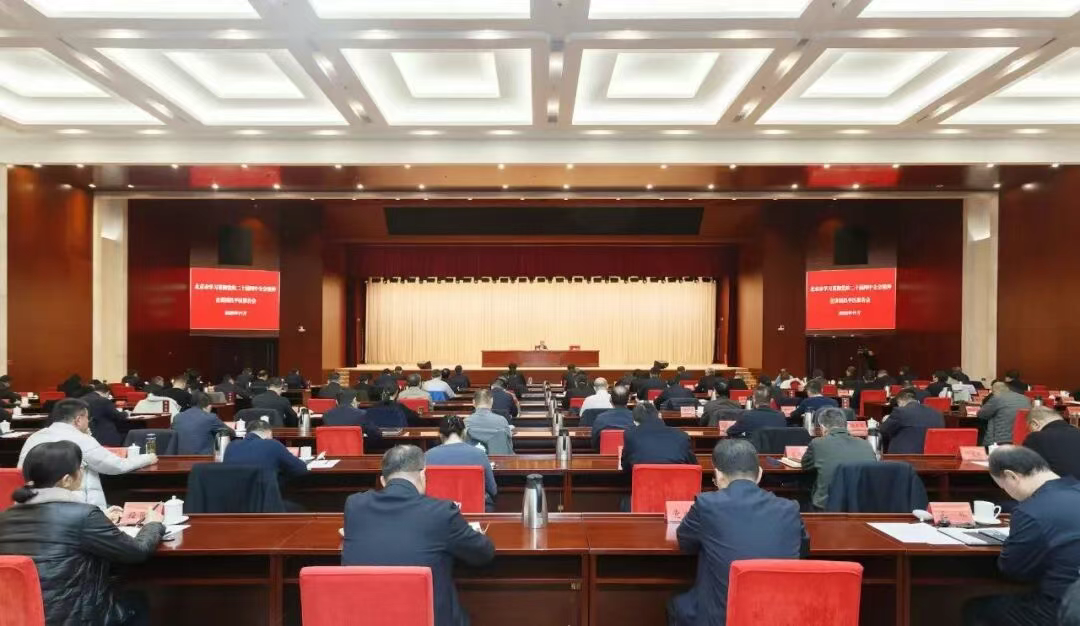
深学细悟聚共识 实干笃行强担当 北京市学习贯彻党的二十届四中全会精神宣讲团在互联网企业和昌平区开展宣讲
Bei Jing Wan Bao· 2025-12-01 14:44
Group 1 - The city宣讲团 is actively promoting the spirit of the 20th Central Committee, aiming to unify thoughts and inspire action among party members and the public [1] - Zhang Jinlin, a member of the宣讲团, delivered a speech at Kuaishou, emphasizing the importance of understanding the committee's spirit and its implications for the internet industry [5] - The report from Zhang highlighted three key areas: understanding the committee's spirit, recognizing achievements during the 14th Five-Year Plan, and promoting the implementation of the committee's spirit to contribute to Beijing's modernization [5] Group 2 - After the report, Zhang engaged in discussions with leaders from key internet companies, addressing their concerns and fostering deeper understanding of the committee's spirit [6] - Hu Xuefeng, another member of the宣讲团, provided a comprehensive explanation of the committee's spirit in Changping District, offering targeted suggestions for developing emerging industries and promoting technological innovation [8] - Following the report, Hu conducted research in the synthetic biology manufacturing industry, exchanging insights with party members and grassroots representatives [10] Group 3 - Du Jianbo, Deputy Secretary of Meituan's Party Committee, expressed commitment to integrating the committee's spirit into corporate governance and enhancing social responsibility [12] - Kong Xixian, Deputy Director of the Changping District Reform Office, emphasized the need to implement the committee's spirit in accelerating the development of the local economy and fostering innovation in agriculture [14]

Sora 2两月留存率接近 0%,奥特曼得学抖音快手?
3 6 Ke· 2025-12-01 08:20
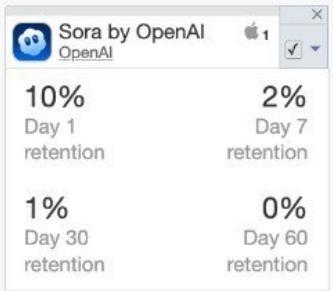
Core Insights - Sora 2, developed by OpenAI, was initially seen as a revolutionary tool in the video generation space but has faced significant challenges in user retention and overall effectiveness [1][3][34] Group 1: User Engagement and Retention - Despite a strong launch with over 1 million downloads in the first week on iOS and 470,000 on Android, Sora 2's user retention rates are alarmingly low, with a 30-day retention rate of less than 1% [5][8][9] - The app's rapid decline in App Store rankings, dropping from first to fourth place within two weeks, indicates a significant loss of interest among users [6][9] - Comparatively, other social apps like TikTok and Kuaishou maintain much higher retention rates, highlighting Sora 2's struggle to convert initial curiosity into sustained usage [8][9] Group 2: Product Quality and User Experience - The quality of video generation is inconsistent, with only 5% to 10% of generated videos deemed usable, leading to user frustration [10][11] - Users face long wait times for video generation, which, combined with high failure rates, results in a poor overall experience [11][12] - The lack of advanced editing features and community engagement tools further limits user satisfaction, as users cannot modify videos directly within the app [12][18] Group 3: Business Model and Financial Viability - OpenAI's current model is unsustainable, with daily operational costs reaching $15 million, translating to approximately $4.5 billion annually [27][29] - The introduction of paid services to supplement free usage has not resolved the underlying issues of low user retention and high operational costs [26][27] - Legal challenges regarding intellectual property and content generation add complexity to the business model, as restrictions on content can negatively impact user experience [29][30] Group 4: Industry Implications - The rapid decline of Sora 2 serves as a cautionary tale for the AI video generation industry, emphasizing that technological advancement does not guarantee product success [34][35] - The industry is still in the early stages of commercial exploration, with many companies struggling to find viable business models [32][33] - OpenAI's experience highlights the need for a balance between user engagement and ethical considerations, as the pursuit of user retention can lead to potential over-dependence on addictive features [31][34]
Kuaishou Technology: Overall Still Bullish With Some Near-Term Risks (OTCMKTS:KUASF)
Seeking Alpha· 2025-12-01 01:31
Core Viewpoint - The investment strategy focuses on long-term investments while also utilizing short-term shorts to identify alpha opportunities through bottom-up analysis of individual companies' fundamentals [1] Group 1: Investment Strategy - The approach emphasizes medium to long-term investment duration [1] - The goal is to identify companies with strong fundamentals, sustainable competitive advantages, and growth potential [1]

智通港股通持股解析|12月1日



智通财经网· 2025-12-01 00:32
智通财经APP获悉,根据2025年11月28日披露数据,中国电信(00728)、绿色动力环保(01330)、大 眾公用(01635)位居港股通持股比例前3位,分别为72.72%、69.20%、68.60%。此外,万国黄金集团 (03939)、阿里巴巴-W(09988)、快手-W(01024)在最近有统计数据的5个交易日内,持股额增 幅最大,分别为+119.66亿元、+108.43亿元、+12.76亿元;盈富基金(02800)、中芯国际(00981)、恆 生中国企业(02828)在最近有统计数据的5个交易日内,持股额减幅最大,分别为-26.36亿元、-15.15 亿元、-8.09亿元。 具体数据如下(交易所数据根据T+2日结算): 1、港股通最新持股比例排行(前20名) | 公司名称 | 持股额变动 | 持股数变动 | | --- | --- | --- | | 万国黄金集团(03939) | +119.66亿元 | +37582.04万股 | | 阿里巴巴-W(09988) | +108.43亿元 | +7157.37万股 | | 快手-W(01024) | +12.76亿元 | +1881.69万股 | | ...
快手-W(01024):OneRec赋能商业化增长,可灵收入环比持续高增
CMS· 2025-11-30 13:03
Investment Rating - The report maintains a "Strong Buy" investment rating for the company [3] Core Insights - The company reported a revenue of 35.55 billion yuan for Q3 2025, representing a year-on-year growth of 14.2%, exceeding Bloomberg's consensus estimate of 13.5% [1] - Adjusted net profit for Q3 2025 was 4.99 billion yuan, a year-on-year increase of 26.3%, also surpassing Bloomberg's consensus estimate of 22.4% [1] - The company's AI revenue exceeded 300 million yuan in Q3 2025, marking a continuous increase from 150 million yuan in Q1 and 250 million yuan in Q2 [1] Financial Data and Valuation - Total revenue projections for the company are as follows: 113.47 billion yuan in 2023, 126.90 billion yuan in 2024, 142.13 billion yuan in 2025E, 152.05 billion yuan in 2026E, and 160.66 billion yuan in 2027E, with year-on-year growth rates of 20%, 12%, 12%, 7%, and 6% respectively [2][11] - Adjusted net profit is projected to be 10.27 billion yuan in 2023, 17.72 billion yuan in 2024, 20.59 billion yuan in 2025E, 23.67 billion yuan in 2026E, and 26.74 billion yuan in 2027E, with significant growth rates [8][12] - The company has a total market capitalization of 295.7 billion HKD, with a current share price of 68.4 HKD [3] User Engagement and AI Integration - Daily Active Users (DAU) and Monthly Active Users (MAU) reached 416 million and 730 million respectively in Q3 2025, with year-on-year growth of 2.1% and 2.4% [7] - The average usage time per DAU was 134.1 minutes, indicating increased user engagement [7] - The AI-driven model OneRec has significantly improved user retention and engagement metrics [7] E-commerce Performance - E-commerce transaction volume and profitability exceeded expectations, with Q3 2025 GMV growing by 15.2% to 385 billion yuan [7] - Revenue from live streaming business was 9.57 billion yuan, showing a year-on-year growth of 2.5% [7] - The online marketing services revenue reached 20.1 billion yuan, a year-on-year increase of 14.0% [7] AI Commercialization - The company’s AI revenue has shown a steep growth trajectory, with Q3 2025 AI revenue exceeding 300 million yuan [7] - The introduction of the OneRec model has enhanced advertising matching efficiency and customer ROI [7] - The AI technology has contributed approximately 4%-5% to the online marketing revenue in Q3 2025 [7] Profitability and Financial Ratios - The adjusted PE ratio is projected to decrease from 26.0 in 2023 to 10.0 in 2027, indicating improving valuation metrics [12] - The company’s return on equity (ROE) is expected to stabilize around 20.6% in 2026 and 19.2% in 2027 [12]
解读:《新银发力量:活力、悦己、得劲——2025快手新银发人群洞察报告》
艾瑞咨询· 2025-11-30 00:06
Core Insights - The "new silver-haired population" aged 45 and above has grown from 460 million in 2020 to 660 million in 2023, becoming a significant driver of the consumption market, shifting from "basic elderly care" to "quality living" [1] - The report by iResearch and Kuaishou reveals that the consumption needs of this demographic are evolving from basic utility to a pursuit of quality and comfort, aligning well with Kuaishou's content and e-commerce ecosystem [1][2] Industry Trends - The consumption scale of the 45 and above demographic in China has exceeded 14 trillion, with a rising consumption ratio year by year, driven by policies like the "Silver Economy 26 Articles" and an increase in life expectancy to 79 years [2] - The new silver-haired market is rapidly expanding, becoming a key force in driving domestic demand [2] Digital Empowerment - Digital platforms like Kuaishou are becoming central to the lifestyle and consumption of the new silver-haired population, who are actively embracing online life [4][5] Demographic Breakdown - The new silver-haired population can be categorized into four groups: Practical, Vitality, Calm, and Zen, each with distinct attitudes and consumption preferences [7][10] - The Vitality group (45% of the population) is the main driver of "self-satisfying consumption," while the Practical group (18.6%) balances family and self, and the Calm group (22.8%) focuses on basic consumption [10] Core Consumption Scenes - Health, travel, and fashion are identified as the three core scenes for the new silver-haired population's "comfortable" lifestyle, with a shift from basic functionality to quality experiences [11][13][15] - Health is the foundation of a comfortable life, with a significant percentage of users engaging with health-related content and making related purchases [13] Travel Preferences - The new silver-haired population shows a strong preference for travel experiences that prioritize comfort and ease, with a notable interest in flexible travel arrangements [15][16] Fashion Consumption - The fashion consumption logic has shifted from durability to aesthetics and comfort, with a high purchasing rate for clothing among the new silver-haired demographic [18] Kuaishou's Ecological Advantages - Kuaishou leverages diverse content formats to engage the new silver-haired population, with a high percentage actively searching for products featured in short videos and live streams [20] - Trust is a critical factor, with users valuing platform certification and user reviews to alleviate purchase concerns [21][28] Future Trends - The market is expected to evolve towards a focus on comfort, satisfaction, and multi-dimensional trust systems, enhancing the overall consumer experience for the new silver-haired population [24][27] - Products and services are shifting from basic functionality to enhanced user experience, with a focus on customization and ease of use [25][26] Conclusion - The pursuit of a "comfortable" lifestyle is a fundamental aspect of the new silver-haired population's consumption behavior, driving the transformation of the silver economy from survival to quality living [29]

新银发力量:活力、悦己、得劲——2025快手新银发人群洞察报告
艾瑞咨询· 2025-11-30 00:06
Core Insights - The "new silver-haired population" aged 45 and above has grown from 460 million in 2020 to 660 million in 2023, becoming a significant driver of the consumption market, shifting from basic elder care to quality living [1] - The report by iResearch and Kuaishou reveals that the consumption needs of this demographic are evolving from basic utility to a pursuit of quality and peace of mind, aligning well with Kuaishou's content and e-commerce ecosystem [1] Group 1: Demographic Characteristics - The new silver-haired population is characterized by "vitality, value, and comfort," breaking traditional stereotypes and creating an economic system that balances family responsibilities with self-actualization [2] - Kuaishou has identified four typical user groups within this demographic: Practical, Vitality, Calm, and Zen, each exhibiting unique consumption behaviors and attitudes [2][3] Group 2: Market Potential - The population aged 45 and above has steadily increased, representing 44.7% of the total population, which translates to a market potential exceeding 14 trillion yuan, with expectations to expand to 20 trillion yuan due to policy support [4] - Kuaishou's platform has about 1 billion new silver-haired users, with 25% of daily active users falling into this category, indicating a solid user base with high engagement [6] Group 3: Consumption Trends - The new silver-haired population prioritizes health and personal interests, with 74% focusing on health reserves and 62% on personal interest development, moving away from traditional parental roles [8] - Key consumption categories include health and wellness products, travel and leisure experiences, fashion, home improvement, and educational entertainment, reflecting a diverse range of needs [13][14] Group 4: Consumption Behavior - The consumption behavior is shifting from survival needs to quality living, with a focus on product quality, brand value, and emotional attachment, indicating a transition to "self-pleasing consumption" [38] - The new silver-haired population is increasingly engaging in online decision-making while seeking offline fulfillment, creating a hybrid OMO consumption model that enhances decision security [36] Group 5: Strategic Opportunities - Kuaishou's content ecosystem is designed to resonate with the new silver-haired population's values and needs, offering practical knowledge, interest-based content, and skill learning [28] - The platform's operational strategy focuses on building trust through user engagement, simplifying merchant onboarding, and creating a seamless connection between content and commerce [30][22]