BYD(01211)

Search documents
比亚迪新电池背后 这一锂电材料供应紧俏
Shang Hai Zheng Quan Bao· 2026-03-07 01:12
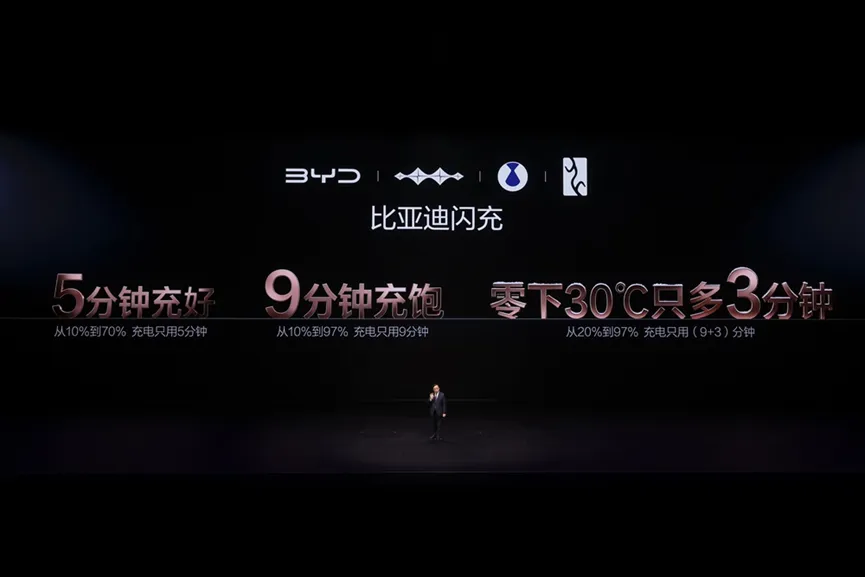
Group 1 - BYD's chairman Wang Chuanfu introduced the second-generation blade battery, which can charge from 10% to 70% in 5 minutes and from 10% to 97% in 9 minutes, showcasing breakthroughs in low-temperature charging performance [1] - The second-generation blade battery utilizes fourth-generation lithium iron phosphate (LFP) materials, which significantly enhance energy density, rate performance, and low-temperature performance [3] - The production capacity of fourth-generation LFP materials is currently below 2 million tons, leading to a supply shortage expected to persist until 2026, creating a first-mover advantage for companies with capacity [3][4] Group 2 - By 2025, only about 4-6 companies are expected to achieve stable production and bulk shipment of fourth-generation LFP materials, with an estimated market share of 10.3% [4] - In 2026, the production of fourth-generation LFP materials is projected to double, with a market share increase to 16%-20%, while actual demand is expected to reach 1.5 million tons against a supply of only 1-1.2 million tons, indicating a tight supply-demand situation [4] - Hunan Youneng has achieved bulk supply of fourth-generation LFP products, forecasting a net profit growth of 93.75% to 135.87% in 2025 due to the rapid development of the new energy vehicle and energy storage markets [5] Group 3 - Longpan Technology has successfully developed both single and double sintered fourth-generation products, with rapid demand growth since 2025 leading to a supply shortage [6] - Andar Technology is upgrading its existing 40,000 tons/year LFP project to meet the demand for higher density and better performance products, expected to complete by Q1 2026 [6] - Fulian Precision is expanding its market share in high-density LFP materials, focusing on the super-fast charging market, and has announced a capital increase with CATL for its subsidiary [6]




比亚迪的守擂之年
2 1 Shi Ji Jing Ji Bao Dao· 2026-03-06 23:04
Core Insights - BYD is facing increasing competition and challenges in maintaining its market share as competitors like Geely are rapidly closing the technology gap [2][3][10] - The company is undergoing a strategic shift from aggressive market expansion to focusing on product adaptation and customer retention [3][4][12] Sales Performance - In January and February 2026, BYD's sales dropped to 210,000 and 190,200 units, representing year-on-year declines of 30% and 41.1% respectively [2] - Geely's sales during the same period were 270,000 and 206,000 units, indicating a competitive threat to BYD's market position [2] Product Strategy - BYD is focusing on the 100,000 to 200,000 yuan market segment, which is under pressure from competitors like Geely and Wuling [3][14] - The company plans to launch new models to reclaim market share in the budget electric vehicle segment [3][14] Technological Innovation - BYD's internal strategy involves a cycle of mass production, reserve, and pre-research for technological advancements [4][12] - The company aims to introduce significant technological upgrades by 2026, as indicated by its leadership [4][12] Market Dynamics - The competitive landscape is shifting, with traditional Japanese brands losing market share from 20.6% to below 10% between 2021 and 2025 due to slow electrification [7] - BYD's growth has been supported by favorable government policies, including tax exemptions for electric vehicles [9] Pricing and Cost Strategy - BYD has successfully positioned itself in the entry-level market by offering competitive pricing and superior fuel efficiency compared to traditional gasoline vehicles [5][6] - The company has implemented a strategy of price reductions and enhanced configurations to maintain its market position [6][11] High-End Market Strategy - BYD is focusing on high-end market segments, with plans to launch new brands and models to compete with luxury vehicles [18][20] - The company has seen significant growth in its high-end brands, with total sales reaching 396,500 units in 2025, doubling their market share [18][19] International Expansion - BYD's overseas sales surpassed 100,000 units in February 2026, marking a 41.4% increase and accounting for 52.6% of total sales [21] - The company aims to achieve 1.3 million overseas sales in 2026, reflecting a strategic pivot towards international markets [21]
比亚迪公布国际专利申请:“机库的舱盖机构、机库及车辆”
Sou Hu Cai Jing· 2026-03-06 21:55
Group 1 - BYD has announced an international patent application titled "Hatch Cover Mechanism of Hangar, Hangar and Vehicle," with application number PCT/CN2025/094835, and the international publication date set for March 5, 2026 [1] - In 2023, BYD has filed a total of 455 international patent applications, representing a significant increase of 461.73% compared to the same period last year [1] - For the first half of 2025, BYD invested 29.596 billion yuan in research and development, which is a year-on-year increase of 50.84% [1]

比亚迪公布国际专利申请:“快拆组件、板卡模组以及电子设备”
Sou Hu Cai Jing· 2026-03-06 21:55
Core Viewpoint - BYD has filed an international patent application for a "quick-release component, board module, and electronic device," with the application number PCT/CN2025/076895, set to be published internationally on March 5, 2026 [1] Group 1: Patent Application - The patent application reflects BYD's ongoing innovation efforts in the electronic device sector [1] - The company has filed a total of 455 international patent applications this year, representing a significant increase of 461.73% compared to the same period last year [1] Group 2: R&D Investment - In the first half of 2025, BYD invested 29.596 billion yuan in research and development, which is a year-on-year increase of 50.84% [1]
比亚迪公布国际专利申请:“电池盖、电池、电池包及用电设备”
Sou Hu Cai Jing· 2026-03-06 21:55
Group 1 - BYD has filed an international patent application for a battery cover, battery, battery pack, and electric equipment, with the application number PCT/CN2025/078345 and an international publication date of March 5, 2026 [1] - In 2023, BYD has announced a total of 455 international patent applications, representing an increase of 461.73% compared to the same period last year [1] - For the first half of 2025, BYD invested 29.596 billion yuan in research and development, which is a year-on-year increase of 50.84% [1]
比亚迪公布国际专利申请:“充电控制方法”
Sou Hu Cai Jing· 2026-03-06 21:55
Group 1 - BYD has filed an international patent application for a "charging control method" with application number PCT/CN2025/076425, published internationally on March 5, 2026 [1] - In 2023, BYD has announced a total of 455 international patent applications, representing a 461.73% increase compared to the same period last year [1] - For the first half of 2025, BYD invested 29.596 billion yuan in research and development, which is a year-on-year increase of 50.84% [1]
BYD Needs Just 9 Minutes To Challenge Tesla's Last Great Advantage
Benzinga· 2026-03-06 20:31
Core Insights - Tesla's competitive advantage lies in its Supercharger network, which has established a benchmark for EV infrastructure, allowing for quick recharging and long-distance travel [1] - The charging network remains a significant practical advantage for Tesla against increasing competition from Chinese EV manufacturers [1] Charging Technology Comparison - Tesla's Supercharger V3 stations provide fast-charging capabilities of up to 250 kilowatts, enabling a charge from 10% to 80% in approximately 25-30 minutes [2] - In contrast, BYD's Flash Charger can deliver up to 1,500 kilowatts, which is about six times the output of Tesla's fastest chargers [2] BYD's Expansion Plans - BYD has installed over 4,000 Flash Charging stations in China and is planning a global rollout of this technology [3] Technical Considerations - The nine-minute charging time for BYD's Flash Charger requires the use of its second-generation Blade Battery and compatible vehicle architecture [4] - To support the high power demand, BYD's chargers are paired with energy storage systems that store electricity and release it quickly during charging sessions [4] Industry Implications - The emergence of ultra-fast charging technologies could shift the competitive landscape of the EV industry from merely establishing charging networks to focusing on the speed of charging [5] - Tesla, which has historically dominated this space, may face increased competition as new technologies scale globally [5]

比亚迪下了盘大棋
远川研究所· 2026-03-06 13:16
Core Viewpoint - The article discusses BYD's recent technological advancements, particularly the second-generation blade battery and the 2.0 version of its megawatt fast charging system, highlighting the company's ambition to enhance electric vehicle charging speed and infrastructure [6][8]. Summary by Sections Technological Advancements - The second-generation blade battery features a charging time of as little as nine minutes to go from 10% to 97% capacity, even in extreme cold conditions [6][8]. - The peak power of the new megawatt fast charging system has increased from 1000 kW to 1500 kW, bringing it closer to the charging speed of traditional fuel refueling [6][8]. Infrastructure Development - BYD plans to build 20,000 fast charging stations by the end of the year, a significant increase from its previous stance of not building any [6][8]. - The company is offering one year of free fast charging for new car owners, which may create dissatisfaction among existing customers [6][8]. Market Strategy - BYD aims to penetrate the high-end market, which has been a challenge for the company, by introducing models priced above 150,000 yuan that utilize the new battery technology [16][18]. - The company’s strategy includes a "light-storage-charging integration" approach for its fast charging stations, which allows for energy storage and optimized charging costs [20][21]. Competitive Positioning - BYD is recognized as the second-largest battery manufacturer globally, with a complex business structure that includes electric vehicles, batteries, photovoltaics, and semiconductors [20][24]. - The company’s vertical integration allows for better cost control and efficiency in its operations compared to competitors [20][21]. Future Outlook - The transition to an 800V architecture in some of BYD's models is expected to enhance charging efficiency and support the rollout of fast charging stations [19][20]. - The article suggests that BYD's approach may position it as a leader in the sustainable energy sector, potentially filling the gap left by competitors like Tesla, which is shifting focus towards AI and autonomous driving [24][26].

比亚迪发布第二代刀片电池及闪充技术 年内将建设落成2万座闪充站
Zheng Quan Ri Bao Wang· 2026-03-06 12:44
Core Insights - BYD has achieved a breakthrough in electrification with the launch of its second-generation blade battery and fast-charging technology, allowing charging from 10% to 70% in just 5 minutes and from 10% to 97% in 9 minutes [1][2] - The second-generation blade battery has improved energy density by over 5% compared to the first generation, enabling the Tengshi Z9GT to achieve a range of 1036 kilometers [1] - BYD's new fast-charging stations, designed with a "sliding rail suspension T-type" structure, can deliver charging power of 1500 kW, overcoming grid capacity limitations [2] Company Developments - BYD plans to build 20,000 fast-charging stations across China by the end of the year, with 18,000 expected to be completed in collaboration with national charging network operators [3] - The fast-charging stations will be strategically located within 3 kilometers in first and second-tier cities, 5 kilometers in third and fourth-tier cities, and 6 kilometers in fifth and sixth-tier cities [3] - BYD has already established 4,239 fast-charging stations in the past two months, aiming to become the leading Chinese automaker in fast-charging station deployment [3] Industry Impact - The introduction of the second-generation blade battery and fast-charging technology is expected to alleviate consumer anxiety regarding charging efficiency, compressing the refueling experience from hours to minutes [2] - This technological advancement is anticipated to accelerate the unification of charging standards and push for upgrades across the industry, potentially reducing the market space for fuel vehicles [3]
2026年建成2万座闪充站!比亚迪力推储充一体解决方案!
Xin Lang Cai Jing· 2026-03-06 12:36
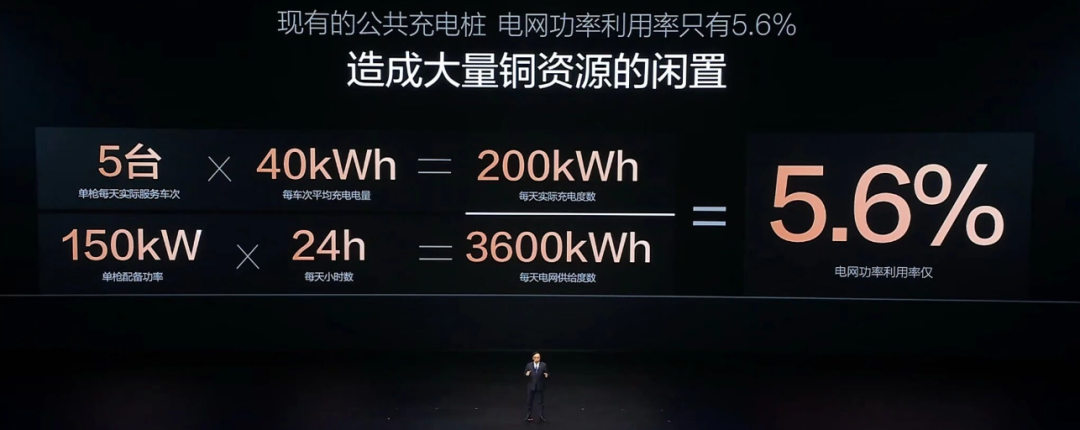
Core Viewpoint - BYD has launched its second-generation blade battery and flash charging technology, aiming to improve charging efficiency and address the low utilization of power grid capacity, which has led to significant copper resource waste [1][44]. Group 1: Second-Generation Blade Battery - The second-generation blade battery has a 5% increase in energy density compared to the first generation, with the Tengshi Z9GT model achieving a range of 1036 km [3][66]. - The battery demonstrates superior fast charging capabilities, with the Seagull 07EV model charging from 10% to 70% in just 4 minutes and 51 seconds, and from 10% to 97% in 8 minutes and 44 seconds, even in extreme cold conditions [4][47]. - Safety tests for the second-generation blade battery exceed national standards, including 500 fast charge cycles without fire or explosion during extreme conditions [3][20][63]. Group 2: Flash Charging Technology - BYD has introduced the world's largest single-gun flash charging pile with a power output of 1500 kW, capable of charging two vehicles simultaneously without power reduction [6][31]. - The flash charging system includes a "storage and charging integrated system" to mitigate grid impact and ensure high power charging capabilities [6][76]. - The "Flash Charging China" strategy aims to establish 20,000 flash charging stations by the end of 2026, with 4,239 already built as of March 5, 2026 [8][51][84]. Group 3: Customer Benefits and Accessibility - BYD is offering one year of free flash charging rights to vehicle owners, eliminating service fees and making the charging stations accessible to all electric vehicle owners [8][51]. - The plan includes building 18,000 flash charging "stations within stations" and 2,000 flash charging highway stations, ensuring that 90% of urban areas are within 5 kilometers of a charging station by 2026 [8][86].