NCI(01336)

Search documents
保险股走强背后:多重利好驱动,估值修复空间显现
Di Yi Cai Jing· 2025-07-24 12:58
Core Viewpoint - The strong performance of insurance stocks is driven by multiple factors, including improvements in fundamentals, supportive policies, and favorable funding conditions [1][3][9]. Group 1: Performance Metrics - As of July 23, the A-share insurance sector saw a 2.25% increase, with New China Life leading at 2.73% [2]. - From April 1 to the present, major A-share insurance stocks have experienced gains ranging from nearly 50% to over 120%, with New China Life doubling its stock price [1][3]. - Over the past year, New China Life's stock has risen by 116.15%, while China Life and China Pacific Insurance have also shown significant increases of 59.16% and 48.51%, respectively [3]. Group 2: Fundamental Drivers - The improvement in the insurance sector's fundamentals is supported by a recovery in liabilities and assets, alongside a series of policies aimed at reducing costs and enhancing market access for insurance funds [1][9]. - Analysts predict that the insurance sector is at the beginning of a long-term upward trend, with all listed insurance companies showing investment value [1][10]. Group 3: Valuation and Investment Trends - The insurance sector is characterized by low valuations and stable dividend yields, attracting attention from public funds [3][4]. - As of the end of Q2 2025, public funds increased their holdings in insurance stocks, with the sector's valuation ranging from 0.60 to 0.93 times P/EV, indicating it remains at historical lows [4][6]. - The total dividends from five listed insurance companies for 2024 are projected to reach 907.89 billion yuan, a year-on-year increase of 20.21% [4]. Group 4: Regulatory Impact - Recent regulatory measures have aimed to mitigate "interest spread loss" risks, which have historically pressured valuations in the insurance sector [6][7]. - The lowering of the maximum guaranteed interest rates for various insurance products is expected to alleviate investment pressures on insurance companies [7][8]. Group 5: Future Outlook - Analysts anticipate continued improvement in the insurance sector's fundamentals, driven by a combination of favorable policies and market conditions [9][12]. - The upcoming financial reports for listed insurance companies are expected to reflect sustained growth in new business value and improved profitability in various insurance segments [11][12].



2025年二季度主动基金重仓股追踪
ZHONGTAI SECURITIES· 2025-07-24 04:52
1. Report Industry Investment Rating - The report does not explicitly mention the overall industry investment rating 2. Core Viewpoints of the Report - In Q2 2025, the overall market value of A - share holdings of active equity - oriented funds decreased, while that of H - share holdings increased. The industry concentration of the top heavy - stock holdings of equity - oriented funds decreased. The communication, non - bank finance, and media industries saw significant increases in allocation ratios, while the steel, food and beverage, and coal industries had large reduction ratios [4][6]. - The structure of the top heavy - stocks of active equity - oriented funds changed. The overall number of large - market - cap leaders decreased, and the holdings of sub - industry leaders increased. The new high - growth technology stocks related to AI emerged, while traditional large - cap white - horse stocks were significantly reduced [4]. - In terms of industry leaders, the communication, non - bank finance, media, agriculture, forestry, animal husbandry, and beauty care industries were significantly increased, while the steel, coal, real estate, social services, and food and beverage industries were significantly reduced [21]. - The report suggests focusing on four investment themes: communication and hardware upstream under AI diffusion, non - bank finance, new consumption in the Hong Kong stock market, and national defense and military industry [26] 3. Summary by Relevant Catalogs 3.1 2025Q2 Active Fund Heavy - Stock Holding Structure Overview - **A - share and H - share holdings changes**: In Q2 2025, the total market value of active equity - oriented fund heavy - stock holdings was 1736.2 billion yuan, a 1.66% QoQ decrease. A - share holdings decreased by 2.79% QoQ to 1394.8 billion yuan, while H - share holdings increased by 3.20% QoQ to 341.3 billion yuan. Due to the complex macro - economic environment and market volatility, funds faced redemption pressure and tended to reduce large - cap stocks with poor liquidity [6]. - **Industry concentration decline**: From Q1 to Q2 2025, the industry concentration of the heavy - stock holdings of equity - oriented funds decreased. CR3 decreased by 0.56 percentage points to 38.37%, and CR5 decreased by 4.18 percentage points to 51.18%. The top five industries in terms of holding market value remained the same, but the proportion of the electronics industry increased, while the other four industries decreased [4][7]. - **Structural adjustment of industry holdings**: In Q2 2025, 12 industries saw an increase in the total market value of holdings. The communication, non - bank finance, and media industries had large increases in allocation ratios, rising by 75.88%, 64.62%, and 38.37% respectively. The steel, food and beverage, and coal industries had large reduction ratios, decreasing by 46.32%, 26.16%, and 23.99% respectively [9] 3.2 Q2 Active Fund Top Heavy - Stock Tracking - **Change in the structure of top heavy - stocks**: In Q2 2025, the structure of the top 20 heavy - stocks of active equity - oriented funds changed. The large - market - cap leaders decreased, and the sub - industry leaders increased. The market value of the top 20 heavy - stocks accounted for 20.72% of all heavy - stocks, a 2% decrease from Q1 [12]. - **Changes in the top five heavy - stocks**: The top five heavy - stocks remained the same, but the overall holdings decreased. New high - growth technology stocks such as New Fiber Optic Technology and Inphi Corporation quickly rose in the rankings, while traditional large - cap white - horse stocks such as Luxshare Precision Industry, Midea Group, and Contemporary Amperex Technology were significantly reduced [4]. - **Hong Kong stock market adjustment**: In the Hong Kong stock market, AI and Internet media leaders were reduced, while the pharmaceutical and new consumption sectors that performed well in Q2 were significantly increased [18] 3.3 Q2 Industry Leader Heavy - Stock Tracking - **Industry leader allocation changes**: In Q2 2025, the communication, non - bank finance, media, agriculture, forestry, animal husbandry, and beauty care industries were significantly increased, while the steel, coal, real estate, social services, and food and beverage industries were significantly reduced [21]. - **Communication industry focus**: Driven by the booming demand for AI hardware, the communication industry became the focus of funds. The optical module sector, which benefits from the expansion of AI capital expenditure, was the main area for increasing communication heavy - stocks. The profitability of communication equipment is expected to continue to improve in the second half of the year [22]. - **Non - bank finance sector highlights**: The leaders of the non - bank finance sector attracted attention. The holdings of Ping An Insurance and CPIC increased by 55% and 41% respectively, and securities leaders such as Citic Securities and Huatai Securities also saw over 30% increases. The brokerage sector's performance is expected to continue to improve [23] 3.4 Investment Recommendations - **AI diffusion - related communication and hardware upstream**: The significant increase in the holdings of optical module leaders reflects that funds are extending from AI software to computing infrastructure. AI capital expenditure is expected to drive the performance of upstream sectors in the second half of the year [26]. - **Non - bank finance sector**: The concentrated increase in holdings of leaders such as Citic Securities and Ping An Insurance reflects the positive expectations of the market for the profitability improvement of the brokerage and insurance sectors. The non - bank finance sector is expected to achieve a resonance of valuation repair and performance recovery [26]. - **Hong Kong stock new consumption theme**: After the correction in the AI sector, funds refocused on consumption structure highlights, especially in the Hong Kong stock market. Sub - sectors such as pets, toys, and emotional consumption have become important directions for heavy - stock allocation [26]. - **National defense and military industry safety theme**: The significant increase in the holdings of core military stocks reflects the high attention of institutions to the "national security + high - end manufacturing" theme. The military industry has policy support, order growth, and mid - report performance improvement expectations, with medium - term allocation value [27]





保险业多维赋能多层次养老保障体系建设
Jin Rong Shi Bao· 2025-07-24 01:18
Core Insights - The aging population in China is projected to reach 310 million by 2024, with 220 million aged 65 and above, highlighting the urgency to address the challenges of an aging society [1] - The insurance industry is positioned as a key player in developing a multi-tiered pension security system, actively creating "insurance + pension" service models in response to policy directions and market demands [1] Policy Framework - In the first half of the year, a comprehensive policy framework for pension finance was established, providing clear guidance for the insurance sector's involvement in the pension security system [2] - The implementation plan issued by the financial regulatory authority outlines 20 specific measures across six areas to enhance the insurance industry's role in pension security [2] - Policies aimed at boosting consumption have also been introduced, encouraging financial institutions to develop long-term pension products that meet consumer needs [2] Local Initiatives - Local governments are actively responding to national policies, with provinces like Anhui implementing measures to enhance the pension finance service system and support the aging population [3] - Research indicates that insurance institutions have invested over 300 billion in the health and pension industry, covering areas such as elderly community construction and health ecosystem development [3] Product Innovation - The insurance sector has accelerated the iteration of pension insurance products, creating a matrix of offerings that includes basic protection, supplementary pensions, and health services [4] - As of July 13, 2023, there are 1,060 personal pension-related products available, with insurance products accounting for 262, representing 24.7% of the total [4] - New products, such as China Life's pension annuity insurance, offer comprehensive coverage for various life stages, enhancing adaptability to consumer needs [4] Market Trends - The demand for annuity insurance is increasing as traditional funding arrangements struggle to meet retirement needs, making it a vital tool for wealth planning [5] - Innovative cross-industry products are emerging, such as TaiKang's member system designed for the "new retirement population," addressing diverse needs in travel and living [6] Community Development - Insurance companies are leveraging their resources to accelerate the establishment of elderly care communities, integrating financial products with service offerings [7] - At least 27 new elderly care communities have opened in the first half of the year, focusing on core urban areas and technological enhancements [7] - Companies like China Life and TaiKang are launching high-quality elderly care projects, emphasizing convenient locations and smart facilities [7][8] Strategic Shifts - The strategy for developing elderly care communities is shifting from a heavy asset model to a combination of light and heavy asset approaches [8] - Despite significant progress in the pension security system, challenges such as product homogenization and uneven regional development remain, necessitating further policy guidance and innovation [8]

上半年多家险企获赔率超99% “秒赔”与“直付”成新常态
Jin Rong Shi Bao· 2025-07-24 01:18
Core Insights - The insurance industry is experiencing a significant increase in claim payouts and service efficiency, with digital and intelligent claims processing becoming standard practice [1][2][4] Group 1: Claim Performance - Major insurance companies reported substantial claim volumes in the first half of 2025, with China Life Insurance processing over 12.14 million claims totaling over 30.2 billion yuan, and Ping An Life handling 2.377 million claims amounting to 20.62 billion yuan [2] - The industry maintains a high claim approval rate, with several companies exceeding 99%, including China Life and Citic Prudential, which both achieved 99.6% [2] - Critical illness insurance accounted for a significant portion of claims, with China Pacific Insurance reporting 5.23 billion yuan in critical illness claims, representing 52.7% of their total payouts [2] Group 2: Medical Insurance Trends - Medical insurance claims are the most frequent, with Ping An Life reporting that 92% of their claims were for medical insurance, while Sunshine Insurance reported 83.7% [3] - The prevalence of medical claims highlights the close connection between insurance products and public health needs [3] Group 3: Technological Advancements - Insurance companies are leveraging technology to enhance claims efficiency, with Ping An Life achieving 93% of automated claims processed within 60 seconds using their DeepSeek model [4][5] - China Life's claims processing time has improved significantly, with small medical claims being settled in an average of 0.37 days [4] Group 4: Direct Payment Services - The industry is focusing on "direct payment" services, allowing for seamless integration between hospitals, health insurance, and commercial insurance, enabling patients to settle claims upon discharge [6][7] - China Life has pioneered direct payment initiatives, processing over 3.91 million direct payment claims worth over 2.13 billion yuan in the first half of 2025 [7] - Other companies, such as Ping An Life and Taikang Life, have also introduced similar direct payment services, enhancing customer convenience [7]


盘中突破3600点后冲高回落 是趋势反转还是逢低布局机会?
Guang Zhou Ri Bao· 2025-07-23 17:04
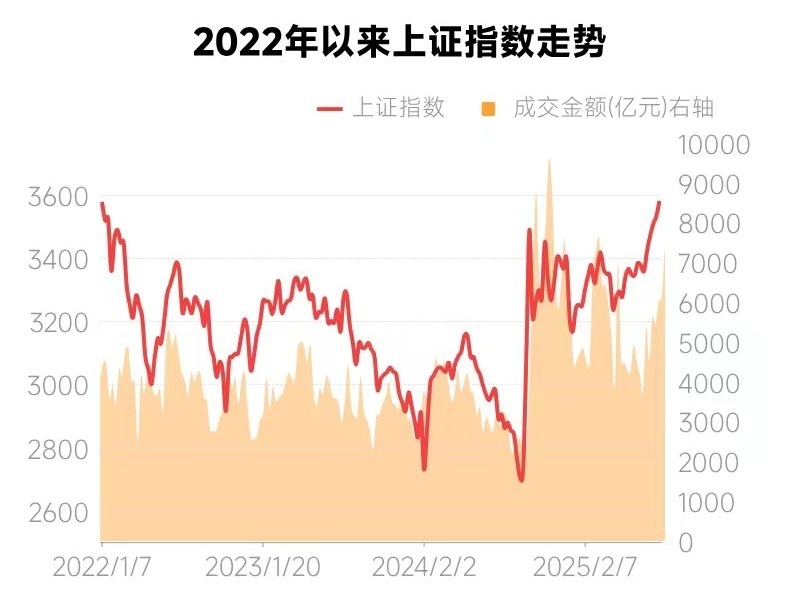
Market Overview - The Shanghai Composite Index reached a high of 3600 points during the day but closed at 3582.3 points, up 0.01% [1] - The total market turnover was 1.9 trillion yuan, a decrease of 30.3 billion yuan from the previous day [1] - The Hang Seng Index rose by 1.62%, reaching a three-and-a-half-year high, while the Hang Seng Tech Index increased by 2.48% [1] Sector Performance - The financial sector played a significant role in pushing the index above 3600 points, but it retreated in the afternoon [2] - Notable performances included Guosen Securities, which rose over 5%, and New China Life Insurance, which hit a historical high of 64.29 yuan per share [2] - The Yajiang Hydropower concept stocks showed mixed results, with some core stocks like China Power Construction and Tibet Tianlu achieving three consecutive gains, while others like Ankao Zhidian fell over 13% [2] Institutional Insights - Analysts from GF Securities suggest that the recent index fluctuations are not indicative of a trend reversal but rather a release of multiple pressures [3] - If trading volume remains below 1.7 trillion yuan in the coming days, short-term support for the Shanghai index may drop to the 3536-3542 point gap [3] - Huatai Securities reports that brokerage firms are expected to see high growth in their semi-annual earnings, indicating a potential recovery in the brokerage sector [3]


3家上市险企上半年保费收入近4200亿元 银保渠道价值贡献提升
Zheng Quan Ri Bao· 2025-07-23 16:50
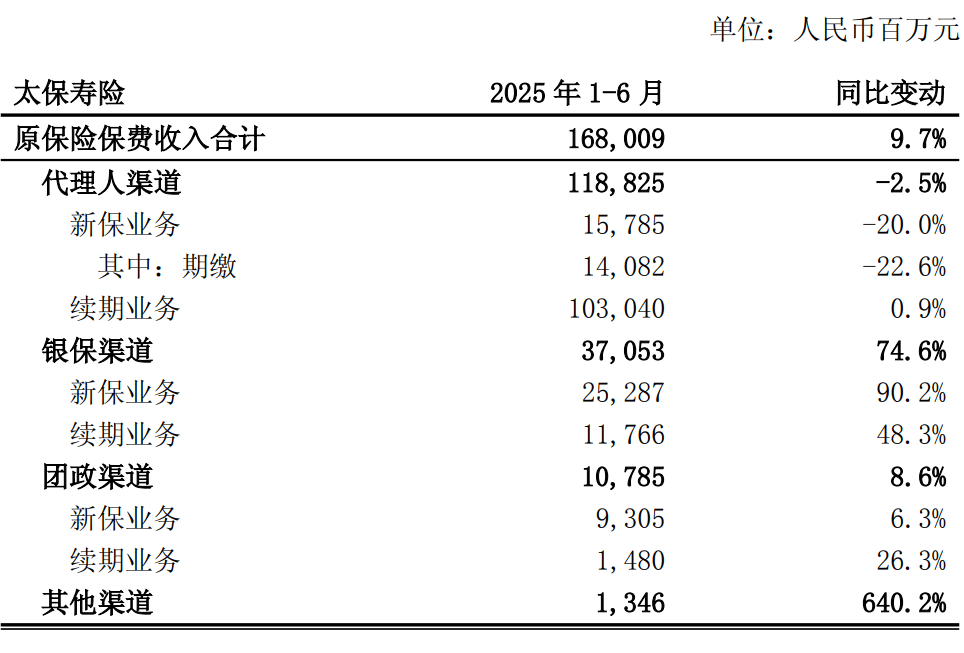
Core Viewpoint - The insurance industry in China shows resilience with a total premium income of 419.93 billion yuan in the first half of the year, reflecting a year-on-year growth of 10.4% among major insurers [1][2][3] Group 1: Company Performance - New China Life Insurance reported a premium income of 121.26 billion yuan, a year-on-year increase of 23% [2] - China Pacific Insurance achieved a premium income of 282.01 billion yuan, with its life insurance segment contributing 168.01 billion yuan, up by 9.7% [2] - ZhongAn Online recorded a premium income of 16.66 billion yuan, growing by 9.3% year-on-year [2] Group 2: Industry Trends - The overall insurance industry reported a premium income of 3060.2 billion yuan in the first five months, marking a 3.8% year-on-year increase [2] - Life insurance remains the largest and fastest-growing segment, with premium income reaching 1873.5 billion yuan, up by 3.9% [2] Group 3: Distribution Channels - The bancassurance channel has become a key driver for premium growth, particularly after regulatory changes that allowed for greater flexibility in partnerships [4] - China Pacific's life insurance segment saw premium income from the bancassurance channel reach 37.05 billion yuan, a significant increase of 74.6% [4] - The removal of the "1+3" restriction has expanded the range of insurance products banks can offer, enhancing market vitality [4] Group 4: Future Outlook - Experts suggest that insurers should optimize product structures and enhance operational efficiency to sustain premium income growth [1][5] - The low interest rate environment is expected to challenge traditional high-yield products, prompting insurers to adjust their product offerings [5] - Insurers are encouraged to adopt diversified strategies, including technology investments and improved customer experiences, to ensure sustainable development [5]

个险跌倒,银保吃饱?上市寿险半年报前瞻:银保扛起增长大旗!
Sou Hu Cai Jing· 2025-07-23 12:25
Core Insights - The performance of listed life insurance companies in the first half of the year is under scrutiny as they prepare to disclose their results, with a focus on premium growth and channel performance [1] - Both China Pacific Insurance and New China Life Insurance reported strong premium growth, primarily driven by the bancassurance channel [1][2] Premium Performance - New China Life Insurance achieved a total premium income of 121.26 billion yuan, a year-on-year increase of 23% [2] - China Pacific Insurance reported a total premium income of 168.01 billion yuan, with a year-on-year growth of 9.7% [2][4] - The bancassurance channel for China Pacific Insurance saw a significant increase in premium income, rising by 74.6% to 37.05 billion yuan, while the agent channel experienced a decline of 2.5% [2][4] Channel Analysis - The agent channel for China Pacific Insurance generated 118.83 billion yuan in premium income, with new business premiums down by 20% [4] - The bancassurance channel's new business premiums surged by 90.2%, indicating a strong recovery and growth potential [2][4] - The decline in individual insurance channel performance is attributed to restrictions on previous "New Year" promotions and ongoing adjustments in the agent workforce [4][5] Investment Trends - Life insurance companies are actively increasing their investment activities, with major players like New China Life, Ping An Life, and China Life making approximately 10 significant investments in various sectors [6] - The total investment balance of insurance funds has grown from 7.7 trillion yuan in 2013 to 33.3 trillion yuan in 2024, reflecting a compound annual growth rate (CAGR) of 14.2% [6] - The life insurance sector accounts for nearly 90% of the total investment scale in the industry, with a significant portion of investments expected to shift towards equities in the coming years [6]
分红险实现率回暖,百余款产品超100%
2 1 Shi Ji Jing Ji Bao Dao· 2025-07-23 09:30
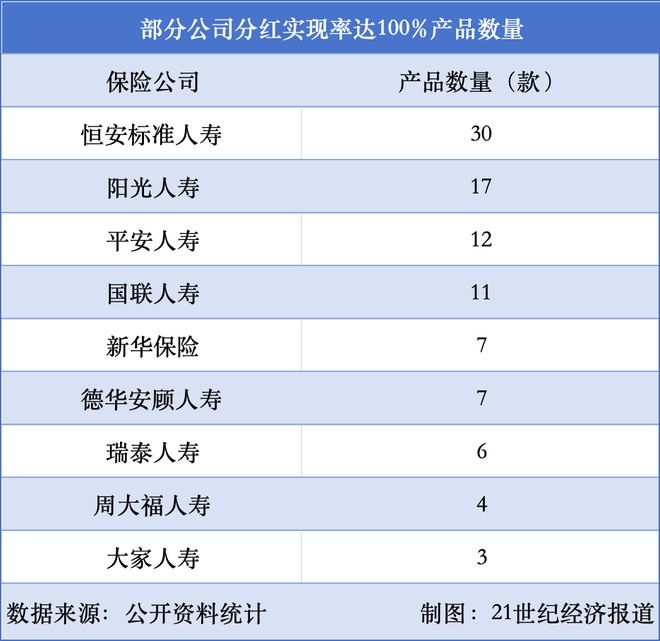
Core Insights - The overall dividend realization rate for participating insurance products has improved significantly in 2024, with many products exceeding 100% realization rates, contrasting with the 2023 average of below 100% [1][2][3] Industry Performance - Major insurance companies have shown notable improvements in their dividend realization rates, with companies like New China Life and Sunshine Life reporting multiple products exceeding 100% [2][3] - The regulatory changes in June 2023 allowed companies to justify higher dividend rates, leading to a rebound in realization rates [1][5] Product Analysis - A significant number of older products still have realization rates between 25% and 50%, primarily due to higher demonstration rates used in older products compared to newer ones [1][3] - The first batch of 2024 dividend realization rates revealed over a hundred products with rates exceeding 100%, indicating a positive trend in the market [3][4] Regulatory Impact - The issuance of the "Opinion Letter" in June 2023 has been pivotal in allowing companies to set higher dividend levels, provided they can justify the rationale [5][6] - The regulatory framework aims to prevent irrational competition and promote stable operations within the industry [5][6] Market Trends - The market for participating insurance products is expanding, with a notable shift towards these products as companies adapt to a low-interest-rate environment [7][8] - The proportion of participating insurance products in new business has surpassed 50%, indicating a strategic pivot by many insurers [8] Sales and Distribution Challenges - Despite the growth in participating insurance products, there are challenges in replacing traditional products, as evidenced by a decline in overall insurance premiums in early 2025 [8][9] - Some sales practices have raised concerns, with reports of agents exaggerating dividend realization rates, leading to potential misrepresentation of product benefits [9]

非银金融25Q2重仓持股分析及板块最新观点:保险持仓显著回升,券商持仓仍严重欠配-20250723
CMS· 2025-07-23 06:33
Investment Rating - The report maintains a recommendation for the securities and insurance sectors, indicating a positive outlook despite potential challenges from trade friction and economic pressures [6]. Core Insights - The non-bank financial sector saw a significant increase in holdings, with the insurance sector's holdings rising to 1.54%, up 0.63 percentage points from the previous quarter, while the brokerage sector's holdings reached 0.90%, up 0.36 percentage points [5][21]. - The total market value of public funds reached 6,285.3 billion, with a year-on-year increase of 10% and a quarter-on-quarter increase of 7% [2]. - The insurance sector is benefiting from a recovery in premium income, with a cumulative premium income of 30,602 billion from January to May, reflecting a year-on-year growth of 3.8% [20]. Summary by Sections Public Fund Market Size - In Q2 2025, the total net value of funds was 33.7 trillion, with a year-on-year increase of 10% and a quarter-on-quarter increase of 7% [10]. - The non-monetary fund scale was 19.5 trillion, up 11% year-on-year and 7% quarter-on-quarter [10]. High Dividend Stock Holdings Analysis - The holdings of banks, electric equipment, transportation, public utilities, oil and petrochemicals, and coal showed varied changes, with bank holdings increasing by 16% [16]. Non-Bank Sector Holdings Analysis Brokerage Sector - The brokerage sector's holdings increased to 0.90%, with a 58% rise in shareholding volume to 669 million shares [18][19]. - The average daily trading volume for equity funds reached 1.49 trillion, a year-on-year increase of 57% [18]. Insurance Sector - The insurance sector's holdings increased significantly, with a notable rise in individual stock holdings for major companies like China Ping An and China Taiping [21]. - The insurance sector's holdings are still below the standard allocation of 1.91%, indicating potential for further investment [21]. Investment Recommendations - The report suggests focusing on key brokerage firms such as CITIC Securities and Guotai Junan, as well as insurance companies like China Taiping and China Ping An, due to their potential for growth in the current market environment [6].




港股保险股震荡走强,中国人寿(02628.HK)涨超3%,友邦保险(01299.HK)、中国太保(02601.HK)涨超2%,中国平安(02318.HK)、新华保险(01336.HK)、众安在线(06060.HK)涨超1%。
news flash· 2025-07-23 01:46
港股保险股震荡走强,中国人寿(02628.HK)涨超3%,友邦保险(01299.HK)、中国太保(02601.HK)涨超 2%,中国平安(02318.HK)、新华保险(01336.HK)、众安在线(06060.HK)涨超1%。 ...