
GLMS SEC(01456)

Search documents
调研速递|冰轮环境接待国联民生证券等3家机构调研 数据中心液冷、核电业务受关注 HRSG产品2025年营收预计达10亿
Xin Lang Zheng Quan· 2026-01-22 10:25
Core Viewpoint - Ice Wheel Environmental Technology Co., Ltd. is actively engaging in various sectors, focusing on advanced energy and power solutions, with significant developments in data center liquid cooling systems, nuclear power technologies, HRSG products, and thermal management solutions. Group 1: Business Overview - The company provides comprehensive temperature and energy management solutions across a wide temperature range from -271°C to 200°C, with products including various types of compressors, absorption chillers, industrial heat pumps, and heat exchange equipment [2] - Its products serve multiple industries such as food cold chain, industrial refrigeration, commercial air conditioning, energy and chemical sectors, aerospace research, rail transportation, data centers, nuclear power plants, and metallurgy [2] Group 2: Data Center Liquid Cooling Systems - The company has deepened its layout in data center liquid cooling systems, with its subsidiary Dunhan Bush providing cooling equipment for major domestic and international projects [3] - Dunhan Bush has a 131-year history and is recognized in the HVAC sector, with products included in the Ministry of Industry and Information Technology's list of advanced applicable technologies for green data centers [3] Group 3: Nuclear Power Sector - The company is focusing on nuclear power technologies, having developed innovative solutions for nuclear island cooling and heat recovery, and has recently won a bid for a floating small modular reactor cooling project [4] - Dunhan Bush is a leading service provider in the nuclear island refrigeration market, with over 20 years of experience and has served multiple nuclear power stations in China [4] Group 4: HRSG Products - The joint venture with Yantai Modern Ice Wheel Heavy Industry Co., Ltd. is experiencing strong demand for HRSG products, with expected revenue of over 1 billion yuan in 2025 [5] - The HRSG business has established strong competitiveness through collaborations with major companies like GE, Siemens, and Mitsubishi [5] Group 5: Thermal Management Solutions - The thermal management sector is a key focus for the company, benefiting from policies promoting urban renewal and carbon neutrality, with technologies aimed at reducing energy consumption and carbon emissions [6][7] - The company has developed various technologies, including absorption heat exchangers and flue gas waste heat recovery systems, which have received national recognition and awards [7] Group 6: AIDC Cooling Solutions - The company is addressing cooling needs in AIDC (Artificial Intelligence Data Centers) with lithium bromide absorption chillers that utilize waste heat from gas turbines, enhancing energy efficiency [8]


研报掘金丨国联民生:维持宁波银行“推荐”评级,中收高增30%+表现亮眼
Ge Long Hui· 2026-01-22 07:40
Core Viewpoint - Ningbo Bank has maintained stable revenue and profit growth over 25 years, with a remarkable increase of over 30% in non-interest income [1] Group 1: Financial Performance - Revenue and profit growth has been stable over 25 years [1] - Non-interest income has shown a significant increase of over 30% [1] - Steady growth in deposits and loans, with a high proportion of new deposits being demand deposits [1] Group 2: Cost and Asset Quality - Liability costs are expected to decline, supporting a gradual stabilization of interest margins [1] - Non-performing loans remain low and stable, with continued emphasis on cost control [1] Group 3: Strategic Focus - The company has consistently implemented a strategy of "large banks cannot do well, small banks cannot do" [1] - Market-oriented operations are a key feature, with a focus on high-quality operational areas [1] - Credit scale growth is higher than the industry average, and asset quality remains stable [1] Group 4: Service Development - Recently, the company has actively provided comprehensive services to corporate clients [1] - There is a strengthened focus on developing wealth management in the retail sector, marking a new phase in banking operations [1] Group 5: Investment Recommendation - The report maintains a "recommended" rating and suggests active monitoring of the company [1]

研报掘金丨国联民生:维持新乳业“推荐”评级,有望在2026年原奶周期触底向上中受益
Ge Long Hui A P P· 2026-01-20 09:01
Group 1 - The core viewpoint of the article is that New Dairy Industry is expected to benefit from the upward cycle of raw milk prices by 2026, as indicated by the research report from Guolian Minsheng Securities [1] - The current price-to-earnings (PE) ratios for New Dairy Industry are projected at 23, 19, and 16 times for the years leading up to 2026, maintaining a "recommended" rating [1] - The China Dairy Association's eighth member conference highlighted the need for the dairy industry to adapt to demographic changes and emphasized deep processing of dairy products as a key strategy to enhance resilience and value in the industry [1] Group 2 - The upward cycle of raw milk prices is expected to favor midstream dairy companies, particularly New Dairy Industry [1] - Industry competition is improving, with the intensity of competition in ambient temperature products being greater than that in low-temperature products, which may benefit New Dairy Industry [1] - The company is anticipated to leverage strategies of "promoting sales and introducing new products," with the expected increase in average prices from the cycle likely to offset cost pressures [1]

港股收评:恒指跌0.29%、科指跌1.16%,黄金及新消费概念股逆势走高,科技股、AI应用、商业航天股普跌
Jin Rong Jie· 2026-01-20 08:25
Market Performance - The Hong Kong stock market experienced a decline, with the Hang Seng Index falling by 0.29% to 26,487.51 points, the Hang Seng Tech Index down 1.16% to 5,683.44 points, and the National Enterprises Index decreasing by 0.43% to 9,094.76 points [1] - Major technology stocks generally declined, with Alibaba down 0.44%, Tencent down 1.48%, and Xiaomi down 2.74%, while JD.com saw a slight increase of 0.09% [1] - New consumption concept stocks performed well, with Pop Mart rising by 9% and Naixue's Tea increasing by over 4% [1] Corporate News - Codex-B (02487.HK) reported positive top-line results from a Phase III clinical trial for CU-20101, an injectable botulinum toxin type A for moderate to severe glabellar lines [2] - Saint Bella (02508.HK) entered a strategic cooperation framework agreement with Cloudwise Technology to explore the integration of AI and robotics in high-demand home care scenarios [2] Profit Forecasts - China Taiping (00966.HK) expects a net profit increase of approximately 215% to 225% in 2025, compared to 8.432 billion HKD in the previous year [3] - TCL Electronics (01070.HK) anticipates an adjusted net profit of approximately 2.33 billion to 2.57 billion HKD in 2025, representing a growth of 45% to 60% [3] - Jihong Co. (02603.HK) forecasts a net profit of approximately 273 million to 291 million RMB in 2025, a year-on-year increase of 50% to 60% [3] - Guolian Minsheng (01456.HK) expects a net profit of 2.008 billion RMB in 2025, a growth of around 406% [3] - China Railway (00390.HK) reported a new contract amount of 1,165.98 billion RMB in Q4 2025, with a cumulative new contract amount of 2,750.9 billion RMB, a year-on-year growth of 1.3% [3] Sales and Revenue - Shenzhen Holdings (00604.HK) anticipates a total contract sales amount of approximately 13.311 billion RMB in 2025, a decrease of 21.55% [4] - SF Holding (06936.HK) reported a total revenue of 27.339 billion RMB in December from its logistics, supply chain, and international businesses, reflecting a year-on-year growth of 3.41% [5] Institutional Insights - Dongwu Securities noted that the Hong Kong market is in a long-term upward trend but faces short-term challenges, with strong consensus on domestic fundamentals but mixed views on overseas factors [9] - Huaxia Fund emphasized the high sensitivity of the Hong Kong market to corporate earnings and macroeconomic data, suggesting that positive economic surprises could significantly boost market expectations [10] - Tianfeng Securities highlighted that the Hong Kong market has the foundation for a rebound due to valuation recovery and sentiment improvement, but upward momentum may be constrained by high overseas interest rates [10] - Huaxi Securities pointed out that the "AI+" logic is catalyzing valuation optimization in the Hong Kong market, with a focus on internet, technology, and emerging consumption sectors [10]

IPO 排队第六、新报辅导第四、新三板挂牌第一,国联民生投行业务后劲十足
Cai Jing Wang· 2026-01-20 08:07
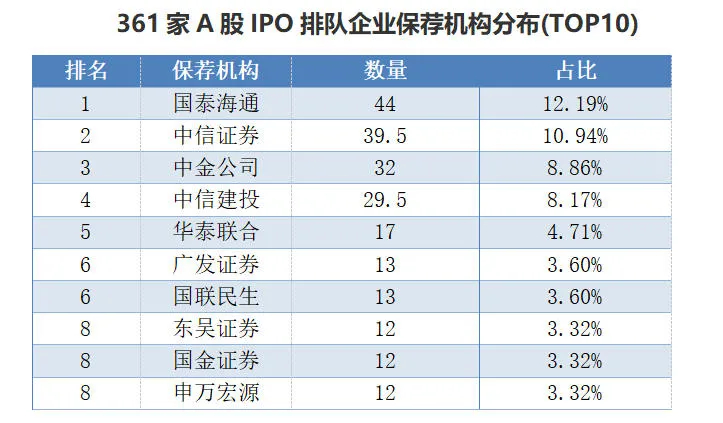
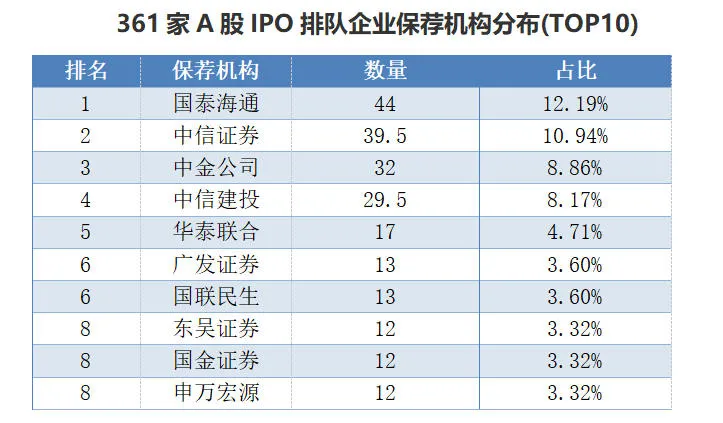
Core Viewpoint - Guolian Minsheng (601456) expects a significant increase in net profit for 2025, projecting a net profit of 2.008 billion yuan, representing a year-on-year growth of approximately 406% [1] Group 1: Performance Highlights - The investment banking sector performed well, with a robust pipeline of IPO projects. As of the end of 2025, there are 361 companies queued for IPOs in the A-share market, with Guolian Minsheng ranking sixth with 13 projects [1] - In the New Third Board market, Guolian Minsheng led with 27 projects, capturing a market share of 8% among newly listed companies, indicating strong synergy and professional service capabilities [2] - The company completed a business restructuring and rebranding in 2025, focusing on "industrial investment banking, technology investment banking, and wealth investment banking," achieving significant integration effects [5] Group 2: IPO and Underwriting Performance - In 2025, Guolian Minsheng ranked seventh in A-share IPO underwriting, completing five IPOs with an underwriting amount exceeding 3 billion yuan [5][7] - The company ranked fourth in the number of new IPO counseling projects, with 24 companies [3] - The company aims to provide comprehensive financial services tailored to clients' diverse capital needs, emphasizing its strategy of being the "most industry-friendly investment bank" [8] Group 3: Strategic Focus and Future Outlook - Guolian Minsheng is actively exploring the deep integration of technology, finance, and industry, enhancing its comprehensive financial service capabilities through "synergistic empowerment" and "internal growth" [4] - The company is optimizing its industry grouping mechanism to expand coverage of key and forward-looking industries, focusing on high-growth potential projects [9] - Market experts predict that with the recovery of the A-share market in 2026, Guolian Minsheng is likely to achieve better results in IPOs and other market activities [9]

研报掘金丨国联民生:维持石头科技“推荐”评级,割草机器人等新品类或贡献增量
Ge Long Hui A P P· 2026-01-20 07:43
Core Viewpoint - Stone Technology is expected to maintain high growth in Q4 2025 despite intense competition and a high base, but profitability may be under pressure due to changes in product structure and global competition [1] Group 1: Company Performance - The company has established a leading position globally, which provides a foundation for expected performance elasticity [1] - Projected net profit attributable to the parent company for 2025, 2026, and 2027 is estimated to be 1.4 billion, 2.32 billion, and 3.27 billion yuan respectively [1] Group 2: Valuation Metrics - The corresponding price-to-earnings (PE) ratios for the company based on the closing price on January 19, 2026, are projected to be 29, 17, and 12 times for the years 2025, 2026, and 2027 respectively [1] Group 3: Strategic Focus - The company is advised to focus on subsequent product layout and cost reduction and efficiency improvement pace [1] - New product categories, such as lawn mowers, are expected to contribute incremental growth [1]

IPO排队第六、新报辅导第四、新三板挂牌第一,国联民生投行业务后劲十足
Cai Jing Wang· 2026-01-20 07:17
Core Viewpoint - Guolian Minsheng (601456) expects a significant increase in net profit for 2025, projecting a net profit of 2.008 billion yuan, representing a year-on-year growth of approximately 406% [1] Group 1: Performance Highlights - The investment banking sector performed well, with a robust pipeline of upcoming IPO projects [1] - As of the end of 2025, there are 361 companies queued for IPOs in the A-share market, with Guolian Minsheng ranking sixth in the industry with 13 companies [1][2] - In the New Third Board market, Guolian Minsheng led with 27 projects, achieving a market share of 8% [4] Group 2: IPO and Underwriting Achievements - In 2025, Guolian Minsheng completed 5 IPO underwriting projects in the A-share market, ranking seventh with an underwriting amount exceeding 3 billion yuan [7][9] - The company ranked fourth in the number of new IPO counseling projects, with 24 companies [5] - The company’s strategic focus on "industry investment banking, technology investment banking, and wealth investment banking" has led to significant integration effects since the merger with Minsheng Securities [6][7] Group 3: Strategic Initiatives - Guolian Minsheng is actively exploring the deep integration of technology, finance, and industry, enhancing its comprehensive financial service capabilities [6] - The company aims to provide tailored financial solutions across various stages of enterprise development, focusing on equity financing, bond financing, mergers and acquisitions, and financial advisory services [10] - The company is optimizing its industry grouping mechanism to expand coverage of key and forward-looking industries, targeting high-growth potential projects [11]
李强总理主持召开今年首场座谈会 美欧争端压低美股期指
Xin Lang Cai Jing· 2026-01-19 23:21
Group 1: Economic and Market Overview - The International Monetary Fund (IMF) President Kristalina Georgieva stated that it is too early to assess the economic impact of tensions surrounding Greenland, but these tensions could become a hindrance to economic growth [2] - U.S. stock futures showed a significant decline due to President Trump's threats regarding tariffs and the situation in Greenland, with Dow Jones futures down 0.83%, S&P 500 futures down 0.88%, and Nasdaq 100 futures down 1.09% [3] Group 2: Company News and Financial Projections - China Pacific Insurance (00966) expects a net profit increase of approximately 215% to 225% in 2025, compared to 8.432 billion HKD in the previous year [6] - TCL Electronics (01070) anticipates an adjusted net profit of approximately 2.33 billion to 2.57 billion HKD in 2025, representing a growth of about 45% to 60% [6] - Jihong Co., Ltd. (02603) projects a net profit of approximately 273 million to 291 million CNY in 2025, reflecting a year-on-year growth of 50% to 60% due to the recovery of the packaging business and significant growth in cross-border social e-commerce [6] - Guolian Minsheng (01456) expects a net profit attributable to shareholders of approximately 2.008 billion CNY in 2025, representing a year-on-year increase of around 406% [6] - China Railway (00390) reported a new contract amount of 1,165.98 billion CNY in Q4 2025, with a cumulative new contract amount of 2,750.9 billion CNY for the year, reflecting a year-on-year growth of 1.3% [7] - SF Holding (06936) reported a total revenue of 27.339 billion CNY from its express logistics, supply chain, and international business in December, marking a year-on-year growth of 3.41% [8]




研报掘金丨国联民生:维持隆鑫通用“推荐”评级,多业务协同发力驱动增长
Ge Long Hui A P P· 2026-01-19 09:19
Core Viewpoint - Longxin General is expected to achieve significant growth in 2025, with a new phase for the Wujie brand starting in 2026, driven by steady growth in its motorcycle and general machinery sectors, as well as continuous optimization of the Wujie product structure [1] Group 1 - The company is experiencing robust growth in overall performance due to the scale of its main businesses in motorcycles and general machinery [1] - The implementation of the employee stock ownership plan has enhanced the stability of the core team [1] - The global expansion of the medium and large displacement motorcycle segment is primarily driven by the Wujie brand [1] Group 2 - The company is leveraging multi-business collaboration to drive growth, with dual expansion in both product and channel for the Wujie brand [1] - The resonance of volume and profit is accelerating growth [1] - The rating is maintained at "Recommended" [1]

“牛市旗手”业绩开花!国联民生去年利润大增超4倍,四季度加速明显
Guan Cha Zhe Wang· 2026-01-19 06:58
炒股就看金麒麟分析师研报,权威,专业,及时,全面,助您挖掘潜力主题机会! 【文/羽扇观金工作室】号称"牛市旗手"的券商板块,去年业绩陆续宣布。 此前中信证券于1月14日发布《2025年度业绩快报》。快报显示,2025年,中信证券实现营业收入 748.30亿元,同比(与前一年同期相较)增加28.75%;归属于母公司股东的净利润(下称"净利润") 300.51亿元,同比增加38.46%。这也是中信证券历史首次全年净利润突破300亿元。同时,截至2025年 末,中信证券总资产2.08万亿元,较上一年同期增加了21.79%。 此外,西南证券16日发布的业绩预告也显示,2025年度预计实现归属于母公司所有者的净利润10.28亿 元至10.98亿元,同比增幅达47%至57%。对于业绩预增的核心原因,西南证券称主要是财富管理业务、 证券投资业务、投资银行业务同比大幅增长。 本文系观察者网独家稿件,未经授权,不得转载。 昨日(1月18日),国联民生发布公告,宣布预计公司2025年实现归母净利润20.08亿元,同比大增约 406%;扣除非经常性损益的净利润人民币也将达到19.44亿元,同比增长410%左右。 MACD金叉信号形 ...