
PSBC(01658)

Search documents
“存款千万换实习” 争议背后:私人银行“抢客”竞争加剧
Nan Fang Du Shi Bao· 2025-05-30 07:48
Core Insights - The closure of the "10 million deposit for internship opportunities" program by Industrial Bank highlights issues of fair competition in the banking sector [2] - The competition among banks for high-net-worth clients continues to intensify, with various strategies being employed to attract and retain these customers [2][3] Group 1: Private Banking Strategies - Banks are focusing on providing educational opportunities for high-net-worth clients' children, with services like overseas study programs being a common offering [3][4] - ICBC's private banking division serves over 300,000 clients, with many participating in charitable donations, indicating a trend towards integrating philanthropy into banking services [2][4] - CCB's private banking center has 248 branches and manages financial assets of 2.78 trillion yuan, showing a growth of 10.31% year-on-year [3] Group 2: Market Growth and Client Base - As of the end of 2024, the total number of private banking clients among 13 major banks in China reached 1.7131 million, an increase of 17.4% from the previous year [5] - The asset management scale of ICBC's private banking reached 3.47 trillion yuan, marking a growth rate of 13.2%, leading the industry [5][6] - The private banking sector is becoming a crucial growth area for banks, especially as traditional retail banking faces challenges [5] Group 3: Client Requirements and Service Offerings - The minimum financial asset requirement for private banking clients varies among banks, with some setting the threshold at 600,000 yuan, while others, like CMB, consider 10 million yuan as the starting point [6][7] - The services offered by private banks are diversifying, including non-financial services such as family governance, health care, and personalized lifestyle services [8] - Recent trends indicate a shift in high-net-worth clients' consumption patterns, with a focus on enhancing quality of life and well-being rather than material goods [9]




着眼“宏伟蓝图”深化区域联动
Bei Jing Ri Bao Ke Hu Duan· 2025-05-28 22:15
Core Viewpoint - The article emphasizes the role of Postal Savings Bank of China (PSBC) in supporting the coordinated development of the Beijing-Tianjin-Hebei region, focusing on financial services that align with urban planning and regional strategies [1][13]. Group 1: Financial Support for Urban Development - PSBC Beijing Branch has strategically relocated to the core area of the urban sub-center to better align with regional development goals and enhance financial services [3][5]. - The establishment of the G20 Young Entrepreneurs Alliance International Salon at PSBC Beijing Branch signifies its commitment to fostering international business exchanges and enhancing Beijing's global image [4]. - The bank has introduced innovative financial products and services to support local industries, such as the "Cherry Loan" for farmers in Xijicun, which has improved financing access and sales for local agricultural products [6][7]. Group 2: Technology and Innovation - PSBC is actively involved in promoting technology-driven projects, such as the establishment of the Softcom AI Research Institute, which aims to enhance the digital economy in the region [5][9]. - The bank focuses on providing tailored financial solutions for technology enterprises, including various loan products designed for different stages of business growth [9][10]. Group 3: Collaborative Ecosystem - PSBC is enhancing collaboration with government and enterprises to create a robust ecosystem that supports innovation and economic development in the region [11][12]. - The bank has established a "three-bank linkage" mechanism with branches in Tianjin and Hebei to facilitate resource sharing and project collaboration across the region [13][14]. Group 4: Green Finance Initiatives - PSBC is committed to green finance, actively developing products that support low-carbon projects and has been recognized as a "climate-friendly financial institution" [15]. - The bank's initiatives in green finance aim to integrate environmental sustainability with financial services, contributing to the broader goals of carbon neutrality [15]. Group 5: Overall Impact on Regional Development - Over the past three years, PSBC has supported 78 key projects in the Beijing-Tianjin-Hebei region, providing over 60 billion yuan in loans, significantly contributing to infrastructure and social welfare improvements [14]. - The bank's efforts are aimed at making the Beijing-Tianjin-Hebei region a model for high-quality development and a pioneer in modern Chinese construction [1][16].


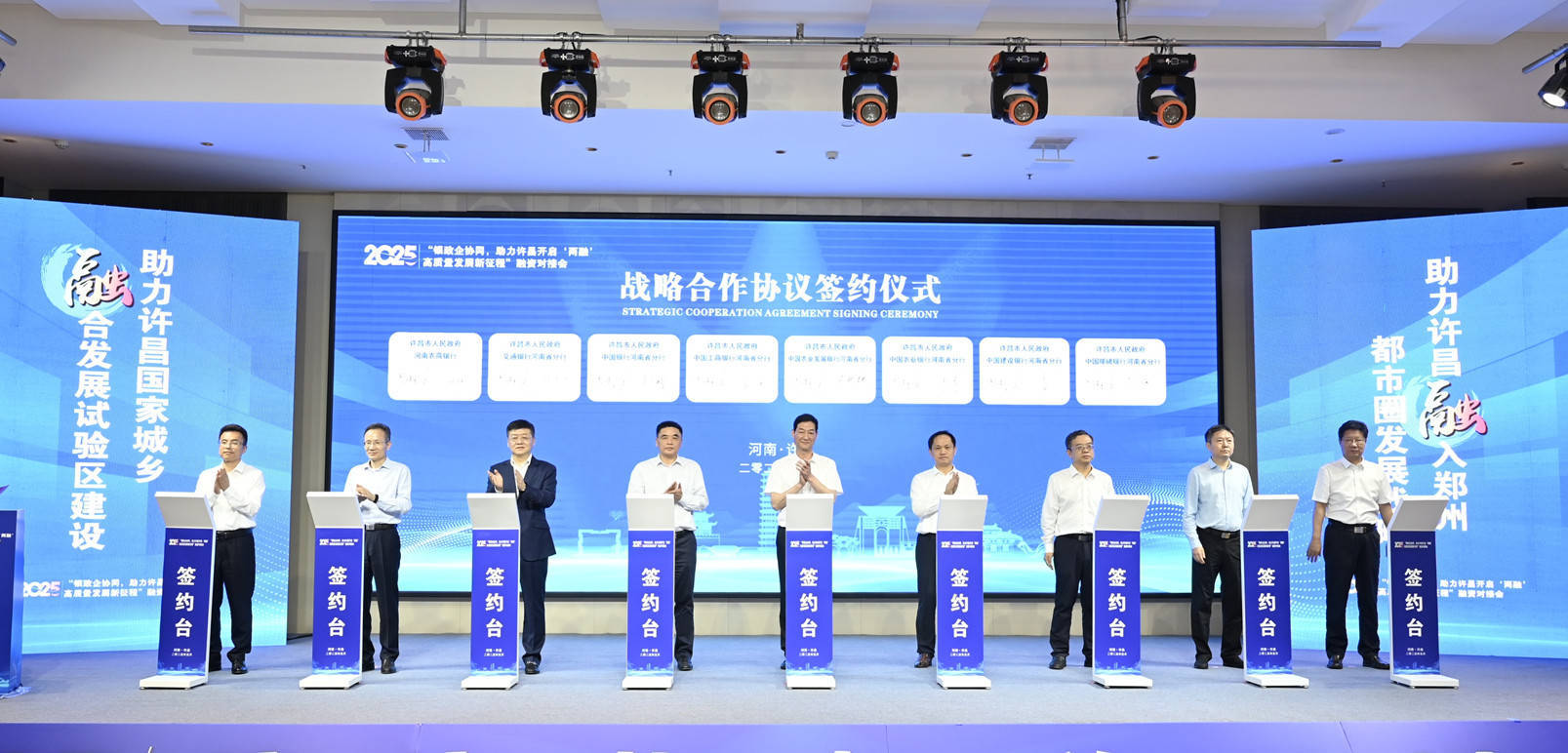
14家银行“牵手”许昌!未来将提供5500亿元融资支持
Sou Hu Cai Jing· 2025-05-28 12:59
Core Viewpoint - The financing matchmaking event in Xuchang marks a significant advancement in the collaboration between banks, government, and enterprises, aiming to support the high-quality development of the "two financing" model in the region [1][3]. Group 1: Strategic Cooperation - The Xuchang Municipal Government has established deep cooperation intentions with 14 banks, signing strategic cooperation agreements [1]. - The participating banks include major institutions such as Agricultural Development Bank, Industrial and Commercial Bank, Agricultural Bank, Bank of China, and several others [1]. Group 2: Financial Support - Over the next 3 to 5 years, the banks are set to provide approximately 550 billion yuan in financing support to Xuchang, enhancing the financial momentum for the city's "two financing" high-quality development [3]. - The collaboration aims to broaden the channels for bank-enterprise cooperation, with 196 enterprises reaching cooperation intentions with the banks, totaling 56.35 billion yuan [3]. Group 3: Signing Achievements - At the event, 30 enterprises completed on-site agreements with banks, amounting to 20.31 billion yuan [3]. - The successful signing activities reflect the confidence and support of financial institutions in the economic development of Xuchang, providing tangible financing opportunities for local enterprises [3].



“土特产” 新气象︱金融助力瓜果飘香,四季“丰”景
Xin Lang Cai Jing· 2025-05-28 11:25
Core Viewpoint - The article highlights the role of Postal Savings Bank of China Chengdu Branch in supporting the local fruit industry through tailored financial products, particularly focusing on the needs of farmers and agricultural enterprises in Chengdu. Group 1: Financial Support for Farmers - Chengdu's rich fruit resources are complemented by the growing financing needs of farmers, prompting Postal Savings Bank to provide financial support to enhance agricultural productivity and local economic development [1][6]. - The bank has introduced "Industry Loans" that offer high limits, low interest rates, and quick approvals, which have been well-received by the market, with a total of 116 million yuan in fruit-related loans disbursed to 94 clients by the end of the first quarter [6][8]. Group 2: Case Studies of Financial Impact - Xu Yanmin and her husband, who run a family farm in Pujiang County, received a 1.5 million yuan loan, enabling them to purchase advanced agricultural equipment and expand their planting scale, thereby increasing their confidence in future development [1][2]. - Huang Zeyang, a major citrus grower in Jintang County, utilized a similar loan to enhance his irrigation system, resulting in an increase in the quality of his produce, with the good fruit rate rising from 60% to 85% and annual sales exceeding 3 million yuan [2][6]. Group 3: Innovative Financial Products - The "Credit Express Loan" product allows farmers like Wang Yongtao to access funds without collateral, addressing their immediate financial needs for maintenance and technology upgrades, with Wang receiving a 300,000 yuan loan [3][4]. - The bank's proactive approach includes on-site assessments and customized loan solutions, which have proven effective in meeting the unique financial demands of the agricultural sector [2][6]. Group 4: Broader Economic Impact - The financial support from Postal Savings Bank has not only improved individual farm operations but has also contributed to the overall revitalization of the rural economy, enabling farmers to achieve higher incomes and enhancing the local agricultural landscape [7][8]. - The bank is committed to continuing its support for agriculture by developing tailored financial solutions that align with local industry characteristics and financial needs, promoting sustainable growth in the sector [8].
邮储银行(601658) - 中国邮政储蓄银行股份有限公司关于董事任职资格获国家金融监督管理总局核准的公告
2025-05-28 10:16
证券代码:601658 证券简称:邮储银行 公告编号:临 2025-037 中国邮政储蓄银行股份有限公司 关于董事任职资格获国家金融监督管理总局核准的 公告 1 站(www.sse.com.cn)的《中国邮政储蓄银行股份有限公司 2024 年 第一次临时股东大会会议资料》《中国邮政储蓄银行股份有限公司 2025 年第一次临时股东大会会议资料》。本行董事会对刘瑞钢先生、 杨勇先生的加入表示欢迎。 中国邮政储蓄银行股份有限公司董事会及全体董事保证本公告内容不存在 任何虚假记载、误导性陈述或者重大遗漏,并对其内容的真实性、准确性和完整 性承担法律责任。 中国邮政储蓄银行股份有限公司(以下简称本行)先后召开 2024 年第一次临时股东大会及 2025 年第一次临时股东大会审议并通过了 选举刘瑞钢先生为本行非执行董事、选举杨勇先生为本行独立非执行 董事的议案。5 月 27 日,本行收到《国家金融监督管理总局关于刘 瑞钢邮储银行董事任职资格的批复》(金复〔2025〕315 号),《国家 金融监督管理总局关于杨勇邮储银行独立董事任职资格的批复》(金 复〔2025〕316 号),国家金融监督管理总局已核准刘瑞钢先生担任 本行 ...
银行:信用卡新打法
Bei Jing Shang Bao· 2025-05-27 13:39
Core Viewpoint - In 2025, China's economy is at a critical juncture of consumption-driven transformation, with expanding domestic demand and stabilizing growth as core policy goals. The credit card business, as a "main force" in consumer finance, plays a vital role in activating consumption potential [1][3]. Group 1: Market Dynamics - The credit card market has shifted from a "land grab" development model to a more sustainable approach as the market nears saturation. The focus is now on scenario-based and digital strategies to break through the constraints of existing business models [1][7]. - As of the end of 2024, the total number of credit cards and combined lending cards reached 727 million, a decrease of 5.14% year-on-year, indicating a trend of market saturation [7]. Group 2: Marketing Strategies - Credit card issuers are increasingly launching diverse marketing activities during peak consumption seasons, such as traditional holidays and e-commerce shopping festivals, to stimulate consumer enthusiasm [3][4]. - Recent promotional activities include significant cashback offers and discounts for cardholders during events like Mother's Day, showcasing the integration of credit cards into the consumer ecosystem [3][4]. Group 3: Product Innovation - Credit cards are evolving to meet changing consumer demands, expanding into new areas such as health, education, and pet care, while also enhancing integration with various consumption scenarios [4][5]. - Innovations in credit card products are focusing on green finance and digital services, utilizing big data and AI to provide personalized financial services [5][10]. Group 4: Competitive Strategies - To address market saturation, banks are raising quick payment limits and offering installment payment discounts to stimulate consumer spending and extend payment cycles [7][8]. - Recent competitive moves include significant interest rate reductions for installment loans, with promotional rates as low as 2.76% for 12-month plans, aimed at encouraging larger purchases [8]. Group 5: Future Outlook - The credit card industry is expected to continue its growth trajectory by deepening scenario-based and digital transformations, aligning with government initiatives to boost consumption [9][10]. - The integration of advanced technologies such as big data, AI, and blockchain will be crucial for enhancing customer insights, risk management, and product innovation [10][11].



银行:消费贷走出“规模竞赛”
Bei Jing Shang Bao· 2025-05-27 13:39
Core Viewpoint - The competition in consumer loans among banks has shifted from a focus on low interest rates to enhancing loan limits and extending loan terms, as banks seek to adapt to changing market conditions and regulatory guidance [1][11][15] Consumer Loan Growth - In 2024, the total consumer loan balance of 40 A-share listed banks increased by over 950 billion yuan, with some banks experiencing growth rates exceeding 90% compared to the previous year [1][3] - The consumer loan balance for these banks reached approximately 6.06 trillion yuan by the end of 2024, marking an increase of 957.85 billion yuan from the previous year [3][4] Interest Rate Trends - Consumer loan interest rates dropped to the "2" range, with some banks offering rates as low as 1.88% for select customers, but this trend has reversed with many banks raising rates to no less than 3% by April 2024 [1][9][10] - The shift back to "3" range interest rates is aimed at preventing excessive competition and potential financial risks associated with low-rate loans [10][11] Bank Strategies - Banks are now focusing on enhancing consumer loan products by increasing limits and extending terms, responding to government initiatives to boost consumption [11][12] - Various banks have begun to raise loan limits and extend repayment periods, with some institutions increasing the maximum loan amount from 300,000 yuan to 500,000 yuan and extending terms from five to seven years [12][16] Market Segmentation - The consumer loan market is showing significant differentiation, with some banks rapidly expanding their loan portfolios through low-rate strategies, while others are contracting due to concerns over rising non-performing loan rates [5][10] - Banks are increasingly targeting specific consumer scenarios, such as home renovations and electric vehicle purchases, to drive loan growth [15][16] Risk Management - The rise in consumer loan balances has led to an increase in non-performing loans, prompting banks to enhance their risk management practices and focus on quality customer segments [9][10][14] - Regulatory bodies are emphasizing the need for banks to monitor the flow of consumer loan funds to mitigate systemic risks [14]

保险爆买了1000亿?
表舅是养基大户· 2025-05-27 13:31
Group 1 - The core issue in the automotive industry is the fierce price competition, particularly affecting the profitability of car manufacturers, with automotive manufacturing profits declining by 5.1% year-on-year despite a revenue increase of 6.9% [1][2] - The government is reportedly convening meetings with car manufacturers and dealers to discuss issues related to "zero-kilometer used cars," indicating regulatory scrutiny in the sector [1] - A specific car dealer in Shandong has faced severe financial difficulties, highlighting the pressures on dealers compared to manufacturers [1] Group 2 - The article suggests that the trend of price reductions in the new energy vehicle sector is unlikely to stop, drawing parallels with the solar industry, which has faced similar challenges [2][3] - Car manufacturers may have two potential paths: to endure the competitive landscape until only a few remain or to establish core competencies and target specific customer segments [4][5] - The current environment is characterized by extreme homogenization, making it difficult for manufacturers to carve out unique positions in the market [6] Group 3 - The Hong Kong stock market continues to outperform the A-share market, with significant inflows from southbound capital, indicating investor confidence in certain sectors [8] - The article outlines four cycles contributing to the positive outlook for Hong Kong stocks, including a low interest rate environment and regulatory easing for insurance capital [9] - Recent performance in the innovation and new consumption sectors has been strong, with notable gains in stocks like Bubble Mart and Mixue Ice City [9][10] Group 4 - There is a significant net inflow of capital into Hong Kong bank stocks, with southbound funds purchasing over 100 billion HKD worth of bank shares since the beginning of the year [12][15] - The concentration of investments is primarily in the major state-owned banks, indicating a strategic focus by institutional investors [15][16] - Monthly purchases of bank stocks have remained stable, suggesting a consistent investment strategy aligned with insurance capital flows [18]

中山各银行上门服务探访:多家可办理,但部分不建议上门开卡
Nan Fang Du Shi Bao· 2025-05-27 12:32
Core Viewpoint - The increasing demand for convenience and personalized financial services has led banks to offer home banking services for clients with mobility issues, particularly the elderly [1][3][4]. Group 1: Home Banking Services - Multiple banks in Zhongshan provide home banking services for elderly clients who are unable to visit bank branches due to mobility issues [1][3]. - Banks require that if an elderly person is not mentally clear, a medical or community certificate is needed to proceed with banking services [3][4]. - Home banking services include account opening and transactions, but specific procedures depend on the client's needs and mental state [4][6]. Group 2: Recommendations Against New Bank Accounts - Some banks recommend using existing social security or medical insurance cards instead of opening new bank accounts for elderly clients, citing convenience and regulatory concerns [7][9]. - Legal experts argue that banks' reluctance to open new accounts for elderly clients lacks legal basis, as regulations support providing services to those with disabilities [9][10]. - It is suggested that elderly clients should avoid opening multiple new bank accounts unless absolutely necessary, to prevent complications [10][11]. Group 3: Legal and Regulatory Context - Regulations from the China Banking Regulatory Commission emphasize the need for banks to develop services for elderly clients and those with disabilities [9]. - The demographic data indicates a significant portion of Zhongshan's population is elderly, highlighting the importance of accessible banking services [9].

金融“活水”润三湘 邮储银行长沙市分行 激活“三农”金融“新引擎”
Chang Sha Wan Bao· 2025-05-27 10:01
Core Viewpoint - The development of "Three Rural" finance is a significant reflection of the political and people-oriented nature of financial work, linking economic development with the well-being of the people [1] Group 1: Financial Support for Agriculture - As of the end of 2024, the agricultural loan balance of Postal Savings Bank's Changsha branch is expected to exceed 20.179 billion yuan, having helped 15,100 agricultural clients [2] - The bank aims to enhance the accessibility, coverage, and satisfaction of financial services related to "Three Rural" finance, fulfilling its mission of inclusive finance [1] Group 2: Support for Local Enterprises - Postal Savings Bank's Changsha branch has collaborated with SaaS service provider Hunan Xingfutong Technology Co., Ltd. to create a unified payment system for "Pig Commander," facilitating its expansion and addressing its financial challenges [3] - A customized financial solution was provided to "Pig Commander," including a 2 million yuan rapid loan based on store operating cash flow, with further credit support planned for franchisees [3][4] Group 3: Broader Impact on Local Economy - The bank's financial services have enabled "Pig Commander" to plan the opening of 50 new stores this year, indicating a positive growth trajectory [4] - The bank's innovative financial solutions have also supported "Lu Ka," a hot food brand, by streamlining payment processes and providing timely loans, enhancing operational efficiency [6] Group 4: Commitment to Community Development - Postal Savings Bank's Changsha branch is committed to deepening cooperation in the livelihood sector and providing high-quality services, ensuring that "Three Rural" finance continues to nourish the local economy [7]