CHALCO(02600)

Search documents
智通港股通持股解析|1月21日




智通财经网· 2026-01-21 00:34
智通财经APP获悉,根据2026年1月20日披露数据,中国电信(00728)、绿色动力环保(01330)、天 津创业环保股份(01065)位居港股通持股比例前3位,分别为71.01%、69.50%、67.58%。此外,阿里 巴巴-W(09988)、腾讯控股(00700)、建设银行(00939)在最近有统计数据的5个交易日内,持股 额增幅最大,分别为+30.01亿元、+25.58亿元、+14.29亿元;中国移动(00941)、中国铝业(02600)、 紫金矿业(02899)在最近有统计数据的5个交易日内,持股额减幅最大,分别为-27.58亿元、-8.63亿 元、-8.06亿元。 2、港股通最近5个交易日增持榜(前10名) 具体数据如下(交易所数据根据T+2日结算): 1、港股通最新持股比例排行(前20名) | 公司名称 | 持股数量 | 最新持股比例 | | --- | --- | --- | | 中国电信(00728) | 98.56亿股 | 71.01% | | 绿色动力环保(01330) | 2.81亿股 | 69.50% | | 天津创业环保股份(01065) | 2.30亿股 | 67.58% | | ...
A股重磅!宽基ETF连续出现净赎回,有“巨无霸”份额回落至“924”行情之前,多只科创、创业板系ETF份额缩水,发生了啥?
Jin Rong Jie· 2026-01-20 08:57
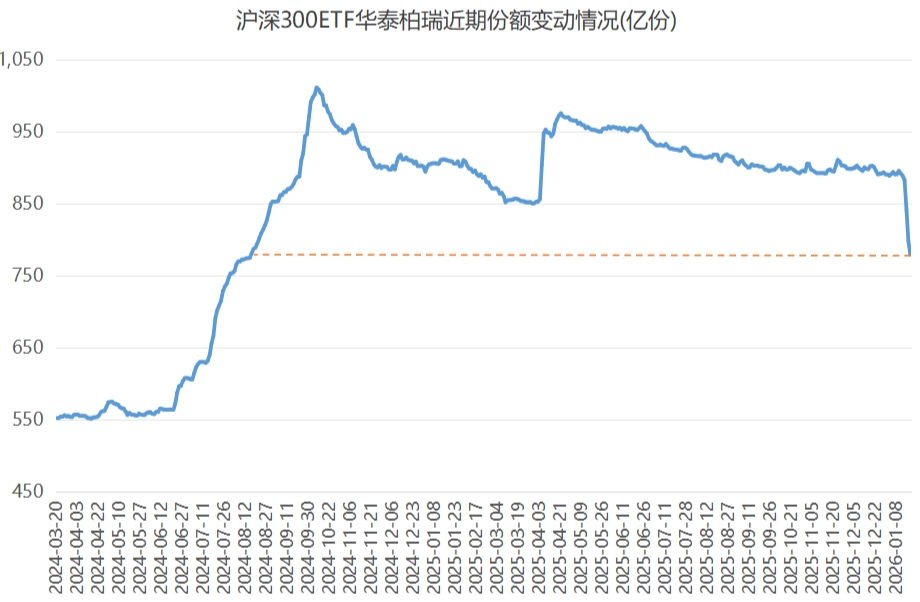
Group 1 - Recent net redemptions in A-share broad-based ETFs have drawn market attention, with significant outflows recorded on January 15 and 16, totaling 687 billion and 863 billion respectively, marking the highest single-day outflows in history [1] - As of January 19, four out of six major broad-based ETFs saw their shares decline by over 10% in the last three trading days, with the largest, Huatai-PB CSI 300 ETF, dropping to 778.63 billion shares, a scale of approximately 369.2 billion, the lowest since August 2024 [1] - The ChiNext and STAR Market ETFs also experienced significant declines, with the E Fund STAR 50 ETF and E Fund ChiNext ETF seeing share reductions of 34.55% and 20.22% respectively [3] Group 2 - In contrast to the outflows from broad-based ETFs, certain commodity, cross-border, and narrow-based ETFs attracted significant inflows, with the Southern Nonferrous ETF being the only product to receive over 10 billion in net inflows, totaling 100.87 billion, driven by rising base metal prices [3] - Other ETFs such as Yongying Satellite ETF, Harvest Software ETF, and GF Media ETF also received net inflows exceeding 6 billion [3] - According to CITIC Securities, the impact of ETF redemptions on individual stocks was significant, with main board, ChiNext, and STAR Market stocks experiencing sell-offs of 946 billion, 334 billion, and 265 billion respectively during the peak outflow days [3] Group 3 - Regulatory measures have been implemented to cool down the market following rapid price increases and overheated sentiment, including raising the minimum margin requirement for margin trading from 80% to 100% [5][6] - The China Securities Regulatory Commission emphasized the need for comprehensive market monitoring and timely counter-cyclical adjustments to maintain market stability and prevent excessive volatility [6] - There are differing views on the long-term outlook for A-shares, with some analysts suggesting the potential for a slow bull market due to reforms, while others remain skeptical about escaping historical volatility patterns [7]





港股异动丨有色金属股齐跌 美银指金属需求的增长已不再具有周期性特征
Ge Long Hui· 2026-01-20 02:31
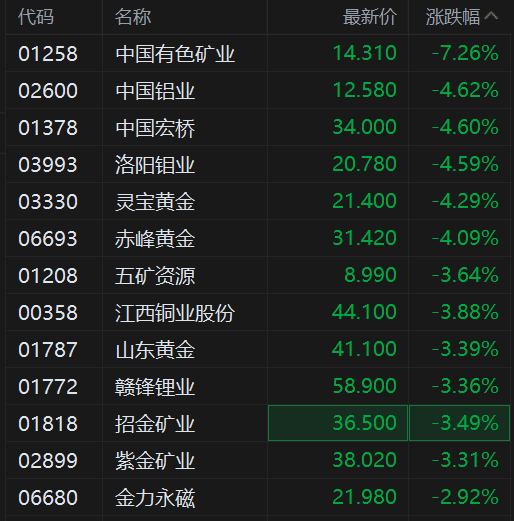
Group 1 - The core viewpoint of the news highlights a collective decline in Hong Kong's non-ferrous metal stocks, with significant drops observed in companies such as China Nonferrous Mining, China Aluminum, and China Hongqiao, among others [1] - The report mentions a strategy proposed by Bank of America, suggesting investment in non-AI tech stocks that benefit from the AI boom, focusing on sectors like electrification, infrastructure, and metals [1] - Bank of America identifies metals such as copper, silver, lithium, aluminum, and nickel as key beneficiaries of the growing demand driven by the restructuring of energy infrastructure across economies [1] Group 2 - Specific stock performance data shows China Nonferrous Mining down 7.26%, China Aluminum down 4.62%, and China Hongqiao down 4.60%, among others, indicating a broader trend of declines in the sector [2] - Other notable declines include Luoyang Molybdenum down 4.59%, Lingbao Gold down 4.29%, and Chifeng Jilong Gold down 4.09%, reflecting a significant downturn in the non-ferrous metal market [2] - The overall trend indicates that multiple companies in the non-ferrous metal sector, including Jiangxi Copper and Zijin Mining, experienced declines of over 3%, suggesting a challenging market environment [2]

智通港股通持股解析|1月20日
智通财经网· 2026-01-20 00:36
Group 1 - The top three companies by Hong Kong Stock Connect holding ratios are China Telecom (71.07%), Gree Power Environmental (69.49%), and Kaisa New Energy (67.59%) [1][2] - Alibaba-W, Tencent Holdings, and China Construction Bank have seen the largest increases in holding amounts over the last five trading days, with increases of +4.028 billion, +3.291 billion, and +1.432 billion respectively [1][2] - The companies with the largest decreases in holding amounts over the last five trading days are China Mobile (-2.322 billion), China Aluminum (-0.963 billion), and SMIC (-0.934 billion) [1][3] Group 2 - The latest holding ratios for the top 20 companies in Hong Kong Stock Connect show that China Telecom leads with 98.63 billion shares, followed by Gree Power Environmental with 2.81 billion shares and Kaisa New Energy with 1.69 billion shares [2] - The top 10 companies with the largest increases in holdings over the last five trading days include Alibaba-W (+40.28 billion), Tencent Holdings (+32.91 billion), and China Construction Bank (+14.32 billion) [2] - The top 10 companies with the largest decreases in holdings over the last five trading days include China Mobile (-23.22 billion), China Aluminum (-9.63 billion), and Zijin Mining (-8.69 billion) [3]
光大证券:重视各国战略金属收储带来投资机会 全面看好战略金属价值重估
智通财经网· 2026-01-19 01:52
Core Viewpoint - The report from Everbright Securities highlights the increasing importance of strategic metals (copper, aluminum, cobalt, nickel, tin, antimony, tungsten, rare earths) due to supply disruptions and the limitations in production capacity in China and abroad [1][2]. Group 1: Strategic Metal Storage Initiatives - Australia announced a strategic reserve plan for critical minerals worth AUD 1.2 billion, with AUD 185 million allocated for necessary mineral reserves, prioritizing antimony, gallium, and rare earths [2] - The European Commission approved a resource revival action plan to raise EUR 3 billion for supply chain strategies, establishing a platform to support critical material reserves [2] - The U.S. Defense Logistics Agency (DLA) plans to procure USD 500 million in cobalt, USD 245 million in antimony, USD 100 million in tantalum, and USD 45 million in scandium [2] Group 2: Investment Opportunities in Strategic Metals - The focus on strategic metal storage in the U.S. and Australia presents significant investment opportunities, particularly in metals with concentrated supply chains and security risks, such as cobalt from the Democratic Republic of Congo and lithium from South America [3] - The rapid development of AI and energy transition is expected to drive demand for copper, aluminum, and tin, although supply constraints exist for these metals [4] - Military-related metals like tungsten, antimony, and rare earths are facing tightening supply, with production declines attributed to lower resource grades and regulatory controls [5] Group 3: Supply Concentration and Constraints - Copper, lithium, cobalt, and nickel supply is highly concentrated in South America, the Democratic Republic of Congo, and Indonesia, with Chile and Peru accounting for 35% of global copper production and the Democratic Republic of Congo producing 76% of global cobalt [4] - The rapid growth of AI is expected to significantly increase demand for copper, aluminum, and tin, but supply for these metals is constrained [4] - Tungsten, antimony, and rare earths are critical for military applications, but their production has decreased due to resource management practices and regulatory measures [5] Group 4: Investment Recommendations - For copper, recommended companies include Zijin Mining, Luoyang Molybdenum, and Western Mining [5] - For aluminum, Yunnan Aluminum is recommended, with China Aluminum as a focus [5] - For cobalt and nickel, Huayou Cobalt is recommended, with attention to Liqin Resources and Shengtun Mining [5] - For tungsten, focus on China Tungsten High-tech [5] - For tin, Xiyang Tin Industry is recommended, with interest in Xingye Silver Tin [5] - For antimony, Huaxi Nonferrous is highlighted, and for rare earths, Northern Rare Earth is recommended with a focus on China Rare Earth [5]



中金 | 铝的新时代之三:电解铝重估风鹏正举
中金点睛· 2026-01-19 01:31
Core Viewpoint - The article emphasizes the importance of selecting stocks based on three criteria: high capacity-to-market value ratio, ability to expand overseas, and the current bottoming of alumina prices, suggesting a focus on companies with high self-sufficiency in alumina amid potential supply disruptions [1][3][4] Supply Side - Global supply elasticity is decreasing and vulnerability is increasing due to factors such as peak domestic capacity in China, energy constraints in Europe and the US, and power supply issues in Indonesia, leading to a projected global supply CAGR of 1.4% from 2025 to 2030 [3][5] - China's electrolytic aluminum production capacity is nearing its limit, with a forecasted production of 4,430 million tons in 2025, reflecting a growth rate of only 2.4% [9] - The US and Europe face challenges in restoring electrolytic aluminum capacity due to high energy costs and tight power supplies, which will slow down recovery and limit new capacity [10][11] - Indonesia is expected to contribute significantly to future global electrolytic aluminum growth, but power supply constraints will hinder rapid capacity release [13][16] Demand Side - Global aluminum demand is projected to grow at a CAGR of 2.3% from 2025 to 2030, driven by traditional demand recovery and emerging sectors like energy storage and data centers [18][22] - Traditional demand is expected to benefit from fiscal and monetary easing, with a projected decrease in the real estate sector's contribution to aluminum demand [22][23] - New industries, particularly energy storage and data centers, are becoming significant drivers of aluminum demand, with projected CAGRs of 26% and 13% respectively from 2025 to 2030 [26][30] Cost Factors - Alumina prices are expected to rebound due to supply-side constraints and policy changes in Guinea, despite current oversupply conditions [36][38] - The energy transition is anticipated to lower the costs of green electricity for electrolytic aluminum production, although short-term carbon taxes may raise energy costs [40][56] - Coal prices are expected to remain low, which will help suppress the costs of thermal power generation for electrolytic aluminum [41] Growth Opportunities - The Chinese aluminum industry is accelerating its overseas expansion due to domestic resource shortages and capacity constraints, with significant investments in regions like Guinea and Southeast Asia [42][45] - Guinea is highlighted as a key player in the alumina market, with plans to enhance local processing capabilities and attract investment [46] - Indonesia is emerging as a major hub for the aluminum industry, supported by government policies aimed at developing its domestic aluminum value chain [47] - Angola's rich hydropower resources and supportive policies are attracting investments in electrolytic aluminum production [48][49] - The Middle East is positioned as a cost-competitive region for aluminum production due to its abundant natural gas resources [50][51] Price Outlook - The electrolytic aluminum sector is expected to experience a revaluation as supply constraints and rising demand support higher aluminum prices, with potential for significant profit expansion [52][55] - The article suggests that the sector is transitioning from a purely cyclical nature to one that also includes dividend stability, making it an attractive investment opportunity [58]


智通港股通资金流向统计(T+2)|1月19日
智通财经网· 2026-01-18 23:34
Group 1 - Tencent Holdings (00700), Alibaba Health (00241), and Alibaba Group-W (09988) ranked the top three in net inflow of southbound funds, with net inflows of 2.012 billion, 1.440 billion, and 1.128 billion respectively [1][2] - China Mobile (00941), Haidilao (06862), and China Aluminum (02600) ranked the top three in net outflow of southbound funds, with net outflows of -756 million, -460 million, and -434 million respectively [1][2] - Shenzhen Expressway (00548), Jiangsu Nanjing-Hangzhou Expressway (00177), and Anhui Wanan Expressway (00995) had the highest net inflow ratios at 73.29%, 68.10%, and 64.90% respectively [1][3] Group 2 - The top ten stocks by net inflow included Tencent Holdings (20.12 billion), Alibaba Health (14.40 billion), and Alibaba Group-W (11.28 billion), with respective closing prices of 633.000 (+0.88%), 7.780 (+18.96%), and 169.000 (+5.69%) [2] - The top ten stocks by net outflow included China Mobile (-7.56 billion), Haidilao (-4.60 billion), and China Aluminum (-4.34 billion), with respective closing prices of 80.800 (-0.19%), 15.740 (+9.15%), and 13.440 (-1.18%) [2] - The top three stocks by net outflow ratio were Industrial Bank of China Southern (03167) at -100.00%, Yancoal Australia (03668) at -62.10%, and Zhengzhou Bank (06196) at -60.19% [3]



美联储换届生变,不改长期宽松预期
GOLDEN SUN SECURITIES· 2026-01-18 11:00
Investment Rating - The report maintains a "Buy" rating for several companies in the non-ferrous metals sector, including 山金国际, 赤峰黄金, 洛阳钼业, 中国宏桥, and 中钨高新 [10]. Core Insights - The non-ferrous metals sector is experiencing a general upward trend, with significant price increases across various metals, driven by macroeconomic factors and supply chain dynamics [11][19]. - The report highlights the impact of U.S. tariffs and trade policies on the supply and demand dynamics of key metals, particularly copper and aluminum [2][3]. - The report emphasizes the importance of monitoring inventory levels and production capacities, as these factors are critical in determining future price movements [26][35]. Summary by Sections Precious Metals - Concerns over tariffs have led to a temporary pullback in silver prices, but the long-term outlook remains positive [1]. - The report suggests monitoring companies such as 兴业银锡 and 盛达资源 for potential investment opportunities [1]. Industrial Metals - Copper inventories are rising, particularly in the U.S., raising concerns about supply tightness in non-U.S. regions [2]. - The report notes that while high copper prices are suppressing end-user demand, the long-term consumption outlook remains strong due to infrastructure investments [2]. Aluminum - The aluminum market is expected to experience price fluctuations due to geopolitical tensions and macroeconomic policies [3]. - The report indicates that production cuts in aluminum processing are occurring, particularly in regions like Guizhou and Henan [3]. Nickel - Nickel prices are on an upward trend, supported by supply tightening expectations from Indonesia [4]. - The report highlights the importance of monitoring companies like 华友钴业 and 力勤资源 for investment opportunities [4]. Tin - Supply chain bottlenecks and macroeconomic factors are providing short-term support for tin prices [5]. - The report suggests that companies like 华锡有色 and 兴业银锡 may benefit from these market conditions [5]. Lithium - Lithium prices are experiencing wide fluctuations due to export policy expectations and demand uncertainties [6]. - The report recommends关注 companies such as 赣锋锂业 and 天齐锂业 for potential investment [6]. Cobalt - Progress in cobalt shipments from the Democratic Republic of Congo is expected to support high cobalt prices in the short term [9]. - The report suggests monitoring companies like 华友钴业 and 腾远钴业 for investment opportunities [9].


中金上调中国铝业A股评级至跑赢大盘
Ge Long Hui· 2026-01-18 00:46
Group 1 - The core viewpoint is that CICC has upgraded the rating of China Aluminum A-shares to "outperform the market" with a target price of 17.10 yuan [1]
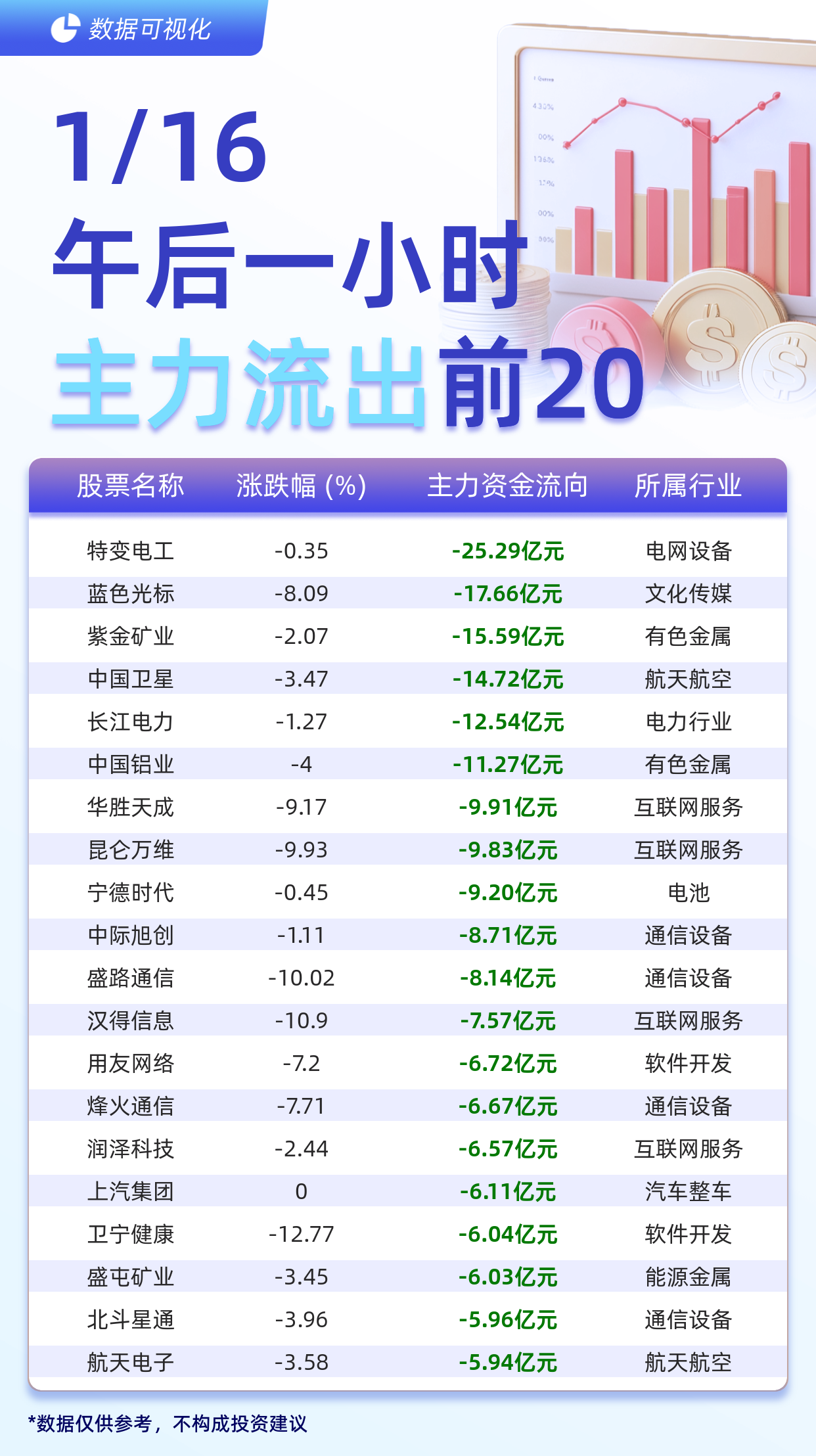
主力个股资金流出前20:特变电工流出25.29亿元、蓝色光标流出17.66亿元
Jin Rong Jie· 2026-01-16 06:38
Core Viewpoint - The data indicates significant outflows of capital from various stocks, with notable amounts leaving the market, suggesting a potential shift in investor sentiment and market dynamics [1][2][3] Group 1: Major Stocks with Capital Outflows - The stock with the highest capital outflow is TBEA Co., Ltd. (特变电工), experiencing a net outflow of 2.529 billion yuan, with a decline of 0.35% [2] - BlueFocus Communication Group Co., Ltd. (蓝色光标) follows with a capital outflow of 1.766 billion yuan and a drop of 8.09% [2] - Zijin Mining Group Co., Ltd. (紫金矿业) saw an outflow of 1.559 billion yuan, with a decrease of 2.07% [2] - China Satellite Communications Co., Ltd. (中国卫星) had a capital outflow of 1.472 billion yuan, down by 3.47% [2] - Yangtze Power Co., Ltd. (长江电力) experienced a 1.27% decline with an outflow of 1.254 billion yuan [2] Group 2: Sector Analysis - The electric power sector, represented by Yangtze Power, shows a capital outflow of 1.254 billion yuan, indicating potential concerns within the industry [2] - The non-ferrous metals sector, including companies like Zijin Mining and China Aluminum Corporation (中国铝业), is also facing significant outflows, with 1.559 billion yuan and 1.127 billion yuan respectively [2][3] - The internet services sector, represented by companies such as Huasheng Tiancheng (华胜天成) and Kunlun Wanwei (昆仑万维), shows substantial declines of 9.17% and 9.93% respectively, with outflows of 0.991 billion yuan and 0.983 billion yuan [2][3] Group 3: Additional Notable Stocks - Other companies with significant capital outflows include: - Ningde Times (宁德时代) with an outflow of 0.920 billion yuan and a decline of 0.45% [2] - Zhongji Xuchuang (中际旭创) with an outflow of 0.871 billion yuan and a decrease of 1.11% [2] - Han's Laser Technology Industry Group Co., Ltd. (汉得信息) with a capital outflow of 0.757 billion yuan and a drop of 10.9% [3]