
GCL TECH(03800)

Search documents
小摩:预计2026年反内卷政策推动的储能行业整合 对协鑫科技(03800)等予“增持”评级
智通财经网· 2026-01-07 07:39
Group 1 - Morgan Stanley reports a significant increase in solar wafer and battery prices by December 2025, primarily due to rising costs of key materials such as polysilicon and silver paste, along with some influence from anti-involution policies [1] - The establishment of a polysilicon industry consolidation platform is expected in early December 2025, with policy-driven industry consolidation anticipated to occur in 2026 [1] - The firm has given "overweight" ratings to GCL-Poly Energy (03800) and Daqo New Energy (DQ.US) [1] Group 2 - Goldwind Technology (02208) H-shares and A-shares saw price increases of 17% and 18% respectively from December 31, 2025, to January 6, 2026, while the Hang Seng China Enterprises Index rose by 4% and the Shenzhen Component Index by 3% [1] - The price surge is attributed to market expectations regarding the value release of Goldwind's 4.14% stake in Blue Arrow Aerospace, which has IPO plans [1] - Since December 31, 2025, Goldwind's market capitalization has increased by approximately 14 billion RMB, with an estimated valuation multiple for Blue Arrow Aerospace reaching 88 times the 2024 fiscal year price-to-book ratio [1] Group 3 - Siyuan Electric (002028.SZ) has signed a three-year memorandum of understanding for energy storage cooperation with CATL (03750), with a total scale of 50GWh [2] - This collaboration demonstrates Siyuan Electric's ambition to develop its energy storage system business, which could support annual revenues of approximately 20 billion RMB once fully operational [2] - Preliminary estimates suggest that this 50GWh partnership may provide over 10% upside to Siyuan Electric's market consensus earnings forecast for the fiscal years 2027 to 2028 [2]



小摩:预计2026年反内卷政策推动的储能行业整合 对协鑫科技等予“增持”评级
Zhi Tong Cai Jing· 2026-01-07 07:29
Group 1 - Morgan Stanley reports a significant increase in solar wafer and battery prices by December 2025, driven by rising costs of key materials such as polysilicon and silver paste, along with policies against internal competition [1] - The establishment of a polysilicon industry consolidation platform is expected by early December 2025, with policy-driven consolidation anticipated to occur in 2026 [1] - The firm maintains an "overweight" rating on GCL-Poly Energy (03800) and Daqo New Energy (DQ.US) [1] Group 2 - Goldwind Technology (02208) H-shares and A-shares saw price increases of 17% and 18% respectively from December 31, 2025, to January 6, 2026, outperforming the Hang Seng Index and Shenzhen Component Index [1] - The market's expectation of value release from Goldwind's 4.14% stake in Blue Arrow Aerospace, which has IPO plans, is believed to be a key factor in this price surge [1] - Goldwind's market capitalization increased by approximately 14 billion RMB since December 31, 2025, with an estimated valuation multiple for Blue Arrow Aerospace reaching 88 times the 2024 fiscal year price-to-book ratio [1] Group 3 - Siyuan Electric (002028.SZ) signed a three-year memorandum of understanding for energy storage cooperation with CATL (03750), with a total scale of 50GWh [2] - This collaboration indicates Siyuan Electric's ambition to develop its energy storage system business, potentially supporting annual revenues of around 20 billion RMB upon full capacity [2] - The partnership is expected to provide over a 10% upside to Siyuan Electric's market consensus earnings forecast for the fiscal years 2027 to 2028 [2]

港股光伏股普遍活跃 福莱特玻璃涨超4%
Mei Ri Jing Ji Xin Wen· 2026-01-06 08:02
Group 1 - Hong Kong solar stocks are generally active, with notable price increases observed [2] - Fuyao Glass (06865.HK) rose by 4.67%, reaching HKD 10.32 [2] - Xinyi Solar (00968.HK) increased by 3.25%, trading at HKD 3.18 [2] - GCL-Poly Energy (03800.HK) saw a rise of 2.65%, priced at HKD 1.16 [2] - New Energy (01799.HK) gained 1.18%, with a current price of HKD 7.69 [2]


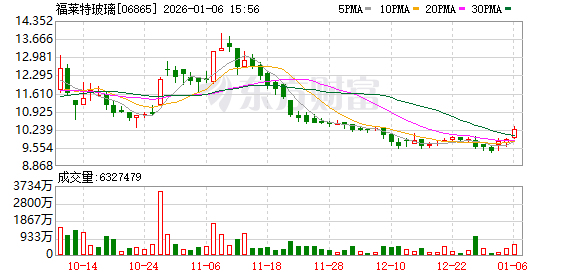
港股异动 | 光伏股普遍活跃 福莱特玻璃(06865)涨超4% 信义光能(00968)涨超3%
智通财经网· 2026-01-06 07:46
Core Viewpoint - The photovoltaic (PV) sector is experiencing increased activity, with notable stock price rises for companies such as Fuyao Glass, Xinyi Solar, GCL-Poly Energy, and New Times Energy, following regulatory announcements aimed at addressing price violations and promoting industry stability [1] Group 1: Market Activity - Fuyao Glass (06865) increased by 4.67%, reaching HKD 10.32 [1] - Xinyi Solar (00968) rose by 3.25%, reaching HKD 3.18 [1] - GCL-Poly Energy (03800) saw a 2.65% increase, reaching HKD 1.16 [1] - New Times Energy (01799) gained 1.18%, reaching HKD 7.69 [1] Group 2: Regulatory Environment - On December 26, the State Administration for Market Regulation reported price violations in the PV industry, emphasizing the need for the sector to recognize the importance of addressing "involution" competition [1] - GF Securities anticipates that the regulatory requirements will lead to further implementation of anti-involution measures, potentially improving industry profitability by 2026 [1] Group 3: Industry Outlook - Guosheng Securities predicts that 2025 will mark a turning point for the PV industry, with policies aimed at curbing low-price competition and tightening energy consumption standards, leading to the exit of high-cost production capacities [1] - The polysilicon segment is expected to rebound first, with prices rising nearly 50% since July's low, initiating industry consolidation [1] - The firm forecasts that by 2026, the price center will stabilize between 60-80 RMB/kg, with significant profit recovery anticipated for leading companies [1]
光伏股普遍活跃 福莱特玻璃涨超4% 信义光能涨超3%
Zhi Tong Cai Jing· 2026-01-06 07:45
Group 1 - The photovoltaic stocks are generally active, with notable increases in share prices for companies such as 福莱特 (4.67% increase), 信义光能 (3.25% increase), 协鑫科技 (2.65% increase), and 新特能源 (1.18% increase) [1] - The State Administration for Market Regulation announced issues and risks related to price violations in the photovoltaic industry, emphasizing the importance of addressing "involution" competition within the sector [1] - According to 广发证券, the further requirements from the market regulator are expected to enhance the anti-involution measures in the photovoltaic industry, leading to improved profitability in the downstream component segment by 2026 [1] Group 2 - 国盛证券 predicts that 2025 will mark a turning point for systematic anti-involution in the photovoltaic industry, with policies from central to local levels aimed at curbing low-price competition and tightening energy consumption standards [1] - The price of polysilicon has rebounded nearly 50% since its low in July, indicating the start of industry consolidation, with expectations that the price center will stabilize between 60-80 yuan/kg by 2026, leading to significant recovery in profitability for leading companies [1]
彭博绿金2026值得关注榜成功发布
Sou Hu Wang· 2026-01-06 04:57
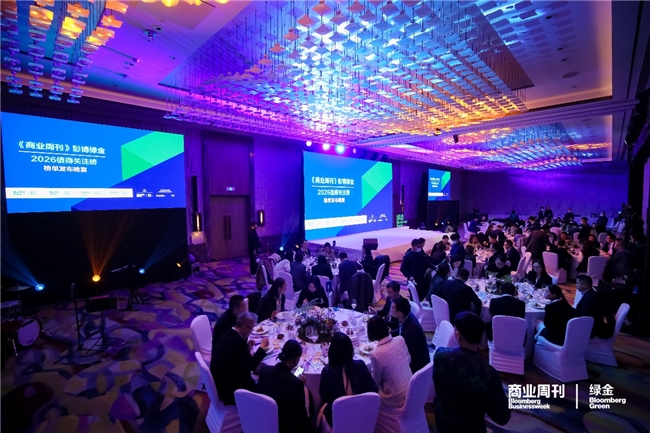
Core Insights - The 2026 Bloomberg Green Finance Awards ceremony was successfully held at the MGM Hotel in Shanghai, emphasizing the importance of aligning with China's "dual carbon" goals and the evolving global business landscape [2] - The event introduced two new evaluation systems: the "Green Finance List" and the "ESG Potential Enterprises" list, alongside existing categories for "ESG Leading Enterprises" and "Outstanding ESG Projects" [2] Green Finance List - The Green Finance List focuses on the green development and innovation within China's financial sector, developed in collaboration with the Central University of Finance and Economics [3] - It aims to respond to national green finance policies and promote the green transformation of financial institutions and enterprises [3] ESG Potential Enterprises - The ESG Potential Enterprises list is based on Bloomberg's proprietary analysis of corporate data, utilizing a comprehensive ESG matrix covering four dimensions, 16 core issues, and 41 sub-issues [4] - The matrix addresses nine major themes, including climate action, energy and ecological management, product safety, employee health, and social responsibility, to identify companies with long-term value and industry leadership potential [4] Complete Lists Released - The ESG Leading Enterprises include CHINT Group Co., Ltd., Tingyi Holding Corp. (Master Kong), Trina Solar Co., Ltd., and several others [5][6][7] - Outstanding ESG Projects feature initiatives from Beijing Fuping Social Venture Capital Co., Ltd., Envision Energy, LONGi Green Energy Technology Co., Ltd., and others [7][8] Green Financial Institutions - The Green Financial Institutions recognized include Bank of China (Hong Kong) Limited, Guotai Junan International Holdings Limited, Industrial Bank Co., Ltd., and others [9][10] Innovation Drivers - The ESG Innovation Drivers include organizations such as the Alliance for Water Stewardship, Climate Bonds Initiative, and Shanghai Advanced Institute of Finance [10] ESG Advocates - The ESG Advocates list features companies like Hydrowell (Taicang) Energy Technologies Co., Ltd., Ningbo Joyson Electronics Corp., and Skyworth Group Limited [11] Future Outlook - Bloomberg Green Finance aims to collaborate with more practitioners to explore core trends and future pathways for sustainable development, accumulating cross-disciplinary wisdom and solutions [13]



2025年港股再融资规模略超IPO
Zheng Quan Ri Bao· 2026-01-05 17:08
Core Insights - The Hong Kong stock market's refinancing activities in 2025 were exceptionally active, with a total of approximately HKD 325.32 billion raised through various methods, significantly surpassing the previous year [1] - Placement became the primary method for refinancing, with 345 companies initiating 463 placements, raising HKD 289.62 billion, slightly exceeding the HKD 285.69 billion raised through IPOs [1] - Leading companies like BYD and Xiaomi spearheaded large-scale refinancing efforts, focusing on industry integration and technological development [2] Group 1: Refinancing Trends - In 2025, the refinancing market in Hong Kong saw significant participation from industry leaders, with BYD raising HKD 43.51 billion and Xiaomi raising HKD 42.6 billion [2] - Other notable companies included NIO and Horizon Robotics, which collectively raised over HKD 11 billion, focusing on core technology breakthroughs and operational stability [2] - The refinancing activities reflect a trend of companies engaging in multiple rounds of financing, with firms like SenseTime and China Ruoyi completing several placements throughout the year [4] Group 2: Mechanisms and Strategies - The "old before new" placement system in Hong Kong allows companies to quickly raise funds by transferring existing shares before issuing new ones, significantly shortening the financing cycle [5] - This method typically offers discounts of 5% to 12% compared to market prices, effectively attracting institutional investors [5] - New companies listed in 2025, such as Boreton and Jiangsu Hongxin, quickly initiated refinancing to leverage their post-IPO stock price advantages [6] Group 3: Strategic Focus - The funds raised through refinancing are often directed towards capacity expansion and R&D, particularly in high-growth sectors like technology and renewable energy [3] - Companies like GCL-Poly announced specific uses for their raised funds, including structural adjustments in polysilicon production and enhancing R&D capabilities [2] - The trend of "going global" is also evident, with many Hong Kong-listed companies pursuing international expansion strategies while ensuring compliance with local regulations [7]


协鑫科技(03800) - 截至二零二五年十二月三十一日止股份发行人的证券变动月报表
2026-01-05 06:55
股份發行人及根據《上市規則》第十九B章上市的香港預託證券發行人的證券變動月報表 截至月份: 2025年12月31日 狀態: 新提交 公司名稱: 協鑫科技控股有限公司 呈交日期: 2026年1月5日 I. 法定/註冊股本變動 | 1. 股份分類 | 普通股 | 股份類別 | 不適用 | | | 於香港聯交所上市 (註1) | | 是 | | | --- | --- | --- | --- | --- | --- | --- | --- | --- | --- | | 證券代號 (如上市) | 03800 | 說明 | | | | | | | | | | | 法定/註冊股份數目 | | | 面值 | | | 法定/註冊股本 | | | 上月底結存 | | | 50,000,000,000 | HKD | | 0.1 | HKD | | 5,000,000,000 | | 增加 / 減少 (-) | | | | | | | HKD | | | | 本月底結存 | | | 50,000,000,000 | HKD | | 0.1 | HKD | | 5,000,000,000 | 本月底法定/註冊股本總額: HKD ...
港股收盘|科技指数涨超4%迎“开门红” 硬科技与政策消费双轮驱动
Xin Lang Cai Jing· 2026-01-02 08:41
Core Viewpoint - The Hong Kong stock market started 2026 with a strong performance, indicating a continuation of the structural bull market from 2025, with a clear investment focus on hard technology sectors like semiconductors, AI, and smart hardware, as well as policy-driven consumption sectors like home appliances and automobiles [1][5]. Market Performance - The Hang Seng Index rose by 2.76% to close at 26,338.47 points, while the Hang Seng Technology Index surged by over 4% to 5,736.44 points, and the Hang Seng China Enterprises Index increased by 2.86% to 9,168.99 points [1]. Semiconductor Sector - The semiconductor sector saw significant gains, driven by mergers and acquisitions as well as domestic production initiatives. Notable stock performances included Huahong Semiconductor (up 9.42%), SMIC (up 5.11%), and Jingmen Semiconductor (up 3.53%) [5][6]. - Huahong Semiconductor announced a major asset restructuring plan to acquire a 97.5% stake in Huali Micro for a transaction price of 8.268 billion yuan, alongside plans to raise up to 7.556 billion yuan for technology upgrades [6][7]. Internet Technology Sector - Internet technology stocks rebounded strongly, with Baidu Group rising by 9.53%, NetEase by 6.62%, and Alibaba by 4.34%. A key catalyst was Baidu's announcement of its AI chip subsidiary Kunlun's application for a mainboard listing [9][10]. - Kunlun's expected revenue for 2025 is around 5 billion yuan, with a potential valuation of 3 to 11 billion USD for Baidu's stake in the company [11]. Home Appliances Sector - Home appliance stocks benefited from favorable policies, with Skyworth Group rising by 10.45%, Midea Group by 5.12%, and Haier Smart Home by 4.20%. The National Development and Reform Commission and the Ministry of Finance announced a new policy to support large-scale equipment updates and trade-in programs [11][12]. - The new policy is expected to alleviate sales pressure in the short term and benefit leading companies with R&D and brand advantages in the long term [13]. Automotive Sector - Several automotive stocks gained, including Li Auto (up 4.93%) and BYD (up 3.57%), supported by the implementation of the "old-for-new" vehicle trade-in policy [14][16]. - The policy allows consumers to receive subsidies for trading in eligible old vehicles for new ones, which is expected to stimulate market confidence [16]. Solar Energy Sector - Solar energy stocks saw gains, with GCL-Poly Energy rising by 20.99% and GCL-Technology by 4.72%. The market regulator is enhancing compliance guidance for price competition in the solar industry [17]. Commercial Aerospace Sector - Commercial aerospace stocks performed well, with Asia Pacific Satellite rising by 34.53% and Aerospace Holdings by 18.33%. Blue Arrow Aerospace's IPO application was accepted, marking a significant milestone in the sector [18][19]. Individual Stock Movements - Delin Holdings rose by 11.76% following the conditional approval of its subsidiary to provide virtual asset trading services [21]. - Meitu Inc. increased by 6.14% after issuing $250 million in convertible bonds to Alibaba, which could make Alibaba the third-largest shareholder in Meitu [22].



港股光伏太阳能股普涨,协鑫新能源涨近21%,协鑫科技涨近5%
Jin Rong Jie· 2026-01-02 07:24
Core Viewpoint - The Hong Kong stock market saw a significant rise in solar energy stocks, indicating positive market sentiment towards the renewable energy sector [1] Group 1: Company Performance - GCL-Poly Energy surged nearly 21%, reflecting strong investor interest and confidence in the company's growth potential [1] - GCL-Technology experienced an increase of nearly 5%, suggesting a favorable outlook for its operations and market position [1] - Flat Glass Group, Rainbow Energy, and Xinyi Solar all rose over 3%, indicating a broader positive trend among solar energy companies [1] - New Special Energy, Xinyi Energy, and Xinyi Glass saw increases of over 2%, further demonstrating the overall strength of the solar energy sector in the market [1]
