
GCL TECH(03800)

Search documents
协鑫科技(03800) - 建议根据一般授权发行可换股债券-延长最后截止日期
2026-02-27 09:48
茲提述協鑫科技控股有限公司(「本公司」)日期為2026年1月28日刊發之公告(「該公 告」),內容有關建議根據一般授權發行可換股債券。本公告所用詞彙與該公告所界定 者具有相同涵義。 誠如該公告所披露,認購協議的完成須待所有先決條件於最後截止日期(即 2026年2月 27日)或之前或認購方與本公司書面協定之任何其他日期獲達成(或豁免)後,方可作 實。 香港交易及結算所有限公司及香港聯合交易所有限公司對本公告之內容概不負責,對其準確性或完整 性亦不發表任何聲明,並明確表示概不會就本公告全部或任何部分內容而產生或因倚賴該等內容而引 致之任何損失承擔任何責任。 GCL Technology Holdings Limited 協鑫科技控股有限公司 (於開曼群島註冊成立之有限公司) (股份代號:3800) 建議根據一般授權發行 可換股債券-延長最後截止日期 鑒於需要更多時間達成認購協議之先決條件,於 2026年2月27日,本公司與認購方已 同意將最後截止日期延長至2026年3月20日。 承董事會命 GCL Technology Holdings Limited 協鑫科技控股有限公司 主席 朱共山 香港,2026年2月27 ...

协鑫剥离的隐形冠军:市占率超五成,拟登陆创板
Xin Lang Cai Jing· 2026-02-26 12:09
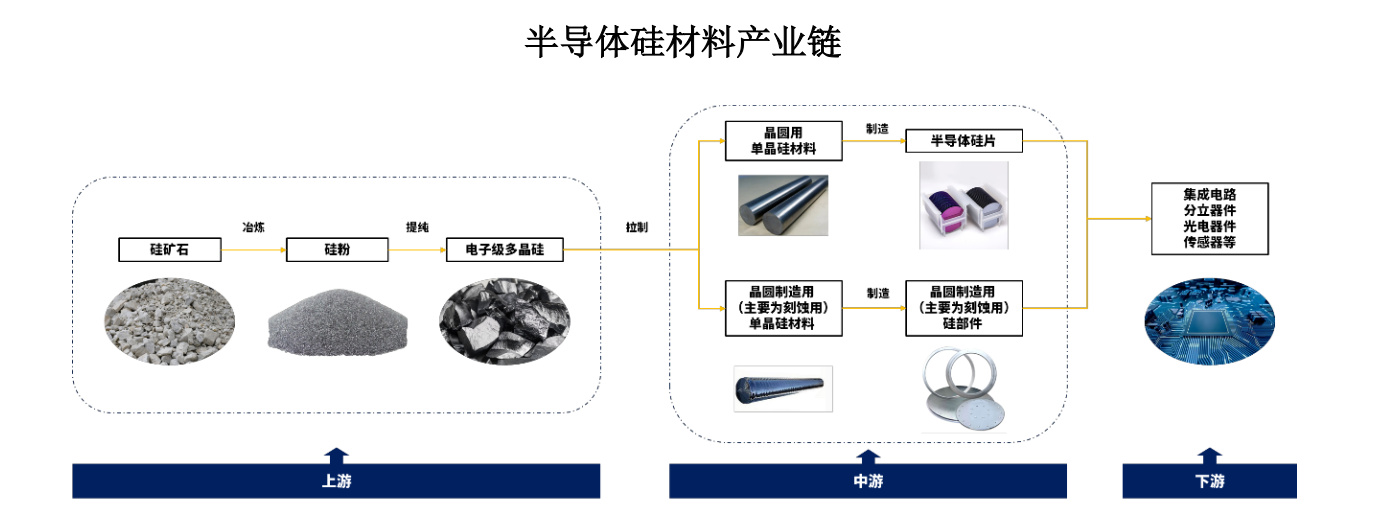
Core Viewpoint - Xinhua Technology has officially initiated its IPO process on the Sci-Tech Innovation Board, aiming to raise 1.32 billion RMB to expand its production capacity in high-purity electronic-grade polysilicon and related projects [1][2]. Company Overview - Established in 2015, Xinhua Technology is the largest domestic producer of electronic-grade polysilicon, focusing on R&D, production, and sales for the semiconductor industry [1][2]. - The company has a market share exceeding 50% in the domestic high-purity electronic-grade polysilicon market for integrated circuits as of 2024 [1]. IPO Details - The IPO plans to issue no less than 165 million shares, representing at least 10% of the total share capital post-issue [1]. - The funds raised will be used for projects including a 10,000 tons/year high-purity electronic-grade polysilicon industrial cluster and a 1,500 tons/year ultra-high-purity polysilicon research base [1]. Financial Performance - Xinhua Technology's net profits for 2022, 2023, and the first nine months of 2025 were 143 million RMB, 36 million RMB, and 78 million RMB respectively, with a notable increase in the latest period [10]. - The company's comprehensive gross profit margins showed fluctuations, with rates of 23.81%, 15.63%, 22.44%, and 24.56% over the same periods [10]. Market Position and Products - Xinhua Technology's products cover a wide range of silicon wafer sizes, including 12-inch, 6-8 inch, and small-sized wafers, and have been validated by major domestic semiconductor companies [5]. - The company is the only domestic supplier capable of large-scale stable supply of electronic-grade polysilicon for 12-inch wafers, which are the most mainstream specifications in the market [5]. Supply Chain and Partnerships - Xinhua Technology has a close relationship with its former parent company, GCL-Poly, and relies on it for a significant portion of its operational supplies [14]. - The company has signed long-term supply agreements with various domestic semiconductor wafer manufacturers, ensuring a stable market for its products [5]. Challenges and Market Dynamics - The semiconductor and photovoltaic markets' future trends will significantly impact Xinhua Technology's business margins and operational performance [13]. - The company faced a sharp decline in the solar-grade polysilicon market prices, which dropped nearly 80% in 2023 compared to 2022, affecting its overall profitability [12].

港股异动 协鑫科技(03800)午后涨近5% 通威股份拟收购丽豪清能 硅料产能整合迎来标志性事件
Jin Rong Jie· 2026-02-25 05:57
Group 1 - GCL-Poly Energy (03800) saw a nearly 5% increase in stock price, reaching HKD 1.27 with a trading volume of HKD 357 million [1] - Tongwei Co., Ltd. announced plans to acquire 100% equity of Qinghai Lihua Qingneng Co., Ltd. through a combination of share issuance and cash payment [1] - Qinghai Lihua ranks sixth in the industry for silicon material production capacity, indicating a significant move towards capacity consolidation in the silicon material sector [1] Group 2 - Analysts suggest that the acquisition reflects a proactive approach by leading companies to drive silicon material capacity consolidation amid stricter national controls on new capacity and the exit of outdated capacity [1] - The domestic polysilicon production capacity is expected to face strict limitations in the long term due to ongoing tightening of energy consumption standards [1] - Structural adjustments in polysilicon capacity have become inevitable as the industry adapts to new regulatory environments [1]

港股异动 | 协鑫科技(03800)午后涨近5% 通威股份拟收购丽豪清能 硅料产能整合迎来标志性事件
智通财经网· 2026-02-25 05:45
Group 1 - GCL-Poly Energy (03800) saw a nearly 5% increase in stock price, reaching HKD 1.27 with a trading volume of HKD 357 million [1] - Tongwei Co., Ltd. announced plans to acquire 100% equity of Qinghai Lihau Qingneng Co., Ltd. through a combination of share issuance and cash payment [1] - Qinghai Lihau ranks sixth in the industry for silicon material production capacity, indicating a significant move towards capacity consolidation in the silicon material sector [1] Group 2 - Analysts suggest that the acquisition reflects a proactive approach by leading companies to drive the consolidation of silicon material capacity amid current industry conditions [1] - The Chinese government is tightening controls on new capacity and promoting the exit of outdated capacity, which will lead to strict limitations on new polysilicon production capacity in the foreseeable future [1] - Structural adjustments in polysilicon capacity are deemed inevitable due to the ongoing tightening of national energy consumption standards [1]
光伏股多数回暖 我国光伏产业保持快速发展势头 机构称26年产业链有望实现扭亏
Zhi Tong Cai Jing· 2026-02-24 01:05
Group 1 - The photovoltaic sector is experiencing a rebound, with notable stock increases for companies such as Xinyi Solar (00968) up 5.38% to HKD 3.72, Junda Co. (002865) up 4.95% to HKD 38.2, and Flat Glass (601865) up 4.82% to HKD 11.96 [1][1][1] - The National Energy Administration has reported that by 2025, the country is expected to add 31.7 million kilowatts of new photovoltaic capacity, representing a year-on-year growth of 14%, with 16.4 million kilowatts from centralized photovoltaic and 15.3 million kilowatts from distributed photovoltaic [1][1][1] - By December 2025, the total installed photovoltaic capacity in the country is projected to reach 120 million kilowatts, reflecting a year-on-year increase of 35%, indicating rapid development in the photovoltaic industry and significant progress in energy green and low-carbon transformation [1][1][1] Group 2 - Guoyuan Securities indicates that since July 2025, the "anti-involution" measures in the country have boosted the photovoltaic industry's prosperity, with price control and supply-side clearing expected to drive profit recovery in the industry [1][1][1] - The exit of some tail-end enterprises combined with the efficiency improvements of leading companies is anticipated to lead to a turnaround in the photovoltaic industry chain by 2026 [1][1][1] - The construction of AI computing power is expected to generate rigid electricity demand, suggesting that global photovoltaic demand may exceed expectations, potentially accelerating opportunities in the sector [1][1][1]



港股光伏股多数回暖 信义光能涨5.38%
Mei Ri Jing Ji Xin Wen· 2026-02-23 06:59
Group 1 - The Hong Kong solar stocks are experiencing a rebound, with several companies showing significant gains [1] - Xinyi Solar (00968.HK) increased by 5.38%, reaching HKD 3.72 [1] - Junda Co. (02865.HK) rose by 4.95%, trading at HKD 38.2 [1] Group 2 - Flat Glass Group (06865.HK) saw an increase of 4.82%, with shares priced at HKD 11.96 [1] - Kaisheng New Energy (01799.HK) gained 4.1%, with a share price of HKD 3.27 [1] - GCL-Poly Energy (03800.HK) experienced a rise of 2.48%, trading at HKD 1.24 [1]
港股异动 | 光伏股多数回暖 我国光伏产业保持快速发展势头 机构称26年产业链有望实现扭亏
智通财经网· 2026-02-23 06:45
Core Viewpoint - The photovoltaic sector is experiencing a rebound, with several stocks showing significant gains following the release of positive data from the National Energy Administration regarding solar power capacity growth in China [1] Group 1: Stock Performance - Xinyi Solar (00968) increased by 5.38%, trading at HKD 3.72 [1] - Junda Co., Ltd. (02865) rose by 4.95%, trading at HKD 38.2 [1] - Flat Glass Group (06865) saw a rise of 4.82%, trading at HKD 11.96 [1] - Kstar New Energy (01799) increased by 4.1%, trading at HKD 3.27 [1] - GCL-Poly Energy (03800) rose by 2.48%, trading at HKD 1.24 [1] Group 2: Industry Growth Projections - By 2025, China's new photovoltaic installed capacity is projected to reach 317 million kilowatts, representing a year-on-year growth of 14% [1] - Of this, centralized photovoltaic installations are expected to contribute 164 million kilowatts, while distributed photovoltaic installations are expected to add 153 million kilowatts [1] - By December 2025, the total installed capacity for photovoltaic power generation in China is anticipated to reach 1.2 billion kilowatts, reflecting a year-on-year increase of 35% [1] Group 3: Market Dynamics and Future Outlook - Guoyuan Securities indicates that since July 2025, China's "anti-involution" measures have improved the photovoltaic industry's prosperity [1] - Price control and supply-side clearing are expected to drive profitability recovery in the industry, with some tail-end companies exiting the market and leading firms enhancing efficiency through technological upgrades [1] - The photovoltaic industry chain is projected to achieve profitability by 2026, with AI computing power construction potentially creating rigid electricity demand, suggesting that global photovoltaic demand may exceed expectations [1]
电力设备新能源行业2026年投资策略报告:驭风逐光,破卷新章-20260212
Guoyuan Securities· 2026-02-12 02:46
Group 1: Photovoltaic Industry - The photovoltaic industry is experiencing a clear upward trend due to supply-side clearing and demand-side support, with expectations of profitability recovery in 2026 as inefficient companies exit the market and leading firms enhance efficiency through technological upgrades [1][14] - In 2025, China's photovoltaic industry saw a significant increase in installed capacity, reaching 315.07 GW, with a year-on-year growth rate of 13.67%, despite a slowdown in the second half of the year [14][16] - The introduction of policies aimed at preventing "involution" in the industry has led to a recovery in prices, with polysilicon prices rising over 50% from June to November 2025, indicating a shift towards a more rational pricing environment [22][29] Group 2: Wind Power Industry - The wind power industry is expected to benefit from a favorable supply-demand structure, with significant growth anticipated in offshore wind projects and exports, particularly in 2025 [1][3] - The domestic wind power market is projected to continue its growth trajectory, with offshore wind becoming a key focus area, supported by increasing demand for domestic and international markets [1][3] - Investment recommendations include focusing on leading manufacturers in the wind turbine sector and companies involved in high-barrier components such as submarine cables, which are expected to see increased demand [3][3] Group 3: New Energy Vehicles - The new energy vehicle sector in China is projected to achieve sales of 16.49 million units in 2025, reflecting a year-on-year growth of 28.2%, driven by stable market demand and improved product structures [2][3] - The industry is witnessing a recovery in profitability as supply-side chaos is effectively managed, with significant price increases in key materials like lithium hexafluorophosphate and vinyl carbonate [2][3] - The transition to a high-quality development phase is expected in 2026, supported by technological innovations and enhanced supply chain capabilities [2][3] Group 4: Lithium Battery Industry - The lithium battery industry is experiencing a recovery in profitability as inefficient production capacity is eliminated, with key materials seeing price increases and demand from new energy vehicles and energy storage continuing to rise [8][8] - Recommendations include focusing on leading companies in the battery and structural components sectors, which are expected to benefit from the industry's recovery [8][8] - The commercialization of solid-state batteries is accelerating, with several companies making significant progress in this area [8][8]



港股异动 | 太空光伏概念股全线走高 特斯拉正加速推进太阳能制造 太空光伏需求有望迎来指数级增长
智通财经网· 2026-02-09 02:03
Group 1 - The core viewpoint of the article highlights a significant rise in space photovoltaic concept stocks, driven by Tesla's acceleration in solar manufacturing and the potential for exponential growth in space photovoltaic demand [1][1][1] Group 2 - JunDa Co., Ltd. (02865) saw a remarkable increase of 167.14%, trading at 43.5 HKD, while other companies like GCL-Poly Energy (03800), New Special Energy (01799), and Flat Glass Group (06865) also experienced notable gains of 9.01%, 6.81%, and 6.15% respectively [1][1][1] - Tesla is evaluating options to expand its solar production capacity, including increasing the capacity of its Buffalo, New York factory to 10 GW and potentially building additional factories in New York, Arizona, or Idaho [1][1][1] - Elon Musk stated that Tesla aims to produce 100 GW of solar cells annually to power data centers on Earth and in space [1][1][1] Group 3 - According to a report from CITIC Securities, the demand for space photovoltaics is expected to experience exponential growth, with Tesla's investment in solar manufacturing paving the way for powering orbital computing and AI [1][1][1] - Leading Chinese photovoltaic equipment manufacturers possess strong capabilities for efficient iteration and rapid response, positioning them to enter the supply chains of Tesla and SpaceX, potentially securing high-value orders and opening new growth opportunities [1][1][1] - Space photovoltaic equipment may exhibit significant inflation effects, leading to a substantial increase in value [1][1][1]


港股光伏太阳能板块持续拉升,协鑫新能源涨超10%
Xin Lang Cai Jing· 2026-02-09 01:57
Group 1 - The Hong Kong stock market's photovoltaic solar energy sector has seen a significant rise, with GCL-Poly Energy increasing by over 10% [1] - GCL-Technology has also experienced a rise of over 8% [1] - Other companies such as Flat Glass Group, New Energy, and Xinyi Glass have followed suit with upward movements in their stock prices [1]